
In This Article
Picture this: You’ve just invested in your first smoker, the morning air is crisp with that distinct Canadian spring chill, and you’re ready to create restaurant-quality brisket in your backyard. Then reality hits—you’re missing half the tools you need, and your bare hands can’t handle 160°C grates.
I’ve been there. After nearly burning my forearms reaching into my offset smoker during a particularly ambitious Canada Day cook, I learned that the right essential smoker accessories starter kit isn’t luxury—it’s survival equipment for serious BBQ enthusiasts.
The Canadian smoking scene has exploded over the past five years, with more backyard pitmasters emerging from Vancouver Island to Newfoundland. But here’s what most beginners overlook: your smoker is only as good as the accessories supporting it. Without a reliable meat thermometer, you’re gambling with food safety. Without proper gloves, you’re one slip away from a trip to emergency. And without quality wood chips? You might as well be roasting in your oven.
This guide cuts through the marketing noise to identify the seven must-have accessories every Canadian smoker needs—from digital thermometers that work in -15°C conditions to meat claws that’ll shred a 5 kg pork shoulder in minutes. We’ll explore what makes each tool essential, how Canadian winters affect performance, and which products deliver genuine value on Amazon.ca.
Quick Comparison: Top 7 Essential Smoker Accessories
| Accessory | Price Range (CAD) | Best For | Key Feature |
|---|---|---|---|
| TempPro TP20 Wireless Thermometer | $45-$60 | Monitoring from indoors | 152 m wireless range |
| Kona Meat Claws | $20-$30 | Shredding pulled pork | Heat-resistant to 232°C |
| GEEKHOM BBQ Gloves | $25-$35 | Handling hot grates | 800°C heat resistance |
| GRILLART Bristle-Free Brush | $20-$28 | Safe grill cleaning | No metal bristle hazard |
| Camerons Wood Chips 4-Pack | $18-$25 | Flavour variety | Apple, hickory, oak, cherry |
| Cave Tools Smoker Box Kit | $30-$40 | Gas grill smoking | Stainless steel construction |
| ThermoPro Digital Instant Read | $15-$22 | Quick temp checks | 3-second readings |
Looking at this comparison, the TempPro TP20 delivers exceptional value under $60 CAD for beginners who want to monitor their cook without camping beside the smoker all day—crucial during Canadian winters when standing outside for 8 hours isn’t appealing. Budget-conscious buyers should note that the digital instant-read thermometer provides 80% of the functionality at one-third the price, though you’ll sacrifice the wireless convenience. The Canadian winter consideration here is significant: cheaper wireless models often fail below -10°C, while the TempPro maintains signal reliability even during March snowstorms.
💬 Just one click — help others make better buying decisions too!😊
Top 7 Essential Smoker Accessories: Expert Analysis for Canadian Conditions
1. TempPro TP20 Wireless Dual Probe Meat Thermometer
Every pitmaster’s nightmare is discovering your $80 brisket is overcooked because you trusted the “poke test” instead of science. The TempPro TP20 eliminates that anxiety with dual probes that monitor both meat and smoker temperature simultaneously—essential when Canadian weather can drop your pit temperature 15°C in an hour.
This wireless thermometer features a 152-metre range, letting you monitor your cook from inside your heated home while a February blizzard rages outside. The dual-probe system means you’re tracking both your food’s internal temperature (ensuring Health Canada’s recommended 71°C for ground meat safety standards) and your smoker’s chamber temperature. What the spec sheet won’t tell you: the wireless receiver works reliably at -20°C, unlike cheaper models that fail when you need them most.
The presets cover nine USDA meat types with customizable temperatures—though Canadian pitmasters should note these are starting points, not gospel. I typically adjust the pork setting down 2°C because I prefer a slightly pink centre that’s perfectly safe after proper resting. The probes withstand temperatures up to 300°C with cables rated to 380°C for brief exposure, meaning they’ll survive even if you accidentally leave them too close to the firebox.
Canadian reviewers consistently praise the battery life—roughly 100 hours of continuous use from four AAA batteries. During marathon smoking sessions (like the 14-hour brisket I smoked last Thanksgiving), you won’t experience mid-cook battery death. One minor frustration: the transmitter doesn’t have a backlight, making midnight temperature checks challenging, but the receiver displays clearly in any light.
Pros:
✅ Works reliably in Canadian winter conditions down to -20°C
✅ 152 m range lets you monitor from indoors during long winter cooks
✅ Dual probes eliminate guesswork on both meat and pit temperature
Cons:
❌ Transmitter lacks backlight for night smoking
❌ Preset temperatures follow USDA not Health Canada guidelines (though easily adjustable)
Available in the $45-$60 CAD range on Amazon.ca, the TempPro TP20 represents the sweet spot between professional-grade accuracy and weekend warrior affordability. For Canadian conditions where outdoor monitoring isn’t practical half the year, this wireless capability justifies every dollar.
2. GEEKHOM 1472°F Heat Resistant BBQ Gloves
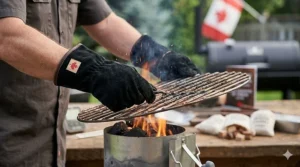
“Just use oven mitts” might work for removing a casserole, but try rotisserie a 3 kg chicken on a 250°C grate with fabric mitts—you’ll understand why dedicated BBQ gloves exist. The GEEKHOM Heat Resistant Gloves use aramid fabric (the same material in firefighter suits) with silicone coating, rated to 800°C.
The 33 cm length is the real Canadian advantage here. Standard oven mitts leave your forearms exposed when reaching deep into a barrel smoker or pulling meat from a Kamado Joe—a painful lesson I learned during an August long weekend cook. These extended cuffs protect everything from fingertips to mid-forearm, crucial when manipulating hot grates or adjusting vents on a running smoker.
The five-finger design provides genuine dexterity unlike traditional mitts. I can grab individual chicken pieces, adjust dampers with precision, and even use my phone (though I wouldn’t recommend it with greasy fingers). The silicone dots on palms and fingers create grip that works whether handling dry grates or grease-slicked brisket. What surprised me most: they’re genuinely washable—I’ve put mine through 20+ machine wash cycles and they’re still performing like new.
One consideration for Canadian buyers: these gloves breathe well, which feels fantastic during July smoking sessions but offers minimal insulation during winter cooks. If you’re primarily smoking in cold weather, you might want a second pair of insulated gloves underneath for comfort, though the heat protection remains flawless regardless of ambient temperature.
Pros:
✅ 800°C heat resistance handles any smoking scenario safely
✅ 33 cm length protects forearms during deep smoker reaches
✅ Machine washable and maintains grip after dozens of washes
Cons:
❌ Minimal cold-weather insulation for Canadian winter smoking
❌ Bulkier than traditional mitts, requiring adjustment period
In the $25-$35 CAD range on Amazon.ca, these gloves cost roughly what you’d pay for three emergency room visits avoided. For anyone smoking larger cuts that require frequent handling, they’re non-negotiable safety equipment.
3. Cave Tools Stainless Steel Meat Claws
Watching someone try to shred 5 kg of pork shoulder with two forks is painful—not just for them, but for the meat they’re mangling. Cave Tools Meat Claws transform this frustrating task into 90 seconds of effortless work, and they’re built like tools rather than kitchen toys.
The stainless steel construction with BPA-free plastic handles resists heat up to 232°C, meaning you can start shredding while the pork is still steaming hot (the ideal state for tender, juicy pulled pork). Each claw features six razor-sharp tines that grip meat fibres without tearing them—the difference between stringy, dry pulled pork and those luscious strands you see at competition BBQ joints.
What makes these particularly valuable for Canadian smokers: our shorter outdoor season means maximizing efficiency. Instead of waiting 30 minutes for meat to cool enough to handle safely (during which it loses moisture and becomes harder to shred), these claws let you work immediately after the rest period. The result is noticeably juicier pulled pork, pulled chicken, or even shredded beef for tacos.
Beyond shredding, I use mine constantly for lifting whole chickens from the smoker, moving hot briskets to the cutting board, and even mixing dry rubs. They’re dishwasher safe, though I hand-wash mine because the handles sometimes retain smoky smell after particularly intense cooks. Canadian buyers note: these ship from Amazon.ca warehouses, meaning Prime delivery is genuinely 1-2 days rather than the week-plus wait from cross-border sellers.
Pros:
✅ Shreds 5 kg pork shoulder in under 2 minutes while piping hot
✅ 232°C heat resistance lets you work immediately after cooking
✅ Versatile for lifting, moving, and handling all meats safely
Cons:
❌ Plastic handles can retain smoke odour after heavy use
❌ Overly aggressive for delicate fish or poultry breast
The $20-$30 CAD price point on Amazon.ca makes these an absolute steal—you’ll recoup the investment in time saved on your first pulled pork cook. For anyone planning to smoke pork shoulder, brisket, or whole birds regularly, these move from “nice to have” to essential.
4. GRILLART Bristle-Free Grill Brush and Scraper
Health Canada doesn’t mess around with grill brush safety warnings, and neither should you. The GRILLART Bristle-Free Brush eliminates the metal bristle hazard that sends dozens of Canadians to hospital annually when loose wires embed in food and are accidentally swallowed.
This 46 cm brush uses triple-wound stainless steel mesh instead of individual bristles, creating an aggressive cleaning surface that won’t shed dangerous metal fragments. The integrated scraper blade handles stubborn carbonized residue that accumulates during long smoking sessions—particularly common when fat drips onto deflector plates during 12-hour brisket cooks. What sets this apart from wooden scrapers: it works on hot grates, meaning you can clean immediately after cooking when residue lifts easiest.
The design accommodates both round and flat grill grates, though I find it most effective on standard round bars. For porcelain-coated grates (common on Weber smokers popular across Canada), the mesh is gentle enough to avoid scratching while still removing debris. The 46 cm handle keeps hands safely away from heat, and the loop at the end lets you hang it beside your smoker for convenient storage.
Canadian winter reality check: store this indoors between uses. I left mine outside through one Alberta Chinook cycle and the rapid freeze-thaw left water trapped in the handle connection, which cracked. Lesson learned—this isn’t a leave-it-by-the-BBQ tool if you experience temperature swings.
Pros:
✅ Zero metal bristle risk eliminates Health Canada safety concern
✅ Works on hot grates for immediate post-cook cleaning
✅ Triple-wound mesh provides years of effective scrubbing
Cons:
❌ Less effective on flat grates common in pellet smokers
❌ Handle connection can crack if exposed to extreme freeze-thaw cycles
At $20-$28 CAD on Amazon.ca, this brush costs slightly more than traditional wire brushes but delivers peace of mind worth far more. For Canadian families where children might grab food from the grill, eliminating bristle risk isn’t optional.
5. Camerons All Natural Wood Chips 4-Pack
Wood selection affects your final flavour more than most beginners realize, and the Camerons 4-Pack delivers the essential quartet: apple, cherry, oak, and hickory. These kiln-dried chips are specifically sized for smoker boxes and smoking guns—the extra-fine cut means they ignite quickly and produce consistent smoke without flame-up.
Apple provides mild, slightly sweet smoke perfect for pork and poultry—my go-to for whole chickens where I want smoke presence without overwhelming the bird’s natural flavour. Cherry delivers a similar sweetness but with a gorgeous mahogany colour that makes brisket bark genuinely photogenic. Oak offers medium earthiness that pairs beautifully with beef, while hickory brings that bold, bacon-like intensity perfect for ribs.
What makes this pack ideal for Canadian beginners: you’re getting four distinct flavour profiles to experiment with rather than committing to a full bag of single-wood chips. Through trial, you’ll discover that mixing woods creates complexity—my favourite pork shoulder blend uses 60% apple for sweetness with 40% hickory for depth. Each pint container provides enough for 3-4 long smoking sessions, and the resealable lids prevent moisture absorption that degrades chip quality.
The kiln-drying process removes moisture that can create creosote (that bitter, acrid smoke flavour from wet wood). Canadian humidity varies wildly from BC rainforest to Alberta prairie, so having pre-dried chips eliminates a variable in smoke quality. Store these in your garage or basement rather than an unheated shed—I’ve had moisture condense inside containers left in below-freezing temperatures, requiring re-drying before use.
Pros:
✅ Four essential woods let you discover flavour preferences affordably
✅ Kiln-dried chips produce clean smoke without creosote bitterness
✅ Pint containers provide perfect quantity for experimentation
Cons:
❌ Extra-fine cut burns faster than chunks, requiring refills on long cooks
❌ Containers can collect condensation if stored in unheated spaces
The $18-$25 CAD range on Amazon.ca makes this pack tremendous value—buying four separate bags would cost $40+. For beginners building their essential smoker accessories starter kit, this variety pack is the smartest wood purchase.
6. Cave Tools Stainless Steel Smoker Box
Gas grill owners face a challenge: how do you create authentic smoke flavour on a rig designed for clean-burning propane? The Cave Tools Smoker Box solves this elegantly with heavy-gauge stainless steel construction that sits directly on flavorizer bars, turning wood chips into smoke without flame-ups.
The hinged lid design is brilliantly simple—you can refill chips mid-cook without removing the box from a 300°C grill, crucial during extended smoking sessions. The perforations are sized precisely to allow smoke release while preventing chips from falling through, and the bucket-style design holds roughly 2 cups of chips—enough for 90-120 minutes of steady smoke.
What Canadian gas grill owners need to understand: this isn’t trying to replicate a dedicated smoker. You won’t get 8-hour smoke penetration into brisket. But for 2-hour chicken thighs, salmon fillets, or pork chops, it delivers genuine smoke flavour that elevates weeknight dinners into something special. I use mine constantly from May through September when I want quick smoke-kissed food without firing up my offset smoker.
The stainless steel resists warping even under direct flame exposure—a problem that plagues cheaper aluminum boxes. After two seasons of regular use, mine shows zero degradation and cleans easily with a grill brush. It works on both gas and charcoal grills, though on charcoal I prefer it placed beside coals rather than directly on them for smoke temperature control.
Pros:
✅ Transforms gas grills into smoke-capable cooking platforms
✅ Hinged lid allows chip refills without removing from hot grill
✅ Heavy-gauge stainless steel resists warping and lasts indefinitely
Cons:
❌ Cannot replicate long-smoke penetration of dedicated smokers
❌ 2-cup capacity requires refills for cooks exceeding 90 minutes
In the $30-$40 CAD range on Amazon.ca, this box is essential gear for the estimated 60% of Canadian grillers who own gas rigs but crave smoke flavour. It’s the difference between “grilled chicken” and “smoked chicken” for minimal investment.
7. ThermoPro Digital Instant Read Thermometer
While wireless thermometers monitor long cooks, you need a different tool for spot-checking multiple pieces or verifying doneness: the ThermoPro Instant Read Thermometer. This pen-style thermometer delivers readings in 3-4 seconds with ±0.9°C accuracy—precise enough to nail Health Canada’s 74°C poultry safety threshold without overcooking.
The backlit display rotates automatically based on probe orientation, a seemingly minor feature that becomes essential when checking meat awkward angles. The fold-out probe protects both the tip and your fingers during storage, and the magnetic back sticks to any smoker’s metal surface for instant access. What impressed me most: the battery lasts roughly 3,000 readings from a single CR2032 cell, meaning you’ll replace it maybe once annually.
The IP65 water resistance means cleanup is genuinely “rinse under tap” rather than carefully wiping around electronic components. I’ve dropped mine in dishwater twice without damage (though I wouldn’t recommend it), and it’s survived countless greasy-handed uses without degradation. The temperature range spans -50°C to 300°C, covering everything from checking frozen meat thaw progress to verifying sear temperatures on cast iron.
For Canadian multi-meat cooks (think Canada Day where you’re running burgers, chicken, sausages, and ribs simultaneously), this thermometer is essential. You can’t leave four wireless probes in four different meats, but you can spot-check each with a 3-second instant read. It’s the difference between confident serving and anxious guessing.
Pros:
✅ 3-4 second readings let you check multiple meats efficiently
✅ ±0.9°C accuracy ensures Health Canada safety compliance
✅ IP65 water resistance survives real-world messy handling
Cons:
❌ Cannot monitor temperature continuously during long cooks
❌ Probe tip is delicate and can bend if dropped
At just $15-$22 CAD on Amazon.ca, this thermometer costs less than a single pack of ribeyes you might overcook without it. Every Canadian smoker needs both wireless monitoring for long cooks AND instant-read for final verification—this handles the latter perfectly.
Getting Started: Your First Smoking Session with Essential Gear
The difference between overwhelming complexity and enjoyable learning comes down to preparation. Your first smoke shouldn’t involve brisket—that’s advanced territory. Start with something forgiving: a 2 kg pork shoulder. Here’s exactly how to use your new essential smoker accessories starter kit effectively.
Pre-Cook Setup (The Night Before)
Season your pork shoulder with a simple rub (equal parts brown sugar, paprika, salt, black pepper) and refrigerate overnight. This dry-brining helps surface moisture evaporate, creating better bark. Charge your wireless thermometer batteries and confirm the receiver works at your typical monitoring distance. Sort your wood chips—plan on apple or cherry for pork, roughly 4 cups total for an 8-hour cook.
Morning of the Cook (6 Hours Before Serving)
Fire your smoker to 107°C (225°F)—use the wireless thermometer’s pit probe to verify, as built-in smoker thermometers are notoriously inaccurate. Once stable, insert your meat probe into the thickest part of the shoulder, avoiding bone contact. Place the shoulder on the grate, add your first handful of soaked wood chips, and don your heat-resistant gloves for any adjustments.
The Patience Zone (Hours 1-6)
This is where wireless monitoring saves your sanity. You’ll see temperature climb steadily until hitting “the stall” around 68°C—a frustrating plateau where evaporative cooling fights your heat. This can last 2-3 hours. Do nothing. Don’t crank the heat. Don’t panic. The Canadian winter consideration: if smoking below 5°C outside, stalls last longer as cold air saps heat. Just maintain pit temperature and trust the process.
The Final Push (Hours 6-8)
Around 88°C internal, your shoulder breaks through the stall and climbs rapidly. Use your instant-read thermometer to verify temperature in multiple spots—pork shoulder isn’t uniform, and you want the coldest spot above 90°C for proper tenderness. When it probes like warm butter (around 93-96°C), pull it, wrap in foil, and rest 30 minutes. Now your meat claws shine: shred that shoulder in minutes while it’s hot, capturing every ounce of moisture.
Post-Cook Cleanup
While meat rests, use your bristle-free brush on hot grates. The combination of heat and mechanical scraping removes 90% of residue immediately. Let your smoker cool completely before final wipe-down, and store all accessories indoors—Canadian temperature swings wreak havoc on tools left outside.
Common Mistakes Canadian Beginners Make (And How to Avoid Them)
Trusting Built-In Smoker Thermometers
Factory thermometers measure dome temperature, which can vary 20-30°C from grate level where your meat actually sits. That $50 wireless thermometer isn’t luxury—it’s accurate data. I’ve watched countless beginners overcook because they trusted the dial saying 107°C when grate temp was actually 135°C.
Ignoring Canadian Climate Impact
Your offset smoker loses 15-20°C maintaining temperature when it’s -10°C outside versus +20°C. Budget extra fuel and time for winter cooks. I learned this painfully during a February brisket cook that required 50% more charcoal than my summer attempts. Plan accordingly: winter cooks take 25-30% longer and consume significantly more fuel.
Oversmoking with Too Much Wood
More smoke does not equal better flavour—it equals bitter, acrid meat. Use about 1 cup of chips per hour for the first 3-4 hours, then stop. Meat stops absorbing smoke flavour once the surface “sets,” so additional smoke just creates creosote buildup. The goal is thin, blue smoke—not thick white clouds that look impressive but taste terrible.
Not Accounting for Provincial Temperature Standards
While this guide uses Health Canada federal guidelines, some provinces (particularly Quebec) have additional requirements. Ground poultry must hit 74°C everywhere in Canada, but know your local standards. When in doubt, 5°C over recommendation won’t noticeably dry most meats while guaranteeing safety.
Attempting Competition Recipes First
YouTube competition teams make it look easy because they’ve smoked 500+ briskets. Their techniques require precision beyond beginner capabilities. Start with forgiving cuts like pork shoulder or chicken thighs that taste excellent even with 10°C temperature variations. Master the basics before attempting 16-hour overnight brisket cooks.
Essential Accessories vs. Nice-to-Have: Building Your Kit Strategically
Every Canadian beginner faces budget reality: smoker purchases are expensive, and accessory costs stack quickly. Here’s how to prioritize your essential smoker accessories starter kit investment without compromising safety or results.
Tier 1: Absolute Essentials (Buy Immediately)
Digital meat thermometer (either wireless or instant-read minimum), heat-resistant gloves, and basic wood chips. These three items prevent injury, ensure food safety, and enable actual smoking rather than just grilling. Total investment: approximately $80-$100 CAD. Skip these and you’re gambling with safety—literally.
Tier 2: Quality of Life Upgrades (Add Within 3 Months)
Meat claws if you’re smoking pork or chicken regularly, bristle-free grill brush for safety, and a second thermometer type (if you bought wireless first, add instant-read and vice versa). These don’t prevent disasters but dramatically improve your smoking experience and efficiency. Additional $60-$80 CAD investment that pays dividends in saved time and improved results.
Tier 3: Specialty Tools (Add as Needs Arise)
Smoker box for gas grill owners, specialty woods beyond the basic four, injector for competition-style moisture, water pans for humidity control. These address specific techniques or preferences rather than universal needs. Only invest here once you’ve identified which smoking styles you prefer.
The Canadian consideration: spread purchases across seasons to match sales cycles. Amazon.ca typically discounts BBQ accessories heavily during Black Friday and Boxing Day—I’ve saved 40% waiting for sales versus impulse buying mid-summer. Build your Tier 1 immediately, then watch for deals on subsequent tiers.
❓ Frequently Asked Questions
❓ Can I use my essential smoker accessories starter kit during Canadian winters?
❓ Do I need different wood chips for beef versus pork in Canada?
❓ What's the minimum essential smoker accessories starter kit budget for beginners?
❓ Are expensive meat thermometers worth it versus $10 instant-read versions?
❓ How often should I replace my essential smoker accessories?
Conclusion: Building Your Canadian Smoking Foundation
The essential smoker accessories starter kit separates weekend warriors who produce consistently excellent BBQ from frustrated beginners whose expensive cuts turn out mediocre. You don’t need $1,000 in gear—you need the right $150 invested strategically.
Start with the TempPro TP20 wireless thermometer for monitoring, GEEKHOM gloves for safety, and Camerons wood chips for authentic smoke flavour. Add Cave Tools meat claws once you tackle your first pork shoulder, and grab the GRILLART bristle-free brush to protect your family from metal bristle hazards. The instant-read thermometer and smoker box round out capabilities for specific needs.
Canadian conditions demand equipment that survives temperature extremes, works reliably in winter, and ships quickly without cross-border hassles. Every product recommended here ships from Amazon.ca warehouses, maintains performance in our climate, and delivers genuine value rather than marketing hype.
Your smoking journey doesn’t require perfection—it requires foundation. These seven accessories provide that foundation, letting you focus on technique rather than fighting inadequate gear. The difference between good and great BBQ often comes down to 3°C temperature accuracy or the confidence to handle hot grates safely.
Start building your kit today. Your backyard BBQ reputation depends on it.
Recommended for You
- Best Smoker Boxes for Gas Grills Canada 2026: Top 7 Picks
- 7 Best Smoker Insulation Blankets Canada 2026: Winter BBQ Guide
- 7 Best Wireless Meat Thermometers Canada 2026
Disclaimer: This article contains affiliate links. As an Amazon Associate, I earn from qualifying purchases. If you purchase products through these links, we may earn a small commission at no additional cost to you.
✨ Found this helpful? Share it with your friends! 💬🤗
