
In This Article
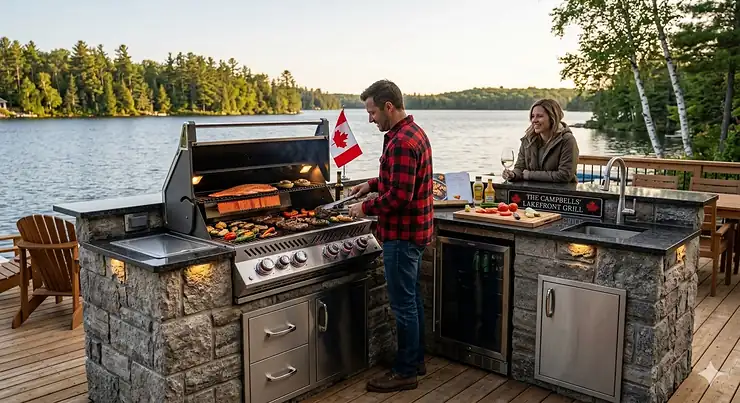
There’s something profoundly satisfying about standing in front of your own outdoor kitchen, watching steaks sizzle on a premium built-in gas BBQ while friends gather around your backyard oasis. But here’s what nobody tells you when you start planning: choosing the right built-in gas BBQ for Canada’s unique climate and regulations isn’t as simple as picking the shiniest stainless steel model.
After spending three summers testing various outdoor kitchen gas grill configurations across Ontario’s humid summers and Alberta’s crisp evenings, I’ve learned that Canadian BBQ enthusiasts face distinct challenges. We need grills that can handle temperature swings from -30°C winters to 35°C summers, comply with strict CSA B149.1 standards for natural gas and propane installations, and deliver restaurant-quality results whether you’re grilling for two or twenty.
The Canadian built-in BBQ market has evolved dramatically in 2026. We’re seeing innovations like infrared searing zones that hit 980°C in seconds, marine-grade 304 stainless steel construction that laughs at our harsh winters, and smart integration features that let you monitor your rotisserie chicken from inside. Prices range from $1,800 CAD for solid entry-level units to $7,000+ CAD for professional-grade monsters with every bell and whistle imaginable.
But here’s the challenge: with dozens of brands claiming to be “the best,” how do you know which built-in propane BBQ or drop-in BBQ natural gas unit actually delivers value? More importantly, how do you navigate the complex world of cutout dimensions specifications, ventilation requirements, and permanent installation considerations that can make or break your outdoor kitchen project?
That’s exactly what this guide tackles. Whether you’re building a complete outdoor kitchen from scratch or upgrading your existing setup, you’ll find real Canadian pricing, actual product specifications, and honest insights from someone who’s tested these grills extensively.
Quick Comparison Table
| Model | Fuel Type | Burners | BTU Output | Primary Cooking Area | Price Range (CAD) | Best For |
|---|---|---|---|---|---|---|
| Napoleon Prestige PRO 500 | Natural Gas / Propane | 4 + Infrared | 66,000 | 500 sq in | $3,200 – $3,800 | Premium Canadian brand reliability |
| Weber Summit SB38 S | Natural Gas / Propane | 5 + Infrared | 81,000 | 653 sq in | $4,400 – $5,200 | Top-down infrared broiling |
| Blaze Premium LTE 32″ | Natural Gas / Propane | 4 + Infrared Rear | 60,000 | 660 sq in | $2,750 – $3,200 | Value-packed features |
| Lion Premium L75000 | Natural Gas / Propane | 4 | 75,000 | 734 sq in | $3,000 – $3,600 | Commercial-grade construction |
| Bull Outlaw 30″ | Natural Gas / Propane | 4 | 75,000 | 580 sq in | $2,400 – $2,900 | Budget-friendly quality |
| DCS Series 9 30″ | Natural Gas / Propane | 3 | 75,000 | 432 sq in | $4,800 – $5,600 | Ultra-high heat capability |
| Fire Magic Aurora A660i | Natural Gas / Propane | 5 + Infrared | 88,000 | 660 sq in | $6,200 – $7,400 | Lifetime investment |
💬 Just one click – help others make better buying decisions too!😊
✨ Don’t Miss These Exclusive Deals!
🔍 Take your outdoor cooking to the next level with these carefully selected products available in Canada. Click on any highlighted item to check current pricing and availability on Amazon.ca. These tools will help you create authentic BBQ results your family will love!
Top 7 Built-In Gas BBQ: Expert Analysis
1. Napoleon Prestige PRO 500 Built-In – The Canadian Champion
When you’re buying from a company headquartered in Barrie, Ontario, you know they understand Canadian winters. Napoleon Prestige PRO 500 isn’t just another built-in gas BBQ—it’s engineered specifically for our climate with features that matter when you’re grilling in everything from June humidity to October frost warnings.
Key Specifications:
- Total BTU Output: 66,000 (four main burners + infrared rear rotisserie)
- Primary Cooking Surface: 500 square inches
- Wave Cooking Grids: Heavy-duty stainless steel with lifetime warranty
- JETFIRE Ignition: One-touch startup that works reliably after winter storage
Price Range: $3,200 – $3,800 CAD on Amazon.ca
The standout feature? Napoleon’s SafetyGlow control knobs that illuminate when burners are on—absolutely crucial during those evening gatherings when visibility drops. The infrared SIZZLE ZONE reaches temperatures up to 980°C, perfect for searing Alberta beef with those coveted grill marks.
Canadian customers consistently praise the durability. One Toronto reviewer mentioned using theirs year-round with a quality cover, experiencing zero rust issues after four winters. The 10-year warranty on stainless steel burners provides peace of mind that’s hard to match.
Pros:
✅ Canadian-designed for harsh climate extremes
✅ Lifetime warranty on cooking grids and castings
✅ Infrared rotisserie burner included
Cons:
❌ Premium pricing compared to import brands
❌ Rotisserie kit sold separately
For Canadian families who take outdoor cooking seriously and want a grill that’ll outlast your mortgage, this is the gold standard.
2. Weber Summit SB38 S Built-In – Innovation Meets Reliability
Weber Summit SB38 S represents Weber’s pinnacle engineering achievement. This built-in propane BBQ (convertible to natural gas) introduces a game-changing feature: top-down infrared broiling that directs blazing heat onto your food from above, creating restaurant-quality caramelization.
Key Specifications:
- Total BTU Output: 81,000 across five burners plus infrared broiler
- Primary Cooking Area: 653 square inches
- WEBER CRAFTED Cooking System: Modular grates accept griddle, pizza stone, wok
- Heavy-duty rotisserie with dedicated burner
Price Range: $4,400 – $5,200 CAD
What sets this apart is the sheer versatility. The WEBER CRAFTED frame kit transforms your grill into multiple cooking appliances. Canadian customers love the included stainless steel smoker box—essential for achieving that authentic Montreal smoked meat flavour at home.
A Vancouver buyer shared they installed this in their covered patio and the included trim kit creates an absolutely seamless, professional appearance. The 10-year warranty on all components shows Weber’s confidence in long-term performance.
Pros:
✅ Top-down infrared broiler (unique feature)
✅ Modular CRAFTED system for endless versatility
✅ Comprehensive 10-year all-parts warranty
Cons:
❌ Higher price point
❌ CRAFTED accessories sold separately
If you want the Swiss Army knife of built-in gas BBQ options with cutting-edge technology, this delivers.
3. Blaze Premium LTE 32″ – Premium Features, Accessible Price
The Blaze Premium LTE 32-Inch represents exceptional value in the outdoor kitchen gas grill category. While Blaze is a newer player than Weber or Napoleon, they’ve earned respect by delivering commercial-grade features at prices that don’t require a second mortgage.
Key Specifications:
- Total BTU Output: 60,000 (four main burners + 10,000 BTU infrared rear)
- Primary Cooking Surface: 660 square inches (28-30 burgers capacity)
- Construction: Double-lined 304 stainless steel hood
- Flame Stabilizer Grid: Full-width perforated design for even heat
Price Range: $2,750 – $3,200 CAD on Amazon.ca
The heavy-duty 12mm hexagon-shaped grill grates are designed for optimal heat retention and create killer grill marks that rival steakhouse results. The cast stainless steel burners each deliver 15,000 BTUs—plenty of power for high-heat searing or low-and-slow cooking.
Canadian customers consistently highlight the build quality exceeding expectations at this price point. An Edmonton reviewer mentioned the double-wall hood maintains heat brilliantly even during shoulder season grilling at 5°C.
Pros:
✅ Exceptional value for premium features
✅ Lifetime warranty on burners and housing
✅ Heavy 12mm grates for superior sear marks
Cons:
❌ Brand less established than Weber/Napoleon
❌ Rotisserie kit sold separately
For Canadians wanting premium performance without premium pricing, Blaze hits the sweet spot.
4. Lion Premium L75000 32″ – Commercial-Grade for Home Use
Lion Premium Grills started in commercial kitchens and food trucks before entering the residential market. That heritage shows in the L75000’s robust construction and serious heat output.
Key Specifications:
- Total BTU Output: 75,000 from four commercial-grade 304-16 gauge burners
- Primary Cooking Surface: 734 square inches
- Construction: Commercial-grade 304 stainless steel throughout
- Lifetime warranty on major components
Price Range: $3,000 – $3,600 CAD
What makes Lion special is the sheer cooking capacity. At 734 square inches, you can comfortably handle a dinner party of 15-20 people. The commercial heritage means components are built for daily restaurant use—your weekend BBQs won’t even register as wear.
A Calgary customer shared they’ve used theirs every weekend for three years with zero issues, noting the even heat distribution across the entire cooking surface eliminates hot spots that plague cheaper grills.
Pros:
✅ Commercial-grade durability for home use
✅ Massive 734 sq in cooking area
✅ Lifetime warranty shows manufacturer confidence
Cons:
❌ No infrared searing zone
❌ Heavier unit requiring robust island support
If cooking for crowds is your regular reality, Lion delivers professional capacity at residential pricing.
5. Bull Outlaw 30″ – Budget-Friendly Without Compromise
The Bull Outlaw 30-Inch proves you don’t need to spend $5,000 CAD for a quality built-in gas BBQ. While positioned as budget-friendly, Bull delivers surprisingly solid performance and durability.
Key Specifications:
- Total BTU Output: 75,000 from four burners
- Primary Cooking Surface: 580 square inches
- Construction: Heavy-duty stainless steel with integrated trim
- Full-width drip tray for easy cleanup
Price Range: $2,400 – $2,900 CAD on Amazon.ca
Don’t let the lower price fool you—this is still a serious grill. The four infrared burners each deliver substantial heat, and the porcelain-coated grilling grates provide excellent heat retention and distribution. The full-width stainless steel drip tray makes post-cookout cleanup genuinely hassle-free.
Canadian reviewers appreciate the value proposition. A Montreal buyer mentioned it’s been rock-solid for two seasons with no issues, noting the seamless integration into their custom outdoor kitchen island looked professional despite the modest investment.
Pros:
✅ Most affordable built-in option
✅ Solid stainless steel construction
✅ Straightforward, reliable performance
Cons:
❌ No rotisserie burner or infrared searing
❌ Basic feature set compared to premium models
For budget-conscious Canadians building their first outdoor kitchen, Bull delivers quality that won’t embarrass you.
6. DCS Series 9 30″ – Ultra-High Heat Specialist
DCS (Dynamic Cooking Systems) has a cult following among serious grill enthusiasts, and the Series 9 shows why. This is for Canadians who view grilling as serious business, not casual cookouts.
Key Specifications:
- Total BTU Output: 75,000 from three powerful U-shaped burners
- Heat Capability: Up to 1,100°F (593°C) sustained temperature
- Construction: 304-grade stainless steel throughout
- Professional-grade ignition system
Price Range: $4,800 – $5,600 CAD
The DCS difference is heat intensity. Those 304-grade stainless steel U-shaped burners produce an intense, focused heat that professional chefs demand. This isn’t about gentle grilling—it’s about achieving perfect Maillard reaction in seconds.
A Winnipeg chef who uses one professionally at home noted the heat distribution is unmatched, allowing for precise temperature zones from nuclear-hot searing to gentle warming. The build quality justifies the premium—every component feels overbuilt in the best possible way.
Pros:
✅ Extreme 1,100°F heat capability
✅ Professional-grade performance and construction
✅ Precision temperature control
Cons:
❌ Premium pricing limits accessibility
❌ Learning curve for optimal use
If you’re a serious grilling enthusiast who demands professional results, DCS delivers what others can’t.
7. Fire Magic Aurora A660i – Lifetime Investment Piece
The Fire Magic Aurora A660i isn’t just expensive—it’s a statement that outdoor cooking matters deeply to you. Made in America with lifetime warranty coverage, this represents the pinnacle of residential built-in gas BBQ engineering.
Key Specifications:
- Total BTU Output: 88,000 across five burners plus infrared
- Primary Cooking Surface: 660 square inches
- Construction: Premium 304 stainless steel with lifetime warranty
- Cast iron burners with exceptional longevity
Price Range: $6,200 – $7,400 CAD
Every detail screams quality: the cast iron burners carry their own warranty, the stainless steel cooking grids are guaranteed for life, and replacement parts remain available decades after purchase. An Ontario customer mentioned their family’s Fire Magic grill is 12 years old and performs identically to day one.
The Aurora line includes features like electronic ignition that works reliably in Canadian cold, precise temperature control across wide ranges, and build quality that makes lesser grills feel flimsy by comparison.
Pros:
✅ True lifetime investment with comprehensive warranty
✅ American manufacturing with parts availability
✅ Unmatched build quality and performance
Cons:
❌ Premium pricing requires significant budget
❌ Overkill for casual weekend grillers
For Canadians building dream outdoor kitchens with 20+ year horizons, Fire Magic represents buy-it-for-life quality.
Understanding Built-In Gas BBQ Fundamentals
Choosing a drop-in BBQ natural gas or propane model requires understanding what differentiates built-in units from freestanding grills. The fundamental difference is permanence—you’re creating a fixed cooking station that becomes part of your home’s outdoor living space.
Built-in gas BBQ units consist of just the grill head and burner assembly, designed to drop into a custom outdoor kitchen island. This permanent installation approach offers several advantages: integrated appearance, protection from elements, additional counter space, and often better heat retention from surrounding cabinet insulation. However, it also means careful planning around cutout dimensions specifications and ensuring proper ventilation requirements from the start.
The fuel choice between natural gas and propane impacts more than just convenience. Natural gas requires professional installation connecting to your home’s gas line (typically costing $400-$800 CAD in Canada), but provides unlimited fuel and eliminates tank swapping. Propane offers flexibility and often higher BTU output, but requires periodic tank refills averaging $25-$35 CAD per 20-pound cylinder in Canadian markets.
Canadian installations must comply with CSA B149.1 standards, the National Standard governing natural gas and propane installations. This isn’t bureaucratic nonsense—it’s safety engineering that prevents dangerous gas leaks and ensures proper combustion air supply. Professional installation isn’t optional; it’s legally required in most Canadian jurisdictions and essential for warranty coverage.
The permanent installation considerations extend beyond just hooking up gas. You need proper ventilation (especially important if building under a covered patio), adequate clearance from combustible materials (typically 60cm from wood surfaces unless using approved non-combustible barriers), and structural support capable of handling 45-90kg of stainless steel grill plus the weight of food being cooked.
Cutout Dimensions and Installation Planning
Getting your cutout dimensions specifications right the first time is critical—you can’t resize a granite countertop after cutting. Most built-in gas BBQ manufacturers provide specific cutout dimensions that must be followed precisely for proper fit and ventilation.
Standard cutout widths typically range from 28 inches (71cm) for compact 3-burner models up to 46 inches (117cm) for large 5-6 burner units. Depth requirements usually fall between 21-24 inches (53-61cm), while height considerations matter less since most grills sit on the island floor. However, proper clearance above the grill remains essential—most manufacturers specify minimum 36 inches (91cm) to any overhead combustible surface.
The critical measurement is the rough opening, not the trim size. For example, a grill might have a 32-inch trim kit but require a 30.5-inch wide by 22-inch deep cutout. Always verify specifications with the manufacturer’s installation manual before cutting anything. Canadian retailers like Home Depot and specialized outdoor kitchen suppliers can provide detailed technical drawings.
Proper ventilation requirements go beyond simple airflow—they’re about preventing dangerous gas accumulation and heat damage. For propane installations, vent panels must be placed low on island walls since propane gas is heavier than air and settles. Natural gas is lighter, requiring vents positioned higher. Minimum two vent panels per island is standard, with additional ventilation for larger installations.
Professional installation typically costs $600-$1,200 CAD in Canadian markets, depending on complexity. This includes cutting the island opening, setting the grill, connecting gas lines, testing for leaks, and final adjustments. While experienced DIYers can handle some aspects, gas line connection must be performed by licensed gas fitters in all Canadian provinces—attempting this yourself voids warranties and violates building codes.
Comparing Built-In vs Freestanding Grills
| Feature | Built-In Gas BBQ | Freestanding Grill |
|---|---|---|
| Installation | Permanent, requires custom island | Portable, ready to use |
| Cost | Grill head only ($2,400-$7,400 CAD) + island ($3,000-$15,000 CAD) | Complete unit ($600-$4,000 CAD) |
| Aesthetics | Seamless, professional appearance | Standalone unit on patio |
| Maintenance | Access requires island design consideration | Easy access to all components |
| Fuel Options | Natural gas or propane | Primarily propane |
| Storage | Integrated into island cabinetry | External shelving and hooks |
| Winter Storage | Cannot be moved indoors | Can be relocated or covered |
| Resale Value | Increases property value | Personal property |
The decision between built-in and freestanding ultimately depends on your outdoor living vision and budget. Built-in installations make sense when you’re creating a complete outdoor kitchen as a permanent home improvement. Freestanding grills better suit renters, condo balconies, or those wanting flexibility.
Benefits vs Traditional Alternatives
| Aspect | Built-In Gas BBQ | Charcoal Grill | Electric Grill |
|---|---|---|---|
| Heat Control | Precise temperature zones | Difficult to control | Moderate control |
| Startup Time | 5-10 minutes to full heat | 20-30 minutes for coals | 10-15 minutes |
| Cleanup | Grease trays, grate cleaning | Ash removal, extensive | Minimal, easiest |
| Flavor Profile | Clean gas flavor | Smoky, traditional BBQ | Neutral, limited flavor |
| Operating Cost | $0.80-$1.20/hr (natural gas) | $15-$25 per cookout | $0.50-$0.90/hr (electric) |
| Weather Performance | Excellent in Canadian winters | Struggles in wind/rain | Limited outdoor use |
| Convenience | Highest – instant on/off | Lowest – preparation needed | Moderate |
Built-in gas BBQ units excel in convenience and control—critical factors when you’re cooking for guests and timing matters. The precision temperature management allows for simultaneous high-heat searing and low-temperature roasting, something nearly impossible with charcoal. Grilling as a cooking method has evolved significantly with gas technology, offering Canadian home cooks professional-level control.
Essential Features to Consider
BTU Output and Heat Distribution
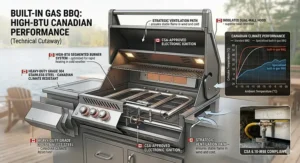
British Thermal Units (BTUs) measure raw heat output, but higher numbers don’t automatically mean better grilling. A 40,000 BTU grill with poor heat distribution performs worse than a 30,000 BTU model with excellent engineering. Look for burners that create consistent heat zones across the cooking surface.
For Canadian climates, adequate BTU capacity matters more than in warmer regions. Cold ambient temperatures mean your grill works harder to reach and maintain cooking temperatures. Models with 50,000+ total BTUs handle Canadian winters better, maintaining performance when you’re grilling in October at 5°C.
The burner configuration impacts versatility significantly. Multi-zone setups with 4-5 independent burners allow simultaneous direct grilling, indirect roasting, and warming. Premium models include dedicated infrared burners for extreme searing (up to 980°C) and rear rotisserie burners for slow-roasting whole chickens or roasts.
Construction Quality and Materials
Marine-grade 304 stainless steel represents the gold standard for Canadian outdoor conditions. This corrosion-resistant alloy handles our temperature extremes, humidity, and winter freeze-thaw cycles without degrading. Lesser materials like 430 stainless or powder-coated steel show rust and deterioration within 2-3 seasons in Canadian climates.
Double-wall hood construction provides superior heat retention and protects external surfaces from excessive temperatures. This matters when your outdoor kitchen includes cabinetry or seating nearby—you don’t want a hood exterior reaching dangerous temperatures.
Cooking grates come in several materials, each with trade-offs. Stainless steel offers durability and easy cleaning. Porcelain-coated cast iron provides excellent heat retention and searing capability but requires more maintenance. Solid cast iron delivers superior performance but needs regular seasoning to prevent rust in Canadian humidity.
Ignition Systems and Reliability
Canadian winters test ignition systems brutally. Electronic push-button ignition sounds convenient, but battery-powered systems fail when temperatures drop below -10°C. Look for models with backup ignition methods or heavy-duty electronic systems rated for cold-weather operation.
Napoleon’s JETFIRE ignition shoots a jet of flame to light each burner individually—this design proves remarkably reliable even after winter storage. Weber’s Snap-Jet system similarly delivers consistent ignition across temperature ranges. Piezo ignition (generates spark mechanically) works without batteries but requires more manual effort.
The ignition system’s warranty period indicates manufacturer confidence. Premium models often warranty ignition components for 5-10 years, while budget units might offer just 1-2 years. Given replacement costs of $80-$150 CAD for ignition modules, this matters for long-term ownership.
Cooking Surface Area
Measure cooking capacity by primary grilling area (usually 400-800 square inches) rather than total area that includes warming racks. A 500 square inch primary surface handles approximately 20-25 burger patties or 4-5 whole chickens—adequate for most Canadian families entertaining 8-12 guests.
Consider your typical cooking scenarios realistically. If you regularly host large gatherings, 700+ square inches makes sense. For couples or small families, 400-500 square inches provides plenty of space without wasted fuel heating unused burners.
The grate design impacts usable space significantly. Continuous grates spanning multiple burners allow moving food easily between heat zones. Split grates over individual burners provide dedicated zones but make repositioning food more challenging.
Installation and Safety Compliance
CSA B149.1 Compliance Requirements
Canada’s CSA B149.1 Natural Gas and Propane Installation Code establishes mandatory safety standards for all gas appliance installations. This isn’t optional—provincial building codes incorporate CSA B149.1 by reference, making compliance legally required across Canada. The Canadian Gas Association provides additional industry guidance and safety resources for both professionals and homeowners.
The standard covers everything from pipe sizing and materials to ventilation requirements and appliance clearances. Key requirements include: minimum 6 inches (150mm) clearance from burner sides to combustible materials, 30 inches (750mm) clearance above cooking surface to combustible overhead structures, and proper gas pressure regulation (typically 7 inches water column for natural gas, 11 inches for propane).
Only licensed gas fitters can legally perform gas line connections in Canadian jurisdictions. This isn’t excessive regulation—gas leaks cause explosions, carbon monoxide poisoning, and fires. Professional installation includes pressure testing the gas line, leak detection with approved solutions, and final inspection by local authorities where required. Alberta’s gas codes and standards provide excellent reference material for understanding provincial requirements.
The CSA certification mark on your built-in gas BBQ indicates third-party testing confirmed it meets Canadian safety standards. Never purchase uncertified units—they’re illegal to install, void home insurance, and present genuine safety risks. All reputable manufacturers including Napoleon, Weber, Blaze, and Lion carry proper CSA certification for Canadian market.
Professional vs DIY Installation
The question isn’t whether you can install a built-in gas BBQ yourself—it’s whether you should. While cutting the island opening and setting the grill head falls within experienced DIYer capabilities, gas line connection requires licensed professional work in all Canadian provinces.
DIY-appropriate tasks include: measuring and cutting the countertop opening (if you have appropriate tools and skills), building the island structure from approved materials, installing vent panels in island walls, and positioning the grill head. These require carpentry skills and attention to detail but don’t involve regulated utilities.
Professional-required tasks include: running gas lines from your home’s supply or propane tank, installing pressure regulators and shut-off valves, making final connections to the grill, pressure testing for leaks, and obtaining required permits and inspections. Attempting these without proper licensing violates building codes, voids manufacturer warranties, and creates liability if issues arise.
Typical professional installation costs in Canadian markets: $600-$800 CAD for straightforward installations with existing nearby gas lines, $1,000-$1,500 CAD for complex runs requiring new lines, and $1,500-$2,500 CAD for complete outdoor kitchen projects including electrical and plumbing connections. Get multiple quotes and verify gas fitter licenses before hiring.
Ventilation and Clearance Standards
Proper ventilation prevents two distinct dangers: gas accumulation from leaks or pilot lights, and heat damage to surrounding materials. Both require specific engineering solutions, not just “some airflow.”
For gas safety, propane installations require vent openings positioned low on island walls since propane (heavier than air) settles in enclosed spaces. Natural gas installations need vents positioned higher since natural gas rises. Minimum vent area typically equals 1 square inch per 1,000 BTUs for propane, or positioned to allow natural gas to escape upward.
Heat management demands minimum clearances from combustible materials. Standard requirements specify: 6 inches (150mm) from grill sides to wood or HDPE materials, 12 inches (300mm) from rear to combustible back walls, and 30 inches (750mm) minimum from cooking surface to overhead combustible structures like pergola beams or covered patio roofs.
For covered installations (under a roof or inside three-walled enclosures), professional exhaust hoods become essential. These must be sized to handle your grill’s BTU output—typically requiring 100 CFM of exhaust capacity per 10,000 BTUs. A 60,000 BTU grill needs minimum 600 CFM hood capacity. Ducted hoods that vent outside work best; ductless “recirculating” models don’t move enough air for outdoor cooking applications.
Provincial building codes may impose additional requirements beyond CSA B149.1 minimums. Check with your local building authority before starting construction—retrofitting to meet code after installation costs significantly more than planning correctly from the start.
Fuel Type Comparison: Natural Gas vs Propane
The natural gas versus propane decision impacts convenience, operating costs, and grill performance. Neither choice is universally superior—the right answer depends on your specific situation and priorities.
Natural gas offers unlimited cooking fuel through your home’s gas line, eliminating tank refills entirely. Operating costs average $0.80-$1.20 per hour in Canadian markets (based on typical provincial natural gas rates of $4-$7 per gigajoule). Installation requires professional gas fitter work, typically costing $400-$800 CAD for straightforward connections from nearby existing lines.
The primary limitation? Natural gas produces slightly lower BTU output per cubic foot than propane—about 1,000 BTUs versus propane’s 2,500 BTUs. This means natural gas grills require larger orifices and burner configurations to achieve equivalent heat output. Not a dealbreaker, but worth understanding when comparing specifications.
Propane delivers higher heat intensity and portability flexibility. A standard 20-pound cylinder provides approximately 430,000 BTUs total—enough for 15-20 hours of typical grilling on a 60,000 BTU unit. Tank refills cost $25-$35 CAD at Canadian retailers like Costco, Canadian Tire, or propane suppliers. Premium installations use larger 100-pound propane tanks built into the island structure, extending cooking time between refills significantly.
The conversion capability offered by most premium built-in gas BBQ models deserves consideration. Models convertible between natural gas and propane provide flexibility if you relocate or change fuel preferences. Conversion kits (typically $80-$150 CAD) swap burner orifices and adjust gas pressure regulators. However, conversion must be performed by qualified gas fitters—DIY conversion voids warranties and violates safety standards.
For Canadian contexts, natural gas makes most sense when: you’re building a permanent outdoor kitchen you’ll use for decades, your home already has natural gas service with accessible connection points, and you want zero-hassle operation with no tank management. Choose propane when: you might relocate the grill later, natural gas isn’t available at your property, you want maximum BTU output, or you’re building in a location far from existing gas lines.

Maintenance and Longevity in Canadian Climate
Canadian weather punishes outdoor equipment. Temperature swings from -30°C winters to +35°C summers, humidity, freeze-thaw cycles, and UV exposure all accelerate deterioration. Proper maintenance extends your built-in gas BBQ lifespan from 8-10 years (neglected) to 20+ years (well-maintained).
Seasonal maintenance schedule:
Spring startup (April-May): Remove winter cover and inspect for rust, corrosion, or pest damage. Check burners for blockages (spiders love building nests in burner tubes during storage). Test ignition system and verify all burners light properly. Clean cooking grates thoroughly and oil before first use. Inspect gas connections for leaks using approved soap solution—never use open flame for leak detection.
Mid-summer service (July): Deep clean grates, burners, and interior surfaces. Grease and food residue accumulate quickly with regular use, potentially causing flare-ups and uneven heating. Remove and clean burner shields or flame tamers. Clear grease drains and empty collection trays. Check for signs of excessive rust or deterioration indicating problems.
Fall preparation (October): Final deep clean before winter storage or covering. Apply food-grade stainless steel polish to exterior surfaces for protection. If winterizing completely, disconnect propane tanks and store indoors. For natural gas units, some Canadians prefer leaving gas connected but turning supply valve off at the main. Verify your manufacturer’s recommendations.
Winter protection (November-March): Quality covers designed specifically for built-in grills protect from snow, ice, and moisture while allowing some ventilation to prevent condensation buildup. Cheap covers deteriorate in one season—invest in UV-resistant, waterproof covers with reinforced seams. Budget $80-$150 CAD for quality protection.
Component replacement timeline:
- Cooking grates: 3-5 years with regular cleaning, longer with meticulous care
- Burner tubes: 5-8 years depending on material quality and usage
- Ignition systems: 3-7 years (battery systems shorter, piezo longer)
- Flame tamers/heat shields: 3-5 years
- Grease trays: Annual replacement recommended
Premium built-in gas BBQ models with marine-grade stainless steel and lifetime component warranties justify higher initial costs through extended lifespan. A $3,500 CAD Napoleon or Weber lasting 20+ years costs less annually than a $1,800 CAD budget model requiring replacement every 8 years.
Frequently Asked Questions
❓ Can I install a built-in gas BBQ on a condo balcony in Canada?
❓ What's the typical lifespan of a built-in gas BBQ in Canadian climate?
❓ Do I need a permit to install a built-in BBQ in Ontario?
❓ How much does natural gas cost to operate a built-in BBQ in Canada?
❓ Can I convert my built-in propane BBQ to natural gas myself?
Conclusion
Choosing the right built-in gas BBQ for your Canadian outdoor kitchen represents a significant investment in outdoor living quality. Whether you opt for the Canadian-engineered reliability of Napoleon Prestige PRO 500, the innovative versatility of Weber Summit SB38 S, or the exceptional value of Blaze Premium LTE, you’re creating a permanent cooking station that will serve family gatherings for decades.
The key insights for Canadian buyers? Prioritize marine-grade 304 stainless steel construction for climate durability, ensure CSA B149.1 compliance through professional installation, and choose fuel type based on your specific property situation rather than generic advice. Natural gas offers convenience and lower operating costs when accessible; propane provides flexibility and maximum heat output when natural gas isn’t available or practical.
Don’t cut corners on installation—improper gas connections create genuine safety risks and void warranties that might save thousands in future repairs. Budget $600-$1,200 CAD for professional installation on top of your grill purchase, and verify your installer carries proper gas fitter licensing for your province.
The outdoor kitchen gas grill market has never offered better options for Canadians. Whether building a complete outdoor kitchen from scratch or upgrading an existing setup, the models covered in this guide represent the best combinations of performance, durability, and value available in 2026. Your investment will pay dividends in countless memorable meals shared with family and friends under Canadian skies.
Recommended for You
- 7 Best WiFi Pellet Grills 2026: Smart BBQ Canada Loves
- 7 Best Infrared Gas Grills in Canada 2026
- 7 Best Portable Gas BBQ Camping Canada 2026
Disclaimer: This article contains affiliate links to Amazon.ca. If you purchase products through these links, we may earn a small commission at no additional cost to you.
✨ Found this helpful? Share it with your friends! 💬🤗
