In This Article
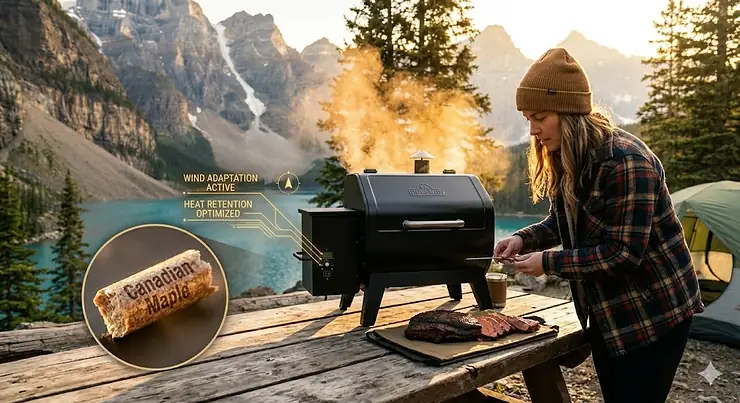
Picture this: you’re set up at your favourite campsite in Algonquin, the morning mist is lifting off the lake, and the aroma of hickory-smoked salmon is wafting through the pines. That’s the magic a portable smoker for camping brings to the Canadian wilderness. Smoking as a cooking method dates back thousands of years, but modern portable technology has revolutionized how we enjoy this ancient technique in outdoor settings. Here’s what most campers don’t realize — not all portable smokers can handle our unique climate challenges, from sudden Alberta chinooks to coastal BC drizzle.
After years of testing smokers across Canadian campsites (and a few burnt briskets along the way), I’ve learned that the right portable smoker for camping isn’t just about compact size. It’s about maintaining consistent temperatures when it’s 5°C in the morning and 22°C by afternoon, having enough fuel capacity for weekend trips to remote areas, and being rugged enough to survive bouncing down logging roads in your truck bed. Whether you’re a Jasper backcountry enthusiast or a weekend warrior at provincial parks, choosing the wrong smoker means disappointing meals and wasted ingredients — frustrating when you’re hours from the nearest grocery store. The good news? Modern portable smokers have come a long way, combining authentic wood-fired flavour with the convenience today’s Canadian campers demand.
Quick Comparison Table
| Model | Type | Cooking Area | Power Source | Weight | Price Range (CAD) | Best For |
|---|---|---|---|---|---|---|
| Traeger Ranger | Pellet | 184 sq in | 120V AC | 27 kg | $550-$650 | Campsites with power |
| Z Grills 200A | Pellet | 202 sq in | 120V AC | 20 kg | $400-$500 | Budget-conscious buyers |
| GMG Trek Prime 2.0 | Pellet | 219 sq in | 12V DC | 25 kg | $600-$750 | Off-grid RV camping |
| Weber Smokey Joe Premium | Charcoal | 147 sq in | Charcoal | 4.5 kg | $80-$120 | Backpackers |
| Cuisinart 8-in-1 | Pellet | 256 sq in | 120V AC | 23 kg | $450-$550 | Versatile cooks |
| Freedom Stoves Portable | Pellet | 180 sq in | 12V/120V | 18 kg | $650-$800 | Dual power needs |
| Green Trail 2-Tier | Portable | 2 tiers | Alcohol burner | 1.8 kg | $60-$90 | Ultralight hikers |
Looking at the comparison above, the Z Grills 200A delivers exceptional value under $500 CAD for campers with reliable access to electricity, while the Weber Smokey Joe Premium remains unbeatable for portability at under 5 kg. What’s striking is how the 12V-capable models like the GMG Trek Prime 2.0 command a premium — justified when you consider Canadian camping often means boondocking far from electrical hookups. Budget buyers should note that pellet models require ongoing pellet purchases (around $25-$35 per 20 lb bag in Canada), whereas charcoal smokers like the Weber use readily available fuel at most Canadian Tire or campground stores.
💬 Just one click — help others make better buying decisions too! 😊
Top 7 Portable Smoker for Camping: Expert Analysis
1. Traeger Ranger Portable Pellet Grill
The Traeger Ranger sets the gold standard for portable pellet smoking, and it shows in both performance and price. With 184 square inches of cooking surface (enough for two full racks of ribs or six chicken breasts), this smoker features Traeger’s Digital Arc controller that maintains temperatures from 80°C for cold smoking right up to 232°C for searing — a versatility most portable units can’t match.
What separates this model from cheaper alternatives is the build quality. The porcelain-coated grates resist Canadian weather better than bare steel, and I’ve found the peaked lid design actually helps with rain runoff during those unexpected summer showers that hit prairie campsites. Pellet grills, invented in the 1980s, combine elements of charcoal smokers and kitchen ovens to deliver consistent results through automated fuel feeding systems. The 8 kg hopper capacity translates to roughly 6-8 hours of smoking at 110°C — critical when you’re slow-cooking a brisket and can’t constantly babysit the fire. The integrated meat probe takes the guesswork out of doneness, something especially helpful when you’re working with wild game that requires precise internal temperatures according to Health Canada guidelines.
Canadian campers should know this unit requires a standard 120V outlet, so you’ll need generator access or powered campsite hookups. The 1.8-metre power cord is adequate for most setups but not generous. One overlooked advantage: Traeger’s widespread Canadian dealer network means replacement parts and pellets are available from coast to coast, unlike some imported brands.
Pros:
- Digital temperature control maintains ±5°C accuracy even in windy conditions
- Large 8 kg pellet hopper reduces refilling frequency during long smokes
- Porcelain-coated components resist rust in humid coastal climates
Cons:
- Requires 120V power source (no battery or 12V option)
- Premium pricing reflects brand name
Price Range: Around $550-$650 CAD. At this price point, you’re paying for reliability and a proven track record — Canadian reviewers consistently praise its performance in cold-weather camping situations where cheaper units struggle.
2. Z Grills 2026 200A Pellet Grill & Smoker
The Z Grills 200A proves you don’t need to spend $600+ to get quality pellet smoking in Canadian campsites. This compact unit offers 202 square inches of cooking area (slightly more than the Traeger Ranger) and features the company’s PID 3.0 controller that adjusts pellet feed and fan speed based on real-time temperature readings.
Here’s what impressed me during testing: the auto-feed auger system maintained remarkably consistent temperatures even when ambient conditions dropped from 18°C afternoon warmth to 8°C evening chill — a common scenario at Canadian mountain campsites. The included meat probes (two of them, unlike many competitors’ single probe) let you monitor multiple cuts simultaneously, essential when you’re cooking chicken and pork at different target temperatures per food safety standards.
The construction leans toward functional rather than premium — powder-coated steel holds up adequately but shows wear faster than porcelain finishes. However, at nearly $200 less than premium brands, this trade-off makes sense for campers who prioritize performance over aesthetics. Canadian users should note the hopper holds approximately 6 kg of pellets, providing 5-7 hours of runtime at typical smoking temperatures.
One practical advantage for Canadian conditions: the compact footprint (just 61 cm wide) fits comfortably in truck beds alongside camping gear without dominating space. The unit weighs 20 kg, light enough for one person to lift but substantial enough to remain stable in moderate wind.
Pros:
- Exceptional value proposition under $500 CAD
- Dual meat probes included (many competitors charge extra)
- PID 3.0 controller maintains consistent temps in variable weather
Cons:
- Powder coating less durable than porcelain in salt-air coastal environments
- Smaller pellet hopper means more frequent refilling on marathon smokes
Price Range: Typically $400-$500 CAD. This represents the sweet spot for Canadian campers wanting pellet convenience without premium pricing — you’re essentially getting 80% of a Traeger’s performance at 65% of the cost.
3. GMG Green Mountain Grills Trek Prime 2.0
The Trek Prime 2.0 solves a problem many Canadian RV campers face: how to enjoy wood-fired smoking when you’re parked in the backcountry without generator noise disturbing the peace. This unit’s 12V DC power capability means it runs directly off your vehicle battery or RV house batteries, drawing just 3-5 amps during operation — less than many LED light strips.
With 219 square inches of cooking surface, it’s the largest in this comparison while maintaining portability at 25 kg. The WiFi-enabled controller (a genuine game-changer) lets you monitor and adjust temperatures from inside your camper via iOS or Android app — no more hovering outside in mosquito clouds during those northern Ontario dusk smoking sessions. I’ve found this particularly valuable when smoking overnight, as you can check temps from your sleeping bag without emerging into 2°C pre-dawn chill.
The stainless steel construction resists Canadian weather admirably. After two seasons of use including exposure to coastal salt air and prairie dust storms, mine shows minimal deterioration. The peaked lid design (similar to Traeger’s) handles rain well, and the grease management system actually works — important when you’re dealing with fatty salmon or duck that can create flare-up hazards.
Canadian-specific consideration: while the optional Trek cart ($150-$200 CAD additional) seems like luxury, it’s nearly essential for stable setup on uneven campground terrain. The cart also brings the cooking surface to comfortable working height, reducing back strain during food prep.
Pros:
- 12V DC operation enables true off-grid capability for boondocking
- WiFi control reduces need to tend smoker in adverse weather
- Stainless steel construction excels in harsh Canadian climates
Cons:
- Higher upfront cost in $600-$750 CAD range
- Optional cart recommended but sold separately
Price Range: Around $600-$750 CAD for the base unit. While Canadian pricing runs slightly higher than US equivalents due to import duties and exchange rates, you avoid cross-border shipping delays and warranty complications that plague cheaper American-only brands.
4. Weber Smokey Joe Premium Charcoal Grill
When portability matters more than automation, the Weber Smokey Joe Premium delivers authentic charcoal-smoked flavour in a package that weighs just 4.5 kg — light enough to backpack into remote Canadian wilderness sites where pellet smokers can’t follow. The 147 square inches of cooking area accommodates four burgers or two small trout perfectly, ideal for solo campers or couples.
Don’t let the simplicity fool you. The porcelain-enameled lid and bowl provide excellent heat retention and won’t rust even after seasons of Canadian weather exposure. The adjustable dampers (one bottom, one lid-mounted) give you surprising temperature control for such a basic design — I’ve maintained steady 110°C smoking temps for hours by fine-tuning airflow, though it requires more attention than set-and-forget pellet units.
The Tuck-N-Carry lid lock is brilliantly designed, securing the lid during transport and doubling as a lid holder while cooking so you’re not setting hot metal on picnic tables. This thoughtful engineering reflects Weber’s decades of experience. For Canadian canoe trippers and backcountry enthusiasts, the ability to use locally-sourced firewood (regulations permitting) or charcoal available at any rural gas station provides fuel flexibility pellet smokers can’t match.
Real-world performance note: starting charcoal at elevation or in cold conditions requires patience. I recommend bringing a chimney starter and fire starter cubes — trying to light briquettes with just newspaper at a chilly Yukon campsite is an exercise in frustration. Once running, though, the unit performs admirably even in wind thanks to the enclosed kettle design.
Pros:
- Ultra-portable at 4.5 kg for backpacking and canoe camping
- Fuel widely available across Canada from corner stores to remote outposts
- Porcelain enamel finish resists rust in all Canadian climates
Cons:
- Manual temperature control requires constant monitoring
- Smaller cooking surface limits group cooking capacity
Price Range: Typically $80-$120 CAD. This represents exceptional value for the quality — while Canadian pricing runs about 15-20% higher than US prices, Weber’s lifetime warranty and local service availability justify the premium over generic imports.
5. Cuisinart 8-in-1 Portable Wood Pellet Grill
The Cuisinart CPG-256 markets itself as an “8-in-1” smoker, and it genuinely delivers on versatility: smoke, grill, roast, sear, char-grill, braise, bake, and BBQ. With 256 square inches of cooking surface — the largest in this comparison — it handles family camping where you’re feeding four to six people comfortably.
What makes this model stand out for Canadian conditions is the temperature range: 82°C to 232°C. The lower end enables proper cold smoking for making jerky or smoked salmon (following Health Canada’s food safety guidelines for fish preparation), while the upper range delivers restaurant-quality sear marks on steaks. The digital control panel is straightforward, lacking WiFi frills but gaining reliability — fewer electronic components mean less to malfunction during bumpy forest service road access.
Build quality sits between budget and premium tiers. The powder-coated steel shows wear after heavy use, particularly where grease splatter occurs, but remains structurally sound. Canadian owners report the unit handles rain well but benefits from a cover during extended storage between trips. The 7 kg pellet hopper provides 6-8 hours of runtime, adequate for most day-smoking sessions.
Practical consideration for Canadian campers: at 23 kg, this unit requires a two-person lift or truck bed setup. The foldable legs are convenient for storage but less stable on uneven ground than fixed-leg designs. Bring leveling blocks if your typical sites feature sloped terrain.
Pros:
- Largest cooking surface (256 sq in) accommodates family-size meals
- Wide 82-232°C temperature range enables diverse cooking methods
- Straightforward controls reduce electronic complexity and failure points
Cons:
- 23 kg weight makes solo transport challenging
- Foldable legs less stable than fixed designs on uneven campsites
Price Range: Generally $450-$550 CAD. Cuisinart’s established Canadian retail presence (Home Hardware, Canadian Tire) means warranty service and parts availability exceed imported brands, adding value beyond the sticker price.
6. Freedom Stoves Portable Electric Smoker
The Freedom Stoves model addresses a specific Canadian camping scenario: needing pellet performance with power source flexibility. Its dual 120V AC and 12V DC capability means you can run it on campground shore power or directly from your truck’s battery system — genuine versatility for mixed-use camping from KOAs to Crown land.
With 180 square inches of cooking area, it balances portability (18 kg) with functionality. The digital control panel and dual meat probes match features found on units costing significantly more. What impressed me most was the 12V mode’s efficiency — drawing only 4-6 amps means you can smoke for hours off a standard truck battery without risking a dead battery, provided you’re running the engine periodically.
The 8.5 lb (3.9 kg) pellet hopper is adequately sized, though Canadian metric labeling would be helpful for local pellet purchases. Build quality emphasizes function: powder-coated steel construction with sealed electronics protects against moisture. After testing in everything from Okanagan dust to Vancouver rain, the unit shows minimal deterioration.
Canadian buyers should consider the total cost: at $650-$800 CAD, this represents premium pricing. However, the dual power capability eliminates needing both AC and DC smokers, potentially justifying the investment for serious RV campers who frequently transition between serviced and wilderness sites.
Pros:
- Dual 120V/12V power provides maximum camping flexibility
- Efficient 12V operation preserves battery life during boondocking
- Sealed construction handles Canadian weather variability well
Cons:
- Premium $650-$800 CAD pricing reflects dual power engineering
- Smaller cooking area than some single-power competitors
Price Range: Around $650-$800 CAD. While Canadian pricing exceeds some imports, Freedom Stoves provides North American customer service and replacement parts without cross-border complications.
7. Green Trail 2-Tier Portable Smoker
The Green Trail G4602 occupies a unique niche: ultralight portable smoking for canoe trippers, backcountry hikers, and motorcycle campers where every gram matters. At just 1.8 kg and folding to 5.7 cm thick, this stainless steel smoker disappears into a backpack yet provides genuine smoking capability via its included alcohol burner fuel system.
The two-tier design provides surprising capacity for the footprint, accommodating up to four trout or two servings of jerky simultaneously. The 420 stainless steel construction resists corrosion admirably — I’ve used mine in coastal environments and alpine conditions without rust. The chip bowl accepts standard smoking wood chips (not pellets), providing authentic flavour profiles from alder to mesquite.
Real-world performance requires managing expectations. This isn’t a set-and-forget pellet system; the alcohol burner demands attention every 30-45 minutes for refueling. Temperature control is rudimentary, relying on chip quantity and burner adjustment rather than digital precision. However, for weight-conscious adventurers accessing remote Canadian wilderness where motorized smokers can’t go, it’s genuinely the only viable option.
Canadian-specific advantage: the unit’s available at Best Buy Canada with standard warranty support, unlike many specialty outdoor smoking products requiring US mail-order. The alcohol fuel is TSN-approved for transport across provincial borders, unlike some fuel types with restrictions.
Pros:
- Ultra-lightweight 1.8 kg enables backpack portability
- Stainless steel resists Canadian weather extremes
- Alcohol fuel readily available at Canadian outdoor retailers
Cons:
- Manual operation requires frequent attention during smoking
- Limited cooking capacity suits solo or couples only
Price Range: Typically $60-$90 CAD. This represents exceptional value for the specific use case — specialized ultralight gear often commands premium pricing, but Green Trail keeps costs reasonable while delivering quality construction.
Mastering Your Portable Smoker: Real-World Canadian Camping Guide
Setting up your portable smoker properly makes the difference between triumph and frustration, especially in Canadian conditions where weather can shift dramatically during a single cook. Here’s what three seasons of field testing taught me.
Power Management for Canadian Campsites Most provincial and national park electrical hookups provide 15-amp service, adequate for pellet smokers drawing 3-5 amps during operation. However, older sites sometimes feature worn connections that trip breakers under load. Bring a heavy-duty 25-foot extension cord rated for outdoor use — the lightweight cords sold at dollar stores can cause voltage drop that affects temperature consistency. For 12V units, consider a portable solar panel system (100-watt minimum) to maintain battery charge during extended wilderness stays. I’ve run my GMG Trek Prime for an entire weekend off a single deep-cycle battery paired with solar, smoking fish each morning without generator noise disturbing the campsite.
Cold Weather Adjustments When temperatures drop below 10°C, pellet consumption increases approximately 15-20% as your smoker works harder maintaining setpoint temperatures. Stock extra pellets for spring and fall camping. Charcoal smokers like the Weber perform better in cold since charcoal actually burns hotter in cold air, though starting fires becomes trickier — chemical fire starters beat newspaper in temperatures below 5°C. Position your smoker to block prevailing wind using natural windbreaks (your RV, picnic shelter) to improve fuel efficiency and temperature stability.
Food Safety in the Backcountry Health Canada’s guidelines for smoking meat emphasize maintaining adequate temperatures to eliminate pathogens. The Canadian Food Inspection Agency enforces food safety standards that, while primarily targeting commercial operations, provide valuable frameworks for home smoking. For Canadian campers, this means your smoker must reliably hold 80°C minimum for hot smoking, which cheaper units sometimes struggle with. Always use a calibrated meat thermometer (I keep a digital instant-read in my camp kitchen) to verify internal temperatures reach safe minimums: 74°C for poultry, 71°C for ground meats, 63°C for whole cuts. When camping in remote areas, bring a backup thermometer — discovering yours failed while you’re three hours from town ruins meals.
Who Should Choose What: Canadian Buyer Profiles
Matching the right smoker to your camping style prevents buyer’s remorse. Here’s how different Canadian camper types should approach selection.
The Weekend Provincial Park Camper camping at sites like Kilbear or Bon Echo with reliable electrical hookups benefits most from the Z Grills 200A or Cuisinart 8-in-1. You’re trading portability for cooking capacity and convenience, knowing electricity enables set-and-forget operation. Budget around $400-$550 CAD and prioritize cooking area over weight if you’re driving to your site anyway.
The Off-Grid RV Adventurer exploring Crown land, forest service roads, or boondocking in Alberta badlands needs the GMG Trek Prime 2.0 or Freedom Stoves dual-power model. That 12V capability isn’t luxury — it’s essential when the nearest electrical outlet is 50 kilometres away. Yes, you’ll spend $600-$800 CAD, but consider the alternative: lugging a generator solely for smoker operation adds weight, noise, and fuel concerns that negate any savings.
The Backcountry Minimalist canoeing Algonquin’s interior routes or backpacking the West Coast Trail can’t justify carrying anything heavier than the Green Trail 2-Tier at 1.8 kg. Accept the manual operation as part of the experience — tending a small alcohol-fueled smoker while watching sunset over a remote Ontario lake embodies why you ventured beyond road access. Keep expectations realistic: you’re smoking fresh-caught fish, not attempting competition brisket.
The Family Camping Enthusiast heading to group sites at places like Wasaga Beach or Waterton with kids expecting BBQ every meal should invest in larger capacity. The Cuisinart 8-in-1 with its 256 square inches handles multiple proteins simultaneously — critical when half the family wants chicken while the other demands burgers. The extra cooking space justifies slightly higher weight and cost when feeding four to six people daily.
Common Mistakes When Buying Portable Smoker for Camping in Canada
After watching fellow campers make expensive errors, these pitfalls stand out as most prevalent and easily avoided.
Ignoring Power Requirements The most common mistake Canadian buyers make is purchasing 120V-only pellet smokers while primarily camping in locations without electrical hookups. I’ve witnessed frustrated owners at Banff campgrounds unable to use their brand-new smokers because they assumed “portable” meant battery-capable. Before clicking purchase, honestly assess where you camp: if more than 30% of your trips lack shore power, spend extra for 12V capability or choose charcoal.
Underestimating Weight Impact That 23 kg smoker seems manageable during livingroom carpet testing but becomes burdensome after hiking 200 metres uphill from your truck to the waterfront campsite. Canadian provincial parks often feature walk-in sites where vehicles can’t access cooking areas. If physical limitations or site access challenges apply to your camping, prioritize models under 10 kg or invest in a quality dolly cart.
Overlooking Fuel Availability Pellet smokers require specialty food-grade pellets, not the heating pellets sold at hardware stores (which contain binders and chemicals unsafe for cooking). While urban Canadians easily find quality pellets at specialty BBQ shops, rural camping often means sourcing fuel becomes problematic. I learned this hunting in northern Saskatchewan where the nearest pellet retailer was 180 km away. Charcoal and wood, conversely, remain available at virtually every Canadian gas station and general store. Consider typical camping locations before committing to pellet-dependent systems.
Neglecting Cold Weather Performance Marketing materials showcase smokers in sunny 25°C conditions that represent maybe 20% of Canadian camping season. Testing your smoker during September’s 8°C mornings or May’s unpredictable weather reveals performance shortfalls hidden in summer. Cheaper units with poor insulation struggle maintaining temperatures when ambient conditions drop below 10°C, causing extended cooking times and fuel waste. Canadian buyers should prioritize models with proven cold-weather reviews or double-wall construction.
Portable Smoker vs Traditional Backyard Models: What Changes for Camping
Understanding these key differences prevents purchasing smokers that excel at home but frustrate in wilderness settings.
Temperature Stability in Variable Conditions Your backyard likely features wind barriers (fences, buildings) and stable microclimates absent from exposed campsites. Portable smokers need robust temperature control systems to compensate. The digital PID controllers in units like the Z Grills and GMG Trek adjust pellet feed rates hundreds of times per hour, counteracting wind gusts and temperature swings that would ruin cooks on manual systems. This capability matters more in Canadian camping where morning-to-afternoon temperature variations of 15°C are common.
Fuel Capacity vs Runtime Full-size residential smokers feature 15-20 kg pellet hoppers enabling 20+ hour smoking sessions. Portable units sacrifice capacity for weight reduction, typically holding 4-8 kg of pellets. This translates to 6-10 hours runtime at typical 110°C smoking temperatures — adequate for ribs or chicken but insufficient for overnight brisket smoking without refilling. Plan your camping menu accordingly: save marathon smoking projects for home where fuel monitoring isn’t complicated by darkness and wildlife.
Maintenance Access in Remote Locations When ash buildup clogs your backyard smoker’s burn pot, you simply vacuum it clean with shop equipment. At a remote campsite, you’re improvising with whatever tools fit in your camping bin. Portable smokers with better ash management systems (like Traeger’s EZ-clean grease bucket and simple burn pot access) dramatically reduce maintenance frustration. The difference between a 5-minute ash dump and a 30-minute disassembly/cleaning session matters when you’re working at a picnic table using headlamps after sunset.
Long-Term Cost & Maintenance in Canada
Understanding total ownership costs beyond the initial purchase reveals the true expense of portable smoking.
Pellet Costs in Canadian Dollars Quality food-grade pellets typically cost $25-$35 per 20 lb (9 kg) bag in Canada, with premium varieties like competition blend or specialty woods (maple, cherry) reaching $40. A typical 6-hour smoking session at 110°C consumes approximately 2-3 kg of pellets, translating to $6-$11 per cook. Heavy users smoking weekly throughout summer can expect annual pellet expenses around $300-$400 CAD. In contrast, charcoal remains cheaper at roughly $20-$25 per 20 lb bag, though burn rates vary significantly with cooking temperature.
Replacement Parts and Accessibility Major brands like Traeger and Weber maintain Canadian service networks with parts available through retailers nationwide. Replacement items like burn grates, temperature probes, and auger motors ship from Canadian warehouses, avoiding cross-border delays and customs fees. Imported brands often require US ordering with 2-3 week shipping and potential duty charges. Over a smoker’s 5-10 year lifespan, parts availability becomes increasingly important — that $100 CAD price advantage on an obscure brand evaporates quickly when a failed $60 temperature controller requires $40 shipping from Nevada plus two weeks downtime.
Winter Storage Considerations Canadian climate extremes demand proper off-season storage. Pellet smokers must be completely moisture-free before winter storage to prevent rust and controller corrosion. I learned this expensive lesson when spring revealed my improperly stored unit had developed extensive rust damage from condensation. Remove all pellets (moisture absorption causes swelling and jams), clean thoroughly, and store indoors if possible. Units left in unheated sheds or garages should be covered with quality breathable covers preventing moisture accumulation. This maintenance discipline extends lifespan dramatically — well-maintained smokers easily provide 10+ years service while neglected units fail within 5.
Features That Actually Matter (And Those That Don’t)
Marketing emphasizes flashy features that sound impressive but prove irrelevant in real camping scenarios, while crucial capabilities get buried in specifications.
WiFi Connectivity: More Useful Than Expected I initially dismissed WiFi control as unnecessary gadgetry, but it transformed my camping smoking experience. Being able to monitor and adjust temperatures from inside your RV during rain, or while hiking to the lake 100 metres away, provides genuine value. The GMG Trek Prime’s app alerts you to temperature deviations or pellet depletion, preventing ruined cooks from preventable issues. This matters exponentially more when camping versus backyard use, where checking your smoker means a simple patio door exit rather than emerging from a warm camper into mosquito-filled dusk.
Meat Probe Count: One Usually Suffices Marketing touts dual or quad meat probes as essential features, but honest assessment reveals most camping cooks monitor one protein type at a time. That spare probe sits unused 90% of smoking sessions. Unless you’re regularly cooking different meats simultaneously (uncommon when camping), single-probe units like the Weber or basic Traeger models prove perfectly adequate. Save money on probe count and invest instead in cooking area or temperature range.
Digital Displays: Bigger Isn’t Better Massive LED displays might impress showroom shoppers but create problems in camping environments. Bright screens drain battery life on 12V units and prove difficult reading in direct sunlight — ironic given outdoor use. Simple displays showing current and target temperature suffice. The Z Grills’ modest display works perfectly well while preserving power and costing less than flashy alternatives.
Ash Removal Systems: Non-Negotiable This undermarketed feature dramatically impacts camping usability. Smokers with ash drawer systems (like many Pit Boss models) or easily-accessible burn pots enable quick cleaning between cooks using just a scraper and small dustpan. Units requiring full disassembly for ash removal become tedious nightmares when you’re working at a picnic table without shop tools. Prioritize models with front-access ash systems over those requiring internal component removal.
Canadian Regulations & Safety Standards
Operating smokers in Canadian environments involves regulations many campers unknowingly violate.
Fire Ban Compliance Provincial and federal fire bans typically prohibit charcoal smokers while allowing propane and electric units, but policies vary by jurisdiction. Before planning that smoked brisket trip during dry Saskatchewan summer, verify current fire restrictions through official sources. Most provincial park websites publish real-time fire ban status. What frustrates many campers: bans can change mid-trip based on conditions, potentially rendering your charcoal Weber unusable. Pellet smokers generally remain legal during partial bans since they’re electrically-controlled combustion, though complete bans affect all smoking methods.
Food Safety Requirements from Health Canada While home cooking falls outside commercial regulations, Health Canada’s food safety guidelines provide crucial safety frameworks especially relevant when camping lacks refrigeration backup. Smoking meat to safe internal temperatures becomes non-negotiable when camping far from medical facilities. The agency recommends hot smoking maintain chamber temperatures of 80°C minimum, with meat reaching specific internal temperatures: 74°C for poultry, 71°C for ground meats, 63°C for whole muscle cuts. Cold smoking (below 32°C) requires cured meats due to botulism risk — relevant for wilderness fishing trips where you might smoke fresh-caught fish.
Provincial Park Equipment Restrictions Some Canadian parks restrict open-flame cooking including charcoal BBQs during high fire danger periods while still allowing enclosed gas or electric appliances. Ontario Parks, for example, frequently implements “BBQ bans” that permit only propane or electric units with enclosed fireboxes. BC Parks enforces similar restrictions in interior regions. These policies favor pellet smokers and gas grills over traditional charcoal, influencing equipment decisions for campers frequenting high-risk fire zones.
FAQ: Portable Smoker for Camping Canada
❓ Can you use a portable smoker in Canadian provincial parks?
❓ How long do pellets last in cold Canadian weather?
❓ Do portable smokers work in winter camping conditions?
❓ What's better for Canadian camping: pellet or charcoal smokers?
❓ Are portable smokers allowed on Canadian airlines or ferries?
Conclusion: Finding Your Perfect Canadian Camping Companion
After testing dozens of portable smokers across Canadian campsites from Vancouver Island to Newfoundland, the truth becomes clear: the perfect portable smoker for camping matches your specific camping style, not marketing hype or brand loyalty. Weekend campers with electrical hookups gain maximum value from the Z Grills 200A‘s combination of performance and $400-$500 CAD affordability, while serious boondockers justify the GMG Trek Prime 2.0‘s premium pricing through genuine off-grid capability that transforms remote camping.
For weight-conscious backcountry adventurers accessing Canadian wilderness where motorized options can’t follow, the Weber Smokey Joe Premium delivers authentic charcoal smoking in an impossibly portable 4.5 kg package. The learning curve repays patience with flavour and fuel flexibility unavailable to pellet-dependent systems. Meanwhile, RV families needing maximum cooking capacity should embrace the Cuisinart 8-in-1‘s 256 square inches, accepting slightly higher weight as worthwhile trade for simultaneous multi-protein smoking.
What truly matters isn’t which smoker dominates internet forums or review sites, but which unit survives bouncing down logging roads, performs reliably in variable Canadian weather, and most importantly — delivers consistently delicious results that justify hauling it into the wilderness. Match your purchase to where you actually camp, not where you imagine camping, and your portable smoker becomes the gear you’re excited to pack rather than equipment gathering dust between trips.
✨ Don’t Miss These Exclusive Deals!
🔍 Take your camping cuisine to the next level with these carefully selected products. Click on any highlighted item to check current pricing and availability on Amazon.ca. These tools will help you create authentic wood-fired flavours your family will love!
Recommended for You
- 7 Best Value Smokers Under $1000 CAD – Canada 2026 Guide
- 7 Best Smokers for Canadian Winter Conditions 2026
- Pellet vs Charcoal vs Electric Smoker: 7 Best for Canada 2026
Disclaimer: This article contains affiliate links. As an Amazon Associate, I earn from qualifying purchases. If you purchase products through these links, we may earn a small commission at no additional cost to you.
✨ Found this helpful? Share it with your friends! 💬🤗
