

In This Article
Imagine biting into a perfectly charred, bubbling hot pizza with leopard-spotted crust—the kind you’d find in Naples—except it’s on your own patio in Vancouver or right on your kitchen counter in Toronto during a -20°C February evening. The best pizza oven transforms your home cooking from “pretty good” to “restaurant-quality,” and for Canadians, that matters even more. Our long winters mean outdoor cooking season is frustratingly short, while our multicultural food culture demands authenticity.
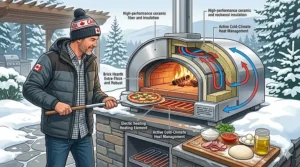
Traditional Neapolitan pizza, recognised by UNESCO as intangible cultural heritage, requires temperatures around 430°C (800°F)—nearly double what your conventional oven can achieve. This isn’t marketing hype; it’s physics. At these extreme temperatures, pizza cooks in 60-90 seconds, creating that signature chewy-yet-crispy crust with charred bubbles that’s impossible to replicate at 260°C. Whether you’re a weekend pizza enthusiast in Calgary experimenting with sourdough crusts, or a busy family in Montreal looking to upgrade Friday night dinners, a dedicated pizza oven delivers results that justify the counter space.
What most Canadian buyers overlook when browsing Amazon.ca is how our climate impacts oven selection. Outdoor models need to withstand temperature swings from -30°C winter storage to 35°C summer use. Indoor electric ovens solve the winter problem but demand sufficient counter space and proper ventilation. This guide cuts through the marketing noise with hands-on analysis of seven real products available on Amazon.ca, complete with Canadian pricing, climate considerations, and practical advice you won’t find in manufacturer descriptions.
Quick Comparison Table
| Pizza Oven Model | Type | Max Temp | Price Range (CAD) | Cook Time | Best For |
|---|---|---|---|---|---|
| Breville Pizzaiolo | Indoor Electric | 400°C (750°F) | $900-$1,200 | 2 min | Year-round Neapolitan enthusiasts |
| Ooni Koda 16 | Outdoor Gas | 500°C (950°F) | $900-$1,100 | 60 sec | Outdoor entertaining, large pizzas |
| Cuisinart CPZ-120C | Indoor Electric | 370°C (700°F) | $200-$400 | 5 min | Budget-conscious indoor cooking |
| Ooni Karu 2 | Outdoor Multi-fuel | 500°C (950°F) | $550-$700 | 60 sec | Wood-fire purists, flexibility |
| Ooni Volt 2 | Indoor/Outdoor Electric | 450°C (850°F) | $1,500-$1,900 | 90 sec | Premium indoor Neapolitan |
| VEVOR 14″ Electric | Indoor Electric | 370°C (698°F) | $200-$350 | 6-8 min | Entry-level, occasional use |
| Chefman Indoor | Indoor Electric | 425°C (800°F) | $150-$300 | 4-6 min | Compact kitchens, beginners |
Looking at this comparison, the Ooni Koda 16 and Karu 2 dominate for outdoor Canadian summer cooking—their 500°C capability means authentic Neapolitan results in under 90 seconds. However, Canadian winters render outdoor ovens useless for 5-7 months depending on your province. That’s where the Breville Pizzaiolo and Ooni Volt 2 shine: they bring near-authentic performance indoors, though at premium prices. Budget buyers face a trade-off—the Cuisinart and VEVOR models reach 370°C, which handles New York and Detroit styles beautifully but can’t quite nail true Neapolitan crust. The sweet spot for most Canadians? Either the Cuisinart for year-round value, or pairing an outdoor Ooni for summer with a pizza steel for winter.
💬 Just one click — help others make better buying decisions too! 😊
Top 7 Best Pizza Ovens: Expert Analysis
1. Breville Pizzaiolo (BPZ820BSS) — The Indoor Neapolitan Champion
The Breville Pizzaiolo stands alone as the only countertop oven that genuinely replicates wood-fired Neapolitan pizza indoors. Reaching 400°C (750°F) with separate top and bottom heat controls, it cooks a 12″ pizza in just 2 minutes with proper leopard-spotting on the crust—the hallmark of authentic Neapolitan technique.
What separates this from cheaper indoor ovens is the Element iQ system, which uses algorithms to adjust power distribution between the deck and ceiling elements. Think of it like having two independent ovens working in concert: the deck delivers conductive heat for bottom char, while radiant ceiling heat blisters the top. Most Canadian reviewers praise the manual mode, which lets you moderate heat for sourdough crusts or push temperatures for classic Margherita without burning the cheese—a flexibility crucial when experimenting with different dough hydration levels common in Canadian humidity variations.
The oven includes preset modes (“Wood Fired,” “New York,” “Pan”) that work surprisingly well, though serious pizza makers will graduate to manual control within a few sessions. The cordierite stone (included) requires a full 30-minute preheat to saturate properly, but once hot, it maintains temperature beautifully even when launching multiple pizzas back-to-back—essential for dinner parties. Canadian users in condos appreciate the double-pane viewing window and multi-layer insulation: external surfaces stay cool enough to touch even at peak temperature, addressing safety concerns in smaller kitchens.
Canadian Considerations: At around 16 kg, this isn’t something you’ll store in a cupboard. Plan for permanent counter real estate. It draws 1800W, so sharing a circuit with other high-draw appliances may trip breakers in older Canadian homes. The stone can crack if exposed to rapid temperature changes—avoid moving it directly from a cold garage to full preheat.
Customer Feedback (Canadian Reviews): “Finally making proper Neapolitan in January without firing up the backyard Ooni in -15°C” — typical sentiment from Toronto-area buyers. Some complaints about the stone cracking after 6-12 months of heavy use, though Breville’s customer service has been responsive in Canada.
Pros:
✅ True Neapolitan capability indoors (400°C sustained heat)
✅ Separate top/bottom controls for crust optimization
✅ Year-round use regardless of Canadian weather
Cons:
❌ Premium price point ($900-$1,200 CAD range)
❌ Requires significant permanent counter space
Price Verdict: In the $900-$1,200 CAD range on Amazon.ca. Expensive, but the only indoor option that truly delivers restaurant-grade Neapolitan. For serious pizza makers who cook weekly through Canadian winters, the per-use cost justifies itself within a year versus outdoor-only alternatives.
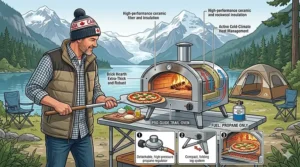
2. Ooni Koda 16 — The Outdoor Party Powerhouse
The Ooni Koda 16 represents the gold standard for Canadian backyard pizza ovens, combining blistering 500°C (950°F) capability with dead-simple propane operation. The 16″ cooking surface accommodates larger pies than most competitors—crucial when feeding Canadian families or hosting summer gatherings where everyone wants a different topping combination.
Gas-powered ovens like the Koda 16 offer crucial advantages for Canadian climates: they preheat in just 20 minutes (versus 45+ for wood-burning models in cold weather), maintain consistent temperature regardless of wind, and require zero wood-sourcing knowledge. The L-shaped flame pattern delivers fairly even heat distribution, typically requiring just one pizza rotation mid-cook rather than the constant turning needed in cheaper models. That said, outdoor temperatures matter—expect 5-10 minute longer preheat times during shoulder season (April-May, September-October) when ambient temps drop below 10°C.
The carbon steel construction handles Canadian temperature swings well, though you’ll want to store it indoors during winter. Road salt and moisture from snow can accelerate corrosion if left exposed. The powder coating on the exterior protects against UV damage during our intense summer sun—a real issue in prairie provinces where deck equipment faces extreme conditions.
Canadian Considerations: Propane tank not included (standard Canadian 20-lb tank works perfectly). Ensure your propane regulator matches Canadian specs—some US-market Ooni bundles include incorrect regulators. Check Amazon.ca specifically for Canadian-compliant versions. Works beautifully May through October in most provinces; in BC’s milder climate, year-round outdoor use is feasible with a covered patio.
Customer Feedback (Canadian Reviews): Alberta buyers love the wind-resistant performance—”made pizzas in 40 km/h chinook winds, no problem.” Quebec reviewers note the large opening makes it easy to work with even when wearing BBQ gloves. A few complaints about uneven heating on the left edge; rotating pizzas 180° halfway through solves this.
Pros:
✅ Extra-large 16″ capacity for family-sized pizzas
✅ Gas convenience (fast preheat, consistent heat)
✅ Reaches authentic 500°C Neapolitan temperatures
Cons:
❌ Outdoor-only limits use in harsh Canadian winters
❌ Requires propane tank and outdoor storage space
Price Verdict: Around $950-$1,100 CAD on Amazon.ca, typically including a bundle with pizza peel and cover. Excellent value for outdoor summer cooking, though Canadian buyers should factor in 5-7 months of downtime. Consider pairing with an indoor pizza steel for winter months.
3. Cuisinart Indoor Pizza Oven (CPZ-120C) — The Value Champion
The Cuisinart Indoor Pizza Oven occupies the sweet spot for Canadian buyers who want significant improvement over their conventional oven without premium pricing. Reaching 370°C (700°F)—double your standard kitchen oven’s maximum—it handles New York, Detroit, and pan-style pizzas exceptionally well, though it falls slightly short of true Neapolitan temperature requirements.
What makes this model particularly Canadian-friendly is its compact footprint (21.5 x 17.4 x 10.4 inches) and year-round usability. The included pizza stone, deep dish pan, and peel provide everything needed to start experimenting immediately—no accessory hunting required. Canadian reviewers consistently praise the viewing window and interior light combination, which eliminates constant door-opening that drops temperature. In practice, expect 5-minute cook times for a 12″ pizza at maximum temperature, versus 8-10 minutes in a conventional oven with a pizza steel.
The 350-700°F temperature range means you’re not locked into one pizza style. Lower settings work beautifully for par-baking crusts, reheating leftover pizza (far superior to microwaving), or even baking small batches of cookies and focaccia. The countdown timer and integrated cooking guide provide helpful reference points for beginners still learning how different dough hydrations behave at high heat.
Canadian Considerations: The 1800W power draw is manageable in most Canadian homes, though avoid running simultaneously with kettles or toaster ovens. Active cooling technology keeps exterior surfaces safe—important in households with children. Stores relatively easily in pantries during non-use periods, unlike bulkier premium models.
Customer Feedback (Canadian Reviews): “Makes better pizza than our local pizzeria, and we use it every week” — common feedback from Ontario buyers. Montreal users appreciate the versatility for multiple pizza styles. Some noted the included peel is basic quality; upgrading to a perforated aluminum peel improves launch success rate.
Pros:
✅ Excellent value in the $200-$400 CAD range
✅ Complete kit with stone, pan, and peel included
✅ Compact design fits most Canadian kitchens
Cons:
❌ 370°C max falls short of authentic Neapolitan temps
❌ 5-minute cook time longer than premium models
Price Verdict: Typically $200-$400 CAD on Amazon.ca (watch for sales dropping below $200). Outstanding value for year-round pizza making. While it won’t replicate a 500°C wood-fired oven, it delivers 80% of the experience at 30% of the cost—perfect for most Canadian households.
4. Ooni Karu 2 — The Multi-Fuel Master
The Ooni Karu 2 appeals to Canadian pizza purists who want authentic wood-fired flavour with the flexibility to switch fuel sources based on convenience. This 12″ multi-fuel oven burns wood, charcoal, or propane (with optional gas attachment), reaching 500°C (950°F) for genuine Neapolitan results in 60 seconds.
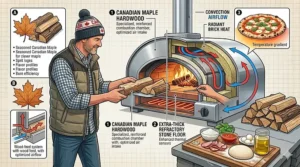
Wood-fired cooking adds subtle smoky complexity impossible to achieve with gas or electric ovens—the difference between good pizza and transcendent pizza. However, Canadian buyers should understand the learning curve: wood selection matters (hardwoods like maple and oak work best; avoid softwoods that create excessive smoke), moisture content affects burn consistency (aim for wood below 20% moisture), and cold weather demands more fuel. Prairie province buyers appreciate the dual-fuel flexibility—wood for special occasions, gas for quick weeknight dinners when it’s -15°C outside and you just want reliable heat.
The Karu 2’s improved insulation over the original model means better heat retention during our temperature swings. The borosilicate glass door provides clear viewing without heat loss—a genuine upgrade for monitoring leopard-spotting development. The oven’s chimney baffle adjusts for airflow control, which becomes critical when dealing with Canada’s wildly variable humidity levels: drier prairie air requires different settings than humid coastal conditions.
Canadian Considerations: Wood storage becomes a factor—you’ll need a dry location for seasoned hardwood, ideally maintaining 15-20% moisture content. Canadian winters make outdoor wood storage challenging; consider a small dedicated bin in your garage. The optional gas burner attachment (sold separately, around $150 CAD) transforms this into a reliable year-round option for shoulder seasons.
Customer Feedback (Canadian Reviews): BC reviewers love the wood-fired option for authentic flavour, especially when using local alder and fruitwoods. Alberta users appreciate gas backup for unpredictable weather. Some Ontario buyers noted the learning curve for maintaining consistent wood-fire heat—expect 5-10 sessions before mastering it.
Pros:
✅ Authentic wood-fired flavour for pizza purists
✅ Multi-fuel flexibility (wood, charcoal, or gas)
✅ Reaches true 500°C Neapolitan temperatures
Cons:
❌ Wood-firing has a significant learning curve
❌ Requires dry wood storage and chimney maintenance
Price Verdict: Around $550-$700 CAD on Amazon.ca for the base oven; add $150 for gas burner attachment. Best suited for Canadian users with covered outdoor spaces and commitment to mastering wood-fired technique. The flexibility justifies the investment for year-round outdoor cooking enthusiasts.
5. Ooni Volt 2 — The Premium Indoor Solution
The Ooni Volt 2 represents Ooni’s first purpose-built electric pizza oven, delivering outdoor-calibre results indoors without gas lines or wood smoke. Reaching 450°C (850°F) with both top and bottom heating coils, it cooks authentic Neapolitan pizza in 90 seconds—bridging the gap between the Breville Pizzaiolo’s indoor convenience and the Koda’s outdoor performance.
What sets the Volt 2 apart is the larger viewing window (30% bigger than the original Volt) combined with dual heating zones that eliminate the need for mid-bake rotation—a genuine advantage when you’re still learning pizza handling skills. The 12″ cooking capacity hits the sweet spot for Canadian households: large enough for proper dinner-sized pizzas, compact enough that dough stretching doesn’t require professional-level technique. The boost function provides an extra temperature surge for the first 60 seconds, mimicking the initial blast a pizza receives in a commercial wood oven.
Canadian buyers appreciate the truly portable design with built-in handles—at 18 kg, it’s manageable for moving between indoor counter and covered patio depending on season. The plug-and-play electric operation means no propane tanks, no wood storage, no chimney cleaning. Just reliable, repeatable results whether it’s January in Winnipeg or July in Victoria.
Canadian Considerations: Requires a 15-amp dedicated circuit—most modern Canadian homes comply, but older houses may need electrical assessment. The 2600W power draw is significant; avoid sharing circuits with fridges or other major appliances. Can be used outdoors on covered patios (protected from rain), extending its utility during Canadian summer months.
Customer Feedback (Canadian Reviews): “Finally, proper Neapolitan year-round without dealing with propane or wood” — Toronto condo owners particularly love this feature. Vancouver users appreciate using it outdoors May-October, then bringing it inside for rainy season. Some noted the $1,800+ price point is steep, but acknowledge nothing else delivers this performance indoors.
Pros:
✅ Indoor/outdoor flexibility for Canadian climates
✅ Electric convenience with 450°C Neapolitan capability
✅ No rotation needed during cooking
Cons:
❌ Premium pricing ($1,500-$1,900 CAD range)
❌ Requires dedicated 15-amp circuit
Price Verdict: Around $1,500-$1,900 CAD on Amazon.ca. The most expensive option in this guide, but the only electric oven that truly delivers Neapolitan-quality results indoors. For serious Canadian pizza makers in condos or areas with strict outdoor cooking bylaws, it’s the ultimate solution.
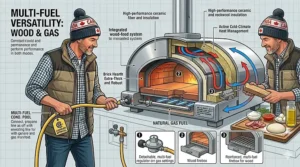
6. VEVOR Electric Pizza Oven (14″) — The Budget Entry Point
The VEVOR 14″ Electric Pizza Oven serves Canadian buyers testing the pizza oven waters without major financial commitment. Reaching 370°C (698°F) with a cordierite stone and viewing window, it handles basic pizza-making duties at entry-level pricing—typically $200-$350 CAD on Amazon.ca.
This countertop model uses straightforward dial controls for temperature (5 preset modes plus manual) and timer functions—no app connectivity or fancy features. The 14″ capacity accommodates medium-large pizzas, though the effective cooking zone is closer to 12″ due to heat concentration in the centre. Canadian reviewers note that preheating takes 25-30 minutes to fully saturate the stone, and cook times run 6-8 minutes at maximum temperature—acceptable for New York and Detroit styles, but too long for authentic Neapolitan.
Where the VEVOR shines is reliability for occasional use. If you’re making pizza monthly rather than weekly, the lower price point makes more sense than premium models that sit idle. The construction feels adequate rather than premium—thin metal housing that gets quite hot externally (avoid placing near curtains or cabinets), and a viewing window that fogs at high temperatures, limiting its usefulness.
Canadian Considerations: The 1600W power draw suits most Canadian kitchen circuits. Compact enough for apartment kitchens, though you’ll want at least 6″ clearance on all sides due to external heat. Some Canadian buyers report receiving units with US-only manuals; Amazon.ca sellers should provide bilingual documentation per Canadian requirements.
Customer Feedback (Canadian Reviews): “Good starter oven for the price, makes decent pizza” — realistic expectations from Manitoba users. Quebec buyers appreciate the price point for occasional weekend use. Common complaints centre on uneven heating (edges cook slower than centre) and the foggy window during high-heat cooking.
Pros:
✅ Budget-friendly entry point ($200-$350 CAD)
✅ 14″ capacity handles family-sized pizzas
✅ Straightforward controls for beginners
Cons:
❌ 6-8 minute cook times (slower than premium models)
❌ Uneven heat distribution requires monitoring
Price Verdict: Around $200-$350 CAD on Amazon.ca. Best for Canadian buyers exploring whether they’ll actually use a pizza oven regularly before investing in premium models. Delivers acceptable results at entry-level pricing, though serious pizza makers will outgrow it within 6-12 months.
7. Chefman Indoor Pizza Oven — The Compact Solution
The Chefman Indoor Pizza Oven targets Canadian buyers in smaller living spaces—condos, apartments, or kitchens with limited counter real estate. Reaching 425°C (800°F) with 5 touchscreen preset modes, it occupies minimal space while delivering respectable 12″ pizza results in 4-6 minutes.
The touchscreen interface provides modern convenience with settings for Neapolitan, New York, Thin & Crispy, Frozen, and Pan pizzas—helpful for beginners still learning how different styles require temperature adjustments. The included cordierite stone and peel get you started immediately, though the peel is basic stamped metal rather than quality perforated aluminum. Canadian reviewers note the compact footprint (roughly 45 cm x 45 cm) fits comfortably on most counters without dominating the kitchen.
Where the Chefman makes compromises is heat consistency and exterior temperature. The unit gets quite hot externally during operation—plan for dedicated counter space away from cabinets and keep children at a safe distance. The 425°C maximum theoretically reaches Neapolitan territory, but in practice, the smaller heating elements struggle to maintain that temperature when you launch a cold pizza, resulting in 4-6 minute cook times rather than the 90-second ideal.
Canadian Considerations: The compact size suits urban Canadian living, particularly in Toronto, Vancouver, and Montreal where counter space commands premium pricing. The 1800W power draw is standard for this class. Some units shipped to Canadian buyers had only Fahrenheit temperature displays; ensure your Amazon.ca seller provides Celsius-compatible models.
Customer Feedback (Canadian Reviews): “Perfect for my downtown Toronto condo—makes good pizza without taking over the kitchen” — typical feedback from urban buyers. Calgary users appreciate the space-saving design. Complaints focus on the external heat and occasional uneven cooking (front hotter than rear; rotating pizza helps).
Pros:
✅ Compact footprint for small Canadian kitchens
✅ Touchscreen presets simplify operation
✅ Reaches 425°C for near-Neapolitan capability
Cons:
❌ External surfaces get very hot during use
❌ Heat consistency requires pizza rotation
Price Verdict: Typically $150-$300 CAD on Amazon.ca. Strong value for Canadian condo dwellers prioritizing space efficiency. Delivers better results than conventional ovens with pizza steels, though serious pizza makers will prefer the Cuisinart or Breville for more consistent performance.
First-Time Pizza Oven Owner’s Setup Guide
Getting your new pizza oven operational in Canadian conditions requires more than unboxing and plugging in. Here’s what newcomers overlook during their first month:
Week One: Seasoning and Break-In
Before cooking actual pizzas, run your oven through 2-3 empty heating cycles to burn off manufacturing residues. For indoor electric models like the Breville or Cuisinart, this creates temporary smoke—crack a window and run your range hood. Outdoor models like the Ooni Koda should be fired up outside even for seasoning. The cordierite stone needs gradual temperature increases during the first 3 uses; rapid heating can cause cracking. Start with 15-minute preheats at medium heat, gradually increasing to full temperature.
Temperature Calibration Matters
Most pizza ovens’ built-in thermometers measure air temperature, not stone surface temperature—the number that actually matters. Invest $30 in an infrared thermometer to measure your stone’s surface. Proper Neapolitan cooking requires 400-430°C stone temp; if your oven reads 450°C but the stone measures 380°C, you’ll need longer preheats. Canadian users in colder climates (Alberta, Saskatchewan, Manitoba) should add 5-10 minutes to recommended preheat times when ambient temperature drops below 5°C.
Dough Is Your Foundation
Pizza ovens amplify both success and failure—mediocre dough at high temperature becomes inedible quickly. According to Health Canada’s food safety guidelines, pizza should reach an internal temperature of 74°C (165°F), which happens automatically at these high temperatures. Focus on proper fermentation: cold-proofing dough in your fridge for 24-72 hours develops flavour and makes the dough easier to stretch. Canadian tap water varies significantly by region; Calgary’s harder water creates tighter gluten networks (good for chewy crusts), while Vancouver’s softer water produces more delicate dough. Adjust hydration accordingly.
Winter Storage Protocol
Outdoor ovens like the Ooni Koda and Karu must be stored indoors during Canadian winters. Before storage, burn the oven on maximum heat for 15 minutes to carbonise any food residue, then wipe clean once cooled. Remove the stone and store separately wrapped in cloth—temperature cycling from -30°C garage storage to 500°C cooking accelerates micro-cracks. In spring, inspect all components before first use, checking for moisture damage and verifying gas connections haven’t corroded. Prairie provinces with extreme dry cold see less corrosion than coastal regions with damp winters.
Case Study: Matching Canadian Users to Perfect Ovens
Profile 1: The Vancouver Condo Chef
Meet Sarah, who lives in a 700 sq ft downtown Vancouver condo with gas stove but limited counter space. She cooks pizza 2-3 times monthly, wants authentic results, and can’t have outdoor equipment per strata bylaws. Her ambient cooking environment stays relatively mild year-round (8-22°C).
Recommended Match: Breville Pizzaiolo or Cuisinart CPZ-120C
Sarah’s situation eliminates outdoor ovens entirely. The Breville delivers authentic Neapolitan indoors with minimal space sacrifice, though the $1,000+ CAD price point is significant. For her usage frequency (2-3 times monthly), the Cuisinart provides better value—it occupies less permanent counter real estate, costs $600-800 less, and handles New York and Detroit styles beautifully. Sarah can store it in her pantry between uses, pulling it out for Friday pizza nights. The viewing window lets her monitor cooking without opening the door (crucial in small kitchens where releasing heat affects comfort). If Sarah’s pizza obsession grows to weekly cooking, upgrading to the Breville or Ooni Volt 2 makes sense within a year.
Profile 2: The Calgary Family of Four
The Johnsons live in suburban Calgary with a covered patio, large backyard, and dedicated outdoor entertaining space. They host summer BBQs frequently (May-September) and want pizza as part of their outdoor cooking repertoire. Budget: $1,000-$1,500 CAD for quality equipment they’ll use 20-30 times per season.
Recommended Match: Ooni Koda 16 plus winter backup
The Koda 16’s large capacity suits family cooking and entertaining—16″ pizzas feed four with a single bake. Gas operation means the Johnsons avoid the wood-fire learning curve, focusing on perfecting dough and toppings instead. Calgary’s dry climate and significant summer sun make outdoor cooking pleasant, though the 1,100-metre elevation means water boils at 97°C and dough behaves slightly differently (less gluten relaxation at altitude; increase rest times 20%). For winter months, a $60 pizza steel in their conventional oven provides adequate backup—80% satisfaction at minimal cost. Total investment: $1,000 CAD for Koda 16, $60 for steel, $100 for quality peels and accessories.
Profile 3: The Rural Ontario Pizza Purist
James lives on 10 acres outside Ottawa with unlimited outdoor space, wood lot access (free hardwood), and passion for authentic wood-fired cooking. He’s retired, has time to master technique, and wants the genuine article—smoky, charred, traditional.
Recommended Match: Ooni Karu 2 Pro with gas backup attachment
James’s situation is ideal for wood-fired cooking—he has space, time, and free fuel. The Karu 2’s multi-fuel capability means learning wood-fire technique while having gas backup for quick weeknight pizzas. Ontario’s mixed humidity (dry winters, humid summers) requires airflow adjustments between seasons; the chimney baffle provides that control. James should invest in a moisture meter ($40) to verify his seasoned wood stays below 20% moisture content—critical for consistent burns. In practice, he’ll use wood for weekend entertaining (amazing flavour), gas for Tuesday dinners (convenience). Winter storage in his heated garage prevents moisture damage. Total investment: $700 CAD for Karu 2 Pro, $150 for gas attachment, $200 for quality accessories and wood storage.

How to Choose a Pizza Oven in Canada
Selecting the best pizza oven starts with honest assessment of your cooking pattern, space constraints, and climate reality. Here’s the framework that cuts through marketing claims:
Frequency First: Usage Patterns Matter
Monthly users (4-8 pizzas/year) should prioritize value and simplicity—the Cuisinart or VEVOR models deliver sufficient performance without premium investment. Weekly users (40+ pizzas/year) justify premium models like the Breville Pizzaiolo or Ooni Koda 16, where the per-use cost drops below $20 within the first year. Daily commercial-style users need robust construction; the Ooni Volt 2 or Karu 2 Pro handle intensive schedules better than entry-level models.
Indoor Versus Outdoor: Canadian Climate Reality
This decision dictates everything else. Indoor ovens (Breville, Cuisinart, Chefman, Ooni Volt 2) provide year-round accessibility—crucial for Canadian winters lasting 5-7 months depending on province. They require electrical capacity (check your panel for 15-20 amp availability) and adequate ventilation, though modern models minimise smoke. Outdoor ovens (Ooni Koda, Karu) deliver authentic high-heat experience but sit dormant October through April in most provinces. BC coastal users get year-round outdoor access with covered patios; prairie and northern users face 6+ month downtimes. Many serious Canadian pizza makers own both: outdoor for summer entertaining, indoor backup for winter cravings.
Temperature Determines Capability
The 500°C threshold matters. Ovens reaching 500°C (Ooni Koda, Karu, Volt 2) can cook authentic Neapolitan in 60-90 seconds with proper leopard-spotting. Ovens topping out at 370-425°C (Cuisinart, VEVOR, Chefman) excel at New York, Detroit, and pan styles but compromise on Neapolitan authenticity. Consider your pizza aspirations: if you dream of replicating that Naples pizzeria you visited on vacation, invest in 500°C+ capability. If you’re upgrading from frozen pizza and delivery, mid-range temperatures provide dramatic improvement without premium costs.
Fuel Source Trade-offs
Electric models (Breville, Cuisinart, Ooni Volt 2) offer consistent, repeatable results with minimal learning curve—plug in, set temperature, wait for preheat. They suit beginners and those prioritising convenience. Gas models (Ooni Koda) provide reliable outdoor performance with 20-minute preheat times and easy temperature control; they require propane tanks (standard 20-lb Canadian tanks work) and outdoor storage. Wood-burning options (Ooni Karu in wood mode) deliver authentic smoky flavour but demand technique mastery, dry wood storage (challenging in humid Canadian climates), and patience for variable burn patterns. Multi-fuel models (Karu 2) provide flexibility—wood for special occasions, gas for convenience.
Space Constraints and Canadian Housing
Urban Canadian housing (Toronto condos, Vancouver apartments, Montreal walk-ups) imposes real limits. Measure your available counter space before ordering—the Breville Pizzaiolo demands 50 cm x 40 cm permanent real estate, while the Chefman fits smaller footprints. Condo bylaws often restrict outdoor cooking equipment; verify strata/building regulations before investing in outdoor models. Rural and suburban buyers with garages can store outdoor ovens properly, protecting them from Canadian temperature extremes and moisture.
Budget Realism: Total Cost of Ownership
Initial purchase price represents 60-70% of true cost. Add quality pizza peel ($50-100), infrared thermometer ($30), dough proofing containers ($40), and specialty ingredients (00 flour, San Marzano tomatoes). Outdoor ovens require weatherproof covers ($80-150), propane refills ($15-25 per tank lasting 10-15 cooking sessions), or seasoned hardwood ($100-200 per cord). Indoor electric ovens add $20-40 monthly to electricity bills at Canadian rates. Calculate total first-year cost: entry-level setups run $400-600 CAD all-in, premium setups $1,500-2,500 CAD.
Common Mistakes When Buying Pizza Ovens
Mistake #1: Ignoring Canadian Winter Performance
The glossy product photos show sun-drenched patios and outdoor entertaining, conveniently omitting the -25°C February reality. Canadian buyers seduced by outdoor oven marketing often face buyer’s remorse when their $1,000 Ooni sits unused November through April. The fix: honestly assess your willingness to cook outdoors in shoulder seasons. Calgary buyers with chinooks might extend the season; Winnipeg buyers face harsher limits. If year-round pizza matters, prioritise indoor-capable models or budget for both outdoor summer oven plus winter backup solution.
Mistake #2: Underestimating Electrical Requirements
“It’s just a countertop appliance” — famous last words before tripping your circuit breaker mid-pizza. The Breville Pizzaiolo (1800W), Ooni Volt 2 (2600W), and Cuisinart (1800W) draw significant power. Many older Canadian homes have 15-amp kitchen circuits already serving multiple outlets; adding a 2600W oven (21 amps) creates problems. Before purchasing, check your electrical panel capacity. In condos and apartments, verify your lease allows high-draw appliances. The fix: have a qualified electrician assess your setup ($100-200 consultation fee beats discovering incompatibility after purchase).
Mistake #3: Buying Maximum Capacity You’ll Never Use
The 16″ Ooni Koda looks impressive, but how often do you actually need 16″ pizzas? For couples or small families, 12″ capacity handles 90% of situations; the extra 4″ adds weight, fuel consumption, and storage challenges. Canadian buyers often overestimate entertaining frequency—that “weekly pizza parties” vision becomes monthly reality once novelty fades. The fix: assess your actual cooking patterns. If you’re replacing Friday night delivery for 2-3 people, 12″ models suffice. Large families or frequent entertainers justify 16″ capacity.
Mistake #4: Neglecting Stone Quality and Replacement Costs
Cordierite pizza stones crack eventually—thermal cycling from room temperature to 500°C creates stress fractures over months or years. Premium ovens like Breville include quality stones that last 12-24 months with proper care; budget models use thinner stones that crack within 6 months. Replacement stones cost $80-150 CAD plus shipping. The fix: factor stone longevity into purchase decisions. Avoid moving stones from cold Canadian winter storage directly to maximum preheat—allow gradual temperature increases. Inspect stones before each session; hairline cracks expand rapidly.
Mistake #5: Believing You’ll Master Wood-Fire Immediately
Wood-fired cooking romanticism collides with reality: maintaining 500°C requires constant fuel feeding, airflow adjustment, and wood selection knowledge. Canadian hardwoods (maple, oak, birch) burn differently than European species featured in most pizza oven tutorials. Moisture content varies wildly—winter-stored wood absorbs humidity; summer firewood dries out. The learning curve spans 10-20 sessions before consistent results. The fix: start with gas or electric models if you’re new to pizza making. Master dough, sauce, and technique before adding wood-fire complexity. Transitioning from Cuisinart electric to Karu 2 gas to Karu wood-mode provides graduated learning.
Mistake #6: Skipping Weatherproof Covers and Storage
“I’ll just bring it inside when it rains” — until you forget once, and morning dew rusts the burner assembly. Canadian climate swings from torrential spring rain to intense summer UV to autumn freeze-thaw cycles punish outdoor equipment. Ooni ovens are built tough, but exposure accelerates degradation. The fix: invest in quality weatherproof covers ($80-150), use them religiously, and establish off-season storage protocols. Clean thoroughly before winter storage; moisture trapped inside freezes, expanding and cracking components.
Mistake #7: Forgetting About Canadian Shipping and Returns
Amazon.ca pricing sometimes lags behind direct manufacturer pricing, but Amazon’s return policy (30 days, free returns on most items) provides crucial protection. Manufacturer direct purchases save $50-100 but complicate returns if the oven arrives damaged or doesn’t meet expectations. Given the weight (Breville: 16 kg, Ooni Koda 16: 18 kg), return shipping costs matter. The fix: compare Amazon.ca pricing including Prime shipping benefits against manufacturer direct pricing. Factor return convenience into the value equation—paying $50 extra for hassle-free returns makes sense for large appliances.
Features That Actually Matter (And Those That Don’t)
Viewing Window: Critical for Learning, Less Important Later
Large viewing windows (Breville Pizzaiolo, Cuisinart, Ooni Volt 2) help beginners monitor crust development without opening doors and losing heat. You’ll learn when bubbles form, when char appears, and when rotation is needed. After 20-30 pizzas, you’ll cook by time and sound rather than constant visual monitoring. The window remains useful for impressing guests and teaching others. Verdict: Nice-to-have feature, especially during the first 6 months.
Separate Top/Bottom Heat Controls: Game-Changer for Perfectionists
Only the Breville Pizzaiolo and Ooni Volt 2 offer independent top/bottom element control. Why it matters: different pizza styles require different heat balance. Neapolitan demands aggressive top heat for leopard-spotting with moderate bottom heat to prevent burning. New York style needs more bottom heat for crispy undercarriage with gentler top heat to prevent cheese burning. If you’re experimenting with multiple styles or developing signature recipes, independent control provides crucial flexibility. Verdict: Premium feature that justifies cost for serious pizza makers.
Digital Timers and Preset Modes: Training Wheels
Touchscreen interfaces and preset cooking modes (Chefman, newer Cuisinart models) provide helpful guidance initially—select “Neapolitan” and the oven sets appropriate temperature and time. Within 10-15 sessions, you’ll develop intuition for your specific dough recipes and topping preferences, rendering presets less useful. Manual control becomes preferred. Verdict: Helpful for beginners, superseded by experience. Don’t pay significant premium for this feature.
Portability and Weight: Context-Dependent
The Ooni Volt 2’s built-in handles and Karu 2’s foldable legs target portability. In practice, how often will you move a 15-20 kg oven? Canadian camping trips work better with compact propane grills than pizza ovens requiring level surfaces and weather protection. Portability matters if you’re shuttling between indoor counter and covered patio seasonally, or if you lack permanent outdoor entertaining space. For most users, portability goes unused. Verdict: Evaluate your specific use case—likely unnecessary unless you have clear seasonal migration needs.
Maximum Temperature Claims: Verify Sustained Performance
Marketing claims of “up to 850°F” often represent peak burner capability, not sustained cooking temperature. The VEVOR and Chefman claim 698-800°F, but user testing shows 650-700°F sustained heat under real cooking conditions (cold pizza launch, ambient Canadian temperatures). The Breville and Ooni models deliver on their temperature promises more consistently. Verdict: Research third-party reviews confirming sustained temperature, not just manufacturer specs.
Cordierite Stone Quality: Thickness Matters
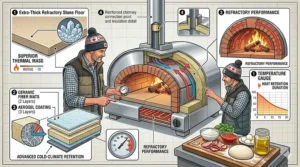
Stone thickness directly affects heat retention and cracking resistance. Premium ovens include 12-15 mm cordierite stones that maintain temperature when you launch cold dough. Budget models use 8-10 mm stones that lose heat rapidly, extending cook times. Thicker stones resist thermal shock better during Canadian temperature cycling. Verdict: Worth paying extra for quality stones; factor replacement costs into total ownership calculations.
Smart Features and App Connectivity: Unnecessary Complexity
Some newer models offer smartphone connectivity for temperature monitoring and recipe libraries. For an appliance used weekly at most, app integration adds failure points without meaningful benefit. Pizza oven operation is straightforward—preheat, launch, rotate, remove. Apps don’t improve outcomes. Verdict: Marketing gimmick; avoid paying premium for connectivity features.
Long-Term Cost and Maintenance in Canada
Owning a pizza oven involves recurring costs beyond the initial purchase—understanding total ownership expenses prevents budget surprises.
Electricity Costs for Indoor Electric Ovens
The Breville Pizzaiolo (1800W) running for 30-minute preheat plus 10 minutes cooking (making 3-4 pizzas) consumes approximately 1.2 kWh per session. At Ontario’s average electricity rate (13.9 cents/kWh in 2026), that’s $0.17 per session or $1.70 monthly for weekly use. The Ooni Volt 2 (2600W) costs roughly $0.25 per session. BC rates (10.5 cents/kWh) reduce costs; Atlantic Canada (16+ cents/kWh) increases them. Annual electricity cost for weekly electric oven use: $10-25 CAD depending on province—negligible compared to delivery pizza costs.
Propane Costs for Outdoor Gas Ovens
The Ooni Koda 16 consumes approximately 0.7-1.0 kg propane per hour at full temperature. A standard 20-lb (9 kg) Canadian propane tank provides 10-15 cooking sessions (each session = 30-minute preheat + 20 minutes making 3-4 pizzas). Propane refills cost $15-25 CAD depending on location (urban Canadian Tire pricing versus rural exchanges). Annual propane cost for 20 sessions/year: $30-50 CAD.
Wood Costs and Sourcing
Canadians with rural property can source free hardwood (maple, oak, birch) from their own lots—a genuine advantage for the Ooni Karu 2. Urban buyers pay $100-200 per cord of seasoned hardwood, though pizza ovens consume minimal amounts (one cord lasts 100+ cooking sessions). Specialty kiln-dried hardwood chunks sold at BBQ stores ($30 for 10 kg) provide convenience at premium pricing. Verdict: Wood costs $20-40 annually for moderate use if buying commercially; free if self-sourced.
Replacement Parts and Consumables
Pizza stones crack eventually. Budget cordierite stones ($40-60 replacement) last 6-12 months with heavy use; premium stones ($100-150) endure 18-36 months. Gas oven igniters fail after 200-300 uses; replacements cost $30-50 plus installation. Outdoor oven covers deteriorate from UV exposure and temperature cycling; replace every 2-3 years ($80-150). Pizza peels (especially wooden ones) warp and crack; metal peels last indefinitely. Budget $50-100 annually for consumables and minor replacement parts.
Deep Cleaning and Maintenance
Indoor electric ovens require minimal maintenance—wipe exterior with damp cloth, brush stone debris into crumb tray. Outdoor ovens need seasonal deep cleaning: remove burner assembly, clean gas jets with wire brush, inspect connections for corrosion, re-season cast iron components. Time investment: 20-30 minutes quarterly for indoor models, 60-90 minutes seasonal for outdoor models. Professional pizza oven cleaning services (available in major Canadian cities) charge $150-250 annually—unnecessary for home users willing to DIY.
Warranty Coverage and Canadian Service
Breville provides 1-year warranty with responsive Canadian customer service (calls answered in Ontario); extended warranties available through retailers. Ooni offers 1-year coverage but requires shipping to UK or US for repairs—Canadian buyers face shipping costs ($50-100) and long turnaround. Budget brands (VEVOR, Chefman) offer minimal warranty support; assume self-service repairs. Premium price includes service value.
Total 5-Year Ownership Cost Comparison
- Breville Pizzaiolo: $1,100 initial + $75 annual electricity/maintenance + $200 stone replacements = $1,675 CAD
- Ooni Koda 16: $1,000 initial + $50 annual propane + $150 covers/parts = $1,400 CAD
- Cuisinart CPZ-120C: $300 initial + $50 annual electricity/maintenance + $120 stone replacements = $620 CAD
The Cuisinart delivers lowest total cost for moderate use; the Breville and Ooni justify premium pricing through superior performance if you’re cooking 30+ times annually.
Pizza Oven for Canadian Families
Canadian families navigate unique challenges when selecting pizza ovens—safety concerns with children, dietary restrictions across household members, and budget constraints. Here’s how different models address family priorities:
Safety Considerations with Children
The Breville Pizzaiolo and Ooni Volt 2 feature double-pane windows and multi-layer insulation that keep external surfaces touchable even at peak temperature—critical for homes with curious toddlers. Outdoor gas ovens like the Ooni Koda reach 200°C+ on external surfaces; establish clear safety zones (1-metre perimeter) and supervise young children closely. The Cuisinart’s active cooling technology makes it the safest compact option for family kitchens. Consider placement: counter-height ovens put hot surfaces at toddler eye level; dedicated elevated stations (kitchen islands, outdoor prep tables) improve safety.
Accommodating Dietary Restrictions
Canadian families often navigate multiple dietary needs—gluten-free for celiac children, dairy-free for lactose intolerance, vegetarian teenagers. Pizza ovens excel at customisation. The Cuisinart and Breville’s lower temperature settings (350-400°F) work well for gluten-free crusts, which require gentler heat than traditional dough. Clean the stone thoroughly between gluten and gluten-free pizzas; dedicated gluten-free stones ($60) eliminate cross-contamination concerns. Dairy-free cheese substitutes (Daiya, Violife) melt better at 375-425°F than 500°F—mid-range ovens like Cuisinart handle these better than ultra-high-heat Neapolitan ovens.
Teaching Children Pizza-Making Skills
Pizza making provides excellent kitchen education for children ages 6-14—dough science, measuring skills, temperature awareness. The Cuisinart’s viewing window lets children observe cooking without door-opening risks. The Breville’s preset modes simplify operation for teenage cooks. Outdoor ovens like Ooni models create backyard family activities—older children can help with wood selection (Karu 2), propane connection (Koda), and temperature monitoring. Start with dough-stretching and topping assembly; children as young as 8 can launch pizzas onto stones with supervision.
Budget-Friendly Family Solutions
Families replacing weekly $60-80 pizza delivery recoup pizza oven costs rapidly. The Cuisinart at $300 pays for itself in 4-5 weeks versus delivery; the VEVOR at $200 recoups in 3 weeks. For families genuinely committed to weekly pizza nights, investing in the Breville ($1,100) still breaks even within 15-20 weeks compared to restaurant quality alternatives. The social benefit—family cooking together—adds value beyond pure cost calculations.
Managing Large Groups and Extended Family
Canadian holiday gatherings (Thanksgiving, Christmas, summer BBQs) often involve 12-20 people. The Ooni Koda 16’s large capacity and 60-second cook time means churning out 10-15 pizzas in 30 minutes—each family member customises their own. The Breville’s 2-minute cook time suits smaller gatherings (6-8 people). Budget ovens with 5-8 minute cook times create bottlenecks when feeding crowds; plan accordingly or consider two smaller ovens working simultaneously (two Cuisinarts cost less than one Breville, double throughput).
FAQ
❓ Can I use a pizza oven in Canadian winter temperatures below -20°C?
❓ Do pizza ovens sold on Amazon.ca comply with Canadian electrical and safety standards?
❓ What's the difference between pizza oven prices on Amazon.ca versus buying direct from manufacturers in Canada?
❓ Can pizza ovens reach proper temperatures when starting from a cold Canadian garage in winter?
❓ Are replacement parts for Ooni and Breville pizza ovens readily available in Canada?
Conclusion: Your Path to Perfect Pizza in Canada
The journey from frozen grocery store pizza to restaurant-quality pies you bake at home represents more than upgraded ingredients—it’s reclaiming Friday night traditions, reducing delivery costs, and mastering a genuine culinary skill. For Canadian buyers, choosing the best pizza oven starts with honest assessment: How often will you actually use it? Can your kitchen or patio accommodate it? Does authentic Neapolitan matter, or will improved New York style satisfy?
The Breville Pizzaiolo stands as the undisputed indoor champion for serious pizza makers who cook year-round and demand authentic Neapolitan results regardless of Winnipeg winters or Vancouver rain. Its $900-$1,200 CAD premium buys 400°C sustained heat, separate element controls, and reliable performance session after session. For Canadian families committed to weekly pizza nights, the per-use cost drops below $20 within the first year—competitive with quality delivery.
The Ooni Koda 16 dominates the outdoor category with its blazing 500°C capability and 16″ capacity, though Canadian buyers must accept 5-7 months of winter downtime depending on province. Paired with a basic pizza steel for cold months, it provides a complete solution for backyard entertainers who host summer gatherings. The gas convenience means reliable results without wood-fire learning curves.
Budget-conscious Canadians find exceptional value in the Cuisinart CPZ-120C, which delivers 370°C heat at $200-$400 CAD—enough for dramatic improvement over conventional ovens without premium investment. It excels at New York, Detroit, and pan styles while fitting comfortably in most Canadian kitchens. For monthly users still developing pizza skills, this represents the smart entry point.
The truth about pizza ovens: they amplify your existing cooking enthusiasm rather than creating it. If you’re currently making homemade pizza monthly in your conventional oven, a dedicated pizza oven will increase your frequency and satisfaction. If you order delivery because cooking seems burdensome, a $1,000 oven won’t change that pattern. Start with honest assessment of your cooking habits, then select the oven that matches your actual lifestyle—not your aspirational vision of weekend pizza parties that may never materialise.
Ready to transform your Canadian kitchen? The products reviewed here all ship via Amazon.ca with reliable delivery and return policies that protect your investment. The difference between acceptable pizza and exceptional pizza is temperature and technique—the oven provides the temperature; you’ll develop the technique through practice.
✨ Don’t Miss These Exclusive Deals!
🔍 Take your pizza game to the next level with these carefully selected ovens. Click on any highlighted item to check current pricing and availability on Amazon.ca. These tools will help you create authentic Neapolitan pies your family will love!
Recommended for You
- Best 2-in-1 Grill Smoker Combos for Canada 2026
- 7 Best Portable Smoker for Camping Canada 2026
- 7 Best Value Smokers Under $1000 CAD – Canada 2026 Guide
Disclaimer: This article contains affiliate links. As an Amazon Associate, I earn from qualifying purchases. If you purchase products through these links, we may earn a small commission at no additional cost to you.
✨ Found this helpful? Share it with your friends! 💬🤗
