In This Article
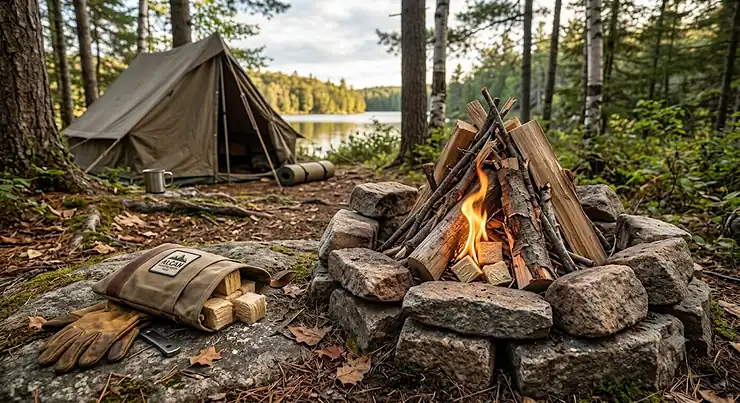
Ask any Canadian who has stood over a lump of charcoal at 6 p.m., stomach growling, fighting a book of soggy matches, and they’ll tell you: fire starter cubes for BBQ and camping are the unsung heroes of outdoor cooking season. These small waxy or fibrous blocks do one job and do it well — they turn “please, just light” into “flames in under two minutes,” without the eye-watering whoosh of lighter fluid or the frustration of newspaper that refuses to catch in a coastal drizzle. That’s the whole appeal of fire starter cubes for BBQ and camping: less fuss, more flame, right when you need it.
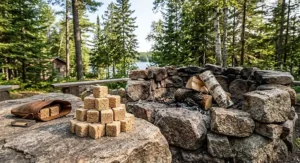
So what exactly is a fire starter cube? In short, it’s a compact, pre-measured ignition source — usually wax, compressed wood fibre, or a biofuel blend — engineered to burn hot and steady for several minutes, giving kindling and charcoal enough sustained heat to catch reliably, even in damp or windy Canadian conditions.
This guide digs into seven real, currently available products spanning budget grocery-aisle boxes to premium strike-anywhere biofuel starters, compares how they perform on portability, burn duration, and waterproof ignition — the three things that actually separate a good cube from a frustrating one — and walks through how to pick the right one for your backyard kettle grill, your canoe-trip firepit, or your cabin wood stove. We’ll also cover where fire starter cubes fit into Canada’s patchwork of provincial fire bans, because nothing ruins a camping trip faster than an unexpected fine (see the science of how fire actually starts and spreads if you want the full combustion picture).
Whether you’re outfitting a first-time car-camping kit or just tired of your current firelighters fizzling out in the rain, the products and criteria below should get you to a confident, better-informed pick — one that survives the drive to the campsite and still lights on the first strike.
Quick Comparison Table
| Product | Burn Duration | Portability | Waterproof Ignition | Best For |
|---|---|---|---|---|
| Weber Lighter Cubes | ~8-10 min | Compact boxed cubes | Lights in damp conditions | Backyard charcoal grilling |
| Zip Premium All-Purpose Fire Starters | ~10-15 min | Individually wrapped | Water-resistant wrapper | Grab-and-go camping kits |
| Duraflame Firestart Cubes | ~8-10 min | Stackable boxed cubes | Moderate | Budget-conscious grillers |
| Lightning Nuggets Firestarters | ~15 min | Loose nuggets | Good, but can crumble in transit | Longest single-cube burns |
| UCO Sweetfire Strikeable Fire Starter | ~7 min per segment | Break-apart bar | Damp-resistant | Strike-anywhere convenience |
| Instafire Granulated Fire Starter | ~5-8 min per pour | Sealed pouches | Rated for rain, snow, and wind | Extreme-weather camping |
| Grill Trade Fire Starter Squares | ~8-10 min | Bulk bag | Manufacturer-rated all-weather | Best value per cube |
Looking at the table, the clearest pattern is that burn duration and waterproof ignition tend to trade off against price: the two longest-burning or most weather-tested options, Lightning Nuggets Firestarters and Instafire Granulated Fire Starter, sit at the upper end of the price ranges covered later in this guide, while the fastest, cheapest options cluster around the standard eight-to-ten-minute mark that most backyard grilling needs. Portability tells a slightly different story: individually wrapped or break-apart formats like Zip Premium All-Purpose Fire Starters and UCO Sweetfire Strikeable Fire Starter hold up better in a packed trunk or backpack than loose, unwrapped cubes, regardless of price point. If your trips rarely involve rain or long hikes, the cheaper, shorter-burning options are genuinely enough — the premium features exist for the specific conditions that expose their absence.
Just one click — help others make better buying decisions too!
Top 7 Fire Starter Cubes for BBQ and Camping: Expert Analysis
Before the individual breakdowns, here’s the quick-reference version: pack sizes, price ranges at the time of research, and who each product suits best.
| # | Product | Pack Size | Price Range (CAD) | Best For |
|---|---|---|---|---|
| 1 | Weber Lighter Cubes | 24-count (also sold in multi-packs) | around C$10-C$15 per 24-pack | Weekend charcoal grillers |
| 2 | Zip Premium All-Purpose Fire Starters | 16-60 count | C$8-C$20 depending on pack | Portable, multi-fuel starting |
| 3 | Duraflame Firestart Cubes | 18-count | C$7-C$12 | Budget backyard use |
| 4 | Lightning Nuggets Firestarters | 12 to 100+ count | C$10-C$35 depending on box size | Longest burns, wood stoves too |
| 5 | UCO Sweetfire Strikeable Fire Starter | 8-60 count | C$8-C$30 depending on pack | No-lighter-needed convenience |
| 6 | Instafire Granulated Fire Starter | Pouches (~4 fires each) to bulk bags | C$10-C$40 depending on size | Extreme wet or windy conditions |
| 7 | Grill Trade Fire Starter Squares | 50-144 count | C$12-C$25 | Bulk value, high-frequency use |
Prices shift constantly on Amazon.ca and elsewhere, so treat these as ranges to sanity-check against, not quotes — always check current pricing before buying.
1. Weber Lighter Cubes — the BBQ-brand classic that never fails
There’s a reason Weber’s name is stamped on more backyard grills across Canada than almost any other brand, and that same reliability carries over to its lighter cubes.
Each paraffin-wax cube is engineered to ignite in seconds and burn hot enough to get a chimney starter or a bed of briquettes glowing within eight to ten minutes, without leaving behind the faint petroleum aftertaste that lighter-fluid-soaked charcoal can impart to food. That matters more than it sounds: reviewers of competing lighter-fluid products consistently cite a chemical taste as their top complaint, and a wax cube sidesteps that problem entirely.
Based on the spec comparison with other paraffin-based starters in this guide, Weber’s cubes sit squarely in the middle of the pack on burn duration but win on brand trust and shelf availability — you’ll find them at hardware stores, big-box retailers, and grocery stores across the country, not just online, which matters if you forget to restock before a long weekend. That makes them a safe default pick for anyone who already owns a kettle-style or gas-assist charcoal grill and just wants something that works without research.
Aggregated retailer feedback on these cubes skews positive, with buyers most often praising consistent ignition and knocking the product for occasional variation in cube size from batch to batch — a minor manufacturing quirk rather than a performance flaw.
Pros:
- ✅ Odorless, non-toxic wax — no chemical aftertaste on food
- ✅ Widely available across Canadian retailers, not just online
- ✅ Lights reliably even in damp or breezy backyard conditions
Cons:
- ❌ Mid-pack burn duration compared to nugget-style starters
- ❌ Some reported inconsistency in individual cube size
At around C$10-C$15 for a 24-count box at the time of research, Weber Lighter Cubes land as solid value for anyone already invested in the Weber ecosystem, though not the cheapest per-cube option on this list.
2. Zip Premium All-Purpose Fire Starters — individually wrapped for grab-and-go portability
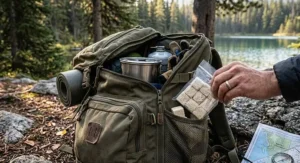
Open a bag of these and you’ll notice the difference immediately: each cube comes individually wrapped in its own water-resistant paper, which sounds like a small thing until you’re digging through a damp backpack looking for one usable fire starter among a dozen crumbled ones.
That wrapping is the whole selling point. Tear it open and the wrapper itself becomes extra tinder, while the cube burns with a tall, steady flame for roughly ten to fifteen minutes — long enough to catch damp kindling on a canoe trip, not just dry charcoal in a backyard. The brand markets these as BBQ fire starter cubes as much as camping fire starter blocks, and the individually wrapped format genuinely earns that dual billing; they toss into a tackle box, glove compartment, or grill caddy without making a wax-flecked mess of everything else in the bag.
What most buyers overlook about this format is that the extra packaging, while great for portability, does add slightly more waste per use than bulk cubes — worth knowing if you’re trying to minimize campsite litter. Reviewers commonly describe these as a reliable toss-one-in-and-forget-about-it option, with the main critique being that the wrapped format costs a bit more per cube than unwrapped bulk alternatives.
Pros:
- ✅ Individually wrapped — ideal portability for backpacks and tackle boxes
- ✅ Wrapper doubles as extra tinder when torn open
- ✅ Works across charcoal, briquettes, and wood fuel types
Cons:
- ❌ Higher cost per cube than unwrapped bulk options
- ❌ More packaging waste to pack out at the campsite
Pack sizes run from 16 to 60 cubes, priced roughly C$8-C$20 depending on count at the time of research, making Zip Premium All-Purpose Fire Starters a strong pick specifically for campers who value portability over bulk savings.
3. Duraflame Firestart Cubes — the grocery-aisle staple most Canadians already know
If you’ve ever grabbed a fire starter on a last-minute grocery run before a cottage weekend, there’s a decent chance it was this box — Duraflame’s name recognition from its log products carries directly over to its cube line.
Each of the 18 cubes per box is designed for wood or charcoal fires, and the compressed-wax formulation ignites within seconds of a single match or lighter touch, burning long enough that most users need only one or two cubes per fire rather than a whole handful. Based on the spec comparison with pricier options in this guide, Duraflame’s cubes trade some burn duration for a genuinely low price point, which is exactly the trade-off a family grilling three times a week is looking for.
Here’s what the spec sheet won’t tell you: because these cubes aren’t individually wrapped, tossing a loose box in a damp trunk or tackle bag can leave you with a slightly crumbly cube by the time you reach the campsite, so a dry storage container is worth the extra two minutes. Reviewers broadly describe consistent ignition performance for the price, with occasional notes about a faint waxy smell during the first thirty seconds of burn that fades quickly.
Pros:
- ✅ Low price point relative to pack size
- ✅ Sold in most Canadian grocery and hardware stores
- ✅ Ignites quickly with a single match or lighter
Cons:
- ❌ Not individually wrapped — vulnerable to crumbling if stored loosely
- ❌ Slightly shorter burn duration than premium options
At roughly C$7-C$12 for 18 cubes at the time of research, Duraflame Firestart Cubes are hard to beat as a no-frills, always-in-stock backup for budget-conscious backyard grilling.
4. Lightning Nuggets Firestarters — longest burn time of the bunch
Made from compressed pitchwood by-product rather than wax, these look more like dense wood nuggets than the flat squares most people picture when they hear “fire starter cube” — and that shape difference is exactly why they burn so much longer than almost everything else on this list.
Each nugget burns for roughly fifteen minutes with a tall, resinous flame, driven by naturally occurring pitch concentrated in the wood fibre rather than an added wax coating. That longer burn duration means a single nugget can often get damp split wood catching in a campfire ring where a standard cube would burn out first. On a major home-improvement retailer’s review page, the product carries a 4.4-out-of-5 rating across more than 110 verified reviews, with the large majority landing at four or five stars.
The honest trade-off, visible in that same review data, is that a meaningful minority of buyers report nuggets arriving partially crumbled after shipping — a packaging weak point rather than a burn-performance one. Reviewers who kept them dry and intact consistently praised how well they caught in damp, breezy conditions, which lines up with the natural-resin composition.
Pros:
- ✅ Roughly fifteen-minute burn duration, the longest on this list
- ✅ Reliable ignition in damp, breezy outdoor conditions
- ✅ No added chemicals — pure compressed wood by-product
Cons:
- ❌ Not waterproof-wrapped; loose nuggets can crumble in transit
- ❌ Smaller boxes cost more per nugget than bulk boxes
Boxes range from twelve nuggets up to bulk cases, priced around C$10-C$35 depending on count at the time of research — Lightning Nuggets Firestarters are worth the premium specifically when burn duration is your top priority, such as lighting a wood stove or a stubborn campfire.
5. UCO Sweetfire Strikeable Fire Starter — strike it like a match, no lighter needed
Most fire starter cubes still assume you’re carrying a separate lighter or matches to actually ignite them — this one doesn’t. Each bar is made from bagasse, a sugarcane processing by-product, bonded with plant-based wax, and scored into break-off segments that strike against the box itself like an oversized match head.
That strike-anywhere design is a genuine convenience upgrade for anyone who has fumbled a lighter with cold, wet hands at a trailhead. Each broken-off segment burns for about seven minutes, shorter than the wax cubes on this list but plenty of time to get dry kindling established, and the biofuel composition means it produces minimal smoke residue compared to petroleum-based starters. What most buyers overlook is that UCO sells this as both a standard and a separately available windproof formulation — the standard version performs well in damp conditions but, per the manufacturer’s own product notes, can extinguish in genuinely strong wind, so gusty alpine or coastal trips may call for the windproof variant instead.
Reviewers consistently highlight the strike-to-light convenience as the standout feature, with the main critique centred on the shorter per-segment burn time relative to Lightning Nuggets Firestarters or Weber Lighter Cubes.
Pros:
- ✅ Strike-on-box ignition — no separate lighter or matches required
- ✅ Renewable bagasse and plant-wax composition, minimal smoke residue
- ✅ Break-off segments let you portion exactly what you need
Cons:
- ❌ Shorter roughly seven-minute burn per segment than wax alternatives
- ❌ Standard version can struggle in genuinely strong wind
Packs run from eight to sixty segments, priced around C$8-C$30 depending on size at the time of research, positioning UCO Sweetfire Strikeable Fire Starter as a premium pick for backcountry campers who want one less piece of gear to carry.
6. Instafire Granulated Fire Starter — lights even when soaked or windblown
This one breaks the cube format entirely — it’s a granulated blend of wood pellets, paraffin wax, and volcanic rock that you pour into a small mound rather than stack like a brick. That change in form factor is deliberate: granules create far more surface area for a match or spark to catch than a solid cube does.
The manufacturer markets it as effective in any weather, including rain, snow, and wind, with the volcanic rock component specifically included because it holds heat and resists being blown apart the way loose paper or dry grass would. Each pouch is portioned for about four separate fires, and the product picked up a fire-starter-of-the-year industry award in the years after its Shark Tank appearance brought it wider attention. Based on the spec comparison with wrapped cubes like Zip’s, the granulated format sacrifices some grab-and-go tidiness — you’re pouring a mound rather than placing a single block — in exchange for genuinely superior performance in the worst conditions Canadian weather can produce.
Reviewers who camp in coastal or mountain regions where wind and rain are the norm rather than the exception tend to rate this highest among all-weather options, while campers who mostly deal with dry summer conditions often find it more capability than they need.
Pros:
- ✅ Rated by the manufacturer for rain, snow, and windy conditions
- ✅ Volcanic rock component resists scattering in gusty weather
- ✅ Each pouch yields roughly four separate fire starts
Cons:
- ❌ Loose granules are messier to portion than a solid cube
- ❌ Premium pricing relative to basic wax-cube alternatives
At roughly C$10-C$40 depending on pouch or bulk-bag size at the time of research, Instafire Granulated Fire Starter earns its premium price tag specifically for shoulder-season and coastal camping where waterproof ignition genuinely gets tested.
7. Grill Trade Fire Starter Squares — best value per cube for budget campers
Not every good fire starter needs a recognizable logo. This is one of several smaller, direct-to-Amazon brands filling the budget end of the fire starter cubes for BBQ and camping category, and it earns its spot here on pure value math rather than name recognition.
The squares are built from natural wood wool bonded with food-safe wax, sold in bulk packs running from fifty up to 144 pieces, which works out to a noticeably lower per-cube cost than branded competitors once you do the arithmetic. Burn time lands around eight to ten minutes per square, comparable to Weber’s or Duraflame’s cubes, and the manufacturer markets the product as all-weather and waterproof, positioning it directly against pricier specialty options. For a family that grills weekly and burns through a starter cube every single time, that bulk pricing adds up to real savings over a season.
The honest analytical take here is that lesser-known bulk brands like this one typically match the performance of name-brand cubes on the metrics that matter most — ignition speed and burn duration — while saving money specifically on marketing and packaging rather than on the fire-starting material itself. Reviewers most often mention the large pack size as the deciding factor in choosing this over a name brand, with occasional notes about slightly more variability between individual squares than tightly quality-controlled major brands.
Pros:
- ✅ Large bulk packs (up to 144 count) minimize cost per cube
- ✅ Comparable burn duration to name-brand wax cubes
- ✅ Manufacturer-rated for waterproof, all-weather ignition
Cons:
- ❌ Less brand recognition and quality-control history than majors
- ❌ Slightly more square-to-square variability reported by some buyers
At around C$12-C$25 for a 50-to-144-count pack at the time of research, Grill Trade Fire Starter Squares represent the strongest per-cube value on this list for anyone burning through starters at a high volume.
Getting the Most from Your Fire Starter Cubes: A Practical Usage Guide
Buying the right cube is only half the equation — how you use it determines whether you get a roaring fire in two minutes or a smoldering mess you’re still fanning ten minutes later.
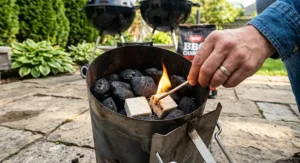
Start with placement, not quantity: nestle one cube (two for stubborn or damp charcoal) directly underneath your kindling or charcoal pyramid rather than beside it, so rising heat and flame travel straight up through the fuel. Light the cube at its corner or edge rather than the flat top — corners catch faster and let the flame wrap around the block instead of burning a single hole through the middle. For charcoal grilling specifically, a chimney starter dramatically outperforms a flat pile: drop one cube in the bottom vents, stack briquettes on top, and you’ll have grill-ready coals in roughly fifteen to twenty minutes without ever touching lighter fluid.
Storage matters more than most people realize. Keep unwrapped cubes like Duraflame Firestart Cubes or Weber Lighter Cubes in a sealed container rather than loose in a camping bin, since humidity is the single biggest cause of a cube that won’t catch. A common mistake in the first thirty days of ownership is over-buying — a box of individually sealed camping fire starter blocks like Zip Premium All-Purpose Fire Starters can sit in a glove compartment for a full season without degrading, so there’s rarely a need to double up on packs “just in case.”
Finally, once your fire is established, resist the urge to add a second cube for insurance; a properly placed single cube almost always gets the job done, and adding fuel to an already-catching fire just wastes product.
Real-World Scenarios: Matching Fire Starter Cubes to How You Actually Camp and Grill
Picture three different Canadians heading into a long weekend, each with a different relationship to fire starting.
The first is a condo-dweller with a small charcoal kettle grill on a shared balcony, cooking two or three times a month. Budget and mess matter more than raw burn duration here, so Duraflame Firestart Cubes or Weber Lighter Cubes make sense — inexpensive, widely available at the corner hardware store, and more than enough burn time for a standard chimney starter.
The second is a family driving to a provincial park campground for a week, cooking over a fire pit most nights in whatever weather shows up. Here, portability and waterproof ignition both matter, since gear gets tossed in and out of a packed trunk repeatedly. Zip Premium All-Purpose Fire Starters or Grill Trade Fire Starter Squares hit that balance of individually manageable pieces and enough quantity to last the whole trip.
The third is a backcountry canoe-tripper paddling into terrain where a bottle of lighter fluid is dead weight and a soggy pack is a real risk. For this camper, UCO Sweetfire Strikeable Fire Starter or Instafire Granulated Fire Starter justify their higher price — strike-anywhere convenience and genuine all-weather performance matter more than saving a few dollars per pack when you’re three days from the trailhead.
Matching the product to the actual trip, rather than defaulting to whatever’s cheapest or most familiar, is the single biggest lever for getting reliable fires.
Problem → Solution: Fixing the Most Common Fire-Starting Headaches
Even good fire starter cubes fail when the surrounding technique is off, so here are the recurring problems and the fixes that actually address them.
Problem: the cube lights but the charcoal or kindling never catches. Solution: you likely need more airflow, not more starter cubes — arrange fuel loosely enough for oxygen to reach the flame, and consider a chimney starter, which uses a vertical draft to solve this automatically.
Problem: cubes feel crumbly or won’t ignite on the first strike. Solution: this is almost always a moisture issue from loose storage; switch to individually wrapped cubes like Zip Premium All-Purpose Fire Starters, or transfer bulk cubes into a small dry-bag or sealed container before every trip.
Problem: the fire catches but dies down again within a few minutes. Solution: this usually means kindling was too thick for the cube’s burn duration to bridge the gap to sustained flame — add a layer of genuinely fine kindling, pencil-thickness or thinner, between the cube and your larger wood.
Problem: fire starter smell or residue lingers on grilled food. Solution: stick to wax or bagasse-based cubes rather than lighter fluid, and always wait until the cube has fully burned out and the charcoal is ash-grey before cooking, rather than cooking over active flame.
Problem: you’re not sure a fire is allowed where you’re camping. Solution: check current restrictions before you leave — see the fire-ban and safety section below for exactly where to look.
How to Choose Fire Starter Cubes for BBQ and Camping
Picking the right product comes down to weighing six practical factors against how and where you’ll actually use it.
- Burn duration. Longer burn times, like Lightning Nuggets Firestarters‘ roughly fifteen minutes, give damp or thick kindling more time to catch, which matters more for campfires than for a charcoal chimney that only needs a few minutes of heat.
- Portability. If cubes are riding in a backpack, canoe barrel, or glove compartment, individually wrapped or break-apart formats survive rough handling far better than loose, unwrapped bulk cubes.
- Waterproof ignition. Anyone camping in coastal, mountain, or shoulder-season conditions anywhere in Canada should prioritize products explicitly rated for wet or windy performance over ones that assume dry, calm weather.
- Fuel compatibility. Confirm the product is rated for your actual fuel — charcoal, briquettes, split wood, or all three — since a few formulations burn cleaner on one than another.
- Pack size and price per use. Calculate cost per cube, not just cost per box; bulk options like Grill Trade Fire Starter Squares often win here for frequent grillers.
- Ingredients and emissions. Wax and biofuel-based cubes burn cleaner than lighter fluid and petroleum-soaked briquettes, which matters both for food taste and for basic air-quality courtesy at shared campgrounds.
Weigh burn duration and waterproof ignition most heavily if you camp in unpredictable weather; weigh price per cube most heavily if you’re mainly lighting a backyard grill on dry summer evenings.
Fire Starter Cubes vs Traditional Fire-Starting Methods
Before fire starter cubes became a grocery-aisle staple, most backyard grillers reached for lighter fluid, and most campers reached for newspaper, dryer lint, or raw willpower. Both older methods still work, but the comparison below shows why cubes have become the default recommendation from BBQ enthusiasts and camping guides alike.
| Method | Setup Time | Weather Reliability | Food-Safe (No Aftertaste) | Cost Per Use |
|---|---|---|---|---|
| Fire starter cubes | 1-2 min | High (waterproof options available) | Yes | Low-moderate |
| Lighter fluid | 3-5 min | Moderate; hazardous in wind | No — chemical aftertaste risk | Low |
| Newspaper/kindling only | 5-15 min, often fails | Low; fails when damp | Yes | Very low |
| Matches/lighter alone | Variable; unreliable on wet wood | Low | Yes | Very low |
The numbers make the trade-offs clear: lighter fluid ignites fast but introduces a genuine food-safety and taste concern that fire starter cubes simply avoid, while newspaper and raw matches are cheap but fail exactly when you need reliability most — in wind or damp conditions. For anyone who has fought a soggy newspaper fire at a rain-dampened Canadian campsite, the extra dollar or two per use that a quality cube costs is a small price for a fire that actually starts on the first try.
✨ Don’t Miss These Exclusive Deals! 🔥
Check current pricing on the fire starter cubes above before your next grocery run or camping trip — availability and prices shift often, so it pays to compare before you head to checkout.
Common Mistakes When Buying and Using Fire Starter Cubes
Even experienced campers and grillers trip over a handful of avoidable mistakes with this category.
The first is buying based on price per box rather than price per cube — a cheap-looking small box can actually cost more per use than a bulk 144-count pack once you do the math, especially for anyone who grills weekly.
The second is assuming all cubes are interchangeable across fuel types. A cube optimized for charcoal ignition doesn’t always transfer heat the same way to split firewood, and using the wrong type can mean adding two or three cubes to compensate for one that should have worked alone.
The third, and most common in our research, is poor storage. Buyers who leave loose, unwrapped cubes in a humid garage or an open camping bin routinely report reduced performance within a single season, even though the same product performs perfectly when kept dry — a storage problem gets misread as a product-quality problem.
The fourth mistake is skipping the label entirely. Products explicitly marketed with waterproof ignition claims, like Instafire Granulated Fire Starter or Grill Trade Fire Starter Squares, are genuinely tested for wet conditions; a bargain-bin cube with no such claim may simply not have been engineered for rain.
What to Expect: Real-World Performance in Canadian Conditions
Specs on a package rarely tell you what actually happens at a windy prairie campsite or a humid cottage dock, so here’s the practical translation.
In calm, dry summer conditions — most backyard grilling scenarios — virtually every cube on this list performs similarly: light it, wait roughly a minute, and your charcoal or kindling catches. The differences show up under stress. In genuine wind, unwrapped wax cubes can blow out mid-ignition unless shielded, while strike-on formats like UCO Sweetfire Strikeable Fire Starter and granulated options like Instafire Granulated Fire Starter hold their flame more consistently because their ignition point sits lower and more sheltered.
In damp conditions — a common reality on the coasts and during shoulder-season trips anywhere in the country — waterproof-rated products maintain their advertised burn duration, while non-waterproof cubes that absorbed even light moisture in transit can underperform their rated time by several minutes, sometimes failing to establish a flame at all.
Cold temperatures, meanwhile, affect wax-based cubes less than most people expect; paraffin and biofuel blends both ignite reliably well below freezing, so a January ice-fishing trip is rarely where these products struggle. The real variable is almost always moisture and wind, not temperature.
Fire Starter Cubes for Canadian Winter Campers and Cottage Country BBQers
Two distinct groups of Canadian outdoor enthusiasts get outsized value from this category, for different reasons.
Winter campers and ice-fishing hut owners deal with genuinely cold hands, frozen or snow-dusted kindling, and short daylight windows where a failed fire attempt wastes precious time. For this group, longer-burning options like Lightning Nuggets Firestarters matter most, since their extended flame gives snow-dampened wood more time to dry out and catch than a quick-burning cube would allow. A strike-anywhere product like UCO Sweetfire Strikeable Fire Starter also earns its keep here, since fumbling a lighter with gloved or numb fingers is a real hazard, not a minor inconvenience.
Cottage country BBQers — the crowd who grill most weekends from May through September — have the opposite priorities: convenience, low mess, and low cost per use, since they’re lighting a chimney starter far more often than they’re fighting the elements. Weber Lighter Cubes, Duraflame Firestart Cubes, and bulk options like Grill Trade Fire Starter Squares serve this crowd well, offering fast, mess-free ignition without paying a premium for all-weather features they’ll rarely need.
Matching the product to which of these two profiles you fit — rather than picking whatever’s trending — genuinely changes how satisfied you’ll be with the purchase.
Long-Term Cost and Value: Are Fire Starter Cubes Worth It?
Run the numbers over a full grilling season and fire starter cubes look considerably cheaper than most people assume, especially compared to the ongoing cost of replacing lighter fluid bottles.
| Product | Approx. Cost Per Cube (CAD) | Est. Uses Per Season (weekly griller) | Rough Seasonal Cost |
|---|---|---|---|
| Weber Lighter Cubes | ~C$0.45 | 20 | ~C$9 |
| Duraflame Firestart Cubes | ~C$0.50 | 20 | ~C$10 |
| Grill Trade Fire Starter Squares | ~C$0.15-C$0.20 | 20 | ~C$3-C$4 |
| Lightning Nuggets Firestarters | ~C$0.30-C$0.80 | 20 | ~C$6-C$16 |
Based on the price ranges established earlier in this guide, bulk options like Grill Trade Fire Starter Squares cost roughly a third of what name-brand boxed cubes run per use, which adds up meaningfully for anyone grilling weekly across a full Canadian BBQ season. Even the pricier specialty options, like UCO Sweetfire Strikeable Fire Starter or Instafire Granulated Fire Starter, remain cheap in absolute terms — the premium buys reliability in bad weather, not a fundamentally different cost structure. Unlike a butane lighter or a refillable lighter-fluid canister, cubes have no ongoing maintenance cost or replacement parts — you buy a box, you use it, and there’s nothing to service or refill between trips, which simplifies the total-cost picture considerably. Total cost of ownership for this category is low enough that the smarter optimization is usually matching the product to your actual conditions rather than chasing the lowest price per box.
Fire Safety, Fire Bans, and Regulations Across Canada
Fire starter cubes make ignition easier, but they don’t override local fire regulations — and every province enforces its own rules, which can change week to week during dry summer stretches.
Provincial and territorial wildfire agencies issue fire bans or restrictions whenever conditions get dry enough that even a small campfire poses a wildfire risk; Alberta, for instance, publishes current fire ban status by region that every camper should check before leaving home, not just before lighting a fire on arrival. British Columbia, Ontario, and other provinces run comparable systems, and municipal bylaws can add further restrictions even when a provincial ban isn’t in effect — some cities have banned all open flame, charcoal, and even propane BBQs during extreme drought conditions.
National and provincial parks add another layer: Parks Canada’s campfire guidelines require fires to stay within designated fire pits or rings, be fully extinguished — cold to the touch — before leaving, and comply with whatever fire-danger rating is posted at the park entrance that day.
Importantly, none of this changes based on what starts the fire — a fire starter cube, matches, or a lighter are all treated identically under fire-ban rules, since the ban targets open flame itself, not the ignition method. Checking current restrictions takes two minutes online and is the single most important step most guides to this topic leave out entirely.
FAQ
❓ Are fire starter cubes better than lighter fluid for BBQ?
❓ Do fire starter cubes work when wet?
❓ How many fire starter cubes do I need to start a charcoal grill?
❓ Are fire starter cubes safe to use during a campfire ban in Canada?
❓ Can you use fire starter cubes in a fire pit or fireplace, not just a BBQ?
Conclusion
Across budget grocery-aisle boxes and premium strike-anywhere biofuel bars, the seven products in this guide all solve the same basic problem — getting from cold charcoal or damp kindling to a real flame without fighting lighter fluid or a fistful of soggy newspaper. Where they differ is exactly where your own trips differ: burn duration matters most for damp campfires and wood stoves, portability matters most for backpacks and canoe trips, and waterproof ignition matters most anywhere Canadian weather can’t be trusted to cooperate.
For a backyard griller cooking a few times a month, Weber Lighter Cubes or Duraflame Firestart Cubes cover the basics without overpaying for features you won’t use. For a family filling a cooler every weekend all summer, Grill Trade Fire Starter Squares stretch the budget furthest. And for anyone heading into genuinely unpredictable conditions — coastal rain, backcountry wind, or winter ice-fishing — UCO Sweetfire Strikeable Fire Starter, Instafire Granulated Fire Starter, and Lightning Nuggets Firestarters each justify their higher price with real weather performance.
Whichever you choose, pair it with the basic BBQ fire safety habits fire marshals across Canada consistently recommend, and check local fire-ban status before any trip. Do that, and the only thing left to get right is dinner.
Recommended for You
- Propane Leak Detector for Home BBQ: 7 Safest Picks for 2026
- Chimney Starter vs Electric Fire Starter: 7 Picks (2026)
- Charcoal Chimney Starter Under $40 CAD: 7 Best Picks for 2026
Disclaimer: This article contains affiliate links. As an Amazon Associate, I earn from qualifying purchases. If you purchase products through these links, we may earn a small commission at no additional cost to you.
✨ Found this helpful? Share it with your friends! 💬🤗
