In This Article
There’s a very specific kind of heartbreak reserved for backyard grillers: you’ve got the steaks seasoned, the guests are arriving in twenty minutes, and your charcoal is sitting there like a pile of black rocks that refuse to catch. Lighter fluid feels like cheating (and it tastes like it too, if you’re not careful with your timing). This is exactly the gap that fire starter sticks for charcoal grills were built to close — no chemical aftertaste, no waiting around for fumes to burn off, just a match and a few minutes of patience.
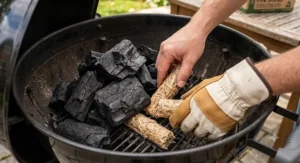
So what is a fire starter for a charcoal grill? It’s a compact ignition aid — typically made from compressed wax, resin-rich wood, or paraffin-soaked fibre — designed to burn hot and long enough to catch briquettes or lump charcoal without lighter fluid. Some come as sticks, some as cubes, some as pouches, but they all solve the same problem: getting from “cold coal” to “cooking heat” reliably.
This guide walks through seven real, currently available options sold through Amazon.ca, breaks down where each one shines (and where it doesn’t), and digs into the practical stuff nobody puts on the packaging — how storage humidity wrecks half of these products, why “ignition consistency” matters more than raw burn temperature, and when a stick format actually beats a cube. Health Canada’s own guidance on barbecue safety is a useful starting point before you even strike a match, since a good fire starter is only half the safety equation — Health Canada’s barbecue safety tips cover clearances, ventilation, and pre-season checks that apply no matter which starter you pick.
Every product below was chosen because it’s a real, purchasable item with verifiable specs — no invented brands, no fabricated five-star reviews. Where aggregated customer sentiment is mentioned, it’s flagged as exactly that: a pattern reviewers report, not a claim of personal testing.
Quick Comparison Table
Before the deep dive, here’s the shape of the market at a glance. These seven span the three formats you’ll actually encounter — compressed cubes, resin-rich wood sticks, and eco-fibre pouches — plus budget, mid-range, and premium price points.
| Product | Format | Price Range (CAD) | Best For |
|---|---|---|---|
| Weber Charcoal Lighter Cubes | Wax cube | C$10-C$15 | Weeknight reliability |
| Rutland Safe Lite Fire Starter Squares | Wood/wax square | C$15-C$25 | Long, slow-building fires |
| Kingsford Quick Light Fire Starter Rolls | Hardwood/paraffin roll | C$8-C$14 | Fast weekend lighting |
| Billy Buckskin Fatwood Fire Starter Sticks | Natural resin stick | C$25-C$40 | Bulk, cottage or seasonal use |
| Duraflame Fatwood Firestarters | Natural resin stick | C$12-C$20 | Occasional, no-fuss lighting |
| Instafire Eco-Friendly Fire & Charcoal Starter | Granulated pouch | C$18-C$30 | Wet or windy conditions |
| HGD Natural Fire Starters | Mini waterproof stick | C$10-C$18 | Budget bulk buyers |
A quick read of this table tells most of the story: stick-format products like Billy Buckskin Fatwood Fire Starter Sticks and Duraflame Fatwood Firestarters sit at opposite ends of the value spectrum because bulk weight — not quality — drives the price gap. Cube-based options like Weber Charcoal Lighter Cubes cluster in the middle because they’re pre-portioned and easy to price consistently. The Instafire Eco-Friendly Fire & Charcoal Starter commands a premium largely because it’s engineered to perform in rain and wind, a use case the others don’t specifically target.
💬 Just one click — help others make better buying decisions too!😊
Top 7 Fire Starter Sticks for Charcoal Grills: Expert Analysis
Coverage below runs budget to premium, sticks to cubes to pouches, and includes both mainstream grilling brands and lesser-known specialists worth a look.
1. Weber Charcoal Lighter Cubes — the safe, no-drama default
If you’ve ever borrowed a neighbour’s grill supplies, there’s a decent chance this is what they handed you. Weber’s cubes are paraffin wax blocks, 24 to a box, designed to sit under briquettes or lump charcoal and burn long enough to establish a self-sustaining fire.
Each cube burns roughly 5-7 minutes at a steady, contained flame — long enough to catch a chimney starter’s worth of charcoal without babysitting it. The wax formulation is odorless and non-toxic, which matters more than it sounds like: cheaper paraffin blends can carry a faint chemical smell that lingers near food during the first few minutes of cooking. Based on the spec comparison with other cube products in this list, Weber’s cubes hold their shape better in transit and storage, which reduces the crumbling that frustrates bulk buyers of softer wax formulas.
This is the pick for grillers who want zero learning curve — beginners, renters without a permanent charcoal setup, or anyone who grills a couple of times a month and doesn’t want to think about ignition technique. Reviewers consistently report reliable ignition even in mild wind, though a handful note that recent batches feel slightly more brittle than older stock, which can make them harder to place precisely under a charcoal pile.
Pros:
- ✅ Odorless wax leaves no chemical taste on food
- ✅ Consistent 5-7 minute burn window every time
- ✅ Trusted brand with wide retail and online availability
Cons:
- ❌ Some recent batches reported as more brittle than before
- ❌ Cube format offers less kindling contact area than sticks
Priced around C$10-C$15 for a 24-count box, the cost-per-light works out to well under a dollar — solid value for the consistency you’re buying.
2. Rutland Safe Lite Fire Starter Squares — best for long, unattended catch times
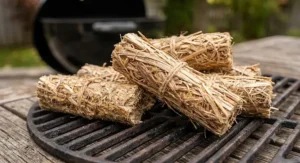
Rutland has been making fireplace and hearth products in Vermont since 1883, and their Safe Lite squares carry that old-school “built for a wood stove” engineering into the charcoal grill category. Each square is a compressed wood-fibre-and-wax block rated for roughly 10 minutes of burn time — noticeably longer than a standard cube.
That extended burn matters most with lump charcoal, which is irregularly shaped and can be slower to catch evenly than uniform briquettes. A 10-minute square gives the flame more time to spread across an uneven charcoal bed before it needs a second source of heat. What most buyers overlook about squares like this is that longer burn time isn’t just about convenience — it directly reduces the odds of a “half-lit” chimney where the top layer never fully ignites.
The 144-count bulk box (2.5 kg / roughly 5.5 lb) suits anyone hosting regularly enough to justify buying in bulk, while a smaller 72-count option exists for occasional users. Aggregated reviewer sentiment describes the squares as reliable in damp conditions, with a recurring note that individual squares vary slightly in size within the same box — a minor cosmetic quirk rather than a performance issue.
Pros:
- ✅ Roughly 10-minute burn, longer than standard cubes
- ✅ Performs well with irregular lump charcoal
- ✅ Established USA manufacturer since 1883
Cons:
- ❌ Square sizes vary slightly within the same box
- ❌ Bulk box pricing skews higher than basic cube 24-packs
Expect to pay in the C$15-C$25 range depending on count size, positioning Rutland Safe Lite Fire Starter Squares as a mid-range choice that earns its premium through burn duration.
3. Kingsford Quick Light Fire Starter Rolls — best for fast weekend turnaround
Kingsford is the name most Canadians associate with charcoal itself, and their fire starter rolls apply the same “get cooking fast” philosophy to ignition. These are compressed rolls of all-natural hardwood fibre infused with paraffin, sold 32 to a box, engineered specifically for quick catch rather than long, slow burns.
The hardwood-and-paraffin combination lights almost instantly with a single match, and the roll shape — longer and thinner than a cube — tucks neatly between charcoal pieces rather than sitting underneath them, which speeds up contact with the fuel. Here’s what to weigh: quick ignition is fantastic for a Tuesday-night grill session where you want food on the plate in 25 minutes, but that same speed means the flame window is shorter, so you need your charcoal arranged before you strike the match rather than after.
Kingsford states the rolls are water-resistant enough to light in rain or wind, a claim aligned with the broader category of paraffin-hardwood starters. This is the practical pick for weeknight grillers and anyone using a charcoal chimney, since the roll shape slots through chimney vents easily.
Pros:
- ✅ Near-instant single-match ignition
- ✅ Roll shape fits well inside charcoal chimneys
- ✅ Rated water-resistant for damp weeknight grilling
Cons:
- ❌ Shorter burn window than square or cube formats
- ❌ Best results require charcoal pre-arranged before lighting
At around C$8-C$14 for 32 rolls, this is one of the more budget-friendly mid-range options, and the cost-per-light is competitive with the Weber cubes above.
4. Billy Buckskin Fatwood Fire Starter Sticks — best bulk stick option for cottages and repeat use
This is where “fire starter sticks” stops being a category name and starts being literal. Fatwood is resin-saturated pine heartwood — no additives, no wax coating, just wood so dense with natural sap that it lights with a single match and burns hot enough to catch charcoal or firewood on its own. Billy Buckskin Fatwood Fire Starter Sticks ship in a 10 lb box, which sounds excessive until you do the math on cost-per-use.
Two or three sticks, split into smaller kindling-sized pieces, is typically enough to establish a charcoal fire. Because fatwood is 100% real wood rather than a manufactured cube, it stores almost indefinitely without degrading — the resin that makes it flammable is also what prevents rot. On paper this means a single 10 lb box can realistically outlast several boxes of wax cubes bought over the same period, which is exactly why cottage owners, seasonal grillers, and anyone who wants to stock up once a summer gravitate toward the bulk format.
Reviewers consistently report strong, reliable ignition, though a meaningful minority — noted across multiple fatwood products from different brands — mention a stronger pine smoke smell during the first minute of burning compared to wax cubes. That smell dissipates quickly and doesn’t transfer to food once charcoal takes over, but it’s worth knowing before your first light.
Pros:
- ✅ 100% natural wood with no wax or chemical additives
- ✅ Near-indefinite shelf life due to natural resin content
- ✅ Excellent cost-per-use across a full grilling season
Cons:
- ❌ Noticeable pine smoke smell in the first minute of burning
- ❌ 10 lb box requires more storage space than boxed cubes
Priced around C$25-C$40 for the full box, the upfront cost is higher than a single box of cubes, but the value verdict flips once you calculate cost per light across dozens of grilling sessions.
5. Duraflame Fatwood Firestarters — best fatwood option for occasional grillers
Duraflame built its name on indoor fireplace logs, and their fatwood stick line brings that same “real wood, no synthetic fillers” approach to a smaller, more grill-friendly package. Like the Billy Buckskin sticks above, these are harvested from the resin-rich stumps of non-endangered pine trees rather than manufactured, which the brand notes explicitly on its own product pages.
What sets this pick apart from the bulk 10 lb box option is package size — Duraflame’s fatwood sticks are sold in smaller counts suited to grillers who fire up the charcoal every few weeks rather than every weekend. According to Duraflame’s own product information, stacking just two to three sticks together is enough to ignite a wood or charcoal fire, matching the general fatwood category standard. For fuller detail on what makes fatwood chemically different from a wax cube, Wikipedia’s overview of fatwood covers the resin concentration process that gives the wood its ignition properties.
Here’s what to weigh against the bulk option: paying a modest per-stick premium buys you a manageable quantity that won’t sit half-used in a garage for two years, which matters if storage space or humidity control is limited.
Pros:
- ✅ Real resin-rich pine, no synthetic wax coating
- ✅ Package size suits occasional rather than heavy-volume grilling
- ✅ Sustainably sourced from non-endangered pine stumps
Cons:
- ❌ Higher per-stick cost than buying in 10 lb bulk
- ❌ Same pine-smoke first-minute smell as other fatwood products
Typical pricing lands around C$12-C$20 depending on retailer and pack size — a reasonable middle ground for anyone who wants fatwood’s reliability without committing to a decade’s supply.
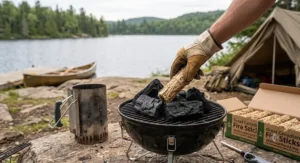
6. Instafire Eco-Friendly Fire & Charcoal Starter — best for wind and wet-weather grilling
Every other product on this list assumes reasonably calm, dry conditions. Instafire Eco-Friendly Fire & Charcoal Starter is built for the opposite — a granulated, volcanic-rock-and-wood-fibre blend, packaged in water- and pest-resistant pouches, specifically engineered to light and stay lit in rain, snow, and wind gusts up to roughly 30 mph according to the manufacturer’s testing claims.
The mechanism is different from a stick or cube: instead of one solid piece, you pour a measured amount (roughly half a cup) directly onto or around your charcoal, and a single match sets the whole pile burning for 10-15 minutes. That granulated format means more total ignition points across the charcoal bed simultaneously, which is a real practical advantage over a single stick or cube trying to catch fuel from one contact point.
What the spec sheet won’t tell you, but the broader wet-weather fire-starter category shows, is that granulated and pouch-based starters generally outperform solid sticks in genuinely bad weather — more surface area means more resistance to a stray gust snuffing the flame before charcoal catches. This is the pick for anyone grilling through a Canadian shoulder season, when a clear forecast can turn to drizzle by dinner.
Pros:
- ✅ Engineered specifically for rain, snow, and windy conditions
- ✅ Granulated format ignites more contact points at once
- ✅ Water/pest-resistant storage pouch built into packaging
Cons:
- ❌ Messier to portion than a pre-formed stick or cube
- ❌ Priced at the premium end of this comparison
At roughly C$18-C$30, this sits toward the top of the price range, but for anyone who grills regardless of forecast, the weather reliability can justify the premium.
7. HGD Natural Fire Starters — best budget bulk pick for frequent grillers
Rounding out the list is the budget bulk workhorse. HGD Natural Fire Starters are sold in large counts — often 100-150 mini sticks or cubes per bag — at a per-unit price that undercuts most of the branded options above, while still being marketed as water-resistant and odorless.
The trade-off with a lesser-known, high-volume brand like this is that specs and formulation details are typically thinner than what a legacy brand like Weber or Kingsford publishes. Based on the available product information, these are compressed natural-fibre mini sticks rather than fatwood or paraffin cubes, positioned for campfires, fireplaces, and charcoal chimneys alike rather than charcoal-grilling specifically. That multi-use framing is common in this budget tier and doesn’t hurt performance, but it does mean the packaging offers less charcoal-specific guidance than a dedicated grilling brand.
Aggregated reviews for budget bulk fire starters in this general category tend to be positive on value and mixed on consistency batch-to-batch — a pattern worth flagging honestly rather than glossing over. For grillers who fire up charcoal multiple times a week and want to minimize cost per light without hunting for the absolute lowest price on every restock, this is a reasonable everyday choice.
Pros:
- ✅ Large per-bag count keeps cost per light very low
- ✅ Marketed as water-resistant for outdoor storage
- ✅ Versatile across grills, chimneys, and fire pits
Cons:
- ❌ Less charcoal-specific formulation detail than major brands
- ❌ Batch consistency reported as more variable than premium picks
Priced around C$10-C$18 for a large bulk bag, this is the value play for anyone grilling often enough that per-light cost matters more than brand recognition.
Top 7 Products: Specs & Value Comparison
| Product | Material | Typical Count | Approx. Burn Time | Price Range (CAD) |
|---|---|---|---|---|
| Weber Charcoal Lighter Cubes | Paraffin wax | 24 cubes | 5-7 min | C$10-C$15 |
| Rutland Safe Lite Fire Starter Squares | Wood fibre + wax | 72-144 squares | ~10 min | C$15-C$25 |
| Kingsford Quick Light Fire Starter Rolls | Hardwood + paraffin | 32 rolls | 3-5 min | C$8-C$14 |
| Billy Buckskin Fatwood Fire Starter Sticks | Natural fatwood | 10 lb box | Varies by piece size | C$25-C$40 |
| Duraflame Fatwood Firestarters | Natural fatwood | Small-medium pack | Varies by piece size | C$12-C$20 |
| Instafire Eco-Friendly Fire & Charcoal Starter | Granulated fibre blend | Multi-pouch pack | 10-15 min per portion | C$18-C$30 |
| HGD Natural Fire Starters | Compressed natural fibre | 100-150 pieces | ~5 min | C$10-C$18 |
Reading across this table, burn time and price don’t move in lockstep — Rutland Safe Lite Fire Starter Squares and Instafire Eco-Friendly Fire & Charcoal Starter both offer 10+ minute windows but arrive at that number through completely different formats (compressed square versus granulated pour). The fatwood entries, Billy Buckskin Fatwood Fire Starter Sticks and Duraflame Fatwood Firestarters, don’t have a fixed burn time at all because you control it by how many sticks and what size pieces you use, which is either a feature or a hassle depending on how much you like fiddling with kindling.
Practical Usage Guide: Lighting a Charcoal Grill With Fire Starter Sticks
Buying the right starter is half the job — using it well is the other half, and this is where most first-timers lose ten minutes they didn’t need to lose.
Setup: Whether you’re using a chimney starter or lighting directly in the kettle, arrange your fire starter first, then build charcoal loosely around and on top of it — tight-packed charcoal restricts airflow and slows ignition regardless of which starter you’re using. For stick-format fatwood, split one or two sticks into thin, pencil-sized pieces with a knife before lighting; thin splits catch faster than a single thick stick.
First light: Strike your match at the base of the starter, not the top, so the flame naturally climbs upward through the charcoal above it — heat rises, and fighting that physics wastes matches. Leave the grill lid off (or the chimney uncovered) for the first 8-10 minutes to feed the flame plenty of oxygen.
Maintenance schedule: Fire starters themselves need almost no maintenance, but storage does. Keep boxes and bags in a dry cupboard or sealed bin — humidity is the single biggest performance killer across every format on this list, wax cubes included. Rotate older stock to the front so nothing sits untouched for multiple seasons.
Common first-30-days mistakes: New grillers often light multiple starters at once “just to be safe,” which usually just burns through product faster without meaningfully speeding ignition. Another frequent misstep is closing the grill lid too early, which starves the young flame of oxygen right when it needs the most. Give the coals the full 15-20 minutes to develop a light grey ash coating before spreading them — that’s the visual cue that combustion is stable and consistent, not just surface-lit.
Real-World Scenarios: Matching Fire Starters to Your Grilling Style
The weeknight solo griller: If you’re cooking for one or two, two or three nights a week, after work, with maybe 20 minutes before you want food on the plate — the Kingsford Quick Light Fire Starter Rolls or Weber Charcoal Lighter Cubes are built for exactly this. Fast, predictable, no prep beyond opening the box.
The weekend host: If you’re firing up a full kettle grill for six to eight people most Saturdays through summer, burn duration matters more than raw speed, because you’re often lighting a full chimney’s worth of charcoal rather than a small pile. The Rutland Safe Lite Fire Starter Squares, with their roughly 10-minute window, give a large charcoal load enough time to catch evenly before the flame source burns out.
The cottage or camp owner: If your grilling happens at a property you visit every few weeks through spring, summer, and fall, buying starters one box at a time gets tedious and expensive. This is the exact use case Billy Buckskin Fatwood Fire Starter Sticks were built for — buy the 10 lb box once, store it in a dry shed, and you’re set for the season regardless of how often you actually show up.
The unpredictable-weather griller: If you live somewhere that swings from sunny to drizzling in the time it takes to season a steak — a fair description of a lot of Canadian shoulder seasons — the Instafire Eco-Friendly Fire & Charcoal Starter earns its higher price tag by staying lit through wind and light rain that would snuff a standard cube.
How to Choose Fire Starter Sticks for Charcoal Grills
Picking the right product comes down to matching a handful of criteria against how you actually grill, not which box looks most impressive on a store shelf.
- Ignition speed versus burn duration. Fast-lighting rolls suit quick weeknight cooks; longer-burning squares or bulk sticks suit big charcoal loads that need more time to catch evenly.
- Format compatibility with your setup. Chimney starters generally favour rolls or thin stick splits that slide between vents; open kettle lighting works well with cubes or squares placed directly under the charcoal pile.
- Storage space and climate. A 10 lb box of fatwood needs real shelf space and a dry spot; a small box of cubes fits in a drawer, which matters more in a condo or apartment setup than a house with a garage.
- Weather exposure. If you grill through rain, wind, or a damp coastal climate, granulated or pouch-based products built for those conditions will outperform a standard wax cube, even a well-made one.
- Frequency of use. Occasional grillers rarely benefit from bulk pricing since product can degrade in poor storage before it’s used; frequent grillers almost always save money buying larger counts.
- Odour tolerance. Fatwood’s brief pine-smoke smell during ignition is a non-issue for most people but worth knowing if you’re sensitive to smoke, especially when grilling on a balcony or near open windows.
- Price per light, not price per box. A C$40 box of 10 lb fatwood sticks that yields 100+ lights is cheaper per use than a C$10 box of 24 cubes — always divide total price by realistic uses before comparing sticker prices.
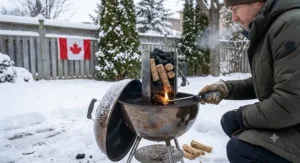
Stick vs Cube: Which Charcoal Fire Starter Format Wins?
This is the debate that never quite settles, mostly because “wins” depends entirely on what you’re optimizing for.
Cubes and squares — like the Weber Charcoal Lighter Cubes and Rutland Safe Lite Fire Starter Squares — are pre-portioned, which is their biggest practical advantage. You know exactly how much fuel you’re using every time, there’s no cutting or splitting involved, and the compact shape sits neatly under a charcoal pile without rolling away. The trade-off is contact area: a single cube touches charcoal at relatively few points, so ignition depends more heavily on careful placement.
Fire starter sticks — fatwood options like Billy Buckskin Fatwood Fire Starter Sticks and Duraflame Fatwood Firestarters — flip that trade-off. Splitting a stick into thin pieces creates far more surface area and more contact points across a charcoal bed, which is part of why fatwood has a reputation for catching reliably even in slightly damp conditions. What most buyers overlook about sticks, though, is that this advantage only shows up if you actually split them properly; a single thick, unsplit stick underperforms a well-placed cube.
Granulated and pouch formats, like the Instafire Eco-Friendly Fire & Charcoal Starter, are really a third category rather than a stick-cube hybrid, and they solve a different problem entirely — weather resistance over raw ignition efficiency.
The honest answer: cubes suit grillers who value simplicity and consistency, sticks suit grillers who want maximum reliability and don’t mind five extra seconds of prep with a knife, and granulated pouches suit anyone fighting genuinely bad weather. None of the three is objectively superior — they’re solving slightly different versions of the same problem.
Ignition Consistency: What Actually Makes a Fire Starter Reliable
“Ignition consistency” gets thrown around in marketing copy a lot, but it actually breaks down into three measurable factors worth understanding before you buy.
Material uniformity. Manufactured products — wax cubes, compressed squares, hardwood-paraffin rolls — tend to have more batch-to-batch consistency than natural products like fatwood, simply because resin concentration in real wood varies piece to piece. That’s not a flaw in fatwood so much as an inherent trade-off of using a natural material instead of an engineered one.
Moisture exposure before use. This is the single biggest real-world variable, and it applies to every format equally. A cube stored in a damp garage for a season will underperform a fresh one from a sealed box, regardless of brand. Reviewers across multiple product lines consistently flag humidity-related ignition problems, and it’s almost always a storage issue rather than a manufacturing defect.
Placement and technique. Even a perfectly reliable starter can produce inconsistent results if it’s buried too deep under charcoal (starving it of oxygen) or lit from the wrong side (fighting the natural upward draft of heat). The products that test as most “reliable” in aggregated reviews are often just the ones that are hardest to place incorrectly — cubes and squares are more forgiving here than a single unsplit stick.
Practically speaking, if ignition consistency is your top priority, look for products with a stated water-resistance claim — like the Instafire Eco-Friendly Fire & Charcoal Starter — combined with proper dry storage on your end. The product only controls one variable; storage controls the other.
Storage Convenience: Keeping Charcoal Fire Starter Sticks Dry and Ready
Storage is the most underrated factor in this entire category, and it’s almost never mentioned on product packaging.
Space requirements vary enormously by format. A 24-count box of Weber Charcoal Lighter Cubes takes up roughly the footprint of a paperback book, easy to tuck into a drawer near the grill. A 10 lb box of Billy Buckskin Fatwood Fire Starter Sticks, by contrast, is closer to the size of a small toolbox — manageable in a garage or shed, awkward in a condo storage locker.
Humidity is the enemy across every format. Wax cubes can develop a chalky surface film in damp conditions that slightly slows ignition; fatwood sticks can absorb ambient moisture over months, which reduces (though rarely eliminates) their easy-light advantage; granulated products can clump if the pouch seal is compromised. The fix is the same regardless of product: a sealed plastic bin or the product’s original packaging, kept off a concrete floor (which holds more ambient moisture than a shelf), solves most of this.
Shelf life differs meaningfully. Manufactured wax and paraffin products generally have a long, stable shelf life since there’s little for the material to break down into. Natural fatwood, somewhat counterintuitively, often outlasts both because the resin content that makes it flammable is the same compound that resists rot and decay over time — which is exactly why bulk-box fatwood appeals to cottage owners who might not touch the box again for eight months.
Practical takeaway: if storage space is tight, favour smaller-format cubes or the modest-sized Duraflame Fatwood Firestarters over a bulk box. If you have a dry shed or garage shelf to spare, bulk fatwood or bulk bags like HGD Natural Fire Starters deliver noticeably better cost-per-use.
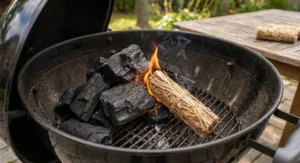
Easy-Light BBQ Starter Sticks for Beginners
If you’re new to charcoal grilling entirely, the sheer number of formats above can feel like overkill for what should be a simple task. Here’s the beginner-focused shortcut.
Look for a product explicitly marketed around single-match, no-technique ignition rather than one that assumes you already know how to build a proper charcoal bed. Weber Charcoal Lighter Cubes are close to foolproof for this reason — place one or two cubes, stack charcoal loosely around them, light, and walk away for ten minutes. There’s no splitting, no measuring, no technique to get wrong.
Kingsford Quick Light Fire Starter Rolls are a close second for beginners specifically because the shape is intuitive to tuck between charcoal pieces without much thought, and the fast ignition means less time standing around wondering if it’s working.
What beginners should actively avoid, at least for the first few grilling sessions: bulk fatwood that requires splitting technique, and granulated pour-on products that require judging quantity by eye. Both are excellent once you’ve got a feel for charcoal grilling, but they add a small skill requirement that isn’t necessary on your first attempt. Start simple, get comfortable with basic charcoal arrangement and airflow, and graduate to the more technique-dependent formats once lighting a grill stops feeling like a small event.
Common Mistakes & Safety Considerations for Canadian Grillers
A few recurring mistakes show up across aggregated reviews and general charcoal-grilling guidance, worth flagging honestly rather than assuming they only happen to “other people.”
Using too many starters at once. As mentioned in the usage guide above, doubling up on fire starters rarely halves your wait time — it mostly wastes product and can occasionally produce a flame larger than intended right at the moment you’re leaning in to check on it.
Storing starters near the grill itself, outdoors, uncovered. This is the single most common storage mistake, and it directly undermines the ignition-consistency factors covered earlier. A starter left in a bin on the deck all season will absorb moisture from rain, dew, and humidity swings even if it’s technically under a lid.
Ignoring local fire conditions. This one matters more than it might seem for something as routine as backyard grilling. During dry, windy stretches, some municipalities issue fire bans or restrictions that can apply to open-flame ignition methods, even for a contained charcoal grill. Ottawa Fire Services’ outdoor fire safety guidance is a good example of the kind of municipal detail worth checking before a long, dry weekend — clearance distances, surface requirements, and unattended-fire rules are consistent themes across most Canadian municipalities’ guidance.
Lighting too close to structures or dry vegetation. Every safety guide agrees on this one: keep the grill a solid distance from siding, railings, overhanging branches, and anything else that could catch an errant spark, and never leave a lit grill unattended even for a “quick” trip inside.
Disposing of ash too soon. Charcoal ash can retain enough heat to reignite or cause a burn for several hours after a fire appears out, even after the fire starter itself is long gone. Let coals cool completely — genuinely cool to the touch, not just dark — before disposal.
None of this is meant to be alarming; charcoal grilling with a proper fire starter is a routine, low-risk activity for the overwhelming majority of Canadian backyards. It’s just worth treating the ignition step with the same basic care most people already apply to the actual cooking.
Frequently Asked Questions
❓ What is the best fire starter for a charcoal grill?
❓ Are fire starter sticks safe to use on a charcoal grill?
❓ Do fire starter sticks affect the taste of grilled food?
❓ How many fire starter sticks does it take to light a charcoal grill?
❓ Can charcoal fire starter sticks get wet and still work?
Conclusion
Getting from cold charcoal to cooking heat shouldn’t require lighter fluid, a prayer, and twenty minutes of fanning the coals with a paper plate. The seven products covered here — spanning wax cubes, resin-rich fatwood sticks, and weather-resistant granulated pouches — cover essentially every realistic Canadian grilling scenario, from a quick Tuesday dinner to a rain-threatened Saturday cookout to a cottage that only gets visited a few weekends a season.
If there’s one takeaway to carry forward, it’s that the “best” fire starter is really a function of how you grill, not which product has the flashiest packaging. Match format to frequency, respect storage and humidity, and treat the ignition step with the same basic care you’d apply to any open flame — a quick check of local conditions through a resource like Natural Resources Canada’s wildland fire information system takes thirty seconds and is worth it during dry, windy stretches. Get the fundamentals right, and the rest of the cookout tends to take care of itself.
✨ Don’t Miss These Exclusive Deals!
🔍 Take your charcoal grilling to the next level with these carefully selected fire starters. Click on any highlighted product to check current pricing and availability on Amazon.ca. These small tools make a real difference in getting authentic, smoky backyard flavour on the table faster, for family and friends alike!
Recommended for You
- 7 Best Long-Reach BBQ Lighters Under $25 CAD In 2026
- Propane Torch Lighter for Grilling: 7 Best Picks in 2026
- Natural Fire Starters vs Fire Starter Cubes: 7 Best Picks (2026)
Disclaimer: This article contains affiliate links. As an Amazon Associate, I earn from qualifying purchases. If you purchase products through these links, we may earn a small commission at no additional cost to you.
✨ Found this helpful? Share it with your friends! 💬🤗
