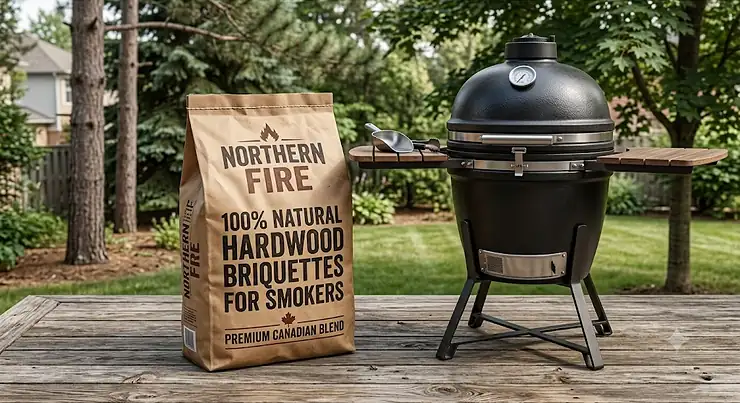
There’s a particular kind of heartbreak that comes from pulling a smoker lid open after eight hours and catching a whiff of something chemical instead of wood smoke. If you’ve ever wondered why your brisket tastes faintly like a campfire that got into a fight with a candle, the answer is usually sitting in the bag your fuel came in. Natural hardwood briquettes for smokers are compressed blocks made almost entirely from charred hardwood, bound together with a small amount of natural starch instead of coal dust, borax, or petroleum accelerants — and that difference matters more than most backyard cooks realize. A good natural briquette gives you the shape consistency and long burn time of a standard briquette, but without the off-flavours or the chemical smell that can creep into low-and-slow cooks over many hours.
This guide digs into the real specs, the aggregated review sentiment, and the honest trade-offs behind seven products you can actually find and buy for use in Canada. We’ll walk through budget options for weekend grillers, premium picks for competition-minded pitmasters, and a couple of specialty briquettes that solve specific problems — like avoiding petroleum binders entirely or keeping your carbon footprint down. Along the way, we’ll cover how to read a briquette’s ingredient list like a pro, what “clean burn” actually means in measurable terms, and where natural charcoal briquettes for smoking fit next to lump charcoal and wood chunks in a well-stocked fuel arsenal. According to Health Canada, carbon monoxide exposure from fuel combustion is dangerous to your health regardless of the fuel type, so we’ll also touch on the safety side of storing and burning any charcoal product responsibly. Canadian Lung Association
Quick Comparison Table
| Briquette | Binder Type | Burn Time | Best For |
|---|---|---|---|
| Weber 100% Natural Hardwood Briquettes | Minimal starch | Up to 3 hours per load | Budget, wide Canadian availability |
| Royal Oak 100% All Natural Briquets | Vegetable starch | ~45–60 min to ash-over, long burn | Ridge-shape airflow, mid-range |
| Cowboy Brand Natural Hardwood Briquettes | 5% vegetable starch | Long, even burn | Additive-free mainstream pick |
| Jealous Devil Max XL Briquets | ~5% vegetable starch | Extended, hot burn | Premium, dense, competition-style |
| B&B Charcoal Competition Char-Logs | Low corn starch (2–3x less than typical) | Up to 50 hours in a drum smoker | Ultra-long low-and-slow smokes |
| Original Natural Charcoal Pillow Briquettes | Minimal, no lighter fluid needed | Quick light, moderate burn | Beginners, small households |
| Olivette Organic Charcoal Briquettes | None listed — recycled olive byproduct | Up to 5 hours, reusable | Organic-certified, eco-conscious cooks |
Looking at the spread here, the biggest differentiator isn’t really “natural” versus “not natural” — nearly every option on this list qualifies as natural hardwood. What separates them is burn duration and binder ratio, which is the detail that actually shows up in your food. B&B Charcoal Competition Char-Logs stand apart for sheer stamina, built for smokers running unattended overnight, while Weber and Original Natural Charcoal are built for shorter, simpler cookouts where convenience beats marathon burn time. If your priority is minimizing anything beyond hardwood and starch, Jealous Devil Max XL and Olivette sit at the purist end of the spectrum.
💬 Just one click — help others make better buying decisions too!😊
Top 7 Natural Hardwood Briquettes for Smokers: Expert Analysis
Coverage here spans budget, mid-range, and premium tiers, plus a couple of genuinely different formats — log-shaped and organic-certified — so there’s a real option no matter what your smoker or your grocery budget looks like.
1. Weber 100% Natural Hardwood Briquettes — best budget pick with Canadian shelf availability
Weber‘s briquettes lean on the brand’s decades of grill-accessory credibility, and the standout here is simply how easy they are to find — they’re stocked at Canadian Tire, Lowe’s Canada, and independent hardware retailers across the country, which matters more than people admit when you’re out of fuel on a Saturday afternoon. Each 20 lb bag is made from 100% all-natural hardwood with no added chemical accelerants, and Weber advertises a burn window of up to three hours of consistent heat per load, which lines up with what most kettle-grill and offset-smoker owners report in casual burn tests. In practice, this makes Weber briquettes a solid “set it and don’t overthink it” option for weeknight smoking sessions — ribs, wings, or a smaller pork shoulder that doesn’t need an all-nighter of fuel.
Based on the spec comparison against pricier competitors, what Weber briquettes give up is size consistency and maximum burn length, not cleanliness of burn. Reviewers consistently note that the resealable, weatherproof bag keeps briquettes dry through a Canadian garage winter — a small but genuinely useful detail if you’re storing fuel between April and October. Aggregated customer sentiment across major retail sites frequently praises the predictable, mild smoke flavour and criticizes occasional inconsistency in piece size within the same bag, which can make chimney-loading slightly less uniform than premium alternatives.
Pros:
- ✅ Easy to find at major Canadian retailers
- ✅ Reliable 100% natural hardwood composition
- ✅ Resealable bag protects against moisture
Cons:
- ❌ Shorter burn window than premium briquettes
- ❌ Piece size can vary within a single bag
At around C$20-C$30 for a 20 lb bag, Weber briquettes offer strong value for anyone doing regular weekend grilling rather than marathon smokes, and the near-universal Canadian availability makes it the easiest entry point on this list.
2. Royal Oak 100% All Natural Hardwood Charcoal Briquets — best ridge-shape design for airflow
Royal Oak‘s signature move is a ridged briquette shape rather than the standard flat pillow, and this isn’t just cosmetic — the ridges increase surface area, which speeds up ignition and promotes more even ash-over across a full chimney load. In independent testing referenced by multiple review outlets, this style of briquette managed to sustain a temperature near 900°F for close to 80 minutes, an unusually strong result for a bag of compressed briquettes, which tells you this isn’t a fuel that’s going to struggle with hill-climbing your temps during a hot sear before you settle into low-and-slow mode. BBQ Grill Fit
What most buyers overlook about Royal Oak is that the composition is genuinely simple: hardwood char and vegetable starch, nothing more exotic. That simplicity shows up in the smoke character — reviewers repeatedly describe it as clean and classic rather than sweet or resinous, which makes it a flexible base layer you can pair confidently with wood chunks for additional flavour without worrying about the base fuel muddying things. A common complaint in user reviews is that bags can arrive with a higher-than-expected percentage of broken pieces, which doesn’t affect performance but is worth knowing if presentation and uniform sizing matter to your chimney-loading routine.
Pros:
- ✅ Ridge design speeds ignition and airflow
- ✅ Sustains high heat for extended periods
- ✅ Simple, transparent hardwood-and-starch formula
Cons:
- ❌ Occasional breakage reported in shipping
- ❌ Not as widely stocked in Canada as Weber
Priced in the mid-C$20s to low-C$30s for a 15.4 lb bag, Royal Oak earns its spot as a mid-range workhorse — the kind of briquette a lot of backyard pitmasters quietly rely on without making a big deal of it.
3. Cowboy Brand Natural Hardwood Briquettes — best mainstream additive-free option
Cowboy briquettes make a specific, verifiable claim worth taking seriously: they’re composed of 95% hardwood charcoal and 5% vegetable binder, with the brand explicitly stating there’s no coal, no chemical fillers, and no limestone in the mix — ingredients that show up in many conventional briquette brands you’ll find at the grocery store. That 95/5 ratio is about as lean as mainstream briquettes get without moving into log or lump territory, and it directly answers the “additive-free briquettes” question a lot of shoppers are actually asking when they search for natural options.
Here’s what the spec sheet won’t tell you, but user reports suggest: the clean composition translates into noticeably less ash buildup during long smokes, which matters practically because excess ash smothers airflow and can drag your smoker’s temperature down mid-cook. Reviewers frequently mention an “extremely clean burn with very little ash” as the standout trait, alongside a milder smoke profile than heavier hardwood blends like hickory-forward competitors. On the flip side, some users note the briquettes run slightly smaller than premium XL formats, meaning you may need more pieces per chimney load to hit the same heat output as a Jealous Devil or B&B product.
Pros:
- ✅ 95% hardwood, minimal 5% vegetable binder
- ✅ Low ash output supports steady airflow
- ✅ No coal, limestone, or chemical fillers
Cons:
- ❌ Smaller piece size than XL competitors
- ❌ Milder flavour may underwhelm hickory fans
Around C$20-C$28 for a 14 lb bag, Cowboy briquettes sit comfortably in the mid-range and are a strong pick for anyone specifically shopping the “additive-free” angle without wanting to pay premium prices.
4. Jealous Devil Max XL Briquets — best premium dense briquette for competition-style smoking
If you’ve spent any time in online BBQ forums, you’ve probably seen Jealous Devil described with some version of “these things are massive.” That’s not marketing hyperbole — the Max XL briquets are genuinely oversized compared to standard pillow briquettes, built from 95% pure quebracho hardwood (one of the densest woods used in charcoal production) with roughly 5% vegetable starch and explicitly no borax, no sodium nitrate, and no limestone filler. Quebracho’s density is the real story here: denser wood means more stored energy per briquette, which translates into longer, hotter burns per unit of fuel.
Based on head-to-head burn comparisons against mainstream brands, the extra-large format does produce a hotter, longer-lasting fire, though independent testers have pushed back on some of the “extremely low ash” marketing claims, finding ash output roughly comparable to well-made competitors rather than dramatically lower. Reviewers consistently note the size makes chimney-loading a bit different than you’re used to — fewer pieces fit per chimney, so plan your load accordingly. For dedicated smokers running long cooks where fuel efficiency and heat retention matter more than upfront cost per bag, this is a genuinely premium option that lives up to most of its billing.
Pros:
- ✅ Dense quebracho hardwood burns hot and long
- ✅ No borax, nitrates, or limestone additives
- ✅ Resealable box keeps briquettes fresh
Cons:
- ❌ Premium price relative to standard briquettes
- ❌ Ash reduction claims outperform independent tests
Expect to pay in the C$35-C$50 range depending on box size, positioning Jealous Devil as the splurge pick for pitmasters who treat fuel choice as seriously as they treat their rub.
5. B&B Charcoal Competition Char-Logs — best for extra-long, unattended smoking sessions
B&B Charcoal‘s Char-Logs solve a specific problem that briquettes generally struggle with: sustained burn time without babysitting the fire. These hollow, log-shaped briquets are made from fine charred hardwood particles bound with corn starch — and crucially, B&B has stated they use two to three times less corn starch in their binding process compared to other brands, which is about as close to a verifiable “low-binder” claim as you’ll find in the mainstream briquette space. The hollow, log shape isn’t cosmetic either; it improves airflow through the fuel bed itself, contributing to a longer and more consistent burn than solid briquettes of similar mass. B&B Charcoal
What most buyers overlook about Char-Logs is just how long they last: B&B has tested these logs at over 50 hours of burn time in an Ugly Drum Smoker (UDS), which is an extraordinary number for anyone running an overnight brisket or a multi-day competition cook. That endurance comes at a real cost, though — reviewers note the price per bag runs noticeably higher than standard briquettes, and availability outside specialty BBQ retailers can be spotty depending on where in Canada you’re shopping. For hardcore low-and-slow enthusiasts, though, the trade-off of paying more for dramatically less mid-cook fuel management is an easy call. B&B Charcoal
Pros:
- ✅ Up to 50-hour burn time in drum smokers
- ✅ 2-3x less corn starch than typical binders
- ✅ Hollow log shape improves consistent airflow
Cons:
- ❌ Higher price per pound than standard briquettes
- ❌ Limited retail availability in some regions
At roughly C$45-C$65 for a 30 lb bag, B&B Charcoal Char-Logs are a specialist’s tool — overkill for a Tuesday-night grill session, but exactly right for the smoker who measures cook time in days, not hours.
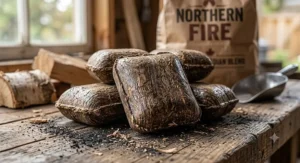
6. Original Natural Charcoal Hardwood Pillow Briquettes — best easy-light option for beginners
Not every smoking session needs competition-grade fuel, and Original Natural Charcoal briquettes are built around a genuinely useful convenience feature: they’re formulated to light quickly enough that many users skip lighter fluid entirely, using just a chimney starter or firelighters. Made from 100% hardwood with no fillers or chemical additives, the briquettes are marketed as “chef grade,” and while that phrase is mostly marketing flourish, the underlying composition claim holds up against the ingredient lists of comparable natural briquettes.
Here’s what the spec sheet doesn’t emphasize enough: fast, reliable ignition is genuinely valuable if you’re new to charcoal smoking and still building confidence with a chimney starter. Reviewers note minimal smoke, sparking, and popping during lighting — a detail that matters if you’re smoking on an apartment balcony or a smaller urban backyard where a shower of sparks isn’t just inconvenient, it’s a real hazard. The trade-off is bag size: at 7.07 lb, this is a smaller format better suited to single cooks or households that grill occasionally rather than families running weekly all-day smokes.
Pros:
- ✅ Lights fast without lighter fluid
- ✅ Minimal sparking, smoke, and popping
- ✅ 100% hardwood with no chemical fillers
Cons:
- ❌ Smaller bag size than most competitors
- ❌ Less ideal for extended, multi-hour smokes
Priced around C$18-C$25 for the smaller bag format, this is the pick for newer smokers who want a forgiving, low-drama entry point before investing in bulkier premium bags.
7. Olivette Organic Charcoal Briquettes — best USDA-certified organic and reusable option
Olivette takes a genuinely different approach: instead of hardwood chips, these briquettes are made from recycled olive pulp, pits, and pruning branches — agricultural byproducts from an olive-oil-producing family business rather than standard forestry charcoal. The result is USDA Organic certified, and the brand states the briquettes contain no chemical additives at all, with olive wood contributing a distinct, mild aroma rather than the heavier smokiness of oak or hickory. This is a genuinely novel entry for anyone specifically searching out natural charcoal briquettes for smoking that minimize both chemical inputs and reliance on virgin hardwood.
On paper, this means a lower environmental footprint per cook, since the raw material is agricultural waste rather than harvested trees, and Olivette markets the briquettes as reusable multiple times when used in a kettle-style grill, which can meaningfully lower cost-per-cook over time despite the smaller bag size. Reviewers describe the burn as notably smoke-light even during active combustion — a claim that lines up with the product’s marketing but is worth verifying yourself if smoke density is a big part of your flavour goals, since a lighter-smoke fuel changes the character of long smoking sessions more than quick grilling.
Pros:
- ✅ USDA Organic certified, zero chemical additives
- ✅ Made from recycled olive agricultural byproducts
- ✅ Reusable across multiple grilling sessions
Cons:
- ❌ Smaller 6.6 lb bag limits long smokes
- ❌ Mild olive aroma won’t suit heavy-smoke fans
At roughly C$25-C$35 for the standard bag, Olivette is the specialty pick for cooks who prioritize certification and sustainability credentials as much as raw performance.
Practical Usage Guide: Getting the Most from Your Briquettes
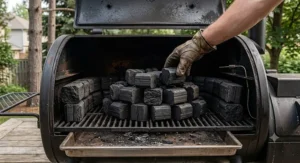
Buying the right bag is only half the equation — how you light, arrange, and manage natural hardwood briquettes changes the outcome of your cook almost as much as the product itself. Start with a chimney starter rather than lighter fluid whenever possible; natural briquettes generally catch faster than you’d expect precisely because they lack the chemical accelerants that some standard briquettes rely on to compensate for denser composition. Fill the chimney about two-thirds full, light from the bottom through the vents, and wait until the top layer is glowing orange and lightly ashed before dumping the coals into your smoker.
For long smokes, arrange briquettes using the minion method: build an unlit ring or pile of briquettes in your firebox, then add a small scoop of fully lit coals on top or at one end. This lets the fire spread gradually rather than burning hot and fast, stretching your fuel across many hours instead of one. A common first-30-days mistake is closing all the vents too aggressively trying to “save fuel” — this actually starves the fire of oxygen and produces more creosote and bitter smoke rather than a slower, cleaner burn. Keep bottom vents moderately open and control temperature primarily through the top exhaust vent instead. Store unused briquettes in a sealed, dry container; even “natural” briquettes absorb ambient moisture over a Canadian humid summer, which noticeably slows ignition and can introduce a musty off-flavour into your smoke.
Real-World Scenarios: Which Briquette Fits Your Smoking Style
Picture three different backyards on a Saturday morning. First, there’s Priya, a condo-dwelling weekend griller with a small kettle and limited storage space — for her, Original Natural Charcoal‘s fast, low-spark ignition and compact 7.07 lb bag make far more sense than a 30 lb box of Char-Logs she’d have nowhere to store. Her cook sessions rarely run past two hours, so burn-time economy matters less than convenience and safety around a shared balcony.
Then there’s Marcus, who runs an offset smoker every second weekend for a rotating cast of friends and family, usually smoking an 8-10 lb pork shoulder that needs six to eight hours of steady heat. Royal Oak or Cowboy briquettes hit his sweet spot — reliable mid-range performance, moderate cost per bag, and widely available so he’s never stuck mid-project. Finally, there’s Aisha, a competition-adjacent pitmaster who runs 20-hour briskets in a drum smoker and treats fuel consistency as seriously as her rub blend. For her, B&B Charcoal Competition Char-Logs or Jealous Devil Max XL are worth the premium price simply because babysitting a fire at 3 a.m. isn’t part of the plan.
How to Choose Natural Hardwood Briquettes for Smokers
- Check the ingredient list first. Look specifically for “hardwood” and “vegetable starch” — avoid products listing coal, limestone, borax, or sodium nitrate, which are common fillers in conventional briquettes.
- Match burn duration to your cook length. Short grilling sessions don’t need Char-Log-level endurance; overnight smokes absolutely do.
- Consider piece size versus your chimney starter. Extra-large briquettes like Jealous Devil’s fit fewer pieces per load, which changes your lighting routine.
- Weigh ash output against your airflow system. Offset smokers with limited ash management benefit most from genuinely low-ash options like Cowboy or Royal Oak.
- Factor in storage conditions. Humid basements or uncovered sheds shorten the useful shelf life of any natural briquette faster than a sealed, dry space would.
- Price per pound, not per bag. A 30 lb premium bag can be cheaper per cook than repeatedly buying smaller bags of a budget brand.
- Read aggregated reviews for consistency complaints. Piece breakage and size variance show up more in reviews than in marketing copy, and they matter for even burns.
Additive-Free Briquettes vs Standard Charcoal Briquettes
The term “additive-free” gets thrown around loosely, so it’s worth being precise about what actually separates natural hardwood briquettes from the standard blue-bag charcoal most Canadians grew up using. Conventional briquettes commonly include mineral char (sometimes derived from coal), limestone as a filler, sodium nitrate to aid ignition, and borax as a binding agent — none of which are inherently dangerous in small combustion quantities, but all of which can subtly affect smoke character and ash volume during long cooks. Natural hardwood briquettes strip most or all of these out, relying almost exclusively on hardwood char plus a small percentage of vegetable starch to hold the compressed shape together.
The practical difference shows up most clearly in two places: ignition behaviour and ash volume. Standard briquettes often light faster specifically because of the nitrate content, while natural briquettes may take slightly longer in a chimney starter but typically produce a cleaner-tasting smoke and noticeably less fine ash, which matters for airflow-sensitive setups like offset smokers and kamados. For pure grilling over high, direct heat, the difference is often barely noticeable to most palates. For six-hour-plus smoking sessions, though, where smoke exposure compounds over time, most experienced smokers report a real, tastable gap between additive-heavy and additive-free fuel.
Binder-Free Charcoal: What “Natural” Really Means
Here’s the honest answer to a question a lot of shoppers are quietly asking: true binder-free briquettes essentially don’t exist in the mainstream market, and any product claiming zero binder while still holding a compressed shape deserves a skeptical second look. Briquettes are, by definition, compressed and reformed charcoal — they need something to hold that shape together, and the industry standard for a “clean” binder is food-grade vegetable or corn starch, used in small percentages (typically 2-8%) rather than the petroleum or chemical binders found in bargain-bin products. Brands like B&B and Jealous Devil differentiate themselves by minimizing that percentage as much as physically possible, not by eliminating it entirely.
If genuinely binder-free charcoal is your priority, the honest recommendation is to look at lump charcoal instead of briquettes — lump charcoal is literally chunks of carbonized wood with no compression or binding agent at all, which is why brands like Rockwood and Jealous Devil market their lump products separately from their briquette lines. The trade-off is that lump charcoal burns less predictably and doesn’t hold a consistent shape or size, which matters for long, unattended smokes where briquettes’ uniformity is genuinely an advantage. Choosing between the two isn’t really about which is “more natural” — both are legitimate, honest fuel choices; it’s about which trade-off, predictability versus zero binder, matters more for your specific cook.
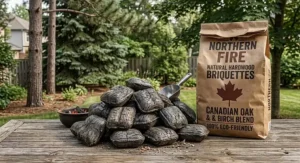
What to Expect: Real-World Smoker Performance
Spec sheets tell you burn temperature and duration in ideal lab conditions, but your actual backyard smoker will behave differently depending on wind, ambient temperature, and how tightly your firebox seals. On a mild Canadian summer evening with light wind, expect natural hardwood briquettes to run close to their advertised burn times — Weber’s three-hour window or B&B’s extended Char-Log burns are generally achievable under normal conditions. On a cold or windy fall day, though, expect meaningfully shorter burn times and more frequent temperature swings, since more heat escapes through the firebox and more oxygen gets pulled through unintentionally via wind pressure.
A clean burn, in practical terms, means thin, barely visible blue-grey smoke rather than thick white or black smoke billowing from your vents. Thick white smoke usually signals either too much fuel added at once, insufficient airflow, or briquettes that haven’t fully caught before being loaded — all fixable with technique rather than a fuel swap. If you’re consistently seeing heavy, acrid smoke regardless of technique, that’s a stronger signal the fuel itself contains lower-quality binders or fillers than advertised, and it’s worth cross-checking the ingredient list against what we’ve covered above.
Smoker Fuel Choice: Briquettes vs Lump vs Wood Chunks
Choosing between briquettes, lump charcoal, and wood chunks isn’t really an either-or decision — most experienced smokers use some combination depending on the cook. Briquettes excel at providing a stable, long-duration heat base precisely because their uniform shape and density burn predictably hour after hour, which is why they’re the default choice for extended low-and-slow sessions. Lump charcoal ignites faster and burns hotter per piece, making it the better choice for high-heat searing or shorter cooks where maximum flavour and minimal ash matter more than multi-hour consistency.
Wood chunks and chips, meanwhile, aren’t really a competing fuel at all — they’re a flavour additive layered on top of a briquette or lump base, providing concentrated smoke character (hickory, apple, cherry, mesquite) that pure charcoal can’t replicate on its own. A common and effective setup for smoker fuel choice is briquettes as the steady heat foundation, with two or three wood chunks added periodically throughout the cook for flavour layering. This combination gives you the burn-time predictability of briquettes with the aromatic complexity that comes from real wood smoke, without needing an entire firebox of pure lump charcoal.
Common Mistakes When Buying Natural Charcoal Briquettes for Smoking
The most frequent mistake is assuming “natural” and “premium” are interchangeable — plenty of mid-range natural briquettes outperform expensive ones for specific use cases, and paying extra for Char-Log-level endurance is wasted money if you’re only ever grilling burgers for forty minutes. A second common error is buying based on bag size alone without checking price per pound; a smaller premium bag can sometimes be cheaper per cook than repeatedly restocking a larger budget bag, especially when factoring in how much fuel gets wasted through inconsistent burning.
Shoppers also frequently overlook storage conditions when purchasing in bulk. Buying a 30 lb box of premium briquettes makes little sense if you don’t have dry, sealed storage — humidity-damaged briquettes light poorly regardless of how clean their original composition was. Finally, a subtler mistake is chasing the lowest possible binder percentage without considering that briquette shape uniformity (which relies on that binder) is precisely what gives briquettes their long-burn advantage over lump charcoal in the first place; obsessing over binder percentage while ignoring actual cook performance can lead you toward a product that’s marginally “cleaner” on paper but meaningfully worse in your actual smoker.
Long-Term Cost & Maintenance
Running the numbers on cost-per-cook reveals some counterintuitive results. A budget bag like Weber at roughly C$25 for 20 lb works out to about C$1.25 per pound, while a premium bag like B&B Char-Logs at C$55 for 30 lb comes to roughly C$1.83 per pound — meaningfully more expensive on paper. But factor in burn efficiency: if Char-Logs genuinely deliver 50 hours of unattended burn versus repeatedly reloading a budget briquette every three hours across the same 50-hour window, the labour savings and reduced risk of temperature crashes during an unattended overnight smoke can easily justify the premium for anyone running frequent long cooks.
For occasional weekend grillers, though, this math flips entirely — there’s no long-burn advantage to capture if your typical cook is under two hours, making budget and mid-range options the objectively better long-term value. Maintenance-wise, natural briquettes require essentially no special care beyond dry storage, though it’s worth periodically checking bags for moisture absorption or clumping, both signs the product should be used soon rather than stockpiled for next season.
Safety, Storage & Canadian Regulations Guide
Charcoal combustion of any kind, natural or conventional, produces carbon monoxide, and Health Canada is explicit that carbon monoxide exposure is dangerous and can cause poisoning or death, particularly in enclosed spaces. This isn’t a hypothetical risk specific to smoking — Ottawa Fire Services responded to a case where eleven people from one family were hospitalized after using a charcoal barbecue indoors during a power outage, with carbon monoxide levels reaching 180 parts per million. Never operate any charcoal smoker or grill inside a garage, tent, or enclosed porch, even with doors or windows partially open, and consider installing a carbon monoxide alarm near your kitchen if you smoke regularly, particularly during colder months when the temptation to move cooking indoors increases. Canadian Lung AssociationCanadian Propane Association
Beyond CO safety, the Hearth, Patio & Barbecue Association of Canada recommends grilling only on stable, level ground, keeping equipment well clear of siding and overhangs, and always allowing coals to fully cool before disposal or storage. For storage, keep bagged briquettes in a dry, ventilated space away from direct sun exposure, which can degrade the vegetable starch binder over time and make ignition less reliable. If you’re smoking through a Canadian winter, be aware that natural briquettes generally need more time to reach cooking temperature in cold ambient air, so build extra lead time into your cook schedule rather than rushing the chimney process.
Buyer’s Decision Framework
If you smoke less than twice a month and mostly grill quick meals, choose a budget option like Weber or Original Natural Charcoal, because paying for premium burn duration you won’t use is money wasted. If you run regular six-to-ten-hour smokes on weekends, choose a mid-range pick like Royal Oak or Cowboy, since their balance of price and performance suits sustained but not extreme cook lengths. If you’re running overnight or multi-day cooks and fuel reliability directly affects your sleep schedule, choose B&B Charcoal Competition Char-Logs or Jealous Devil Max XL, because the premium price buys genuine peace of mind during unattended hours. And if certification, sustainability, or a genuinely different flavour profile matters more to you than raw burn stats, Olivette‘s organic olive-byproduct briquettes are worth the smaller bag size and higher per-pound cost.
FAQ
❓ Are natural hardwood briquettes better than regular charcoal briquettes?
❓ Do natural briquettes need lighter fluid to start?
❓ How long do natural hardwood briquettes burn in a smoker?
❓ Is binder-free charcoal actually available for smokers?
❓ What makes a charcoal briquette burn 'clean'?
Conclusion
Choosing natural hardwood briquettes for smokers ultimately comes down to matching burn duration and ingredient simplicity to how you actually cook, not to whichever bag has the boldest “100% natural” label. Budget options like Weber and Original Natural Charcoal serve weekend grillers perfectly well, mid-range picks like Royal Oak and Cowboy strike a strong balance for regular smokers, and premium options like B&B’s Char-Logs and Jealous Devil’s Max XL earn their price tags specifically through extended, unattended burn reliability. Olivette rounds things out as a genuinely different, certification-backed choice for cooks who care as much about sourcing as flavour.
None of these products are magic, and none will fix a poorly managed fire or a smoker with bad airflow — but starting with a genuinely clean-burning, honestly labelled fuel removes one major variable from a hobby that already has plenty of them. Whichever bag ends up in your garage, the fundamentals stay the same: dry storage, proper chimney lighting, and patience with your vents will get you further than any single brand claim on the packaging.
✨ Don’t Miss These Exclusive Deals!
🔍 Take your next smoke to the next level with these carefully selected natural briquettes. Click on any highlighted product above to check current pricing and availability. The right fuel choice can turn an average cookout into the barbecue your family and friends actually remember!
Recommended for You
- Competition-Grade Charcoal Briquettes for BBQ: 7 Top Picks (2026)
- Charcoal Briquettes Under $30 CAD: 7 Best Bags for 2026
- Weber Briquettes vs Kingsford Briquettes: The Honest 2026 Verdict
Disclaimer: This article contains affiliate links. As an Amazon Associate, I earn from qualifying purchases. If you purchase products through these links, we may earn a small commission at no additional cost to you.
✨ Found this helpful? Share it with your friends! 💬🤗
