In This Article
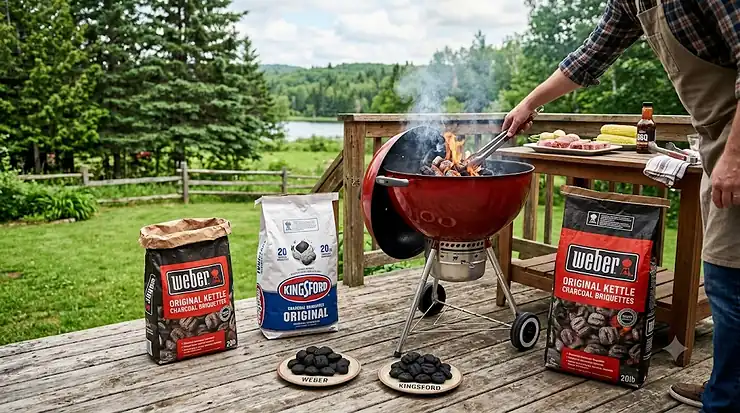
Somewhere between the propane snobs and the lump-charcoal purists sits a very practical question: weber briquettes vs Kingsford briquettes, which one actually deserves a spot in your garage this summer? It sounds like a small decision. It isn’t, not really — the fuel you load into your kettle shapes everything downstream, from how long you can walk away from the grill to how much smoke curls up your neighbour’s laundry line. Weber briquettes are the newer, denser challenger built specifically with Weber’s own kettles in mind, while Kingsford is the century-old household name that basically invented the category and still dominates shelf space from Halifax to Victoria.
Here’s the short version: weber briquettes vs Kingsford briquettes essentially comes down to Weber’s larger, denser all-natural hardwood briquette against Kingsford’s smaller, additive-assisted briquette family, which now spans Original, Professional, Competition, Match Light, and Low & Slow formulas. Weber tends to burn longer and hotter once established; Kingsford tends to light faster and costs less per bag. Neither is “wrong” — they’re built for different rhythms of backyard cooking.
This guide walks through seven real briquette products Canadians can actually find at Amazon.ca, Home Depot, and Walmart Canada, breaks down burn consistency and briquette shape in plain language, and gives you a framework for choosing based on your grill, your patience level, and your budget. No fluff, no invented “I tested this for six months” claims — just spec sheets, aggregated reviewer sentiment from real barbecue forums, and honest analysis.
Quick Comparison: Weber Briquettes vs Kingsford Briquettes at a Glance
Before diving into all seven products, here’s the 30-second version for anyone who just wants an answer before their in-laws show up for dinner.
| Briquette | Burn Time (approx.) | Briquette Size | Best For |
|---|---|---|---|
| Weber 100% All-Natural Hardwood Briquettes | Around 1 hour+ per load, longest in this lineup | 30-40% larger than Kingsford | Long, unattended cooks on a Weber kettle |
| Kingsford Original Charcoal Briquettes | Roughly 45 minutes to 1 hour | Standard, smaller Kingsford size | Beginners and weeknight grilling |
| Kingsford Professional Charcoal Briquettes | 45 minutes to 1 hour, low ash | Standard size, denser mix | Ceramic grills and searing |
| Royal Oak Natural Organic Char Briquettes | Comparable to Kingsford Original | Standard, ridge design | Budget-conscious weekend grillers |
Looking at the table, the pattern that jumps out immediately is size versus convenience. Weber 100% All-Natural Hardwood Briquettes win the raw burn-time contest because bigger briquettes simply hold more fuel per piece, while Kingsford Original Charcoal Briquettes trade some of that longevity for faster, more predictable ignition that new grillers appreciate. Royal Oak Natural Organic Char Briquettes land in between on performance but noticeably below both on price, which matters if you’re grilling every weekend from May through September.
💬 Just one click — help others make better buying decisions too!😊
Top 7 Weber and Kingsford Briquettes: Expert Analysis
Coverage below spans budget, mid-range, and premium options, plus a couple of specialty formulas worth knowing about before you commit to a brand for the whole season.
1. Weber 100% All-Natural Hardwood Charcoal Briquettes — longest burn time in this lineup
The headline feature here is size: Weber 100% All-Natural Hardwood Charcoal Briquettes run roughly 30 to 40 percent larger than a standard Kingsford briquette, and that extra mass is exactly why they outlast almost everything else on this list. Made from 100% natural hardwood with no added fillers, they’re rated to deliver steady heat for extended grilling sessions, and the resealable, waterproof bag is a small but genuinely useful touch if your charcoal lives in a damp garage over winter. On paper, the bigger briquette means fewer refuels during a long cook, and it also means the coals can climb to higher sustained temperatures if you give them enough airflow — useful when you’re searing a thick tri-tip rather than babysitting hot dogs.
Who should care: anyone who grills for more than an hour at a stretch, or anyone running a kettle-style grill where Weber engineered the briquette to match the airflow of its own vents. Aggregated sentiment from long-running threads on The Virtual Weber Bulletin Board and Weber Kettle Club consistently notes that Weber 100% All-Natural Hardwood Charcoal Briquettes burn noticeably longer than Kingsford’s standard line side by side, though a few users mention they can be harder to source consistently outside of Weber’s own retail partners. Independent burn tests posted on those same forums found Weber’s briquettes produced a similar ash percentage by weight to Kingsford Original, but more ash by volume — worth knowing if bin space under your grill is tight.
Pros:
- ✅ Largest, longest-burning briquette in this comparison
- ✅ 100% natural hardwood with no chemical binders
- ✅ Resealable, weatherproof bag protects unused product
Cons:
- ❌ Less consistently stocked than Kingsford at Canadian retailers
- ❌ Larger size means longer wait before the grill is ready
Price sits around C$30-C$40 for a 20 lb (roughly 9 kg) bag at the time of research, and given the longer burn per briquette, the cost-per-hour math tends to favour Weber for extended cooks even though the sticker price looks higher.
2. Kingsford Original Charcoal Briquettes — best all-around value for beginners
Kingsford Original Charcoal Briquettes are, by a wide margin, the best-selling charcoal briquette in North America, and the reason isn’t mysterious: Sure Fire Grooves cut into each briquette add extra surface area, so airflow reaches more of the fuel at once and lighting happens roughly 25 percent faster than a plain block would manage. That translates into real dinner-table math — you’re looking at about 15 minutes from match to cooking-ready coals, which matters on a Tuesday when nobody wants to wait 40 minutes for burgers. The smaller, more uniform briquette shape also means a chimney starter loads more evenly than it does with Weber’s chunkier pieces.
Reviewers across BBQ forums and retail sites consistently describe Kingsford Original as beginner-friendly, largely because the mild starter agent baked into the briquette forgives sloppy lighting technique in a way pricier hardwood-only briquettes don’t. The trade-off, and it’s a real one, is a shorter burn window — expect useful heat for something in the neighbourhood of 45 minutes to an hour before you’re adding more fuel, noticeably less than Weber’s briquette in side-by-side burn tests published by hobbyist testers. For weeknight grilling, that’s rarely a problem. For a four-hour pork shoulder, it means planning your refuel schedule.
Pros:
- ✅ Fastest, most forgiving ignition for new grillers
- ✅ Widely available at Canadian grocery, hardware, and big-box stores
- ✅ Consistent briquette shape for even chimney loading
Cons:
- ❌ Shorter burn time than Weber’s hardwood briquette
- ❌ Contains a starter additive some purists prefer to avoid
At around C$18-C$22 for a 7.26 kg (16 lb) bag, with in-store markdowns occasionally dropping into the low teens, this is the value benchmark every other briquette on this list gets measured against.
3. Kingsford Professional Charcoal Briquettes — lowest ash for ceramic grills
Kingsford Professional Charcoal Briquettes exist because plenty of grillers upgraded to a ceramic cooker like a Big Green Egg-style unit and discovered that standard briquettes clog the airflow with ash far too quickly. This formula is built with a denser char blend specifically to burn hotter and leave a lower-ash residue behind, which in practice means less mid-cook fiddling with vents that have gone half-blocked. What that spec sheet doesn’t spell out clearly is why this matters: on a ceramic grill, ash buildup around the firebox can choke airflow and stall your temperature climb right when you need a hard sear, so a low-ash formula genuinely changes how the cook goes.
This is a mid-tier upgrade rather than an everyday briquette, and it’s priced accordingly. Grillers running kamado-style cookers on forums like Pitmaster Club describe it as their go-to for high-heat searing sessions specifically because it holds a hotter, steadier burn than Original without the ash pile that used to force a mid-cook cleanout. If you’re grilling on a standard kettle and not chasing max searing temperatures, the upgrade is harder to justify.
Pros:
- ✅ Noticeably lower ash output than Kingsford Original
- ✅ Denser char blend supports higher sustained heat
- ✅ Well suited to ceramic and kamado-style grills
Cons:
- ❌ Premium pricing versus the Original formula
- ❌ Overkill for casual weeknight grilling
Expect somewhere in the C$20-C$25 range for a 5.44 kg (12 lb) bag at the time of research — a real step up from Original, and worth it mainly if ash management is actively hurting your cooks.
4. Kingsford Competition Briquettes — hottest sear for steak night
Kingsford Competition Briquettes were built to split the difference between briquette convenience and lump charcoal’s raw heat, and the shape reflects that ambition — a slightly different pressed profile than Original, designed to burn with the high-heat character of lump while keeping the predictable, stackable consistency of a briquette. That combination is genuinely useful for anyone who wants to sear a steak hard and fast without switching entirely to messier lump charcoal. Ready-to-cook in roughly 10 to 15 minutes according to the manufacturer’s own timing, it’s positioned as the option for people who care more about peak heat than total burn duration.
The honest trade-off here, based on aggregated forum sentiment from sites like Weber Kettle Club’s charcoal showdown tests, is that Competition briquettes run hot and fast but burn out sooner than a low-and-slow formula — testers noted you could feel more radiant heat standing several feet back compared to milder briquettes, but also noted it wasn’t the pick for a long smoke. If your grilling calendar is mostly steaks, burgers, and searing rather than eight-hour briskets, that trade makes sense.
Pros:
- ✅ High searing heat comparable to lump charcoal
- ✅ Fast ready time, roughly 10-15 minutes
- ✅ Still stacks and loads like a standard briquette
Cons:
- ❌ Shorter overall burn than Original or Weber
- ❌ Some reviewers note more smoke on initial ignition
Pricing tends to land around C$20-C$26 for an 11.1 lb (5 kg) bag at the time of research, positioning it as a specialty purchase rather than a weekly staple for most households.
5. Kingsford Match Light Instant Charcoal Briquettes — fastest lighting, zero chimney needed
Kingsford Match Light Instant Charcoal Briquettes solve one very specific problem: not owning a chimney starter, or not wanting to deal with one at a campsite or cottage dock. Each briquette is pre-infused with a measured amount of lighter fluid, so a single match gets you to cooking-ready coals in about 10 minutes without any separate fluid, cube, or electric starter. The manufacturer states the fluid burns off completely before food goes on, which matters enough that Kingsford prints an explicit carbon monoxide warning on the bag reminding grillers to only use this — like any charcoal product — outdoors in open air.
What most buyers overlook about this convenience is that it comes with a genuine flavour trade-off: aggregated reviewer sentiment across grilling forums consistently flags a faint chemical smell during the first few minutes of lighting that dissipates once the coals ash over, and a handful of purists actively avoid the product for that reason. For camping, tailgating, or anyone who simply doesn’t want to own a chimney starter, that’s a small price for genuine convenience. For a backyard griller with two minutes to spare for proper lighting, a chimney and Original briquettes will get a cleaner result.
Pros:
- ✅ Lights with just a match, no chimney required
- ✅ Ready to cook in about 10 minutes
- ✅ Convenient for camping, cottages, and tailgates
Cons:
- ❌ Faint chemical smell noted during early ignition
- ❌ Not preferred by grillers chasing pure hardwood flavour
Expect roughly C$18-C$24 for a twin pack of 6.2 lb bags at the time of research, a modest premium over Original that buys back the convenience of skipping a chimney starter entirely.
6. Kingsford Low & Slow Charcoal Briquettes — built for backyard brisket marathons
Kingsford Low & Slow Charcoal Briquettes are Kingsford’s direct answer to the long-smoke crowd who kept buying premium brands specifically for extended burn times. The formula is engineered to outlast Original across a long cook, with a low-ash profile aimed at ceramic grills and smokers running for hours at low, steady temperatures. Ready in about the same 15-minute window as Original, the difference shows up later in the cook — this is the briquette built to still be producing usable heat six or eight hours in, rather than needing a mid-cook top-up.
Here’s what the spec sheet won’t tell you outright: a longer burn per briquette also means slower, gentler heat delivery, so this isn’t the pick if you want to sear first and smoke second in the same session — you’d want Competition or Weber’s hardwood briquette for that opening blast, then switch fuel types. Reviewers on smoking-focused forums describe it as a genuine niche product built for one job — briskets, pork shoulders, ribs — rather than an everyday griller’s briquette, and pricing reflects that specialty positioning.
Pros:
- ✅ Engineered specifically for long, low-temperature smokes
- ✅ Low-ash formula suits ceramic smokers well
- ✅ Consistent 15-minute ready time like Original
Cons:
- ❌ Not ideal for quick, high-heat searing
- ❌ Premium price for a single-purpose formula
At around C$18-C$23 for a 12 lb bag at the time of research, it’s priced close to Kingsford Professional, and the choice between them really comes down to whether your grilling calendar leans toward searing or smoking.
7. Royal Oak Natural Organic Char Briquettes — budget pick that punches above its price
Royal Oak Natural Organic Char Briquettes are the lesser-known name on this list, and that’s exactly why they’re worth including: Royal Oak has quietly built a loyal following among grillers who load up during hardware-store sales and never look back. The briquettes use a ridge design intended to improve airflow for faster starts, and the company advertises a roughly 15-minute ready time in line with Kingsford’s mainstream products. Made from natural hardwood and vegetable starch binders rather than coal dust, the ingredient profile reads closer to Weber’s all-natural approach than to a bargain-bin briquette.
Aggregated sentiment from long-running barbecue forum threads is mixed but generally positive — several grillers rank Royal Oak just behind Weber and Stubb’s on personal preference lists, praising the burn smell and everyday reliability, while a smaller number of posts describe occasional inconsistency between bags, with one batch running hotter or cooler than the last. Based on the spec comparison, this isn’t the briquette for a competition cook where consistency is everything, but for weekend family grilling where budget matters more than perfect repeatability, it’s a genuinely smart pick.
Pros:
- ✅ Noticeably cheaper than Kingsford or Weber per bag
- ✅ All-natural hardwood and vegetable starch binder
- ✅ Ridge design supports faster, easier lighting
Cons:
- ❌ Some reported bag-to-bag consistency variation
- ❌ Less widely available than Kingsford at major Canadian retailers
Pricing runs roughly C$12-C$16 for a 7 lb bag at the time of research, making it the clear value leader in this entire lineup on a per-bag basis.
Top 7 Products Compared: Specs and Value
| Briquette | Ready Time | Price Range (CAD) | Best For |
|---|---|---|---|
| Weber 100% All-Natural Hardwood Briquettes | ~15 min | C$30-C$40 (20 lb) | Long unattended cooks |
| Kingsford Original | ~15 min | C$18-C$22 (16 lb) | Beginners, weeknights |
| Kingsford Professional | ~15 min | C$20-C$25 (12 lb) | Ceramic grills |
| Kingsford Competition | ~10-15 min | C$20-C$26 (11.1 lb) | Hard searing |
| Kingsford Match Light | ~10 min | C$18-C$24 (2×6.2 lb) | No-chimney convenience |
| Kingsford Low & Slow | ~15 min | C$18-C$23 (12 lb) | Long smokes |
| Royal Oak Natural Organic | ~15 min | C$12-C$16 (7 lb) | Budget weekend grilling |
The clearest takeaway from this table is that ready time barely varies across the lineup — nearly everything is cooking-ready inside 15 minutes — while price and intended use case are where the real differences live. If you only grill occasionally, Royal Oak Natural Organic Char Briquettes deliver the lowest cost of entry, while Weber 100% All-Natural Hardwood Briquettes justify their higher price primarily through burn duration rather than speed. Buyers running specialty grills should note that Kingsford Professional Charcoal Briquettes and Kingsford Low & Slow Charcoal Briquettes are priced almost identically, so the deciding factor is really searing versus smoking, not budget.
💬 See something that fits your setup? Prices shift often, so check current availability before you head to the store.
Practical Usage Guide: Setting Up Your Grill for Consistent Burns
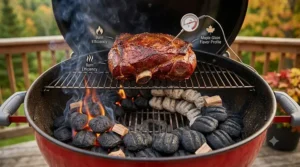
Grill compatibility starts before you ever strike a match. For a Weber kettle, load your chimney starter with briquettes stacked loosely rather than packed tight — airflow between pieces matters more than sheer quantity, and cramming the chimney actually slows ignition. A standard 57 cm (22 in) kettle typically wants somewhere between 80 and 100 Kingsford-sized briquettes for a two-zone setup, or noticeably fewer of the larger Weber briquettes given their added bulk.
Common first-30-days mistakes are almost always the same three. First, lighting fluid on the grate itself rather than only in the chimney starter, which leaves a fuel residue taste in food. Second, closing the bottom vents too early, which starves the coals of oxygen and stalls the burn right when you need heat climbing. Third, ignoring maintenance — ash buildup in the bottom bowl restricts airflow over repeated uses, so a quick scrape-out between cooks keeps burn consistency where it should be.
For optimization, a two-zone fire (coals banked to one side, empty grate on the other) gives you a sear zone and a gentler cooking zone without switching briquette types mid-cook — genuinely one of the simplest upgrades a new griller can make. Once the top layer of briquettes turns ash-grey, you’re in the window Kingsford and Weber both target with their 10-to-15-minute ready-time claims, and that’s your cue to spread the coals and start cooking.
Real-World Scenarios: Matching Briquettes to Your Grilling Style
Picture three different Canadian grillers, each with a completely different relationship to their backyard fire.
The first is a condo-dwelling university student who grills maybe six times a summer on a small charcoal balcony grill, values low cost above all else, and has zero patience for chimney starters. Kingsford Match Light Instant Charcoal Briquettes solve this exactly — no separate equipment needed, ready in 10 minutes, and the modest chemical smell during ignition is a non-issue for someone grilling burgers rather than chasing competition-level flavour.
The second is a suburban family that hosts weekend cookouts from May to September and burns through a lot of charcoal without wanting to spend a fortune doing it. Royal Oak Natural Organic Char Briquettes or Kingsford Original Charcoal Briquettes both fit this budget-and-frequency profile, and the choice between them mostly comes down to whichever is on sale that week at the local hardware store.
The third is a smoking enthusiast with a ceramic kamado grill, running eight-hour brisket cooks on weekends and caring deeply about ash buildup choking their airflow mid-cook. Kingsford Low & Slow Charcoal Briquettes, or Weber 100% All-Natural Hardwood Charcoal Briquettes for the opening sear before switching fuel, are the sensible picks — the long burn window and lower ash output directly address the specific pain point of a long, unattended cook.
Problem → Solution: Fixing the Most Common Charcoal Complaints
Problem: the fire dies before the food is done. This is almost always an airflow issue, not a fuel issue — check that bottom vents are at least half open, and consider switching from Kingsford Original to Kingsford Low & Slow Charcoal Briquettes or Weber 100% All-Natural Hardwood Charcoal Briquettes for genuinely longer burn windows on extended cooks.
Problem: food tastes faintly chemical. This traces back almost every time to lighter fluid applied directly to the grate, or to instant-light briquettes not given enough time to ash over fully. Let Kingsford Match Light Instant Charcoal Briquettes burn a full 10 minutes before cooking, and never add fresh fluid to a partially lit fire.
Problem: too much ash clogging the vents mid-cook. Switch to a lower-ash formula like Kingsford Professional Charcoal Briquettes, and scrape out the ash catcher between uses rather than letting it accumulate over a whole season.
Problem: inconsistent heat from bag to bag. This is the most commonly reported issue with budget briquettes like Royal Oak Natural Organic Char Briquettes — buying from a retailer with high turnover (rather than a bag that’s been sitting on a shelf through a humid summer) meaningfully reduces the odds of a damp, underperforming batch.
Problem: can’t get the fire hot enough for a proper sear. Kingsford Competition Briquettes are specifically engineered for this, borrowing lump charcoal’s high-heat character while keeping briquette-style consistency.
Weber Briquettes vs Kingsford Briquettes: Burn Consistency and Briquette Shape Compared
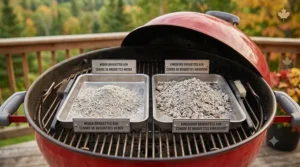
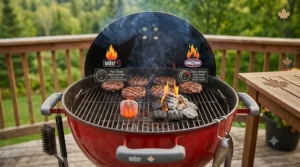
Briquette shape isn’t cosmetic — it’s engineering. Kingsford’s standard briquettes are pressed with “Sure Fire Grooves,” small ridges that increase surface area so oxygen reaches more of the briquette at once, which is the entire reason Kingsford lights measurably faster than a plain block of compressed char. Weber’s briquette skips the grooved design in favour of raw size, betting that a larger mass of hardwood simply holds and radiates heat longer once established, even if it takes a touch longer to get there.
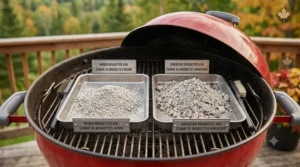
Burn consistency follows directly from that shape difference. Independent burn tests posted on The Virtual Weber Bulletin Board found Weber briquettes produced essentially the same ash percentage by weight as Kingsford Original — both landing around 18.6 percent — but Weber generated noticeably more ash by volume, a byproduct of the bigger briquette breaking down into bulkier chunks of spent fuel. Kingsford Professional and Competition briquettes, by contrast, are formulated for a tighter, more predictable burn curve with less variance batch to batch, which is precisely why competition-focused grillers and low-ash-conscious kamado owners tend to prefer them over Original.
The practical upshot: if predictable, repeatable heat matters more to you than raw burn duration, Kingsford’s engineered grooves and tighter manufacturing tolerances win. If total burn time per load matters more, Weber’s simpler, larger briquette wins on that single metric even without the fancy surface geometry.
Briquettes for Weber Grills: A Compatibility Guide
Grill compatibility is less about brand loyalty than about physical fit and airflow design. Weber kettle grills — the classic 47 cm (18.5 in), 57 cm (22 in), and Master-Touch lines — are engineered around a rounded firebox with bottom and lid vents positioned to create a specific draft pattern, and both Weber’s own briquettes and Kingsford’s full lineup work fine within that design, since briquette shape doesn’t need to match the grill brand to burn properly.
Where compatibility actually matters is briquette count relative to grate size. A smaller 37 cm (14.5 in) Weber Smokey Joe wants noticeably fewer briquettes per load than a full-size kettle, and overloading a small grill’s firebox with oversized Weber briquettes can actually restrict airflow rather than help it — proportion matters more than brand. For gas grills retrofitted with a charcoal tray or basket, Kingsford’s smaller, more uniform briquette shape tends to sit more evenly in a confined tray than Weber’s chunkier pieces do.
Ceramic and kamado-style grills are the one place brand genuinely matters: their tighter firebox and lower airflow design pair better with Kingsford Professional or Low & Slow’s low-ash formulas than with either Weber’s or Kingsford Original’s higher-ash output, simply because ash accumulation restricts the narrower airflow path more severely on a ceramic cooker than on an open kettle.
How to Choose Weber Charcoal Briquettes for Your Cooking Style
- Match burn time to cook length. Short cooks under an hour rarely need Weber’s premium hardwood briquette — Kingsford Original or Royal Oak covers weeknight grilling fine.
- Weigh convenience against flavour purity. Match Light saves real time but carries a faint ignition smell that hardwood-only briquettes avoid entirely.
- Check your grill type first. Ceramic and kamado owners should prioritize low-ash formulas over standard ones regardless of brand loyalty.
- Budget for frequency, not just quality. Someone grilling twice a summer doesn’t need the same briquette as someone grilling every weekend from May to September.
- Factor in searing versus smoking. Competition-style briquettes and Low & Slow formulas solve genuinely different problems; don’t buy one expecting the other’s performance.
- Buy from high-turnover retailers. Briquettes sitting in a damp warehouse or storefront for months lose consistency, particularly with all-natural formulas lacking chemical stabilizers.
- Read the bag’s carbon monoxide warning. Every charcoal product, Weber and Kingsford alike, must only be burned outdoors in open air — this isn’t optional advice, it’s a genuine safety requirement.
Common Mistakes When Buying Charcoal Briquettes
The single most common mistake is buying based on brand recognition alone rather than matching the product to the grill and cook length actually being planned — someone running eight-hour smokes on Kingsford Original will refuel constantly, while someone grilling burgers on Weber’s premium hardwood briquette is arguably overpaying for burn time they’ll never use. A close second is ignoring bag storage: charcoal left in a torn or unsealed bag absorbs ambient moisture, and damp briquettes light slower and burn less consistently regardless of brand.
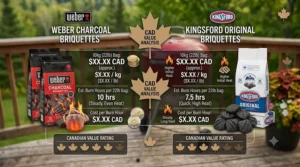
A third mistake, less obvious but genuinely costly over a season, is chasing the lowest price per bag without calculating price per hour of usable heat. Kingsford Original Charcoal Briquettes at roughly C$20 per 16 lb bag with a 45-to-60-minute burn window can end up costing more per hour of grilling than Weber 100% All-Natural Hardwood Charcoal Briquettes at nearly double the sticker price but with substantially longer burn duration per load, particularly for anyone doing long cooks regularly.
Long-Term Cost and Maintenance: What Briquettes Really Cost Per Cookout
Total cost of ownership for charcoal isn’t just the bag price — it includes how many briquettes a typical cook consumes and how often you’re restocking through a Canadian grilling season that realistically runs May through September. A household grilling twice weekly through that stretch burns through roughly 15 to 20 bags of standard-size briquettes annually, meaning even a few dollars of difference per bag compounds into a real seasonal cost gap.
Cost-per-hour is the more useful number than cost-per-bag. Kingsford Original Charcoal Briquettes, priced around C$20 for a 45-to-60-minute burn window per load, works out to a moderate hourly fuel cost for casual grilling. Weber 100% All-Natural Hardwood Charcoal Briquettes, at a higher sticker price but with meaningfully longer burn duration, often narrows that gap for anyone doing extended cooks rather than quick weeknight sessions. Maintenance costs matter too — low-ash formulas like Kingsford Professional Charcoal Briquettes reduce wear on ceramic grill gaskets and airflow components over time, a genuine long-term savings that rarely shows up in the sticker price comparison most shoppers make at the store shelf.
Features That Actually Matter (And Those That Don’t)
Marketing copy on charcoal bags leans hard on phrases like “restaurant quality” and “authentic flavour,” most of which are difficult to verify and don’t meaningfully change how the briquette performs. What actually matters, based on the spec comparison across all seven products here, is burn duration relative to your typical cook length, ash output relative to your grill’s airflow design, and ignition time relative to how much patience you actually have on a Tuesday evening.
What doesn’t matter nearly as much as packaging suggests: exact briquette shape beyond the functional grooves-versus-size distinction, and marginal claims about “natural flavour infusion,” since aggregated reviewer sentiment across barbecue forums rarely distinguishes flavour differences between briquette brands once food is properly seasoned and cooked. The genuinely load-bearing specs are ready time, burn duration, and ash percentage — everything else on the bag is largely secondary.
Safety, Smoke and Canadian Regulations Guide
Every charcoal briquette discussed here, regardless of brand, produces carbon monoxide as it burns, and Canadian municipal fire services are consistent and blunt about the risk: Ottawa Fire Services explicitly warns that charcoal barbecues must be operated outdoors only, since even attached garages are treated as part of the home for this purpose. That warning isn’t boilerplate caution — CBC reported a case where eleven people from one Ottawa-area family were hospitalized after running a charcoal grill indoors for heat during a power outage, with carbon monoxide levels measured at 180 parts per million on scene.
Beyond acute CO risk, there’s a slower-burning health consideration worth knowing honestly rather than glossing over: grilling meat directly over hot coals produces polycyclic aromatic hydrocarbons, or PAHs, particularly when fat drips onto the fire and smoke curls back up around the food. Researchers at McGill University’s Office for Science and Society note that traditional smoking and grilling methods generate more of these compounds than gentler cooking methods, and CBC has separately reported on University of Alberta research linking heavily charred meat to elevated cancer risk markers. None of this means abandoning charcoal grilling — it means trimming excess fat before grilling, avoiding flare-ups, and not eating the deeply blackened bits, which meaningfully reduces exposure without sacrificing the experience.
Provincially, condo and apartment rules on charcoal barbecues vary — some buildings ban them outright due to fire risk and smoke complaints — so check your building’s bylaws or your municipality’s fire code before assuming a charcoal grill is allowed on a balcony.
Frequently Asked Questions
❓ Are Weber briquettes better than Kingsford briquettes for a Weber kettle grill?
❓ Can you use Kingsford briquettes in a Weber grill?
❓ Which briquette shape burns most evenly, Weber's or Kingsford's?
❓ How many briquettes do I need for a two-hour grilling session?
❓ Where can Canadians buy Weber and Kingsford briquettes online?
Conclusion
Weber briquettes vs Kingsford briquettes was never really a fight with one universal winner — it’s a question of matching fuel to how you actually cook. Weber’s 100% All-Natural Hardwood Briquettes earn their higher price through genuinely longer burn times, which pays off on extended sears and slow cooks where refuelling mid-session is a real hassle. Kingsford’s sprawling lineup, from Original through Professional, Competition, Match Light, and Low & Slow, covers nearly every use case a Canadian backyard griller could have, usually at a lower price point than Weber’s specialty briquette. Royal Oak rounds things out as the honest budget alternative for anyone grilling on a tighter seasonal fuel budget without wanting to sacrifice all-natural ingredients.
If there’s one piece of advice worth taking away, it’s this: buy based on your typical cook length and your grill type first, and worry about brand loyalty second. A weeknight burger grill and an eight-hour smoked brisket have almost nothing in common fuel-wise, and no single briquette on this list does both jobs equally well.
✨ Ready to stock up for the season?
Compare current prices on the picks above and grab whichever matches your next cookout best — your grill (and your guests) will thank you.
Recommended for You
- Kingsford Charcoal Briquettes Review 2026: 7 Top Picks Ranked
- Hickory vs Mesquite Lump Charcoal for Ribs: 7 Top Picks (2026)
- Maple Lump Charcoal vs Mesquite Lump Charcoal: 7 Best Picks for 2026
Disclaimer: This article contains affiliate links. As an Amazon Associate, I earn from qualifying purchases. If you purchase products through these links, we may earn a small commission at no additional cost to you.
✨ Found this helpful? Share it with your friends! 💬🤗
