
In This Article
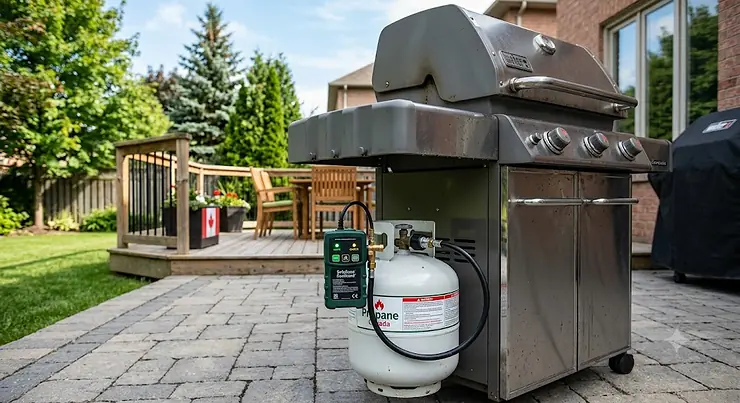
A propane leak detector for home BBQ use is a small sensor or spray-based tool that senses escaped propane gas around your grill’s hose, regulator, and tank connections, then warns you with sound, light, or visible bubbles before that gas has a chance to ignite or pool somewhere dangerous. That’s the textbook definition, but here’s the part the box never tells you: most Canadians only think about gas safety for about four seconds a year, right after they smell something faintly like rotten cabbage near the patio. That fleeting whiff is mercaptan, the chemical added to propane specifically so your nose can catch what would otherwise be an invisible, odourless gas — and honestly, your nose is a decent first line of defence. It’s just not a reliable one, especially outdoors where wind scatters the smell before it ever reaches you.
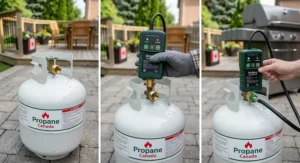
That’s where a dedicated detector earns its keep. Whether you’re firing up a two-burner apartment balcony grill or running a six-burner beast that could double as a small furnace, the connections between your propane cylinder and burner are the weak point — cracked hoses, loose fittings, and worn O-rings don’t announce themselves. Over a Canadian grilling season that runs from the first thaw in April through Thanksgiving weekend, those connections get opened, closed, jostled, and left out in freeze-thaw cycles more times than most of us realize.
This guide walks through seven real, currently available detection tools — handheld sniffers, plug-in alarms, and bubble-spray solutions — with honest analysis of what the specs mean in practice, not just a list of numbers copied off a product page. We’ll also cover how Health Canada and provincial safety authorities define the real risk (spoiler: it’s not just fire, it’s carbon monoxide too), what mistakes trip up first-time buyers, and how to build a habit around testing that takes less time than preheating your grill.
Quick Comparison Table: Propane Leak Detector for Home BBQ Options at a Glance
| Product | Type | Best For | Price Range (CAD) |
|---|---|---|---|
| Kidde Nighthawk Plug-In CO & Gas Alarm | Plug-in continuous alarm | Garages & enclosed patios | C$45–C$65 |
| TOPTES PT520A | Handheld gooseneck sniffer | Best all-around value | C$45–C$55 |
| Camco 10324 Gas Leak Detector w/ Sprayer | Bubble spray solution | Budget hose & fitting checks | C$15–C$25 |
| First Alert FG500 | Dedicated propane alarm | Simplicity-focused homeowners | C$35–C$50 |
| Amprobe GSD600 | Handheld gooseneck sniffer | Pinpointing leak intensity | C$85–C$125 |
| TOPTES PT-830S | Rechargeable digital sniffer | Frequent, precise checks | C$70–C$95 |
| Klein Tools ET120 | Handheld gooseneck sniffer | Durable backup tool | C$55–C$80 |
A propane leak detector for home BBQ setups isn’t a one-size-fits-all purchase, and the table above hints at why: a plug-in alarm like the Kidde Nighthawk is built for continuous monitoring near an enclosed space, while something like the Camco 10324 is a five-minute pre-season ritual tool you keep in a drawer. If you only ever grill on an open deck and just want peace of mind before the first cookout of the year, a spray solution or a basic gooseneck sniffer covers 90% of what you need. If your setup includes an attached garage, a partially enclosed sunroom, or a propane heater running alongside the grill, a continuous plug-in alarm earns its spot on the wall.
💬 Just one click — help others make better buying decisions too!😊
Top 7 Propane Leak Detectors for Home BBQ: Expert Analysis
1. Kidde Nighthawk Plug-In CO & Gas Alarm — dual protection against CO and explosive gas
The standout here is that this single plug-in unit covers two very different threats at once, which matters more than most people realize until they’ve read the safety data. This model combines carbon monoxide sensing with combustible gas detection (methane and propane) in one wall-outlet device, with a listed sensitivity around 50 parts per million for CO. In practice, that means it’s less a “leak locator” and more a background guardian for any indoor or semi-enclosed space near where you store or vent propane equipment — a garage, a mudroom, or an enclosed porch where a grill sometimes gets wheeled in during bad weather.
Based on the spec comparison with pure gas sniffers, the trade-off is clear: this device won’t help you pinpoint where on the hose a leak is coming from, but it will scream at you continuously, 24/7, without needing to be picked up and waved around. Reviewers consistently report that the digital display and dual-threat coverage make it a favourite for homes with attached garages where a BBQ tank sometimes gets stored overnight. A common complaint in user reviews is that plug-in placement near floor-level outlets can dull sensitivity, since propane is heavier than air and pools low, so it performs best mounted where explosive gas is actually expected to accumulate.
Pros:
- ✅ Detects both carbon monoxide and explosive gas in one unit
- ✅ Continuous plug-in monitoring, no manual scanning needed
- ✅ Digital display shows real-time readings, not just a light
Cons:
- ❌ Not portable — can’t locate the exact leak point on a hose
- ❌ Placement height significantly affects propane detection accuracy
Expect to pay somewhere in the C$45–C$65 range at the time of research; check current price before buying, as retail listings shift often. For the money, it’s a strong value if your grilling setup shares space with an enclosed structure — pair it with a handheld sniffer below for full coverage.
2. TOPTES PT520A Natural Gas Detector — best all-around value with a long gooseneck
What immediately stands out on the PT520A is its 17-inch flexible gooseneck probe, which sounds like a minor detail until you’re trying to reach the regulator connection tucked behind a grill’s side panel. That length means you don’t have to crouch at an awkward angle or risk your hand near a hot burner just to get the sensor close to a suspect fitting.
The unit runs on AA batteries rather than a proprietary rechargeable pack, uses a tick-rate audible alarm paired with a visual light indicator, and detects natural gas, propane, methane, and butane — useful if your household also has a gas range or a natural-gas fire pit alongside the propane grill. On paper this means one tool covers your entire property’s combustible-gas checks, not just the BBQ. What most buyers overlook about this model is that the tick-rate system (the beep speeds up as gas concentration rises) is simpler and arguably more intuitive under stress than a numeric readout — you don’t have to interpret a number, you just listen for the beeping to get faster as you get closer to the source. Reviewers consistently note strong accuracy for the price point, with thousands of verified ratings averaging solidly above 4 stars, and repeated mentions of the AA-battery design as a practical plus since replacements are available at any corner store.
Pros:
- ✅ 17-inch gooseneck reaches tight, awkward connection points
- ✅ Detects four combustible gases, not just propane
- ✅ Uses widely available AA batteries instead of proprietary packs
Cons:
- ❌ Tick-rate alarm has no numeric PPM readout for precision
- ❌ Plastic housing feels less rugged than prosumer-tier tools
Priced around C$45–C$55 at the time of research, this is the detector we’d point a first-time buyer toward if they want one tool that handles the whole yard, not just the grill.
3. Camco 10324 Gas Leak Detector with Sprayer — the budget-friendly bubble-spray classic
This one earns its spot on the list precisely because it isn’t electronic — and for a huge number of BBQ owners, that’s the point. The Camco 10324 comes with an 8-ounce sprayer bottle pre-loaded with a soap-based detection solution designed specifically for propane and natural gas fittings, so you spray the connection, watch for bubbles, and know within seconds whether there’s an active leak at that specific joint.
Here’s what the spec sheet won’t tell you, but decades of RV and grill forums confirm: soapy-water and commercial spray solutions remain the gold standard for pinpointing a leak’s exact location on a fitting, something an electronic sniffer with a broad detection cone struggles to match at close range. The trade-off is that a spray solution only tells you about the specific spot you sprayed — it won’t alert you to a slow leak while you’re inside making dinner. Reviewers and BBQ forum veterans consistently favour purpose-made detection fluid over homemade dish-soap mixes because commercial formulas cling longer to vertical surfaces and produce more stable, longer-lasting bubbles, which matters when you’re checking an overhead regulator connection rather than a flat horizontal joint.
Pros:
- ✅ Pinpoints the exact leak location with visible bubbles
- ✅ No batteries, no charging, works instantly out of the box
- ✅ Purpose-formulated fluid clings better than dish soap
Cons:
- ❌ Only checks the spot you spray — no continuous monitoring
- ❌ Bubble solutions perform poorly in freezing temperatures
Around C$15–C$25 at the time of research, this is the cheapest genuinely effective option on the list and a smart companion purchase even if you buy an electronic detector too — professionals use both methods for a reason.
4. First Alert FG500 Propane Gas Detector — simplicity for hands-off homeowners
The First Alert FG500’s standout feature is how little thinking it demands. Where some detectors ask you to interpret tick rates or scan a display, this one is built around a straightforward audible alarm that activates when propane concentration crosses a preset threshold, with an install process that doesn’t require any technical background.
Based on the spec comparison against portable sniffers, this device leans toward “install it and mostly forget it” rather than “grab it and go hunting for the leak.” That’s a real advantage for households where the person doing the grilling isn’t necessarily the person who wants to fuss with gooseneck probes and battery compartments. Reviewers consistently describe the alarm as loud and unmistakable — a detail that matters more than sensitivity specs alone, since a detector that whispers its warning is functionally useless in a backyard with music playing and kids running around. A recurring theme in aggregated feedback is that the FG500 suits people replacing an older, less reliable propane alarm rather than serious DIY tinkerers who want granular PPM data.
Pros:
- ✅ Extremely simple installation and daily operation
- ✅ Loud, unmistakable alarm designed for real-world noise
- ✅ Dedicated propane focus, no unnecessary extra features
Cons:
- ❌ Lacks the numeric readout serious hobbyists may want
- ❌ Not designed for pinpointing exact leak location
Expect a price in the C$35–C$50 range at the time of research — a sensible pick for anyone who wants “buy once, mount once, done.”
5. Amprobe GSD600 Gas Leak Detector — best for visually pinpointing leak intensity
The Amprobe’s party trick is its five-LED light bar, each light corresponding to a rising PPM concentration, so instead of just hearing an alarm speed up, you can watch the light count climb as you move the 18-inch gooseneck closer to the source. That visual feedback loop is genuinely useful in a noisy backyard environment where an audible-only alarm can get lost.
What most buyers overlook about this model is the auto-calibration and auto-shutoff combo — it calibrates itself on startup (about a minute) and powers down after 10 minutes to save battery, which is smart engineering for occasional use but mildly annoying if you’re doing an extended inspection and have to restart the calibration cycle mid-check. It detects methane and propane specifically rather than the broader combustible-gas net some competitors cast, which for a dedicated BBQ-and-house-gas-line tool is arguably all you need anyway. Reviewers consistently praise the light-bar interface for making leak-hunting almost intuitive, even for people who’ve never used a gas sniffer before.
Pros:
- ✅ Five-LED display shows leak intensity at a glance
- ✅ Automatic startup calibration reduces user error
- ✅ Long 18-inch gooseneck excels at hard-to-reach fittings
Cons:
- ❌ Auto-shutoff after 10 minutes interrupts longer inspections
- ❌ Detects only methane and propane, not a broader gas range
At roughly C$85–C$125 at the time of research, this sits in the prosumer tier — worth it if you also do occasional gas-line troubleshooting beyond just the BBQ.
6. TOPTES PT-830S Rechargeable Gas Sniffer — premium precision with a colour display
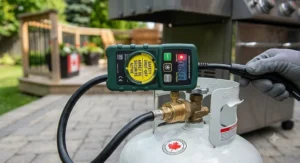
This is the detector for people who want numbers, not just noise. The PT-830S pairs a 14.5-inch flexible probe with a colour screen that displays gas concentration as you close in on a leak, turning the hunt into a precision exercise rather than a guessing game based on beep speed alone.
Here’s what the spec sheet doesn’t fully capture: the shift from AA batteries to a built-in rechargeable pack is a genuine quality-of-life upgrade for anyone who uses their detector more than a couple of times a season, since you’re not stuck discovering dead batteries mid-inspection. Reviewers consistently frame this as the step-up choice for people who found a basic tick-rate sniffer frustratingly vague — the colour display effectively removes the interpretation step, showing you a concentration trend line rather than asking you to judge alarm cadence by ear. On paper this means faster, more confident leak-location for anyone checking multiple fittings across a larger propane system, such as a house with both a BBQ hookup and a propane fireplace insert.
Pros:
- ✅ Colour display shows precise concentration, not just alarm speed
- ✅ Rechargeable battery avoids mid-inspection dead-battery surprises
- ✅ Flexible probe suits both BBQ fittings and household gas lines
Cons:
- ❌ Higher price than tick-rate alternatives on this list
- ❌ Rechargeable design means it’s unusable if you forget to charge it
Priced around C$70–C$95 at the time of research, this is the pick for buyers who’ve outgrown a basic sniffer and want data, not guesswork.
7. Klein Tools ET120 Combustible Gas Detector — durable backup with dual sensitivity modes
Klein’s entry brings something the rest of this list doesn’t emphasize as strongly: genuine trade-tool durability, backed by two selectable sensitivity levels — a high range around 50 to 1,000 ppm and a low range extending to roughly 10,000 ppm — so the same unit can hunt a whisper-quiet slow leak or confirm a known, larger one without needing to be replaced or recalibrated between tasks.
Based on the spec comparison with home-focused sniffers, the ET120’s 85 dB audible alert paired with five red LED indicators and an 18-inch gooseneck puts it closer to a tool an electrician or HVAC tech might keep in a truck, which is exactly the audience Klein built it for — but that professional pedigree translates nicely to a homeowner who wants a detector that will still work reliably five grilling seasons from now. Reviewers consistently cite the automatic zero-point calibration at power-up as a trust-building feature, since the light flash sequence confirms the unit is actively self-checking rather than just powering on blind. What most buyers overlook is that this dual-sensitivity design makes it genuinely useful beyond the BBQ — furnace lines, water heater connections, and dryer gas lines all fall within its wheelhouse.
Pros:
- ✅ Dual sensitivity ranges cover both faint and strong leaks
- ✅ Trade-grade build quality suited to years of repeated use
- ✅ Automatic zero-point self-calibration on every power-up
Cons:
- ❌ Overkill in features for someone who only checks a BBQ hose
- ❌ Higher learning curve than a simple one-button sniffer
At around C$55–C$80 at the time of research, it’s a strong middle-ground pick for anyone who wants trade-tool reliability without paying full prosumer pricing.
Top 7 Detectors: Specs and Value Snapshot
| Product | Detects | Power | Best For | Price Range (CAD) |
|---|---|---|---|---|
| Kidde Nighthawk Plug-In CO & Gas Alarm | CO + explosive gas | AC plug-in + battery backup | Enclosed/garage spaces | C$45–C$65 |
| TOPTES PT520A | Natural gas, propane, methane, butane | AA batteries | Whole-property gas checks | C$45–C$55 |
| Camco 10324 w/ Sprayer | Propane, natural gas (bubble test) | None needed | Fast fitting checks | C$15–C$25 |
| First Alert FG500 | Propane | Plug-in / battery | Hands-off simplicity | C$35–C$50 |
| Amprobe GSD600 | Methane, propane | Battery, auto-shutoff | Visual leak intensity | C$85–C$125 |
| TOPTES PT-830S | Multi-combustible gas | Rechargeable | Precision, frequent use | C$70–C$95 |
| Klein Tools ET120 | Methane, propane | Battery | Durable trade-grade backup | C$55–C$80 |
Looking at the comparison above, the TOPTES PT520A delivers the best all-around value for a household that just wants one reliable tool covering both the grill and other gas appliances, while the Camco 10324 remains the cheapest genuinely effective option if all you need is a pre-season fitting check. Buyers who split time between a BBQ and a larger propane system — say, a cottage with a propane fridge or fireplace — should lean toward the Klein Tools ET120 or TOPTES PT-830S, since the added durability and precision pay off across more use cases than a single-purpose alarm.
Practical Usage Guide: Setting Up and Maintaining Your Propane Leak Detector
Getting a detector out of the box is the easy part; using it correctly, every time, is where most households fall short. Start every grilling season — and every time you swap or refill a cylinder — with the same three-step routine safety authorities across Canada recommend: clean the burner ports of debris, check the hose for cracking or wear, then test every connection point with either your electronic sniffer or a soap-and-water bubble check before you ever turn on the gas.
For electronic sniffers like the TOPTES PT520A or Klein Tools ET120, let the unit complete its auto-calibration cycle fully before you start scanning — interrupting this step is the single most common cause of false readings reported in user feedback. Move the probe slowly, roughly two seconds per inch, along every fitting: the tank valve, the regulator, the hose-to-manifold connection, and any quick-connect couplers. If you’re using a spray solution like the Camco 10324, apply a generous coat and watch for a full 30 seconds — small leaks produce small, slow-forming bubbles that impatient users often miss.
Maintenance is refreshingly low-effort. Replace AA batteries at the start of each season regardless of whether the low-battery indicator has triggered, since cold winter storage can quietly drain cells faster than expected. Rechargeable units like the TOPTES PT-830S should get a full charge cycle before the season’s first use, not a quick top-up. The most common first-30-days mistake we see referenced across BBQ forums isn’t a faulty detector — it’s skipping the test entirely after a tank swap because “it worked fine last time.” Propane fittings are mechanical connections; they degrade with repeated use, not on a calendar.
Real-World Scenarios: Matching the Right Detector to Your Backyard
The condo balcony griller: If you’re working with a compact two-burner grill on a balcony with strict building rules about propane storage, portability and speed matter more than continuous monitoring. A lightweight sniffer such as the TOPTES PT520A, paired with a small bottle of Camco 10324 spray for quick fitting checks before each use, covers this scenario without adding bulk to a small storage space.
The suburban family with an attached garage: When the propane tank sometimes gets wheeled into the garage overnight, or when a propane heater runs near the patio in shoulder-season months, continuous monitoring becomes genuinely important — not just at grill-time, but around the clock. This is exactly the situation the Kidde Nighthawk Plug-In CO & Gas Alarm was designed for, since it catches both the explosive-gas risk and the carbon monoxide risk that comes with any semi-enclosed combustion space.
The multi-appliance property owner: If your household runs a BBQ alongside a propane fireplace, a propane-fuelled water heater, or a cottage with several gas fittings, a single-purpose alarm won’t cut it. The durability and dual-sensitivity range of the Klein Tools ET120, or the precision colour readout of the TOPTES PT-830S, earns its higher price tag by handling every fitting on the property rather than just one appliance.
Problem → Solution: Fixing Common Propane Leak Detector for Home BBQ Issues
Problem: “My detector keeps giving false alarms near the kitchen window.” Solution: relocate the sensor away from cooking exhaust and cleaning-product fumes, which can trigger combustible-gas sensors that aren’t gas-specific; a dedicated propane-only unit like the First Alert FG500 is less prone to this than broad-spectrum sniffers.
Problem: “I can’t tell if my alarm cadence is speeding up or if I’m imagining it.” Solution: switch to a model with a numeric or visual concentration display, such as the Amprobe GSD600 or TOPTES PT-830S, both of which remove the guesswork inherent in tick-rate-only alarms.
Problem: “The bubble solution froze in cold weather and I couldn’t test before a shoulder-season cookout.” Solution: store spray solutions like the Camco 10324 indoors between uses and bring them out only for testing, or switch to a battery-powered sniffer for cold-weather checks since electronic sensors aren’t affected by freezing.
Problem: “I smell propane but my plug-in alarm hasn’t gone off.” Solution: remember that propane is heavier than air and sinks — a plug-in alarm mounted high on a wall may miss ground-level accumulation near the tank itself; leave the area immediately, don’t operate switches or lighters, and call your propane supplier or local fire department rather than troubleshooting the alarm on the spot.
Problem: “My detector’s battery died mid-season and I didn’t notice.” Solution: build battery checks into your seasonal BBQ-opening routine rather than relying solely on low-battery indicators, particularly for AA-powered units like the TOPTES PT520A.
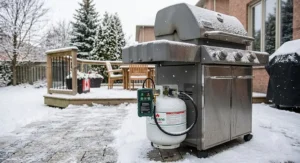
How to Choose a Propane Leak Detector for Home BBQ
- Decide between continuous and spot-check protection first. A plug-in alarm like the Kidde Nighthawk monitors around the clock; a handheld sniffer or spray only tells you about the moment you test.
- Match detection range to your actual gas setup. If your home also runs natural gas appliances, a multi-gas unit such as the TOPTES PT520A covers more ground than a propane-only device.
- Weigh gooseneck length against your grill’s design. Enclosed cabinet-style grills with tucked-away regulators benefit from the longer 17–18 inch probes on the TOPTES PT520A, Amprobe GSD600, or Klein Tools ET120.
- Consider battery type honestly. AA batteries are cheap and always available; rechargeable packs like the one in the TOPTES PT-830S demand more discipline but avoid mid-season battery-store runs.
- Factor in how you’ll interpret the alert. Tick-rate audible alarms are simpler but vaguer; LED bar graphs and colour displays give more precise, confidence-building feedback.
- Budget for both a sensor and a spray solution. Professionals use electronic detectors for area scanning and bubble solutions like the Camco 10324 for pinpointing — the two methods complement rather than replace each other.
- Check for CSA or ULC recognition on any propane appliance you pair with a detector. The Canadian Propane Association specifically recommends buying propane appliances and detectors certified by an agency recognized in your province, such as CSA or ULC.
Gas Leak Warning Signs Every Grill Owner Should Know
Your senses are the original gas leak detector for home BBQ setups, and they’re worth trusting alongside any device you buy. The most obvious sign is smell — that faint rotten-egg or skunk-like odour from added mercaptan, noticeable even at low concentrations outdoors if the wind cooperates. A hissing sound near the tank valve or hose connection is a second, more urgent signal, and one that usually means gas is actively escaping under pressure rather than just seeping slowly.
Visual cues matter too: a flame that burns mostly yellow instead of blue suggests incomplete combustion and warrants a professional check, not a DIY fix. Frost or unusual condensation forming on the outside of the propane tank during use can indicate rapid gas flow consistent with a leak at the valve. And if a bubble test ever produces steady, growing bubbles rather than a single static one, that’s your confirmation — stop immediately, shut the cylinder valve, and don’t attempt to light the grill again until the fitting is repaired or replaced by a qualified technician.
Propane Safety Alarm vs Gas Leak Detector Spray: What’s the Difference
These two tools get lumped together constantly, but they solve genuinely different problems, and understanding the distinction changes how you shop. A propane safety alarm — whether a plug-in unit like the First Alert FG500 or a handheld sniffer like the TOPTES PT520A — is an active sensing device that continuously or on-demand samples the air itself, converting gas concentration into an audible, visual, or digital signal.
A gas leak detector spray, by contrast, doesn’t sense gas in the air at all; it relies on physics. When propane escapes through even a hairline crack in a fitting, the pressurized gas pushes through the soap-based film and forms visible bubbles at that exact spot. What most buyers overlook is that this makes spray solutions dramatically better at pinpointing a leak’s precise location once you already suspect one exists, while alarms are better at first detection across a broader area, including leaks you didn’t know to check for. Reviewers and safety guides consistently recommend using both: an alarm or sniffer to catch a leak you weren’t expecting, and a spray solution like the Camco 10324 to confirm and locate it once suspicion arises. Neither tool fully replaces the other, and the small additional cost of owning both is trivial compared to the cost of guessing wrong.
Propane Leak Detectors vs Soapy Water: Benefits vs Traditional Alternatives
| Method | Speed | Precision | Reusability | Cost Over Time |
|---|---|---|---|---|
| Electronic sniffer (e.g. TOPTES PT520A) | Fast, continuous scanning | Good, especially with LED/digital readouts | Reusable for years | Low after initial purchase |
| Homemade soapy water | Fast for a single spot | High at the exact spray point | Reusable, but inconsistent mix quality | Nearly free |
| Commercial spray solution (e.g. Camco 10324) | Fast for a single spot | High, longer-lasting bubbles | Reusable until bottle empties | Low, occasional refill |
| Plug-in continuous alarm (e.g. Kidde Nighthawk) | Instant, 24/7 | Moderate — area detection, not pinpoint | Reusable, permanent install | Low, occasional battery |
Looking at the comparison above, homemade soapy water wins on raw cost but loses on consistency — dish soap formulations vary widely in bubble stability, and a weak mix can miss a small leak entirely. Commercial spray solutions close that gap for a modest cost, while electronic sniffers and plug-in alarms add the one thing soap-and-water can never provide: detection of a leak you weren’t specifically looking for. For most Canadian households, the most cost-effective long-term setup pairs one reusable electronic tool with an inexpensive spray solution rather than relying on either method alone.
✨ Ready to gear up before your next cookout? Check current pricing on the models above and pick the combination that matches your setup.
Carbon Monoxide Risk: Why Your BBQ Needs More Than a Nose
It’s tempting to think of BBQ safety purely as a fire and explosion issue, but carbon monoxide risk deserves equal attention, and Canadian safety data backs that up. Barbecues are approved for outdoor use only precisely because they emit carbon monoxide (CO), a colourless, odourless gas that can lead to unconsciousness and death when it accumulates in enclosed or partially enclosed spaces such as a garage, tent, or covered porch. This isn’t a theoretical risk — in one widely reported Ottawa case, eleven people from a single family were hospitalized after using a charcoal barbecue indoors for heat during a power outage, with carbon monoxide levels measured at 180 parts per million on scene.
The danger compounds because CO poisoning symptoms — headache, dizziness, nausea, confusion — mimic common illnesses, which delays recognition until levels become genuinely dangerous. Technical Safety BC has investigated fatal incidents traced specifically to improperly installed or uncertified propane appliances, reinforcing that DIY installations carry meaningfully higher carbon monoxide exposure risk than professionally installed, code-compliant systems. None of the propane leak detectors reviewed above are designed as dedicated CO monitors except the Kidde Nighthawk, which is exactly why pairing a propane-specific tool with a genuine CO alarm — not just relying on one device to catch both risks — is the safer approach for any household using fuel-burning appliances near living spaces.
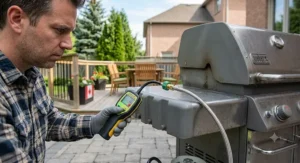
Home BBQ Safety: Beyond Leak Detection
A leak detector is one layer of a much broader home BBQ safety practice, and treating it as the only precaution misses the bigger picture. Position your grill at least one metre (about three feet) away from your house, fences, or anything combustible, on a stable, level, non-combustible surface — a wood deck works, but keep it clear of overhanging branches and vinyl siding. Always light a propane grill with the lid open, never closed; propane that accumulates under a closed lid before ignition can produce a dangerous flash of flame the moment the igniter sparks.
Never leave a lit grill unattended, especially with kids or pets moving through the yard, and always shut off the tank valve first when you’re finished, letting the residual gas in the line burn off before closing the burner controls. Store spare propane cylinders outdoors, upright, away from any ignition source — never in a garage, basement, or vehicle trunk. And if you live in a condo or apartment, check your building’s rules before assuming a balcony BBQ is even permitted; many municipalities and property managers restrict or ban propane appliances on balconies entirely for exactly the risks covered in this guide.
Common Mistakes When Buying a Propane Leak Detector for Home BBQ
The single biggest mistake is buying a detector and never testing it against a known source to confirm it actually works — a “bump test” using a small, controlled exposure to gas from a stovetop or lighter (unlit, just released briefly) builds real confidence that the unit responds as expected, rather than discovering a dead sensor during an actual emergency.
A second common error is choosing based on price alone without matching the detection method to the use case — grabbing the cheapest spray bottle when what you actually need is continuous monitoring near an attached garage, or buying an expensive multi-gas sniffer when a simple bubble test would have solved a one-time fitting check. Buyers also frequently overlook battery type until it’s inconvenient; a rechargeable unit like the TOPTES PT-830S left uncharged all winter is a dead tool on the first warm Saturday of spring. Finally, many people never replace ageing propane hoses even after their detector flags a slow leak repeatedly at the same joint — a detector’s job is to warn you, not fix the underlying wear, and repeated alerts at one fitting mean it’s time to replace the part, not just retest it.
Long-Term Cost & Maintenance: Is a Propane Leak Detector Worth It?
Running the numbers honestly favours the detector every time. A basic electronic sniffer in the C$45–C$55 range, used for five grilling seasons with nothing more than occasional AA battery swaps, works out to a few dollars a year — genuinely trivial compared to the cost of even a minor propane-related incident, which can mean anything from a damaged deck to a homeowner’s insurance claim. Commercial spray solutions like the Camco 10324 cost even less per use, since one bottle typically lasts multiple seasons of periodic fitting checks.
The real long-term cost consideration isn’t the detector itself, it’s the habit of using it. A C$100 premium sniffer that sits in a drawer unused delivers zero value, while a C$20 spray bottle actually used before every tank swap delivers outsized protection for its cost. Total cost of ownership should factor in battery replacement (roughly C$5–C$10 annually for AA-powered units), occasional solution refills for spray-based methods, and — for continuous alarms like the Kidde Nighthawk — periodic replacement of the entire unit every several years, as gas and CO sensors do lose sensitivity over time regardless of brand.
Safety, Regulations & Compliance for Canadian Grill Owners
Canadian propane safety isn’t governed by a single national rulebook so much as a patchwork of provincial technical safety authorities working from shared principles. Propane cylinders themselves must be inspected and re-certified every 10 years, and it’s against the law to fill an outdated cylinder — a detail Technical Safety BC flags as a common oversight among homeowners who’ve had the same tank for a decade or more without checking the stamped manufacture date.
When shopping for propane appliances and detectors, the Canadian Propane Association specifically recommends confirming certification by an agency recognized in your province of use, such as the Canadian Standards Association (CSA) or Underwriters Laboratories of Canada (ULC) — this matters because uncertified imported appliances and detectors have been directly linked to fatal carbon monoxide incidents in recreational and off-grid properties. Municipal fire services, including Toronto Fire Services, generally don’t regulate propane cylinder use directly on private property but do point residents toward their local Technical Standards and Safety Authority for cylinder transport and installation questions — and for condo or apartment dwellers, building-specific bylaws around balcony BBQ use typically apply on top of these provincial rules, so checking with your property manager remains an essential step regardless of what detector you buy.
Frequently Asked Questions
❓ Do I really need an electronic detector if I already smell propane's odour?
❓ How often should I test my BBQ's propane connections for leaks?
❓ Can a natural gas detector also work for a propane leak detector for home BBQ setups?
❓ Is a propane safety alarm required by law in Canadian homes?
❓ What should I do if my detector alerts me to a leak?
Conclusion
Choosing a propane leak detector for home BBQ safety isn’t about finding the single “best” gadget — it’s about matching a tool, or a combination of tools, to how and where you actually grill. A condo balcony setup and a suburban backyard with an attached garage face genuinely different risk profiles, and the seven options covered here span that range: the budget-friendly Camco 10324 spray for quick pre-season checks, the versatile TOPTES PT520A for whole-property coverage, and the continuous protection of the Kidde Nighthawk for homes where propane and enclosed spaces share proximity.
What matters most isn’t the specific model you land on, but building the habit around it — testing connections after every tank swap, replacing worn hoses instead of just noting the alert, and understanding that carbon monoxide risk deserves the same respect as fire risk. Canadian safety authorities have documented real, serious incidents tied to skipped checks and uncertified equipment, and the fix is genuinely inexpensive relative to the stakes. A few dollars in batteries or bubble solution, and a few minutes before you light the burner, is a remarkably small price for the peace of mind that comes with knowing your setup is safe.
✨ Don’t Miss These Exclusive Deals!
🔍 Take your backyard grilling to the next level with these carefully selected propane safety tools. Click on any highlighted item to check current pricing and availability. A few dollars now could prevent a very expensive — or very dangerous — surprise later this season!
Recommended for You
- BBQ Propane Tank Gauge Under $30 CAD: 7 Top Picks for 2026
- Best Propane Tank Cover for Outdoor Storage: 7 Picks for 2026
- Quick Connect Propane Fittings for BBQ: 7 Top Picks (2026)
Disclaimer: This article contains affiliate links. As an Amazon Associate, I earn from qualifying purchases. If you purchase products through these links, we may earn a small commission at no additional cost to you.
✨ Found this helpful? Share it with your friends! 💬🤗
