
In This Article
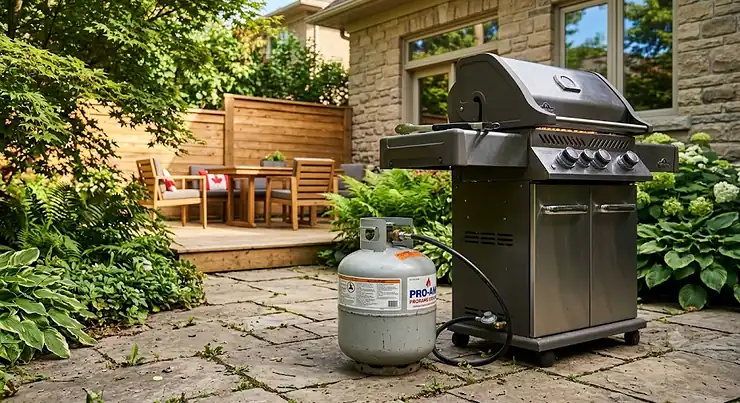
Somewhere in every Canadian garage sits a dented, sun-bleached cylinder nobody’s quite sure is still legal to fill. That’s usually the moment someone starts googling a 20 lb propane tank for BBQ, and honestly, it’s a smarter search than most people realize — because the tank matters almost as much as the grill it feeds. A 20 lb propane tank for BBQ is the standard vertical steel or aluminum cylinder, roughly 4.6 gallons of water capacity, built to hold about 18 lb of usable propane when filled to the industry-mandated 80% safety level. It’s the size that fits nearly every backyard grill sold in Canada, and it’s also the size most tightly regulated by Transport Canada.
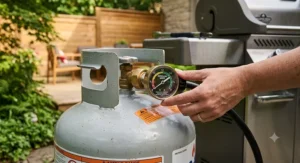
What most shoppers don’t expect is how much variation exists between one “20 lb tank” and the next. Wall thickness differs. Valve types differ. Some ship with a built-in gauge, some don’t, and some are aluminum instead of steel — a distinction that changes both the price and how the tank ages on your deck. We dug into real specs, aggregated review sentiment, and Canadian regulatory requirements to put together this guide, comparing budget steel cylinders against premium aluminum builds and even weighing ownership against the exchange-program route that so many Canadians default to without thinking twice.
Before you add anything to your cart, it’s worth understanding what separates a tank that lasts a full decade from one that gets rejected at the fill station in year six. That’s exactly what this guide covers — real products, honest trade-offs, and the Canadian rules that actually govern whether your tank gets filled or turned away.
Quick Comparison Table
| Tank | Material | Gauge | Price Range (CAD) | Best For |
|---|---|---|---|---|
| Flame King YSN230b | Steel | Yes | around C$70-90 | Best all-round pick |
| Flame King Aluminum 20LB | Aluminum | Yes | C$150-190 range | Marine & corrosion resistance |
| Worthington Pro-Grade Steel | Steel | No | C$90-130 range | Heavy-duty commercial use |
| Worthington Aluminum Vertical | Aluminum | No | C$400-500+ | Premium long-term ownership |
| Manchester Tank 10504 | Steel | No | around C$55-75 | Lowest-cost basic option |
| Tank Traders Exchange Tank | Steel | No | around C$30-45 | Zero-wait convenience |
| Flame King 20+30 lb Bundle | Steel | Yes (20 lb) | C$150-190 range | Backup / double-tank households |
A quick scan of the table above makes one thing obvious: price swings less with capacity than it does with material and features. Aluminum tanks land at roughly double the cost of comparable steel ones, largely because the metal resists corrosion far better near coastal air or road salt, which matters a lot more in Halifax or Vancouver than it does in dry inland Alberta. The gauge-equipped Flame King YSN230b sits in a sweet spot for most backyard grillers, while the Tank Traders Exchange Tank wins on convenience precisely because you’re not buying a tank at all — you’re renting access to whichever cylinder happens to be full that day.
💬 Just one click — help others make better buying decisions too!😊
Top 7 20 lb Propane Tanks for BBQ: Expert Analysis
1. Flame King YSN230b — built-in gauge for at-a-glance fuel levels
The standout here is simple: most 20 lb tanks make you guess how much propane is left, but the Flame King YSN230b bakes a gauge right into the collar. That alone eliminates the classic mid-cookout propane panic. Beyond the gauge, this is a pre-purged, vacuum-ready steel cylinder with an OPD (overfill protection device) valve, powder-coated for rust resistance, and DOT/Transport Canada certified for cross-border use. The welded steel construction is standard-gauge, not heavy-duty, so don’t expect it to shrug off a serious drop the way a commercial-grade tank might.
Based on the spec comparison, this tank is built for the person who grills three or four times a week and wants one less variable to think about — nobody wants to run out of gas mid-sear on a Friday night. Reviewers consistently report that the gauge reads a bit optimistically near empty, so treat “quarter tank” as your cue to swap rather than your last resort. That’s a minor quirk, not a dealbreaker, and it doesn’t undermine the tank’s core value.
Pros:
- ✅ Built-in gauge removes the guesswork on fuel level
- ✅ Pre-purged and ready to fill immediately after purchase
- ✅ DOT and Transport Canada dual-certified for cross-border travel
Cons:
- ❌ Gauge accuracy softens noticeably near empty
- ❌ Standard-gauge steel dents more easily than commercial builds
At around C$70-90 depending on retailer promotions, the Flame King YSN230b delivers strong value for anyone who wants a gauge without paying aluminum-tank prices.
2. Flame King 20LB Aluminum Propane Tank — corrosion-proof for coastal and marine use
What most buyers overlook about aluminum tanks is that the weight savings matter less than the corrosion resistance — and that’s exactly what the Flame King 20LB Aluminum Propane Tank leans into. Aluminum doesn’t rust the way steel does, which is a genuinely different maintenance profile over a decade of Canadian winters, road salt, and coastal humidity. It ships with a built-in gauge and an OPD valve, the same safety baseline as the steel model, but the shell itself is roughly 20-30% lighter to carry up a dock or into a cottage.
On paper this means less annual upkeep — no touch-up paint, no surface rust creeping under the powder coat near the base. The trade-off is upfront cost: aluminum runs meaningfully higher than steel at the same 20 lb capacity. Reviewers who use these tanks on boats and RVs note the corrosion resistance as the main draw, with several mentioning that a five-year-old aluminum tank still looks close to new next to a pitted steel one from the same era.
Pros:
- ✅ Highly resistant to rust and coastal corrosion
- ✅ Noticeably lighter to lift and transport than steel
- ✅ Built-in gauge included at no extra cost
Cons:
- ❌ Roughly double the price of an equivalent steel tank
- ❌ Aluminum dents can be harder to inspect than steel dents
In the C$150-190 range, this tank makes the most sense for marine use, cottage country, or anyone within a few kilometres of salt air.
3. Worthington Pro-Grade Steel Cylinder — commercial-grade Durabond coating
The Worthington Pro-Grade Steel Cylinder is built for a different customer than the average backyard griller — think food trucks, rental companies, and contractors who cycle tanks daily. The standout is the Durabond powder-coat finish, a thicker, more abrasion-resistant paint layer than the standard coatings found on consumer-grade tanks. It carries the same OPD valve requirement and TC/DOT certification as every legal 20 lb cylinder sold in Canada, but the steel gauge itself tends to run slightly heavier.
Here’s what the spec sheet won’t tell you, but industrial buyers note anyway: that extra coating thickness translates into real longevity when a tank gets dragged across concrete or bounced around in a truck bed weekly. For a household griller who fires up twice a month, this durability is arguably overkill. For anyone running a mobile food operation or a rental fleet, it’s precisely the point. Worthington’s manufacturing facilities carry ISO 9002-certified quality management, which is a meaningful signal of consistency across production runs.
Pros:
- ✅ Durabond coating resists abrasion better than standard paint
- ✅ ISO-certified manufacturing for consistent build quality
- ✅ Trusted brand with wide availability at industrial suppliers
Cons:
- ❌ No built-in gauge on the base model
- ❌ Heavier than most consumer-oriented steel tanks
Commercial pricing typically lands in the C$90-130 range depending on supplier, making this a strong pick for anyone whose tank sees more than casual weekend use.
4. Worthington Aluminum Vertical LPG Cylinder — premium build for long-term ownership
If the aluminum Flame King is the value aluminum option, the Worthington Aluminum Vertical LPG Cylinder is the premium one. This is a marine-spec cylinder with a smooth, scale-free interior finish, which matters more than it sounds — a clean interior means less particulate contamination reaching your grill’s regulator over years of refills. It’s a vertical-orientation tank engineered specifically for consistent performance in RV and marine installations, where a tank might sit at an angle or face rougher handling than a stationary backyard setup.
Based on the spec comparison, this is the tank you buy once and expect to own for the tank’s entire practical lifespan without touch-ups, repainting, or worrying about a seized valve from internal corrosion. That longevity is exactly why the price sits well above every other option on this list — premium marine-grade aluminum construction simply costs more to manufacture than mainstream consumer steel. Reviewers in marine and RV forums consistently praise the smooth handling and describe it as a “buy it for life” purchase, though several note it can be genuinely difficult to find in stock at any given time.
Pros:
- ✅ Marine-spec aluminum with a scale-free interior finish
- ✅ Excellent long-term corrosion and wear resistance
- ✅ Purpose-built for consistent vertical RV and marine use
Cons:
- ❌ Premium price puts it out of reach for casual grillers
- ❌ Stock availability can be inconsistent at Canadian retailers
At C$400-500+ depending on availability, this is squarely a premium buy — justified for marine or RV owners, harder to justify for a backyard-only setup.
5. Manchester Tank & Equipment 10504 — no-frills basic steel tank
Sometimes the honest answer is that you just need a tank that holds propane safely, and the Manchester Tank & Equipment 10504 delivers exactly that with nothing extra. It’s a gray powder-coated steel cylinder with a scalloped foot ring for stability, a QCC1 Acme valve (the standard connector for modern BBQ regulators), and the mandatory OPD overfill protection device. There’s no built-in gauge, no marketing flourishes — just a compliant, functional 20 lb tank.
What most buyers overlook is that Manchester Tank is actually one of the primary OEM manufacturers supplying tanks to major exchange programs and hardware chains across North America, so the underlying build quality is field-proven at enormous scale even if the retail branding is understated. This is the tank for someone who wants the lowest legitimate entry price without cutting corners on certification or safety compliance. Reviewers frequently mention it as a reliable, unremarkable backup tank — which, for a backup, is exactly the right kind of unremarkable.
Pros:
- ✅ Lowest price point among fully certified new tanks
- ✅ Scalloped foot ring adds base stability
- ✅ Manufactured by a major OEM supplier at proven scale
Cons:
- ❌ No gauge, so fuel level is a guessing game
- ❌ Basic powder coat offers less rust protection than Durabond
Priced around C$55-75, this is the tank to grab as a backup or for a first-time BBQ owner who doesn’t want to overspend on features they may not use.
6. Tank Traders 20 lb Pre-Filled Exchange Tank — zero-wait convenience
Not every option on this list is about owning a tank outright, and the Tank Traders 20 lb Pre-Filled Exchange Tank — available through Home Hardware and Canadian Tire locations — represents the exchange-program alternative. You bring an empty, same-size cylinder in reasonable condition, hand it over, and walk out with a pre-filled, already-inspected replacement in under a minute. No waiting at a fill station, no wondering if your tank passed inspection.
Here’s the honest trade-off: exchange programs typically fill to a slightly lower net weight than a full refill station top-up, and the per-fill cost tends to run higher over a full grilling season compared to refilling the same owned tank repeatedly. What you’re buying is certainty and speed, not maximum propane per dollar. Reviewers and community forum users consistently point out that exchange is the better call specifically when your existing tank is near its 10-year Transport Canada requalification date — the exchange operator absorbs that recertification headache entirely.
Pros:
- ✅ Instant swap with zero fill-station wait time
- ✅ Recertification responsibility shifts to the retailer
- ✅ Widely available at Home Hardware and Canadian Tire
Cons:
- ❌ Costs more per fill over a full season than refilling
- ❌ Net propane fill is often lower than a full station top-up
At roughly C$30-45 per exchange, this suits light or occasional grillers who value convenience over squeezing out every last dollar of value.
7. Flame King 20 lb + 30 lb Steel Tank Bundle — built-in backup for heavy users
The last pick on this list solves a specific problem: running out of propane mid-grill with no backup on hand. The Flame King 20 lb + 30 lb Steel Tank Bundle pairs a gauge-equipped 20 lb cylinder with a larger 30 lb companion tank, both pre-purged, OPD-valved, and certified for both DOT and Transport Canada standards. The idea is straightforward — one tank stays connected to the grill while the other sits ready as an immediate swap.
Based on the spec comparison, this bundle earns its keep for households that grill frequently enough to burn through a 20 lb tank every few weeks, or for anyone hosting regular backyard gatherings where running dry mid-party simply isn’t an option. Buying the pair together typically costs less than purchasing both tanks separately, and it sidesteps a second delivery or store trip. Reviewers who bought the bundle specifically for backup purposes report peace of mind as the main benefit, more than any single spec on either tank.
Pros:
- ✅ Never run out mid-cookout with a ready backup tank
- ✅ Bundled pricing beats buying both tanks separately
- ✅ Both tanks include OPD valves and dual certification
Cons:
- ❌ Takes up noticeably more storage space than one tank
- ❌ Higher upfront cost than a single-tank purchase
Bundled pricing typically falls in the C$150-190 range for both tanks combined — solid value for anyone who’s tired of the mid-party propane scramble.
✨ Don’t Miss These Exclusive Deals!
🔍 Take your backyard grilling to the next level with these carefully selected propane tanks. Click on any highlighted item to check current pricing and availability. These tanks will help you create the reliable, uninterrupted cookouts your family and friends will actually remember!
Practical Usage Guide: Setup, Maintenance & First 30 Days
Getting a new 20 lb propane tank for BBQ ready for its first use takes more than just screwing it onto the regulator. Start by checking the collar stamp — every legitimate Canadian tank shows a manufacture date in MM-YY format, and if it reads “E” beside the date, that indicates an extended qualification period before recertification is due. New tanks arrive pre-purged and vacuum-ready, meaning they’re already free of air and moisture, so resist the urge to “air it out” yourself before the first fill.
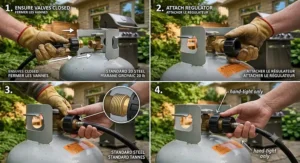
Once filled, connect the regulator hand-tight, then perform the soap-and-water leak test: mix a 50/50 solution of dish soap and water, brush it over every connection point, and open the valve slowly. Bubbles mean a leak — tighten the connection and retest before lighting anything. This single habit, repeated at the start of every grilling season, catches the overwhelming majority of connector-related propane issues before they become dangerous.
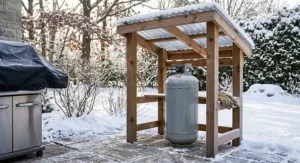
For the first 30 days, the most common mistake new owners make is storing the tank on its side or leaning it against something in a garage. Propane tanks are designed to be stored upright, outdoors, at least one metre from doors, windows, and air intakes — never in an enclosed space. A monthly wipe-down with a damp cloth keeps the powder coat free of grime that traps moisture against the steel, which is one of the simplest, most overlooked maintenance tricks that extends a tank’s usable life well before its formal 10-year expiry ever comes into play.
Real-World Scenarios: Matching the Right Tank to Your Situation
Picture three different households, each shopping for the same basic item but needing something different from it.
The first is a young couple in a Toronto condo with a small balcony, grilling maybe twice a month in summer. For them, the Manchester Tank & Equipment 10504 or a single Tank Traders Exchange Tank makes the most sense — low upfront cost, minimal storage footprint, and no long-term ownership commitment to a tank that mostly sits idle nine months of the year.
The second is a family in suburban Calgary that grills three or four times weekly from May through September and regularly hosts backyard get-togethers. Running dry mid-cookout isn’t a minor inconvenience for them — it’s a genuine disruption to a planned evening. The Flame King 20 lb + 30 lb Bundle fits this household precisely, giving them a built-in backup without a second shopping trip or delivery wait.
The third is a retired couple who splits time between a Muskoka cottage and a sailboat moored on Georgian Bay for the summer. Salt air, humidity, and infrequent but heavy-duty use define their situation, which is exactly the profile the Worthington Aluminum Vertical LPG Cylinder was engineered for — corrosion resistance and long-term reliability matter more to them than shaving a few dollars off the purchase price.
Problem → Solution Guide
Problem: The tank runs out mid-cookout with no warning. A gauge-equipped tank like the Flame King YSN230b solves the visibility issue directly, but the more reliable fix is simply owning a backup, which is exactly the case for the Flame King 20 lb + 30 lb Bundle.
Problem: The tank gets rejected at the fill station for being expired. Check the collar stamp before every fill season. If it’s past the 10-year mark from manufacture with no requalification stamp, either get it professionally requalified or switch to an exchange program like the Tank Traders Exchange Tank, which sidesteps the issue entirely.
Problem: Visible rust is spreading near the base. This is the classic steel-tank aging pattern in humid or coastal regions. Regular wipe-downs slow it, but if it’s already advanced, an aluminum option such as the Flame King 20LB Aluminum Propane Tank removes the problem going forward.
Problem: The regulator won’t connect properly. Nearly all modern 20 lb tanks sold in Canada use the QCC1 (Type 1) Acme valve, standardized specifically to prevent overfilling and connector mismatches — confirm your grill’s regulator is also QCC1-compatible, which covers virtually every gas BBQ sold in the last two decades.
Problem: Storage space is limited in a small backyard or condo. A single lightweight tank — the aluminum Flame King or a Tank Traders exchange cylinder — takes up less footprint than a two-tank bundle and doesn’t require a dedicated storage bracket.
How to Choose a 20 lb Propane Tank for BBQ
- Confirm the certification. Every legal tank in Canada carries a TC or DOT stamp on the collar — never buy a tank without one, and never buy one visibly past its 10-year window without confirming recertification.
- Decide between steel and aluminum. Steel costs less upfront; aluminum resists corrosion better and costs roughly double. Coastal or marine buyers should lean aluminum.
- Check for a built-in gauge. Not essential, but it removes the guesswork that leads to running dry mid-grill.
- Match the valve type to your regulator. Confirm QCC1 (Type 1 Acme) compatibility before purchase — it’s near-universal, but always worth a 10-second check.
- Consider ownership versus exchange. Frequent grillers save money owning and refilling; occasional grillers often come out ahead with an exchange program’s convenience.
- Factor in storage space and weight. A full 20 lb tank weighs roughly 35-40 lb combined — plan for a stable, upright, ventilated storage spot before you buy.
- Buy from a Canadian-compliant retailer. Ensure the tank ships pre-purged and Transport Canada certified, not just DOT-certified for the U.S. market alone.
Common Mistakes When Buying a 20 lb Propane Cylinder
The single most common mistake is buying based on price alone and ignoring the manufacture date stamped on the collar — a “discount” tank that’s already eight years old leaves very little runway before recertification becomes necessary. A close second is assuming every tank ships full; nearly all new propane tanks sold online or in stores, including every product on this list, ship empty and require a separate fill.
Buyers also frequently overlook valve compatibility, particularly when replacing an older tank that predates the QCC1 standard — mismatched valves simply won’t connect to modern regulators, full stop. Another recurring misstep is storing a brand-new tank indoors “just until grilling season,” which violates basic propane storage safety and, in many municipalities, local fire code as well. Finally, some shoppers assume aluminum is strictly an upgrade in every scenario; for a dry inland climate with light use, the added cost rarely pays for itself compared to a well-maintained steel tank.
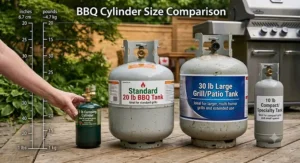
20 lb Propane Cylinder vs Other Propane Tank Sizes
The 20 lb propane cylinder sits at the center of a broader lineup that ranges from 1 lb disposable camping canisters up to 100 lb tanks used for patio heaters and small commercial setups. Compared to a 30 lb tank, the 20 lb size is noticeably easier to lift, fits standard grill side-mount brackets without modification, and remains the exchange-program default almost everywhere in Canada — which matters if you ever need a swap on short notice while travelling. A 30 lb tank buys roughly 50% more burn time between refills but adds real weight and often won’t fit factory grill mounts designed around the 20 lb footprint.
Against smaller 5 lb and 11 lb cylinders — popular for portable grills, patio heaters, and camping stoves — the 20 lb tank wins decisively on cost-per-pound of propane and total burn time, but loses on portability. For a stationary backyard grill, the math clearly favours the 20 lb standard; for a tailgate setup or a compact balcony grill, a smaller cylinder may genuinely serve better despite the higher per-pound cost.
Tank Certification: What Every Canadian Owner Needs to Know
Tank certification isn’t optional paperwork — it’s a hard legal requirement enforced at every fill station in Canada. Transport Canada requires all portable propane cylinders to meet CSA B339 and related standards, with a mandatory requalification every 10 years from the original manufacture date stamped on the collar. Attempting to fill an expired cylinder isn’t just risky — it’s against the law, and reputable fill stations will refuse outright.
The Canadian Propane Association confirms that requalification must be performed only by facilities registered with Transport Canada, and that a passed inspection results in a fresh stamp showing the new qualification date. Two inspection types exist: an external visual check (“E” marking) extends the tank for five more years, while a fuller internal-and-external check (“S” marking) can extend it a full ten. If a tank shows heavy rust, dents, or gouges, most inspectors will decline to recertify it regardless of age, and replacement becomes the only safe path forward.
Exchange Programs: Are They Worth It?
Exchange programs — offered through retailers like Home Hardware, Canadian Tire, and fuel stations like Petro-Canada — solve a real logistical problem: no waiting, no worrying about certification dates, and no risk of a rejected tank at the counter. You hand over an empty cylinder and walk out with a full, pre-inspected one in under a minute, which is genuinely appealing on a busy weekend.
| Factor | Ownership + Refill | Exchange Program |
|---|---|---|
| Upfront cost | Higher (buy the tank once) | Lower (no tank purchase) |
| Per-fill cost | Lower over time | Higher per fill |
| Wait time | 5-10 minutes at a fill station | Under a minute |
| Certification hassle | Owner’s responsibility | Retailer’s responsibility |
| Best for | Frequent grillers | Occasional or travelling users |
Looking at the comparison above, ownership wins on long-term cost for anyone burning through more than a couple of tanks per season, since refilling an owned cylinder consistently costs less per pound than an exchange swap. Exchange programs earn their premium specifically around convenience and certification risk transfer — if your tank is approaching its 10-year mark, letting the retailer absorb that problem is often worth the extra few dollars per fill. Heavy users, including anyone running a food truck or hosting frequent parties, should default to ownership; light or occasional grillers often come out ahead sticking with exchange.
Tank Lifespan: What to Expect Over 10, 15, and 20 Years
A new 20 lb propane tank carries an initial certified lifespan of 10 years from its manufacture date under Canadian regulations — after that, it either gets requalified or retired. In practice, a well-maintained steel tank stored upright, outdoors, and away from moisture can pass its first external visual requalification easily, extending it another five years, and potentially a second requalification after that if the internal and external checks both pass.
Aluminum tanks tend to outlast steel ones cosmetically, since they don’t develop the surface rust that eventually compromises a steel tank’s paint and base. That said, requalification rules apply equally regardless of material — a pristine-looking aluminum tank still needs its 10-year stamp checked. Realistically, most households get somewhere between 15 and 20 years of total service life out of a single well-cared-for tank across two requalification cycles, provided it’s stored correctly and never left sitting in standing water or against corrosive surfaces like a damp concrete slab without a base pad underneath it.
Features That Actually Matter (And Those That Don’t)
A built-in gauge matters more in practice than most spec sheets suggest — running dry mid-cookout is genuinely disruptive, and a gauge, even an imperfect one, gives real warning. Dual DOT/Transport Canada certification also matters concretely if you ever cross the border with a tank, or if you simply want the broadest possible acceptance at fill stations. Valve type matters too, though it’s less a “feature” than a hard compatibility requirement — QCC1 is the standard, full stop.
What matters less than marketing suggests: tank colour has zero functional impact beyond personal preference, and “premium” branding on a steel tank rarely translates to meaningfully thicker steel unless the listing explicitly states a heavier gauge or commercial-grade coating like Durabond. Handle design differences are largely a comfort preference rather than a durability factor. Buyers chasing the lowest possible weight should also know that the difference between two similarly sized steel tanks is usually under a kilogram — not enough to change a purchase decision on its own.
Safety, Storage & Regulations Guide
Propane cylinders must always be stored upright, outdoors, and at least one metre from doors, windows, air intakes, and any ignition source — Ontario’s safety authority is explicit that cylinders should never be stored inside a structure, including garages and sheds, and recommends never grouping more than 25 twenty-pound cylinders together even for commercial storage. Before each grilling season, a soap-and-water leak test on every connection catches the vast majority of hose and regulator issues before they become dangerous.
Canada’s own fire safety guidance reinforces the basics: always open the BBQ lid before lighting, keep venturi holes clear of insect nests and debris, and shut off the tank valve first when finished so residual gas doesn’t linger in the connector hose. If a leak is detected and there’s no flame present, shut off both the tank and the grill immediately; if the smell persists after shutting the valve, evacuate the area and call the fire department rather than attempting to troubleshoot further. These aren’t optional suggestions — they’re the baseline every certified Canadian propane cylinder is designed and regulated around.
Buyer’s Decision Framework
If you grill fewer than twice a month and prioritize low upfront cost, choose an exchange program or the Manchester Tank & Equipment 10504 because ownership overhead simply isn’t worth it for occasional use. If you grill weekly or host frequent gatherings, choose the Flame King 20 lb + 30 lb Bundle because a backup tank eliminates the single most common mid-cookout frustration. If you’re near salt water, on a boat, or in a coastal climate, choose an aluminum tank because corrosion resistance will save real money in avoided replacements over a decade. If your existing tank is approaching its 10-year certification window and you’d rather not deal with requalification logistics, choose exchange, because the retailer absorbs that responsibility entirely.
Frequently Asked Questions
❓ How long does a 20 lb propane tank last on a BBQ?
❓ Can I refill an expired propane tank in Canada?
❓ Is aluminum or steel better for a 20 lb propane tank?
❓ Do propane tank exchange programs check certification for you?
❓ What size fitting do Canadian BBQ propane tanks use?
Conclusion
Choosing a 20 lb propane tank for BBQ isn’t really about finding the “best” tank in some universal sense — it’s about matching the right build, material, and ownership model to how often you actually grill. A weekend-only griller in a condo gains little from a premium aluminum cylinder, while a family hosting cookouts three times a week will feel the difference a backup tank and a reliable gauge make almost immediately. Steel remains the practical default for most Canadian households, aluminum earns its premium in coastal and marine settings, and exchange programs solve a real convenience problem for anyone who’d rather not track certification dates themselves.
Whatever you choose from the seven options above, the fundamentals stay the same: confirm the Transport Canada certification stamp, store the tank upright and outdoors, test connections with soap and water each season, and replace or requalify before that 10-year window closes. Get those basics right, and the tank becomes the least stressful part of your next backyard cookout — exactly as it should be.
✨ Ready to stock up for the season? Check current availability on the picks above and get your backyard cookout-ready today!
Recommended for You
- Natural Hardwood Briquettes for Smokers: 7 Best Picks for 2026
- Competition-Grade Charcoal Briquettes for BBQ: 7 Top Picks (2026)
- Charcoal Briquettes Under $30 CAD: 7 Best Bags for 2026
Disclaimer: This article contains affiliate links. As an Amazon Associate, I earn from qualifying purchases. If you purchase products through these links, we may earn a small commission at no additional cost to you.
✨ Found this helpful? Share it with your friends! 💬🤗
