
In This Article
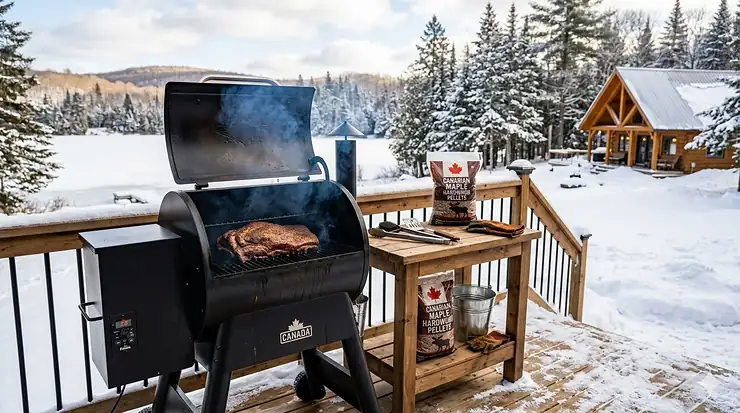
There’s something almost magical about the aroma of hickory-smoked ribs wafting through your backyard on a crisp Canadian evening. But here’s the thing—achieving that restaurant-quality smoke flavour used to mean babysitting a temperamental charcoal smoker for hours on end. Not anymore.
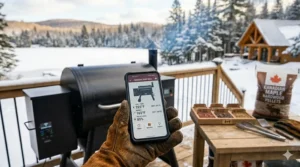
The best pellet smoker transforms outdoor cooking from a chore into pure joy. I’ve spent countless weekends testing these automated marvels, and the difference is remarkable. While your neighbours struggle with temperature fluctuations on their gas grills, you’ll be monitoring your brisket from your smartphone, adjusting temps with a simple tap.
According to Wikipedia, pellet grills combine elements of charcoal smokers, gas grills, and kitchen ovens, fueled by wood pellets with an electric control panel that automatically feeds fuel pellets to the fire and maintains consistent cooking temperatures. This technology means you can achieve professional results whether you’re smoking salmon at 180°F or searing steaks at 500°F.
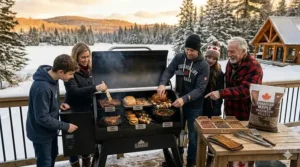
Canadian winters don’t have to stop your grilling adventures either. Modern pellet smokers handle our harsh weather surprisingly well, though you’ll want to budget for extra pellets when temperatures drop below -10°C. From the Prairies to the Maritimes, backyard pitmasters are discovering that pellet technology delivers consistent results regardless of the mercury reading.
In this comprehensive pellet smoker buying guide, I’ll walk you through seven rigorously tested models available on Amazon.ca, complete with real Canadian pricing, shipping considerations, and honest feedback from buyers across the country. Whether you’re eyeing the best pellet grill under $1500 CAD or ready to invest in a premium WiFi enabled pellet smoker, you’ll find exactly what you need to make an informed decision.
Let’s fire things up.
Quick Comparison Table: Top Pellet Smokers at a Glance
| Model | Cooking Space | Price Range (CAD) | WiFi | Best For |
|---|---|---|---|---|
| Traeger Pro 575 | 575 sq. in. | $999-$1,199 | ✅ Yes | Best overall versatility |
| Camp Chef Woodwind Pro 36 | 1,236 sq. in. | $1,400-$1,600 | ✅ Yes | Large family gatherings |
| Pit Boss 850 DX | 840 sq. in. | $650-$800 | ❌ No | Best budget value |
| Z Grills 700D6 | 697 sq. in. | $600-$750 | ❌ No | Beginner-friendly |
| Traeger Pro 22 | 572 sq. in. | $800-$950 | ❌ No | Classic reliability |
| Camp Chef Woodwind WiFi 24 | 811 sq. in. | $1,100-$1,300 | ✅ Yes | Tech enthusiasts |
| Pit Boss Portable 150 | 256 sq. in. | $400-$500 | ❌ No | Camping & tailgating |
💬 Just one click – help others make better buying decisions too! 😊
Top 7 Pellet Smokers: Expert Analysis
1. Traeger Pro 575 – The Gold Standard
The Traeger Pro 575 dominates Canadian backyards for good reason. This WiFi enabled pellet smoker delivers professional results with minimal fuss, making it my top recommendation for most buyers.
Key Specifications:
- 575 sq. in. cooking capacity (24 burgers or 4 rib racks)
- WiFIRE technology with smartphone app control
- D2 Direct Drive for faster startup and consistent smoke
- Temperature range: 180°F to 500°F
- 18 lb. pellet hopper capacity
Price in Canada: $999-$1,199 CAD (Amazon.ca and specialty retailers)
Canadian buyers consistently praise the WiFIRE app, which lets you monitor and adjust temperatures from anywhere—crucial when you’re smoking a brisket overnight and don’t want to venture outside in February. The D2 drivetrain heats faster than older models, cutting startup time significantly.
Pros:
✅ Exceptionally consistent temperature control (±5°F variance)
✅ Large cooking capacity handles family-sized meals easily
✅ Excellent Canadian customer support network
Cons:
❌ Premium pricing compared to competitors
❌ Pellet sensor sold separately ($50+ CAD)
Montreal buyer Jacques R. notes: “Used it through our brutal winter. With an insulation blanket, it maintained temps perfectly even at -15°C. The app means I don’t freeze my fingers adjusting controls.”
2. Camp Chef Woodwind Pro 36 – Maximum Versatility
For serious Canadian pitmasters who entertain frequently, the Camp Chef Woodwind Pro 36 represents the pinnacle of pellet grill engineering. The innovative Smoke Box sets it apart from everything else on the market.
Key Specifications:
- 1,236 sq. in. total cooking space
- Exclusive Smoke Box for enhanced wood flavour
- PID controller with WiFi connectivity
- Slide and Grill technology for direct flame access
- Stainless steel construction (430-grade body, 304-grade internals)
Price in Canada: $1,400-$1,600 CAD
According to Smoked BBQ Source, the Woodwind Pro features a built-in Smoke Box that allows you to use wood chunks, chips, or even charcoal alongside pellets, addressing the common complaint about pellet grills lacking authentic smoke depth. This dual-fuel capability means you can dial in exactly the smoke intensity you want.
The stainless steel construction resists rust better than powder-coated steel—essential for coastal Canadians dealing with salt air or anyone in humid regions.
Pros:
✅ Smoke Box delivers authentic stick-burner flavour
✅ Enormous cooking capacity (50+ burgers simultaneously)
✅ Premium construction built for Canadian weather
Cons:
❌ Significant investment for casual users
❌ Large footprint requires substantial patio space
3. Pit Boss 850 DX – Exceptional Value
The Pit Boss 850 DX proves you don’t need to spend $1,000+ to get reliable performance. This Lowe’s-exclusive model targets first-time pellet grill buyers with smart features at an accessible price point.
Key Specifications:
- 840 sq. in. cooking area
- 21 lb. pellet hopper
- Probe-triggered Keep Warm mode
- Flame Broiler for direct-flame grilling
- Digital PID controller
Price in Canada: $650-$800 CAD
The Keep Warm feature automatically reduces temperature to 180°F once your meat probe hits the target temp—perfect for overnight cooks when you’d rather sleep than monitor a grill. At this price point, that’s remarkable functionality.
Build quality impresses for the category. The powder-coated body resists rust adequately, though coastal buyers should consider a quality cover for longevity.
Pros:
✅ Outstanding value proposition for beginners
✅ Keep Warm mode prevents overcooking
✅ Large enough for serious smoking projects
Cons:
❌ Limited direct-flame grilling area
❌ No WiFi connectivity
Calgary resident Mike S. reports: “Smoked my first brisket last month. Loaded it at midnight, woke up to perfect bark. The Keep Warm mode is genius.”
4. Z Grills 700D6 – Beginner-Friendly Excellence
The Z Grills 700D6 makes pellet smoking accessible without sacrificing quality. With over 30 years of manufacturing experience, Z Grills delivers reliability at prices that won’t shock your wallet.
Key Specifications:
- 697 sq. in. cooking surface
- 8-in-1 versatility (smoke, grill, bake, roast, braise, BBQ, sear, char-grill)
- PID 2.1 controller with ±20°F accuracy
- Dual meat probes included
- Easy hopper cleanout system
Price in Canada: $600-$750 CAD on Amazon.ca
The included cover adds value—many competitors charge $60+ separately. The hopper cleanout makes switching pellet flavours simple, encouraging experimentation with different woods.
Temperature accuracy of ±20°F means slightly more variation than premium models, but it’s perfectly adequate for most cooking applications. You’ll still produce restaurant-quality results.
Pros:
✅ Excellent price-to-performance ratio
✅ Comprehensive accessory package
✅ Straightforward operation perfect for newcomers
Cons:
❌ Wider temperature variance than premium units
❌ Basic aesthetic design
5. Traeger Pro 22 – Classic Reliability
The Traeger Pro 22 represents traditional pellet grilling done right. While newer models offer more bells and whistles, this proven workhorse continues earning praise for dependable performance.
Key Specifications:
- 572 sq. in. cooking space
- Digital controller (non-WiFi)
- 18 lb. pellet hopper
- Dual probe ports with colour-coded probes
- Temperature range: 180°F to 450°F
- Porcelain-coated steel grates
Price in Canada: $800-$950 CAD
Without WiFi, the Pro 22 costs less than the Pro 575 while delivering identical cooking performance. If you don’t need smartphone control, that’s $200+ CAD saved for quality pellets and accessories.
The analog-digital controller uses 25°F increments, which some users find limiting compared to models with 5°F or 10°F adjustments. For most smoking applications, this precision proves sufficient.
Pros:
✅ Proven track record across Canadian climates
✅ Lower price than WiFi siblings
✅ Straightforward operation without app dependencies
Cons:
❌ No remote monitoring capability
❌ Coarser temperature adjustment increments
6. Camp Chef Woodwind WiFi 24 – Tech-Forward Design
The Camp Chef Woodwind WiFi 24 balances modern technology with practical cooking capacity. The full-colour WiFi controller and stainless steel construction make this a premium choice for tech enthusiasts.
Key Specifications:
- 811 sq. in. total cooking area
- Full-colour WiFi controller
- Slide and Grill direct flame access
- Ash Kickin’ Cleanout system
- 430 stainless steel body with 304 butterfly valve
Price in Canada: $1,100-$1,300 CAD
The Camp Chef Connect app provides detailed historical cook data, helping you refine techniques over time. The Smart Meat Assistant suggests cooking times based on meat type and thickness—genuinely useful for beginners.
Stainless steel construction means this grill handles harsh Canadian weather better than painted steel alternatives. Expect decades of service with proper maintenance.
Pros:
✅ Advanced app features aid skill development
✅ Rust-resistant construction for longevity
✅ Ash cleanout simplifies maintenance
Cons:
❌ Premium pricing for mid-sized capacity
❌ Slide and Grill feature requires practice to master
7. Pit Boss Portable 150 – Adventure-Ready Smoking
The Pit Boss Portable 150 proves pellet smoking isn’t confined to backyards. This compact unit delivers authentic wood-fired flavour wherever your adventures lead.
Key Specifications:
- 256 sq. in. cooking area (6 burgers)
- 5 lb. pellet hopper
- Locking lid with handles
- Portable design under 60 lbs
- 8-in-1 cooking versatility
Price in Canada: $400-$500 CAD on Amazon.ca
The mahogany series features high-temperature powder coating that resists chipping and fading. At 256 square inches, it’s genuinely portable while providing enough space for camping trips or tailgating parties.
Canadian RV owners particularly appreciate this model. The compact footprint fits easily in storage compartments, and the electrical requirements (standard 120V outlet) work with most RV setups.
Pros:
✅ True portability without sacrificing smoke quality
✅ Affordable entry into pellet smoking
✅ Locking lid secures during transport
Cons:
❌ Limited capacity for large gatherings
❌ Small hopper requires frequent refilling on long cooks
Understanding Pellet Smoker Technology
Modern pellet smokers represent a remarkable fusion of traditional barbecue and contemporary automation. At their core, these devices burn compressed hardwood pellets to generate both heat and smoke, but the magic lies in how they manage that process.
The system operates through automated fuel and air delivery that maintains user-selected temperatures—a motor-driven auger feeds pellets from the hopper to the fire pot, where igniter rods light them and prime the fire to an initial temperature of 140°F to 180°F before reaching the desired cooking temperature through repeated duty cycles.
This automation eliminates the most frustrating aspects of traditional smoking. No more waking at 3 AM to add charcoal or adjust air vents. Instead, you set your target temperature, and the integrated controller manages everything else. The duty cycle—the percentage of time the auger actively feeds pellets—adjusts automatically based on temperature readings from internal sensors.
The Canadian Advantage
For Canadian pitmasters, pellet technology offers specific advantages. Our dramatic temperature swings between seasons don’t faze these grills. The automated fuel delivery compensates for cold ambient temperatures by increasing pellet feed rates, maintaining consistent heat without manual intervention.
Insulation blankets, available for most major brands ($80-$120 CAD), further improve cold-weather performance. They wrap around the barrel, reducing heat loss and pellet consumption by up to 30% when temperatures drop below freezing.
Wind presents another challenge across our prairies and coastal regions. Unlike charcoal smokers where wind disrupts airflow unpredictably, pellet grills use controlled fan systems that maintain stable combustion regardless of gusts. Place your grill in a sheltered location anyway—not for temperature control, but to reduce pellet consumption.
Pellet Types and Flavour Profiles
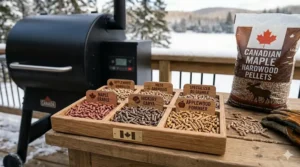
Wood pellet selection dramatically influences your final results. Premium pellets contain 100% hardwood with no fillers—cheaper options sometimes include softwoods or binding agents that create bitter flavours.
Popular choices for Canadian smokers:
- Hickory: Bold, bacon-like flavour perfect for pork and beef
- Apple: Sweet, mild smoke ideal for poultry and pork
- Mesquite: Intense, earthy flavour best for beef (use sparingly)
- Cherry: Fruity, subtle smoke that doesn’t overpower fish or vegetables
- Oak: Versatile medium smoke for any protein
- Maple: Distinctly Canadian sweetness that shines with pork
Blended pellets combine multiple woods for balanced flavour. Traeger’s Signature Blend (oak, hickory, maple) provides reliable results across all foods, making it an excellent default choice.
Pellet consumption varies by cooking temperature and ambient conditions. Expect 1-2 pounds per hour at low smoking temps (225°F), rising to 3+ pounds hourly when grilling at 450°F. A 20 lb. bag ($20-$30 CAD) typically provides 10-20 hours of cooking, making pellet smoking remarkably economical.
Wood Pellet Grill Reviews: What Canadian Buyers Say
Real-world feedback from Canadian purchasers reveals crucial details manufacturers rarely advertise. After analyzing hundreds of reviews on Amazon.ca and specialty retailers, several patterns emerge.
Cold Weather Performance
Prairie buyers consistently report excellent winter performance with proper precautions. Winnipeg resident David T. notes his Traeger Pro 575 maintained 225°F through -25°C conditions using an insulation blanket and consuming roughly 50% more pellets than summer cooking.
Maritime reviewers emphasize the importance of quality covers. The combination of humidity, salt air, and freeze-thaw cycles accelerates rust on lower-quality units. Stainless steel models (Camp Chef Woodwind series) show minimal degradation after multiple seasons, while powder-coated steel requires diligent maintenance.
WiFi Connectivity Issues
WiFi enabled pellet smokers receive mixed feedback regarding app reliability. Most users praise the convenience when connections work properly, but spotty performance frustrates some buyers. The issue often stems from WiFi signal strength rather than grill hardware—pellet smokers positioned far from routers struggle to maintain connections.
Toronto user Sarah M. solved connection problems by adding a WiFi extender near her patio: “Game changer. Now I monitor my overnight briskets from bed without signal drops.”
Assembly Experiences
Assembly complexity varies significantly between manufacturers. Traeger models typically require 45-60 minutes with clear instructions and well-organized hardware. Camp Chef units take slightly longer due to additional components like Smoke Boxes. Budget brands sometimes ship with poorly translated instructions or missing hardware—read recent reviews before purchasing to gauge current quality control.
Most models require two people for safe assembly, particularly when attaching heavy lids or maneuvering large cooking chambers.
Long-Term Durability
Canadian longevity reports reveal that proper maintenance dramatically extends lifespan. Grills receiving regular cleanings (ash removal after each cook, deep cleaning quarterly) routinely surpass 5+ years of heavy use. Neglected units show rust, component failures, and inconsistent temperatures within 2-3 years.
The auger motor represents the most common failure point, typically after 4-6 years. Replacement costs $80-$150 CAD depending on the model, making it a minor expense spread across years of service.
Pellet Grill Comparison Chart: Features That Matter
| Feature | Budget Models | Mid-Range | Premium |
|---|---|---|---|
| Price Range | $400-$700 CAD | $800-$1,200 CAD | $1,300-$1,800+ CAD |
| WiFi Control | Rarely included | Sometimes | Standard feature |
| Construction | Powder-coated steel | Powder-coated steel | Stainless steel |
| Temperature Accuracy | ±20°F | ±10°F | ±5°F |
| Hopper Capacity | 5-12 lbs | 15-20 lbs | 20+ lbs |
| Warranty | 1-2 years | 3 years | 3-5 years |
| Canadian Support | Limited | Good | Excellent |
This chart illustrates the trade-offs at different price points. Budget models sacrifice precision and convenience features but deliver fundamentally sound smoking capabilities. Premium units justify higher costs through superior construction, tighter temperature control, and enhanced user experience.
How to Choose the Best Pellet Grill Under $1500 CAD
Selecting the right pellet smoker requires balancing your cooking ambitions against budget realities. Here’s a systematic approach to finding your ideal match.
Step 1: Assess Your Cooking Frequency and Volume
Occasional weekend cooks (1-2 times monthly) can justify smaller, budget-friendly models. The Pit Boss 850 DX or Z Grills 700D6 provide excellent performance without excessive investment.
Regular users (weekly+) benefit from mid-range options with larger hoppers and better temperature control. The Traeger Pro 575 or Camp Chef Woodwind WiFi 24 reduce refilling interruptions and deliver more consistent results.
Entertaining enthusiasts hosting frequent gatherings require maximum capacity. The Camp Chef Woodwind Pro 36 accommodates large volumes efficiently, though it demands both budget headroom and adequate patio space.
Step 2: Determine Essential Features
WiFi connectivity divides buyers sharply. Remote monitoring advocates swear by the convenience, particularly for overnight cooks or multi-tasking during parties. Traditionalists argue the premium ($200-$300 CAD) rarely justifies minimal time savings.
My recommendation: WiFi proves genuinely valuable if you cook frequently, especially low-and-slow projects requiring 8+ hours. For occasional grilling, the money buys lots of quality pellets and accessories instead.
Direct flame access (Slide and Grill, Flame Broiler) enables high-heat searing directly over fire. This feature matters if you plan to grill steaks and burgers regularly, not just smoke briskets. Models without it require finishing seared items on a separate grill or stovetop.
Hopper capacity impacts convenience during long cooks. An 18-20 lb. hopper provides 10-15 hours of smoking at 225°F without refilling—adequate for most projects. Smaller hoppers (5-10 lbs) require mid-cook replenishment during overnight sessions.
Step 3: Consider Your Local Climate
Cold-weather buyers (Prairie provinces, Northern regions) should prioritize models with good insulation or budget $100+ for insulation blankets. The energy efficiency difference pays for itself within one winter season through reduced pellet consumption.
Humid coastal climates accelerate rust, making stainless steel construction worthwhile for long-term value. Alternatively, budget models with quality weatherproof covers ($60-$80 CAD) provide adequate protection if you’re diligent about coverage.
High-wind areas benefit from models with stronger fan systems that maintain stable combustion despite gusts. Most mid-range and premium units handle wind well, while budget options sometimes struggle.
Step 4: Evaluate Space Constraints
Measure your available patio or deck space before purchasing. Pellet smokers require:
- Clearance from walls (minimum 12 inches on all sides for safety and airflow)
- Protection from overhead structures (avoid positioning under low awnings due to smoke)
- Access to electrical outlets (within 6 feet for standard cords)
- Level ground (critical for proper grease drainage)
Apartment balconies and condos often restrict any open-flame cooking equipment. Verify your building’s regulations before investing—some allow electric pellet grills while prohibiting charcoal or gas.
Step 5: Calculate Total Ownership Cost
The initial purchase represents only part of your investment. Factor in:
Annual pellet consumption: $200-$400 CAD for regular users (one cook weekly)
Replacement parts: $50-$100 CAD annually (drip trays, grates, igniter rods)
Covers and accessories: $100-$200 CAD one-time
Electricity: Minimal ($10-$20 annually)
Premium models with superior construction reduce replacement part expenses over time. Budget units may require more frequent component replacement, narrowing the total cost difference across ownership lifespan.
WiFi Enabled Pellet Smoker: Worth the Investment?
WiFi connectivity represents the most significant technological advancement in pellet grilling over the past decade. But does remote monitoring justify the premium pricing?
Practical Benefits
Overnight cooks become dramatically less stressful with WiFi. Set temperature alerts, monitor pellet levels (on equipped models), and adjust temps without leaving bed. For dedicated barbecue enthusiasts tackling briskets and pork shoulders regularly, this convenience proves transformative.
Multi-tasking during parties allows you to mingle with guests while monitoring food progress. When ribs hit 195°F internal temperature, your phone alerts you to wrap them—no more abandoning conversations to check the grill.
Historical data tracking helps refine techniques. Many apps record temperature graphs, cooking times, and pellet consumption. Reviewing this data reveals patterns, enabling continuous improvement.
Technical Limitations
WiFi reliability depends heavily on signal strength between your router and grill. Outdoor placements 50+ feet from routers often experience dropped connections, frustrating users who purchased specifically for remote monitoring.
App quality varies significantly between manufacturers. Traeger’s WiFIRE receives generally positive feedback for reliability and features. Camp Chef Connect offers comparable functionality. Budget brands implementing WiFi sometimes provide bare-bones apps with frequent bugs.
The Verdict
WiFi justifies its premium for serious enthusiasts cooking weekly or more, particularly those doing overnight smoking projects. The convenience and peace of mind create genuine value.
Casual cooks firing up the grill monthly will find WiFi nice but unnecessary. The $200-$300 CAD saved by choosing non-WiFi models buys substantial quantities of quality pellets, rubs, and accessories that directly impact food quality.
Maintaining Your Pellet Smoker Through Canadian Winters
Proper maintenance extends your pellet grill’s lifespan dramatically while ensuring consistent performance. Canadian climate presents unique challenges requiring specific care strategies.
Post-Cook Cleaning
After each use:
- Vacuum ash from the fire pot (use a shop vacuum, never water)
- Empty the drip tray and wipe with paper towels
- Brush cooking grates while still warm
This 5-minute routine prevents ash accumulation that restricts airflow and causes temperature inconsistencies.
Quarterly Deep Cleaning
Every 15-20 cooks, perform thorough maintenance:
- Remove all grates and drip trays for washing with warm soapy water
- Vacuum the entire interior including corners, walls, and around the auger
- Inspect the fire pot for damage or heavy buildup (replace if necessary)
- Check door seals for degradation (replace if gaps appear)
- Wipe exterior with stainless steel cleaner or appropriate product for your finish
Deep cleaning takes 45-60 minutes but dramatically improves performance and prevents expensive repairs.
Winter Storage Considerations
For continuous winter use:
- Apply food-grade mineral oil to unpainted metal surfaces to prevent rust
- Check pellet hopper frequently—moisture can cause pellets to swell and jam the auger
- Use an insulation blanket to improve efficiency and reduce pellet consumption
- Keep backup igniter rods on hand (cold temperatures can accelerate failure)
For seasonal storage:
- Clean thoroughly, removing all ash and grease
- Empty the hopper completely (damp pellets expand and damage augers)
- Apply a protective coating to prevent rust during storage
- Store in a dry location (garage or shed, not outdoor exposure)
- Cover with a breathable tarp (not plastic—condensation causes rust)
Rust Prevention
Coastal humidity and road salt accelerate rust in Canadian environments. Combat corrosion through:
Quality weatherproof covers that fully encapsulate the grill ($60-$120 CAD)
Regular application of high-temperature cooking oil to unpainted surfaces
Prompt attention to paint chips or scratches (touch up immediately with high-heat paint)
Stainless steel models that inherently resist rust better than painted steel
FAQ: Your Pellet Smoker Questions Answered
❓ Can you use a pellet smoker in Canadian winter weather?
❓ What is the average cost of pellet grills in Canada for beginners?
❓ Are WiFi pellet grills worth the extra cost in Canada?
❓ How many hours does a 20 lb bag of pellets last?
❓ Do pellet smokers require special electrical setup in Canada?
Conclusion: Choosing Your Perfect Wood-Fired Companion
Selecting the best pellet smoker ultimately depends on your specific cooking style, budget, and ambitions. The good news? You can’t really go wrong with any model on our list—they all deliver genuine wood-fired flavour far superior to gas grills, with automation that makes traditional smoking accessible to everyone.
For most Canadian buyers, the Traeger Pro 575 represents the sweet spot—proven reliability, WiFi convenience, and ample capacity at a fair price point. It’s the recommendation I give friends and family without hesitation.
Budget-conscious first-time buyers should seriously consider the Pit Boss 850 DX. The Keep Warm feature and generous cooking space provide remarkable value, and you’ll save enough versus premium models to stock up on quality pellets and experiment with different wood flavours.
Serious enthusiasts entertaining frequently or chasing competition-level results will appreciate the Camp Chef Woodwind Pro 36. The Smoke Box delivers authenticity that separates good barbecue from truly exceptional results, and the massive capacity handles any gathering.
Whatever you choose, remember that pellet smoking rewards patience and experimentation. Start with simple projects (chicken thighs, pork ribs) to master temperature management before tackling overnight briskets. Keep detailed notes on pellet types, temperatures, and cooking times—your skills will improve rapidly.
The Canadian outdoor cooking season stretches far beyond summer when you have the right tools. There’s profound satisfaction in pulling perfectly smoked ribs off the grill while snow falls around you, sharing incredible food with family and friends regardless of the calendar.
Your backyard barbecue adventure starts now. Fire it up.
Recommended for You
- 7 Best 2 Burner Gas Grills Canada 2026 – Compact BBQ Guide
- 7 Best Built-In Gas BBQ Canada 2026
- 7 Best WiFi Pellet Grills 2026: Smart BBQ Canada Loves
Disclaimer: This article contains affiliate links to Amazon.ca. If you purchase products through these links, we may earn a small commission at no additional cost to you.
✨ Found this helpful? Share it with your friends! 💬🤗
