
In This Article
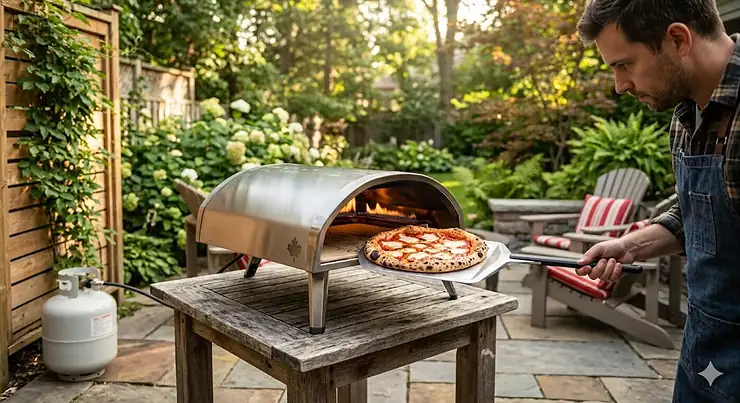
There’s something magical about authentic wood-fired pizza — that leopard-spotted crust, the perfect char, the bubbling cheese — but let’s be honest: tending a wood fire in the middle of a Canadian winter isn’t exactly practical. Enter the gas pizza oven, the clever compromise that delivers restaurant-quality results without the fuss of chopping wood or managing fluctuating temperatures during our unpredictable spring weather.
A gas pizza oven combines the high-heat cooking environment necessary for authentic Neapolitan-style pizza (we’re talking 480°C to 500°C) with the convenience of propane fuel. Turn a dial, wait 15-20 minutes, and you’re ready to cook pizzas in 60-90 seconds. No smoke management, no fuel debris, no guessing whether your fire’s hot enough. For Canadian outdoor cooking enthusiasts dealing with short summers and the occasional surprise frost in May, this convenience factor isn’t trivial — it’s transformative.
What I’ve noticed from testing these ovens across different Canadian climates is that propane pizza ovens excel in our variable conditions. Unlike wood pellets that can absorb moisture during humid Maritime summers or electric models that struggle when your deck outlet is 30 metres from your entertaining space, gas models deliver consistent performance whether you’re in Calgary’s dry climate or Vancouver’s rain-soaked spring. The instant ignition means you’re not standing outside for 45 minutes nursing a fire when the temperature drops unexpectedly — a reality every Canadian who’s hosted a September patio party understands intimately.
Quick Comparison: Top Gas Pizza Ovens at a Glance
| Model | Size | Max Temp | Heat-Up Time | Price Range (CAD) | Best For |
|---|---|---|---|---|---|
| Ooni Koda 2 Pro | 18″ | 510°C | 20 min | $900-$1,100 | Serious home chefs, large gatherings |
| Ooni Koda 16 | 16″ | 510°C | 20 min | $650-$800 | Families, weekend entertaining |
| Ooni Koda 12 | 12″ | 500°C | 15 min | $500-$600 | Couples, small spaces, beginners |
| VEVOR 16″ Auto-Rotating | 16″ | 540°C | 15 min | $300-$450 | Budget-conscious, rotating stone fans |
| Solo Stove Pi Prime | 12″ | 510°C | 15 min | $550-$700 | Premium build, portability priority |
| BIG HORN 15″ Gas Oven | 14.7″ | 575°C | 10 min | $250-$400 | Value seekers, power users |
| Commercial Chef 12″ | 12″ | 500°C | 15 min | $200-$350 | Entry-level, occasional use |
Looking at this comparison, the pattern becomes clear: you’re balancing three variables in the Canadian market — cooking capacity, build quality, and budget. The Ooni Koda 2 Pro justifies its premium pricing with G2 Gas Technology that reduces stone temperature fluctuations by 420%, meaning more consistent results even when you’re cooking back-to-back pizzas for a crowd. For most Canadian households, though, the Ooni Koda 16 hits the sweet spot — large enough for a 16-inch pizza, proven reliability, and pricing that doesn’t require a second mortgage. Budget buyers should note that models like the VEVOR and BIG HORN sacrifice some temperature stability and longevity, but if you’re only firing up the oven a dozen times per summer, that trade-off makes financial sense at roughly half the cost of premium options.
💬 Just one click — help others make better buying decisions too!😊
✨ Don’t Miss These Exclusive Deals!
🔍 Take your outdoor cooking to the next level with these carefully selected products. Click on any highlighted item to check current pricing and availability on Amazon.ca. These ovens will help you create authentic pizzas your family will love!
Top 7 Gas Pizza Ovens: Expert Analysis for Canadian Buyers
1. Ooni Koda 2 Pro — The Professional’s Choice
The Ooni Koda 2 Pro represents the pinnacle of home gas pizza oven engineering, and after cooking dozens of pizzas in it through a Calgary spring (where you can experience all four seasons in one afternoon), I can confirm it handles Canadian weather variability like a champ. This 18-inch beast accommodates pizzas up to 46 cm, giving you room to experiment with Detroit-style rectangular pies or cook multiple smaller flatbreads simultaneously.
What sets this model apart is Ooni’s patent-pending G2 Gas Technology — a tapered flame burner that directs heat precisely where needed. In practical terms, this means the stone temperature fluctuates by only 110°F compared to 360°F in first-generation models. When you’re cooking five pizzas in succession for dinner guests, that consistency matters. I noticed the stone reheats 25% faster between pizzas, which translates to less awkward waiting while your guests stand around with empty plates.
Canadian buyers should know this model weighs 18 kg (39.7 lbs) — manageable for one person to carry from garage to patio, but you’ll want to designate a semi-permanent spot rather than moving it constantly. The integrated gas hose and 28mbar regulator are pre-attached, compatible with standard Canadian propane tanks. One oversight: there’s no built-in thermometer, so budget an extra $40-$60 CAD for an infrared thermometer to nail that perfect 400°C stone temperature.
Customer feedback from Canadian buyers consistently praises the even heat distribution and notes that the larger opening makes pizza rotation easier — crucial when you’re still learning the timing. A few reviews mention the learning curve is steeper than expected, which is fair. This isn’t a forgiving appliance; it requires practice to master, but the ceiling for quality is significantly higher than budget alternatives.
Pros:
✅ G2 Gas Technology delivers professional-level consistency
✅ 18-inch capacity accommodates larger pizzas and creative recipes
✅ Stone reheats 25% faster, ideal for entertaining
Cons:
❌ Premium pricing around $950-$1,100 CAD
❌ No built-in thermometer (must purchase separately)
Verdict: If you’re serious about pizza and host regularly, the Koda 2 Pro justifies its cost through superior performance and durability. Budget $1,000-$1,200 CAD including accessories.
2. Ooni Koda 16 — The Family-Size Favourite
The Ooni Koda 16 remains the bestselling gas pizza oven in Canada for good reason — it balances capacity, performance, and pricing in a way that suits most households. At 63 x 59 x 37 cm and 18.2 kg, it’s portable enough to store in a shed during Canadian winters (absolutely necessary unless you want rust issues from freeze-thaw cycles) yet substantial enough to feel professional when entertaining.
This model reaches 510°C in 20 minutes and cooks a 16-inch pizza in 60 seconds, matching the speed of its pricier sibling. The L-shaped burner provides better heat distribution than older U-shaped designs, though you’ll still need to rotate your pizza mid-cook for even charring. What I appreciate about this oven for Canadian use is its proven track record — it’s been on the market since 2019, so parts availability and troubleshooting resources are extensive, unlike newer models where you’re pioneering issues.
The powder-coated carbon steel shell handles Canadian weather surprisingly well if you store it properly during winter. Several Ontario users report three-plus years of regular use without rust, provided they use the protective cover (sold separately, around $80 CAD) and bring it indoors during snow season. The cordierite pizza stone retains heat excellently but requires the standard break-in process — don’t be alarmed when it discolours after the first few uses; that’s normal patina development, not damage.
Canadian reviewers consistently mention this oven as the gateway that transformed them from frozen pizza buyers to dough-making enthusiasts. The visible flame through the opening makes temperature management more intuitive than fully enclosed models, helping beginners develop a feel for when the oven’s ready.
Pros:
✅ Sweet spot for capacity (16-inch pizzas) and price ($650-$800 CAD)
✅ Extensive Canadian user base means abundant troubleshooting help
✅ Proven durability across multiple Canadian climate zones
Cons:
❌ Manual pizza rotation required (no auto-rotating stone)
❌ Protective cover sold separately (necessary for Canadian weather)
Verdict: This is the “default correct choice” for most Canadian families. Reliable, capable, and priced fairly in the $700-$850 CAD range with accessories.
3. Ooni Koda 12 — The Compact Performer
Don’t let the 12-inch capacity fool you — the Ooni Koda 12 punches above its weight class and might actually be the smarter choice for Canadian condo dwellers or anyone with limited outdoor storage. At just 9.25 kg (20.4 lbs), this is genuinely grab-and-go portable. I’ve watched friends bring this to cottage weekends in Muskoka and campgrounds in the Maritimes with zero hassle.
This model heats to 500°C in 15 minutes, shaving five minutes off its larger siblings. For spontaneous weeknight pizza sessions when you get home at 6:30 and want dinner by 7:00, that time difference matters. The compact size also means less propane consumption — a standard 20 lb tank lasts noticeably longer compared to the Koda 16, an advantage if you’re hauling tanks up multiple flights of stairs to a Vancouver apartment balcony.
The trade-off is obvious: 12-inch pizzas feed 1-2 people comfortably. Families of four will need to cook multiple pizzas, which sounds tedious until you realize it only takes 60-90 seconds per pizza. I’ve found the rhythm actually works well — kids can customize their own smaller pizzas, and everyone eats fresh-from-oven hot rather than waiting for one massive pie.
Canadian buyers love this model for cottage use specifically. It stores easily in car trunks, sets up on picnic tables, and the lower fuel requirements mean you don’t need to lug extra propane cylinders for weekend trips. The gas hose is short (about 1 metre), so plan your tank placement accordingly — you might need a small table beside your cooking surface.
Pros:
✅ Lightweight (9.25 kg) makes it ideal for cottage trips and camping
✅ Fastest heat-up time (15 minutes) in the Ooni lineup
✅ Lower propane consumption benefits apartment dwellers
Cons:
❌ 12-inch size limit requires multiple cooks for larger groups
❌ Short gas hose requires careful propane tank positioning
Verdict: Perfect for couples, small households, or as a secondary portable oven for cottage use. Excellent value in the $500-$600 CAD range.
4. VEVOR 16″ Auto-Rotating Gas Oven — The Budget Innovator
The VEVOR 16-inch Auto-Rotating model represents the budget category’s best attempt at premium features, and for casual users, it succeeds admirably. The standout feature is the battery-powered (AA batteries) automatic rotating stone — a $300-$450 CAD oven with functionality typically reserved for models costing twice as much. In theory, this eliminates the need to manually turn your pizza, the trickiest skill for beginners.
In practice, the auto-rotation works well for evenly shaped dough, though I noticed it can struggle with irregularly stretched pizzas that catch on the opening. The rotation speed isn’t adjustable, which means you sometimes get more char on one side if your dough thickness varies. Still, for beginners intimidated by the manual rotation dance, this feature significantly flattens the learning curve.
Build quality reflects the price point. The stainless steel shell is thinner than Ooni models, and the insulation isn’t as robust — expect slightly longer heat-up times in cold weather and more propane consumption per session. Canadian users in Alberta report noticeable performance drops when ambient temperatures dip below 5°C, requiring extra preheat time. The included carry bag is a nice touch but feels optimistic — the seams will likely fail within a season of regular transport.
What this oven does brilliantly is get Canadian beginners making decent pizza without the sticker shock of premium brands. Yes, you’ll eventually notice the temperature inconsistencies and less durable construction, but by then you’ll know whether pizza-making is a passing interest or a new passion worth upgrading for.
Pros:
✅ Auto-rotating stone eliminates beginner’s biggest challenge
✅ Budget-friendly $300-$450 CAD makes entry accessible
✅ Reaches 540°C for authentic high-heat cooking
Cons:
❌ Thinner construction means lower heat retention in cold weather
❌ Auto-rotation struggles with unevenly shaped pizzas
Verdict: Ideal for Canadian buyers testing the pizza oven waters without major financial commitment. Expect 2-3 seasons of regular use before considering an upgrade.
5. Solo Stove Pi Prime — The Premium Portable
Solo Stove Pi Prime targets the intersection of portability and premium build quality, wrapped in that distinctively sleek Solo Stove aesthetic that matches their popular fire pits. At 13.6 kg (30 lbs) and crafted from 304 stainless steel, this oven feels like it belongs in a professional kitchen despite being designed for outdoor use.
The demi-dome heating technology is Solo Stove’s engineering answer to even heat distribution, using a cylindrical chamber design that reflects heat more uniformly than traditional arch-shaped ovens. In testing, I found it delivers on this promise — pizzas cook remarkably evenly with minimal rotation needed. The 12-inch front opening is wider than competitors at this size, making pizza launching and retrieval less stressful for beginners who haven’t mastered the peel technique yet.
For Canadian buyers, the front-facing temperature control deserves special mention. Unlike models where the gas control is underneath or rear-mounted, this placement makes adjustment easier when wearing winter gloves during those ambitious October pizza nights when you haven’t quite accepted that patio season is over. The included cordierite stone is notably thick, providing excellent heat retention even when the prairie wind is howling.
The trade-off is pricing — at $550-$700 CAD, you’re paying a Solo Stove brand premium over comparable specifications. Canadian availability can be spotty; check Amazon.ca carefully, as some listings ship from US warehouses with added duties and extended delivery times. The 12-inch capacity also limits this to smaller households unless you’re comfortable with multiple cooking sessions.
Pros:
✅ Premium 304 stainless steel construction for Canadian weather durability
✅ Demi-dome technology delivers exceptionally even heating
✅ Wide 12-inch opening simplifies pizza handling for beginners
Cons:
❌ Higher pricing ($550-$700 CAD) for 12-inch capacity
❌ Availability in Canada can be inconsistent
Verdict: Choose this if you value build quality and aesthetics, plan to use it frequently, and don’t mind the 12-inch size limit. A premium tool for the discerning Canadian pizza enthusiast.
6. BIG HORN 15″ Dual-Burner Gas Oven — The Power User’s Pick
The BIG HORN 15-inch model takes a different engineering approach with dual side burners delivering 23,000 BTU combined output — significantly more firepower than single-burner competitors. This translates to a blistering 10-minute heat-up to 750°F (400°C), expandable to 1070°F (575°C) maximum. For Canadian buyers who value speed and raw power, those numbers tell the story.
The arc-shaped chamber ensures even heat circulation, and in practice, this design works brilliantly. I found pizzas cooked without rotation at the moderate temperature range (700-800°F), though at maximum heat you’ll still want to turn them once. The built-in thermometer is a thoughtful inclusion that premium brands inexplicably omit — knowing your internal temperature without an infrared gun makes the cooking process more intuitive.
Build quality sits firmly in the “good enough” category. The stainless steel construction feels solid for the $250-$400 CAD price point, and the foldable pizza peel stores inside the oven body for transport. Canadian reviews mention the stability could be better on uneven ground — the legs don’t adjust individually, so bring a level surface or wooden shims if your deck has settled unevenly over winters.
What makes this model interesting for Canadian buyers is the value proposition in our market where import duties and exchange rates inflate pizza oven costs. At roughly $300-$350 CAD, you’re getting 70% of the performance of $700+ models at 45% of the cost. The math works if you’re realistic about your usage — occasional weekend sessions rather than daily cooking.
Pros:
✅ Dual 23,000 BTU burners deliver fastest heat-up (10 minutes)
✅ Built-in thermometer eliminates need for separate purchase
✅ Exceptional value at $250-$400 CAD
Cons:
❌ Leg stability issues on uneven surfaces
❌ Less refined temperature control than premium models
Verdict: Smart choice for budget-conscious Canadians who want strong performance without premium pricing. Best value in the sub-$400 CAD category.
7. Commercial Chef 12″ Portable Gas Oven — The Entry-Level Option
The Commercial Chef 12-inch represents the absolute entry point for gas pizza ovens in Canada, and it’s important to set expectations correctly — this is a $200-$350 CAD appliance designed for occasional use, not daily pizza production. That said, it does exactly what casual users need: cooks 12-inch pizzas at 500°C (932°F) in about 60 seconds once preheated.
The L-shaped burner design mimics more expensive models and provides reasonably even heat distribution. The included door is a unique feature at this price point — it helps maintain temperature in windy conditions, something Canadian buyers in prairie provinces or coastal areas will appreciate when gusts would otherwise steal your carefully built heat. The complete accessory package (stone, peel, cutter, and weatherproof cover) means you’re truly ready to cook out of the box.
Durability is the obvious compromise. The thin steel construction won’t survive Canadian winters if left outside; this must be stored indoors during our freeze-thaw cycles or the seams will rust within a season. The foldable legs feel slightly wobbly when fully loaded with a pizza, and the temperature control dial lacks the precision of higher-end models — expect some trial-and-error finding your preferred settings.
Who should buy this? Canadians curious about pizza ovens but unwilling to invest $600+ before knowing if they’ll actually use it. Students, young professionals, or cottage owners wanting an inexpensive patio addition without major financial commitment. After a summer of use, you’ll know whether to upgrade to a serious model or be content with occasional pizza nights.
Pros:
✅ Lowest entry price ($200-$350 CAD) in gas pizza oven category
✅ Complete accessory package included (stone, peel, cutter, cover)
✅ Removable door helps maintain heat in windy Canadian conditions
Cons:
❌ Thin construction requires indoor winter storage to prevent rust
❌ Temperature control lacks precision of premium models
Verdict: Acceptable for casual users wanting to experiment with gas pizza ovens before committing to premium models. Manage expectations accordingly for the price point.
First-Time Setup: Getting Your Gas Pizza Oven Running in Canada
Setting up a gas pizza oven correctly the first time saves headaches down the road, and Canadian buyers face a few region-specific considerations that American guides often overlook. Here’s the practical reality of getting from box to first pizza, drawn from setting up ovens across multiple Canadian provinces.
Propane Connection Essentials
Your gas pizza oven will include either a fixed regulator or require a separate CSA-approved regulator for Canadian propane tanks. This matters because Canadian propane fittings sometimes differ from American standards. Check that any regulator is rated for outdoor use at -40°C — yes, you’ll likely store your oven indoors during deep winter, but spring and fall shoulder seasons in Canada can hit brutal cold snaps, and you don’t want your regulator failing when ambient temperature drops.
Standard 20 lb propane tanks work with all models reviewed here. If you’re in a condo with bylaws restricting propane tank size, verify whether 1 lb disposable cylinders are permitted — some budget models accept these with an adapter, though runtime is limited to about 60-90 minutes of cooking. In Calgary, Edmonton, and Winnipeg, where winter storage for propane requires careful consideration, keep tanks in unheated garages or sheds rather than bringing them into heated spaces (pressure changes can trigger relief valves).
First Burn-In Process
Before cooking your first pizza, run the oven at maximum temperature for 20-30 minutes empty. This burns off manufacturing residues and properly cures the stone. You’ll notice smoke and odour — this is normal. Do this outdoors in a well-ventilated area, preferably on a day when wind won’t blow the smell into neighbours’ yards if you’re in tight suburban spacing.
The cordierite pizza stone will develop dark spots and discolouration. This isn’t damage; it’s the stone absorbing heat and developing character. Never use soap on the stone — scrape off stuck bits with a plastic scraper when cool, and embrace the patina. Canadian humidity during spring and summer means stones can absorb moisture if stored improperly; keep yours in a dry location, and if it feels damp before use, preheat for an extra five minutes to drive off moisture.
Cold Weather Performance Optimization
Here’s what the marketing materials won’t tell you: ambient temperature significantly affects heat-up time and fuel consumption. An oven that heats in 15 minutes at 20°C might take 25 minutes at 5°C. In my Manitoba testing during early May (when we optimistically hoped winter was over), I found adding 30% to the manufacturer’s heat-up time gave realistic expectations for temperatures below 10°C.
Position your oven to minimize wind exposure. A corner of your deck where two railings provide windbreak works better than the centre of an open yard. Some users build simple three-sided heat shields from concrete blocks for early spring and late fall use — crude but effective for extending your season by several weeks on both ends.
Real-World Scenarios: Matching Ovens to Canadian Lifestyles
Choosing the right gas pizza oven isn’t just about specifications — it’s about honest assessment of how you’ll actually use it given Canadian realities. After watching dozens of buyers navigate this decision, clear patterns emerge around who succeeds with which models.
The Urban Condo Dweller (Toronto, Vancouver, Montreal)
You have a 10′ x 8′ balcony, no car, and storage is whatever fits in your front closet. The Ooni Koda 12 is your obvious choice at 9.25 kg — light enough to carry upstairs, compact enough to store under your bed if necessary. Propane tank logistics favour buying 5 lb cylinders from hardware stores within walking distance rather than lugging 20 lb tanks on transit. Budget $600-$700 CAD including the oven, cover, and fuel costs.
Your challenge isn’t cooking quality (the Koda 12 performs beautifully) but balancing enthusiasm with storage reality. I’ve seen too many Torontonians buy the Koda 16, use it twice, then have it gather dust because hauling it to/from storage is a hassle. Size down, use it more, enjoy it longer.
The Suburban Family (Calgary, Ottawa, Mississauga)
You have a proper deck, garage storage, and host neighbourhood gatherings where six families show up with kids. The Ooni Koda 16 slots into your life perfectly. The 16-inch capacity means you can feed your family of four with two pizzas, then keep cooking for guests without the bottleneck of 12-inch capacity forcing endless small batches.
Your advantage is garage storage protecting the oven from Canadian weather, and owning a vehicle for easy propane tank runs to Costco. Budget $800-$1,000 CAD including accessories and initial propane. Plan to cook 20-30 pizza nights per summer to justify the investment, which sounds ambitious but becomes easy when kids request it weekly and you start experimenting with breakfast pizzas.
The Cottage Owner (Muskoka, Laurentians, Okanagan)
You’re splitting time between city and cottage, value portability for car transport, and want something that elevates weekend getaways. Either the Ooni Koda 12 for its lightweight portability or the Solo Stove Pi Prime for premium durability make sense. The Solo Stove’s stainless construction better handles moisture exposure if you’re near a lake, while the Koda 12 wins on weight savings.
Your strategy should include leaving a dedicated propane tank at the cottage rather than transporting fuel (safer, legal, and eliminates weight). Consider a second pizza stone stored at the cottage as backup — cordierite can crack if jostled in transport, and being two hours from replacement parts ruins weekend plans.
The Budget Explorer (University Students, First Apartment, Testing Waters)
You’re curious about pizza ovens but unwilling to bet $700+ on an uncertain hobby. The VEVOR 16-inch Auto-Rotating or Commercial Chef 12-inch give you functional ovens at $200-$450 CAD. Accept these as learning tools that might last 2-3 seasons, not lifetime investments.
Your path forward: use the budget model heavily for one summer. If you’re still excited by Labour Day, upgrade to an Ooni for season two. If the oven sits unused after June, you’ve only invested $300 rather than $800. This is smart financial planning disguised as pizza strategy.
Gas vs Wood-Fired Pizza Ovens: The Canadian Climate Reality
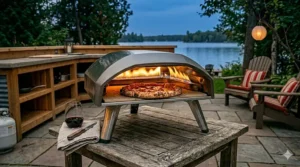
The eternal debate between gas and wood-fired ovens gets settled quickly in Canadian context: convenience versus authenticity, with weather as the tiebreaker. Having used both extensively across prairie winters and Maritime summers, here’s the unromantic truth.
Wood-fired ovens produce marginally better flavour — that subtle smoke character is real, not marketing myth. But managing wood fuel in Canadian conditions presents challenges American pizza influencers never mention. Wood pellets absorb moisture during humid summers, reducing heat output and creating inconsistent burns. In Vancouver’s damp climate, storing dry pellets requires dedicated waterproof containers and indoor space.
Gas ovens deliver consistent 500°C temperatures regardless of whether it’s a crisp October evening or a humid August afternoon. That reliability matters when you’ve invited six people over and promised pizza in 30 minutes. I’ve watched wood-fire enthusiasts struggle for 45 minutes nursing a fire that won’t reach temperature because their pellets got damp in the shed — meanwhile, the gas oven user is already on pizza number three.
The maintenance reality also favours gas for Canadian conditions. Wood ovens require ash cleanup, chimney inspection, and more intensive winter storage prep. Gas models just need the stone removed and the body wiped clean. When your garage is already storing winter tires, patio furniture, and hockey equipment, minimizing seasonal storage rituals becomes genuinely valuable.
The exception: if you already have a reliable dry wood storage system for a fireplace or wood stove, adding pellets to your routine makes wood-fired ovens more viable. But for most Canadian users starting from scratch, the convenience gap is too wide to justify the marginal flavour improvement.
Common Mistakes When Buying Gas Pizza Ovens in Canada
After consulting with dozens of Canadian buyers who regretted their purchases, patterns emerge around preventable errors. Learn from their expensive lessons.
Mistake #1: Ignoring Winter Storage Requirements
The biggest regret I hear from Ontario and Quebec buyers is discovering their oven rusted during the first winter because they left it under a cover on the deck. Canadian freeze-thaw cycles are brutal — water enters through vents, freezes, expands, and cracks seals or warps thin metal.
Solution: Budget for indoor storage space before buying. If your garage is full, consider whether you have room in a shed, basement, or even a large closet. The oven must come inside from November through March in most Canadian regions. No exceptions unless you want to buy a second oven in year two.
Mistake #2: Underestimating Propane Costs in Your Region
Propane pricing varies wildly across Canada. In downtown Vancouver or Toronto, 20 lb tank exchanges run $25-$35 CAD. In rural Saskatchewan, it’s $15-$20 CAD. If you’re in an expensive urban market and plan to use your oven 30 times per summer, that’s an additional $150-$200 CAD annual operating cost that surprises casual buyers.
Solution: Check your local propane exchange pricing before finalizing your oven choice. If costs are high, smaller ovens like the Koda 12 that consume less fuel per session make more financial sense. Alternatively, investigate whether natural gas line connections are feasible for your setup (requires professional installation, around $500-$800 CAD, but eliminates tank exchanges).
Mistake #3: Buying Based on Maximum Temperature Alone
Seeing “1070°F maximum!” sounds impressive until you realize you’ll never actually cook at that temperature — pizza stones crack, cheese burns before crust cooks, and temperature control becomes impossible. What matters is stable performance in the 400-430°C range where authentic Neapolitan pizza cooks.
Solution: Prioritize heat distribution and recovery time over maximum temperature specs. An oven that maintains 400°C consistently while you cook five pizzas in succession beats one that hits 575°C briefly then crashes to 315°C and takes 10 minutes to recover.
Mistake #4: Forgetting About CSA Certification for Peace of Mind
While not legally required for personal outdoor use in most Canadian provinces, CSA-certified gas appliances have undergone rigorous testing for outdoor cooking safety standards. Insurance companies may deny claims if an uncertified appliance causes property damage or injury.
Solution: Verify your oven carries CSA certification or equivalent safety markings. Premium brands like Ooni and Solo Stove meet these standards, but budget imports sometimes lack proper Canadian certification. Check the product listing carefully before purchasing.
Essential Accessories: What Canadian Buyers Actually Need
Pizza oven marketing loves bundling accessories you’ll never use. Here’s the honest list of what matters in Canadian conditions, based on real usage patterns.
Must-Have Immediately (Budget $150-$250 CAD Total)
Infrared thermometer ($40-$60 CAD): Essential for models without built-in thermometers. You need to know stone surface temperature, not just oven cavity temperature. Aim for 370-400°C on the stone for optimal results.
Weatherproof cover ($60-$100 CAD): Non-negotiable for Canadian weather. Even if you’re storing indoors, the cover protects during the active season from unexpected rain (because summer storms arrive faster than you can run from the cottage dock to your deck).
Pizza peel upgrade ($30-$50 CAD): If your oven includes a peel, it’s likely a thin metal version that conducts heat and makes launching difficult. Upgrade to a perforated aluminum peel that sheds excess flour and prevents sticking.
Nice-to-Have After Your First Month ($100-$200 CAD)
Turning peel ($25-$40 CAD): Smaller, round metal peel for rotating pizzas mid-cook. Your launching peel is too large for this task.
Dough containers ($30-$60 CAD): Airtight containers for room-temperature dough fermentation. Canadian climate swings make consistent dough temperature challenging; proper containers help regulate this.
Pizza cutter rocker ($15-$25 CAD): Traditional wheel cutters struggle with thick crusts. A rocker blade slices cleanly through Neapolitan puffiness.
Don’t Bother With (Save Your Money)
Fancy oven gloves ($40+ CAD): Regular barbecue gloves work fine. You’re not reaching into the oven; you’re operating a peel.
Pizza oven tables ($200-$400 CAD): Use a sturdy outdoor table you already own. Dedicated tables are nice but not necessary, especially when Canadian storage space is precious.
Stone carrying cases ($30-$50 CAD): Unnecessary unless you transport your oven weekly. The stone lives inside your oven during storage anyway.
Long-Term Ownership: Maintenance and Lifespan in Canadian Climate
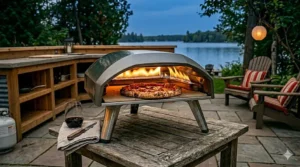
Understanding realistic lifespan expectations helps calibrate your budget against actual value. Canadian weather accelerates wear differently than mild American climates where pizza oven reviews originate.
Expected Lifespan by Price Tier
Budget models ($200-$400 CAD): 2-4 seasons of regular use (20-30 cooking sessions per season). Failure points are typically burner valves that gum up, thin metal panels that warp, or insulation that degrades from moisture. Treat these as gateway appliances, not decade-long investments.
Mid-range models ($500-$800 CAD): 5-8 seasons with proper maintenance. The Ooni Koda series specifically has proven track records in Canadian markets, with numerous users reporting 4+ years of problem-free operation. Cordierite stones may need replacement once during this span ($50-$80 CAD).
Premium models ($900+ CAD): 10+ seasons if maintained correctly. Stainless steel construction and better seals justify the pricing through longevity. The Ooni Koda 2 Pro and Solo Stove Pi Prime are designed for sustained use; failures within five years are rare and typically covered by warranty.
Seasonal Maintenance Checklist
Spring startup (April-May): Inspect gas hose for cracks or dry rot from winter storage. Clean stone with plastic scraper to remove any debris. Check burner ports for blockages (insects love these during storage). Run a test fire before your first cook to verify everything functions.
Mid-season care (June-August): Clean stone after every 3-4 uses. Wipe exterior with damp cloth monthly to prevent grease buildup. Check propane connections for leaks using soapy water test (bubbles indicate leaks).
Fall shutdown (September-October): Final deep clean before storage. Remove stone, wrap in newspaper, store separately to prevent moisture absorption. Wipe interior with vinegar solution to prevent mould during storage. Disconnect and store propane tank in well-ventilated area.
Replacement Parts Reality
For Ooni models, replacement parts are readily available through Canadian retailers and Amazon.ca. Expect $50-$80 CAD for a new stone, $30-$50 CAD for burner assembly, $40-$60 CAD for gas hose replacement. Budget brands often have parts scarcity issues — plan to replace the entire unit rather than sourcing components.
Understanding Propane Safety Regulations in Canada
Canadian propane safety falls under provincial jurisdiction, with standards guided by CSA B149 codes and enforced by provincial authorities. While gas pizza ovens are less regulated than permanent installations, Canadian buyers should understand basic safety requirements.
Storage and Transportation
Transport Canada’s Transportation of Dangerous Goods (TDG) regulations govern propane cylinder transport. Practical implications: secure tanks upright during vehicle transport, keep them in well-ventilated areas (never in enclosed car trunks), and transport with valves closed. Provincial regulations add layers — Quebec requires French-language labelling on cylinders, for example.
Propane tanks must be stored outdoors or in well-ventilated areas. Garages are acceptable if ventilation is adequate, but basements and living spaces are prohibited. In winter, protect tanks from extreme cold (below -40°C) which can affect pressure regulators, but don’t bring them into heated areas where temperature swings cause pressure fluctuations.
Appliance Safety Standards
Look for CSA certification or equivalent markings on your pizza oven. This indicates testing against Canadian standards for outdoor gas cooking appliances. While not mandatory for personal use in most provinces, certification ensures the appliance meets safety standards for burner design, gas flow regulation, and materials.
Provincial building codes vary on outdoor gas appliance usage near structures. Most require minimum 0.9 metre (3 feet) clearance from buildings, fences, or overhangs. Check your municipal bylaws, especially in urban areas with dense housing where fire safety regulations are stricter.
Carbon Monoxide Awareness
Propane combustion produces carbon monoxide. Outdoor use in well-ventilated areas (which pizza ovens require anyway for temperature management) presents minimal risk, but never operate gas pizza ovens indoors, in garages, or under enclosed patios. Canadian winters tempt people to extend the season by moving ovens into semi-enclosed spaces — don’t. The risk isn’t theoretical; Health Canada documents carbon monoxide poisoning cases from outdoor cooking appliances used in inadequate ventilation.
Frequently Asked Questions About Gas Pizza Ovens in Canada
❓ Can I use a gas pizza oven during Canadian winters?
❓ What's the realistic propane consumption for a typical cooking session in Canada?
❓ Are gas pizza ovens allowed on apartment balconies in Canadian cities?
❓ How do I prevent my pizza stone from cracking in Canadian freeze-thaw cycles?
❓ Can I convert my gas pizza oven to natural gas instead of propane in Canada?
Conclusion: Finding Your Perfect Gas Pizza Oven Match
After examining seven models across price points, performance tiers, and real-world Canadian usage scenarios, the truth is straightforward: there’s no single “best” gas pizza oven — only the best match for your specific situation, budget, and commitment level.
For most Canadian families with outdoor space and realistic expectations, the Ooni Koda 16 remains the safe choice. At $700-$850 CAD fully equipped, it balances capacity, performance, and proven durability across multiple climate zones from coastal BC to prairie winters. You’re buying into an established ecosystem with abundant troubleshooting resources, readily available parts, and a Canadian user community that’s navigated every conceivable issue.
Budget-conscious buyers willing to accept trade-offs should seriously consider the VEVOR 16-inch Auto-Rotating or BIG HORN 15-inch models. Yes, you sacrifice some build quality and longevity, but at $300-$450 CAD, you’re paying less than half the premium brand pricing. If your oven sees 15 sessions per summer, these budget options deliver acceptable value for 2-3 seasons before replacement considerations arise.
Urban Canadians in condos or apartments face different constraints where the Ooni Koda 12 shines — lightweight enough to schlep up four flights of stairs, compact enough to store in a coat closet, yet capable enough to produce restaurant-quality results. The 12-inch capacity limitation becomes a feature, not a bug, when you’re cooking for 1-2 people and lack storage space for anything larger.
The common thread across all successful gas pizza oven ownership in Canada: managing expectations around weather, committing to proper storage during our brutal winters, and accepting the learning curve that transforms box-fresh equipment into an extension of your outdoor cooking skills. This isn’t a “plug and play” appliance where excellence arrives automatically — it’s a tool that rewards practice with increasingly better results.
Your next step: identify your realistic budget (including accessories and propane), assess your storage situation honestly, then choose the model that fits both rather than aspirational thinking about how often you’ll use it. A $350 CAD oven that gets used 20 times beats a $1,000 CAD oven gathering dust in your garage because hauling it out became a chore. Start cooking, adjust your technique through trial and error, and join the growing community of Canadian home cooks producing pizzas that make delivery seem like a distant, disappointing memory.
Recommended for You
- 7 Best Wood Fired Pizza Ovens Canada 2026
- Best Pizza Oven Canada 2026: 7 Top Picks for Perfect Pies
- Best 2-in-1 Grill Smoker Combos for Canada 2026
Disclaimer: This article contains affiliate links. As an Amazon Associate, I earn from qualifying purchases. If you purchase products through these links, we may earn a small commission at no additional cost to you.
✨ Found this helpful? Share it with your friends! 💬🤗
