
In This Article
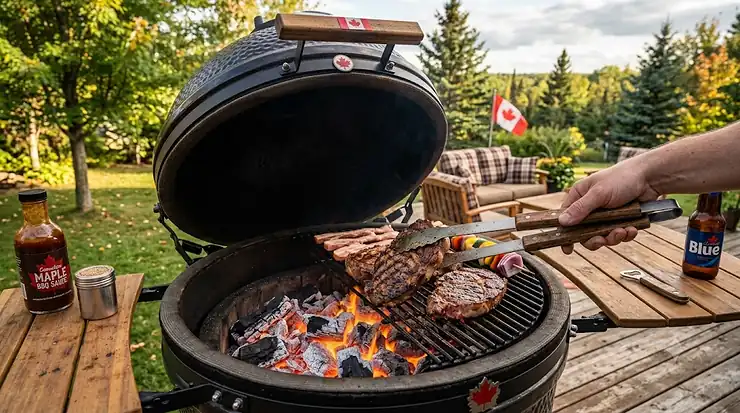
There’s a moment every backyard cook eventually has: standing in the charcoal aisle, staring at a wall of bags that all promise “premium,” “natural,” and “restaurant-quality,” with absolutely no way to tell which one is lying to you. Lump charcoal for BBQ is simply hardwood that’s been carbonized — burned slowly with almost no oxygen until only carbon remains, with no binders, no sawdust, no mystery filler. That’s it. No smoke-and-mirrors required for the definition, even if the marketing sometimes suggests otherwise.
What separates a good bag from a forgettable one isn’t the word “premium” printed on the front. It’s lump size consistency, how much genuine hardwood species diversity you’re getting, how much ash it leaves behind, and whether the company sourcing that wood is doing it responsibly. This guide digs into seven real, purchasable products — from bargain big-box bags to restaurant-grade imports — and breaks down what the spec sheet doesn’t tell you. We’ll also work through ash content, temperature control on a kettle or kamado, and where the hardwood in your bag actually comes from, because “natural” is doing a lot of heavy lifting on some of these labels.
One quick note before we dive in: prices for charcoal move constantly with fuel costs and seasonal demand, so every figure below is a range at the time of research — always check the current listing before you buy.
Quick Comparison Table
| Category | Top Pick | Why It Wins |
|---|---|---|
| Best Overall | FOGO Super Premium Oak Lump Charcoal | Restaurant-grade lump consistency, low ash |
| Best for Overnight Smokes | Jealous Devil Quebracho Blanco XL | 20+ hour low-oxygen burn |
| Best for Kamado Grills | Kamado Joe Big Block XL | Purpose-blended for ceramic cookers |
| Best Budget Bag | Royal Oak 100% Natural Hardwood | Widely stocked, lowest cost per bag |
| Best for Smokers | B&B Charcoal Oak Lump | Low smoke profile, steady BTU output |
Looking at this table, the split isn’t really about which charcoal is “best” in a vacuum — it’s about what you’re cooking and how long you need heat to hold. A weeknight burger night doesn’t need the same fuel as an 14-hour brisket, and Royal Oak buyers chasing a bargain are optimizing for a completely different variable than Jealous Devil buyers chasing burn time. Keep your actual use case in mind as you read through the full breakdown below.
💬 Just one click — help others make better buying decisions too!😊
Top 7 Lump Charcoal Options for BBQ: Expert Analysis
1. FOGO Super Premium Oak Lump Charcoal — restaurant-grade lump size for kamado cooking
FOGO built its reputation supplying professional kitchens, and that restaurant-grade sourcing shows in the bag: this is genuinely large, dense oak lump, not the fragmented scraps you sometimes find lower down the price ladder.
Reviewers and retailers consistently describe the mix as roughly 70% medium pieces (5-8 cm) and 30% smaller chunks, which means you get enough big lumps to build a stable kamado fire base while still having smaller pieces to fill gaps. That size profile matters more than it sounds — uneven bags force you to break lumps by hand just to get consistent airflow, and FOGO mostly skips that chore for you. Based on the spec comparison with other premium bags, this makes it a strong match for anyone running a Big Green Egg, Kamado Joe, or Primo where lump shape directly affects how evenly heat radiates through the ceramic.
Reviewers consistently report minimal sparking and popping on ignition, along with a noticeably lighter ash bed after long cooks — a detail that matters if you’re doing back-to-back weekend cooks without wanting to scrape the firebox every time.
Pros:
- ✅ Large, restaurant-grade lumps ideal for kamado airflow
- ✅ Low ash buildup after extended low-and-slow cooks
- ✅ Minimal sparking and popping compared to bargain bags
Cons:
- ❌ Costs more per pound than big-box budget brands
- ❌ Occasional smaller “fill” pieces mixed with the large lumps
Expect to pay in the C$40-C$65 range depending on bag size (17.6 lb vs. 35 lb) — a reasonable premium for grillers who value consistency over saving a few dollars.
2. Jealous Devil Quebracho Blanco XL Lump Charcoal — longest burn for overnight smokes
If FOGO is about consistency, Jealous Devil is about raw density. This charcoal is made from quebracho blanco — literally “axe-breaker” hardwood from Paraguay — one of the densest woods commercially available for fuel.
That density translates directly into performance: manufacturer testing and independent reviewers both point to sustained temperatures above 1,100°F for searing, alongside low-oxygen burns exceeding 20 hours for slow cooks like brisket or pulled pork. What most buyers overlook about ultra-dense hardwood like this is that it doesn’t just burn longer — it burns more efficiently, meaning you actually use less charcoal per cook once you dial in your airflow, since the lumps hold heat rather than flashing through it. Reviewers consistently note it produces almost no visible ash residue, which is a genuine selling point if you’re managing a long offset or kamado session without wanting to babysit the coal bed.
The trade-off is availability and price — this isn’t the bag you grab on a whim at the corner hardware store, and the extra-large lump size can be awkward in smaller grills.
Pros:
- ✅ Sustained low-oxygen burns exceeding 20 hours
- ✅ Very low ash and minimal sparking on ignition
- ✅ Reaches 1,100°F+ for genuine high-heat searing
Cons:
- ❌ Premium pricing compared to domestic hardwood brands
- ❌ Extra-large lumps can be awkward in compact grills
Pricing typically lands in the C$45-C$60 range for a 20 lb bag — steep, but arguably justified for anyone doing regular overnight smokes where refuelling mid-cook is a genuine hassle.
3. Kamado Joe Big Block XL Lump Charcoal — built specifically for ceramic cookers
Kamado Joe makes its own charcoal for the same reason Traeger mills its own pellets: it’s designed around the exact airflow physics of its own grills. The blend here draws on guayacán, guayaibí, mistol, and white quebracho — a mix chosen for density and burn consistency inside a kamado’s restricted-airflow firebox.
On paper, this means predictable heat retention: Kamado Joe rates the Big Block XL for burns of up to 18 hours and claims the lumps can be reused up to three times if you shut down airflow properly after a cook rather than letting everything burn to ash. That reusability angle is a genuine cost lever most competitors don’t offer outright, since unspent lump charcoal left in a sealed kamado essentially becomes free fuel for your next session. Here’s what to weigh, though: you don’t actually need a Kamado Joe grill to use this charcoal — any ceramic or kettle grill benefits from the same dense lump structure, despite what warranty-anxious owners sometimes assume.
Pros:
- ✅ Rated for up to 18-hour burns in ceramic grills
- ✅ Reusable up to three times when shut down properly
- ✅ Blend of dense hardwoods purpose-picked for kamado airflow
Cons:
- ❌ Premium price point versus generic hardwood blends
- ❌ Extra-large chunks may need breaking for smaller ceramic cookers
Prices generally sit in the C$40-C$50 range for a 20 lb bag, with occasional retailer promotions bringing it closer to the mid-C$30s.
4. B&B Charcoal Oak Lump Charcoal — lowest smoke profile for clean flavour
B&B Charcoal has quietly supplied competition pitmasters for decades, and its oak lump is built around one specific claim: a low smoke profile with high BTU output, meaning it sears hard without drowning your food in heavy, bitter smoke.
Based on the spec comparison with other oak-based lumps, that low-smoke, high-heat combination makes practical sense for the pieces of meat where you actually want the wood’s flavour to stay in the background — fish, vegetables, quick-cooking cuts — rather than the smoke overwhelming the dish the way some hickory-heavy blends can. Aggregated reviewer feedback (via retailer review databases and independent lump-quality trackers like the Naked Whiz database) generally praises the burn temperature and clean-burning character, though a subset of reviewers note more dust and smaller fragmented pieces in some bags than in FOGO or Jealous Devil, which tracks with B&B‘s position as a mid-tier rather than flagship product.
Pros:
- ✅ Low smoke profile pairs well with delicate proteins
- ✅ High BTU output for quick, hot sears
- ✅ Additive-free, family-sourced oak with no fillers
Cons:
- ❌ More dust and fragment pieces reported than top-tier bags
- ❌ Less widely stocked in Canadian retail than Royal Oak or Cowboy
Expect a C$30-C$40 range for a 20 lb bag, positioning it squarely as a mid-range option between budget briquette-adjacent lump and true restaurant-grade imports.
5. Royal Oak 100% Natural Hardwood Lump Charcoal — best budget bag at big-box stores
Royal Oak is the lump charcoal most Canadians have actually already used, mostly because it’s the one sitting on the shelf at Walmart, Canadian Tire, or the local hardware store when you realize five minutes before guests arrive that you’re out of fuel.
The blend of oak, hickory, maple, and walnut lights in about 15 minutes and delivers what most reviewers describe as a solid, unremarkable everyday burn — not the headline performer of this list, but a genuinely serviceable one for casual grilling. The spec sheet won’t tell you this, but user reports across several BBQ forums flag a recurring issue: inconsistent quality control, with some bags containing far more small fragments and dust than others, and a small but persistent number of reviewers reporting foreign material like rocks or metal fragments mixed in. That’s not universal — plenty of bags are perfectly clean — but it’s a common enough complaint that it’s worth a quick visual check before you dump the bag into your chimney starter.
Pros:
- ✅ Widely available across major Canadian retailers
- ✅ Lights quickly, ready to cook in about 15 minutes
- ✅ Lowest cost per pound of any bag on this list
Cons:
- ❌ Quality control varies noticeably between bags
- ❌ Burns faster than denser premium hardwoods
Pricing generally stays under C$30 for a 15.4-30 lb bag, making it the default choice for grillers who want reliable fuel without a premium price tag.
6. Cowboy Hardwood Lump Charcoal — fastest-lighting option for weeknight grilling
Cowboy leans into speed. Made primarily from oak and hickory, this lump is repeatedly described by reviewers as one of the quickest-lighting bags on the market, which makes it a genuine convenience pick for the “it’s 6 p.m. and I need dinner on the grill” crowd.
Reviewers consistently note a flavourful smoke output and versatility across kettle, barrel, and ceramic-style grills, and Cowboy has become a common budget substitute for pricier kamado-specific charcoal at big-box retailers. What most buyers overlook is that faster ignition often comes paired with faster burn-through — several forum threads and independent lump reviewers report more sparking on lightup and a higher rate of foreign debris (wood scraps, occasional construction material) compared to Rockwood or B&B. None of this makes it a bad product for casual use; it just means the “fastest to light” advantage trades off against the “cleanest and most consistent” advantage that pricier bags offer.
Pros:
- ✅ Among the fastest-lighting lump charcoals available
- ✅ Versatile across kettle, barrel, and ceramic grills
- ✅ Flavourful oak-and-hickory smoke output
Cons:
- ❌ More reported sparking and popping on ignition
- ❌ Occasional debris or uneven lump sizes noted by reviewers
Expect a C$25-C$35 range for an 18 lb bag, making it comparable in cost to Royal Oak but with a noticeably faster time-to-cooking-temperature.
7. Rockwood All-Natural Hardwood Lump Charcoal — mill-waste sourcing for eco-conscious grillers
Rockwood is the lesser-known name on this list, and it deserves more attention than it usually gets. The company makes its lump charcoal from a blend of oak, hickory, maple, and pecan sourced specifically from timber-milling waste — offcuts and byproducts that would otherwise be discarded — rather than trees felled specifically for charcoal production.
That sourcing model is genuinely differentiated: on paper, it means the hardwood going into your grill isn’t competing with fresh forestry demand the way some bargain lump can. Reviewers consistently describe the burn as clean with comparatively low ash, and several BBQ forum users specifically switched to Rockwood after negative experiences with debris in competitor bags. The honest trade-off is piece consistency — because the material comes from varied mill offcuts rather than uniform logs, lump sizes and shapes are noticeably less uniform than FOGO or Kamado Joe, and you’ll find more flat, irregular pieces in the mix.
Pros:
- ✅ Sourced from sustainable timber-mill waste, not fresh-cut trees
- ✅ Blend of oak, hickory, maple, and pecan for balanced flavour
- ✅ Cleaner burn with less reported debris than budget competitors
Cons:
- ❌ Piece sizes and shapes are noticeably inconsistent
- ❌ Less widely stocked in Canadian stores, often needs online ordering
Pricing typically falls in the C$30-C$40 range for a 20 lb bag, positioning it as a mid-tier option with a genuinely compelling sustainability story.
Full Lineup Comparison: Specs, Price Range & Best For
| Product | Wood Source | Approx. Price Range (CAD) | Best For |
|---|---|---|---|
| FOGO Super Premium Oak | Central American oak | C$40-C$65 | Kamado consistency |
| Jealous Devil Quebracho Blanco XL | South American quebracho | C$45-C$60 | Overnight smokes |
| Kamado Joe Big Block XL | Guayacán/quebracho blend | C$40-C$50 | Ceramic grill owners |
| B&B Charcoal Oak | North American oak | C$30-C$40 | Low-smoke searing |
| Royal Oak Natural Hardwood | Oak/hickory/maple/walnut | Under C$30 | Everyday budget grilling |
| Cowboy Hardwood | Oak/hickory | C$25-C$35 | Fast weeknight lighting |
| Rockwood All-Natural | Mill-waste oak/hickory/maple/pecan | C$30-C$40 | Eco-conscious buyers |
Scanning this table, there’s a clear line between the “purpose-built” tier — FOGO, Jealous Devil, and Kamado Joe — and the “everyday value” tier occupied by Royal Oak and Cowboy. The middle ground, held by B&B and Rockwood, is where most casual-to-serious grillers actually land, since neither demands the premium price nor accepts the inconsistency of the cheapest bags. If price-per-hour-of-burn is your real metric rather than price-per-bag, the denser premium options frequently work out cheaper over a full smoking season.
Lump Charcoal vs. Briquettes vs. Propane: Benefits Comparison
| Factor | Lump Charcoal | Briquettes | Propane |
|---|---|---|---|
| Ash Produced | Low | High | None |
| Time to Cooking Temp | 10-20 min | 20-30 min | 1-2 min |
| Flavour Contribution | Strong, wood-specific | Moderate, uniform | Minimal |
| Additives | None (pure hardwood) | Binders, sometimes coal dust | N/A |
| Temperature Control | Fast response to airflow | Slower response | Precise, instant |
According to this comparison, lump charcoal’s biggest edge over briquettes is purity and airflow responsiveness — because there’s no binder holding it together, adjusting your vents changes the fire’s behaviour almost immediately, which is exactly what makes lump popular for searing. Propane wins outright on convenience and precision but sacrifices the wood-smoke flavour that’s the entire reason many Canadians reach for charcoal in the first place. Briquettes split the difference: cheaper and more uniform than lump, but with noticeably more ash and, depending on the brand, potential additives that lump charcoal simply doesn’t have. For more background on how charcoal is actually produced through pyrolysis, Wikipedia’s charcoal overview covers the carbonization process in detail.
Practical Usage Guide: Lighting, Airflow & Maintenance for Better Burns
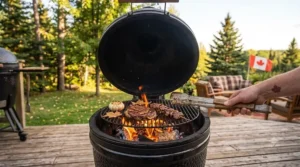
Getting good results from lump charcoal for BBQ isn’t complicated, but the first few cooks trip up a lot of new users. Start with a chimney starter rather than lighter fluid — lump ignites fast enough on its own, and fluid just adds a chemical taste that fights against the whole reason you bought hardwood in the first place. Fill the chimney, light a firestarter cube or crumpled newspaper underneath, and wait until flames are visible over the top rim before dumping the coals into your grill.
Airflow is where most beginners lose control. Lump charcoal responds to oxygen almost instantly, so opening your vents even a quarter-turn can swing your temperature 30-50°F within minutes 🔥. If you’re chasing a steady 225°F for a low-and-slow cook, make small adjustments and wait 10-15 minutes before adjusting again — overcorrecting is the single most common mistake in the first month of ownership.
For maintenance, empty the ash bin after every two or three cooks (lump produces far less ash than briquettes, but it still accumulates), and store your charcoal bag in a dry space — damp lump lights poorly and can develop mould over a Canadian winter in an unheated shed. A resealable bag or a lidded storage bin solves this cheaply.
✨ Ready to grill smarter? Grab a bag of one of these top picks and put this guide into action tonight!
Real-World Scenarios: Which Lump Charcoal Fits Your Grilling Life
Picture three different Canadian backyards. First, a condo-dwelling weeknight griller with a small kettle and about 30 minutes free after work — for them, Cowboy or Royal Oak makes the most sense, since fast ignition and low upfront cost matter more than an extra few hours of burn time they’ll never use on a 20-minute cook.
Second, a weekend pitmaster running a Kamado Joe or Big Green Egg for 10-14 hour briskets twice a month. Budget isn’t the constraint here — consistency and burn duration are, which points squarely at Jealous Devil or FOGO, where the extra cost per bag is offset by fewer mid-cook refuels and more predictable temperature holds.
Third, a family that grills every weekend all summer and wants a middle ground between cost and quality without obsessing over lump size — B&B or Rockwood covers that use case well, delivering cleaner burns than the cheapest bags without the premium pricing of the restaurant-grade imports. If you fall between these profiles, weigh how often you’re doing genuinely long cooks (which justifies premium fuel) against how often you’re doing quick weeknight grilling (where the cheaper, faster-lighting bags earn their keep).
Problem → Solution: Fixing Common Lump Charcoal Frustrations
Problem: Charcoal won’t stay lit. This is almost always damp storage or too little airflow underneath the chimney starter. Solution: store bags in a dry space and make sure your chimney sits on a grate with open airflow beneath it, not directly on solid metal.
Problem: Too much smoke, bitter flavour. Often caused by closing vents too early, which smothers the fire into smouldering rather than clean combustion. Solution: let flames burn visibly for the first several minutes before dialing back airflow, and switch to a lower-smoke option like B&B if this keeps happening.
Problem: Inconsistent temperature swings. Usually over-correcting on vents. Solution: make one small adjustment, then wait a full 10-15 minutes before touching it again — lump charcoal responds faster than you think.
Problem: Excessive ash clogging airflow mid-cook. More common with cheaper, fragmented bags. Solution: switch to a denser option like Jealous Devil or FOGO for long cooks, and rake the ash bed periodically during extended sessions.
Problem: Finding debris or rocks in the bag. A known issue with some budget brands like Royal Oak or Cowboy. Solution: do a quick visual scan before loading your chimney, and consider a mid-tier brand like Rockwood if it happens more than once.
How to Choose Lump Charcoal for BBQ: 7 Buying Criteria
- Wood species — denser hardwoods like quebracho or oak burn hotter and longer than softer, mixed-species fillers.
- Lump size consistency — larger, uniform pieces mean better airflow and fewer surprises mid-cook.
- Ash content — lower-ash bags mean less mid-cook maintenance and cleaner airflow through vents.
- Burn duration needed — match fuel density to your typical cook length, not the other way around.
- Bag sourcing transparency — brands that disclose wood origin and harvesting practices tend to have fewer quality-control surprises.
- Grill compatibility — kamado and ceramic cookers benefit from purpose-blended lump; kettles are more forgiving.
- Price per pound versus burn efficiency — a cheaper bag that burns twice as fast isn’t actually cheaper over a season.
Common Mistakes When Buying Lump Charcoal
The most common mistake is buying based on bag size alone rather than lump density — a 20 lb bag of light, fragmented charcoal can burn through faster than a 15 lb bag of dense quebracho, making the “bigger bag” actually the worse value. A close second is ignoring grill compatibility: kamado owners who buy loosely-packed, fragmented lump often struggle with poor airflow and inconsistent temperature holds that a purpose-built blend like Kamado Joe Big Block XL avoids by design. Buyers also frequently skip checking for foreign debris, especially with budget bags, which can mean an unpleasant surprise mid-cook. Finally, many first-time buyers assume “natural” and “premium” on packaging are regulated terms — they aren’t, and the only reliable way to judge quality is aggregated reviewer sentiment and, where available, disclosed wood sourcing.
Understanding Ash Content: Why It Matters More Than the Bag Says
Ash content is one of the least-marketed but most functionally important specs on any lump charcoal bag. High-ash charcoal — typically the result of more bark, fines, and mineral contamination mixed into lower-grade lump — chokes airflow around the coal bed as it accumulates, which drops your grill’s temperature exactly when you don’t want it to during a long cook. Reviewers consistently note that dense, high-quality hardwoods like the quebracho used in Jealous Devil or the restaurant-grade oak in FOGO leave a noticeably thinner ash layer than budget bags, meaning fewer mid-cook interruptions to rake and reset.
Low ash content isn’t just about convenience, either — it’s a reasonable proxy for purity. Genuine hardwood carbonized cleanly, without picked-up dirt, bark fragments, or foreign material, simply produces less residue. If you’re noticing a thick, sandy ash layer after a cook, that’s often a sign of a lower-grade bag rather than anything wrong with your technique.
Mastering Charcoal Grill Temperature Control
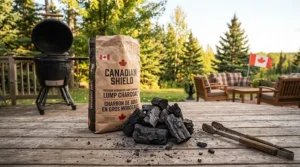
Charcoal grill temperature control comes down to one variable more than any other: oxygen. Lump charcoal responds to airflow changes within minutes, which is both its biggest advantage and its biggest beginner trap. To hold a steady searing temperature (450°F+), open both top and bottom vents most of the way and use a denser hardwood like Jealous Devil or Kamado Joe Big Block XL that won’t flash through its fuel too quickly. For low-and-slow work around 225-275°F, close vents down to a narrow gap and make adjustments in small increments, waiting at least 10 minutes between changes to let the fire actually respond before judging the result.
The spec sheet won’t tell you this, but user reports across BBQ forums consistently suggest that denser lump holds temperature more predictably through vent adjustments than lighter, fragmented charcoal — one more reason premium hardwood earns its price tag on longer cooks specifically, even if it’s overkill for a 20-minute burger session.
Hardwood Sourcing: What “100% Natural” Actually Means
“100% natural hardwood” is a legally vague phrase — it tells you there are no additives, but says nothing about where the wood came from or how sustainably it was harvested. This is where the brands on this list genuinely differ. Rockwood, for instance, sources specifically from timber-milling waste rather than freshly felled trees, while Jealous Devil has publicly discussed moving toward Forest Stewardship Council certification for its South American quebracho supply. Other brands are considerably less transparent about origin, and reviewers have limited ability to verify sourcing claims beyond what’s printed on the bag.
For readers who care about this angle, the Forest Stewardship Council’s Canadian program maintains searchable certification records and explains what third-party verification actually requires — a useful reference point since charcoal packaging rarely provides this level of detail voluntarily. Based on the spec comparison across brands, sourcing transparency tends to correlate loosely with overall product consistency, though it’s not a perfect predictor on its own.
Lump Charcoal for BBQ Smokers: Low & Slow Considerations
Smokers demand something different from lump charcoal than a quick-searing kettle does: sustained, stable heat over many hours rather than a fast, hot burn. This is where burn duration and lump density become the dominant factors, favouring Jealous Devil‘s 20+ hour low-oxygen rating or Kamado Joe Big Block XL‘s 18-hour ceramic-grill performance over faster-burning budget bags.
Offset smokers in particular benefit from larger, denser lumps that don’t collapse and choke airflow partway through a cook — a common complaint reviewers raise about fragmented, lower-grade charcoal in extended smokes. If you’re running a vertical or horizontal offset smoker regularly, the extra upfront cost of a premium bag like FOGO or Jealous Devil is usually recovered in fewer mid-cook refuels and more consistent results, particularly on unpredictable Canadian weekends where wind and temperature swings already make airflow management harder than it needs to be.
Long-Term Cost & Value: Is Premium Lump Charcoal Worth It?
Comparing sticker price alone makes premium lump charcoal look like a poor deal — Jealous Devil at roughly double the per-pound cost of Royal Oak seems hard to justify on paper. But cost-per-cook tells a different story. Denser hardwood burns more efficiently, meaning you typically use noticeably less Jealous Devil or FOGO by weight per cook than the equivalent budget alternative, partially closing the price gap. Add in fewer wasted lumps from breakage, less time spent managing ash and airflow interruptions, and more predictable results on expensive cuts of meat, and the total cost of ownership over a full grilling season narrows considerably.
That said, value is genuinely use-case dependent. A once-a-month weeknight griller doing 20-minute cooks has little reason to pay a premium for 20-hour burn stability they’ll never use — Royal Oak or Cowboy remains the rational choice there. The math only tips toward premium fuel once cook frequency and duration climb.
Safety First: Carbon Monoxide, Storage & Canadian Regulations
Lump charcoal is an open-flame, carbon-based fuel, and that means the same carbon monoxide risk applies here as with any combustion appliance. Never operate a charcoal grill indoors, in a garage, tent, or other enclosed space — even with a door or window cracked open, CO can accumulate to dangerous levels far faster than most people expect. Health Canada’s guidance on preventing carbon monoxide exposure is explicit that outdoor equipment using charcoal or fuel should never be run inside any structure, including a garage with the door open.
This isn’t a theoretical risk. In 2023, eleven people from a single Ottawa household were hospitalized after running a charcoal barbecue indoors for heat during a power outage, with CO levels reportedly reaching 180 parts per million — a stark reminder that this can happen to anyone, not just careless grillers, especially during storm-related outages when people improvise for heat. CBC’s coverage of the incident is worth reading in full for anyone who’s ever considered a charcoal grill as a backup heat source — don’t.
Beyond CO safety, store bags away from moisture and direct sun, keep charcoal well clear of siding or wood fencing when in use, and always let ash cool completely (ideally 48 hours) in a metal container before disposal, since embers can smoulder far longer than they appear to.
Frequently Asked Questions
❓ What's the difference between lump charcoal and briquettes for BBQ?
❓ How long does lump charcoal burn on a Weber kettle?
❓ Is lump charcoal or briquettes better for a Big Green Egg?
❓ How much lump charcoal do I need for a 4-hour smoke?
❓ Can you reuse lump charcoal after grilling?
Conclusion
There’s no single “best” lump charcoal for BBQ — there’s only the best match for how you actually cook. If you’re running long smokes and want to walk away from the grill without worrying, Jealous Devil or FOGO earn their premium price. If you’re grilling burgers on a Tuesday and want something reliable without overthinking it, Royal Oak or Cowboy does the job without draining your wallet. Somewhere in between, B&B, Kamado Joe Big Block XL, and Rockwood cover the grillers who want better-than-basic performance without paying restaurant prices.
What matters most is looking past the marketing language on the bag and toward the things that actually affect your cook: lump density, ash content, sourcing transparency, and whether the burn duration matches what you’re actually cooking. Get those right, and almost any of the seven options above will serve you well through a Canadian grilling season.
✨ Don’t Miss These Exclusive Deals!
🔍 Take your BBQ setup to the next level with these carefully selected lump charcoal picks. Click on any highlighted product to check current pricing and availability on Amazon.ca. These bags will help you create authentic, wood-fired flavour your family will love all summer long!
Recommended for You
- Portable Pizza Oven for Camping: 7 Real Picks for 2026
- Pizza Oven Under $1000: 7 Best Picks for 2026
- Pizza Oven Under $500: 7 Best Picks for 2026
Disclaimer: This article contains affiliate links. As an Amazon Associate, I earn from qualifying purchases. If you purchase products through these links, we may earn a small commission at no additional cost to you.
✨ Found this helpful? Share it with your friends! 💬🤗
