In This Article
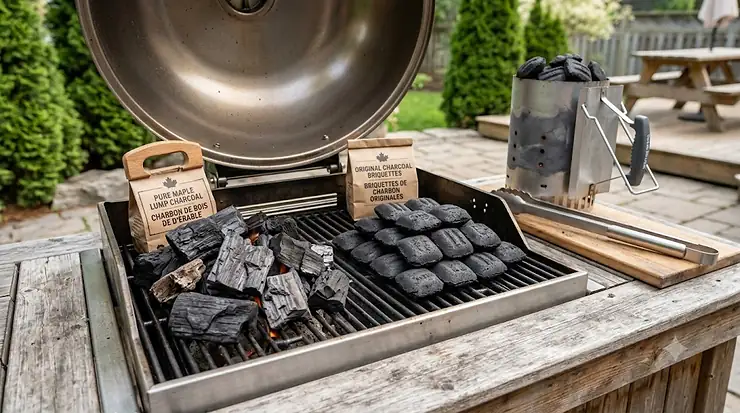
Stand in the charcoal aisle of any Canadian Tire or hardware store long enough and you’ll see it happen: someone picks up a bag of lump charcoal, turns it over, puts it down, picks up briquettes instead, and leaves looking vaguely defeated. Lump charcoal vs charcoal briquettes for grilling is one of those debates that sounds simple until you actually try to answer it — because both fuels will get food cooked, but they get there in completely different ways, and the “right” one depends entirely on what you’re making and how much fussing you’re willing to do.
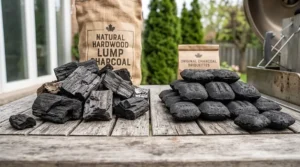
Here’s the short version. Lump charcoal is pure carbonized hardwood — chunks of actual burned wood, irregular in shape, nothing added. Briquettes are engineered: charcoal dust and other ingredients pressed into a uniform pillow shape with a binder holding it all together, a manufacturing process that, as the UN Food and Agriculture Organization explains in its charcoal production reference, essentially reclaims fine charcoal byproduct that would otherwise go to waste. That single manufacturing difference cascades into everything else — how hot each one burns, how much ash they leave in your firebox, and how forgiving they are when you inevitably walk away to refill someone’s drink.
This guide breaks the whole thing down properly: real burn temperatures, real ash production numbers, seven actual products you can buy, and the grilling technique adjustments each fuel demands. No vague “it depends” hand-waving — just the specifics you need before your next backyard cook.
Quick Comparison Table
| Factor | Natural Lump Charcoal | Charcoal Briquettes |
|---|---|---|
| Burn temperature | Higher, often 900°C+ (1,650°F+) | Lower and steadier, roughly 700-820°C (1,300-1,500°F) |
| Ash production | Low — typically 5-10% of weight | Higher — often 20-30% of weight |
| Burn time (per load) | Shorter, less predictable | Longer, more consistent |
| Best for | Searing, high-heat grilling, kamado cooking | Low-and-slow smoking, all-day cooks |
| Price range | C$25-C$55 per bag | C$10-C$25 per bag |
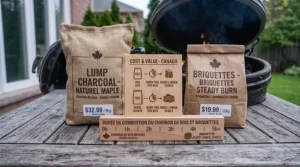
That table looks tidy, but the numbers hide some nuance worth unpacking. The higher ceiling on natural lump charcoal‘s burn temperature is exactly why steakhouses and Argentinian-style grill setups lean on it — you get a crust in ninety seconds that briquettes simply can’t deliver at their more modest heat range. On the flip side, the steadier, lower burn of briquettes is a feature, not a compromise, once you’re managing an eight-hour brisket where wild temperature swings ruin the bark. Price-wise, briquettes usually win on cost per cook because a bag stretches further and reloading is less frequent, even though the sticker price per bag often looks similar.
💬 Just one click — help others make better buying decisions too!😊
💬 Found this breakdown useful? Save this page — you’ll want to reference it before your next charcoal run.
Top 7 Charcoal Products: Expert Analysis
1. FOGO Premium Lump Charcoal — restaurant-grade heat from Central American hardwood
FOGO Premium Lump Charcoal is the bag that shows up in a lot of professional kitchens before it ever hits a backyard, and that pedigree is the standout feature worth expanding on. It’s made from a mix of dense Central American hardwoods with no added chemicals, fillers, or scrap wood, so what you’re burning is genuinely just carbonized tree. The lump sizes run larger than most competitors — mostly fist-sized to baseball-sized chunks — which matters in practice because bigger lumps burn longer and generate less of the ash-choking dust that smaller fragments produce. Based on the spec comparison with other hardwood lumps, FOGO’s density gives it noticeably longer burn times than thinner, faster-burning lump brands, without sacrificing the high ceiling temperature lump charcoal is known for. This is the pick for anyone doing high-heat searing, kamado cooking, or restaurant-style grilling who wants consistency bag to bag — a home cook chasing a Peter Luger-style crust, essentially. Reviewers consistently note minimal sparking on ignition and very little foreign debris (rocks, metal fragments) compared to bargain lump brands, though a recurring complaint in aggregated review sentiment is that bag fill can vary — some bags run heavier on smaller pieces than others.
Pros:
- ✅ Dense, large lumps burn hotter and longer than average
- ✅ No fillers, chemicals, or accelerants added
- ✅ Minimal sparking and low foreign-debris complaints
Cons:
- ❌ Bag consistency varies between batches
- ❌ Sits at the premium end of lump pricing
Expect to pay in the C$30-C$45 range depending on bag size, and for kamado owners or anyone regularly searing steaks, the value case is strong enough to justify the premium over generic lump.
2. Jealous Devil Lump Charcoal — best for long, low-babysitting burns
Jealous Devil Lump Charcoal built its reputation on one specific claim: it burns longer than almost any other lump charcoal on the market, and that’s the standout feature to unpack first. It’s made from South American hardwoods — primarily Quebracho — that are naturally extremely dense, which is the real-world reason behind the extended burn times; density is directly tied to how slowly a fuel releases its stored energy. The lump pieces run medium-to-large and fairly uniform for a lump product, meaning less digging through the bag for usable chunks. What most buyers overlook about this brand is that its density also translates to a genuinely high sustained heat output, so it performs almost like a hybrid between typical lump and briquettes: hot like lump, steady like briquettes. Pitmasters interviewed by outlets like Food Network have specifically praised the lump-size consistency and called out its efficiency — meaning less charcoal is needed per cook compared to lighter lump brands. Aggregated customer sentiment repeatedly flags one thing: it’s noticeably harder to break by hand than softer lump brands, which some see as a sign of quality and others see as an inconvenience when portioning a chimney starter.
Pros:
- ✅ Exceptionally long burn time versus typical lump
- ✅ Dense hardwood means less charcoal used per cook
- ✅ Fairly uniform lump sizing reduces digging through dust
Cons:
- ❌ Denser pieces are harder to break by hand
- ❌ Runs pricier than mainstream lump options
Price typically lands around C$30-C$40 per bag, and for anyone doing extended low-and-slow sessions on a kamado or offset without wanting to babysit the fire constantly, this is one of the strongest lump options available.
3. Kamado Joe Big Block XL Lump Charcoal — best large-format lump for ceramic grills
Kamado Joe Big Block XL Lump Charcoal leans into exactly what its name promises — noticeably larger lump pieces than most competitors, which is worth explaining before anything else. Kamado-style ceramic grills breathe differently than a kettle or offset, and oversized lumps create bigger air pockets between pieces, which helps sustain the long, steady burns kamado cooking depends on. It’s made from a blend of hardwoods including guayacán and white quebracho, and the brand states it can burn up to 18 hours in a properly managed kamado and is reusable multiple times after a cook, since unused lump simply stops burning once airflow is cut. On paper this means fewer refuels during an all-day smoke, and reviewers frequently confirm strong, sustained heat with relatively low ash buildup for a lump product. Here’s what the spec sheet won’t tell you, but user reports suggest: it’s noticeably pricier than most lump competitors unless caught on a promotional discount, and buyers who don’t own a kamado sometimes find the oversized pieces awkward in a standard kettle grill’s smaller firebox.
Pros:
- ✅ Large pieces sustain long, sturdy kamado burns
- ✅ Reusable after cooking since it self-extinguishes
- ✅ Minimal foreign debris reported in bags
Cons:
- ❌ Among the priciest lump options on the market
- ❌ Oversized pieces are less ideal for small kettle grills
Expect roughly C$40-C$70 per bag depending on size and promotions, making this best suited to kamado owners specifically rather than a general-purpose pick.
4. Royal Oak 100% Natural Lump Charcoal — best budget entry into natural lump charcoal
Royal Oak 100% Natural Lump Charcoal is the bag most Canadians will actually find sitting on a shelf at Canadian Tire or a local hardware store, and that accessibility is its real standout feature. It’s made from hardwood scraps and offcuts rather than whole logs, which keeps the price down considerably compared to premium imported lump brands, without dropping the “100% natural, no additives” claim that defines lump charcoal generally. Based on the spec comparison with pricier lump brands, the trade-off is fairly predictable: smaller average piece size, more dust at the bottom of the bag, and shorter burn times per load. This is the sensible entry point for anyone curious about natural lump charcoal for grilling but not ready to commit to a C$40 bag, and it’s a genuinely good match for weeknight grilling where high heat and fast lighting matter more than an eight-hour burn. Aggregated review sentiment is broadly positive on lighting speed and taste, with a recurring theme of complaints about inconsistent piece size and dust volume from bag to bag — a known trade-off of using reclaimed hardwood rather than whole-log stock.
Pros:
- ✅ Genuinely affordable entry into natural lump charcoal
- ✅ Widely available at Canadian retailers
- ✅ Lights quickly and burns notably hot
Cons:
- ❌ More dust and small fragments than premium lump
- ❌ Shorter burn time per load than denser brands
At around C$15-C$25 per bag, it’s the best-value lump on this list, and a smart pick for anyone grilling burgers, chops, and weeknight dinners rather than marathon smoking sessions.
5. Kingsford Original Charcoal Briquettes — best all-around, most available briquette in Canada
Kingsford Original Charcoal Briquettes is the blue bag that basically defined what “charcoal” means to a couple of generations of North American grillers, and it remains the most consistently stocked briquette across Canadian grocery, hardware, and big-box stores. Each briquette is pressed from charcoal fines, mineral char, and a starch binder into a grooved pillow shape — those grooves aren’t decorative, they’re there to improve airflow and speed up ignition. What most buyers overlook is that “briquette” doesn’t mean lower quality; it means engineered consistency, and Kingsford’s decades of refinement show in how evenly a full chimney lights and holds temperature across a two-to-three-hour cook. Reviewers consistently note the burn is steady enough that you can plan cook times around it with real confidence, which matters enormously for anything low-and-slow. The trade-off, and it’s a real one, is ash: briquettes like this one produce noticeably more ash than lump charcoal, which means more frequent grate cleaning and closer attention to airflow vents so ash buildup doesn’t smother the coals mid-cook.
Pros:
- ✅ Extremely consistent, predictable burn temperature
- ✅ Widely available across Canadian retailers
- ✅ Reliable performance backers can plan cook times around
Cons:
- ❌ Higher ash production than any lump option here
- ❌ Contains binders and fillers, not pure hardwood
Pricing typically runs C$10-C$18 per bag, making this the most budget-friendly and beginner-forgiving charcoal briquettes for grilling on this list, especially for anyone new to managing live fire.
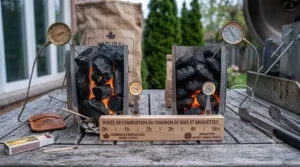
6. Kingsford Professional Briquettes — best upgrade briquette for cleaner-burning consistency
Kingsford Professional Briquettes sits a step above the Original line, and the standout feature here is a denser, more refined briquette formula aimed at reducing the smoky, chemical smell some cheaper briquettes give off during early ignition. Here’s what most people miss: the “Professional” branding isn’t just marketing — the briquette composition is genuinely tighter and more consistent piece to piece, which translates to a more even bed of coals and fewer cold spots across a large grilling surface. Reviewers and chefs quoted in outlets covering charcoal quality have specifically flagged this line for its balance of long burn time and comparatively cleaner smoke profile relative to standard briquettes. On paper this means it’s well suited to competition-style grilling or anyone hosting a big backyard gathering where dozens of burgers need even heat across the whole grate, not just the centre. The honest downside from aggregated feedback: it costs meaningfully more than the Original line for a burn quality improvement that casual weekend grillers may not notice or need.
Pros:
- ✅ More consistent piece density than standard briquettes
- ✅ Cleaner-burning profile during early ignition
- ✅ Well suited to large-surface, even-heat cooking
Cons:
- ❌ Noticeably pricier than Kingsford Original
- ❌ Improvement may be marginal for casual grillers
Expect to pay roughly C$15-C$25 per bag, and the upgrade makes the most sense for hosts who grill often and for large groups rather than the occasional weeknight cook.
7. B&B Charcoal Oak Briquets — best natural-ingredient briquette alternative
B&B Charcoal Oak Briquets takes a different approach to the briquette format, and the standout feature is right on the bag: no coal, no borax, and a shorter, more natural ingredient list than most mainstream briquettes. Made primarily from post-oak charcoal pressed into briquette form, it positions itself as a middle ground — the shape consistency and burn predictability of a briquette, with an ingredient profile closer to what natural lump charcoal buyers are looking for. Based on the spec comparison with Kingsford-style briquettes, B&B tends to run a bit hotter and produce somewhat less powdery ash, though it still generates more ash than pure lump charcoal by a fair margin. Pitmasters quoted discussing charcoal quality have specifically called out B&B’s efficiency — meaning less product used per cook — as a reason it’s become a favourite among barbecue competitors who still want briquette-format consistency. Aggregated review sentiment is strongly positive on burn cleanliness and taste, with the main recurring criticism being that it’s harder to find on Canadian shelves than Kingsford, often requiring an online order rather than a spontaneous store run.
Pros:
- ✅ Shorter, more natural ingredient list than typical briquettes
- ✅ Burns hotter and cleaner than standard briquettes
- ✅ Favoured by competition barbecue circles for efficiency
Cons:
- ❌ Limited availability at Canadian brick-and-mortar stores
- ❌ Pricier than Kingsford Original for a similar format
Priced around C$18-C$28 per bag when available, it’s a strong pick for anyone who wants briquette convenience without fully giving up the “just wood” philosophy behind natural lump charcoal.
How to Light and Manage Your Charcoal Like a Pro
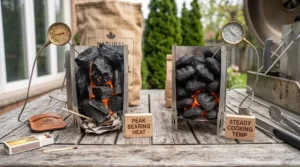
Getting good results from either fuel starts before the first coal ever glows. Skip the lighter fluid entirely — it’s the single biggest rookie mistake, and it leaves a chemical aftertaste that no amount of sauce fixes. A chimney starter with a few sheets of newspaper underneath gets either lump or briquettes fully lit in 15-20 minutes, and it’s genuinely the only tool worth buying beyond the charcoal itself.
Airflow is the real lever you’re controlling the whole cook. More open vents mean more oxygen, which means hotter and faster; closing vents down chokes the fire and stretches burn time. Lump charcoal responds to vent adjustments almost instantly because the irregular pieces have more surface area exposed to airflow — briquettes lag behind by a few minutes because of their denser, uniform shape. In the first 30 days of owning a new grill, the most common mistake is overcorrecting: closing vents too far too fast when the temperature spikes, which can smother the fire entirely rather than gently easing it down. Small, patient adjustments beat dramatic ones every single time.
Maintenance matters more than most casual grillers assume. Empty the ash catcher after every two or three cooks — a buildup restricts airflow from below and makes temperature control noticeably harder, especially with briquettes given their higher ash output. Store both fuel types in a sealed container in a dry spot; charcoal that absorbs moisture lights unevenly and can smoulder rather than burn clean.
Which Charcoal Fits Your Grilling Life? Three Real Scenarios
The weeknight griller. You’re cooking for two or three people, twice a week, mostly burgers, chicken thighs, and the occasional steak, and you don’t want to think too hard about it. Royal Oak 100% Natural Lump Charcoal or Kingsford Original Charcoal Briquettes both make sense here — lump if you want that quick, hot sear with minimal setup time, briquettes if you’d rather have predictable timing you can plan a meal around without checking the grill every five minutes.
The weekend host. Every second Saturday from May through September, you’re feeding eight to twelve people off one grill, and even heat across the whole surface matters more than raw peak temperature. Kingsford Professional Briquettes is built for exactly this — dense, consistent pieces that hold an even bed of coals across a full kettle or larger grill so the burgers on the edge cook at the same rate as the ones in the middle.
The low-and-slow obsessive. You’ve got a kamado or an offset smoker, and Saturday mornings mean an 8am start on a brisket that won’t come off until dinner. Jealous Devil Lump Charcoal or Kamado Joe Big Block XL Lump Charcoal are the moves — dense, long-burning lump that sustains heat for hours without constant refuelling, giving you the stability normally associated with briquettes but with lump’s higher ceiling temperature available whenever you need to open the vents and push through a stall.
Your Quick Decision Framework: Lump or Briquettes?
- If searing steaks or high-heat grilling is your priority, choose natural lump charcoal because its higher ceiling temperature creates better crust development.
- If you’re smoking low-and-slow for six-plus hours, choose briquettes — or a dense lump like Jealous Devil Lump Charcoal — because burn consistency matters more than peak heat over that timeframe.
- If you’re new to charcoal grilling, choose briquettes first because the predictable burn is more forgiving while you’re still learning vent management.
- If minimizing ash cleanup matters to you, choose lump charcoal, since it typically produces well under half the ash of an equivalent briquette load.
- If budget is the deciding factor, choose briquettes — they’re generally cheaper per bag and per cook across most Canadian retailers.
How to Choose Between Lump Charcoal and Charcoal Briquettes
- Define your primary cook type first. High-heat searing favours lump; long smokes favour briquettes or dense lump varieties.
- Check what your grill actually needs. Kamado-style ceramic grills are traditionally built around lump charcoal; offset smokers often run cleaner with briquettes for consistency.
- Factor in how much cleanup you’ll tolerate. Lump’s lower ash production means less scraping and emptying between cooks.
- Weigh cost per cook, not just cost per bag. Briquettes often stretch further per cook despite similar bag pricing, since consistent burn means less waste.
- Consider your experience level honestly. Briquettes forgive inattentive vent management better than lump’s faster-swinging temperatures.
- Think about flavour goals. Reviewers and pitmasters alike consistently describe natural lump charcoal as delivering a slightly cleaner, more pronounced wood-smoke character than most briquettes.
- Don’t ignore availability. A premium lump brand you can’t reliably buy nearby is worth less than a solid briquette you can always find.
Lump Charcoal vs Charcoal Briquettes: Burn Temperature Compared
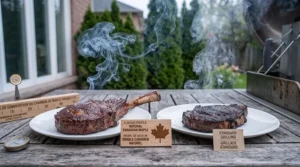
This is where the two fuels genuinely diverge, and it’s worth being specific rather than vague. Natural lump charcoal, being pure carbonized wood with no binders diluting the fuel, commonly reaches temperatures north of 900°C (roughly 1,650°F) in a well-ventilated firebox — hot enough to sear a steak in under two minutes per side. Charcoal briquettes, weighed down by their mineral char and starch binders, typically top out in the 700-820°C range (1,300-1,500°F), which sounds like a small gap on paper but translates into a noticeably different searing experience at the grate.
| Fuel | Typical Peak Temperature | Time to Usable Coals |
|---|---|---|
| Natural lump charcoal | 900°C+ (1,650°F+) | 15-20 minutes |
| Charcoal briquettes | 700-820°C (1,300-1,500°F) | 20-25 minutes |
What most buyers overlook about this table is that briquettes’ lower peak isn’t a flaw — it’s what makes them so much easier to hold steady at a target temperature over hours, since there’s less energy swinging around to manage. Lump’s higher ceiling is a genuine advantage for searing, but that same intensity means small vent adjustments produce bigger, faster temperature swings, demanding a bit more attention from whoever’s minding the grill.
Ash Production: What Actually Ends Up in Your Grill
Ash isn’t just cleanup hassle — it actively affects how a cook goes, and this is one of the most underrated differences between the two fuels. Natural lump charcoal, since it’s essentially pure carbon with the volatile compounds already burned off during the manufacturing carbonization process, typically leaves behind only 5-10% of its original weight as ash. Charcoal briquettes, loaded with mineral char and binder material that doesn’t fully combust, commonly leave 20-30% of their weight behind as ash — sometimes more with cheaper formulations.
That gap matters mid-cook, not just at cleanup. A thick layer of ash smothers airflow from beneath the coal bed, gradually choking the fire’s oxygen supply and dropping temperature in ways that can catch an inattentive griller off guard three hours into a smoke. On a practical level, this means anyone running a long briquette-fuelled cook should plan to rake or shake the ash grate periodically, while lump users generally get away with less frequent intervention. It also explains why competition barbecue teams — who need airflow control down to a science — often gravitate toward lower-ash options like B&B Charcoal Oak Briquets or pure lump varieties.
Grilling Technique: How Charcoal Type Changes What’s on Your Plate
Fuel choice isn’t just a background detail — it should actively shape how you set up the grill. For high-heat searing on lump charcoal, a two-zone fire is non-negotiable: pile the lump densely on one side for a screaming-hot sear zone, leave the other side bare or lightly loaded for a cooler resting zone to pull food back to once it’s charred. Because lump ignites and heats up fast, you’ll often be ready to cook within 15 minutes of lighting — faster than most people expect, which is itself a common source of undercooked-outside, raw-inside mistakes when the grate hasn’t had time to heat through.
Briquettes reward a different rhythm. Their steady, predictable burn makes them ideal for the “snake method” or “fuse method” popular in offset and kettle smoking — arranging unlit briquettes in a curved line with a handful of lit coals at one end, so the fire creeps slowly along the row over many hours rather than blazing all at once. This is genuinely one of the best-kept secrets in backyard barbecue, and it’s specifically a briquette technique; lump’s faster, hotter burn makes it far less predictable when arranged this way.
Whichever fuel is in the firebox, resist the urge to constantly lift the lid — every peek costs several minutes of recovered heat and stretches total cook time noticeably, something first-time smokers consistently underestimate.
Common Mistakes When Buying and Using Charcoal
Even experienced grillers fall into a handful of predictable traps. First: buying charcoal based on price alone without matching it to the cook. A bargain bag of small-piece lump is a poor match for a long smoke, just as budget briquettes struggle to hit searing temperatures for a proper steak crust. Second: dousing coals in lighter fluid, which both brands and food-safety commentators consistently warn against for flavour and health reasons — a clean chimney-lit fire avoids the issue entirely. Third: using wet or improperly stored charcoal, which lights unevenly and smoulders rather than burning cleanly, wasting fuel and producing more acrid smoke than intended.
Fourth, and this one carries real safety weight: using a charcoal grill indoors, in a garage, or in an enclosed space to escape bad weather. Incidents like the hospitalization of eleven family members in Ottawa after running a charcoal barbecue inside during a power outage are a stark reminder that charcoal combustion — lump or briquette — produces carbon monoxide regardless of how “clean-burning” the fuel is marketed as. Fifth: over-loading the firebox in an attempt to guarantee a long burn, which often backfires by restricting the airflow the fire needs to actually stay lit consistently.
✨ Ready to stock up? Compare current pricing on today’s top picks before your next cookout.
Charcoal Safety in Canada: CSA, Ventilation, and Carbon Monoxide
Charcoal safety isn’t a footnote — it’s a genuine public health issue every Canadian griller should take seriously, and it applies equally to lump and briquettes since the carbon monoxide risk comes from combustion itself, not the specific fuel format. Health Canada is explicit on this point: charcoal, wood, and other fuel-burning equipment should never be operated inside a home, garage, tent, or any enclosed space, because carbon monoxide is colourless, odourless, and can build to lethal concentrations before anyone notices symptoms.
Beyond ventilation, look for grills, chimney starters, and related accessories carrying CSA certification where applicable, and keep a fully charged, certified carbon monoxide alarm installed near sleeping areas year-round, not just during grilling season. Practically speaking: always grill in a fully open outdoor space at least a few metres from doors, windows, and vents; never bring a grill onto a covered porch, balcony, or garage to shelter from rain; and let coals cool completely — ideally overnight in a metal container — before disposing of ash, since charcoal can retain dangerous heat for far longer than it looks like it should.
Frequently Asked Questions
❓ Is lump charcoal healthier than briquettes?
❓ Can you mix lump charcoal and briquettes together?
❓ Does charcoal briquette ash affect food taste?
❓ How long does a bag of lump charcoal last once opened?
❓ Is charcoal briquettes for grilling cheaper than lump charcoal long-term?
Conclusion
Lump charcoal vs charcoal briquettes for grilling isn’t really a competition with one winner — it’s a matchup between two tools built for different jobs. Natural lump charcoal earns its keep with higher burn temperature, lower ash production, and that clean, wood-forward smoke character serious searing demands. Charcoal briquettes earn theirs through steady, predictable burn behaviour that makes long smokes and big-group hosting far less stressful to manage.
Across the seven products covered here — from the restaurant-grade heat of FOGO Premium Lump Charcoal to the dependable, everywhere-available consistency of Kingsford Original Charcoal Briquettes — the right pick comes down to matching fuel to the cook in front of you, not chasing a single “best” answer. Keep a bag of each on hand if your grilling life spans both quick weeknight sears and slow weekend smokes; plenty of experienced Canadian grillers do exactly that, and it solves the debate more effectively than picking a permanent side ever could.
Whatever you land on, the fundamentals stay the same: light it clean, manage your airflow with patience, and always keep that fire outdoors and well ventilated.
Recommended for You
- Lump Charcoal for BBQ: 7 Top Picks Canadians Trust in 2026
- Portable Pizza Oven for Camping: 7 Real Picks for 2026
- Pizza Oven Under $1000: 7 Best Picks for 2026
Disclaimer: This article contains affiliate links. As an Amazon Associate, I earn from qualifying purchases. If you purchase products through these links, we may earn a small commission at no additional cost to you.
✨ Found this helpful? Share it with your friends! 💬🤗
