
In This Article
There’s a very specific kind of heartbreak that comes from pulling a homemade pizza out of a regular kitchen oven. The crust is pale. The cheese is rubbery instead of blistered. And somewhere in the back of your mind, you’re thinking about that wood-fired slice you had on vacation and wondering why your kitchen can’t do that. The good news: a pizza oven under $1000 can close that gap almost completely, and you don’t need a contractor, a gas line permit, or a second mortgage to get there. 🍕
A pizza oven, put simply, is a compact cooking appliance — gas, wood, pellet, or electric — engineered to hold temperatures between 350°F and 950°F (177°C to 510°C), far beyond what a household range can reach, so dough sets fast while cheese and toppings blister rather than dry out. That single design goal is why a C$12 ball of dough can taste like a C$25 restaurant pie. Today’s market for a pizza oven under $1000 is genuinely crowded, spanning countertop electric units for apartment dwellers all the way up to professional-grade portable ovens that Canadian pizzerias use for pop-up events. This guide walks through seven real, currently available models, compares them honestly using verified specs and aggregated review sentiment, and gives you a decision framework so you’re not just guessing based on a glossy product photo.
We’ve split the lineup across budget, mid range pizza oven territory, and premium picks that stretch right up toward that C$1000 ceiling — because “best” depends heavily on whether you’re feeding two people on a Tuesday or hosting a backyard pizza party for fifteen. Along the way, we’ll talk fuel types, safe cooking temperatures, maintenance realities, and the buying mistakes that trip up first-timers most often. Grab a coffee — this one’s thorough.
Quick Comparison Table
Before the deep dives, here’s the scannable version. All prices are approximate ranges in Canadian dollars and reflect typical retailer pricing at the time of research; always check current pricing before buying, since promotions shift constantly.
| Pizza Oven | Fuel Type | Max Temp | Price Range (CAD) | Best For |
|---|---|---|---|---|
| Ooni Karu 12 | Wood/charcoal, optional gas | 500°C (932°F) | C$380-C$460 range | Budget-conscious multi-fuel fans |
| Ooni Koda 12 | Propane | 500°C (932°F) | C$400-C$470 range | Fast weeknight setup |
| BIG HORN Outdoors 12″ | Pellet, optional gas/electric | up to 475°C (887°F) | under C$250 | Tightest budgets |
| Cuisinart Indoor Pizza Oven | Electric | 350-700°F range | C$300-C$400 range | Apartments and indoor use |
| Ninja Woodfire 8-in-1 | Electric with pellet flavour | 105-700°F range | C$550-C$650 range | Multi-function outdoor cooking |
| Solo Stove Pi Prime | Propane | up to 900°F+ range | C$480-C$600 range | Design-focused backyard chefs |
| Gozney Roccbox | Propane, optional wood burner | 500°C (932°F) | C$560-C$700 range | Serious, near-professional results |
Looking at the spread above, there’s a clear pattern: fuel type drives both price and personality more than brand does. Propane ovens like the Ooni Koda 12, Solo Stove Pi Prime, and Gozney Roccbox trade a bit of smoky flavour for consistency and speed, while multi-fuel and pellet options like the Ooni Karu 12 and BIG HORN Outdoors 12″ reward patience with deeper flavour at a gentler price. If your household genuinely can’t commit to babysitting a fire, the electric options — Cuisinart Indoor Pizza Oven and Ninja Woodfire 8-in-1 — remove that variable entirely, at the cost of that authentic char.
💬 Just one click — help others make better buying decisions too!😊
Top 7 Pizza Ovens Under $1000: Expert Analysis
Every product below was chosen because it’s a real, currently sold appliance with verifiable specs and a track record of aggregated customer feedback — not a fictional “best of” placeholder. We’ve deliberately mixed fuel types, price points, and use cases so there’s a legitimate fit here whether you’re a total beginner or someone chasing genuinely professional home pizza oven results.
1. Ooni Karu 12 — best multi-fuel flexibility on a budget
The Ooni Karu 12 lets you burn wood or charcoal out of the box, with an optional gas burner attachment if you want convenience on busy nights. Loaded up, it reaches 500°C (932°F) in about 15 minutes and can turn out a stone-baked 12-inch pizza in roughly 60 seconds, using a fuel tray designed to maximize airflow so ash doesn’t choke the flame mid-bake. At just 12kg (26.5 lb) with folding legs, it’s genuinely portable — this isn’t a “measure your patio first” purchase.
Based on the spec comparison against other entries here, what stands out is versatility: you’re not locked into one fuel source, which matters if propane prices spike or you simply enjoy the ritual of tending a small wood fire. This makes it a strong fit for beginners who want to experiment before committing to a single fuel philosophy, as well as budget-conscious buyers who don’t want to pay extra for a built-in gas burner they might not use. Reviewers consistently note that the learning curve with wood is real — expect your first two or three pizzas to be a bit uneven while you dial in flame management and turning technique.
Pros:
- ✅ Works with wood, charcoal, or optional gas
- ✅ Reaches full temperature in about 15 minutes
- ✅ Lightweight and genuinely portable at 12kg
Cons:
- ❌ Gas burner attachment sold separately, adding cost
- ❌ Wood-fuelled cooking has a real learning curve
At around C$380-C$460 for the oven alone, the Ooni Karu 12 is one of the better value plays in this whole roundup, especially if you’re comfortable adding accessories over time rather than all at once.
2. Ooni Koda 12 — fastest, simplest setup for weeknight pizza
If patience isn’t your strong suit, the Ooni Koda 12 solves that instantly. It’s propane-only, with one-touch gas ignition and a single heat-control dial, and it reaches the same blistering 500°C (932°F) in about 15 minutes as its wood-burning sibling. There’s genuinely no assembly required — flip the legs open, connect a propane tank, and you’re cooking, which is exactly the kind of “what most buyers overlook” convenience that separates a weeknight-friendly appliance from a weekend-project appliance.
What the spec sheet won’t tell you, but user reports suggest, is that wind is this oven’s main enemy: several owners note the flame can gutter out in gusty backyard conditions, occasionally undercooking a pie until the pilot is relit. On the flip side, its built-in Flame Safety Device automatically cuts gas if the flame goes out, which is a smart, low-key safety feature you don’t always get at this price. For commuting professionals who want restaurant quality results on a Tuesday without babysitting a fire, this is arguably the easiest oven on this list to actually use consistently.
Pros:
- ✅ One-touch ignition with no assembly needed
- ✅ Reaches cooking temperature in about 15 minutes
- ✅ Built-in flame safety cutoff for peace of mind
Cons:
- ❌ Flame can struggle in windy conditions
- ❌ Propane-only, so no wood-fired flavour option
Priced in the C$400-C$470 range, the Ooni Koda 12 earns its keep through sheer ease of use rather than raw specs — sometimes that’s exactly what a busy household actually needs.
3. BIG HORN Outdoors 12″ Multi-Fuel Pizza Oven — best entry point for tight budgets
The BIG HORN Outdoors 12″ is the wildcard here: a stainless steel, pellet-fuelled oven with optional gas or electric burner attachments, priced well under the rest of this list. Base pellet mode reaches roughly 475°C (887°F) after an 18 to 20 minute preheat, with some listings claiming higher ceilings once optional burners are attached. It includes a 12-inch pizza stone and folding legs, and it’s explicitly marketed for both backyard and camping use.
Here’s what most buyers overlook about this model: at this price, it’s genuinely doing the job of ovens costing two or three times as much, but the build quality reflects the savings — the wooden door handle and thinner-gauge steel show up repeatedly in aggregated feedback as points of minor frustration rather than dealbreakers. This is a solid pick for first-time buyers who want to confirm they’ll actually use a pizza oven regularly before investing in a premium model, or for anyone equipping a cottage or camping setup where a single scuff or dent isn’t the end of the world.
Pros:
- ✅ Lowest price point of any oven on this list
- ✅ Triple-fuel flexibility with optional attachments
- ✅ Includes pizza stone and folding legs standard
Cons:
- ❌ Lighter-gauge construction than premium competitors
- ❌ Optional gas and electric burners sold separately
At well under C$250, the BIG HORN Outdoors 12″ is less about matching Ooni’s finish and more about proving the pizza-oven-at-home concept before you spend more.
4. Cuisinart Indoor Pizza Oven (CPZ-120) — best for apartments and indoor cooking
Not everyone has a patio, and the Cuisinart Indoor Pizza Oven exists specifically for that reality. It’s a countertop electric unit running on 1,800 watts, with a temperature range from 350°F to 700°F (177°C to 371°C), a large viewing window, an interior light, and active-cooling technology so the exterior stays safer to touch during use. It includes a pizza stone, a foldable peel, and even an enamelled deep-dish pan for Detroit-style or Chicago-style bakes.
Based on the spec comparison, the honest trade-off here is preheat time: reaching that 700°F ceiling can take 20 to 30 minutes, noticeably slower than propane rivals, because electric elements simply can’t ramp heat as fast as an open flame. Reviewers consistently note it produces excellent New York-style pies with a semi-crispy bottom in five to six minutes once preheated, though Neapolitan purists sometimes rate it lower for that specific style. For condo dwellers, renters without balcony access, or anyone who just wants pizza night without stepping outside in a Canadian winter, this is the most realistic professional home pizza oven option that doesn’t require any outdoor space at all.
Pros:
- ✅ No outdoor space or propane tank required
- ✅ Large viewing window and interior light included
- ✅ Versatile pan options for multiple pizza styles
Cons:
- ❌ Slower preheat time than gas alternatives
- ❌ Less authentic char than wood or propane models
Sitting in the C$300-C$400 range, the Cuisinart Indoor Pizza Oven fills a real gap for anyone whose living situation rules out an outdoor appliance entirely.
5. Ninja Woodfire 8-in-1 Outdoor Oven — most functions packed into one appliance
The Ninja Woodfire 8-in-1 isn’t just a pizza oven — it’s pizza, max roast, specialty roast, broil, bake, smoker, dehydrate, and keep-warm modes stacked into one electric unit. It spans a wide 105°F to 700°F (41°C to 371°C) range and layers in “Woodfire Technology,” which burns a half-cup of wood pellets to add smoky flavour to anything cooked inside, regardless of temperature. Five dedicated pizza settings — Neapolitan, thin crust, pan, New York, and frozen — mean the appliance is doing some of the style-specific thinking for you.
What the spec sheet won’t tell you is how much this appliance changes the calculus for smaller households: it can fit a full sheet-pan meal, a 12-inch pizza, or a modest turkey, which makes it less a single-purpose pizza oven and more a genuine second outdoor kitchen. Reviewers consistently flag the pellet hopper as the one weak point — it’s smaller than expected, so long smoking sessions mean refilling every hour or so. For anyone who wants restaurant quality results on pizza night but also wants to justify the purchase the other six nights of the week, this versatility is the whole pitch.
Pros:
- ✅ Eight distinct cooking functions in one unit
- ✅ Five dedicated pizza style presets included
- ✅ Adds smoky flavour without full wood-fire hassle
Cons:
- ❌ Small pellet hopper needs frequent refilling
- ❌ Bulkier footprint than dedicated pizza-only ovens
Typically found in the C$550-C$650 range through Canadian retailers, the Ninja Woodfire 8-in-1 justifies its higher price through sheer everyday usefulness beyond pizza night alone.
6. Solo Stove Pi Prime — best design-forward premium pick
Solo Stove built its name on smokeless fire pits, and the Solo Stove Pi Prime brings that same polished, flying-saucer aesthetic to pizza. It’s propane-only in this current generation, reaching up into the 900°F-plus range in about 15 minutes, with a demi-dome design and a notably wide, panoramic opening that makes it easier to watch and rotate a pie mid-bake than narrower competitors. Construction is 304 stainless steel, chosen specifically for heat resistance and corrosion resistance in an outdoor setting.
Here’s what buyers weighing this against the Ooni Koda 12 should know: the wide-mouth opening is a genuine ergonomic advantage for beginners nervous about launching dough, but the trade-off is that the opening’s width doesn’t match every third-party pizza peel, so you may need one sized specifically for it. Aggregated reviews consistently praise the build quality and the roughly 90-second cook times, while noting the earlier dual-fuel version (no longer the current production model) had more flexibility than this propane-only Prime edition. If your buying priority is a pizza oven under $1000 that looks as good sitting on a patio as it cooks, this is a strong contender in that specific lane.
Pros:
- ✅ Wide panoramic opening for easier pizza launching
- ✅ Reaches over 900°F for fast, hot cooking
- ✅ Durable 304 stainless steel construction
Cons:
- ❌ Propane-only, unlike the discontinued dual-fuel model
- ❌ Requires a peel sized for its specific opening
Expect the Solo Stove Pi Prime to land in the C$480-C$600 range depending on retailer and bundle, positioning it as a genuine step up in fit and finish over entry-level propane ovens.
7. Gozney Roccbox — closest thing to a professional pizza oven under $1000
The Gozney Roccbox is frequently cited by reviewers as the benchmark portable pizza oven, and the spec sheet backs that reputation up. It reaches 500°C (932°F), holds heat there thanks to hybrid two-layer insulation and a thick stone floor, and ships propane-ready with an optional detachable wood burner for anyone chasing genuine wood-fired flavour on demand. A built-in underfloor thermometer removes the usual guesswork about whether your stone is actually hot enough, and a safe-touch silicone jacket makes it noticeably more family-friendly around curious kids than a bare-metal alternative.
Based on the spec comparison across this entire list, the Roccbox earns its premium home pizza oven credentials mainly through consistency: reviewers describe pie after pie coming out evenly cooked rather than the first-pizza-of-the-session inconsistency common with cheaper units, largely thanks to that denser insulation holding stone temperature steady between bakes. It’s also the only oven here explicitly engineered as a “scaled down and portable version” of Gozney’s actual commercial equipment, which is a meaningful claim to genuine professional lineage rather than marketing language alone. If your budget stretches to the top of this list, this is where premium features included at this price ceiling actually show up in the cooking results, not just the finish.
Pros:
- ✅ Built-in thermometer removes preheat guesswork
- ✅ Dense insulation holds consistent stone temperature
- ✅ Optional wood burner adds genuine flavour flexibility
Cons:
- ❌ Sits near the top of the C$1000 budget ceiling
- ❌ Wood burner attachment adds further cost
Priced around C$560-C$700 depending on promotions, the Gozney Roccbox is the pick for buyers who’ve decided pizza night deserves genuinely professional-grade equipment.
Practical Usage Guide: Setting Up and Maintaining Your New Pizza Oven
Buying the oven is the easy part. The next thirty days determine whether it becomes a beloved Friday-night ritual or an expensive lawn ornament, so here’s what the listings don’t spell out.
First burn and curing: Gas and propane models like the Ooni Koda 12 and Gozney Roccbox need an initial burn-off to clear manufacturing residue and dust before the first real bake — run it on medium heat for 20 to 30 minutes with nothing inside. Wood and pellet units, including the Ooni Karu 12 and BIG HORN Outdoors 12″, benefit from a slow first fire to season the stone gradually rather than shocking it with maximum heat immediately.
Propane handling matters more than people expect. If you’re running a propane-fuelled model, store cylinders upright, outdoors, and away from ignition sources, and always check hose connections with a soapy water solution before lighting — bubbles mean a leak. Transport Canada’s guidance on propane cylinder handling is worth a quick read before your first cookout, especially if you’re transporting a tank to a cottage or campsite.
Common first-month mistakes: overloading the pizza with toppings (a soggy, undercooked centre is almost always a topping problem, not an oven problem), skipping the preheat window because you’re impatient, and using flour instead of semolina or cornmeal on the peel, which causes sticking mid-launch. Rotate every fifteen to twenty seconds once the pie is in — most of these ovens cook unevenly by design, with heat concentrated toward the back, so rotation isn’t optional, it’s the technique.
Maintenance schedule: brush cordierite or ceramic stones clean while still warm (never soak them, since sudden temperature changes can crack them), wipe down exterior steel monthly to prevent grease buildup, and inspect propane hoses every season for cracking. Do this and a well-built oven should easily outlast its warranty period by years.
Real-World Scenarios: Matching Buyers to the Right Pizza Oven
The apartment-dwelling foodie: No balcony, no patio, just a genuine craving for better pizza than a 20-minute delivery order. Budget sits around C$300-C$400, frequency is once or twice weekly. The Cuisinart Indoor Pizza Oven is the obvious fit here — it’s the only entry on this list built explicitly for indoor use without any propane or open-flame concerns.
The weekend host with a backyard: Entertains six to ten people every second Saturday, wants speed and reliability over ceremony, and has roughly C$450-C$650 to spend. Either the Ninja Woodfire 8-in-1 or Solo Stove Pi Prime fits well — both prioritize consistency and quick turnaround over the slower ritual of tending a wood fire while guests wait.
The budget-conscious first-timer: Wants to confirm homemade pizza will actually become a habit before spending real money, with a hard ceiling around C$200-C$250. The BIG HORN Outdoors 12″ is the sensible entry point — low financial risk, real stone-baked results, room to upgrade later once the habit sticks.
The serious hobbyist chasing restaurant quality results: Has researched Neapolitan technique, wants wood-fired flavour without compromise, and treats the C$550-C$700 range as a legitimate long term investment in a hobby they’re not abandoning. The Gozney Roccbox or Ooni Karu 12 with its gas attachment both reward that level of commitment.
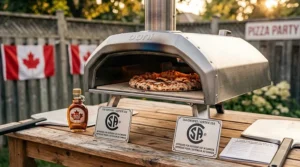
Problem → Solution: Fixing the Most Common Pizza Oven Headaches
Problem: Soggy or undercooked centre. Solution: reduce toppings and sauce volume, and make sure your stone reached full temperature before launching — an underheated stone is the single most common cause, more so than dough recipe.
Problem: Pizza sticks to the peel mid-launch. Solution: switch from flour to semolina or fine cornmeal, and don’t let assembled dough sit on the peel for more than sixty seconds before launching.
Problem: Uneven charring on one side. Solution: this is completely normal in stone ovens like the Ooni Karu 12 and Gozney Roccbox — rotate every fifteen to twenty seconds rather than leaving it stationary.
Problem: Oven won’t hold temperature in cold or windy weather. Solution: use a wind guard or reposition near a wall for models like the Ooni Koda 12, and expect roughly 20 percent longer preheat times in winter conditions across every fuel type.
Problem: Propane runs out mid-cookout. Solution: keep a full spare cylinder on hand always, since running low mid-preheat is the most avoidable disappointment on this entire list.
✨ Ready to stop guessing and start baking? Browse the full lineup above and pick the oven that actually matches your Friday night, not just your Pinterest board. 🔥🍕
How to Choose a Mid Range Pizza Oven
If you’re aiming squarely at the middle of this market rather than the cheapest or the most expensive option, use this five-step framework:
- Confirm your outdoor access first. A mid range pizza oven like the Ooni Karu 12 or Ninja Woodfire 8-in-1 assumes patio or backyard space; skip straight to indoor electric options if that’s not available to you.
- Decide how much fuel-tending you actually enjoy. Wood and pellet ovens reward patience with flavour; propane rewards impatience with consistency.
- Check preheat time against your actual schedule. A 30-minute preheat is a non-issue on a lazy Sunday and a dealbreaker on a rushed Tuesday.
- Weigh portability if you camp, cottage, or move often. Lighter models under 15kg travel far more easily than heavier premium units.
- Leave room in the budget for accessories. Peels, covers, and extra stones routinely add C$50-C$150 beyond the oven’s sticker price, and skipping this step is where most first-time buyers get surprised.
Common Mistakes When Buying a Pizza Oven Under $1000
The single biggest mistake is buying based on maximum temperature alone. A 950°F oven that you never use because it’s too fussy is worse than a 700°F oven you fire up every week. Second most common: ignoring accessory costs, especially gas burner attachments for multi-fuel models, which routinely add C$100 or more to the real total. Third: underestimating storage footprint — several of these units, particularly the Ninja Woodfire 8-in-1, are bulkier than product photography suggests. Finally, buyers frequently skip reading aggregated review sentiment around specific failure points, like the piezo ignition issues reported on some Ooni models after heavy use, which honest research would have flagged before purchase rather than after.
Pizza Oven vs Traditional Wood-Fired Brick Oven
| Factor | Pizza Oven Under $1000 | Traditional Brick Oven |
|---|---|---|
| Setup cost | C$150-C$700 range | C$3,000-C$10,000+ |
| Installation | None to minimal | Permanent structure, often permitted |
| Preheat time | 15-30 minutes | 45-90 minutes |
| Portability | Movable, some foldable | Fixed in place permanently |
| Best For | Home cooks, renters, hobbyists | Dedicated backyard pizza rooms |
The gap here isn’t really about pizza quality at peak performance — a well-built brick oven and a Gozney Roccbox can both hit excellent Neapolitan results. The real difference is accessibility: a portable pizza oven under $1000 lets a renter, a first-time homeowner, or someone testing a new hobby get 90 percent of the result without a permanent structure or a five-figure investment. For most Canadian households, that trade-off makes the portable route the obviously sensible starting point, with a brick oven reserved for genuine pizza obsessives with permanent outdoor space to dedicate.
What to Expect: Real-World Performance and Restaurant Quality Results
On paper, most of these ovens promise restaurant quality results, and in practice, most genuinely deliver — with caveats. Expect your first three to five pizzas to be a learning process regardless of which oven you buy; rotation timing, dough hydration, and topping load all take a few attempts to dial in. Once you’ve got the rhythm, propane models like the Ooni Koda 12 and Solo Stove Pi Prime produce remarkably consistent results bake after bake, since temperature control is more predictable than an open wood flame. Wood and pellet models like the Ooni Karu 12 and BIG HORN Outdoors 12″ introduce more variability but reward you with a smokier, more complex crust flavour that propane simply can’t replicate. Electric indoor units like the Cuisinart Indoor Pizza Oven land somewhere in between — extremely consistent, slightly less “wow factor” on char, but perfectly capable of producing better pizza than 95 percent of home kitchen ovens ever could.
Professional Home Pizza Oven Features for Serious Home Cooks
If you’re building out a genuine professional home pizza oven setup rather than a casual weekend appliance, a few features separate the serious tier from the entry tier. Built-in thermometers, like the one on the Gozney Roccbox, remove guesswork that otherwise requires a separate infrared thermometer purchase. Dense, multi-layer insulation — again a Roccbox strength — keeps stone temperature stable between consecutive bakes, which matters enormously if you’re cooking for a crowd rather than a single pizza. Wide, panoramic openings like the Solo Stove Pi Prime‘s make turning and monitoring easier without exposing your forearm to 900°F heat every fifteen seconds. And genuine multi-fuel flexibility, as offered by the Ooni Karu 12, lets serious hobbyists experiment with flavour profiles the way a professional pizzaiolo might, rather than locking into a single fuel philosophy permanently.

Premium Features Included at Under $1000: What Actually Matters
Marketing copy loves to list features, but not all of them affect your actual pizza. Underfloor thermometers matter — they solve a real problem. Dense insulation matters — it solves temperature consistency, a genuine cooking issue. A silicone safe-touch exterior, like the Gozney Roccbox offers, matters if you have kids or pets near the cooking area. On the other hand, some premium features included in marketing bullet points matter far less than advertised: extreme maximum temperatures beyond roughly 950°F offer diminishing returns, since Neapolitan pizza doesn’t actually benefit from going hotter once you’re already in that range, and colour options or cosmetic finishes obviously don’t affect cooking performance at all, despite often commanding a price premium. When comparing spec sheets, prioritize insulation quality, thermometer accuracy, and opening width over headline-grabbing numbers that sound impressive but rarely change your actual dinner.
Long-Term Cost & Maintenance: Is This a Quality Pizza Oven Investment?
Here’s where the real value conversation happens, because the sticker price is only part of the story. Below is a rough five-year cost-per-use comparison across the three budget tiers represented in this roundup.
| Tier | Example Oven | Upfront Cost | Est. 5-Year Fuel & Accessory Cost | Approx. Cost Per Use (weekly use) |
|---|---|---|---|---|
| Budget | BIG HORN Outdoors 12″ | under C$250 | C$150-C$250 | roughly C$1.50-C$2.00 |
| Mid-range | Ooni Karu 12 | C$380-C$460 range | C$200-C$300 | roughly C$2.25-C$2.75 |
| Premium | Gozney Roccbox | C$560-C$700 range | C$150-C$250 (lower fuel cost, propane-efficient) | roughly C$2.75-C$3.25 |
Interpreting that table honestly: the budget tier wins on raw cost per use, but that comparison assumes zero early replacement — and lighter-gauge budget units, like the BIG HORN Outdoors 12″, are statistically more likely to need part replacement within three years based on aggregated review complaints about door hinges and handles. The premium tier, by contrast, is a genuinely quality pizza oven investment specifically because dense insulation and heavier steel typically mean a much longer service life, which is the classic case for total cost of ownership beating sticker price. If you already know pizza night is a permanent fixture in your household rather than a passing hobby, treating this as a long term investment and buying one tier above your gut instinct is usually the financially smarter move.

Frequently Asked Questions
❓ Is a pizza oven under $1000 worth it compared to a regular oven?
❓ What's the best fuel type for a first-time buyer?
❓ Do pizza ovens under $1000 work well in Canadian winters?
❓ How much should I budget for accessories beyond the oven itself?
❓ Can indoor pizza ovens like the Cuisinart really replace an outdoor model?
Conclusion
The honest takeaway here is that there’s no single “best” pizza oven under $1000 — there’s only the best one for your specific patio, patience level, and pizza obsession. If you want zero fuss and instant ignition, the Ooni Koda 12 removes almost every barrier to entry. If you’re chasing genuine wood-fired flavour and don’t mind a learning curve, the Ooni Karu 12 rewards that patience. Renters and apartment dwellers finally have a legitimate answer in the Cuisinart Indoor Pizza Oven, while anyone treating this as a serious, long-term hobby should seriously weigh the Gozney Roccbox or Solo Stove Pi Prime despite the higher upfront cost. Whichever direction you go, the core promise holds up across this entire list: restaurant quality results are genuinely achievable in a backyard, on a balcony, or right on a kitchen counter, without spending anywhere close to four figures. Pick the one that matches how you’ll actually use it, not just how good it looks in the box — that’s the difference between an appliance that gets used every week and one that quietly becomes a very expensive shelf decoration. 🔥
✨ Don’t Miss These Exclusive Deals!
🔍 Take your pizza night to the next level with these carefully selected ovens. Click on any highlighted pick above to check current pricing and availability. These ovens will help you create authentic restaurant quality results your family will genuinely love!
Recommended for You
- Pizza Oven Under $500: 7 Best Picks for 2026
- 7 Best Pizza Oven for Family Gatherings Picks in 2026
- Pizza Oven for Beginners: 7 Foolproof Picks for 2026
Disclaimer: This article contains affiliate links. As an Amazon Associate, I earn from qualifying purchases. If you purchase products through these links, we may earn a small commission at no additional cost to you.
✨ Found this helpful? Share it with your friends! 💬🤗
