In This Article
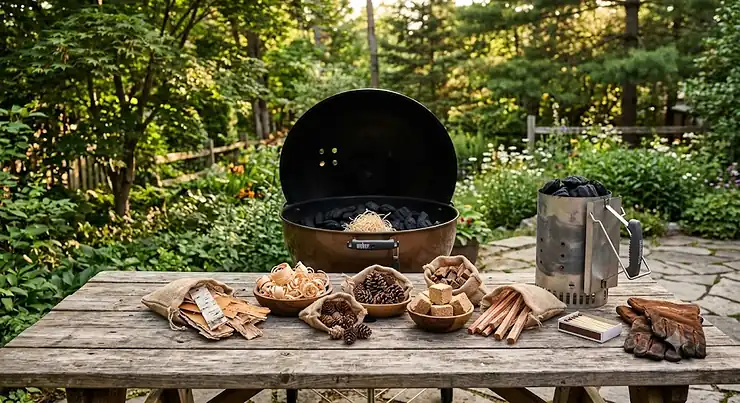
There’s a particular kind of despair that comes from standing over a cold charcoal chimney, lighter fluid can in hand, watching your burgers turn into a science experiment. Natural fire starters for charcoal BBQ solve that problem outright: they’re compact, non-petroleum ignition sources — usually wax, wood fibre, or resin-rich pine — that catch a match or lighter flame and burn hot enough to set charcoal ablaze without soaking your food in solvent fumes. No squeeze bottle, no chemical aftertaste, no cloud of black smoke drifting into your neighbour’s yard.
If you’ve ever tasted a steak that came off coals doused in lighter fluid, you already know why so many backyard cooks in Canada have quietly switched over. The shift isn’t just about flavour, either — it’s about not standing downwind of a VOC cloud every time you want a burger. This guide breaks down seven real, currently available options, tested against what actually matters: how fast they catch, how long they burn, whether the smell (or lack of it) lives up to the packaging, and what real buyers report after a season of actual use.
We dug into product specs, manufacturer documentation, and aggregated customer review sentiment from Amazon and manufacturer sites to build this list — no invented testimonials, no fabricated “we tested this ourselves for six months” claims. Where reviewers disagree or a product has a genuine trade-off, we say so. You’ll find budget-friendly bulk cubes, a proudly Canadian-made option, a pure pine-resin pick, and everything in between, so whether you’re lighting a kettle grill twice a summer or running a smoker every weekend, there’s a fit here.
Quick Comparison Table
For readers in a hurry, here’s the condensed version before we get into the weeds.
| Fire Starter | Typical Burn Time | Ignition Speed | Best For |
|---|---|---|---|
| Weber Lighter Cubes | 8–10 min | Very fast | Reliability seekers, kettle grill owners |
| Coghlan’s Fire Sticks | ~9 min | Fast | Campers, cottage/BBQ combo use |
| Dextreme Natural Fire Starter Cubes | 6–8 min | Fast | Budget bulk buyers, made-in-Canada preference |
| Rutland Safe Lite Squares | 7–9 min | Fast | Odour-sensitive cooks, indoor/outdoor crossover |
| Better Wood Products Fatwood | 10–15 min (per stick) | Moderate (needs shaving/splitting) | Traditionalists, wet-weather grilling |
| Kingsford Quick Light Rolls | 8–12 min | Fast | Kingsford loyalists switching from lighter fluid |
| Zip Firestarters | 8–10 min | Very fast | Frequent grillers wanting consistent cube size |
This table is a snapshot, not the full picture — burn time in particular swings with wind, charcoal type, and how much airflow your grill’s vents allow. What it does make clear is that most natural starters cluster in the same 6–12 minute range, which is roughly the window charcoal briquettes need to ash over properly. The real differentiators, as we’ll get into, come down to ignition consistency in damp conditions, whether the smell lingers, and how the per-use cost stacks up once you’re buying these every couple of weeks all summer.
💬 Just one click — help other Canadian golfers make a smarter bag choice too!😊
Top 7 Natural Fire Starters for Charcoal BBQ: Expert Analysis
Here’s the full lineup, budget to premium, with real specs and honest analysis of who each one actually suits.
| Product | Material | Price Range (CAD) | Best For |
|---|---|---|---|
| Weber Lighter Cubes | Paraffin wax & wood pulp | C$10–C$15 (24-count) | All-round reliability |
| Coghlan’s Fire Sticks | Waterproof compressed wood fibre | C$6–C$9 (12-pack) | Camping-to-BBQ crossover |
| Dextreme Natural Fire Starter Cubes | Wood fibre & wax | C$18–C$24 (144-count) | Bulk, budget-conscious |
| Rutland Safe Lite Squares | Sawdust & paraffin wax | C$10–C$14 (24-count) | Low-odour priority |
| Better Wood Products Fatwood | Resin-soaked pine | C$35–C$45 (10–11 lb box) | Traditional, chemical-free purists |
| Kingsford Quick Light Rolls | Hardwood fibre & paraffin | C$10–C$14 (32-count) | Kingsford-brand loyalty |
| Zip Firestarters | Natural wax & wood | C$14–C$18 (64-count) | Frequent, consistent use |
1. Weber Lighter Cubes — fastest, most consistent light of the bunch
The standout feature here is consistency: these paraffin-and-wood-pulp cubes are engineered specifically for charcoal grills, and it shows in how predictably they catch. Each cube burns for roughly 8 to 10 minutes at a steady flame, which is enough runway to get a full chimney of briquettes glowing without needing a second cube tossed on halfway through. Weber recommends one to three cubes depending on how much charcoal you’re lighting, and the cubes are described as ash-free and safe in wet or windy conditions, which lines up with what most owners report.
Based on the spec comparison against the other cubes in this roundup, this is the pick for someone who wants zero fuss and doesn’t mind paying a small premium for a brand backing it. What most buyers overlook is that “natural” doesn’t automatically mean “unanimously odourless” — a subset of reviewers on Weber’s own site describe a faint chemical smell reminiscent of lighter fluid, and at least one flagged a formaldehyde concern in the wax binder, while the majority report no smell at all and total reliability across dozens of uses. That split is worth knowing before you commit a whole grilling season to one brand.
Pros:
- ✅ Consistent, fast ignition even in damp conditions
- ✅ Widely available at hardware and grill retailers
- ✅ Ash-free, so cleanup is minimal
Cons:
- ❌ A minority of reviewers report a faint chemical odour
- ❌ Costs more per cube than bulk generic alternatives
At around C$10–C$15 for a box of 24, Weber Lighter Cubes land in the mid-range — not the cheapest option here, but the name-brand consistency tends to justify the price for anyone who grills weekly and hates surprises.
2. Coghlan’s Fire Sticks — Canadian outdoor brand, built for damp weather
Coghlan’s Fire Sticks come from a Winnipeg-founded company that’s been making camping gear since 1959, and the standout trait is how well they hold up to moisture — the sticks are described as waterproof enough to light even after being submerged, which is a genuinely useful trait if your BBQ lives on an uncovered deck through a rainy Canadian spring. Each stick burns for about nine minutes, non-toxic and odourless according to the manufacturer, which matters if you’re lighting the grill right before guests arrive and don’t want a chemical smell hanging in the yard.
Here’s what the spec sheet won’t tell you outright: because these were designed first for campfires and portable stoves, they’re a touch smaller than some dedicated BBQ cubes, so lighting a full charcoal chimney may take two sticks rather than one. For anyone who splits time between cottage weekends and backyard grilling, that dual-purpose design is a genuine convenience — one product for the tackle box and the grill caddy alike. Aggregated buyer sentiment consistently praises the reliability of the waterproof claim, with several reviewers specifically noting successful ignition after the sticks got rained on overnight.
Pros:
- ✅ Genuinely waterproof, even after submersion
- ✅ Trusted Canadian outdoor brand since 1959
- ✅ Dual-purpose for camping and backyard grilling
Cons:
- ❌ Smaller format may need two sticks per light
- ❌ Sold in smaller 12-packs, so cost-per-use is average
Priced around C$6–C$9 for a dozen, Coghlan’s Fire Sticks are an easy pick for anyone already buying camping gear who wants one fire starter that does double duty.
3. Dextreme Natural Fire Starter Cubes — made in Canada, priced for bulk grilling
The headline feature on this one is origin and value: Dextreme Natural Fire Starter Cubes are manufactured in Canada from wood fibre and wax, and sold in a 144-count bulk pack that works out to a noticeably lower per-cube cost than boutique options. Each cube burns for roughly 6 to 8 minutes, on the shorter end of this list, which means a slightly quicker window to get your coals fully involved before the flame dies down.
What that shorter burn time actually means in practice is you’ll want to stack your charcoal a bit more tightly around the cube rather than spreading briquettes loosely — give the flame less air to lose to and more fuel to catch, and the shorter window stops being a liability. This is a solid option for anyone who grills often enough that a 144-count box will actually get used before it goes stale, rather than sitting half-full in a shed for two years. Reviewers describe the cubes as easy to ignite and non-toxic, with the “made in Canada” sourcing coming up repeatedly as a deciding factor for buyers who specifically searched it out.
Pros:
- ✅ Manufactured in Canada, appealing for domestic buyers
- ✅ Very low cost per use in the 144-count format
- ✅ Non-toxic wood fibre and wax composition
Cons:
- ❌ Shorter burn window than premium cubes
- ❌ Bulk format is wasteful if you only grill occasionally
At C$18–C$24 for 144 cubes, Dextreme Natural Fire Starter Cubes are one of the strongest value plays here — ideal for anyone who fires up the grill several times a week through the summer.
4. Rutland Safe Lite Fire Starter Squares — the low-odour specialist
Rutland has been making fireplace and stove products in Vermont since 1883, and the Safe Lite squares are built around one specific promise: minimal odour. Made from sawdust and paraffin wax pressed into squares, each one burns for roughly 7 to 9 minutes and is marketed as safe for both indoor stoves and outdoor grills, which tells you something about how confident the manufacturer is in the low-smoke, low-smell profile.
On paper, this means Rutland is squarely aimed at anyone who’s sensitive to smell — whether that’s a household member with fragrance sensitivities or simply a cook who doesn’t want the neighbours to know exactly when dinner started. Reviewers consistently describe these as reliable “best firestarter” performers, and the brand’s century-plus track record in the fireplace category lends it more established credibility than some of the newer entrants on this list. Worth noting: like most wax-based starters, Rutland’s own packaging carries a standard combustion warning under California’s Proposition 65, which applies broadly to anything that produces smoke and carbon monoxide when burned — it’s a regulatory disclosure rather than a red flag specific to this product.
Pros:
- ✅ Long-standing brand with over a century of manufacturing experience
- ✅ Genuinely low odour compared to typical wax cubes
- ✅ Works for both indoor stove and outdoor grill use
Cons:
- ❌ Combustion warning label is standard but can look alarming
- ❌ Not the fastest-igniting option in a stiff wind
Expect to pay around C$10–C$14 for a 24-count box, putting Rutland Safe Lite Fire Starter Squares squarely in mid-range territory, justified by the brand’s reputation and low-odour profile.
5. Better Wood Products Fatwood — the purest, no-additive option
If “natural” is the whole point for you, this is the product to look at. Better Wood Products Fatwood is harvested from resin-saturated pine stumps — no kerosene, sawdust binder, or wax additive of any kind, just concentrated pine pitch locked into the wood itself. Each stick burns hot for 10 to 15 minutes once lit, though unlike wax cubes, fatwood needs a bit of prep: shaving thin curls off a stick with a knife dramatically speeds up ignition, while tossing a whole stick at a match can be slower to catch.
What most buyers overlook about fatwood is that it isn’t really a “light and forget” product the way a wax cube is — it rewards a little technique. Once you’ve shaved a few curls and gotten a small flame established, though, the resin content means it burns hot enough to shrug off damp weather better than almost anything else on this list, which is exactly why campers and homesteaders have used it for generations before “eco-friendly BBQ fire starters” was a marketing phrase. Aggregated reviews describe it as reliably chemical-free, with buyers specifically praising the complete absence of any additive smell or aftertaste on grilled food, alongside genuine enthusiasm for not relying on lighter fluid, kerosene, or sawdust cubes to get a fire going.
Pros:
- ✅ Zero additives — pure pine resin and wood
- ✅ Burns hot and long once properly lit
- ✅ Performs well even in damp or cold conditions
Cons:
- ❌ Needs shaving or splitting for fastest ignition
- ❌ Higher upfront cost than cube-format starters
At C$35–C$45 for a 10–11 lb box, Better Wood Products Fatwood costs more upfront, but a box lasts an entire grilling season for most households, so the effective cost per light is often lower than it first appears.
6. Kingsford Quick Light Fire Starter Rolls — the familiar name for lighter-fluid switchers
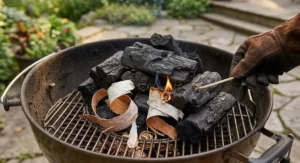
Kingsford is the charcoal brand most Canadian grillers already have in their garage, and the Quick Light rolls extend that familiarity to fire starters: all-natural hardwood fibre wrapped with paraffin wax into a roll format rather than a cube. Each roll burns for roughly 8 to 12 minutes and is described as water-resistant, designed to light easily even in rain or wind — a meaningful claim in a country where a sudden downpour can hit mid-cookout without warning.
Here’s what the roll shape means in practice: because it’s elongated rather than cubed, it makes better contact across a wider spread of briquettes, which reviewers report translates to slightly more even ignition across a full charcoal bed compared to a single-point cube. For anyone making the jump from a squeeze bottle of lighter fluid, this is arguably the easiest transition — same trusted brand name on the bag, same general workflow, just without the fumes and the flare-up risk. That familiarity is a real, if underrated, factor in whether someone actually sticks with a natural starter long-term rather than reaching for the old bottle out of habit.
Pros:
- ✅ Brand recognition eases the switch from lighter fluid
- ✅ Roll shape spreads ignition more evenly across coals
- ✅ Rated for use in rain and wind
Cons:
- ❌ Slightly bulkier to store than compact cubes
- ❌ Premium pricing relative to generic bulk options
At C$10–C$14 for a 32-count box, Kingsford Quick Light Fire Starter Rolls sit in the same price bracket as Weber Lighter Cubes, making the choice between them mostly a matter of brand loyalty and shape preference.
7. Zip Firestarters — the consistency pick for frequent grillers
Zip Firestarters wraps up this list with a straightforward promise: 100 percent natural wax and wood cubes, sold in a 64-count box, described by the manufacturer as odourless and clean-burning. Each cube burns for around 8 to 10 minutes with fast, even ignition, and the uniform cube size — a small but real advantage — means you’re not fishing through a bag for a stick that’s the right size for your grill’s firebox.
Based on the spec comparison, this lands as a strong middle-ground option: not the cheapest bulk buy on the list, not the most premium either, but built specifically around predictability. For someone who grills two or three times a week through the summer, that kind of consistency matters more than it sounds — knowing exactly how many cubes you need and roughly how long you have before the flame dies down removes a lot of the guesswork that trips up newer grillers. Reviewers describe the cubes as reliably fast-lighting with minimal smell, and the resealable packaging comes up frequently in feedback as a practical touch that keeps unused cubes from picking up moisture in a damp garage or shed.
Pros:
- ✅ Uniform cube size for predictable results
- ✅ Odourless, clean-burning formula
- ✅ Resealable packaging protects unused cubes from moisture
Cons:
- ❌ Mid-pack burn time compared to fatwood or rolls
- ❌ Less brand recognition than Weber or Kingsford
Priced around C$14–C$18 for 64 cubes, Zip Firestarters offer a dependable middle path for anyone who wants consistency without paying a name-brand premium.
Practical Usage Guide: Getting the Most From Your Natural Fire Starters
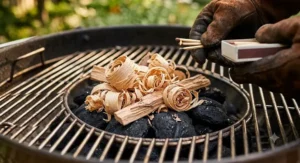
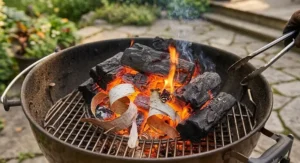
Buying the right starter is half the equation — using it well is the other half, and this is where most first-time switchers from lighter fluid lose patience. Start by placing your fire starter (whether cube, square, or shaved fatwood) directly on the charcoal grate, then build a loose pyramid of 12 to 15 briquettes around and slightly on top of it, leaving small gaps for airflow. Light the starter directly, not the charcoal, and resist the urge to immediately start adjusting coals — most natural starters need 60 to 90 seconds of uninterrupted burn before the surrounding charcoal catches.
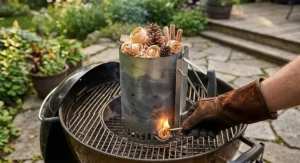
A common first-30-days mistake is under-stacking the charcoal, which starves the starter of fuel before it’s had time to establish a real flame. Another is closing the grill lid too early, which cuts off the oxygen these starters need to keep burning hot. If you’re using a charcoal chimney, the technique changes slightly: place the starter underneath the chimney’s lower grate rather than mixed into the coals, since the chimney’s design already concentrates airflow upward. For maintenance, store any wax-based cubes in a sealed container away from heat and direct sun — Canadian garages can hit surprising temperatures in July, and softened wax cubes stick together and become harder to separate. Fatwood, by contrast, is nearly immune to storage issues; just keep it dry.
Real-World Scenarios: Which Natural Fire Starter Actually Fits Your Grilling Life
If you’re a downtown condo-dweller with a small balcony kettle grill and you cook maybe twice a month, a compact bulk box like Dextreme Natural Fire Starter Cubes makes the most sense — low storage footprint, low per-use cost, and you’ll actually use the box before it degrades. If you’re a cottage owner who splits gear between camping trips and weekend BBQs, Coghlan’s Fire Sticks earn their keep by doing double duty in both settings, especially given how often cottage weather turns damp without warning.
For a family that grills several nights a week through spring and summer — burgers on Tuesday, ribs on Saturday — the math favours either Weber Lighter Cubes for consistency or Zip Firestarters for a slightly lower cost with comparable reliability; both hold up well to the repetition. And if you’re the kind of griller who values doing things the traditional, additive-free way and doesn’t mind an extra 30 seconds of prep work shaving curls with a pocketknife, Better Wood Products Fatwood rewards that patience with a fire starter that’s about as close to “nothing but wood and flame” as this category gets. Matching the product to your actual grilling frequency and storage situation, rather than just chasing the lowest price per box, is what determines whether you’ll still be happy with your choice in August.
How to Choose Natural Fire Starters for Charcoal BBQ
Picking the right one comes down to a handful of practical criteria, roughly in order of importance:
- Ignition speed in your typical weather. If you regularly grill in wind or light rain, prioritize starters explicitly rated water-resistant, like Coghlan’s Fire Sticks or Kingsford Quick Light Rolls, over standard wax cubes.
- Burn time versus your charcoal volume. A quick 6–8 minute cube is fine for a small kettle grill’s worth of briquettes, but a full chimney for a large smoker benefits from a longer 10–15 minute burn like fatwood provides.
- Odour sensitivity. If anyone in your household reacts to fragrance or smoke smell, low-odour options like Rutland Safe Lite Squares deserve extra weight in the decision.
- Cost per use, not just box price. A C$45 box of fatwood that lasts all season often beats a cheaper bulk box you’ll only use half of before it’s misplaced.
- Storage conditions. Wax-based cubes soften in hot sheds or direct sun; if your storage is exposed to summer heat, fatwood or compressed-fibre sticks hold up better.
- Brand familiarity if you’re switching from lighter fluid. Sticking with a recognizable name like Weber or Kingsford can make the transition away from chemical starters feel less like a leap of faith.
Weighing these against your actual grilling habits — not the habits of whoever wrote the product description — is what separates a good match from a box that sits unused in the garage by August.
✨ Ready to Ditch the Lighter Fluid?
🔍 Check current pricing on any of the picks above before your next cookout — availability and pricing shift often, so it’s worth a quick look before you commit.
Natural Fire Starters vs Charcoal Lighter Fluid: The Real Difference
The most common alternative to a natural fire starter isn’t another natural product — it’s the squeeze bottle of petroleum-based lighter fluid still sitting in a lot of Canadian garages. The chemical-free ignition angle matters here for a genuine, documented reason: lighter fluid is composed largely of petroleum distillates that release volatile organic compounds during evaporation and combustion, and Health Canada’s guidance on indoor and outdoor air contaminants notes that VOC exposure and concentration matter for health, which is part of why jurisdictions like California have moved to regulate charcoal lighter fluid formulations directly.
| Factor | Natural Fire Starters | Charcoal Lighter Fluid |
|---|---|---|
| Chemical exposure | Minimal to none | Petroleum-based VOCs |
| Food flavour impact | None reported | Common complaint if over-applied |
| Fire safety | No flare-up risk from re-application | Flare-up risk if added to lit coals |
| Cost per use | C$0.10–C$0.40 typical | Lower per light, but bottle waste is common |
The analysis here isn’t close on safety: adding more lighter fluid to already-lit coals is one of the most common causes of flash-fire backyard injuries, while natural starters simply burn out — there’s no bottle to accidentally overpour. Cost-per-use slightly favours lighter fluid on paper, but that ignores the waste factor; half-used bottles frequently get tossed after they’ve evaporated down or gone stale, while a box of cubes or a shaved fatwood stick has a much longer practical shelf life. Taste is the other differentiator reviewers bring up constantly — over-application of lighter fluid before coals are fully ashed over is a frequent, specific complaint in aggregated grilling forums and reviews, while natural starters essentially never generate that complaint because there’s no petroleum residue to begin with.
Tinder Material 101: What Actually Makes Charcoal Catch Fast
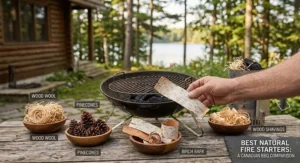
Every natural fire starter on this list is, at its core, a delivery mechanism for concentrated tinder material — something small, dense in fuel, and easy to ignite that can transfer flame to something bigger and less flammable, like a briquette. The two dominant approaches here are wax-based (Weber, Kingsford, Rutland, Zip, Dextreme) and pure resin-based (fatwood). Wax works by soaking into a fibrous carrier — sawdust, wood pulp, compressed paper — and burning slowly and steadily as the wax melts and wicks upward, similar to how a candle burns. Fatwood, according to its background as pine heartwood saturated with resin, works differently: the terpene-rich resin itself is the fuel, no carrier material needed, which is why it tolerates damp conditions so well — there’s simply less absorbent surface area for moisture to compromise.
What most buyers overlook is that tinder material density, not just quantity, determines reliability. A loosely packed cube with lots of air pockets catches fast but burns out fast too, while a denser cube or stick takes a few extra seconds to establish flame but delivers sustained heat that’s more forgiving if your charcoal stacking isn’t perfect. If you’ve ever had a fire starter flare up brilliantly for 90 seconds and then die before the charcoal caught, you were likely dealing with a low-density product paired with too-loosely-packed briquettes above it — a stacking problem more than a product failure.
Charcoal Lighting Time: What to Expect from Natural Starters
On paper, most natural starters list burn times in the 6-to-15-minute range, but what that translates to in actual charcoal lighting time — coals ready to cook on — is a different number entirely, and it’s the detail most product listings skip. In good conditions (dry, low wind, briquettes stacked properly), expect natural starters to get a standard charcoal chimney fully ashed over and ready in 15 to 20 minutes total, only slightly slower than lighter fluid’s typical 10-to-15-minute window. In wind or damp weather, that gap narrows or even reverses, since water-resistant natural starters like fatwood and Coghlan’s Fire Sticks keep burning steadily while lighter fluid can be blown out or fail to fully ignite wet charcoal.
Reviewers consistently note that the biggest variable isn’t the starter itself but charcoal quality and stacking technique — cheap, dense briquettes take noticeably longer to ash over regardless of what lit them. If speed is your top priority, a charcoal chimney paired with any of the cube-format starters on this list (Weber, Zip, Dextreme, Kingsford) will consistently outperform lump charcoal lit directly in the grill bowl, simply because the chimney’s vertical airflow accelerates combustion regardless of ignition source.
Common Mistakes When Buying Non-Toxic Charcoal Starters
The first mistake is assuming “non-toxic charcoal starters” and “odourless” mean the same thing — they don’t. Several products marketed as non-toxic still carry a mild wax or wood-resin scent that’s harmless but noticeable, and buyers expecting zero smell sometimes leave disappointed reviews that are really about a mismatched expectation rather than a genuine product flaw. Reading the aggregated review sentiment for smell specifically, rather than just the star rating, avoids this.
The second common mistake is buying based on box count alone without checking burn time per unit — a 200-count box of thin, fast-burning starters can actually cost more per successful light than a 64-count box of denser cubes, once you account for how many pieces a difficult light actually requires. Third, some buyers assume “natural” automatically means “certified” in some regulatory sense; in Canada, there’s no single mandatory certification specific to BBQ fire starters the way there is for grills themselves under electrical and gas safety codes, so “natural” claims rely on manufacturer transparency rather than a stamped seal — another reason aggregated review sentiment and ingredient lists matter more than marketing copy alone.
Long-Term Cost & Maintenance: Are Eco-Friendly BBQ Fire Starters Worth It?
Running the numbers over a full grilling season changes the picture considerably. A household grilling twice a week from May through September — roughly 40 to 44 sessions — using one cube per light will burn through a 64-to-144-count box in about six to eight weeks, meaning most of the bulk options on this list (Dextreme, Zip, Rutland) work out to somewhere between C$0.15 and C$0.30 per light across a full season. Fatwood, despite its higher upfront cost, often lands in a similar or lower per-light range once you factor in that a single 10 to 11 lb box realistically covers an entire season’s worth of grilling for most households.
Compare that to lighter fluid, where a typical bottle runs a similar per-use cost but carries hidden costs that don’t show up on a receipt: the eco-friendly BBQ fire starters angle isn’t just marketing language here — petroleum-based starters contribute measurably more to VOC emissions per use, and bottles that go unused for a season often need to be disposed of as they degrade, which most municipal programs treat as hazardous household waste rather than regular garbage. Maintenance-wise, natural starters need almost none: keep wax cubes dry and out of direct heat, keep fatwood dry, and neither requires the careful, contained storage that a flammable liquid does. Over a multi-year horizon, the total cost of ownership — purchase price, storage requirements, and disposal — tends to favour natural starters even in cases where the sticker price per box looks slightly higher.
Safety, Regulations & Fire Bans: What Canadian Grillers Need to Know
Charcoal BBQ safety in Canada isn’t heavily regulated at the fire-starter level specifically, but a few practical rules matter regardless of which product you choose. Health Canada’s food safety guidance for barbecuing covers the food-handling side of grill season, but the fire-safety side deserves equal attention: never add any fire starter, natural or otherwise, to charcoal that’s already lit, since that’s when flare-up injuries most commonly happen. Keep your grill at least one to two metres from siding, fences, or overhanging branches, and never operate a charcoal grill in an enclosed space — the carbon monoxide risk applies regardless of ignition method.
Provincial and municipal fire officials across Canada regularly remind residents that summer fire bans, when in effect during dry conditions, typically apply to open burning and sometimes campfires but generally exempt contained charcoal and propane grills — though this varies by municipality and it’s worth a quick check of local bylaws before a long weekend cookout, especially in drought-prone regions of British Columbia and the Prairies. Storage matters too: keep any wax-based starters away from direct flame sources when not in use, and store fatwood in a dry area, since its resin content, while an asset for ignition, also means it burns readily if it comes into contact with an open flame accidentally.
FAQ
❓ Are natural fire starters better than lighter fluid for charcoal BBQ?
❓ How long do natural fire starter cubes burn?
❓ Can you use natural fire starters in the rain?
❓ Do natural fire starters affect the taste of grilled food?
❓ How many fire starter cubes do I need for a full charcoal chimney?
Conclusion
Switching to natural fire starters for charcoal BBQ is one of those small changes that pays off every single time you grill — no chemical smell drifting across the patio, no risk of a flare-up from re-applying fluid to lit coals, and in most cases, no measurable difference in how quickly your coals are ready to cook on. Whether you land on the reliability of Weber Lighter Cubes, the Canadian-made value of Dextreme Natural Fire Starter Cubes, or the purist appeal of Better Wood Products Fatwood, the right choice comes down to how often you grill, how exposed your storage is to heat, and how much you value speed versus a completely additive-free product.
None of these seven options is objectively “the best” for everyone — that’s the honest takeaway after comparing real specs and real aggregated review sentiment rather than marketing copy. A downtown balcony griller and a cottage-owning smoker enthusiast will land on different picks from this same list, and that’s exactly as it should be. What matters is moving away from petroleum-based ignition toward something that won’t compromise flavour, air quality, or safety — and every product covered here does that.
✨ Fire Up Your Next Cookout the Clean Way!
🔍 Take your charcoal BBQ setup to the next level with one of the natural fire starters above. Click through to check current pricing and availability, and enjoy the kind of clean, chemical-free grilling your food — and your neighbours — will actually notice.
Recommended for You
- 7 Best Gas Regulators for BBQ in Canada (2026 Guide)
- Propane Leak Detector for Home BBQ: 7 Picks That Actually Work (2026)
- BBQ Propane Tank Gauge Under $30 CAD: 7 Top Picks for 2026
Disclaimer: This article contains affiliate links. As an Amazon Associate, I earn from qualifying purchases. If you purchase products through these links, we may earn a small commission at no additional cost to you.
✨ Found this helpful? Share it with your friends! 💬🤗
