In This Article
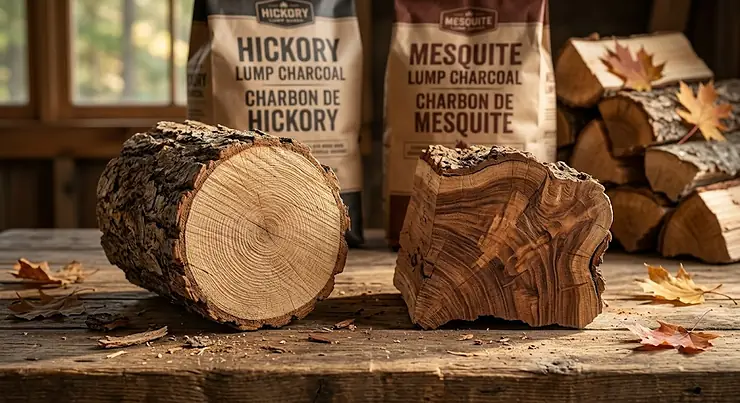
Somewhere on a patio in Alberta or a backyard in Ontario, someone is standing over a chimney starter arguing with a spouse about which bag of lump to dump into the smoker. It’s an old argument, and it deserves a real answer. hickory lump charcoal vs mesquite lump charcoal for ribs isn’t a trivia question — it’s the difference between a rack that tastes like a Texas roadhouse and one that tastes like a slightly smoky pork chop. Hickory lump charcoal brings a bacon-adjacent, sweetish smoke that most Canadians associate with “classic barbecue,” while mesquite swings harder — earthier, punchier, and unforgiving if you get greedy with it. Neither is wrong. But picking the wrong one for a six-hour rib cook can mean the difference between “can I get the recipe” and quietly scraping the sauce off before anyone notices.
Here’s the short version: hickory lump charcoal is a mid-strength hardwood charcoal that pairs naturally with pork ribs because it echoes the flavour of traditional wood-smoked barbecue without overwhelming the meat; mesquite lump charcoal burns hotter and faster and delivers a bolder, more assertive smoke that suits shorter cooks or people who genuinely love an aggressive flavour.
This guide walks through both options honestly — real specs, real aggregated review sentiment, and the kind of side-by-side reasoning you’d get from a friend who’s burned through more bags of lump than they’d like to admit. We’ll cover seven real products currently sold through amazon.ca and similar retailers, break down temperature behaviour, and get into the practical stuff — setup, maintenance, and the mistakes that quietly ruin a good rack of ribs. By the end, you’ll know exactly which bag to grab for your next cook, and why.
What Is Hickory Lump Charcoal vs Mesquite Lump Charcoal for Ribs?
Hickory lump charcoal and mesquite lump charcoal are both 100% natural hardwood charcoals made by carbonizing wood in a low-oxygen kiln, but they come from different trees with very different lignin profiles. Hickory produces a moderate, sweet-smoky flavour ideal for pork ribs; mesquite produces a stronger, more mineral-forward smoke that works best in smaller doses or shorter cooks.
Quick Comparison Table
| Charcoal Type | Flavour Intensity | Burn Temp | Best Rib Cook Length | Best For |
|---|---|---|---|---|
| Hickory Lump Charcoal | Medium-bold, sweet-smoky | Moderate-high | 4-6 hour low-and-slow racks | Traditionalists, first-time smokers |
| Mesquite Lump Charcoal | Bold, earthy, fast-hitting | High, fast-burning | 2-4 hour cooks or hot-and-fast ribs | Bold-flavour fans, quick weeknight racks |
| Oak/Quebracho Blend Lump | Mild-neutral | Very high, long burn | Any length, especially all-day cooks | Buyers who want to add wood chunks separately |
Look at that middle column for a second, because it’s doing more work than it seems. Hickory sits in a sweet spot — assertive enough to notice, restrained enough that you can leave the lid closed for six hours without regretting it. Mesquite’s higher burn temperature and faster-igniting lignin structure mean it delivers flavour quickly, which is exactly why competition cooks often use it for shorter, hotter cooks rather than a full overnight brisket-style session. The neutral oak-and-quebracho blends round out the picture nicely: they’re the “canvas” charcoals serious pitmasters buy specifically so they can layer in their own hickory or mesquite wood chunks on top, controlling flavour intensity independently from heat output.
💬 Just one click — help others make better buying decisions too! 😊
Top 7 Hickory & Mesquite Lump Charcoal Picks for Ribs: Expert Analysis
Seven real bags, spanning budget to premium, hickory-only to mesquite-only to the neutral blends serious rib smokers keep in the shed. Prices below are ranges only — always check current pricing at checkout, since bag costs shift with lumber markets and shipping.
1. B&B Charcoal Signature Hickory Lump Charcoal — screaming-hot sear with a bacon-forward smoke
B&B’s Signature line is one of the more widely stocked pure hickory lumps in North America, and that standout feature — a genuinely bacon-adjacent aroma — comes straight from hickory’s lignin chemistry. The bag runs in 8-pound and larger formats, burns hot enough for a proper sear, and carbonizes cleanly enough that ash buildup stays manageable through a multi-hour cook. In practice, that hot ceiling matters for ribs: it means you can run a hotter first hour to set the bark, then throttle the vents down for the low-and-slow stretch, without the fuel petering out halfway through.
Based on the spec comparison with competing hickory bags, B&B’s chunks trend medium-to-large, which matters more than people think — bigger chunks burn longer and more evenly than the gravel-sized bits some cheaper brands pack in. This is a strong pick for anyone smoking their first rack of ribs and wanting a flavour that reads as “classic barbecue” without much risk of overpowering the meat. Reviewers consistently report a noticeably sweeter smoke than mesquite alternatives, alongside praise for low ash output, though a recurring complaint in user reviews concerns bag-to-bag consistency — some batches include a higher share of smaller fragments than others.
Pros:
- ✅ Sweet, classic barbecue smoke that suits pork specifically
- ✅ Burns hot enough for searing plus low-and-slow stability
- ✅ Low ash output means less mid-cook maintenance
Cons:
- ❌ Occasional inconsistency in chunk size between bags
- ❌ Smaller bag sizes cost more per pound than bulk options
Expect to pay somewhere in the C$25-C$35 range for a standard bag, depending on size and retailer; for a starter hickory lump, it’s a solid, low-risk value pick.
2. Cowboy Southern Style Oak & Hickory Hardwood Lump Charcoal — budget blend with a longer shelf life at retail
Cowboy’s Southern Style bag blends oak with hickory rather than going pure hickory, and that combination is the standout feature worth expanding on: oak tempers hickory’s sweetness with a more neutral backbone, which softens the intensity for anyone nervous about over-smoking a delicate cut like baby back ribs. Kiln-dried southern hardwood keeps moisture content low, so the bag lights faster than damp, poorly stored competitors, and the higher carbon content pushes searing temperatures higher than typical briquettes.
What most buyers overlook about blended bags like this one is that the ratio of oak to hickory isn’t fixed lump to lump inside the same bag — some pieces will carry more hickory character than others, which actually works in your favour for ribs, giving a naturally layered smoke instead of one flat note throughout the cook. This is a genuinely practical pick for cost-conscious smokers who grill often and don’t want to babysit fuel choice for every session.
Aggregated review sentiment on this line is generally favourable regarding ease of lighting and ash cleanup, with a common complaint centred on bag weight variance — some customers report bags arriving lighter than the stated weight after shipping and handling.
Pros:
- ✅ Blended smoke profile is forgiving for smoking beginners
- ✅ Widely available at big-box retailers across Canada
- ✅ Fast, reliable ignition even in cooler weather
Cons:
- ❌ Less pronounced hickory character than pure hickory bags
- ❌ Reported bag-weight inconsistency in some shipments
Price typically sits in the C$20-C$30 range for an 18-pound bag, making it one of the better cost-per-cook options on this list.
3. Rockwood Premium Hardwood Lump Charcoal — Oak, Hickory & Cherry Blend — a three-wood blend built for kamado grills
Rockwood’s standout feature is right there in the name: a triple-hardwood blend of oak, hickory, and cherry that’s specifically formulated with kamado-style cookers like the Big Green Egg and Kamado Joe in mind, though it performs just as well in a kettle. That cherry component is worth expanding on — it adds a faint fruit-forward sweetness underneath the hickory smoke, softening what would otherwise be a fairly bold profile for anyone doing a gentle 5-hour rib cook.
Here’s what the spec sheet won’t tell you, but reviewers note repeatedly: Rockwood tends to burn cleaner and longer than many similarly priced blends, which matters enormously for ribs, since a fuel bed that needs constant refuelling makes consistent smoker temperature control nearly impossible. Responsibly sourced from Missouri hardwoods, it strikes a reasonable middle ground between budget bags and the ultra-premium restaurant-grade brands further down this list.
Reviewers consistently praise the minimal ash production and compatibility with ceramic cookers; a recurring critique in aggregated feedback is that the cherry note is subtle enough that some buyers expected a more noticeably fruity smoke than they actually got.
Pros:
- ✅ Three-wood blend adds subtle complexity to rib smoke
- ✅ Clean burn with low ash suits long ceramic-grill cooks
- ✅ Responsibly sourced hardwood with solid brand reputation
Cons:
- ❌ Cherry character is subtler than some buyers expect
- ❌ Premium positioning means a higher per-pound cost than basics
Expect a price in the mid-C$40s to low-C$50s for a two-bag, 20-pound-each package — a fair value if you’re running a kamado and want blend complexity without going full restaurant-grade pricing.
4. FOGO Super Premium Hardwood Lump Charcoal — oversized chunks for marathon low-and-slow sessions
FOGO’s calling card, and the reason competition cooks keep buying it, is chunk size — this bag is packed with genuinely large pieces of oak-based hardwood rather than the fragmented rubble found in cheaper bags. That standout feature translates directly into rib-smoking performance: bigger lumps mean a longer, steadier burn, which means fewer vent adjustments and fewer moments of temperature drift during a five-hour cook.
Based on the spec comparison with the rest of this list, FOGO runs relatively neutral in flavour on its own, which is precisely why many rib smokers treat it as the fuel base and add a few chunks of actual hickory or mesquite wood on top for flavour — separating heat management from smoke intensity entirely. This is a smart move for anyone who’s found pure hickory or mesquite lump too unpredictable in strength from bag to bag.
Aggregated customer sentiment frequently mentions the satisfying sound and spark of lighting genuine restaurant-quality charcoal, alongside consistent praise for burn length; a common complaint is the higher shelf price relative to bulk domestic brands.
Pros:
- ✅ Oversized chunks mean fewer refuels during long cooks
- ✅ Neutral base flavour pairs well with added wood chunks
- ✅ Restaurant-grade consistency reduces surprises bag to bag
Cons:
- ❌ Noticeably pricier than domestic hickory or mesquite bags
- ❌ Mild base flavour means you’ll want extra wood for smoke
Pricing tends to land around C$60-C$75 for a two-pack of 17.6-pound bags — a premium price that mostly buys consistency and burn time rather than raw flavour.
5. Jealous Devil Chunx XL Lump Charcoal — dense quebracho hardwood built for extreme burn times
Jealous Devil’s standout feature is its raw material: quebracho, a South American hardwood so dense it’s nicknamed “axe-breaker” in Spanish, and that density is what gives this lump its reputation among long-cook pitmasters. The extra-large “Chunx” format means fewer small fragments cluttering the bag, and the wood’s high fixed-carbon content pushes peak searing temperatures higher than most hickory or mesquite alternatives can reach.
What most buyers overlook about quebracho-based lump is that its flavour contribution is comparatively neutral — reviewers consistently note it as one of the least “smoky-tasting” lump charcoals available, which sounds like a downside until you realize that’s exactly why competition teams favour it as a base fuel, then layer hickory or mesquite chunks on top for a controlled flavour dose rather than an all-or-nothing blast. For a rib cook where you want rock-solid smoker temperature control over many hours, this density is a genuine asset.
Aggregated review sentiment is strongly positive on burn duration and size consistency, with a recurring critique that the lump ignites more slowly than lighter woods and can require a bit more patience — and occasionally more starter fuel — to get fully lit.
Pros:
- ✅ Exceptionally long, stable burn for all-day cooks
- ✅ Large, uniform chunk sizing rare in the lump category
- ✅ High peak heat for searing before the low-and-slow phase
Cons:
- ❌ Slower to light than softer, lower-density hardwoods
- ❌ Minimal inherent smoke flavour on its own
Bags typically run C$45-C$60 for 35 pounds, which — measured on a cost-per-cook-hour basis — is often cheaper than it first appears.
6. B&B Charcoal Lump Mesquite — full-strength mesquite smoke from a trusted domestic producer
This is B&B’s straight mesquite offering, and the standout feature is right there on the bag: pure mesquite wood, no blending, no dilution. Mesquite’s lignin structure carbonizes into a charcoal that lights fast, burns hot, and throws off a noticeably earthier, more mineral-driven smoke than hickory — reviewers frequently describe it as “louder” in flavour, and that’s a fair way to put it.
On paper, this means mesquite suits shorter rib cooks better than the standard 5-6 hour low-and-slow method — think a 2-3 hour hot-and-fast rack, or a scenario where you’re only running the smoker for the first hour or two of a longer cook before switching to a milder fuel. Based on the aggregated feedback pattern across mesquite users generally, over-smoking is the single most common complaint, and it’s almost always a dosing problem rather than a fault with the charcoal itself.
Reviewers consistently note the fast light-up time and strong sear capability; a recurring criticism is that the smoke can turn bitter if the meat sits in it too long, which lines up with what food-science sources say about mesquite’s higher concentration of pungent guaiacol-family compounds relative to milder woods.
Pros:
- ✅ Bold, unmistakable mesquite character in every cook
- ✅ Fast ignition and high sear temperatures
- ✅ Domestically produced with consistent sourcing
Cons:
- ❌ Easy to over-smoke on longer, low-and-slow racks
- ❌ Not ideal for smoking beginners still learning dosage
Expect roughly C$20-C$28 for a standard multi-bag mesquite pack — an accessible price for anyone wanting to experiment with bolder rib flavour without committing to a huge bag.
7. Lazzari Mesquite Lump Charcoal, Restaurant Grade — bulk-format mesquite favoured by chefs
Lazzari has been producing mesquite charcoal since the early 1900s, and its standout feature here is scale: a 40-pound restaurant-grade bag screened to remove excess fine debris, aimed at people who smoke often enough that a small bag just doesn’t cut it. That size sorting matters more than it sounds — fewer fine particles means more predictable airflow through the charcoal bed, which directly supports steadier smoker temperature control across a long rib cook.
Here’s what the spec sheet won’t tell you, but longtime users note: Lazzari’s mesquite tends to spark more dramatically when first lit than hickory or oak blends, simply due to mesquite’s higher resin content, though that settles down once the coals reach cooking temperature. For a household or small operation doing ribs regularly — every weekend through the summer, say — the bulk format brings the effective cost per cook down noticeably compared to buying smaller bags repeatedly.
Aggregated sentiment across long-time mesquite users is generally positive on size consistency and heat output for this brand specifically; a common critique across mesquite charcoal broadly (not unique to Lazzari) is that first-timers sometimes find the smoke more assertive than expected on their first rack.
Pros:
- ✅ Bulk 40-pound format lowers cost per cook over time
- ✅ Screened sizing improves airflow and burn consistency
- ✅ Long manufacturing pedigree with restaurant-industry trust
Cons:
- ❌ Noticeable sparking during initial lighting
- ❌ Large bag size demands proper dry storage space
Pricing generally falls in the C$45-C$55 range for the 40-pound bag — among the better per-pound values on this entire list for anyone committed to the mesquite camp.
Hickory Lump Charcoal vs Mesquite Lump Charcoal for Ribs: The Real Difference
Specs on a bag only tell part of the story, so let’s talk about what actually happens on the grate. Hickory’s lignin breaks down during pyrolysis into a moderate concentration of guaiacol-family phenols — the compounds responsible for that classic, faintly sweet “barbecue joint” smell. Mesquite carbonizes with a different phenolic balance, leaning harder into the pungent end of that same chemical family, which is exactly why it reads as sharper and more assertive on the tongue even at a similar dose.
For ribs specifically, cook time changes the calculation. A traditional low-and-slow rack spends four to six hours absorbing smoke, and hickory’s gentler profile is built to survive that long exposure without turning bitter. Mesquite, dosed at the same rate over the same six hours, will often push past “smoky” into “acrid” territory — which is precisely the over-smoking complaint that shows up again and again in aggregated mesquite reviews. That’s not really a flaw in the charcoal; it’s a mismatch between the fuel and the cook length.
What most buyers overlook is that burn temperature compounds the flavour difference. Mesquite tends to burn hotter and faster than hickory, meaning more smoke compounds get produced and deposited on the meat in a shorter window — a double dose of intensity rather than a single one. If you genuinely love mesquite’s flavour but you’re smoking a full rack low and slow, the practical fix is proportion: use mesquite for the first hour or two to build a flavour base, then transition to a milder blend or straight hickory for the rest of the cook.
Wood Flavor Intensity: Why Mesquite Hits Harder Than Hickory
Wood flavor intensity comes down almost entirely to lignin chemistry, and this is where the science gets genuinely interesting rather than just anecdotal. According to research summarized by the Nordic Food Lab, pyrolysis breaks lignin’s interlocked phenolic rings apart into smaller volatile phenols, and the specific mix of those phenols — not simply how much lignin the wood contains — is what determines how “loud” a wood tastes. Hickory’s structural ratio produces a smoother, rounder phenol mix; mesquite’s produces a sharper one, and that’s the entire flavour-intensity gap in a nutshell.
Reviewers consistently frame mesquite’s smoke as more forward and lingering compared to hickory’s, and there’s real chemistry behind that impression rather than just personal taste. The same pyrolysis process that generates flavour compounds also generates related aromatic byproducts more broadly present in wood-derived condensates like liquid smoke, which is why some of the same phenolic families show up whether you’re talking about lump charcoal, wood chips, or bottled smoke flavouring — the intensity dial is set by wood species first, and everything else second.
Here’s what most buyers overlook about intensity: you can’t fully offset it with charcoal quantity alone. Using less mesquite doesn’t make the remaining smoke taste like hickory — it just makes a smaller dose of the same sharper flavour. If your household genuinely prefers a milder profile, switching wood species (or blending in a neutral lump like Jealous Devil or FOGO underneath a small amount of mesquite) works far better than simply using less fuel.
✨ Don’t Miss These Exclusive Deals!
🔍 Whether you land on team hickory or team mesquite, these picks are worth checking current pricing on before your next cookout. Click through on any highlighted product to see availability and grab the bag that matches your rib-smoking style.
Hickory Lump Charcoal for Smokers: Low-and-Slow Performance
Hickory lump charcoal for smokers behaves differently than it does on a quick weeknight grill session, and that distinction matters if you’re using a dedicated offset or vertical smoker rather than a kettle. Over a long cook, hickory’s moderate phenol output means the smoke ring — that pink band just under the surface of the meat — develops gradually and evenly rather than in one aggressive early burst, which is part of why hickory has become the default choice at so many pork-focused barbecue joints across North America.
Based on the spec comparison between pure hickory bags and blended alternatives, dedicated smokers benefit most from a hickory lump with larger, denser chunks (like B&B Signature or a Rockwood-style blend) rather than a rapid-burning budget bag, simply because smokers are designed around sustained, low temperatures — typically 107-135°C (225-275°F) — and a fuel bed that burns unevenly makes that range genuinely hard to hold.
What the spec sheet won’t tell you, but experienced smoker owners note, is that hickory’s ash production tends to be gentler on airflow than some other hardwoods, meaning vent adjustments stay minor and infrequent across a six-hour rib session — a real practical advantage when you’re trying to actually enjoy your afternoon instead of hovering over a thermometer.
How to Choose Hickory or Mesquite Lump Charcoal for Ribs
- Match the charcoal to your cook length. Longer, low-and-slow racks favour hickory or a neutral blend; shorter, hot-and-fast cooks handle mesquite’s intensity better.
- Check chunk size before flavour. Bigger, denser lumps burn longer and more evenly, which matters more for temperature stability than the wood species itself.
- Consider your household’s flavour tolerance. If anyone at the table finds smoke overwhelming, hickory (or a hickory-cherry-oak blend) is the safer default.
- Think about your grill type. Kamado-style cookers benefit from denser, slower-burning lumps; open kettles can handle faster-burning bags without waste.
- Factor in how often you cook. Frequent smokers benefit from bulk formats like Lazzari’s 40-pound bag, where the cost per cook drops meaningfully.
- Decide whether you want charcoal alone or charcoal plus wood chunks. Neutral lumps like FOGO or Jealous Devil let you dial in exact hickory or mesquite dosage separately from heat.
- Buy based on current price per pound, not sticker price. Larger bags often beat smaller ones on a per-cook basis even when the upfront cost looks higher.
Common Mistakes When Buying Lump Charcoal for Ribs
The single most common mistake is buying mesquite for a first attempt at low-and-slow ribs, then wondering why the bark tastes bitter by hour five — it’s simply too much of a strong flavour compound for that exposure window. A close second is judging a bag by weight alone rather than chunk size; two 20-pound bags can behave completely differently on the grate if one is packed with fine rubble and the other with substantial, even pieces.
Buyers also frequently overlook storage. Lump charcoal absorbs ambient moisture readily, and a bag left in a damp garage over a Canadian winter will light more slowly and burn less predictably than fresh stock — not because the product failed, but because the storage did. Finally, plenty of first-time smokers assume “premium” automatically means “better for ribs specifically,” when in reality some of the priciest bags (like the neutral quebracho and oak blends) are deliberately low on flavour, intended to be paired with separate wood chunks rather than used as the sole smoke source.
Smoker Temperature Control With Lump Charcoal
Smoker temperature control comes down to airflow, fuel bed density, and chunk size working together — and lump charcoal gives you more direct control over all three than briquettes do, provided you understand how to use it. Start with a full but not overpacked charcoal chamber; a snake or fuse method, where unlit lump is arranged in a loose line with a handful of lit coals at one end, extends burn time dramatically and keeps temperature swings gentler across a five-hour rib cook.
Vent management matters just as much as fuel choice. Opening the bottom intake vent raises oxygen flow and temperature; closing it down slows combustion and stretches burn time — small half-inch adjustments are usually enough, and overcorrecting is the most common beginner error. Denser lumps like Jealous Devil or a well-carbonized hickory hold steadier heat with fewer adjustments needed, while faster-burning mesquite or fragmented budget bags demand more frequent attention.
A common mistake in the first 30 days of smoker ownership is chasing temperature swings too aggressively — closing vents hard the moment the thermometer ticks up, then reopening them fully when it dips, which creates a rollercoaster instead of a flat line. Small, patient adjustments and a thermometer check every 20-30 minutes will get you to a stable 107-121°C (225-250°F) far more reliably than constant fiddling.
Real-World Rib Smoking Scenarios: Which Charcoal Fits Your Cook
The Saturday-afternoon traditionalist: Planning a full 5-hour low-and-slow rack for a family dinner, using a kettle grill, feeding six people, budget around C$30 per cook. This profile fits hickory lump charcoal almost perfectly — B&B Signature Hickory or the Cowboy Oak & Hickory blend delivers that classic, restrained smoke that survives the full cook length without turning bitter, and the moderate price keeps weekly cookouts affordable.
The weeknight mesquite enthusiast: Short on time, wants bold flavour fast, running a 2.5-hour hot-and-fast rib method on a kamado grill after work, feeding two to three people. B&B Lump Mesquite or Lazzari Mesquite suits this scenario well — the shorter exposure window means mesquite’s intensity reads as “punchy and delicious” rather than “overdone,” and the fast ignition matches a tighter weeknight schedule.
The competition-minded weekend cook: Running back-to-back rib and brisket sessions most weekends through summer, feeding a crowd, wants precise control over flavour separate from heat, willing to spend more upfront for consistency. FOGO Super Premium or Jealous Devil Chunx, layered with separate hickory or mesquite wood chunks for flavour, gives this cook independent control over burn time and smoke intensity — exactly the setup serious pitmasters gravitate toward.
Common Rib-Smoking Problems and Charcoal Fixes
Problem: Bark tastes bitter by the end of the cook. This is almost always an over-smoking issue tied to using a strong wood (usually mesquite) for too long. Fix: switch to hickory for cooks over four hours, or use mesquite only for the first hour before transitioning to a milder fuel.
Problem: Temperature keeps spiking and crashing. Usually caused by overcorrecting vent adjustments or using fragmented, inconsistent lump. Fix: switch to a denser, larger-chunk bag like Jealous Devil or Rockwood, and make smaller vent adjustments spaced further apart.
Problem: Charcoal burns out before the ribs are done. Typically a fuel-bed or chunk-size issue rather than a wood-species issue. Fix: use the snake/fuse method with a denser lump, and consider a bulk bag like Lazzari’s 40-pound format to ensure enough fuel volume for a full cook.
Problem: Smoke flavour is barely noticeable. Common with heavily carbonized, high-carbon lumps like quebracho or well-processed oak blends used alone. Fix: add a few chunks of actual hickory or mesquite wood on top of a neutral base lump to control smoke intensity independently.
Problem: Ribs taste inconsistent between cooks. Often traced back to buying different brands or blends each time. Fix: settle on one hickory and one mesquite brand you trust, and keep notes on how much wood or lump ratio produced your favourite result.
Long-Term Cost & Value: Hickory vs Mesquite for Regular Rib Smokers
| Brand | Approx. Bag Size | Price Range (CAD) | Approx. Cost per Cook* |
|---|---|---|---|
| B&B Hickory Lump | 8-20 lb | C$25-C$35 | C$8-C$12 |
| Cowboy Oak & Hickory | 18 lb | C$20-C$30 | C$6-C$9 |
| Lazzari Mesquite | 40 lb | C$45-C$55 | C$5-C$7 |
| Jealous Devil Chunx | 35 lb | C$45-C$60 | C$6-C$8 |
*Estimated for a typical single low-and-slow rib session; actual usage varies by grill efficiency and weather.
Looking at the table above, bulk bags like Lazzari and Jealous Devil actually undercut smaller premium bags on a per-cook basis, even though their sticker price looks higher at checkout. For anyone smoking ribs most weekends through the summer, that math adds up fast — the difference between C$12 and C$6 per cook is real money across a season. Occasional cooks, on the other hand, are usually better served by smaller bags like B&B or Cowboy, since bulk charcoal left half-used in damp storage loses quality before it gets used up.
Safety, Regulations & Sourcing in Canada
Charcoal grilling comes with genuine safety considerations that go beyond flavour choice. Health Canada’s food safety guidance for barbecuing emphasizes proper internal cooking temperatures and safe meat handling before the smoke ever hits the grate — colour alone isn’t a reliable doneness indicator for ribs, so a meat thermometer matters more than a visual check regardless of which charcoal you’re using.
Fire safety is equally important, particularly for anyone smoking in a shared backyard or condo courtyard. Government guidance on BBQ fire safety recommends keeping grills at least 3 metres from structures, never leaving a lit smoker unattended, and ensuring full cooling before storage or covering — advice that applies just as much to a charcoal smoker as to a propane grill.
On the health side, it’s worth being honest: any high-heat, smoke-exposed cooking method, charcoal included, produces polycyclic aromatic hydrocarbons (PAHs) when fat drips onto hot coals. Trimming excess fat, avoiding flare-ups, and not letting ribs char excessively are simple, evidence-based ways to reduce that exposure without giving up charcoal smoking altogether. None of this means charcoal grilling is uniquely risky — it just means the same common-sense habits that apply to any live-fire cooking apply here too.
Frequently Asked Questions
❓ Is hickory or mesquite better for ribs?
❓ Can you mix hickory and mesquite lump charcoal?
❓ How long does a bag of lump charcoal last for smoking ribs?
❓ Does mesquite lump charcoal burn hotter than hickory?
❓ What's the best charcoal for smoking ribs on a budget?
Conclusion
At the end of the day, hickory lump charcoal vs mesquite lump charcoal for ribs isn’t really a competition — it’s a matching exercise. Hickory earns its reputation as the safer, more forgiving default for classic low-and-slow racks, especially for anyone still dialing in their technique. Mesquite rewards confidence and shorter cook windows with a bolder, more memorable smoke that some backyard cooks will never go back from once they’ve tried it properly dosed.
Whichever camp you land in, the seven real products covered here — from budget-friendly Cowboy blends to restaurant-grade Lazzari mesquite and dense Jealous Devil quebracho — give you legitimate options at every price point and cooking style. Pay attention to cook length, chunk size, and your household’s flavour tolerance more than brand hype, and the right bag becomes obvious fairly quickly.
Ribs are forgiving, patient food. Give them the right fuel, a steady temperature, and a bit of restraint with the smoke, and pretty much any of these seven charcoals will get you to a rack worth bragging about.
✨ Ready to fire up your next rack? Check current availability on today’s pick and get that smoker going this weekend!
Recommended for You
- Maple Lump Charcoal vs Mesquite Lump Charcoal: 7 Best Picks for 2026
- Hardwood Lump Charcoal Under $50 CAD: 7 Best Picks for 2026
- Lump Charcoal vs Charcoal Briquettes: 7 Ultimate Picks (2026)
Disclaimer: This article contains affiliate links. As an Amazon Associate, I earn from qualifying purchases. If you purchase products through these links, we may earn a small commission at no additional cost to you.
✨ Found this helpful? Share it with your friends! 💬🤗
