In This Article
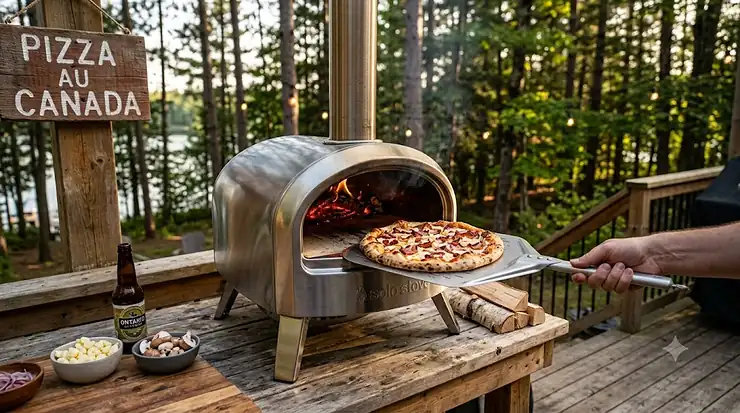
A backyard pizza oven is one of those purchases that looks simple on the spec sheet and gets complicated fast once you start comparing models. The Solo Stove Pi pizza oven is a 304 stainless-steel, demi-dome oven that can run on wood, propane, or both, and it has become one of the more talked-about options for Canadians who want restaurant-style pizza without building a brick oven. It heats a cordierite stone to the 800°F+ range in roughly 15 minutes and turns out a 12-inch pie in under two minutes once it’s there.

That said, “the Pi” is really a family of products now — the original dual-fuel Pi, the gas-only Pi Prime, and a growing shelf of accessories that Solo Stove calls its outdoor cooking ecosystem. The whole backyard pizza oven category is chasing a version of the same benchmark: the Neapolitan-style pie that made wood-fired ovens famous in the first place, a tradition with roots that trace back to Naples’ street-food culture long before any stainless-steel home version existed. The Pi also has serious competition from Ooni, Gozney, Ninja, and Cuisinart, all of which sell into Canada through Amazon.ca and other retailers. This guide breaks down where the Pi fits, what it costs in CAD, how it stacks up against six real alternatives, and the Canada-specific details — propane regulations, cold-weather storage, shipping realities — that most product pages skip entirely.
Quick Comparison: Solo Stove Pi at a Glance
| Oven | Fuel | Heats To | Best For | Price Range (CAD)* |
|---|---|---|---|---|
| Solo Stove Pi (dual fuel) | Wood + optional propane | ~950°F | Buyers who want flexibility and don’t mind paying for it | $750–$1,050 |
| Solo Stove Pi Prime | Propane only | ~900°F | First-time buyers, simplicity, smaller budgets | $480–$620 |
| Ooni Karu 12 | Wood, charcoal, or gas (attachment) | ~950°F | People who want wood flavour without committing fully | $560–$700 |
| Gozney Roccbox | Propane or wood (swappable burner) | ~950°F | Buyers who want the fastest, most consistent results | $650–$800 |
*Approximate ranges based on research at the time of writing; always confirm current pricing on Amazon.ca, as it shifts often with promotions and exchange rates.
Looking at this table, the gap between the Pi Prime and the full dual-fuel Pi is really a gap in flexibility, not quality — both use the same demi-dome shape and the same stainless construction. Where the Roccbox and Karu 12 pull ahead is portability and, in the Roccbox’s case, raw consistency from one cook to the next. None of these four is a “bad” buy; the right one depends on whether you value wood flavour, simplicity, or pure speed more.
💬 Just one click — help others make better buying decisions too! 😊
✨ Don’t Miss These Exclusive Deals!
🔍 Take backyard pizza nights to the next level — check current pricing and availability on Amazon.ca for any oven below before you commit. Stock and bundle pricing change often.
Top 7 Pizza Ovens for Canadian Backyards: Expert Analysis
1. Solo Stove Pi (Dual Fuel)
Solo Stove Pi is the flagship that started the whole lineup, and it’s the one most people mean when they search for “solo stove pi pizza oven.” It ships as a wood-burning oven with the option to add a propane gas burner separately, which is the detail that matters most in practice: the wood-only version is genuinely meant for people who want to manage a small fire, not just flip a dial.
What most Canadian buyers overlook here is the dome shape itself. The demi-dome design holds heat more evenly across the stone than a flat-roofed oven, which means the edges of a 12-inch pizza cook closer to the same rate as the centre — useful if you’re feeding a group and don’t want the first three pies to come out unevenly charred while you’re still figuring out the heat. The trade-off is weight and price: at roughly 30 lbs and a CAD price that lands well above the gas-only Prime once you add the burner, this is the “buy once” option rather than the entry point.
✅ Pros: even heat retention; genuine wood-fired flavour; lifetime warranty backing the brand
✅ Pros: wide panoramic opening makes turning pizzas easier than tighter-mouthed competitors
✅ Pros: doubles as a steak and vegetable cooker once you’re past pizza
❌ Cons: gas burner is a separate purchase, pushing the real cost higher than the headline price
❌ Cons: at over 30 lbs it’s the heaviest oven on this list, so portability is limited
Best for: A Canadian backyard chef who already has a permanent spot for the oven and wants wood-fired results most weekends, not just for the novelty of one summer.
2. Solo Stove Pi Prime
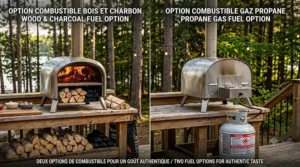
The Pi Prime is Solo Stove’s answer to “I just want pizza without learning to manage a fire.” It dropped the wood-burning assembly entirely and built a single propane burner into the base, which simplified both the setup and the price. Reviewers who’ve run it side by side with the original Pi consistently note it preheats just as fast — about 15 minutes to the 750–900°F range — and the front-mounted dial is easier to reach than the original’s rear control.
In real-world terms, what this means for a Canadian buyer is fewer moving parts to maintain in a climate with real winters: no ash pan to empty, no wood to source and dry, and one less mechanism that can corrode from road salt or humidity if it lives outdoors. The honest trade-off is flavour — propane simply doesn’t deliver the same smokiness as wood, even though several independent taste tests found guests couldn’t always tell the difference once toppings were on.
✅ Pros: lowest barrier to entry in the Solo Stove ecosystem; arrives nearly fully assembled
✅ Pros: compact compared to the original Pi, easier to store over winter
✅ Pros: same demi-dome heat retention as the flagship model
❌ Cons: propane-only — no wood option if you want that flavour later
❌ Cons: still needs a propane tank and regulator, which is an added cost most listings don’t mention
Best for: Condo owners with a shared patio, renters, or anyone who wants Solo Stove’s design without the wood-fire learning curve.
3. Ooni Karu 12
The Ooni Karu 12 is the most direct rival to the Pi, and it’s worth understanding why so many comparisons land here first. Like the Pi, it ships wood/charcoal-only with a gas burner sold separately, but Ooni prices that gas attachment lower than Solo Stove does — a real difference if dual fuel matters to you. At roughly 26.5 lbs, it’s a touch lighter than the Pi as well.
What this means for Canadian buyers specifically is a lower total cost to get to “dual fuel” status than the equivalent Solo Stove setup, which matters if you’re trying to keep both wood and propane options on the table without paying flagship-plus-accessory prices twice. The fuel hatch on the Karu also loads from the back rather than requiring you to pull the whole rear panel like the Pi does, which several reviewers flagged as both easier and a bit safer to manage once the fire’s going.
✅ Pros: cheaper path to dual-fuel than the Solo Stove equivalent
✅ Pros: rear fuel hatch makes mid-cook refuelling simpler
✅ Pros: backed by Ooni’s large accessory and recipe ecosystem
❌ Cons: tighter opening than the Pi’s panoramic mouth, so turning large pizzas takes more practice
❌ Cons: some testers found heat distribution slightly less even toward the back of the stone
Best for: Buyers who’ve decided dual fuel is non-negotiable and want it without paying Solo Stove’s accessory premium.
4. Ooni Koda 16
The Ooni Koda 16 drops wood entirely and goes all-in on propane (with natural gas as an option), but it does so at a larger 16-inch cooking surface — big enough for full-size pizzas rather than the 12-inch personal pies most portable ovens are built around. It reaches the 950°F range and uses an L-shaped burner that several side-by-side tests rated as more even than a single rear-mounted flame.
For a Canadian family of four or more, the practical difference is fewer pizzas to make per gathering, since one 16-inch pie covers more plates than two 12-inch ones. The trade-off is footprint: this is not a campsite oven. It’s a patio fixture, and at around 40 lbs with folding legs, it’s meant to live in one spot through the season rather than travel.
✅ Pros: largest cooking surface on this list, ideal for entertaining
✅ Pros: gas-only simplicity with no wood-fire learning curve
✅ Pros: even L-burner heat distribution praised across multiple independent tests
❌ Cons: no wood option at all, even as an add-on
Cons: bulkier to store than the 12-inch competitors once the season ends
Best for: Larger households or anyone who regularly hosts and would rather make two large pizzas than four small ones.
5. Gozney Roccbox
The Gozney Roccbox is the premium pick on this list, and the price reflects it. It ships with a pizza peel included — unusual at this end of the market — and the burner swaps between gas and wood with a simple twist rather than a tool-based teardown. Independent testers consistently rate it as the most portable of the group, thanks to a built-in lifting strap and retractable legs.
What stands out for Canadian buyers is consistency: in head-to-head tests against the Karu 12, the Roccbox came out faster and more even cook after cook, which matters if you’re hosting and can’t afford a string of inconsistent pies while you dial in technique. The trade-off is straightforward — you’re paying roughly 15–20% more than the Karu 12 for that consistency and the included accessories.
✅ Pros: tool-free burner swap between gas and wood
✅ Pros: most portable design tested, with a real carry strap
✅ Pros: includes a pizza peel most competitors sell separately
❌ Cons: among the most expensive options on this list
❌ Cons: cool-touch exterior claims aside, the body still runs very hot near the opening
Best for: Buyers who travel with their oven — cottage, campsite, tailgate — and don’t want to compromise on cook quality to get there.
6. Ninja Woodfire Outdoor Oven (8-in-1)
The Ninja Woodfire Outdoor Oven takes a different approach entirely: it’s electric, with a pellet-fed smoke flavour system, and it does eight functions beyond pizza, including roasting, smoking, and dehydrating. For a Canadian buyer who wants one appliance that earns its space on a deck for more than just pizza nights, that versatility is the entire pitch.
In practice, what this means is a genuinely different ownership experience — no propane tank to manage, no wood to source, just an outlet. The trade-off is ceiling: its 700°F max temperature (on the related Ninja Artisan model) and electric heating element can’t match the 900–950°F a dedicated wood or gas oven hits, so a true Neapolitan-style charred crust isn’t really on the table.
✅ Pros: most functions of any product on this list — pizza, bake, broil, smoke, and more
✅ Pros: simplest start-up of the group; select a setting and walk away
✅ Pros: no propane tank or wood storage required
❌ Cons: lower max temperature than wood or gas competitors
❌ Cons: needs an outdoor electrical outlet, which not every patio has
Best for: Buyers who want a multi-purpose outdoor appliance more than a dedicated pizza specialist.
7. Cuisinart 3-in-1 Pizza Oven Plus
The Cuisinart 3-in-1 Pizza Oven Plus rounds out the list as the budget-conscious alternative from a brand most Canadian kitchens already trust. It runs on propane, handles pizza alongside basic grilling and baking functions, and is consistently the lowest-priced option among the major brands tested this year.
For a first-time buyer who isn’t sure pizza ovens will become a regular habit, this is the lower-risk way to find out. The honest trade-off is performance ceiling — it doesn’t reach the same temperatures or even-heat results as the Roccbox or Koda 16, so the crust will read as good home pizza rather than pizzeria pizza. That’s a fair compromise at the price.
✅ Pros: lowest typical price point among recognized brands
✅ Pros: multi-function design adds grilling and baking, not just pizza
✅ Pros: familiar, trusted Canadian retail brand
❌ Cons: lower max heat limits true Neapolitan-style results
❌ Cons: less even cooking than the premium options on this list
Best for: First-time buyers testing whether pizza ovens fit their lifestyle before investing in a premium model.
Solo Stove Pi vs. Ooni: Which Wins for Canadian Backyards?
This is the comparison most shoppers actually search for, and the honest answer is “it depends on what you’re optimizing for.” On raw heat and preheat time, the two brands are close enough that blind taste tests often can’t tell the cooked pizza apart. Where they actually diverge is cost-to-flexibility and ease of access to fuel options.
Ooni’s gas burner attachment for the Karu line is priced noticeably lower than Solo Stove’s equivalent add-on, which means reaching “dual fuel” status costs less with Ooni overall — a real consideration when you’re converting US-listed prices to CAD and absorbing whatever exchange-rate premium applies that month. Solo Stove counters with a wider panoramic opening that several reviewers found easier for beginners to manage when launching and turning pizzas, plus a more extensive accessory ecosystem (carts, covers, cast-iron inserts) built around one shape rather than a multi-model lineup.
If you’re brand-loyal to neither, the practical rule of thumb holds up: pick Solo Stove Pi if a wide opening and an integrated accessory ecosystem matter more to you, and pick Ooni’s Karu or Koda line if you want the cheaper road to multi-fuel flexibility or a larger 16-inch cooking surface.
The Solo Stove Ecosystem: Building a Modular Cooking System
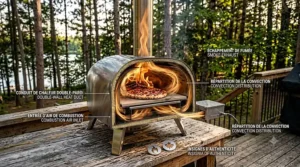
One thing that separates the Pi from a lot of competitors is that Solo Stove designed it to sit inside a broader, modular cooking system rather than as a standalone box. The “Station” storage unit is sized specifically to hold the Pi alongside Solo Stove’s fire pits, and the “Shelter” cover is cut to the oven’s exact demi-dome profile rather than being a generic tarp.
This matters practically for Canadian owners because it turns a single-purpose appliance into the centre of an outdoor kitchen that can expand over a few seasons — add the cart this year, the cast-iron insert next year — instead of needing a full redesign of your patio setup every time you want a new function. It’s a slower, more deliberate way to build an outdoor cooking station than buying one big all-in-one unit, but it spreads the cost out and lets you skip pieces you don’t need.
Solo Stove Pi Accessories Worth Buying (and the Best Pi Bundle)
Specs aside, the accessories are where the Pi either becomes genuinely useful or sits half-used in a shed. A few are close to mandatory, and a few are nice-to-haves you can skip.
Worth buying immediately:
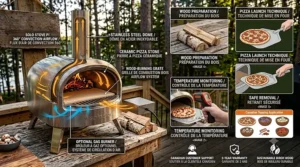
- A stainless steel peel — non-negotiable for safely launching and rotating a 12-inch pizza without burning your forearm on the opening.
- The cast iron skillet and griddle insert — this is the accessory behind the “cast iron pizza insert” searches, and it’s what turns the Pi from a pizza-only device into something that can sear a steak or cook vegetables using the same heat source.
- The weather-resistant Shelter cover — genuinely important in Canada, where rain, snow, and humidity will pit stainless steel faster than most owners expect if it’s left exposed.
Worth waiting on:
- The Station storage cabinet — useful if you already own Solo Stove fire pits and want one footprint for everything, but skippable if the oven is your only Solo Stove product.
- The apron and silicone mat — pleasant, but not the items that make or break your first season.
For the best Solo Stove Pi bundle, the Starter-style bundles that pair the oven with a peel and an IR thermometer tend to offer the best value relative to buying each piece separately — you’re paying a small premium over the oven alone, but less than buying the accessories individually after the fact.
Practical Usage Guide: Getting the Most from Your Pi in Canada
Most of what determines whether a Pi pizza oven earns its keep happens in the first month of ownership, and a few habits make a real difference here in a country with genuine winters.
Before the first cook: Season the cordierite stone with a couple of low-heat runs before pushing it to full temperature — going straight to 900°F on a brand-new stone increases the risk of thermal cracking, especially the first time you fire it up in cooler spring or fall weather.
Through the season: Let the stone cool fully before scraping off flour or cheese residue; cleaning a hot stone with a wet brush is the single most common way owners crack one. If you’re running the dual-fuel version, keep the ash pan emptied between sessions — a packed pan restricts airflow and makes temperature control noticeably harder.
Going into winter: Bring the oven indoors or under fully enclosed cover if you can; Canadian freeze-thaw cycles are harder on cordierite stone and stainless seams than steady cold ever is. If storage space is limited, at minimum disconnect and store the propane regulator separately and somewhere dry — moisture sitting in a connector over a Prairie or Maritime winter is a common cause of slow leaks the following spring.
Real Canadian Backyards: Three User Profiles, Three Picks
The Toronto condo dweller with a shared rooftop patio: Limited storage, limited setup time, and likely no permission for an open wood fire. The Pi Prime or a Cuisinart 3-in-1 makes the most sense — propane-only, compact, and quick to pack away after use.
The Calgary family hosting most weekends through summer: Bigger appetite for both pizza and flexibility. The Ooni Koda 16 or the full Solo Stove Pi with the gas burner fits best — larger cook surface or genuine dual fuel for whichever flavour the crowd wants that week.
The rural Manitoba or Maritime cottage owner: Less concerned with portability between trips, more concerned with durability against weather and infrequent service access. The Gozney Roccbox or Solo Stove Pi dual-fuel model, paired with the weather-resistant cover, holds up best when the unit lives outdoors for stretches without daily attention.
How to Choose a Pizza Oven in Canada
- Decide on fuel first, not last. Wood gives flavour but demands attention; propane gives convenience but costs more per session over time once you factor in tank refills.
- Match the size to your actual gathering size, not an aspirational one — a 16-inch oven is wasted if you’re usually cooking for two.
- Budget for accessories up front. A peel, a thermometer, and a cover aren’t optional extras; treat them as part of the real purchase price in CAD.
- Weigh portability honestly. If the oven is staying in one spot all season, weight matters less than build quality. If it’s coming to the cottage, weight and a carry strap matter a lot.
- Check Amazon.ca availability and shipping timelines before falling in love with a specific bundle — some configurations sell out regionally faster than others, particularly around long weekends.
- Factor in winter storage space, since Canadian conditions are harder on outdoor cooking gear than a year-round mild climate would be.
- Read the warranty terms for Canada specifically — some cross-border purchases complicate warranty service if something needs replacing.
What to Expect: Real-World Performance in Canadian Conditions
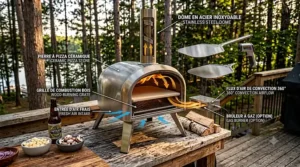
Spec sheets list preheat times and max temperatures, but they don’t tell you that a cold start in a January thaw or a damp Vancouver spring evening will add several minutes to every preheat compared to a warm July night, simply because the steel body and stone are absorbing more ambient cold before they can climb. None of the ovens on this list are unusable in cooler weather, but expect 15-minute preheats to occasionally stretch to 20–22 minutes outside of summer.
Wind is the other underrated factor. Propane burners, in particular, can struggle to hold a steady flame in open, exposed backyards common on the Prairies — a simple windbreak or positioning the oven against a wall solves most of this. Wood-fired models are somewhat more forgiving here since the fire itself generates more turbulent heat regardless of wind.
Common Mistakes When Buying a Pizza Oven in Canada
- Ignoring cold-weather preheat times and assuming the advertised 15 minutes holds year-round — it doesn’t, especially shoulder-season evenings.
- Skipping the propane regulator and hose in the budget, assuming it’s bundled when many listings sell the oven body alone.
- Underestimating shipping costs to remote and northern regions, where heavier dual-fuel ovens can carry meaningfully higher freight charges than the advertised “free shipping” threshold implies.
- Buying from a US listing without checking Amazon.ca first, which can mean warranty headaches and customs surprises that a Canadian listing avoids entirely.
- Not budgeting for a cover, then discovering after one Canadian winter that the stainless steel has pitted from road salt drift or sustained damp.
Long-Term Cost & Maintenance in Canada
The oven’s sticker price in CAD is only part of the real cost. Propane models will run through roughly one 20 lb tank every several cookout sessions depending on how often you fire up and how long you preheat, which adds a recurring cost most listings never mention. Wood-fired models need a steady, dry supply of correctly sized kiln-dried wood — buying pre-cut bundles is more convenient than splitting your own but adds up faster than backyard scrap wood would.
Maintenance is comparatively cheap: a wire brush, the occasional stone replacement (cordierite stones can crack over years of thermal cycling, even with careful use), and a propane line inspection every season or two if you’re using the dual-fuel setup. Factor in the cover and a basic toolkit, and most owners land somewhere in the low hundreds of CAD per year in consumables and upkeep — modest compared to the upfront cost of the oven itself.
Canadian Regulations & Propane Safety Standards
Outdoor propane cooking appliances sold in Canada are expected to meet the CSA/ANSI standard for outdoor cooking gas appliances (ANSI Z21.58 • CSA 1.6), a framework Canadian and American testing bodies jointly maintain that covers everything from burner performance to clearance requirements. On the handling side, Transport Canada publishes guidance specifically aimed at people transporting and storing standard barbecue-style propane cylinders, which applies directly to anyone moving a dual-fuel pizza oven’s tank between a cottage and home.
Provincially, Ontario’s Technical Standards and Safety Authority maintains detailed clearance and storage rules for propane cylinders that, while aimed primarily at commercial exchange points, reflect the same basic safe-distance principles homeowners should follow — keeping cylinders upright, ventilated, and a safe distance from ignition sources. It’s also worth knowing that retail packaging for many consumer products sold in Canada is required to carry bilingual English/French labelling, so don’t be surprised to see French alongside English on the box even for an oven manufactured in the United States.
Frequently Asked Questions
❓ Can I use a Solo Stove Pi pizza oven outdoors in a Canadian winter?
❓ Does the Solo Stove Pi ship to Canada through Amazon.ca?
❓ Is the Solo Stove Pi or Pi Prime better for beginners?
❓ How much does it cost to run a propane pizza oven regularly in Canada?
❓ Do Solo Stove Pi accessories fit other pizza oven brands?
Conclusion
The Solo Stove Pi earns its reputation honestly: the demi-dome shape genuinely cooks more evenly than several competitors, the panoramic opening makes it easier to use for first-timers, and the accessory ecosystem gives it room to grow into a real outdoor kitchen over a few seasons. It isn’t the cheapest path to good pizza, and it isn’t the lightest oven to haul to a cottage — for those priorities, the Ooni Karu 12 or Gozney Roccbox make a stronger case.
For Canadian buyers specifically, the deciding factors usually come down to climate-proofing (a cover and dry winter storage matter more here than in milder markets), realistic shipping expectations outside major cities, and being honest about whether wood-fire flavour is worth the extra fuel-management effort versus the simplicity of propane. Whichever oven you land on, budgeting for a peel, a thermometer, and a proper cover from day one will do more for your results than any spec-sheet difference between these seven models.
✨ Found this helpful? Don’t Miss These Exclusive Deals!
🔍 Check current pricing and availability on Amazon.ca for the oven that fits your backyard before the season fills up.
Recommended for You
- Best Gozney Pizza Oven in Canada 2026: 7 Top Picks Reviewed
- Ooni Volt Electric Pizza Oven: 6 Top Picks for Canada (2026)
- Ooni Koda 16 Review Canada 2026: Best Gas Pizza Oven?
Disclaimer: This article contains affiliate links. As an Amazon Associate, I earn from qualifying purchases. If you purchase products through these links, we may earn a small commission at no additional cost to you. Always confirm current pricing, availability, and specifications directly on Amazon.ca before purchasing.
Found this helpful? Share it with your friends! 💬🤗
