In This Article
There’s a very specific kind of heartbreak that happens at 550°F. You’ve stretched the dough just right, the mozzarella is glistening, the basil is perfectly placed — and then the whole thing folds in on itself like a taco the second it hits the peel. If you’ve ever watched a pizza crumple mid-launch, you already know that the difference between a great home pizza night and a kitchen disaster usually isn’t the dough recipe. It’s the tool underneath it.
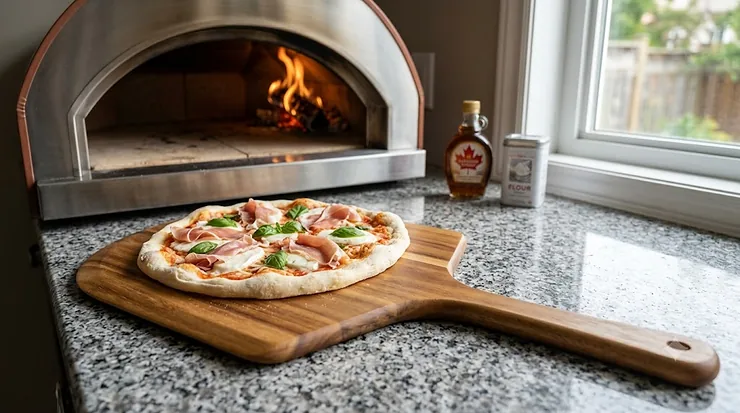
Finding the best pizza peel for your setup means weighing material (wood, aluminum, or steel), surface style (solid or perforated), and purpose (launching versus turning) against how you actually cook. A pizza peel is a flat-bladed paddle, typically wood or metal with a long handle, used to slide raw dough into a hot oven and retrieve the finished pie without anyone getting singed. As Wikipedia’s entry on the peel as a baking tool explains, wood has traditionally been favoured because it doesn’t transfer oven heat to the baker’s hands the way metal can — a design principle that still shapes how today’s hybrid wood-and-metal peels are built.
This guide breaks down seven real, currently available peels sold in Canada — from budget aluminum paddles under C$35 to specialty turning peels built for backyard ovens — along with the honest trade-offs between wood and aluminum, why perforated peels are suddenly everywhere, and the flour-dusting technique that actually stops dough from sticking. No fluff, no invented reviews — just spec-by-spec analysis and aggregated feedback from real buyers, so you can pick the peel that matches your oven, your budget, and your patience level.
Quick Comparison Table
| Peel | Material | Best For | Price Range (CAD) |
|---|---|---|---|
| Ooni 12″ Perforated Pizza Peel | Aluminum, perforated | Best all-around launch peel | C$45–C$60 |
| Hans Grill Pizza Peel PRO | Perforated aluminum + beechwood handle | Reducing burnt-flour smoke | C$50–C$70 |
| Cuisinart 12″ Aluminum Pizza Peel | Aluminum, foldable handle | Budget-friendly beginners | C$25–C$35 |
| New Star Foodservice 50295 | Solid wood | Traditionalists, restaurant-grade | C$35–C$45 |
| Checkered Chef Foldable Peel | Stainless steel, foldable | Small kitchens, easy storage | C$40–C$55 |
| Ooni 7″ Aluminum Turning Peel | Aluminum, perforated | Dedicated pizza turning | C$50–C$65 |
| G.a HOMEFAVOR 14″x17″ XL Peel | Perforated aluminum | Extra-large or family-size pizzas | C$60–C$85 |
Looking at the lineup, there’s a clear split between peels built to load a pizza and peels built to rotate one mid-bake — a distinction most first-time buyers miss entirely. If you’re working with a standard home oven at 500-550°F, a single solid or perforated aluminum peel usually covers both jobs. But if you’ve stepped up to a high-heat backyard oven that hits 800°F or more, a dedicated turning peel like the Ooni 7″ earns its keep fast, since the narrow, flexible blade is what lets you nudge the pizza around without dragging melted cheese across the stone.
💬 Just one click — help others make better buying decisions too!😊
Top 7 Pizza Peels: Expert Analysis
1. Ooni 12″ Perforated Pizza Peel — best all-around launch peel for home ovens
The perforated aluminum surface is the headline feature here, and it earns the hype. Small holes across the blade let excess semolina and flour sift away as you carry the pizza to the oven, which matters more than it sounds like it should.
Specs-wise, you’re looking at a 12-inch aluminum head paired with a long handle designed to keep your forearm out of radiant heat, and a total weight light enough that loading three pizzas in a row doesn’t turn into a shoulder workout. In practice, that lighter perforated design means less dough drag during the launch — the pizza tends to release in one clean motion instead of catching halfway and bunching up, which is the single most common reason home pizzas end up misshapen.
Based on the spec comparison against solid peels, this is the pick for anyone who’s tired of smoke pouring out of the oven from burnt flour residue on the stone. Reviewers consistently report that the perforations meaningfully cut down on the burnt-flour smell that plagues solid peels, though a small number note the thinner blade flexes slightly under a fully loaded 14-inch pie.
Pros:
✅ Perforated design sheds excess flour before launch
✅ Lightweight aluminum reduces arm fatigue on pizza night
✅ Smooth surface makes for consistent, clean releases
Cons:
❌ Noticeable blade flex under heavier, topping-loaded pizzas
❌ Holes can trap dough scraps if the blade isn’t floured properly
Priced in the C$45–C$60 range at the time of research, it lands squarely in the sweet spot between disposable budget peels and pricier restaurant-grade gear — a fair trade for anyone who bakes pizza more than once a month. Prices may vary, so check current pricing before you buy.
2. Hans Grill Pizza Peel PRO — best for taming burnt-flour smoke and mess
Hans Grill built this one around a genuinely clever compromise: an anodized aluminum blade for easy gliding, paired with a turned beechwood handle so your hand isn’t wrapped around cold metal for the whole bake.
The blade measures roughly 12 x 14 inches and is covered edge-to-edge with a fine perforation grid, while the beechwood handle brings total length to around 20 inches — enough reach to keep knuckles away from an open flame without needing a two-hand grip. What that handle length means in practice is fewer close calls reaching into a hot deck oven, and the anodized coating means the surface is naturally slick without relying on a nonstick spray that can wear off over time.
Here’s what most buyers overlook about perforated peels in general: the holes aren’t just about flour, they also reduce total surface contact with the dough, which is why launches feel noticeably smoother than with a solid blade of the same size. Aggregated review sentiment for this model is strong on ease of use and build quality, with the most repeated critique being that the perforations are mildly annoying to scrub clean when sauce drips through during topping.
Pros:
✅ Anodized surface is naturally nonstick, no coating to wear off
✅ Beechwood handle stays cool and comfortable to grip
✅ Perforations reduce burnt flour and smoke at the stone
Cons:
❌ Perforated holes are fiddly to clean if sauce seeps through
❌ Blade flexes slightly when carrying a large, heavily topped pizza
Expect a price in the C$50–C$70 range. Given the wood-and-metal hybrid build, it’s a strong value pick for anyone who wants the smoothness of aluminum without giving up a comfortable wooden grip entirely.
3. Cuisinart 12″ Aluminum Pizza Peel — best budget aluminum pick for beginners
If you’re not sure yet whether pizza night is a weekly ritual or a one-time experiment, this is the low-commitment entry point. The foldable wood handle is the standout feature — it collapses flat against the blade for storage, which solves the “where do I even put this 24-inch paddle” problem that trips up apartment dwellers.
At 12 inches, the aluminum blade is sized for standard home-oven pizzas rather than oversized family pies, and the lightweight build (Cuisinart markets it explicitly for dough, bread, and flatbreads beyond just pizza) makes it genuinely multi-purpose. What that means for everyday use is one tool doing triple duty for pizza night, weekend focaccia, and reheating leftover slices without a spatula.
Honest take: this is not a peel built for a 900°F wood-fired oven, and it isn’t trying to be. For a standard kitchen range, though, it does the job reliably. Reviewers frequently mention the foldable handle as the deciding factor in their purchase, particularly in smaller kitchens, while a recurring complaint is that the aluminum surface can flex more than pricier models when the blade is fully loaded.
Pros:
✅ Foldable handle solves the storage problem in small kitchens
✅ Lightweight build doubles for bread and flatbread duty
✅ Budget-friendly entry point for first-time peel buyers
Cons:
❌ Thinner aluminum flexes more than premium models
❌ Handle hinge is a wear point with frequent heavy use
At around C$25–C$35, this is the peel to grab if you want to test the waters before investing in something heavier-duty. It’s a legitimately good value verdict for casual bakers, less so for anyone chasing Neapolitan-style leoparding at high heat.
4. New Star Foodservice 50295 Wooden Pizza Peel — best budget wood pick for traditionalists
Wood peels persist for a reason, and this restaurant-grade option shows why. The standout here is the sheer surface texture: unlike smooth aluminum, the slightly rough wood grain actually helps keep dough from sliding prematurely while you’re still building the pizza on the counter.
The plate measures 16 x 14 inches with an 8-inch wooden handle, bringing the overall length to about 24 inches — sized more for building and assembling pizzas than for deep reaches into a scorching oven. What the wood surface means practically is more forgiving handling during the topping stage; dough that would slip and slide on a metal peel tends to stay put on wood long enough for you to arrange toppings without a mid-assembly slide.
This is honest analysis grounded in how wood behaves versus metal, not marketing copy: wood is more forgiving for beginners learning to build a pizza in place, but it’s genuinely harder to keep clean and it can warp if left wet. Aggregated customer sentiment for restaurant-grade wooden peels in this size range consistently praises the sturdiness and the multi-use potential as a serving board, while the recurring critique is the added bulk compared to a slim aluminum blade.
Pros:
✅ Textured surface holds dough steady while topping
✅ Doubles as a rustic serving board or cutting surface
✅ Solid, restaurant-grade construction for the price
Cons:
❌ Heavier and bulkier than comparable aluminum peels
❌ Requires hand-washing and periodic oiling to avoid warping
Priced around C$35–C$45, it’s an easy budget pick for anyone who values the classic feel of wood over the slickness of metal, especially if serving the pizza tableside afterward matters to you.
5. Checkered Chef Foldable Pizza Peel — best space-saving stainless steel option
Checkered Chef’s angle is durability without the bulk. Stainless steel is the standout feature — more rigid than aluminum under load, and the foldable handle means a 13 x 15-inch blade still tucks into a drawer instead of hogging counter space.
The extra-large surface area is genuinely useful for bigger 14-16 inch pizzas that would hang awkwardly off a smaller 12-inch blade, and stainless steel resists the minor dents and scratches that aluminum peels pick up over a season of hard use. In practice, that added rigidity means less blade flex when you’re carrying a fully loaded pizza with a thick layer of toppings — a common failure point for thinner aluminum peels.
Based on the spec comparison against the aluminum options on this list, stainless steel trades a bit of weight for meaningfully more durability, which matters if this peel is also getting used for outdoor grilling duty. Reviewers commonly cite the folding mechanism and generous size as the reasons for buying, with occasional complaints about the peel being noticeably heavier in the hand than aluminum alternatives.
Pros:
✅ Rigid stainless steel resists flex under heavy pizzas
✅ Extra-large 13×15″ surface fits bigger home-oven pies
✅ Foldable design saves real drawer and counter space
Cons:
❌ Heavier in hand than comparable aluminum peels
❌ Stainless surface needs a light flour dusting to avoid sticking
Expect to pay in the C$40–C$55 range. For anyone splitting peel duty between the kitchen oven and the backyard grill, the added toughness here is worth the extra weight.
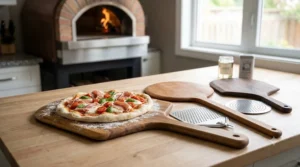
6. Ooni 7″ Aluminum Turning Peel — best dedicated turning peel for high-heat ovens
This is the specialist on the list, and it’s not trying to do everything. The standout feature is the narrow 7-inch head, purpose-built for rotating a pizza mid-bake rather than launching it in the first place.
With the handle attached, overall length runs roughly 31 inches and total weight sits just over a pound, which makes one-handed rotation genuinely easy even deep inside a hot oven. The perforated surface and small diameter let the pizza maintain contact with the stone or grill while you turn it, and it worked well in a countertop oven as well as a standard kitchen oven during hands-on testing by other reviewers, though the real advantage shows up in high-heat outdoor ovens running 800°F or hotter.
What this means for buyers: if your pizza bakes in 90 seconds at extreme heat, you physically don’t have time to lift the whole pie with a wide launch peel to check the underside — a slim turning peel is the only practical tool for the job. Aggregated feedback consistently praises the smooth, single-motion turns this peel enables, while the narrower blade is occasionally flagged as awkward for anyone trying to use it as a general-purpose launch peel too.
Pros:
✅ Narrow blade makes mid-bake rotation fast and precise
✅ Long handle keeps hands well clear of extreme oven heat
✅ Lightweight design allows confident one-handed control
Cons:
❌ Too narrow to comfortably launch a full pizza
❌ Overkill for standard home ovens under 600°F
At C$50–C$65, this isn’t a first peel — it’s a second peel for anyone who’s already upgraded to a high-heat backyard oven and is chasing evenly charred, restaurant-style crusts.
7. G.a HOMEFAVOR 14″x17″ Perforated Pizza Peel — best XL peel for family-size pizzas
For anyone regularly making oversized or family-style pizzas, this is the peel built for the job. The standout is sheer real estate: a 14 x 17-inch perforated aluminum blade with a 35-inch overall length, sized well beyond the standard 12-inch peels most brands default to.
That extra surface area means less awkward maneuvering when you’re sliding a 16-inch pizza that barely fits your oven, and the perforated pattern keeps the peel from feeling as heavy as its size would suggest, since a large chunk of material is simply absent. The extended handle, often silicone-wrapped for grip, adds real reach for anyone working a deep pizza oven or a large gas grill setup.
Here’s what the spec sheet won’t tell you outright: bigger peels are noticeably harder to maneuver in a tight home kitchen, so this is a better fit for people who bake in a garage, backyard, or larger galley kitchen than for anyone working a narrow apartment counter. User reports on oversized perforated peels in this category generally highlight the extra room as a genuine problem-solver for family pizza night, with occasional notes about the longer handle needing more swing room to use comfortably.
Pros:
✅ Generous 14×17″ surface handles oversized, family-size pies
✅ Perforated pattern keeps overall weight manageable
✅ Long, extended handle suits deep ovens and outdoor grills
Cons:
❌ Requires more counter and swing space than smaller peels
❌ Overkill for solo cooks making standard 10-12″ pizzas
Priced around C$60–C$85, it’s a premium pick, but for a household regularly feeding four or more people pizza in one sitting, the value math works out fast.
Practical Usage Guide: Getting the Most From Your New Peel
A pizza peel is deceptively simple, which is exactly why so many first-time buyers get it wrong in the first thirty days. The most common mistake is under-flouring: people dust the peel once, build the pizza slowly while chatting, and by the time they go to launch, the dough has absorbed the flour and stuck fast. The fix is a light re-dust of flour or semolina right before the slide, not just at the start.
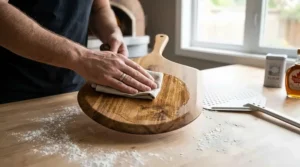
Setup matters more than people expect, too. Before your first bake, give a wooden peel a light coat of food-grade mineral oil to seal the grain, and give a metal peel a quick wash to remove any manufacturing residue. From there, maintenance is minimal: wipe metal peels down after each use, and for wood, avoid soaking it — a damp cloth and occasional oiling every few weeks is plenty to prevent cracking.
The other early mistake is hesitation at the moment of truth. A confident, quick forward-and-back jerking motion releases dough far more cleanly than a slow, tentative push, which tends to drag and fold the crust. Practice the motion with just flour on the peel — no dough — a few times before your first real attempt, so the muscle memory is there when it counts.
✨ Don’t Miss These Exclusive Deals!
🔍 Take your pizza night to the next level with one of these carefully selected peels. Click on any highlighted pick to check current pricing and availability, and turn your next homemade pizza into the kind your family actually asks for again.
Real-World Scenarios: Which Pizza Peel Actually Fits Your Kitchen
Picture three different households making pizza this weekend. Pizza’s popularity in Canada keeps climbing — CBC News reports that more than four in five Canadians eat pizza at least once a month, with roughly a third of us doing it weekly — so odds are good you fall into one of these scenarios already. First, a downtown Toronto condo dweller with a standard electric oven and zero extra storage — for them, the Cuisinart 12″ Aluminum Pizza Peel or the Checkered Chef Foldable Pizza Peel makes the most sense, since both collapse down small enough to slide into a narrow drawer between uses.
Second, a family of five in a suburban house doing pizza night every Friday, feeding growing teenagers who each want their own personal pie plus one giant shared pizza. Here, the G.a HOMEFAVOR 14″x17″ XL Peel earns its higher price tag, since the extra surface area means fewer trips back and forth to the oven and less risk of a too-small peel mangling a family-size crust.
Third, someone who just invested in a backyard wood-fired oven that screams past 800°F and produces a pie in ninety seconds flat. For this cook, a single launch peel isn’t enough — pairing the Ooni 12″ Perforated Pizza Peel for loading with the Ooni 7″ Aluminum Turning Peel for rotation is the realistic setup, since neither tool alone covers both jobs at that heat level. Budget for this combo sits in the C$95–C$125 range combined, which is still less than most people spend on the oven’s cover alone.
What Is a Pizza Peel? (And How to Choose One)
A pizza peel is a flat paddle, usually wood, aluminum, or stainless steel, with a long handle used to slide raw pizza dough into a hot oven and retrieve it once baked, keeping hands safely away from extreme heat. Choosing the right one comes down to matching material and size to your specific oven and cooking frequency.
- Match the blade size to your oven, not your ambition. A 12-inch blade suits most home ovens; go larger only if you regularly bake 14-16 inch pies.
- Pick material based on your workflow. Wood is more forgiving for building a pizza in place; aluminum and steel launch and retrieve more smoothly once the pizza is ready.
- Consider perforated if flour burn bothers you. The holes shed excess flour before the pizza hits the stone, cutting down on smoke and bitter, burnt residue.
- Check handle length against your oven’s depth. A short handle on a deep backyard oven means uncomfortably close contact with heat.
- Decide if you need a dedicated turning peel. Only necessary for high-heat ovens (700°F+) where pizzas cook in under two minutes.
- Factor in storage before buying an oversized peel. A 35-inch peel is a commitment in a small kitchen — foldable handles solve this for smaller spaces.
- Weigh durability against price. Stainless steel and thicker aluminum resist flex and dents longer than budget-tier thin aluminum.
Wooden vs Aluminum Pizza Peel: Which Material Actually Wins
This is the debate that trips up nearly every first-time buyer, and the honest answer is: it depends on which half of the job you care about more. Wood wins for building — its texture grips dough gently enough that a pizza can sit assembled for a minute or two without sliding, which is forgiving for beginners still learning to work quickly.
Aluminum wins for launching and retrieving. The smoother, harder surface reduces friction at the exact moment you need dough to slide freely, and it doesn’t retain heat or moisture the way wood does, so it’s less prone to warping over time. What the spec sheet won’t tell you is that many serious home bakers eventually end up owning both — a wood peel for assembly on the counter, and a thin metal peel just for the actual oven transfer, treating them as two different tools rather than one universal solution.
Value-wise, wood generally costs less upfront but demands more maintenance (hand-washing, periodic oiling, avoiding the dishwasher entirely), while aluminum costs slightly more in the mid-tier but requires almost no upkeep beyond a wipe-down. Reviewers frequently note buyer’s remorse in both directions — aluminum owners wishing they’d started with wood for easier assembly, and wood owners frustrated by how quickly dough sticks once the peel sits idle for more than a minute.
Perforated Pizza Peel Review: Is the Extra Cost Worth It
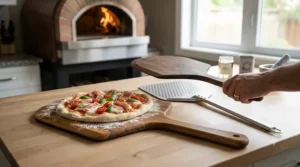
Perforated peels — aluminum or steel blades covered in small holes — have become the default recommendation in most buying guides, and the underlying engineering explains why. The perforated pattern was pioneered specifically to let excess flour fall through before the pizza reaches the hot stone, since flour that transfers into the oven typically burns and can cause smoke, residue, and a bitter taste in the finished pizza.
Beyond the flour issue, less surface area means less friction against the dough, so launches tend to feel smoother even before you factor in the flour benefit. The tradeoff is structural: removing material to create holes makes the blade lighter but also slightly less rigid, which is why several perforated peels on this list mention minor flex under a heavily topped, fully loaded pizza.
Is it worth the extra C$10-C$20 over a comparable solid peel? Based on aggregated review sentiment across perforated models, yes for anyone baking more than occasionally — the reduction in burnt-flour smoke alone justifies it for weekly pizza nights. For a once-a-year backyard party host, a basic solid aluminum peel does the job nearly as well at a lower price point.
Turning Peel vs Launching Peel: What’s the Real Difference
A launching peel is the wide, flat paddle most people picture when they hear “pizza peel” — it’s built to carry a fully assembled raw pizza from the counter into the oven in one confident slide. A turning peel is a different animal entirely: narrow, often round or oval, and purpose-built to rotate a pizza that’s already cooking, without lifting the whole thing off the stone.
| Feature | Launching Peel | Turning Peel |
|---|---|---|
| Blade width | Wide (12″+) | Narrow (6-7″) |
| Primary job | Loading raw dough | Rotating a baking pizza |
| Best oven type | Standard home ovens | High-heat backyard ovens (700°F+) |
| Skill needed | Beginner-friendly | Slightly more practice |
The distinction matters most at extreme heat. In a standard home oven baking at 500-550°F, a pizza takes 8-12 minutes, giving you plenty of time to open the door and rotate the whole pie with your launching peel if the crust is browning unevenly. In a wood-fired or gas-powered backyard oven pushing 800-950°F, the pizza can be done in under two minutes, and there’s no time to fumble with a wide peel — a narrow turning peel lets you nudge the pie a quarter-turn in a single motion without disturbing the toppings.
For most home cooks with a standard kitchen oven, one solid launching peel covers everything. It’s only once you’ve upgraded to a genuinely high-heat backyard setup that a dedicated turning peel like the Ooni 7″ earns a permanent spot in your toolkit.
Non-Stick Pizza Launch: The Flour Dusting Technique That Actually Works
Here’s the problem-solution reality most peel buyers don’t expect: even the best pizza peel money can buy will fail if your flour technique is off. A dough that sticks to the peel doesn’t care how nice the blade is.
Problem 1 — Dough sticks because it sat too long. Solution: build your pizza in under two minutes once it’s on the peel, and give it one gentle shake test before adding sauce to confirm it’s still sliding freely.
Problem 2 — Too much flour, and the crust burns. Solution: switch to semolina or fine cornmeal instead of all-purpose flour for the base dusting; the coarser grain acts like tiny ball bearings and burns less aggressively than fine flour.
Problem 3 — Uneven flour coverage leaves sticky patches. Solution: dust in a light, even layer across the whole blade, then tilt and tap off the excess rather than leaving a thick pile in the centre.
Problem 4 — Wet toppings soak through the flour barrier. Solution: pat watery toppings like fresh mozzarella or sliced tomatoes dry before assembly, and work from the centre outward so moisture doesn’t pool near the peel’s surface.
Before your dough ever touches the peel, it’s worth remembering that food-contact surfaces in general benefit from basic hygiene habits. Health Canada’s food safety guidance recommends sanitizing countertops, cutting boards, and utensils before and after preparing food, and a pizza peel is no exception, especially a wooden one that sees repeated raw-dough contact.
Common Mistakes When Buying a Pizza Peel
The single biggest mistake is buying based on peel size alone without checking oven depth — a 35-inch peel is useless if your oven’s interior is only 20 inches deep, since there’s nowhere to comfortably maneuver the handle. Measure your oven before shopping, not after the peel arrives.
The second mistake is assuming one peel does everything. As covered above, a wide launching peel and a narrow turning peel solve genuinely different problems, and trying to force one to do both jobs in a high-heat oven usually ends with disturbed toppings or a dropped pizza.
Third, buyers frequently underestimate storage. A rigid, non-folding 24-inch wood peel needs somewhere to live between pizza nights, and it doesn’t fit in most drawers. If counter and storage space is tight, the foldable options on this list (Cuisinart, Checkered Chef) solve a problem you may not realize you have until the peel is sitting awkwardly against your fridge.
Finally, some buyers chase premium materials without matching their actual oven. A dedicated turning peel is genuinely wasted on a standard 550°F kitchen oven — save that upgrade for if and when a high-heat backyard oven joins the setup.
Long-Term Cost & Maintenance
Sticker price only tells part of the story. A budget aluminum peel at C$25-C$35 may need replacing within a year or two of heavy use if the blade warps or the handle hinge loosens, while a mid-tier stainless or anodized aluminum peel at C$45-C$70 tends to hold up for years with basic care, making its true cost-per-use lower over time.
Wood peels sit in an interesting middle ground: the upfront cost is moderate, but ongoing maintenance (occasional food-grade mineral oil, careful hand-washing, never leaving it soaking) adds a small recurring time cost that aluminum and steel simply don’t require. For someone baking pizza weekly, that maintenance time is trivial; for an occasional user, it can mean forgetting the oiling routine and shortening the peel’s usable life.
The specialty turning peels and XL perforated models at the C$60-C$85 end of the range are the biggest commitment, but they’re also solving a problem the cheaper peels genuinely can’t — namely, high-heat rotation or oversized pizzas. Total cost of ownership favours buying the right tool once rather than upgrading twice after a budget peel underperforms.
Safety Guide: Using a Pizza Peel Around a Hot Oven
Basic kitchen safety habits matter more with a pizza peel than with most tools, simply because you’re working directly beside an open flame or a 500°F-plus interior. Always wear high-cuff oven mitts when reaching into a deep oven, since standard mitts leave forearms exposed to radiant heat from the oven walls.
Keep a clear path between your counter and the oven — a stray chair leg or pet underfoot during a hot-pizza retrieval is a genuinely common cause of kitchen accidents. Wooden peels have the advantage of staying cooler to the touch than metal if accidentally left resting near the oven’s mouth for a moment, though neither material should be left directly in the heat for extended periods, since even wood can scorch with prolonged contact.
Finally, treat the peel itself as a food-contact surface requiring the same basic hygiene as a cutting board — wash hands before handling raw dough, and clean the blade after each use rather than letting flour and dough residue accumulate across multiple bakes.
Pizza Peel Buying Guide: A Simple Decision Framework
If you’re baking in a standard home oven a few times a month, choose a single solid or lightly perforated aluminum peel in the 12-inch range — it’s the most versatile, lowest-maintenance option for casual use.
If you love the ritual of hand-building pizza and don’t mind a bit of extra care, choose a wooden peel because the textured surface is genuinely more forgiving while you’re still learning to assemble quickly.
If you’ve invested in a high-heat backyard oven, choose a two-peel combo — a wide launching peel plus a narrow turning peel — because at 800°F-plus, one tool simply can’t do both jobs safely.
If storage space is your biggest constraint, choose a foldable peel over a rigid one, since a peel you can’t store conveniently is a peel that eventually stops getting used. For a deeper look at pairing a peel with the right oven for your space, Global News’ 2026 roundup of the best pizza ovens in Canada is a useful next step, since oven type ultimately dictates which peel style makes sense.
❓ What is a pizza peel used for?
❓ Is a wooden or aluminum pizza peel better for beginners?
❓ How do I stop pizza dough from sticking to my peel?
❓ Do I need a perforated pizza peel?
❓ What size pizza peel should I buy?
Conclusion
There’s no single best pizza peel for everyone, and honestly, anyone who tells you otherwise is skipping the part where your oven, your kitchen size, and your patience for maintenance all matter just as much as the peel itself. For most home cooks with a standard oven, a mid-range perforated aluminum peel like the Ooni 12″ or the Hans Grill PRO solves 90% of the frustration that comes with sticky, misshapen launches.
If you’ve fallen down the backyard pizza oven rabbit hole and you’re now baking Neapolitan-style pies in under two minutes, the two-peel combo of a wide launcher and a narrow turning peel stops being a luxury and starts being the only realistic way to keep up with your own oven’s speed. And if storage or budget is the real constraint, the foldable Cuisinart or Checkered Chef options prove you don’t need to spend big to stop pizza night from ending in a folded, sad heap of dough on the oven floor.
Whichever peel you land on, the flour-dusting habit and confident launch motion matter as much as the tool in your hand. Get both right, and pizza night stops being a gamble.
✨ Ready to upgrade your pizza night? Check current pricing on today’s top pick and get baking this weekend! 🍕
Recommended for You
- Portable vs Permanent Pizza Oven: 7 Best Picks for 2026
- Best Budget Pizza Oven Canada 2026: 7 Top Picks Reviewed
- Wood Fired vs Gas Pizza Oven: 7 Best Picks in Canada (2026)
Disclaimer: This article contains affiliate links. As an Amazon Associate, I earn from qualifying purchases. If you purchase products through these links, we may earn a small commission at no additional cost to you.
✨ Found this helpful? Share it with your friends! 💬🤗
