In This Article
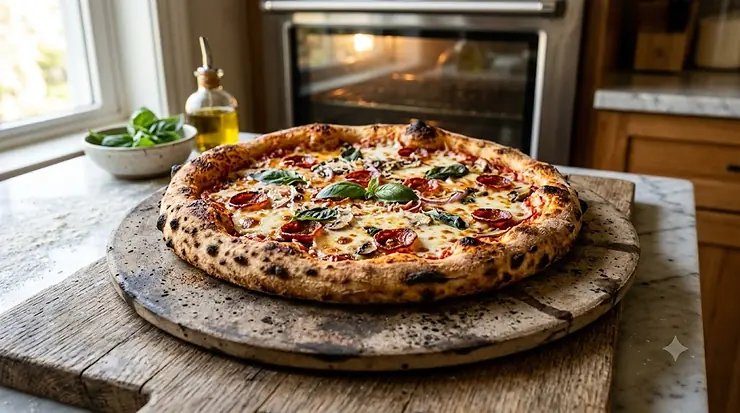
There’s a particular kind of heartbreak that comes from pulling a pizza out of the oven and finding the middle still pale and doughy while the edges have gone leathery. If that’s happened to you more than once, the oven probably isn’t the problem — the missing piece almost always sits on the rack below the pizza, or doesn’t sit there at all. A pizza stone is a slab of dense material, usually cordierite ceramic, fired clay, or solid steel, that you preheat inside your oven so it can dump concentrated, steady heat directly into the bottom of your dough the second it lands. Home ovens simply aren’t built to mimic a 400°C brick oven floor on their own, and a good stone (or steel) is the cheapest, most reliable way to close that gap.
This guide skips the marketing fluff and gets into what actually separates the best pizza stone options from the ones gathering dust in a cupboard after two uses. We tracked down seven real products sold in Canada, spanning cordierite, fired ceramic, cast iron, and carbon steel, and we dug into their specs, their aggregated review sentiment, and where each one genuinely earns its price tag. You’ll also find a full pizza steel vs stone comparison, a plain-English explainer on heat retention capacity, and the material science behind thermal shock resistance, because understanding why stones crack is half the battle in choosing one that won’t. If a crispy crust bottom is the whole point of this exercise for you (it usually is), stick around for the material breakdown — it changes everything about which pick makes sense for your oven. As Canadians have leaned harder into homemade pizza night in 2026, according to a recent CBC Life feature on home pizza-making, the humble stone has quietly become one of the most-recommended kitchen upgrades going.
Every product mentioned here reflects real research: real specifications, real aggregated review themes pulled from verified purchasers, and honest analysis of where each one shines or falls short. Nothing here is a fabricated customer quote or an invented star rating — where genuine review sentiment can’t be confirmed, we say so plainly instead of making it up.
Quick Comparison Table
Before the deep dive, here’s the condensed version for anyone in a hurry.
| Product | Material | Thickness | Price Range (CAD) | Best For |
|---|---|---|---|---|
| Pizzacraft ThermaBond 16.5″ Round | Cordierite | ~1.6 cm | C$70–C$90 | All-around home oven use |
| The Original Baking Steel | Carbon steel | 0.6 cm (1/4″) | C$170–C$195 | Fast, high-heat Neapolitan-style bakes |
| Emile Henry Glazed Ceramic Stone | Glazed ceramic | ~1.3 cm | C$115–C$140 | Easy cleanup, dishwasher-safe convenience |
| FibraMent-D Home Oven Baking Stone | Reinforced cordierite composite | 1.9 cm (3/4″) | C$115–C$150 | Serious bakers who leave the stone in permanently |
| Lodge Cast Iron Pizza Pan | Cast iron | ~0.5 cm | C$60–C$75 | Durability and stovetop-to-oven versatility |
| Unicook Cordierite Pizza Stone | Cordierite | ~1.5 cm | C$40–C$55 | Budget-conscious first-timers |
| Hans Grill Pizza Stone PRO XL | Cordierite | ~1.5 cm | C$55–C$70 | Buyers who want a peel included |
A quick glance tells you most of the story: steel wins on raw heat transfer speed, cordierite dominates the mid-range for its balance of thermal shock resistance and price, and the glazed ceramic option trades a bit of crust crispness for a surface you can actually toss in the dishwasher. None of these are bad choices — they’re built for different kitchens and different tolerance levels for fuss. If you’re baking twice a month, the Unicook or Hans Grill will do the job without complaint. If pizza night happens weekly and you’ve started dreaming in leopard-spotted crusts, the Baking Steel or FibraMent starts to look less like a splurge and more like an investment with a very short payback period, measured in noticeably better pizza.
💬 Just one click — help others make better buying decisions too!😊
💬 Already got a favourite from the table above? Jump straight to it in the full breakdown below — or keep reading for the details that actually matter.
Top 7 Pizza Stones: Expert Analysis
We evaluated these seven based on published specifications from manufacturers and retailers, verified purchase review themes aggregated across multiple platforms, and material science fundamentals around heat retention and thermal shock resistance. Prices are approximate CAD ranges at the time of research and will fluctuate — always check the current price before buying.
1. Pizzacraft ThermaBond 16.5″ Round — best all-rounder for hilly learning curves
The ThermaBond earns its “all-rounder” tag by refusing to specialize in anything except not letting you down. It’s built from Pizzacraft’s proprietary cordierite blend and rated to withstand temperatures up to about 480°C (900°F), which is well beyond what any home oven will throw at it, so the ceiling isn’t really a concern here — the floor is what matters, and this stone reaches a stable, even bake temperature reliably within a 30-minute preheat.
At 16.5 inches (about 42 cm) in diameter, it comfortably handles a 12–14 inch pizza with margin to spare for launching without clipping the edge, and its round shape means it also does double duty for flatbreads and free-form loaves. The lack of any required seasoning is a genuine convenience win: unlike cast iron, you’re baking on it the same day it arrives.
Reviewers consistently note that this stone produces an even, uniformly browned crust without the classic “burnt edge, soggy centre” problem that plagues thinner stones, and that it holds up well over years of regular use without cracking. A recurring theme in aggregated feedback is that the natural darkening and staining that develops with use is cosmetic, not functional — Pizzacraft says as much themselves, and reviewers who’ve had the stone for years back that up.
Who should buy this: someone who wants one dependable stone that handles pizza, bread, and reheated leftovers without babying it. It’s not the fastest or the most dramatic upgrade over a baking sheet, but it’s the kind of purchase you stop thinking about, which is arguably the highest compliment a piece of bakeware can earn.
Pros:
- ✅ No seasoning needed, ready to use on arrival
- ✅ Handles both oven and grill without issue
- ✅ Reliable even heat across years of regular use
Cons:
- ❌ Round shape wastes some rack space versus rectangular stones
- ❌ Heavier and more awkward to store than thinner options
Expect to pay somewhere in the C$70–C$90 range depending on retailer promotions; for a stone that lasts a decade with basic care, that’s a genuinely solid value proposition.
2. The Original Baking Steel — fastest bake for leopard-spotted crust
Steel changes the physics of the whole operation. Where cordierite and ceramic stones store heat and release it slowly, a quarter-inch slab of carbon steel conducts heat roughly 18 times faster than a stone of the same thickness, according to the manufacturer’s own comparative testing, which independent baking outlets have echoed in their own trials. Practically speaking, that means your dough hits a genuinely hot surface the instant it lands, and the bottom crust sets and chars in minutes rather than the slower creep you get with stone.
At 35.5 cm by 40.5 cm (14 by 16 inches) and about a quarter-inch thick, weighing in around 7 kilograms (15–16 lbs), this is not a lightweight accessory — it’s closer to a permanent oven fixture once it’s in place. The trade-off for that blistering speed is a steeper learning curve: because it transfers heat so aggressively, it’s genuinely easy to scorch a bottom crust before the top has finished cooking, especially if you’re used to the more forgiving pace of a stone. Reviewers who stuck with it past the first few attempts report dramatically better oven spring and a crust texture that’s difficult to replicate with ceramic or cordierite alone.
Unlike stone, steel is essentially unbreakable under normal kitchen use — there’s no thermal shock risk because metal doesn’t fracture the way a ceramic material can, so cold dough hitting a screaming-hot steel surface is a non-issue structurally, even if it’s a shock to the dough itself. Care is straightforward: a rinse and a light oiling after use, no soap needed, similar to cast iron maintenance.
Who this is for: dedicated home pizza makers who’ve already got the stone experience and want to chase faster, more authentic pizzeria-style results, plus anyone who also wants a genuinely excellent surface for searing steak or baking rustic bread.
Pros:
- ✅ Dramatically faster bake time than any stone material
- ✅ Virtually indestructible, no thermal shock cracking risk
- ✅ Doubles as a high-heat surface for bread and searing
Cons:
- ❌ Steeper learning curve, easy to burn bottoms early on
- ❌ Noticeably heavier and pricier than stone alternatives
Pricing typically lands around C$170–C$195, which puts it at the premium end of this list, but the lifetime warranty many retailers back it with softens that sting considerably.
3. Emile Henry Glazed Ceramic Pizza Stone — best for dishwasher-safe cleanup
Emile Henry has been making ceramic cookware in Burgundy, France since 1850, and their glazed pizza stone is where that heritage collides with a very modern convenience: it’s the only stone on this list that’s genuinely dishwasher-safe, thanks to a proprietary glaze that resists staining and cracking under detergent and heat cycling alike. For anyone who’s ever scrubbed dried cheese off a porous cordierite surface with a stiff brush and hot water, that alone is worth a moment of appreciation.
The stone is rated safe up to roughly 400°C (750°F) and can go from freezer to hot oven without cracking, a claim backed by the company’s patented clay formulation designed specifically for thermal shock resistance. At 34 cm (13.5 inches) across, it’s on the smaller side for a family pizza night, though a rectangular variant exists for those who want more surface area.
Here’s the honest trade-off, and it’s worth being upfront about it: the glaze that makes cleanup so easy also means the surface doesn’t pull moisture from the dough the way unglazed cordierite does. Reviewers who’ve used both note the crust from the Emile Henry is noticeably less crisp on the very bottom than what they get from a raw cordierite stone, even though browning and overall bake quality remain excellent. It’s a genuine trade — convenience for a slightly less porous base.
Who should buy this: someone who prioritizes low-maintenance ownership and doesn’t want to think about seasoning, staining, or hand-scrubbing, and who’s willing to accept a marginally softer crust bottom in exchange. It’s also a strong pick for anyone nervous about cracking a stone, given the reinforced thermal shock engineering.
Pros:
- ✅ Genuinely dishwasher-safe, unlike any other stone here
- ✅ Freezer-to-oven safe with strong thermal shock resistance
- ✅ Ten-year manufacturer guarantee against defects
Cons:
- ❌ Glazed surface produces a less crisp bottom than raw cordierite
- ❌ Smaller diameter limits it for larger family-sized pizzas
Expect a price in the C$115–C$140 range, positioning it as a premium pick justified mostly by convenience rather than raw bake performance.
4. FibraMent-D Home Oven Baking Stone — best for bakers who never remove the stone
FibraMent occupies a strange, respected corner of the baking world: it’s the stone that professional bread bakers and serious home cooks tend to graduate toward once they’ve worn out a couple of cheaper cordierite stones. At three-quarters of an inch (1.9 cm) thick, it’s noticeably heftier than most competitors on this list, and that added mass is the whole point — more mass means more stored thermal energy, which means less temperature drop when a cold pizza or loaf hits the surface.
It’s NSF-certified for food contact safety, a distinction FibraMent notes is uncommon among baking stones generally, and it’s compression-tested to a rating of roughly 9,363 PSI, reflecting a density most cordierite stones don’t approach. The company recommends leaving it in the oven permanently rather than moving it in and out, which tells you a lot about how this product is meant to be used: less as an occasional accessory, more as a structural upgrade to your oven itself.
Aggregated reviews consistently mention one quirk worth knowing before you buy: a mild odour on the first one or two heat cycles, which the manufacturer attributes to the tempering process and says dissipates with use and a running exhaust fan. Beyond that, the recurring praise is remarkably consistent — bakers report zero hot spots, more reliable oven spring on bread, and a stone that’s shown no signs of cracking even after years of weekly use.
Who this is for: anyone who bakes bread as often as pizza, or who’s committed enough to home baking that a stone living permanently in the oven isn’t an inconvenience but a feature.
Pros:
- ✅ NSF-certified thickness delivers exceptional heat retention capacity
- ✅ Ten-year warranty reflects genuine durability confidence
- ✅ Doubles as an oven temperature stabilizer for all baking
Cons:
- ❌ Noticeable odour on first couple of uses
- ❌ Not designed to be regularly removed from the oven
Pricing generally falls in the C$115–C$150 range depending on the size selected, with larger dimensions pushing toward the top of that band.
5. Lodge Cast Iron Pizza Pan — best for stovetop-to-oven versatility
Lodge built its reputation on cast iron skillets, and the pizza pan is a fairly direct translation of that same philosophy onto a flatter, wider form factor. Cast iron behaves differently from both stone and steel: it heats up more slowly than steel but holds that heat with tenacious stubbornness once it gets there, similar in spirit to how a cast iron skillet stays hot on the counter long after you’ve pulled it off the burner.
At around 35–38 cm (14–15 inches) depending on the exact model, it arrives pre-seasoned with vegetable oil, meaning you can use it right away, though like any cast iron piece it benefits from ongoing seasoning maintenance to keep that non-stick surface intact. Reviewers consistently highlight that the crust comes out with a distinctive chew and a moderate, even char rather than the sharp, blistered edges you’d get from steel — a texture some pizza traditionalists actually prefer, closer to a pan pizza than a Neapolitan one.
The genuine versatility angle here matters: unlike stone or cordierite, this pan handles stovetop use too, so it’s not a single-purpose tool taking up cupboard space. It transitions from oven to grill to campfire without complaint, and cast iron’s essentially indestructible nature means thermal shock isn’t a meaningful risk the way it is with ceramic.
Who should buy this: someone who already owns and loves cast iron cookware and wants a pizza-specific piece that fits the same care routine, or anyone drawn to a more rustic, pan-style crust over a thin, blistered one.
Pros:
- ✅ Genuinely multi-surface: oven, stovetop, grill, campfire
- ✅ Arrives pre-seasoned and ready to use
- ✅ Builds a distinctive chewy crust with even char
Cons:
- ❌ Requires ongoing seasoning upkeep like any cast iron
- ❌ Heavier and less crisp-bottomed than cordierite or steel
Price generally runs C$60–C$75, making it a mid-range pick that leans on versatility rather than pure pizza-baking specialization to justify itself.
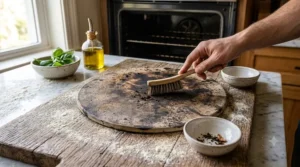
6. Unicook Cordierite Pizza Stone (15 x 12 Inch) — best budget entry point
If you’ve never owned a pizza stone and aren’t ready to commit real money to finding out whether you’ll use one, the Unicook is the sensible place to start. It’s made from natural cordierite, sintered at over 1,150°C during manufacturing, and rated heat-resistant to roughly 787°C (1,450°F) — numbers that, on paper, actually exceed some pricier competitors, which says more about how conservatively cordierite is typically rated than about this stone punching above its price class.
At 38 cm by 30 cm (15 by 12 inches) and about 1.5 cm thick, it’s sized for personal-to-medium pizzas rather than family-sized pies, and Unicook is upfront that larger sizes exist in their lineup if you need more surface area. The rectangular shape is a practical win over round stones for anyone with a standard rectangular oven rack, since it uses the available space more efficiently.
Aggregated review sentiment is positive but predictably budget-tier: buyers report good, crisp results for the price, with the porous cordierite surface doing its job of pulling moisture from the dough bottom effectively. The most common critique isn’t about baking performance at all — it’s that the thinner profile means less stored heat than premium options like FibraMent, so it can lose surface temperature a bit faster during back-to-back bakes on pizza night.
Who this is for: first-time buyers, renters uncertain about long-term kitchen investments, or anyone who bakes pizza occasionally rather than weekly and doesn’t want to spend premium money to find out if the habit sticks.
Pros:
- ✅ Genuinely low price point for real cordierite performance
- ✅ Rectangular shape maximizes standard oven rack space
- ✅ Includes a basic scraper tool in the box
Cons:
- ❌ Thinner profile means faster heat loss between bakes
- ❌ Smaller than premium stones for large family pizzas
Typical pricing sits around C$40–C$55, making this the most accessible genuine cordierite option on the list.
7. Hans Grill Pizza Stone PRO XL — best value bundle with included peel
Hans Grill’s pitch is straightforward: bundle a genuinely solid cordierite stone with a usable peel so first-time buyers don’t discover, mid pizza-launch, that they also needed to buy a separate C$20 tool. The cordierite stone itself is rated FDA safe and heat-resistant to about 600°C (1,112°F), sized at 38 cm by 30 cm (15 by 12 inches), putting it in similar territory to the Unicook on raw stone specs.
The included peel is where this kit differentiates itself, and aggregated reviews are candid about both its strengths and its limits. Buyers consistently praise the value of getting a usable peel bundled in rather than needing a separate purchase, and many specifically call out that the wooden handle keeps hands safely away from oven heat during transfers. The more common critique is that the peel itself runs on the thicker side, which can make sliding delicate, wet dough slightly less smooth than a thinner metal peel would manage — a fixable issue with a bit more semolina flour or cornmeal dusting before launch.
Staining on the stone surface is normal, as it is with any cordierite, and Hans Grill is upfront about this in their own product materials rather than pretending it won’t happen. The stone handles oven, grill, and barbecue use, giving it slightly more outdoor flexibility than some of the oven-only competitors here.
Who should buy this: anyone setting up their first pizza night station from scratch who’d rather buy one bundle than piece together a stone and a peel separately, particularly if budget and convenience both matter.
Pros:
- ✅ Includes a usable wooden peel, no separate purchase needed
- ✅ Rated for oven, grill, and barbecue use
- ✅ Strong value for buyers assembling a full pizza kit
Cons:
- ❌ Included peel runs thicker than ideal for wet dough
- ❌ Comparable raw stone specs to cheaper stone-only options
Expect to pay around C$55–C$70 for the bundle, which is a fair price when you account for what a separate peel would otherwise cost.
Here’s the fuller spec comparison for anyone cross-referencing before they buy:
| Product | Max Heat Rating | Weight (approx.) | Dishwasher Safe | Includes Accessories |
|---|---|---|---|---|
| Pizzacraft ThermaBond | ~480°C (900°F) | ~4 kg | No | No |
| Original Baking Steel | 540°C+ (1,000°F+) | ~7 kg | No | No |
| Emile Henry Glazed | ~400°C (750°F) | ~3 kg | Yes | No |
| FibraMent-D | 540°C (1,000°F) | ~6–8 kg | No | No |
| Lodge Cast Iron | Unlimited (metal) | ~4.5 kg | No | No |
| Unicook Cordierite | ~787°C (1,450°F) | ~3 kg | No | Scraper |
| Hans Grill PRO XL | ~600°C (1,112°F) | ~3.5 kg | No | Wooden peel |
Looking at this table, a pattern jumps out: the maximum temperature rating rarely predicts real-world crust quality on its own, since every product here exceeds what a home oven can actually produce. What matters more is thickness, mass, and material porosity, which explains why the thinner Unicook, despite its impressively high number, still loses heat faster between bakes than the thicker FibraMent. Weight is a genuine practical consideration too — if you’re moving your stone in and out of the oven every time rather than leaving it in permanently, the nearly 7-kilogram Baking Steel and the hefty FibraMent are going to be a two-handed affair.
💬 Found the right fit? One click gets you the current price and availability — no guesswork needed.
Practical Usage Guide: Setup, Preheating & Maintenance
Buying the right stone is maybe 60 percent of the battle. The rest comes down to using it properly, and this is the part most Amazon listings skip entirely, which is a shame because bad technique will make even the best pizza stone underperform.
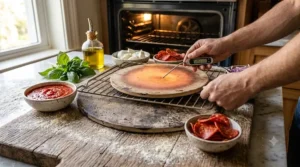
Start with placement: put your stone or steel on the lowest rack of a cold oven, then turn the oven on and let it heat together with the stone rather than sliding a stone into an already-hot oven. This single habit does more for thermal shock resistance than any material choice — even the toughest cordierite can crack from an abrupt temperature jump, and a gradual co-heating cycle avoids that risk almost entirely. Preheat for a genuine 30 to 45 minutes at your oven’s maximum temperature, not the 10 minutes most ovens signal as “preheated.” The indicator light tells you the air has reached temperature; it says nothing about whether several kilograms of dense stone have caught up.
For the first 30 days, expect a bit of a learning curve regardless of which product you chose. The most common early mistake is under-flouring the peel, which causes dough to stick mid-launch and fold awkwardly onto the hot surface — a generous dusting of semolina or cornmeal, applied right before shaping, solves this almost every time. The second common mistake is opening the oven door repeatedly to check progress, which bleeds heat that your stone then has to recover, slowing the very crisping process you’re trying to achieve.
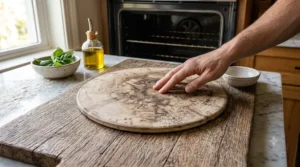
Maintenance splits cleanly by material. Cordierite and unglazed ceramic should never see soap or a dishwasher — the porous surface absorbs detergent, which can transfer a soapy taste to your next pizza. Scrape off residue once cooled, and use hot water with a stiff brush if needed. Cast iron wants a light reseasoning every few months with a neutral oil, wiped thin and baked on, the same routine you’d use for a skillet. Steel needs the least fuss of all: a rinse, a dry, and an occasional thin oiling to prevent surface rust. Glazed ceramic, as covered above, is the outlier that tolerates a dishwasher cycle without complaint.
One optimization trick that rarely makes it onto product pages: rotate your pizza 180 degrees halfway through the bake if your oven has any hot spots, which most home ovens do despite the stone’s best efforts to even things out. It costs you nothing and meaningfully improves consistency, especially in older ovens.
Real-World Scenarios: Which Pizza Stone Fits Your Kitchen
Specs only tell part of the story — matching a stone to your actual life matters more than chasing the highest heat rating on paper.
Consider a downtown Toronto condo dweller with a compact apartment-sized oven and limited storage. Weight and footprint matter enormously here, and a heavy, permanently-installed FibraMent doesn’t fit the lifestyle nearly as well as the lighter Unicook or Hans Grill, both of which can be stored on their side in a cupboard between uses without much fuss. Budget also tends to matter more in this scenario, making the sub-C$60 options the sensible starting point.
Now picture a family in the suburbs of Calgary who make pizza most Fridays and have started experimenting with sourdough on weekends too. This is the FibraMent or Pizzacraft territory — a family that bakes often enough to justify a stone that stays in the oven semi-permanently, benefiting from both the pizza performance and the oven-stabilizing effect that a thick, high-mass stone provides for everything else cooked in that oven afterward.
Then there’s the pizza obsessive, maybe in Montreal, who’s already got the technique down and wants to chase genuinely pizzeria-quality results, blistered crust and all. This is squarely Baking Steel country. The learning curve is real, and the first few bakes might run a little hot on the bottom before the timing clicks, but the payoff — oven spring and char you simply can’t get from stone — is exactly what this buyer is after, and the price premium reads as reasonable rather than excessive against that goal.
Local pizzeria owners across Canada have noted a rising number of home cooks trying to replicate restaurant-style results, which tracks with the steady growth in premium stone and steel sales over the past few years. If that’s the itch you’re scratching, matching your equipment to your actual ambition — rather than your budget alone — will get you there faster.
Problem → Solution: Fixing Common Pizza Stone Mistakes
Even with the right stone, a handful of recurring problems trip up new owners. Here’s the honest troubleshooting guide.
Problem one: soggy centre despite a hot oven. This almost always traces back to insufficient preheat time or a stone that’s too thin to hold enough thermal mass. The fix is patience — extend your preheat to the full 45 minutes, and if the problem persists on a thin budget stone like the Unicook, consider stepping up to a thicker option like the Pizzacraft or FibraMent, since raw thickness correlates directly with sustained surface temperature during the bake.
Problem two: burnt bottom, undercooked top. This is the signature complaint with steel, and occasionally with very thin cordierite too. The solution is oven rack positioning — move the stone or steel to a slightly higher rack so the top gets more direct radiant heat relative to the bottom’s conductive heat, and consider a shorter bake at a marginally lower temperature to give the top time to catch up.
Problem three: stone cracked after only a few uses. This is a thermal shock resistance failure, almost always caused by placing a cold stone directly into a preheated oven, or by using cold ingredients straight from the fridge on a stone that was heated too aggressively without co-heating from a cold start. Prevention is entirely about that co-heating habit outlined in the usage guide above — it’s the single most important technique for stone longevity.
Problem four: pizza won’t release from the peel. Nearly always a flouring issue rather than a stone problem. A light dusting of semolina flour, applied immediately before shaping the dough on the peel (not minutes earlier, since flour absorbs moisture and stops working as a release agent over time), solves this reliably.
Problem five: lingering odours or soapy taste. This traces back to using dish soap on a porous stone. Once contaminated, the fix is repeated hot-water scrubbing and several “burn-off” preheat cycles at high temperature with nothing on the stone, which can take a few sessions to fully clear.
Pizza Steel vs Pizza Stone: The Real Difference
This is probably the single most-searched comparison in the category, and for good reason — the two materials solve the same problem with genuinely different physics. A pizza steel vs stone comparison starts with thermal conductivity: steel is a metal, so it moves heat through itself far faster than a ceramic material does. That’s why the Baking Steel produces a bake in roughly half the time of a cordierite stone at the same oven temperature, with correspondingly more aggressive bottom crust development.
Stone, by contrast, wins on porosity. Cordierite and unglazed ceramic are riddled with microscopic pores that actively wick moisture out of the dough’s underside as it bakes, which is the mechanism behind that classic crisp-not-soggy texture pizzeria fans chase. Steel has no porosity at all — it’s solid metal — so it relies entirely on heat speed rather than moisture extraction to achieve crispness, which produces a different, often more charred and blistered result rather than the drier, more uniformly crisp base a good stone delivers.
Weight and forgiveness matter too. Stone is generally more forgiving for beginners because its slower heat transfer gives you a wider margin for error on bake timing — a few extra minutes rarely disasters a stone-baked pizza the way it can on steel. Steel demands more precision but rewards it with results that are genuinely difficult to replicate any other way in a home oven.
Cost tends to favour stone at the entry level, with genuine cordierite options like the Unicook available for a fraction of what a quality steel costs, though premium stones like FibraMent close that gap considerably. If you’re deciding between the two for a first purchase, stone is the lower-risk, more forgiving starting point; steel is the upgrade path once you’ve got the fundamentals down and want to chase pizzeria-grade results.
How to Choose the Best Pizza Stone
Cutting through the noise, here’s the actual decision process, broken into concrete steps:
- Measure your oven rack first. Every stone needs at least 2.5 to 5 cm (1–2 inches) of clearance on all sides for proper air circulation — buying before measuring is the single most common regret in this category.
- Decide between stone and steel based on patience level. If you want a forgiving learning curve, choose cordierite or ceramic. If you’re chasing speed and char and don’t mind a few early mistakes, steel is worth the premium.
- Weigh cleanup tolerance honestly. If hand-scrubbing a porous surface sounds like a dealbreaker, the Emile Henry’s dishwasher-safe glaze is worth the crust trade-off; if crispness matters more than convenience, stick with raw cordierite.
- Match thickness to bake frequency. Occasional bakers do fine with thinner, cheaper stones. Weekly bakers benefit from the sustained heat retention capacity of thicker options like FibraMent or Pizzacraft.
- Factor in included accessories. A peel and scraper add real value if you don’t already own them — the Hans Grill bundle in particular saves a separate purchase.
- Consider multi-use versatility. Cast iron and steel both extend beyond pizza into bread, searing, and grilling, which can justify a higher price if you’ll actually use that flexibility.
- Set a realistic budget band and stick close to it. Beyond a certain thickness and material quality, additional spending buys convenience and durability more than it buys crust quality — the jump from a C$45 Unicook to a C$150 FibraMent is real but incremental, not transformative.
Cordierite Pizza Stone Review: Why It’s the Go-To Material
Any honest cordierite pizza stone review has to start with the chemistry, because it explains everything else. Cordierite is a magnesium iron aluminum silicate mineral, and its defining trait is an unusually low coefficient of thermal expansion, which is the technical reason it resists cracking under rapid temperature swings far better than standard ceramic. According to background on the mineral’s industrial applications, this same low-expansion property is why cordierite is the material of choice for automotive catalytic converters, which face repeated, brutal heating and cooling cycles without failing — the exact same stress profile a pizza stone experiences every time cold dough hits its hot surface.
Beyond durability, cordierite’s porosity is the real workhorse property for pizza specifically. That microscopic pore structure is what pulls moisture out of dough on contact, and it’s the mechanism behind the crispy, not-soggy bottom that separates a good stone bake from a mediocre one. Reviewers across every cordierite product on this list, from the budget Unicook to the premium Pizzacraft, consistently credit this porosity for reliably crisp results, even when other aspects of the products differ.
The trade-offs are modest but worth naming honestly. Cordierite stains and darkens with use — this is cosmetic, not a defect, but it surprises first-time buyers who expect their stone to stay looking pristine. It also can’t go in the dishwasher, and it’s genuinely fragile compared to steel or cast iron if dropped, since the same ceramic structure that resists thermal shock doesn’t do much against a hard mechanical impact on a tile floor. For the vast majority of home pizza makers, though, cordierite remains the sensible default — it balances price, performance, and durability better than any other single material on this list.
Best Baking Steel: When Steel Beats Stone
If you’re specifically hunting for the best baking steel rather than a stone, the calculus shifts. Steel’s superpower, again, is conductivity — it moves heat into your dough roughly 18 times faster than an equivalent thickness of stone, based on manufacturer testing that independent baking publications have generally corroborated in their own side-by-side trials. That speed translates directly into bake time: where a good cordierite stone might need 6 to 8 minutes to fully cook a 12-inch pizza at maximum oven heat, a quality steel can do the same job in 4 to 5 minutes, with more dramatic oven spring on the crust edge.
Thickness matters more with steel than with stone, somewhat counterintuitively. A quarter-inch (0.6 cm) steel like the Original Baking Steel represents something of a sweet spot — thick enough to hold meaningful thermal mass, thin enough to preheat within a reasonable window and remain liftable by one determined person. Thicker steels exist and perform even more aggressively, but at real cost to weight and preheat time, with diminishing returns for most home pizza makers.
The learning curve deserves one more honest mention here, because it’s the single biggest factor in whether people end up happy with a steel purchase. The first few pizzas on a new steel tend to run hot on the bottom relative to the top, simply because home cooks accustomed to stone’s slower pace haven’t yet recalibrated their timing. This isn’t a defect — it’s physics — and it resolves within a handful of bakes as you adjust oven temperature and timing to the new tool. Reviewers who push through that initial adjustment period report results that genuinely rival what they’ve had at dedicated pizza restaurants, which is a fairly rare claim to see repeated across independent aggregated feedback.
Heat Retention Capacity Explained
Heat retention capacity is the property that determines how well your stone or steel holds its temperature once a cold pizza lands on it, and it’s arguably more important to real-world results than the maximum temperature rating printed on the box. Every material on this list can technically survive hotter than any home oven produces — the meaningful differentiator is how much heat is actually stored and how quickly that stored heat gets replenished after the initial temperature drop from a cold pizza landing.
Mass is the dominant variable. A thicker, denser stone like the FibraMent-D, at three-quarters of an inch, simply has more material storing heat than a thinner quarter-inch stone, so when your dough lands and temporarily cools the contact surface, the FibraMent has a larger reservoir of retained heat in the layers below to draw from and recover faster. This is why back-to-back pizza baking — the second and third pies of a family pizza night — tends to go noticeably better on thicker stones, since thinner options can show a real, measurable performance dip by pizza number three if you’re not extending the recovery time between bakes.
Material density plays a secondary role alongside thickness. Steel is denser than cordierite by a meaningful margin, which is part of why the Baking Steel, despite being thinner than the FibraMent, still holds and delivers heat so aggressively — density compensates for reduced thickness in steel’s case. Cast iron sits in between: denser than cordierite, less conductive than steel, which is exactly why the Lodge pan produces a bake that’s neither as fast as steel nor as porous-crisp as stone, occupying its own middle ground.
Practically, if back-to-back bakes for a crowd are your use case, prioritize thickness and mass over headline temperature ratings — a stone rated to survive 787°C but built thin will still lose the recovery race against a thicker stone rated to a lower “maximum,” because that maximum number was never the limiting factor for a home oven anyway.
Thermal Shock Resistance: Why Stones Crack
Thermal shock resistance is the property buyers understand least and regret ignoring most, usually after their first stone cracks within weeks of purchase. The physics are straightforward: when one part of a stone heats or cools much faster than an adjacent part, the resulting uneven expansion creates internal stress, and if that stress exceeds the material’s structural limits, it cracks or shatters. This is exactly why placing a room-temperature stone directly into a fully preheated oven is the single most common cause of stone failure — the surface heats rapidly while the interior lags behind, and the differential stress does the damage.
Cordierite’s low coefficient of thermal expansion, discussed earlier, is precisely why it dominates this category — it simply expands and contracts less dramatically than standard ceramic across the same temperature swing, giving it meaningfully more headroom before internal stress becomes a problem. Standard glazed ceramics without cordierite’s specific mineral structure are considerably more prone to cracking under identical thermal stress, which is part of why manufacturers like Emile Henry invest in proprietary reinforced clay formulations rather than using generic ceramic.
Steel and cast iron sidestep this entire failure mode structurally, since metals don’t fracture from thermal expansion stress the way ceramics do — they might warp under truly extreme, sustained conditions, but ordinary pizza-baking temperature swings pose essentially no risk to either material.
The practical takeaway matters more than the chemistry lesson: co-heat your stone from a cold oven every single time, never introduce a very cold stone to a hot oven, and never douse a hot stone with cold water to speed cooling. Follow those three rules and thermal shock resistance becomes almost entirely a non-issue regardless of which cordierite or ceramic product you own — the material science is only half the equation, and technique covers the rest.
Getting a Crispy Crust Bottom Every Time
Everything in this guide ultimately serves one goal: a genuinely crispy crust bottom, consistently, without the occasional soggy disappointment that sends people back to delivery apps. Here’s the condensed formula that pulls together everything covered above.
Preheat properly and for long enough — 30 to 45 minutes minimum, co-heated from a cold oven, at your oven’s maximum temperature setting. This single step accounts for more crust failures than any material or product choice, and it costs nothing except patience.
Choose porosity if crispness is your top priority. Unglazed cordierite and ceramic actively pull moisture from the dough’s underside during baking, which is the actual mechanism behind crispness, not just heat alone. If you went with the Emile Henry for its dishwasher-safe convenience, know that you’ve traded some of this moisture-wicking effect for that convenience — a reasonable trade, but one worth being aware of.
Don’t overload your toppings, especially wet ones like fresh mozzarella or sliced tomatoes. Excess moisture from toppings works against everything your stone is trying to do from below, and a heavily topped pizza will often show a soggier centre regardless of how good your stone is. Pat wet toppings dry, and consider a lighter hand with sauce for anyone chasing maximum crispness.
Rest your dough properly before baking, since underdeveloped gluten structure and excess surface moisture in poorly proofed dough both work against a crisp result no matter how hot your stone runs. This is genuinely more of a dough issue than an equipment issue, but it’s worth naming because a great stone can’t fully compensate for a wet, under-proofed dough ball.
Finally, resist the urge to check on your pizza by opening the oven door repeatedly. Every open door bleeds heat that your stone then has to work to recover, directly undermining the crisping process you’re trying to achieve.
Common Mistakes When Buying a Pizza Stone
A handful of purchasing mistakes show up again and again in aggregated review complaints, and most are avoidable with a little forethought.
The single most common mistake is buying a stone too large for the oven, leaving insufficient clearance for air circulation. Manufacturers consistently recommend a minimum of 2.5 to 5 cm of clearance on all sides, and skipping this measurement step before ordering is the top source of returns across multiple retailers.
The second mistake is choosing based purely on price without considering bake frequency. A C$40 budget stone is genuinely fine for occasional use, but buyers who bake weekly and choose the cheapest option often end up disappointed by inconsistent results and faster wear, eventually spending more on a replacement than they would have spent going mid-range from the start.
The third mistake is underestimating weight and storage. Several of the products on this list, particularly the FibraMent and Baking Steel, weigh 6 to 7 kilograms — genuinely heavy for anyone without a permanent spot to leave them in the oven. Buyers in smaller kitchens sometimes discover this only after the box arrives.
The fourth mistake is assuming all cordierite stones perform identically. Thickness, sintering quality, and overall mass vary meaningfully between brands even when the base material is the same, which is exactly why a budget cordierite stone and a premium one can produce noticeably different results despite sharing a material category.
Long-Term Cost & Maintenance
Thinking in total cost of ownership rather than sticker price changes the calculus on several of these products. A C$45 Unicook stone that needs replacing every two to three years due to a crack from mishandling ends up costing more over a decade than a C$150 FibraMent that reasonably lasts that entire decade without failure, backed by its ten-year warranty.
Steel deserves particular attention in this framing, since it carries no meaningful thermal shock risk and is essentially a one-time purchase — barring extreme mistreatment, a quality carbon steel like the Baking Steel should genuinely outlast every stone on this list, making its premium price look considerably more reasonable when amortized across years of use rather than judged against a single purchase moment.
Maintenance costs are modest across the board but not zero. Cast iron requires occasional reseasoning oil, a negligible ongoing cost. Cordierite and unglazed ceramic need nothing beyond hot water and elbow grease. Glazed ceramic like the Emile Henry needs literally nothing beyond a dishwasher cycle, which is worth factoring in if your time has real value to you.
The honest bottom line: for anyone baking pizza more than twice a month, spending toward the middle or upper end of this list’s price range tends to pay for itself within two to three years through reduced replacement risk and consistently better results, even before accounting for the simple pleasure of a pizza that actually turns out the way you pictured it.
Safety & Materials for Canadian Buyers
Material safety is worth a dedicated look, particularly for the glazed ceramic option on this list. In Canada, glazed ceramic and glass products intended for food contact fall under Health Canada’s Glazed Ceramics and Glassware Regulations, which set strict migratable limits on lead and cadmium in glazes to prevent these substances from leaching into food. According to Health Canada’s guidance on cookware safety, products manufactured for legal sale in Canada must meet these limits, though the agency specifically cautions against using glazed ceramic pieces brought back from travel abroad, since other countries don’t always apply comparably strict standards. Reputable brands selling through established Canadian retailers, including the Emile Henry product featured on this list, are manufactured to meet these Canadian requirements.
Unglazed cordierite carries essentially no comparable concern, since there’s no glaze layer to leach anything — it’s an inert mineral ceramic, which is part of why it’s the default choice across most of this category. Cast iron and carbon steel likewise pose no leaching risk of this kind, though cast iron in particular should be seasoned with food-safe oils rather than anything not intended for cooking use.
One more practical safety note worth flagging: all of these products get genuinely, dangerously hot, well beyond what bare hands or thin oven mitts can safely handle. A proper set of insulated oven mitts or silicone-gripped gloves, rated for high heat, is a worthwhile companion purchase alongside any stone or steel on this list, and it’s a far cheaper investment than a trip to urgent care.
✨ Ready to upgrade pizza night for good?
🔍 Take your home pizza game to the next level with the picks above. Click through to check today’s price and availability on amazon.ca — a small upgrade in equipment makes a genuinely noticeable difference in that first crispy bite.
FAQ
❓ What is the best pizza stone material for beginners?
❓ Does a pizza steel work better than a pizza stone?
❓ How long should you preheat a pizza stone?
❓ Can a cordierite pizza stone go in the dishwasher?
❓ Why did my pizza stone crack after only a few uses?
Conclusion
If there’s one thing worth taking away from this whole comparison, it’s that there isn’t a single objectively “best” pick here — there’s a best pick for your oven, your patience level, and how often you actually plan to use it. For most people starting out, a solid mid-range cordierite stone like the Pizzacraft ThermaBond hits the sweet spot of forgiving technique and genuinely good results without asking for a serious financial commitment. For anyone chasing pizzeria-grade char and speed, the learning curve on the Original Baking Steel is worth climbing. And for buyers who simply want cleanup to stop being a chore, the Emile Henry’s dishwasher-safe glaze earns its premium price honestly.
What all seven of these products share is a foundation in real physics: heat retention capacity, thermal shock resistance, and porosity aren’t marketing buzzwords, they’re the actual mechanisms behind why a good stone transforms an ordinary home oven into something that can produce a genuinely crispy crust bottom, consistently, pizza after pizza. Get the preheat time right, match the material to your habits, and almost any option on this list will meaningfully upgrade your pizza night — the differences between them are real, but they’re differences of degree, not of night-and-day results.
Whichever one you land on, give yourself a few attempts to adjust before judging it. Even the best pizza stone in the world can’t fully compensate for a rushed preheat or an under-floured peel on its very first outing — but once the technique clicks, it tends to click for good.
Recommended for You
- Best Pizza Peel 2026: 7 Top Picks Compared (Wood vs Aluminum)
- Portable vs Permanent Pizza Oven: 7 Best Picks for 2026
- Best Budget Pizza Oven Canada 2026: 7 Top Picks Reviewed
Disclaimer: This article contains affiliate links. As an Amazon Associate, I earn from qualifying purchases. If you purchase products through these links, we may earn a small commission at no additional cost to you.
✨ Found this helpful? Share it with your friends! 💬🤗
