
In This Article
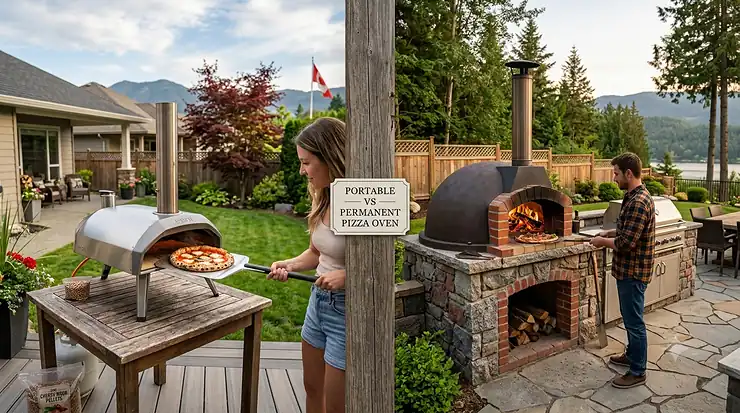
Somewhere between “I’ll just keep ordering Domino’s” and “I’m pouring a concrete slab for a wood-fired masonry oven” lies a decision most Canadian backyard cooks eventually face: the portable vs permanent pizza oven question. It sounds like a small choice — a kitchen appliance, basically, just one that lives outside. It isn’t. One path gets you cooking a 16-inch pie in under two minutes this Saturday and tucked back in the garage by Sunday night. The other commits a corner of your yard, a few thousand dollars, and possibly a mason’s phone number to a structure that will likely outlast your mortgage.
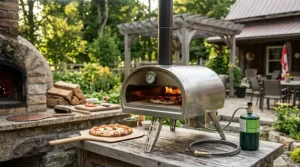
So what is a portable vs permanent pizza oven, exactly? A portable pizza oven is a self-contained, freestanding unit — usually under 30 kg, often with folding legs — that you can move, store, and use without any installation. A permanent pizza oven is a fixed masonry or built-in structure, typically requiring a non-combustible base, professional or DIY construction, and a dedicated footprint that stays put for the life of your property.
Neither is the “correct” answer, which is honestly the most useful thing I can tell you before you scroll one inch further. A renter on a third-floor balcony in Mississauga and a homeowner finishing an outdoor kitchen in the Okanagan are not shopping for the same thing, even if they both type “best pizza oven” into Google. This guide walks through seven real ovens currently sold to Canadians, breaks down the actual cost, maintenance, and lifestyle trade-offs of going freestanding vs built in pizza oven, and gives you a framework so you stop comparing spec sheets and start figuring out which oven actually fits your life. According to Health Canada’s guidance on outdoor cooking appliance safety, gas and propane cooking appliances come with real safety obligations regardless of which type you choose — something worth knowing before you fall in love with a glossy product photo.
Quick Comparison Table: Portable vs Permanent Pizza Oven at a Glance
| Factor | Portable Pizza Oven | Permanent Pizza Oven |
|---|---|---|
| Setup | Out of the box, ready in minutes | Days to weeks; foundation, curing, possibly a contractor |
| Mobility | Carry, fold, store anywhere | Fixed in place for life |
| Typical price (CAD) | C$500–C$1,400 | C$2,800–C$4,000+ (oven only) |
| Best for | Renters, condos, small yards, frequent movers | Permanent homeowners, outdoor kitchens |
| Heat-up time | 10–25 minutes | 30–50+ minutes |
| Storage in winter | Garage, shed, closet | Stays outside year-round under a cover |
A quick read of that table tells you most of what you need emotionally, if not financially: portable units win on flexibility and upfront cost, while permanent ovens win on thermal mass, longevity, and sheer “this is now a backyard landmark” presence. The heat-up gap matters more than it looks — those extra 20-30 minutes on a permanent oven aren’t a flaw, they’re the trade-off for a dome that holds 700°F steady through eight pizzas in a row, something thinner portable steel struggles to do. If you’re cooking for two on a Tuesday, that distinction barely registers; if you’re feeding twenty people at a backyard party, it’s the whole ballgame.
💬 Just one click — help others make better buying decisions too! 😊
Found your lane already? Tap any model below to check current Amazon.ca pricing and availability before they sell through the spring rush.
Top 7 Portable and Permanent Pizza Ovens: Expert Analysis
I’ve grouped these seven real, currently available models from budget to premium, spanning truly movable outdoor pizza oven options through to a genuine permanent build. Every spec below comes with an explanation of what it actually means once you’re standing in your backyard with a ball of dough in your hand.
1. Solo Stove Pi Prime
The Pi Prime is Solo Stove’s answer to “I want a real pizza oven but I don’t want to remortgage anything.” Its standout feature is a front-mounted control knob, which sounds minor until you’ve used an oven where the gas dial sits awkwardly on the back and you’re reaching past 900°F flames to adjust it mid-cook. The gas burner heats fast and lets you dial heat down once the pizza launches, which is the single biggest factor in not burning your crust into a hockey puck. Based on the spec comparison with other entry-level gas ovens, the Pi Prime’s accessible knob placement and included weatherproof shelter cover give it a usability edge that budget competitors often skip to hit a lower price point. This is the oven for someone buying their very first pizza oven and wanting zero surprises — beginners, apartment-adjacent backyards, and anyone who’d rather spend the savings on actual mozzarella. Reviewers consistently note that Solo Stove’s lifetime warranty and responsive customer service stand out in a category where many brands go quiet after the sale.
Pros: lowest price point in this lineup, intuitive front controls, included protective cover.
Cons: smaller cooking surface limits pizza size, single fuel type (gas only) reduces flavour versatility.
Expect a price under C$600, and at that range, it’s arguably the best value entry point for anyone still deciding if this hobby is for them.
2. Ooni Koda 16
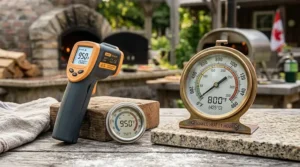
The Koda 16’s standout feature is its L-shaped burner, which throws heat across both the back and side of the cooking chamber instead of just from behind. What that means practically: you rotate your pizza less often to get even browning, which matters enormously when you’re still learning to use a peel without launching your dinner onto the lawn. It’s gas-powered, reaches cooking temperature in about 15-20 minutes, and handles a genuine 16-inch pie — large enough for a family dinner, not just a personal snack. Here’s what to weigh: the carbon steel shell gets seriously hot to the touch and there’s no built-in thermometer, so budget an infrared thermometer as a near-mandatory accessory. What most buyers overlook about this model is how light it is relative to its cooking capacity — at roughly 11 kg, it’s genuinely a movable outdoor pizza oven you can sling into a hatchback for a cottage weekend. Aggregated reviewer sentiment across major outlets consistently flags the Koda 16 as the easiest “first real oven” on the market, with minimal learning curve.
Pros: large 16-inch capacity in a portable shell, fast heat-up, widely available accessories.
Cons: no thermometer included, gets very hot externally with no insulated handle guard.
Priced in the C$500-C$650 range, this remains the benchmark beginner gas oven for a reason.
3. Gozney Roccbox
The Roccbox’s defining trick is a quick-swap burner system — twist one fitting and you’re switching between gas and wood without tools or mess. That alone makes it the most genuinely portable premium oven in this list; it ships with a lifting strap and retractable legs, designed explicitly to be hauled to a cottage, a tailgate, or a friend’s deck. The silicone “safe-touch” exterior jacket is a real practical upgrade most ovens skip, dramatically dropping the external surface temperature so you’re less likely to brand yourself reaching for the peel. On paper this means a 500°C interior alongside a touchable shell, which is the kind of detail that only shows up after someone has actually burned themselves on a competitor. Reviewers frequently highlight the included pizza peel as unusually high quality for something bundled “free” with the oven. This is the pick for someone who wants near-restaurant Neapolitan results but genuinely intends to move the oven regularly, not just claim they might.
Pros: true dual-fuel flexibility, exceptional portability features, premium accessory peel included.
Cons: smaller 12-inch cooking surface than the Koda 16, higher price than comparable gas-only ovens.
Sitting in the C$700-C$900 range depending on fuel bundle, it’s a strong value if portability is non-negotiable for you.
4. Ooni Volt 2
The Volt 2 is the rare pizza oven that doesn’t need propane, wood, or a backyard at all — it plugs into a standard outlet and is genuinely usable on a covered balcony or even, with adequate ventilation, indoors. That single feature reframes who can own a pizza oven entirely: condo dwellers, renters with strict balcony rules, and anyone without access to an outdoor gas hookup. Reaching cooking temperature takes about 20 minutes, slower than gas, but the trade-off is zero combustion byproducts and an installation free pizza oven experience — there’s no tank to fill, no wood to source, nothing to install beyond finding a 120V outlet. What the spec sheet won’t tell you, but reviewers note, is that ventilation still matters more than the marketing suggests; some owners report needing a window cracked to avoid setting off smoke detectors when used indoors. This is squarely the renter friendly option for anyone whose lease or condo board bans open flames or propane storage outright. Pros: works anywhere with an outlet, no fuel costs or storage, genuinely portable at this performance tier. Cons: longer preheat than gas models, higher upfront cost for the convenience. Expect to pay in the C$900-C$1,100 range, which buyers consistently frame as the price of admission for pizza-anywhere flexibility.
5. Gozney Arc XL
The Arc XL sits at the hinge point between freestanding vs built in pizza oven categories — technically portable in that it has no foundation requirement, but with enough thermal mass and a stand-mounted design that most owners treat it as a semi-permanent fixture once placed. Its standout feature is genuinely substantial stone and steel construction that retains heat between pizzas far better than lighter portable models, meaning your fifth pie of the night cooks nearly as fast as your first. Based on the spec comparison, that retained heat is the practical difference between hosting two friends and hosting twelve — thinner-walled ovens lose momentum fast under back-to-back use. The editorial, almost architectural design is a deliberate departure from the utilitarian look of cheaper gas ovens, and Gozney clearly built it to be a visual centrepiece rather than something you hide in a shed. Aggregated review sentiment frequently singles out the build quality and finish as justifying the premium over comparable Ooni models, even when cooking performance is nearly identical.
Pros: superior heat retention for entertaining, striking design, large cooking surface for bigger pies.
Cons: heavier and bulkier than true portable models, higher price bracket.
In the C$1,100-C$1,400 range, it’s the pick for someone who wants permanence-level performance without committing to actual masonry.
6. Gozney Dome (Gen 2)
The Dome is, by a wide margin, the closest thing to a permanent oven you can still technically move (with considerable effort and probably two people). Its standout feature is dual-fuel flexibility between propane and wood, or natural gas and wood, switched via an internal plug configuration rather than a full burner swap. Here’s what to weigh: that large internal volume and dome shape mean it can take 45-50 minutes to fully heat — noticeably slower than the Koda or Roccbox — but once at temperature, the heat retention and even cooking are genuinely in a different league, with enough interior room to maneuver a cast-iron skillet alongside your pizza. What most buyers overlook about this model is that it essentially functions as an outdoor oven for far more than pizza; reviewers regularly cook roasts, braises, and bread inside it once the novelty of pizza night wears off. The cooking community broadly treats the Dome as the aspirational ceiling of the portable-adjacent category, the oven you buy when you’ve outgrown your first one and aren’t ready to pour concrete.
Pros: exceptional heat retention and versatility, dual-fuel operation, restaurant-calibre results.
Cons: slow heat-up time, significant weight and footprint, premium pricing.
Sitting in the C$2,800-C$3,800 range, this is a long-term investment piece, not an impulse buy.
7. Chicago Brick Oven CBO-750 Built-In DIY Kit
This is the genuine permanent pizza oven in our lineup — a refractory-cement dome kit designed to be encased in brick, stone, or stucco as part of a built outdoor kitchen, with zero intention of ever moving again. Its standout feature is a UL- and ULC-certified construction with a proprietary FlameRoll airflow design that pulls flame horizontally across the dome top and back down the sides, producing temperatures past 1,000°F with notably even heat distribution. Reaching that temperature takes around 45 minutes, similar to the Dome, but the masonry mass holds heat for hours afterward — long enough that many owners report cooking pizza, then bread, then a slow-roasted dinner, all on one fire. What the spec sheet doesn’t fully convey is the installation reality: this kit requires a non-combustible base, a curing period before first use, and either confident DIY masonry skills or a contractor, which is a meaningfully different commitment than unboxing a portable oven on a Friday afternoon. Owner feedback aggregated across retailer review sections consistently praises the smoke control and heat retention, with the most common complaint being underestimating the total project timeline and finishing-material costs.
Pros: genuine permanence and resale-value addition to a property, certified safety standards, dramatically superior long-term heat retention.
Cons: requires construction and a dedicated footprint, total project cost extends well beyond the kit price once finishing materials are added.
The kit itself runs in the C$2,900-C$3,900 range, before brick, stone, or labour — making this the clearest “permanent” commitment on this list, financially and literally.
Top 7 Ovens: Specs, Price Range, and Best-For Snapshot
| # | Oven | Fuel | Price Range (CAD) | Best For |
|---|---|---|---|---|
| 1 | Solo Stove Pi Prime | Gas | Under C$600 | First-time buyers, tight budgets |
| 2 | Ooni Koda 16 | Gas | C$500-C$650 | Beginners wanting a bigger pie |
| 3 | Gozney Roccbox | Gas/Wood | C$700-C$900 | Frequent movers, Neapolitan fans |
| 4 | Ooni Volt 2 | Electric | C$900-C$1,100 | Condos, renters, balconies |
| 5 | Gozney Arc XL | Gas | C$1,100-C$1,400 | Entertainers, semi-permanent setups |
| 6 | Gozney Dome Gen 2 | Gas/Wood | C$2,800-C$3,800 | Versatile premium home cooks |
| 7 | Chicago Brick Oven CBO-750 | Wood | C$2,900-C$3,900 | True permanent outdoor kitchens |
Lined up like this, the spread is almost a straight line from “renter with a balcony” to “homeowner building a backyard kitchen,” and that’s not an accident — it mirrors how Canadians actually graduate through this hobby. Notice that the jump from the Arc XL to the Dome is the real inflection point in this table, nearly doubling in cost for meaningfully better heat retention and versatility, which only makes financial sense if you’re cooking often enough to use it. If your household makes pizza more than once a month, that price gap closes fast in terms of cost-per-use; if it’s a twice-a-summer novelty, the Koda 16 or Pi Prime will serve you just as well for years.
✨ Don’t Miss These Exclusive Deals!
🔍 Take your backyard pizza nights to the next level with these carefully selected ovens. Click on any highlighted model to check current pricing and availability on Amazon.ca. These picks will help you create authentic, restaurant-quality pizza your family will actually fight over.
Freestanding vs Built In Pizza Oven: How to Choose
The freestanding vs built in pizza oven decision really comes down to one honest question: are you optimizing for flexibility or for permanence? A freestanding oven — everything from the Pi Prime through the Arc XL in our lineup — asks nothing of your property. No foundation, no permits, no conversations with a contractor. You set it on a sturdy table or its own stand, cook, and if you move next year, it moves with you. A built-in oven like the CBO-750 asks for commitment: a non-combustible base, often a permit depending on your municipality, and a permanent allocation of yard space that you won’t be reclaiming for a garden bed later.
What most buyers overlook is that built-in doesn’t automatically mean better performance — it means different performance characteristics suited to different use patterns. A built-in masonry oven’s enormous thermal mass is its superpower for hosting large groups or cooking multiple courses over hours, but that same mass is dead weight (literally and figuratively) if you only cook pizza six times a year. Freestanding ovens, by contrast, sacrifice some heat retention for the ability to be used the moment you want and packed away the moment you’re done. The CSA Group, which certifies gas-fired outdoor cooking appliances across Canada, classifies these products specifically as portable, stationary, or built-in for testing purposes — a distinction that exists precisely because the safety and performance profile genuinely differs between categories, not just the marketing copy.
If you’re renovating an outdoor kitchen anyway, with the patio already torn up and a mason already on-site for a countertop, the marginal cost of adding a built-in oven shrinks considerably and the case for permanence strengthens. If you’re working with an existing patio you don’t want to disturb, freestanding wins by default, full stop.
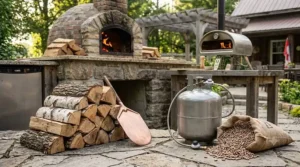
Practical Usage Guide: Setting Up Your Movable Outdoor Pizza Oven
Getting a movable outdoor pizza oven from delivery box to dinner-ready involves more first-30-days nuance than most listings admit. Start with placement: even portable ovens need a stable, level, non-combustible-adjacent surface — a wobbly folding table is how you end up with a pizza oven on the lawn instead of on the table. Keep at least one metre of clearance from siding, railings, or anything flammable, regardless of how small the unit looks.
Seasoning matters more than people expect. Gas ovens benefit from a “dry run” — heating empty for 15-20 minutes before the first cook — to burn off manufacturing residue and let the stone acclimatize gradually, since thermal shock can cause hairline cracking in cooler Canadian spring weather. Wood and multi-fuel ovens like the Roccbox or Dome need a proper curing schedule, typically several short, increasingly hot fires over a few days, before you push them to full temperature.
The single most common first-month mistake is overloading the stone with toppings before it’s hot enough, which produces a soggy, pale crust no matter how good your dough is. A second common error is skipping a regular brush-down between pizzas — burnt flour residue builds heat-trapping carbon spots that scorch your next pie unevenly. Budget five minutes between bakes for a quick stone sweep, and your second and third pizzas will noticeably outperform your first.
The Renter Friendly Option: Best Pizza Ovens for Apartments and Condos
If you’ve ever tried to get a strata council to approve a propane tank on a balcony, you already know why the renter friendly option matters as its own category, not an afterthought. Many Canadian condo corporations restrict or outright ban propane storage on balconies, and some municipalities layer additional fire code requirements on top — clearance from windows, mandatory use of service elevators for tank transport, and minimum distances from air intakes. The City of Toronto’s own fire safety guidance spells out specific propane cylinder placement rules for balcony cooking, which gives you a sense of how seriously this is regulated even where outright bans don’t exist.
This is where an electric model like the Ooni Volt 2 earns its keep as a genuinely installation free pizza oven option. No tank, no wood storage, no combustion byproducts to worry your neighbours about — just an outdoor-rated outlet and you’re cooking. For renters specifically, this sidesteps the entire conversation with a landlord or condo board about open flames, since most building rules target propane and charcoal, not electric appliances. If your building does permit propane, the Pi Prime or Koda 16’s light weight and small footprint make them realistic options too, provided you confirm your specific building’s bylaws first — rules genuinely vary by province, municipality, and even individual strata corporation, so “my friend’s building allows it” is not a safety plan.
Real-World Scenarios: Matching the Oven to Your Life
Picture three realistic Canadian buyers, because “best pizza oven” is a meaningless phrase without knowing who’s asking. First, a university student in a Halifax apartment with a small shared balcony and zero interest in permanent fixtures — for them, the Ooni Volt 2 or, if propane is permitted, the Solo Stove Pi Prime makes sense; light, cheap to start, and entirely reversible if they move again next September.
Second, a young family in a suburban Calgary subdivision who host weekend dinners every couple of weeks and want something that performs well without demanding a renovation — the Ooni Koda 16 or Gozney Roccbox fits this exact use case, offering real performance without asking for a construction project, and both are light enough to tuck away before a Chinook-driven windstorm.
Third, a homeowner near Niagara-on-the-Lake who entertains often, has an established patio, and wants their pizza oven to be a long-term backyard anchor — the Gozney Dome or the Chicago Brick Oven CBO-750 fits naturally here, since the upfront cost and installation effort amortize over years, even decades, of regular use and genuinely add value to how the outdoor space functions.
Seasonal Storage Solutions for Every Oven Type
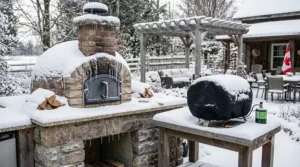
Canadian winters are not gentle on outdoor appliances, and your seasonal storage solutions plan should be decided before your first snowfall, not during it. Portable ovens like the Koda 16, Pi Prime, Roccbox, and Volt 2 should ideally come inside entirely — a garage, shed, or even an interior closet — once temperatures consistently drop below freezing, since repeated freeze-thaw cycles are hard on both the cooking stone and any internal seals. If indoor storage genuinely isn’t available, a properly fitted weatherproof cover, combined with removing the stone separately to a dry indoor spot, meaningfully reduces cracking risk.
Semi-permanent units like the Arc XL and Dome are heavier and bulkier, and most owners leave them in place year-round under a quality cover rather than hauling them indoors. That’s a reasonable compromise, but it does mean checking the cover regularly for ice buildup and ensuring meltwater isn’t pooling against the base. The CBO-750, being genuinely permanent, isn’t going anywhere regardless of season — your seasonal task there is simpler: a quality weatherproof cover over the opening to keep snow and debris out of the cooking chamber, and a quick interior inspection each spring before the first burn of the year.
Building a Flexible Outdoor Setup: Decision Framework
If you’re still torn, here’s a simple decision tree for a flexible outdoor setup that adjusts as your life does. If you rent, or expect to move within two to three years, choose portable — full stop, the resale and relocation math doesn’t favour anything built-in. If you own your home but haven’t settled on a permanent patio layout yet, choose a semi-permanent option like the Arc XL or Dome; you get serious performance without locking in a footprint you might regret redesigning later. If your patio layout is finished, settled, and unlikely to change, and you cook outdoors often enough that heat-retention and capacity genuinely matter, that’s when a built-in oven like the CBO-750 starts paying for itself in both performance and property character.
A simple priority checklist: rate your situation on housing permanence (renting vs owning long-term), cooking frequency (occasional vs weekly-plus), and entertaining scale (small household vs regular large groups). Two or more answers favouring flexibility point you toward freestanding; two or more favouring permanence point you toward built-in.
Common Mistakes When Buying a Pizza Oven
The most expensive mistake is buying too small for your actual household size — a 12-inch oven feels charming in the showroom and frustrating by the third Friday night when you’re cooking five separate small pizzas instead of two large ones. The second common error is ignoring fuel logistics until after purchase; propane means tank runs and storage rules, wood means dry storage and ash cleanup, and electric means confirming your outdoor outlet can actually handle the draw. A third mistake is underestimating true permanent-oven costs, focusing on the kit price while forgetting brick, stone, labour, and a non-combustible base can roughly double the total project budget. Finally, many buyers skip checking their specific municipal or condo rules before purchasing, only to discover their dream oven isn’t allowed on their balcony at all — a five-minute bylaw check up front saves a painful return process later.
Long-Term Cost & Maintenance: Portable vs Permanent
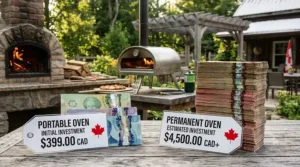
Looked at purely as cost-per-use, the math shifts depending on how often you cook. A C$550 Koda 16 used twice monthly for five years works out to roughly C$4.60 per use before fuel — genuinely cheap entertainment. A C$3,500 Dome used at the same frequency costs closer to C$29 per use over the same window, though that gap narrows considerably for households cooking weekly, where the Dome’s superior retention and capacity reduce fuel waste and cooking time per session. Maintenance costs trend opposite to purchase price in an interesting way: portable gas ovens need occasional burner cleaning and the eventual stone replacement, generally under C$50 a year; the CBO-750 and similar masonry builds need almost nothing beyond an annual visual inspection, since refractory material is built for decades of heavy use.
| Cost Factor | Portable (e.g., Koda 16) | Permanent (e.g., CBO-750) |
|---|---|---|
| Upfront cost | C$500-C$650 | C$2,900-C$3,900+ (kit only) |
| Annual maintenance | Under C$50 | Near zero after first year |
| Expected lifespan | 5-10 years | 20+ years |
| Resale/property value | Minimal | Can add to property value |
That lifespan gap is the real story in the table above — a permanent oven amortized over twenty years can genuinely undercut a portable oven replaced twice in that span, but only if you actually use it enough to justify never moving it.
✅ For most households cooking a few times a month, a mid-range portable oven remains the financially smarter choice; permanence pays off specifically for frequent, large-scale entertaining.
Safety, Regulations & Compliance Guide
Whichever side of the portable vs permanent pizza oven decision you land on, Canadian safety rules apply regardless of price point. Health Canada specifically flags propane and butane outdoor cooking appliances as carrying real flash-fire and leak risks if not certified and maintained properly, recommending buyers confirm CSA or Intertek certification marks before purchase. Gas-fired outdoor cooking appliances sold in Canada are tested against standards maintained by the CSA Group specifically classifying products as portable, stationary, or built-in, which is exactly the distinction this article has walked through.
❌ Never store a spare propane cylinder inside your home, garage attached to living space, or stairwell.
✅ Always keep cylinder relief valves clear of building openings and air intakes, generally at least one to three metres depending on your local fire code.
❌ Never assume your condo or rental allows what your neighbour’s building allows — rules genuinely differ by province and even by individual strata corporation.
✅ Always inspect gas hoses for cracking each spring before first use, and replace propane tanks showing rust or damage rather than risking a slow leak.
What to Expect: Real-World Performance
Spec sheets promise temperatures and timing; real backyards deliver wind, cold starts, and impatient guests standing around hungry. In practice, expect portable gas ovens to take 5-10 minutes longer to reach cooking temperature on a cool spring evening than their rated time suggests, since ambient temperature genuinely affects heat-up speed more than most listings admit. Expect your first three or four pizzas, regardless of oven, to be a learning curve in peel technique and dough handling — even the best oven can’t fix a pizza that sticks to the peel and folds in on itself mid-launch. Expect wood and multi-fuel ovens to demand more attention throughout the cook, with periodic small log or pellet additions, versus the largely hands-off nature of gas once it’s dialed in. And expect, almost universally according to aggregated reviewer sentiment across every oven in this guide, that your second pizza night goes dramatically better than your first — this is genuinely a skill that compounds fast with practice.
Frequently Asked Questions
❓ Is a portable pizza oven worth it compared to a permanent one?
❓ Can I use a propane pizza oven on an apartment balcony in Canada?
❓ How long does a built-in pizza oven kit take to install?
❓ What's the cheapest way to get into outdoor pizza ovens in Canada?
❓ Do permanent pizza ovens need a building permit in Canada?
Conclusion
The portable vs permanent pizza oven debate isn’t really about which oven cooks a better pizza — most of these seven, used correctly, will produce a genuinely excellent pie. It’s about which commitment actually matches your life right now. A renter or a family still finding their footing in this hobby loses nothing by starting portable; an Ooni Koda 16 or Gozney Roccbox delivers real performance without locking anyone into anything. A homeowner with a settled patio and a genuine appetite for entertaining, on the other hand, may find that a Gozney Dome or a built-in Chicago Brick Oven setup pays for itself in both flavour and backyard character over the years ahead. As Global News’ roundup of Canadian pizza ovens notes, the right choice ultimately comes down to your space, your fuel preference, and how much guesswork versus precision you want from the cooking process. Start with where you actually live and how often you’ll genuinely use it — the rest of the decision tends to sort itself out from there.
✨ Ready to fire up your first (or finest) pizza night?
🔍 Browse the full lineup above and check current Amazon.ca pricing before you decide. Whichever you choose, your backyard is about to get a lot more popular on Friday nights.
Recommended for You
- Best Budget Pizza Oven Canada 2026: 7 Top Picks Reviewed
- Wood Fired vs Gas Pizza Oven: 7 Best Picks in Canada (2026)
- Ooni Fyra 12 Review: 7 Best Wood Pellet Pizza Ovens in Canada 2026
Disclaimer: This article contains affiliate links. As an Amazon Associate, I earn from qualifying purchases. If you purchase products through these links, we may earn a small commission at no additional cost to you.
✨ Found this helpful? Share it with your friends! 💬🤗
