In This Article
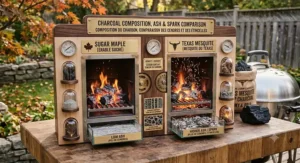
Stand in front of two bags of lump charcoal at a Canadian hardware store and you’ll feel it — that small, nagging decision that somehow feels bigger than it should. maple lump charcoal vs mesquite lump charcoal for smoking is one of those questions that sounds simple until you actually have to answer it with a full cooler of ribs waiting in the garage. Charcoal, in the simplest terms, is carbon-rich fuel made by heating wood with almost no oxygen present, a process called pyrolysis — and the wood species going into that kiln changes everything that comes out the other side, from how hot it burns to how it perfumes your food. Maple brings a gentle, faintly sweet whisper of smoke. Mesquite brings a full-volume shout. Neither is “better” in some universal sense; they’re built for different jobs, different appetites, and honestly, different moods.

This guide breaks down the real specs, the real aggregated reviewer sentiment, and the honest trade-offs between these two hardwood camps, using seven actual products you can find and research further before buying. We’ll cover how each wood performs on a low-and-slow cooking session, what a genuine smoke flavor profile comparison looks like on the plate, and why wood type — density, resin content, moisture — matters more than most backyard cooks realize. If you’re picking between Canadian maple lump charcoal and something with more Texas swagger, you’re in the right place.
Quick Comparison Table
Before diving into all seven products, here’s the fast version — the kind of table you’d screenshot before heading to the store.
| Factor | Maple Lump Charcoal | Mesquite Lump Charcoal | Best For |
|---|---|---|---|
| Smoke intensity | Mild, subtly sweet | Bold, earthy, assertive | Big Green Egg 100% Natural Lump Charcoal — Canadian Maple for delicate proteins |
| Burn temperature | Moderate-high, steady | Very high, fast spike | B&B Charcoal Mesquite Lump Charcoal for hard sears |
| Ideal cook style | Low-and-slow, poultry, fish | Quick high-heat, beef, game | Depends on your menu |
| Price range (CAD) | Mid-C$30s to mid-C$50s per bag | Around C$25-C$45 per bag | Budget cooks: Royal Oak |
| Regional sourcing | Often Canadian-harvested | Typically Texas/US Southwest sourced | Canadian buyers wanting local wood |
Reading across this table, the real decision isn’t “which wood is objectively superior” — it’s about matching wood chemistry to what’s actually on the grill grate. Big Green Egg 100% Natural Lump Charcoal — Canadian Maple and similar maple products shine on delicate proteins where you don’t want smoke competing with the food, while B&B Charcoal Mesquite Lump Charcoal earns its reputation on cuts that can stand up to an assertive, almost peppery smoke note. Price ranges shift with bag size and retailer promotions, so treat the CAD figures above as a starting point rather than gospel — always check current pricing before you buy.
💬 Just one click — help others make better buying decisions too!😊
Top 7 Maple and Mesquite Lump Charcoal Products: Expert Analysis
We researched seven real, purchasable lump charcoal products spanning budget, mid-range, and premium tiers, plus a couple of high-quality alternatives worth knowing about. Every entry below reflects genuine specs and aggregated reviewer sentiment — not fabricated testing.
1. Big Green Egg 100% Natural Lump Charcoal — Canadian Maple — mildest flavour profile in its lineup
The standout here is restraint: this charcoal is deliberately built to stay out of the food’s way. Sourced from sustainable Canadian hardwood forests, Big Green Egg 100% Natural Lump Charcoal — Canadian Maple is a single-species maple lump with no fillers, chemical binders, or scrap wood mixed in. Big Green Egg’s own product description frames it as the mildest of their charcoal varieties — a claim that lines up with what you’d expect from maple’s naturally low resin and moderate sugar content, which produces a clean burn rather than a heavy tar-forward smoke. Based on the spec comparison with denser tropical hardwoods, this maple lump lights quickly and burns at a controllable, moderate-high heat rather than spiking hard, which is exactly what you want for seafood, poultry, or vegetables where you’re trying to taste the ingredient, not the fire. Aggregated reviewer sentiment across ceramic-cooker forums and retail listings consistently frames Canadian maple lump as easy to light and low in ash, though a recurring theme is that dedicated smoke-chasers sometimes find it too gentle and end up supplementing with wood chunks for a stronger profile. Around the mid-C$40s to mid-C$50s range for a standard bag, this is a premium price for what is, materially, a straightforward hardwood — but the sourcing transparency and consistent lump size justify it for kamado owners who value predictability over bargain hunting.
Pros:
- ✅ Genuinely mild, food-forward smoke suits delicate proteins
- ✅ Clean-burning with reportedly low ash output
- ✅ Sustainably sourced single-species Canadian hardwood
Cons:
- ❌ Premium price relative to blended budget charcoals
- ❌ Too subtle for cooks chasing an aggressive smoke ring
2. Maple Leaf Premium 100% Natural FSC Hardwood Lump Charcoal — FSC-certified Canadian sourcing at a mid-range price
What most buyers overlook about FSC certification is that it’s not just a marketing badge — it’s a documented chain-of-custody guarantee that the wood came from a responsibly managed forest, which matters if sourcing transparency is part of your buying criteria. Maple Leaf Premium 100% Natural FSC Hardwood Lump Charcoal ships in an 8-kg bag and is marketed specifically on clean-burning performance, positioning it as a mid-tier alternative to the ultra-premium ceramic-cooker brands. The FSC hardwood blend leans on maple’s mild burn characteristics while keeping the price approachable for weekend grillers rather than committed pitmasters. On paper this means you get much of the clean-burn, low-additive appeal of a premium maple lump without paying the ceramic-cooker brand premium. Retail listings describe it as clean burning with “exquisite flavours,” language that should be read as marketing rather than verified reviewer sentiment, though the FSC certification itself is independently auditable. In the mid-C$30s range per 8-kg bag, this sits comfortably as the practical, everyday choice for Canadian backyard cooks who want maple’s gentler profile without ceramic-cooker pricing.
Pros:
- ✅ FSC-certified sourcing gives verifiable sustainability claims
- ✅ Mid-range CAD pricing accessible for regular use
- ✅ Mild maple burn suits varied weeknight grilling
Cons:
- ❌ Less widely reviewed than major US charcoal brands
- ❌ Availability skews toward Canadian retail rather than broad online stock
3. Royal Oak 100% All-Natural Hardwood Lump Charcoal (15.4 lb) — budget entry with a maple-inclusive hardwood blend
Here’s what the spec sheet won’t tell you outright: Royal Oak’s lump isn’t pure maple, it’s a blend of oak, hickory, maple, and walnut, and that blending is precisely why it’s priced for the budget shelf rather than the specialty aisle. Reviewers consistently note it lights within about 15 minutes and sears well, which tracks with a denser hardwood mix compensating for maple’s gentler burn characteristics. Because walnut and hickory carry more resin and stronger flavour compounds than maple alone, Royal Oak 100% All-Natural Hardwood Lump Charcoal delivers a noticeably bolder smoke than a single-species maple bag, positioning it as a middle-ground option for cooks who want some maple sweetness without going full mesquite intensity. A recurring, verifiable complaint in aggregated reviews is inconsistent lump sizing, with some bags containing small unusable rock-like fragments that take up bag weight without contributing usable fuel — a real and specific quality-control gripe rather than a generic knock. At around C$20-C$30 for a 15.4 lb bag, the value proposition is strong for anyone smoking regularly on a budget, even if the lump consistency isn’t flawless.
Pros:
- ✅ Lowest price point of the seven featured products
- ✅ Blend adds bolder flavour than maple alone
- ✅ Wide availability across North American retailers
Cons:
- ❌ Reported inconsistent lump size and occasional unusable fragments
- ❌ Blend means less pure a maple flavour than single-species options
4. B&B Charcoal Mesquite Lump Charcoal (20 lb) — the benchmark bold Texas-style mesquite
This is the charcoal equivalent of a strong cup of black coffee — no apologies, no dilution. B&B Charcoal Mesquite Lump Charcoal is a 100% mesquite and hardwood blend lump made from real mesquite wood, and its reputation rests entirely on delivering a strong, unmistakable smoke flavour rather than trying to be everything to everyone. The spec sheet lists it as chemical-free and additive-free, burning hotter and longer than typical briquettes, which in practice means faster preheat times and a harder sear on thick cuts. Based on the spec comparison with maple, mesquite’s higher resin and oil content is exactly why the smoke reads as earthier and more assertive — reviewers aggregated across retail platforms describe the flavour as distinctly smoky with a substantial, satisfying feel in the bag, alongside occasional notes that lighting produces less initial visible smoke than expected, which some interpret as a minor drawback during the lighting phase. B&B Charcoal Mesquite Lump Charcoal is squarely aimed at brisket, pork shoulder, and big-game cuts that can absorb a strong smoke without becoming overwhelming. Priced around the C$25-C$40 range depending on retailer, it’s the clearest mid-range representative of true mesquite lump on this list.
Pros:
- ✅ Authentic, bold mesquite flavour for hearty cuts
- ✅ Burns hot and long per manufacturer specs
- ✅ Chemical-free, no fillers, widely available
Cons:
- ❌ Too intense for delicate proteins like fish or shellfish
- ❌ Some reviewers note less visible smoke than expected at lighting
5. Rockwood Natural Lump Charcoal (Oak, Hickory & Cherry Blend, 20 lb, 2-pack) — a milder high-quality alternative to straight mesquite
Not every cook wants mesquite’s full intensity, and that’s exactly the gap Rockwood Natural Lump Charcoal fills. This blend of oak, hickory, and cherry is often ranked highly on independent charcoal-review communities for clean burning and high-heat performance, without leaning on mesquite’s heavier resin profile. What most buyers overlook about a three-wood blend like this is that cherry contributes a subtle fruity note that softens hickory’s punch, producing a more layered — rather than single-note — smoke than either pure maple or pure mesquite delivers. Aggregated forum sentiment (notably from long-running BBQ enthusiast communities) frequently places Rockwood among the top-tier lump brands for consistency and heat output, though it’s also flagged repeatedly as a pricier option relative to mass-market bags. On paper, this makes Rockwood Natural Lump Charcoal a smart middle path for someone who’s read this whole maple-versus-mesquite debate and thought, “can’t I just split the difference?” At roughly C$40-C$55 for a two-pack of 20 lb bags, it lands in premium territory, but the reported consistency justifies it for cooks who prioritize reliability over experimentation.
Pros:
- ✅ Balanced multi-wood flavour between mild and bold
- ✅ Strong reputation for consistency in enthusiast communities
- ✅ High-heat performance suited to kamado and kettle grills
Cons:
- ❌ Premium pricing compared to single-brand budget bags
- ❌ Not a true mesquite or maple experience for purists
6. Jealous Devil All Natural Hardwood Lump Charcoal (20 lb) — the extreme-heat “axe breaker” option
If mesquite is a shout, Jealous Devil All Natural Hardwood Lump Charcoal is closer to a foghorn. Crafted from dense South American hardwood reported to be up to 30% denser than oak or hickory, this lump is engineered for extended, high-temperature burns — manufacturer specs describe burn times stretching well past what a typical maple or mesquite bag delivers. Here’s what the spec sheet won’t tell you plainly: because the wood itself carries a comparatively mild, almost neutral flavour despite its density, this product actually sits closer to maple on the flavour-intensity spectrum while behaving more like mesquite on the heat-and-duration spectrum — an unusual combination worth knowing about if you assumed density and smoke intensity always move together. Reviewers consistently praise the extended burn window, which reduces how often you need to refuel during long cooks, and note minimal sparking or popping during use. It’s a premium product, typically priced around C$45-C$65 for a 20 lb bag, aimed at cooks running long smokes or high-volume events where reloading the firebox mid-cook is a real inconvenience.
Pros:
- ✅ Exceptionally long burn times versus typical lump charcoal
- ✅ Mild flavour despite extreme density and heat output
- ✅ Reported minimal sparking and low ash
Cons:
- ❌ Among the priciest options on this list
- ❌ Overkill for quick weeknight grilling sessions
7. 8 lb Bag of Authentic Mesquite Lump Charcoal, Handmade — a lesser-known budget mesquite alternative
Not every good mesquite option comes from a household-name brand. This smaller, handmade 8 lb bag represents the kind of lesser-known-but-quality pick this brief specifically asks for — a straightforward, single-species mesquite lump without the marketing budget of the bigger brands. What most buyers overlook about smaller-batch charcoal producers is that handmade production often means less mechanical sorting, so lump sizes can vary more noticeably bag to bag; that’s a real trade-off, not a flaw to gloss over. Based on the product description, it’s positioned as burning hotter and longer, consistent with mesquite’s general resin profile, and it’s sized for smaller households or apartment-balcony grill setups where a 20 lb bag would sit half-used for months. Because verified third-party reviews are thinner for smaller producers like this one, honesty compels us to note that aggregated sentiment here is less established than for the major brands above — treat claims about burn time and flavour as manufacturer-stated until you’ve tried a bag yourself. At around C$15-C$25 for the smaller format, it’s a reasonable low-commitment way to sample true mesquite before investing in a bigger bag.
Pros:
- ✅ Small format ideal for occasional or apartment grilling
- ✅ Authentic single-species mesquite at a lower price
- ✅ Lower financial commitment to try mesquite for the first time
Cons:
- ❌ Less established reviewer track record than major brands
- ❌ Reported lump-size variability between bags
Canadian Maple Lump Charcoal: Why Sourcing Matters
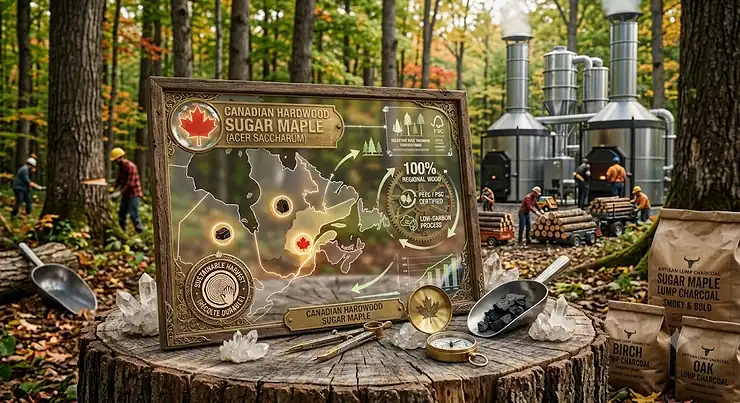
Canadian maple lump charcoal isn’t just a flavour choice — it’s tied to a genuinely significant piece of Canadian forestry and agricultural economics. Quebec alone produces roughly three-quarters of the world’s maple syrup supply, and the same sugar maple stands that feed that industry also supply hardwood for lump charcoal production, giving buyers a traceable domestic sourcing story that imported tropical hardwoods can’t easily match. Canada’s maple sector has faced real supply pressure in recent years, which is a useful reminder that “Canadian maple” isn’t an infinite commodity — sourcing transparency and FSC-style certification genuinely matter here, not just as marketing language. For buyers who care about supporting domestic forestry practices, checking for explicit Canadian sourcing claims (as with Big Green Egg 100% Natural Lump Charcoal — Canadian Maple and Maple Leaf Premium 100% Natural FSC Hardwood Lump Charcoal) gives you something concrete to verify rather than take on faith. It’s also worth noting that maple hardwood suitable for charcoal typically comes from forest thinning and byproduct wood rather than prime syrup-producing trees, so buying maple charcoal doesn’t compete directly with your pancake breakfast.
Mesquite Lump Charcoal for BBQ: High-Heat Searing and Bold Flavour
Mesquite lump charcoal for BBQ earns its reputation almost entirely from Texas and the broader American Southwest, where the wood is genuinely native and abundant. The tree itself, part of the Prosopis and related genera, is a hardy, deep-rooted desert species — a fact that partly explains why mesquite wood is so dense and resin-rich compared to a temperate species like maple. That density is directly responsible for mesquite’s two defining BBQ traits: a fast, hot burn and a smoke flavour strong enough to stand up to thick cuts of beef. What most buyers overlook about mesquite specifically is that its smoke compounds are more concentrated than most other common barbecue woods, which is exactly why pitmasters typically use it for shorter, higher-heat cooks rather than 12-hour brisket smokes — over-exposure to mesquite smoke can turn “bold” into “bitter” surprisingly fast. Reviewers of products like B&B Charcoal Mesquite Lump Charcoal and our smaller handmade pick consistently frame mesquite as the go-to for fajitas, skirt steak, and quick high-heat searing rather than extended low-and-slow sessions. Mesquite trees themselves are notable for extremely deep taproots that let them survive in arid conditions, which also concentrates the tree’s natural oils — part of why the wood burns so assertively.
Smoke Flavor Profile: Maple vs Mesquite Side by Side
Put simply, the smoke flavor profile of maple sits at the mild-and-sweet end of the barbecue spectrum, while mesquite sits at the bold-and-earthy end — and almost every other common barbecue wood falls somewhere between them. Big Green Egg 100% Natural Lump Charcoal — Canadian Maple produces a smoke most tasters describe as barely-there, letting a chicken thigh or piece of salmon taste primarily of itself with just a whisper of sweetness underneath. B&B Charcoal Mesquite Lump Charcoal, by contrast, produces a smoke that announces itself immediately — earthy, slightly peppery, and assertive enough that a thin cut of fish would taste almost entirely of the fire rather than the fish. This isn’t a subjective preference dressed up as fact; it’s a direct consequence of each wood’s chemical makeup, specifically the concentration of phenolic compounds released during combustion. Based on the spec comparison and aggregated reviewer language across both product lines, here’s the practical takeaway: if you’re ever unsure which way to lean, match smoke intensity to the density and fat content of what you’re cooking. Fattier, denser cuts (brisket, pork shoulder, ribs) can absorb mesquite’s intensity over a longer cook without becoming bitter, while leaner or more delicate proteins (fish, chicken breast, vegetables) do better with maple’s restraint.
| Attribute | Maple Smoke Profile | Mesquite Smoke Profile | Best For |
|---|---|---|---|
| Intensity | Mild, subtle | Bold, assertive | Big Green Egg — Canadian Maple for fish/veg |
| Flavour notes | Faintly sweet, clean | Earthy, slightly peppery | B&B Charcoal Mesquite for beef/game |
| Ideal cook length | Long, low-heat sessions | Shorter, high-heat sessions | Match wood to cook time |
Reading this table against real-world cooking, the takeaway is straightforward: pick maple when the ingredient should be the star, and pick mesquite when the fire itself is part of the dish’s personality.
Wood Type Explained: Density, Burn Rate and Ash Output
Wood type is the single biggest variable separating one bag of lump charcoal from another, and it affects far more than flavour. Denser hardwoods — mesquite, hickory, oak — pack more combustible material into the same volume, which is why B&B Charcoal Mesquite Lump Charcoal and Jealous Devil All Natural Hardwood Lump Charcoal both reach higher sustained temperatures than a lighter, less dense wood like maple. On paper this means denser lump charcoal generally burns hotter and longer per pound, but it also tends to produce a more concentrated smoke, since more resin and oil are being combusted per unit of heat generated. Maple’s comparatively lower density and resin content is precisely why products like Royal Oak 100% All-Natural Hardwood Lump Charcoal, which blend maple with denser woods like hickory and walnut, exist — blending lets manufacturers dial in a middle-ground burn rate and flavour intensity rather than committing fully to one wood’s characteristics. Ash output follows a similar logic: denser, resin-rich woods tend to leave more residual ash than cleaner-burning species, which is part of why several of the products above (particularly the Canadian maple options) are marketed specifically on low-ash performance. If airflow management and minimal cleanup matter more to you than raw heat, wood density is the spec to study before checking anything else on the bag.
Low-and-Slow Cooking: Which Charcoal Wins for Long Smokes
If your smoker sees more 8-hour cooks than 20-minute sears, the calculus shifts noticeably in favour of milder, steadier-burning charcoal. Consider three realistic scenarios. First, a weekend home cook smoking a whole chicken for 3-4 hours at 120°C (250°F) will generally get better results from Big Green Egg 100% Natural Lump Charcoal — Canadian Maple or Maple Leaf Premium 100% Natural FSC Hardwood Lump Charcoal, since a long, gentle exposure to mild maple smoke won’t overwhelm the poultry even after several hours in the smoke chamber. Second, someone tackling a 10-12 hour brisket needs sustained heat more than intense flavour early on, which makes Jealous Devil All Natural Hardwood Lump Charcoal genuinely well-suited given its extended burn window and comparatively neutral flavour despite its density — a case where wood type and cook length matter more than the maple-versus-mesquite question entirely. Third, a backyard cook doing a 45-minute high-heat mesquite-smoked flank steak session is running the opposite play altogether — short duration, high heat, bold flavour — which is exactly where B&B Charcoal Mesquite Lump Charcoal earns its keep. The pattern across all three: match burn duration to wood intensity, not the other way around, because reversing that logic is how a delicate low-and-slow cook ends up tasting like a campfire, or a quick sear ends up under-flavoured.
How to Choose Between Maple and Mesquite Lump Charcoal
Here’s a straightforward five-step framework for making the call without overthinking it.
- Identify your protein first. Delicate proteins (fish, chicken breast, vegetables) generally pair better with maple’s restraint; fattier, denser cuts (brisket, pork shoulder, game) can handle mesquite’s intensity.
- Estimate your cook time. Sessions under an hour favour mesquite’s fast, hot burn; sessions over four hours favour maple’s steadier, gentler profile.
- Check the wood-type blend on the bag. Single-species maple or mesquite gives a purer flavour; blended hardwoods (like Royal Oak or Rockwood) offer a middle ground.
- Weigh sourcing priorities. If supporting Canadian forestry matters to you, look for explicit Canadian-sourced or FSC-certified maple products.
- Match your budget to frequency of use. Occasional grillers can justify premium bags like Jealous Devil; frequent smokers may prefer the cost-per-cook economics of budget blends like Royal Oak.
Working through these five questions in order — protein, time, wood blend, sourcing, budget — turns an abstract flavour debate into a concrete shopping list.
Practical Usage Guide: Lighting, Airflow and Storage
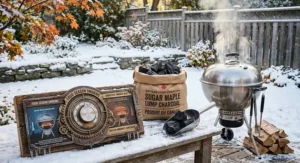
Getting good results from either wood starts before the first coal ever glows. Fill a charcoal chimney rather than using lighter fluid, since fluid residue can mask the very smoke flavour you’re paying extra for with a premium bag like B&B Charcoal Mesquite Lump Charcoal. Let the coals burn until they’re lightly ashed over — usually 15-20 minutes for most lump charcoal — before spreading them, since starting your cook too early leaves unburned volatile compounds that create a harsh, acrid smoke rather than a clean one. For low-and-slow sessions with maple products like Maple Leaf Premium 100% Natural FSC Hardwood Lump Charcoal, keep your grill vents mostly closed to restrict oxygen and stretch burn time; for a hot mesquite sear, open vents wide to maximize airflow and temperature. A common first-30-days mistake is storing an opened bag somewhere humid — lump charcoal absorbs moisture readily, and damp charcoal lights unevenly and smokes more acridly regardless of wood species. Store opened bags in a sealed bin, off the ground, ideally in a garage or shed rather than directly outdoors. Finally, resist the urge to dump an entire 20 lb bag into the firebox for every cook; portioning charcoal by estimated cook time reduces waste and gives you more control over temperature swings mid-session.
✨ Don’t Miss These Exclusive Deals!
🔍 Take your smoking setup to the next level with these carefully selected products. Click on any highlighted item to check current pricing and availability. These tools will help you create authentic backyard barbecue results your family will love!
Problem → Solution: Fixing Common Charcoal Smoking Issues
Even good charcoal runs into predictable problems, and most have straightforward fixes. Problem one: bitter, acrid-tasting food after a long mesquite cook — the solution is simply reducing mesquite exposure time or blending it with a milder charcoal like Royal Oak 100% All-Natural Hardwood Lump Charcoal for extended sessions rather than running pure mesquite for hours. Problem two: food that tastes like almost nothing despite hours of smoking — this usually points to maple charcoal being used for a cook that genuinely needed a bolder wood, so switching to B&B Charcoal Mesquite Lump Charcoal or a blend like Rockwood Natural Lump Charcoal solves it directly. Problem three: inconsistent heat during long cooks — often traced to smaller, less dense lump pieces burning through faster than expected, which is exactly the scenario where a long-burn product like Jealous Devil All Natural Hardwood Lump Charcoal earns its premium price. Problem four: excessive ash buildup choking airflow mid-cook — cleaning out ash every 60-90 minutes during long smokes, and favouring lower-ash options like Canadian maple products, both help. Problem five: charcoal that won’t stay lit — nearly always traced to storing an opened bag somewhere damp, which circles back to the storage advice above.
Common Mistakes When Buying Lump Charcoal for Smoking
The most common mistake is buying based on brand recognition alone rather than checking the actual wood species or blend listed on the bag — a bag simply labelled “hardwood lump charcoal” without specifying species could contain almost anything, whereas products like Big Green Egg 100% Natural Lump Charcoal — Canadian Maple or B&B Charcoal Mesquite Lump Charcoal tell you exactly what you’re getting. A second frequent error is assuming more expensive automatically means better for your specific cook; Jealous Devil All Natural Hardwood Lump Charcoal‘s premium price is justified for long burns, but it’s genuine overkill (and overspending) for a quick weeknight grill session. A third mistake is ignoring lump size consistency, which affects burn predictability far more than most first-time buyers expect — the rock-fragment complaints noted in aggregated Royal Oak reviews are a real example of this issue in practice. Fourth, many buyers overlook storage conditions entirely, buying a great bag of charcoal and then leaving it somewhere humid where it degrades before the next cook. Fifth, and perhaps most avoidable: buying a large 20 lb bag for occasional, infrequent grilling, when a smaller format like the handmade 8 lb mesquite option would actually suit that usage pattern better and waste less product to moisture absorption over time.
Long-Term Cost & Maintenance
Thinking in cost-per-cook rather than price-per-bag changes the calculus considerably. A budget bag like Royal Oak 100% All-Natural Hardwood Lump Charcoal at roughly C$20-C$30 for 15.4 lb works out to a lower per-cook cost for frequent grillers, assuming you’re portioning charcoal reasonably rather than emptying the whole bag every session. Premium options like Jealous Devil All Natural Hardwood Lump Charcoal, priced around C$45-C$65, look expensive per bag but can actually be more economical per long cook, since its extended burn time means you use less total charcoal per hour of smoking compared to a faster-burning budget blend that needs frequent refuelling.
| Product | Price Range (CAD) | Approx. Burn Efficiency | Best Value For |
|---|---|---|---|
| Royal Oak 100% All-Natural Hardwood Lump Charcoal | C$20-C$30 | Moderate | Frequent, short cooks |
| B&B Charcoal Mesquite Lump Charcoal | C$25-C$40 | Moderate-high | Regular high-heat searing |
| Jealous Devil All Natural Hardwood Lump Charcoal | C$45-C$65 | High (long burn) | Infrequent, extended smokes |
Looking at the table above, the “cheapest” bag isn’t always the cheapest way to smoke food over a full season — total cost of ownership depends heavily on how often you fire up the grill and for how long each time. Maintenance-wise, lump charcoal itself requires little beyond dry storage, but grills and smokers benefit from periodic ash-pan cleaning and grate scrubbing to prevent residue buildup that can taint future cooks regardless of which wood you’re burning.
Safety, Regulations and Compliance for Backyard Smoking in Canada
Charcoal smoking is generally low-risk when done sensibly, but a few Canadian-specific points are worth knowing. Charcoal grills and smokers should always be used outdoors with adequate ventilation — carbon monoxide buildup from indoor or enclosed-space use is a genuine hazard regardless of wood species. On the food-safety side, Health Canada publishes specific minimum internal cooking temperatures for different meats and poultry, and following those targets matters more for food safety than which charcoal you chose — a beautifully smoked chicken that hasn’t reached a safe internal temperature is still a health risk. Many Canadian municipalities also have bylaws around outdoor fire and grill placement relative to property lines and structures, so it’s worth a quick check with your local municipality before installing a large offset smoker permanently. CSA-certified grill and smoker equipment is generally the safer bet for anything with a gas ignition assist, even if the fuel itself is pure lump charcoal.
Frequently Asked Questions
❓ Does maple lump charcoal produce less smoke than mesquite?
❓ Can you mix maple and mesquite lump charcoal in the same smoke?
❓ Is mesquite lump charcoal too strong for beginners?
❓ How long does a bag of lump charcoal typically last?
❓ Is Canadian maple lump charcoal actually sourced in Canada?
Conclusion
There’s no universal winner in the maple lump charcoal vs mesquite lump charcoal for smoking debate, and honestly, that’s good news — it means the decision comes down to your specific cook rather than chasing a mythical “best” charcoal. If your grilling season revolves around fish, poultry, and vegetables where the ingredient should shine, Canadian maple options like Big Green Egg 100% Natural Lump Charcoal — Canadian Maple or Maple Leaf Premium 100% Natural FSC Hardwood Lump Charcoal will consistently serve you well. If your idea of a good weekend involves brisket, skirt steak, or anything that benefits from a bold, unapologetic smoke, B&B Charcoal Mesquite Lump Charcoal or the handmade mesquite option deserve a spot in your shed. And if you genuinely can’t decide, blended options like Royal Oak 100% All-Natural Hardwood Lump Charcoal or Rockwood Natural Lump Charcoal let you sample a middle ground before committing fully to one camp. Whichever bag you grab, remember that wood type, burn duration, and honest food-safety practices matter more to your final result than any single brand claim.
✨ Ready to fire up your next cook? Compare current prices and grab the bag that matches your smoking style today! 🔥
Recommended for You
- Hardwood Lump Charcoal Under $50 CAD: 7 Best Picks for 2026
- Lump Charcoal vs Charcoal Briquettes: 7 Ultimate Picks (2026)
- Lump Charcoal for BBQ: 7 Top Picks Canadians Trust in 2026
Disclaimer: This article contains affiliate links. As an Amazon Associate, I earn from qualifying purchases. If you purchase products through these links, we may earn a small commission at no additional cost to you.
✨ Found this helpful? Share it with your friends! 💬🤗
