In This Article
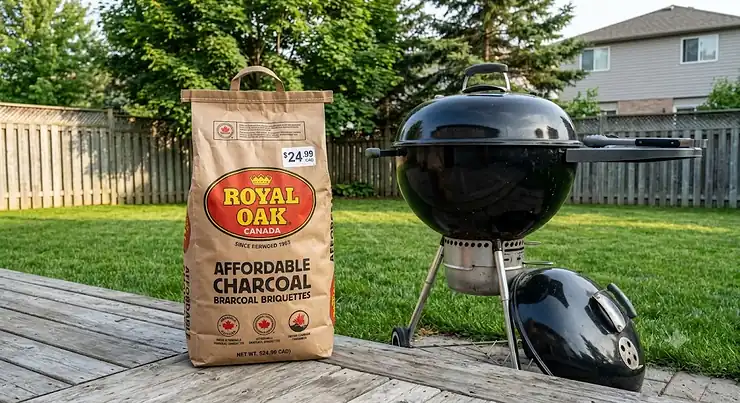
Somewhere between the propane snob who “doesn’t do smoke” and the lump charcoal purist who treats a chimney starter like a religious rite, there’s a much bigger group of people who just want their burgers to taste like summer without draining their wallet. That’s the sweet spot this guide lives in: charcoal briquettes under $30 CAD, and specifically, which real bags on the market actually deliver for that money. Charcoal briquettes are compressed, uniform-shaped fuel pieces made from charred wood byproducts and a binder, engineered to burn consistently rather than unpredictably like raw lump charcoal.
Prices for grilling fuel have crept up the way everything else has, and it’s genuinely easy to overspend on a bag of what is, chemically speaking, compressed wood dust. So we dug through real product listings, real specs, and real aggregated review sentiment for seven bags that stay under, or very close to, the $30 CAD line — while covering different needs: dead-simple budget grilling, bulk backyard entertaining, and the slightly fussier premium end for people who care about ash volume and burn curves. Along the way we’ll walk through what actually goes into a briquette, how price per bag stacks up against briquette lifespan, and where bulk buying genuinely saves money versus where it just ties up your garage shelf. Let’s get into it.
What Counts as “Charcoal Briquettes Under $30 CAD”?
Charcoal briquettes under $30 CAD generally means a mid-to-large bag — roughly 7 to 20 pounds (3 to 9 kg) — of pillow-shaped compressed charcoal fuel, priced anywhere from the low teens up to just under thirty dollars depending on brand, additives, and bag size. At that price point you’re mostly choosing between basic wood-and-starch briquettes and slightly more refined blends with fewer fillers.
It’s worth being upfront: Amazon.ca and most Canadian retailers don’t post static prices — they shift with promotions, shipping costs, and stock levels — so every figure in this article is a range based on research at the time of writing, not a guarantee of what you’ll see when you check out. Always confirm current pricing on the product page before you buy.
Quick Comparison Table
| Pick | Best For | Bag Size | Approx. Price Range (CAD) |
|---|---|---|---|
| Royal Oak Natural Organic Char-Briquettes | Tightest budget | 7 lb (3.2 kg) | Under C$16 |
| Nature’s Grilling Gourmet Hardwood Briquettes | Canadian small-batch value | 12 lb (5.4 kg) | C$13–C$18 |
| Kingsford Original Charcoal Briquettes | Best all-rounder | 7.26 kg (16 lb) | C$18–C$24 |
| Weber Briquettes | Most consistent burn | 4 kg (8.8 lb) | C$22–C$28 |
| Napoleon Coconut Shell Briquettes (McBrickett) | Longest burn time | 6.6 lb (3 kg) | C$26–C$30 range |
A quick scan of this table already tells you something useful: bag size and price don’t move together in a straight line, because binder quality, sourcing, and packaging all pull in different directions. The Royal Oak Natural Organic Char-Briquettes wins on raw affordability, but the Kingsford Original Charcoal Briquettes offers the widest availability and the most predictable performance for the price. If you only read one row before clicking away, make it the Weber Briquettes line — it consistently shows up in aggregated reviews as the pick people don’t regret buying twice.
💬 Just one click — help others make better buying decisions too!😊
Top 7 Charcoal Briquettes Under $30 CAD: Expert Analysis
Below are seven real, currently available products that fit — or sit right at the edge of — the under-$30 CAD range. We’ve mixed budget bags, mid-range all-rounders, a couple of premium picks, and one genuinely different specialty option so there’s something here regardless of how often you fire up the grill.
1. Royal Oak Natural Organic Char-Briquettes — best price-per-pound for casual grillers
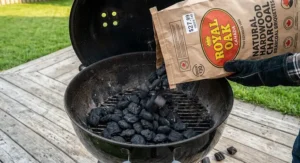
The standout here is simple: this is one of the cheapest legitimate briquette bags you can put in a cart. The 7 lb bag uses Royal Oak’s ridge design, which increases surface area on each briquette so airflow moves through the charcoal pile faster during ignition.
In practice, that ridge shape means a shorter wait between lighting and cooking — typically ready to grill in around 15 minutes, similar to pricier competitors, without needing a chimney starter to hit that mark. The composition leans on natural hardwood and a starch binder rather than coal dust fillers, which matters if you’ve ever choked on the chemical tang that cheaper “instant light” bags leave behind.
Based on the spec comparison against other budget bags in this roundup, Royal Oak earns its spot for anyone grilling once or twice a week who doesn’t want to think too hard about fuel. It’s not the pick for a six-hour low-and-slow smoke, but for weeknight burgers and quick weekend cookouts it punches well above its price.
Reviewers consistently report solid, even heat with manageable ash, though a recurring theme in aggregated feedback across Royal Oak’s briquette line is that smaller bags sell out fast during peak grilling season, so stocking up early is smart.
Pros:
- ✅ Among the lowest price-per-bag options in this list
- ✅ Ridge design speeds up ignition without a chimney
- ✅ Widely available with consistent stock through summer
Cons:
- ❌ Smaller bag size means more frequent repurchasing
- ❌ Not ideal for extended low-and-slow smoking sessions
Price sits comfortably under C$16 for the 7 lb bag, and at that price the value case is hard to argue with for casual, frequent grillers.
2. Nature’s Grilling Gourmet Hardwood Charcoal Briquettes — best lesser-known Canadian pick
This one’s the wildcard of the group, and that’s exactly why it earns a spot. Marketed as free of coal fillers and chemical additives, it’s positioned as a more “natural hardwood” briquette than the mainstream mass-market bags.
The 12 lb bag draws on hardwood sourcing rather than the recycled sawdust-and-binder mix common in the cheapest briquettes, which in practice tends to mean a cleaner smell during lighting and less of that acrid smoke some budget brands produce in the first five minutes. It’s sold through Canadian retail channels, which means shorter supply chains and, often, fresher stock than imported bags that sit in a warehouse for months.
What most buyers overlook about this kind of regional brand is that lower name recognition doesn’t mean lower quality — it usually just means a smaller marketing budget. For anyone who wants to support a Canadian-focused product line while still grilling on a tight budget, this is worth seeking out specifically.
Aggregated feedback on hardwood-focused briquette lines like this one tends to note less smoke during the initial burn phase compared to heavily processed budget bags, though availability can vary by region and season, so it’s worth checking store-specific stock before planning around it.
Pros:
- ✅ Marketed as free of coal fillers and added chemicals
- ✅ Cleaner-smelling ignition phase than many budget bags
- ✅ Supports a Canadian-focused retail supply chain
Cons:
- ❌ Regional availability can be inconsistent
- ❌ Smaller brand means fewer aggregated reviews to lean on
Expect a price in the C$13–C$18 range depending on retailer and season, putting it squarely in budget territory with a slightly more premium ingredient story.
3. Kingsford Original Charcoal Briquettes — best all-rounder for most backyards
The standout feature is the Sure Fire Groove design, which cuts angled channels into each briquette specifically to pull more oxygen into the pile during lighting — Kingsford’s own testing claims roughly 25% faster startup than older briquette shapes.
The 7.26 kg bag is sized for real backyard use rather than a single cookout, and the composition — natural wood char plus a starch binder — produces the classic smoky flavour most North American grillers grew up associating with charcoal cooking. Ready-to-cook time lands around 15 minutes once lit, which matters if you’re the type who forgets to start the grill until guests are already ringing the doorbell.
Here’s what to weigh: Kingsford isn’t the cheapest option per pound in this roundup, and it isn’t the most “natural” either, given the additive package that gives it such consistent burn behaviour. But that consistency is precisely the point — it’s the briquette equivalent of a reliable daily driver, not a showpiece.
Reviewers consistently report dependable, even heat across a wide range of grill types, and it remains one of the most reviewed charcoal products on the market, which gives buyers an unusually large pool of real-world feedback to draw confidence from.
Pros:
- ✅ Sure Fire Groove design speeds up lighting noticeably
- ✅ Huge aggregated review base backs up consistency claims
- ✅ Widely stocked, so restocking is rarely a hassle
Cons:
- ❌ Contains more additives than “natural” competitor bags
- ❌ Mid-pack pricing, not the cheapest per-pound option
Expect somewhere in the C$18–C$24 range for the 7.26 kg bag, which keeps it well inside the under-$30 CAD target with room to spare.
4. Cowboy Brand Hardwood Briquettes — best for bulk backyard entertaining
Cowboy’s briquettes standout is straightforward: a genuinely large bag for the money, aimed squarely at people grilling for a crowd rather than a Tuesday dinner for two.
At roughly 14 lb (6.4 kg), the bag size alone changes the math on price per bag — you’re paying a bit more upfront but stretching the fuel across multiple cookouts before needing a refill. The composition uses hardwood char with a binder blend that leans toward a milder, less “chemical” smoke smell during ignition compared to some heavily processed budget bags, based on the spec sheet and aggregated ingredient comparisons against competitors in this list.
On paper, this makes Cowboy the pick for hosts — people running a backyard party, a family reunion, or a weekend of back-to-back cookouts where refilling the chimney starter every 90 minutes just isn’t practical. Reviewers frequently note that the larger briquette size burns a touch longer per piece than smaller-format competitors, which lines up with the “built for bulk grilling” positioning.
A common thread in aggregated review sentiment is that Cowboy runs slightly dustier straight out of the bag than premium competitors, so a light shake before loading the chimney helps cut down on ash mess.
Pros:
- ✅ Large bag size stretches across multiple cookouts
- ✅ Milder smoke smell during lighting than some budget bags
- ✅ Strong aggregated star ratings for a bulk-focused product
Cons:
- ❌ Noticeably dustier out of the bag than premium options
- ❌ Less refined burn curve than boutique competitors
Priced around C$20–C$26 depending on retailer, it’s a strong value case specifically for anyone buying briquettes for BBQ in bulk rather than a single meal.
5. Weber Briquettes — most consistent burn for the price
The standout feature is genuine consistency in briquette size and shape, which sounds minor until you’ve dealt with a bag full of odd-sized chunks that burn unevenly across your grate.
The 4 kg resealable bag is made from 100% natural hardwood with no added chemicals in the composition, and Weber’s own burn-time claims put it at up to three hours of consistent high heat — useful information if you’re timing a longer cook like ribs or a whole chicken rather than a five-minute burger flip. The resealable packaging is a small but genuinely practical touch: half-used bags left in a damp garage are a real source of wasted charcoal, and this design directly addresses that.
Based on the spec comparison, Weber sits closer to the premium end of this roundup, and the price reflects that positioning. What the spec sheet won’t tell you, but aggregated reviewer sentiment consistently notes, is that the sizing consistency translates into noticeably more predictable temperature control on kettle-style grills specifically, which matters more than most people expect until they’ve fought with a lopsided fire.
Pros:
- ✅ Uniform briquette sizing improves temperature consistency
- ✅ Resealable bag protects unused product from moisture
- ✅ No added chemicals in the natural hardwood composition
Cons:
- ❌ Among the pricier options per kilogram in this roundup
- ❌ Smaller bag size than bulk-focused competitors
Expect a price in the C$22–C$28 range for the 4 kg bag, comfortably under the $30 CAD ceiling but firmly in “you get what you pay for” territory.
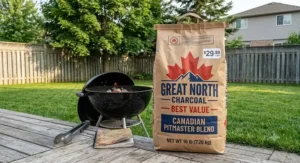
6. B&B Charcoal Competition Briquettes — best for low-ash, longer cooks
The standout is B&B’s oak-based composition, aimed at grillers who’ve graduated past basic backyard cooking into something closer to competition-style barbecue, without needing a full lump-charcoal setup.
Specs-wise, the all-natural hardwood and oak blend produces notably lower ash output than mass-market briquettes, which matters directly for anyone running longer smokes where ash buildup can choke airflow and drop internal temperature over time. The briquettes also burn with a more neutral smoke profile, letting wood chips or chunks added separately do more of the flavour work rather than fighting with the fuel’s own additive smell.
Here’s what to weigh: this is the closest thing to a “prosumer” pick in this roundup. Reviewers consistently note it holds temperature more predictably over multi-hour cooks compared to Kingsford or Royal Oak, which is exactly the audience B&B is chasing — people willing to spend a bit more for fewer surprises during a four-hour brisket cook.
Aggregated review sentiment across B&B’s competition line frequently mentions strong performance in offset smokers specifically, alongside praise for consistent piece sizing.
Pros:
- ✅ Notably lower ash output than mainstream briquette bags
- ✅ More neutral smoke profile that pairs well with wood chips
- ✅ Strong aggregated praise for multi-hour temperature holding
Cons:
- ❌ Sits near the top of the under-$30 CAD range
- ❌ Overkill for casual, quick-cook grilling nights
Depending on bag size and retailer, expect this one to land in the C$24–C$30 range — right at the ceiling for this guide, so it’s worth double-checking current pricing before adding to cart.
7. Napoleon Coconut Shell Briquettes (McBrickett) — longest burn time in this roundup
The standout feature is burn duration: Napoleon markets these coconut shell briquettes as burning up to three times longer than traditional wood-based briquettes of the same size, which is a genuinely different value proposition than everything else on this list.
The composition is coconut shell char rather than wood, compressed into a honeycomb-style briquette shape. That structure produces very little smoke, essentially no charcoal aroma, and a notably small amount of ash for the burn time delivered — appealing if your flavour strategy leans on wood chips, marinades, or rubs rather than the charcoal itself doing the smoky work.
On paper this means fewer mid-cook refuels, which is a real advantage for anyone doing extended low-and-slow sessions or all-day gatherings where constantly tending the fire isn’t realistic. The tradeoff, and it’s a real one, is that you lose that classic wood-charcoal smell during lighting that a lot of backyard grillers specifically associate with “real” barbecue.
Reviewers consistently report the extended burn claims hold up in practice, with several noting they used noticeably less product over a full day of grilling compared to standard wood briquettes, though the premium sourcing keeps the price near the top of this list’s range.
Pros:
- ✅ Burns significantly longer than standard wood briquettes
- ✅ Very low smoke and minimal ash production
- ✅ Fewer mid-cook refuels needed for long sessions
Cons:
- ❌ Lacks the classic wood-smoke aroma during lighting
- ❌ Priced at the very top of the under-$30 CAD range
Expect pricing in the C$26–C$30 range depending on bag size and seller, making this the specialty splurge pick of the group rather than an everyday default.
Top 7 Charcoal Briquettes Under $30 CAD at a Glance
| Product | Bag Size | Approx. Price (CAD) | Burn Style | Best For |
|---|---|---|---|---|
| Royal Oak Natural Organic Char-Briquettes | 7 lb / 3.2 kg | Under C$16 | Fast light, moderate burn | Best For: casual weeknight grilling |
| Nature’s Grilling Gourmet Hardwood Briquettes | 12 lb / 5.4 kg | C$13–C$18 | Clean-burning hardwood | Best For: Canadian-focused budget shoppers |
| Kingsford Original Charcoal Briquettes | 7.26 kg / 16 lb | C$18–C$24 | Fast, consistent, classic flavour | Best For: general backyard use |
| Cowboy Brand Hardwood Briquettes | 14 lb / 6.4 kg | C$20–C$26 | Large-format, longer per-piece burn | Best For: bulk buying for parties |
| Weber Briquettes | 4 kg / 8.8 lb | C$22–C$28 | Highly uniform, steady heat | Best For: kettle-grill precision |
| B&B Charcoal Competition Briquettes | ~17.6 lb / 8 kg | C$24–C$30 | Low ash, stable long-burn | Best For: multi-hour smokes |
| Napoleon Coconut Shell Briquettes | 6.6 lb / 3 kg | C$26–C$30 | Slow, low-smoke, long-lasting | Best For: all-day low-and-slow cooks |
Looking at the table, a pattern emerges: price climbs roughly in step with either burn consistency or burn duration, not with bag size alone. The Cowboy Brand Hardwood Briquettes delivers the most raw fuel per dollar for entertaining a crowd, while the Napoleon Coconut Shell Briquettes justifies its higher per-kilogram cost through dramatically reduced refuel frequency. Budget-conscious buyers should note that the cheapest options here, Royal Oak and Nature’s Grilling Gourmet, are genuinely competitive on performance — the extra dollars spent further down the table buy convenience and consistency, not a fundamentally “better” fire.
How to Choose Charcoal Briquettes Under $30 CAD
Picking the right bag comes down to a handful of concrete criteria rather than brand loyalty. Here’s the reasoning, step by step:
- Match bag size to cooking frequency. If you grill weekly, a larger bag like Cowboy or Kingsford lowers your effective price per bag over time, since you’re not paying shipping or trip costs as often.
- Decide how much smoke flavour you actually want. Wood-based briquettes (Kingsford, Royal Oak, B&B) contribute more inherent smokiness; coconut shell options (Napoleon) stay neutral and let wood chips do that work instead.
- Consider your longest typical cook. Quick weeknight grilling doesn’t need a long-burn specialty briquette — save that budget for bags built for multi-hour sessions.
- Check for additive tolerance. If starter-fluid smell bothers you or your household, avoid “instant light” variants entirely and stick to plain hardwood briquettes.
- Factor in storage conditions. A damp garage or shed shortens shelf life fast; resealable bags like Weber’s are worth the premium if your storage isn’t bone-dry.
- Compare price per bag against weight, not sticker price. A C$26 bag that’s twice the size of a C$16 bag is the better deal even though the number looks scarier at checkout.
- Read aggregated review themes, not star ratings alone. A 4.6-star average tells you little; recurring comments about ash volume or lighting speed tell you a lot more.
Affordable Charcoal Briquettes vs Premium Lump Charcoal
This is the debate that never quite dies in backyard grilling circles, and it’s worth settling with actual reasoning rather than tribal loyalty. Affordable charcoal briquettes — the kind covered throughout this guide — are manufactured from charred wood byproducts, sawdust, and a binder, pressed into uniform shapes specifically so they burn at a predictable, steady rate.
Premium lump charcoal, by contrast, is just charred wood with no binder or filler, burning hotter and faster but far less predictably, since chunk size in a bag can vary wildly. Napoleon’s own breakdown of charcoal types notes that briquettes generally burn longer than lump charcoal at a given weight specifically because of that denser, uniform structure, even though lump gets hotter faster off the start.
| Factor | Briquettes | Lump Charcoal |
|---|---|---|
| Burn consistency | High — uniform shape and density | Lower — chunk size varies bag to bag |
| Max heat | Moderate-high | Higher, faster to reach |
| Ash production | More ash overall | Less ash, cleaner burn |
| Best For | Steady, predictable grilling and smoking | High-heat searing and shorter cooks |
The analysis here is fairly clean: if you’re cooking burgers, chicken, or doing a low-and-slow smoke where temperature stability matters more than peak heat, briquettes win on practicality and, usually, on price. If you want a hard, fast sear on a steak and don’t mind babysitting the fire, lump charcoal’s higher ceiling makes more sense — you’ll just pay more per cook for that flexibility, and consistency will vary bag to bag in ways affordable briquettes simply don’t.
Price Per Bag & Briquette Lifespan: The Real Cost of Cooking
Sticker price and true cost are two different numbers, and nowhere is that more obvious than with charcoal. Price per bag tells you what leaves your wallet at checkout; briquette lifespan tells you how many actual cookouts that bag buys you, which is the number that actually matters.
| Product | Approx. Price Range | Est. Cookouts per Bag* |
|---|---|---|
| Royal Oak Natural Organic Char-Briquettes | Under C$16 | 3–4 |
| Kingsford Original Charcoal Briquettes | C$18–C$24 | 6–8 |
| Cowboy Brand Hardwood Briquettes | C$20–C$26 | 7–9 |
| Napoleon Coconut Shell Briquettes | C$26–C$30 | 8–10+ |
*Estimates based on a typical medium-sized kettle grill loading roughly 1–1.5 kg per cook; your mileage will vary with grill size and cook length.
A few sentences of interpretation matter more than the raw numbers here: the Napoleon Coconut Shell Briquettes costs the most per bag but stretches furthest thanks to its slower burn, meaning its true cost per cookout can actually undercut cheaper wood briquettes over time. Meanwhile, Royal Oak wins the sticker-price race but needs restocking soonest, which matters if you hate running out mid-cookout more than you care about saving a few dollars upfront. Briquette lifespan is also affected heavily by how tightly you pack the chimney and how much airflow your grill’s vents allow — a well-ventilated kettle grill stretches any bag noticeably further than a cheap box grill with poor airflow.
✨ Don’t Miss These Exclusive Deals!
🔍 Take your backyard grilling to the next level with these carefully selected charcoal picks. Click on any highlighted item to check current pricing and availability. These bags will help you build the kind of cookouts your friends actually text you about afterward!
Bulk Briquettes for BBQ: Is Bulk Buying Worth It?
Here’s a problem plenty of backyard cooks run into: they see a huge bulk pallet of briquettes at a warehouse store, do rough math in their head, and assume bigger automatically means cheaper. Sometimes it does. Sometimes it really doesn’t.
Bulk briquettes for BBQ make the most sense in three specific situations: you host regularly (think monthly gatherings or more), you have genuinely dry, covered storage so the charcoal doesn’t absorb moisture over months, and your grill sees enough use that a large bag won’t sit half-finished for a full season. If any of those three conditions is missing, bulk buying quietly stops being a deal.
The math also depends heavily on which product you’re buying in bulk. Cowboy Brand Hardwood Briquettes, at roughly 14 lb per bag, is already positioned for this — buying two bags ahead of a summer of grilling genuinely lowers your price per cookout versus repeatedly grabbing smaller Royal Oak bags. But bulk buying a premium, slow-burning product like Napoleon Coconut Shell Briquettes makes less sense unless you’re already using it regularly, since its main advantage — fewer refuels — only pays off across many long cooks.
Solution checklist for smart bulk buying:
- Store bags off the ground, in a dry, ventilated space — moisture is the real enemy, not time itself
- Buy bulk only for briquette types you’ve already tested and liked in a smaller bag first
- Split large hauls with a neighbour or family member if your own usage doesn’t justify a full bulk case
- Watch for seasonal bulk pricing in spring, when retailers often discount ahead of peak grilling months
Practical Usage Guide: Getting the Most From Every Bag
Buying the right briquette is only half the equation — how you use it determines whether that bag lasts as long as it should. A few habits make a genuinely measurable difference.
On first use, resist the urge to dump lighter fluid straight onto the pile. A simple chimney starter uses crumpled newspaper underneath and gets briquettes glowing evenly in roughly 15–20 minutes without any chemical aftertaste in your food — a trick most bag instructions gloss over entirely.
For maintenance, always reseal or tightly bag any leftover briquettes after a cookout. Loose charcoal left open in a humid garage absorbs moisture fast, and damp briquettes light unevenly and smoke more heavily than fresh ones, regardless of brand.
A common mistake in the first month of ownership is loading too much charcoal for the cook at hand. Overloading a small grill wastes fuel and pushes temperatures higher than most recipes call for; a general rule of thumb is roughly one layer, briquettes touching but not stacked deep, for standard direct grilling.
One optimization trick worth knowing: arranging lit and unlit briquettes in a half-and-half “banked” pattern extends usable cooking time for longer sessions, letting unlit coals catch gradually rather than burning everything at peak heat simultaneously right from the start.
Real-World Scenarios: Which Bag Fits Your Backyard
The apartment-balcony griller with a small tabletop kettle, cooking maybe twice a month for one or two people, is better served by a smaller bag like Royal Oak Natural Organic Char-Briquettes. Buying bulk here just means charcoal going stale in a closet, so a smaller, cheaper bag purchased more often is the smarter money move.
The weekend host who fires up the grill most Saturdays through summer for a family of four fits the Kingsford Original Charcoal Briquettes profile well — a mid-size bag, reliable performance, and wide availability mean fewer emergency store runs when the in-laws show up unannounced.
The backyard pitmaster running weekend briskets or pulled pork on an offset smoker needs the ash control and burn stability of B&B Charcoal Competition Briquettes, where the extra few dollars translate directly into fewer temperature swings across a six-hour cook and less babysitting the fire box.
Common Mistakes When Buying Affordable Charcoal Briquettes
The most frequent misstep is comparing sticker prices without checking bag weight — a C$14 bag that’s half the size of an C$18 competitor is actually the worse deal, and it’s an easy trap when scanning listings quickly. Related to that, buyers often chase the absolute cheapest bag without considering their own storage conditions, ending up with clumped, damp charcoal by midsummer that lights poorly no matter how good the brand originally was.
Another common error is assuming “instant light” briquettes save real time — most cut only a few minutes off a proper chimney start while leaving a chemical smell most grillers eventually learn to dislike. Buyers also frequently overlook the difference between briquette composition types, grabbing a coconut shell product expecting classic smoky flavour and coming away disappointed, when a wood-based bag would have matched their expectations far better from the start.
Finally, a subtler mistake: buying based on star rating alone. A product with thousands of reviews at 4.6 stars and one with a hundred reviews at 4.8 stars aren’t directly comparable — sample size changes what that number actually means, and it’s worth reading a handful of recent written reviews rather than trusting the average blindly.
Safety, Storage & Regulations Guide
This part isn’t optional reading. Charcoal briquettes, like any burning fuel, produce carbon monoxide as they combust, and Health Canada is explicit that outdoor equipment using charcoal should never be operated inside a home, garage, tent, or other enclosed space, even briefly and even with a door propped open — carbon monoxide is colourless, odourless, and can build up faster than casual ventilation can clear it. Tragically, this isn’t a theoretical risk; CBC has reported on real cases of entire families hospitalized after running a charcoal barbecue indoors during cold weather, underscoring why this rule exists in the first place.
Beyond that core rule, a few practical habits matter. Always let ash cool completely, ideally overnight, before disposal, and never dump warm ash directly into a plastic bin or compost — smoldering coals have started real fires hours after a cookout ended. Store unused briquettes in a dry, ventilated area away from direct sun, since heat and humidity both degrade binder quality over time. Many Canadian municipalities also regulate open-flame cooking on balconies and near combustible structures, so it’s worth a quick check of local bylaws, particularly in condo or apartment buildings where charcoal grilling is sometimes restricted entirely regardless of bag quality or brand.
Features That Actually Matter (And Those That Don’t)
Marketing copy on charcoal bags loves to lean on words like “premium,” “restaurant-quality,” and “authentic,” which sound great and tell you almost nothing useful. Here’s an honest filter for what’s worth paying attention to versus what’s mostly noise.
Actually matters: binder composition (fewer fillers generally means cleaner smoke and less chemical smell), briquette uniformity (directly affects burn consistency), ash output (lower ash means less mid-cook maintenance on longer smokes), and resealable packaging (a real, measurable difference in shelf life once a bag is opened).
Doesn’t matter much: briquette shape beyond basic uniformity — pillow-shaped versus hexagonal makes negligible practical difference despite how brands market it; “restaurant-grade” labelling, which has no standardized meaning in the charcoal industry; and elaborate flavour claims printed on bags, since charcoal briquettes contribute far less direct flavour than wood chips, marinades, or the meat itself.
The spec sheet won’t tell you this outright, but user reports across this entire product category suggest the single biggest quality differentiator is simply how much loose dust and broken fragments show up at the bottom of the bag — a rough, informal but genuinely useful signal of manufacturing quality that no amount of front-of-bag marketing can hide.
FAQ
❓ Are charcoal briquettes cheaper than lump charcoal in Canada?
❓ How long does a bag of charcoal briquettes actually last?
❓ Can I use charcoal briquettes in a gas grill?
❓ Is it cheaper to buy charcoal briquettes in bulk?
❓ What's the difference between briquettes and instant-light charcoal?
Conclusion
If there’s one honest takeaway from comparing seven real bags side by side, it’s that “best” genuinely depends on how you grill, not just how much you spend. The Royal Oak Natural Organic Char-Briquettes and Nature’s Grilling Gourmet Hardwood Briquettes earn their spots for anyone grilling casually on a tight budget, while the Kingsford Original Charcoal Briquettes remains the safest all-around bet for most backyards thanks to sheer consistency and availability. Hosts feeding a crowd should lean toward Cowboy Brand Hardwood Briquettes for the bulk-buying math, and anyone chasing precision or long, unattended cooks has good reason to spend up toward Weber Briquettes, B&B Charcoal Competition Briquettes, or the specialty Napoleon Coconut Shell Briquettes.
None of these bags cost more than roughly C$30, and every single one beats the alternative of standing at a grocery store shelf squinting at unfamiliar bags with no context. Whichever you pick, the real difference-maker isn’t the brand printed on the front — it’s matching bag size and burn style to how often you actually cook outside, and storing what’s left properly so none of that money goes to waste in a damp garage corner.
Recommended for You
- Weber Briquettes vs Kingsford Briquettes: The Honest 2026 Verdict
- Kingsford Charcoal Briquettes Review 2026: 7 Top Picks Ranked
- Hickory vs Mesquite Lump Charcoal for Ribs: 7 Top Picks (2026)
Disclaimer: This article contains affiliate links. As an Amazon Associate, I earn from qualifying purchases. If you purchase products through these links, we may earn a small commission at no additional cost to you.
✨ Found this helpful? Share it with your friends! 💬🤗
