In This Article
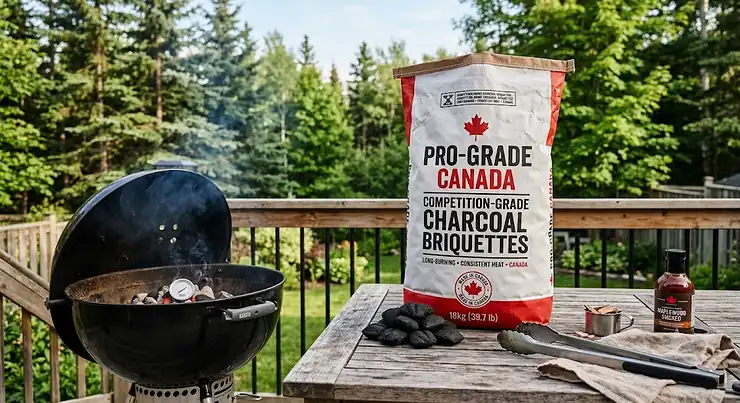
Somewhere between a backyard cookout and a sanctioned BBQ competition circuit event, the fuel you’re burning stops being an afterthought and starts being a variable you actually have to control. Competition-grade charcoal briquettes for BBQ are dense, engineered briquettes built from carbonized hardwood and a starch binder, designed to burn hotter, longer, and more predictably than the bag of grocery-store charcoal sitting next to the lighter fluid. That predictability is the whole point: a judge doesn’t care that your fire dipped 20°C (about 36°F) at 2 a.m. because your fuel burned unevenly, they just care that your brisket wasn’t ready on time.
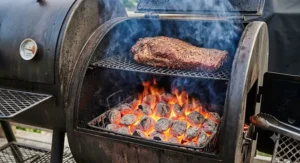
This guide is built for Canadian grillers and pitmasters who want more than a marketing blurb. We researched real, currently available products, checked how competition teams and enthusiast forums describe them, and compared specs against what actually happens on a grate. You’ll get honest analysis, not invented taste tests, because nobody benefits from a fabricated review, least of all you, standing at your smoker at 5 a.m. wondering why your fire won’t hold 107°C (225°F).
Below, we’ll walk through seven real briquette products worth your money, how they stack up on high-heat briquettes performance, briquette purity, and consistent heat output, and where each one fits into a serious cook versus a casual weekend grill session. Whether you’re prepping for the BBQ competition circuit or just tired of babysitting an inconsistent fire, there’s a practical answer here.
Quick Comparison Table
| Product | Best For | Price Range (CAD) | Burn Style |
|---|---|---|---|
| B&B Charcoal Competition Oak & Hickory Briquets | Overall competition performance | C$30-C$45 (20 lb) | Long, steady, low smoke |
| Kingsford Professional Briquettes | Budget-friendly high heat | C$20-C$30 (2 x 18 lb) | Hot, fast-lighting |
| Jealous Devil XL Hardwood Pillow Briquets | Long low-and-slow smokes | C$35-C$50 (20 lb) | Extended, dense burn |
| Royal Oak Ridge Charcoal Briquets | Value ridge-style airflow | C$15-C$25 (15.4 lb) | Fast start, consistent |
| Weber 100% Natural Hardwood Briquettes | Backyard-to-competition transition | C$25-C$40 (8 kg) | Even, low-smoke |
| Cowboy Hardwood Charcoal Briquets | Practice cooks and bulk use | C$20-C$30 (2 x 20 lb) | Moderate heat, budget |
| Franklin Barbecue Post Oak Charcoal Briquets | Post oak smoke character | C$25-C$35 (12 lb) | Hot, long, smoky |
Looking at this table, the real split isn’t just price, it’s what each briquette is optimized for. B&B Charcoal Competition Oak & Hickory Briquets and Jealous Devil XL Hardwood Pillow Briquets sit at the premium end because they’re built for the long, unattended burns that low-and-slow competition categories demand, while Kingsford Professional Briquettes and Royal Oak Ridge Charcoal Briquets earn their keep by lighting fast and holding decent heat for a fraction of the cost. If you’re cooking three or four times a year, the cheaper options are perfectly defensible; if you’re logging dozens of cooks a season, the premium bags start paying for themselves in consistency alone.
💬 Just one click — help others make better buying decisions too!😊
Top 7 Competition-Grade Charcoal Briquettes for BBQ: Expert Analysis
1. B&B Charcoal Competition Oak & Hickory Briquets — the pitmaster favourite for even, low-smoke burns
Larger than a standard briquette and built from a blend of charred oak and hickory bound with vegetable starch, these are the bag you’ll see stacked in the corner of more competition tents than almost any other brand. The oversized shape isn’t just cosmetic: more mass per briquette means a slower, steadier release of heat, which is exactly what a 12-hour brisket cook needs from its fuel.
Each briquette runs noticeably larger than mainstream grocery-store options, and that density translates into longer burn windows between refuels, an important detail when you’re managing a fire through the night instead of babysitting it every hour. Based on the spec comparison with mainstream briquettes, the larger surface-to-mass ratio is what gives this product its reputation for a long, even burn rather than sharp temperature spikes.
This is the pick for anyone serious about the BBQ competition circuit or anyone at home who’s tired of chasing temperature swings on an overnight cook. Reviewers and competition cooks consistently note a cleaner-smelling light-off and less acrid white smoke during the first 15 minutes compared to standard briquettes, which matters if your smoker sits near a patio door.
Pros:
- ✅ Long, steady burn well-suited to overnight smokes
- ✅ Cleaner-smelling ignition than standard briquettes
- ✅ Trusted by competition-level pitmasters for consistency
Cons:
- ❌ Costs noticeably more per pound than mainstream brands
- ❌ Larger size can be awkward in smaller kettle grills
At the time of research, expect to pay in the C$30-C$45 range for a 20-pound bag. For anyone doing regular low-and-slow cooks, the value verdict is straightforward: this is one of the few briquettes worth the premium.
2. Kingsford Professional Briquettes — best budget-friendly path to real high-heat briquettes performance
Formerly marketed under the “Competition” name before Kingsford rebranded the line, Professional Briquettes are built with a lower-ash formula designed specifically for higher, more consistent heat than the standard blue-bag Kingsford most Canadians grew up with. The 100 percent natural wood char composition means fewer binder impurities clogging your grate over a long cook.
What most buyers overlook about this line is that the “low ash” claim isn’t just a cleanliness feature, it directly affects airflow in kamado-style grills and drum smokers where ash buildup can choke off oxygen and stall your fire mid-cook. On paper this means fewer mid-cook vent adjustments, which matters more than it sounds like it should when you’re managing a fire at 2 a.m.
Based on manufacturer specs and third-party burn comparisons, this line lights in roughly 10 to 15 minutes and reaches searing temperatures faster than standard briquettes, which suits high-heat cooks like steaks and chicken skin as much as longer smokes.
Pros:
- ✅ Widely available at big-box retailers across Canada
- ✅ Noticeably lower ash output than standard Kingsford
- ✅ Fast, reliable ignition for weeknight cooks
Cons:
- ❌ Doesn’t quite match premium brands on burn length
- ❌ Some batches run inconsistent in briquette size
Priced around C$20-C$30 for a two-pack of 18-pound bags at the time of research, this is the best entry point if you want a genuine step up from grocery-store charcoal without committing to premium pricing.
3. Jealous Devil XL Hardwood Pillow Briquets — the choice for long, low-and-slow competition smokes
Made almost entirely from dense quebracho hardwood with a small amount of vegetable starch as a binder, Jealous Devil’s XL briquettes are noticeably oversized compared to nearly every competitor on this list. That density is a deliberate engineering choice: quebracho is one of the hardest, most carbon-dense woods used in charcoal production, and it burns proportionally longer as a result.
The practical takeaway here is burn time per dollar on long cooks, not per bag. A denser briquette means fewer additions to the fire basket over a 10-hour brisket, which reduces the temperature dips that come from opening the lid to add fuel. Reviewers across BBQ enthusiast forums consistently describe these as some of the largest briquettes on the market, with several noting the tradeoff of a steeper price per pound against premium lump charcoal alternatives.
Where this briquette struggles a little is high-heat searing; multiple hands-on accounts describe it as excellent for sustained low-and-slow work but less impressive for a fast, hot sear compared to Kingsford Professional or Royal Oak’s ridge-style options.
Pros:
- ✅ Exceptionally long burn time from dense quebracho wood
- ✅ Minimal filler ingredients, close to pure hardwood char
- ✅ Clean burn with limited leftover ash residue
Cons:
- ❌ Premium pricing compared to mainstream briquette brands
- ❌ Less impressive for fast, high-heat searing tasks
Expect a C$35-C$50 range for a comparable bag size at the time of research. For overnight low-and-slow work specifically, the value case is strong; for quick weeknight grilling, it’s arguably overkill.
4. Royal Oak Ridge Charcoal Briquets — a genuinely useful ridge design at a mid-range price
Royal Oak’s ridge-shaped briquette design isn’t just a marketing gimmick, the raised ridges increase surface area exposed to oxygen, which is the actual mechanism behind the brand’s “faster light, better airflow” claims. Made in the USA from natural hardwoods with a starch binder, this line sits comfortably between budget and premium tiers.
Here’s what to weigh: the ridge shape genuinely does improve airflow through a charcoal chimney compared to flat-sided briquettes, cutting a few minutes off your typical light-up time. That’s a small thing on a single cook, but it adds up if you’re running multiple fires through a competition weekend. Aggregated feedback from grilling forums repeatedly mentions a clean, white ash and pleasant aroma during burn-down, both signs of relatively complete combustion and fewer impurities in the mix.
Where reviewers are split is on searing intensity; some competition cooks report the ridge briquettes run slightly cooler at peak than denser premium options, which matters for a hard sear but rarely matters for a low-and-slow smoke.
Pros:
- ✅ Ridge design measurably improves chimney airflow
- ✅ Burns to a clean white ash with mild aroma
- ✅ Solid mid-range price for the performance delivered
Cons:
- ❌ Peak searing heat trails premium hardwood options
- ❌ Bag sizes vary by retailer, making bulk buying inconsistent
At the time of research, a 15.4-pound bag typically runs C$15-C$25, making this one of the strongest value picks on this list for cooks who grill weekly rather than compete monthly.
5. Weber 100% Natural Hardwood Briquettes — the smoothest transition from backyard grill to competition-style cook
Weber’s briquette line is made entirely from natural hardwood with no added chemical accelerants, a detail that matters if you’ve ever had a briquette leave a faint chemical smell during light-off. The compressed hardwood pillows are dense enough to hold a long, even burn while staying compatible with the kettle-style grills most Canadian backyard cooks already own.
What the spec sheet won’t tell you, but longtime users on grilling forums consistently note, is that these briquettes tend to produce noticeably less visible white smoke during ignition than mainstream grocery-store briquettes, a detail that matters if you’re grilling on an apartment balcony or a shared condo patio where neighbours notice smoke plumes. Several longtime users specifically cite this line as their benchmark against which they measure newer competitors, even after Weber altered its briquette formula in recent years.
For Canadian buyers specifically, availability through Weber’s own retail network and major hardware chains makes this one of the easier premium options to actually find on shelves rather than order online and wait for.
Pros:
- ✅ No added chemical accelerants in the briquette formula
- ✅ Noticeably lower visible smoke during ignition
- ✅ Widely stocked at Canadian hardware and grill retailers
Cons:
- ❌ Bag sizes run smaller in kg than comparable US products
- ❌ Some loyal users say the formula changed from earlier years
Pricing sits around C$25-C$40 for an 8 kg bag at the time of research. This is a strong middle-ground pick for anyone who wants premium-adjacent quality without hunting down a niche competition brand.
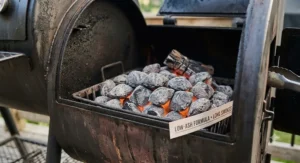
6. Cowboy Hardwood Charcoal Briquets — the practical choice for practice cooks and high-volume use
Cowboy’s briquettes occupy an interesting niche: several longtime competition-adjacent cooks describe them as a reasonable stand-in for older, now-discontinued competition briquette lines, at a price point closer to mainstream grocery charcoal. Made from hardwood char with a starch binder, they’re widely available in large multi-pack bags, which matters if you’re burning through fuel during a full season of practice cooks.
Based on the spec comparison with pricier options, the trade-off here is fairly transparent: you get decent, usable heat and a workable burn time, but not the exceptional density or purity of a dedicated competition line. That’s actually the right trade-off for a lot of home cooks. Reviewers commonly note that Cowboy briquettes run slightly cooler at peak heat than Royal Oak’s ridge line or Kingsford Professional, though the gap is modest rather than dramatic.
Where this briquette earns its keep is volume: if you’re practicing technique before a competition season rather than cooking the actual competition entry, spending premium money on every practice run is hard to justify.
Pros:
- ✅ Large multi-pack bags stretch your budget further
- ✅ Reasonable heat and burn time for the price point
- ✅ Widely available at major retailers
Cons:
- ❌ Peak heat trails dedicated competition briquette lines
- ❌ Slightly more inconsistent piece size than premium bags
At the time of research, a two-pack of 20-pound bags typically runs C$20-C$30, making this the practical choice for anyone burning fuel weekly rather than saving it for competition day.
7. Franklin Barbecue Post Oak Charcoal Briquets — for buyers chasing genuine post oak smoke character
Made from post oak hardwood char with a natural starch binder, this line stands out from most briquettes on this list by actually delivering noticeable wood smoke flavour, something briquettes are traditionally criticized for lacking compared to lump charcoal. That’s a meaningful distinction if flavour profile matters as much as burn consistency for your specific competition category.
Longtime pitmasters and home cooks alike consistently describe long, steady burns in the 16-hour range during cold-weather cooks, alongside a milder, less acrid smoke during initial ignition compared to gypsum-bound competitors. Here’s what to weigh: the trade-off for that flavour and burn length is a noticeably higher price per pound than nearly every other briquette on this list, and availability in Canada leans more toward specialty grilling retailers than big-box stores.
If your competition category rewards a distinct wood-smoke profile, or you simply prefer briquettes that taste closer to lump charcoal, this is the pick worth seeking out despite the higher cost and narrower distribution.
Pros:
- ✅ Genuine post oak smoke flavour, rare among briquettes
- ✅ Long, steady burn even in cold weather
- ✅ Milder smoke during ignition than standard briquettes
Cons:
- ❌ Higher price per pound than most competitors here
- ❌ Harder to find in mainstream Canadian retailers
Expect roughly C$25-C$35 for a 12-pound bag at the time of research. Given the flavour payoff, this is worth the hunt for cooks who prioritize taste over pure convenience.
Practical Usage Guide: Prepping Competition-Grade Briquettes for Cook Day
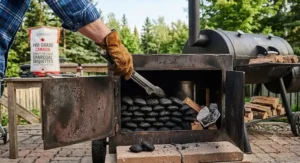
Getting the most out of any of the seven products above starts before you ever strike a match. Fill a charcoal chimney starter roughly two-thirds full and light it over a solid firestarter rather than lighter fluid, which can leave a chemical aftertaste on your first hour of cooking. Wait until flames are visible over the top rim and the briquettes have begun ashing over at the edges, typically 12 to 20 minutes depending on the brand, before dumping the coals into your grill or smoker.
For long cooks, the minion method (arranging unlit briquettes in a ring or pile and burying a small scoop of lit coals in the centre) extends burn time dramatically and is the standard technique competition teams use for overnight smokes. A common mistake in the first 30 days of using competition-grade briquettes is overloading the fire basket, which can push temperatures well past your target and scorch a cook before you’ve even had coffee. Start with less fuel than you think you need; you can always add more.
Maintenance matters too: store bags in a dry, sealed container, since briquettes that absorb moisture light unevenly and produce excess smoke. Empty ash regularly between cooks, since accumulated ash restricts airflow and is one of the most common causes of a fire that won’t hold steady heat.
Real-World Scenario: Matching Briquettes to Your BBQ Journey
Consider a weekend backyard griller in Halifax who fires up a kettle grill two or three times a month for burgers and the occasional rack of ribs. For that use case, Royal Oak Ridge Charcoal Briquets or Cowboy Hardwood Charcoal Briquets make more financial sense than a premium competition bag; the burn characteristics they need are fast ignition and moderate, dependable heat, not a 16-hour burn window they’ll never use.
Now consider a home cook in the Prairies training seriously for their first sanctioned BBQ competition circuit event next season. That cook needs to practice the exact fire management they’ll rely on during the real thing, which means burning through a lot of fuel on technique rather than results. A hybrid approach works well here: Cowboy Hardwood Charcoal Briquets for practice runs, with a bag of B&B Charcoal Competition Oak & Hickory Briquets reserved for the actual competition cook where consistency can’t be left to chance.
Finally, picture an established backyard pitmaster in the GTA who already owns a drum smoker and wants competition-level results without joining the circuit. For that cook, Jealous Devil XL Hardwood Pillow Briquets or Weber 100% Natural Hardwood Briquettes hit the sweet spot: premium consistency for long weekend smokes, without paying circuit-level prices for fuel they’re not competing with.
How to Choose Competition-Grade Charcoal Briquettes for BBQ
Choosing the right bag comes down to matching a handful of measurable characteristics to how you actually cook, not to whichever bag has the flashiest label.
- Burn duration — Estimate your typical cook length and choose a briquette rated (or reputed, through aggregated reviews) to comfortably exceed it, since running out of fuel mid-cook is worse than paying slightly more upfront.
- Peak heat capability — If you sear as often as you smoke, prioritize briquettes known for fast, hot ignition, like Kingsford Professional or Royal Oak Ridge, over slower-burning premium options.
- Ash output — Lower-ash briquettes matter most in kamado-style grills and drum smokers, where ash buildup restricts airflow faster than in an open kettle.
- Ingredient purity — Fewer fillers generally means a cleaner, more neutral flavour base, which lets your wood chunks or chips carry the smoke profile instead of the charcoal itself.
- Availability near you — A slightly less premium briquette you can consistently buy beats a superior one you have to special-order every time you run out.
- Price per cook, not price per bag — A denser briquette that lasts twice as long can be cheaper per cook than a lighter bag at half the price.
- Consistency across bags — Aggregated reviews mentioning uniform piece size are a genuine signal of manufacturing quality control worth paying attention to.
High-Heat Briquettes vs Standard Charcoal Briquettes
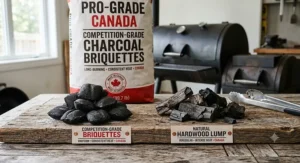
The distinction between high-heat briquettes and standard grocery-store charcoal briquettes comes down to composition and density, not marketing language. Standard briquettes typically blend charcoal dust with clay, limestone, and cornstarch binders, materials that add bulk and structural integrity but don’t contribute combustible energy. High-heat, competition-oriented briquettes minimize those fillers in favour of a higher percentage of actual carbonized hardwood, which is why they reach and sustain higher temperatures.
In practice, this means a standard briquette might top out noticeably below what a high-heat briquette like Kingsford Professional or B&B Charcoal Competition Oak & Hickory can achieve, a meaningful gap when you’re trying to get a hard sear or hold a smoker at a stable temperature through a Canadian autumn evening. The trade-off is usually price: high-heat briquettes cost more per pound because they contain more of the ingredient that actually burns.
For most casual grilling, standard briquettes are entirely adequate. But once your cooks involve searing at high temperatures, holding long smokes through variable outdoor weather, or competing where consistency is scored, the extra cost of high-heat briquettes tends to pay for itself in fewer ruined cooks.
Competition Briquettes for Smoking: What Changes at Low and Slow
Smoking asks something different of a briquette than grilling does. Where a grilling session might last 20 minutes to an hour, a competition smoke can run 10 to 16 hours unattended overnight, which means burn consistency matters more than peak heat. Competition briquettes for smoking, like Jealous Devil XL Hardwood Pillow Briquets and B&B Charcoal Competition Oak & Hickory Briquets, are built with that duration in mind, using denser wood and larger briquette shapes specifically to slow the burn rate.
The minion method pairs particularly well with these denser briquettes: because each piece burns longer, a ring of unlit briquettes with a small lit section in the centre can sustain a stable smoker temperature for the better part of a night with minimal intervention. What most first-time smokers overlook is that briquette choice interacts directly with vent management. A denser, slower-burning briquette gives you more room for error on your vent settings, since temperature swings happen more gradually and give you time to correct course before a cook is ruined.
Reviewers across smoking-focused forums consistently point to burn length and ash volume as the two factors that matter most for overnight cooks, more than initial ignition speed, which is largely irrelevant once a smoker is up to temperature and holding steady.
Consistent Heat Output: What to Expect Round After Round
Consistent heat output is arguably the single most competition-relevant trait a briquette can have, because a judge’s scorecard doesn’t care why your temperature spiked, only that it did. Achieving it starts with the briquette itself: denser, higher-purity products like B&B Charcoal Competition Oak & Hickory Briquets and Franklin Barbecue Post Oak Charcoal Briquets tend to burn more predictably because there’s less variability in what’s actually being combusted from piece to piece.
But the briquette is only half the equation. Consistent heat also depends on airflow management, ash accumulation, and how evenly your fuel is arranged in the firebox or chimney. Based on the spec comparison across products in this guide, briquettes with uniform piece size (a trait aggregated reviews frequently praise in Royal Oak’s ridge line and Weber’s hardwood briquettes) tend to burn more predictably simply because there’s less variation in how quickly individual pieces combust.
For competition cooks specifically, many teams run side-by-side test burns with a new bag before competition day, tracking temperature at 30-minute intervals to understand exactly how that batch behaves before trusting it with a scored cook. That kind of dry-run testing, more than any spec on the bag, is what actually earns consistent results on the day that counts.
Briquette Purity: Reading Ingredient Labels Like a Judge
Briquette purity refers to how much of a briquette’s mass is actual carbonized hardwood versus filler materials like clay, limestone binders, borax, or petroleum-based accelerants used in instant-light products. Higher-purity briquettes generally burn cleaner, produce less residual ash, and impart less off-flavour smoke during the crucial first 15 minutes of ignition.
Reading a label for purity starts with checking whether accelerants are listed at all; competition-grade briquettes never contain lighter fluid or petroleum additives, since even trace amounts can affect flavour on a scored cook. Next, look for the binder used. A starch-based binder (common in B&B Charcoal, Jealous Devil, and Franklin Barbecue products) is generally viewed by aggregated review sentiment as producing a cleaner burn than the borax or limestone binders found in some mainstream mass-market briquettes.
The spec sheet won’t tell you this directly, but user reports across grilling forums suggest that briquette purity correlates strongly with ash colour and volume: a clean-burning, high-purity briquette tends to leave fine, white-grey ash, while lower-purity products often leave darker, chunkier ash residue that can smother airflow faster during a long cook.
✨ Don’t Miss These Exclusive Deals!
🔍 Ready to upgrade your fire? Check current pricing on the briquettes above and stock up before your next cook. A more consistent fire means fewer ruined briskets and more results worth bragging about.
Common Mistakes When Buying Competition-Grade Charcoal Briquettes
The most frequent mistake buyers make is assuming “competition” on a bag label guarantees a meaningfully different product from a standard briquette, when in reality the term is sometimes used loosely for marketing purposes. Checking aggregated reviews and independent burn comparisons matters more than trusting packaging language alone.
A second common error is buying based purely on price per bag rather than price per cook. A cheaper briquette that burns twice as fast, requiring more frequent refuelling and more temperature-disrupting lid openings, can end up costing more in time, fuel, and inconsistent results than a pricier, denser option.
Third, many first-time buyers overlook storage. Even a genuinely high-purity briquette will light unevenly and smoke excessively if it’s absorbed moisture from a damp garage or shed, an issue that has nothing to do with the product itself and everything to do with how it was stored between purchase and use.
The BBQ Competition Circuit: Where Briquette Choice Actually Matters
On the BBQ competition circuit, fuel choice sits alongside rub recipes and wood selection as one of the variables teams actually control before judging even begins. Sanctioned competitions typically score entries on appearance, tenderness, and taste within tight time windows, which means a fire that drifts even 15°C to 20°C off target for an hour can push a cook past its ideal finish time.
Many competition teams gravitate toward briquettes like B&B Charcoal Competition Oak & Hickory Briquets or Jealous Devil XL Hardwood Pillow Briquets specifically because of their reputation for predictable, long-duration burns, reducing one more variable to manage during an already stressful cook window. That said, plenty of successful competitors run standard high-heat briquettes and simply compensate with tighter vent management and more frequent temperature checks, proof that fuel choice matters but isn’t the only path to a good result.
For anyone entering their first sanctioned event, the practical advice from experienced competitors is consistent: test your fuel choice extensively in practice cooks well before competition day, since the worst time to discover how a new briquette behaves is during a scored cook with a clock running.
Long-Term Cost & Maintenance: Total Cost of Ownership
| Product | Approx. Price Range (CAD) | Typical Burn Duration | Best For |
|---|---|---|---|
| Kingsford Professional Briquettes | C$20-C$30 (2 x 18 lb) | Moderate | Budget high-heat cooks |
| Royal Oak Ridge Charcoal Briquets | C$15-C$25 (15.4 lb) | Moderate | Weekly grilling |
| Cowboy Hardwood Charcoal Briquets | C$20-C$30 (2 x 20 lb) | Moderate | Practice cooks, volume use |
| B&B Charcoal Competition Oak & Hickory Briquets | C$30-C$45 (20 lb) | Long | Competition and overnight smokes |
| Jealous Devil XL Hardwood Pillow Briquets | C$35-C$50 (20 lb) | Very long | Extended low-and-slow cooks |
Looking at cost per cook rather than cost per bag changes this comparison considerably. A denser briquette that lasts twice as long per pound can work out cheaper across a full smoking season than a budget bag that needs constant replenishment, even though the sticker price looks higher upfront. Teams cooking dozens of times per season often find that premium briquettes reduce total fuel spend, not increase it, once burn efficiency is factored in.
Maintenance costs are minor but real: a metal storage bin to keep briquettes dry runs a modest one-time cost and prevents wasted, unevenly-lit bags down the line. Factoring that into your total cost of ownership is a small step most casual buyers skip and most competition teams don’t.
Safety, Regulations & Disposal: What Canadian Backyard Cooks Need to Know
Charcoal briquettes of any grade produce carbon monoxide as they burn, a colourless, odourless gas that becomes genuinely dangerous in enclosed spaces. Ottawa Fire Services explicitly prohibits barbecuing in attached garages for exactly this reason, since an attached garage with interior home access is treated as part of the home itself. This isn’t a rule specific to lower-purity charcoal, it applies to every briquette on this list, including the cleanest-burning premium options.
The risk is not hypothetical in Canada. During a 2023 ice storm power outage in Ottawa, eleven members of one family were hospitalized after running a charcoal barbecue indoors for heat, with responders recording carbon monoxide levels at 180 parts per million on arrival. Always burn charcoal outdoors, in a well-ventilated area away from doors and windows, and never as a substitute heat source during a power outage.
For disposal, let ash cool completely, ideally for 24 to 48 hours, before placing it in a metal container; even ash that looks fully cooled can retain enough heat to ignite a garbage bag. Never dispose of hot ash near siding, decking, or dry vegetation. Following manufacturer instructions and basic outdoor ventilation practices keeps competition-grade briquettes exactly as safe as any other charcoal product, which is to say, very safe when used as intended and genuinely dangerous when it isn’t.
Benefits vs Traditional Alternatives
| Factor | Competition-Grade Briquettes | Standard Grocery Briquettes | Natural Lump Charcoal |
|---|---|---|---|
| Burn consistency | High | Moderate | Variable, piece-dependent |
| Ash output | Low to moderate | Higher | Low |
| Typical price | Higher | Lower | Highest |
| Best for | Long, scored cooks | Casual grilling | Quick, hot sears |
This comparison highlights why competition-grade briquettes occupy a specific middle ground rather than being universally “better.” Natural lump charcoal generally burns hotter and cleaner but with less predictable duration, since piece size and density vary within the same bag, while standard grocery briquettes trade consistency for a lower price point that suits casual, low-stakes grilling. Competition-grade briquettes exist specifically to close that consistency gap without giving up the manageable, engineered shape that makes long cooks easier to plan around.
Features That Actually Matter (And Those That Don’t)
Marketing language around charcoal briquettes leans heavily on words like “restaurant quality” and “professional grade,” which sound meaningful but rarely correspond to a measurable spec. What actually matters is burn duration under real conditions, ash volume, and ingredient list transparency, all of which you can verify through independent burn comparisons and aggregated reviews rather than packaging copy alone.
What doesn’t matter nearly as much as marketing suggests is exact briquette shape, beyond the genuine airflow benefit of ridge designs discussed earlier. Similarly, claims about “authentic flavour” deserve scrutiny, since briquettes generally impart a milder, more neutral smoke than lump charcoal or wood chunks regardless of brand, meaning your wood chip or chunk choice will influence flavour far more than which briquette brand you’re burning underneath it.
Weber’s own grilling education content acknowledges this directly, noting that hardwood charcoal briquettes are densely packed compressed hardwood designed primarily for burn length and consistency, with users encouraged to add wood chunks separately if aromatic smoke flavour is the goal.
What to Expect: Real-World Performance
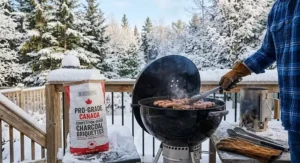
On paper, spec sheets and burn-time claims tell part of the story, but real-world performance depends heavily on your specific setup, ambient temperature, and how you’re managing airflow. A briquette rated for a long burn in ideal conditions will still run shorter on a windy, sub-zero Canadian evening than it would on a calm summer afternoon, simply due to increased heat loss and oxygen exposure.
Expect roughly a 10 to 20 percent reduction in effective burn time during cold-weather cooks compared to manufacturer claims, a pattern consistently reported by cold-climate users across grilling forums regardless of brand. This isn’t a flaw in the product, it’s basic thermodynamics, and it’s why experienced Canadian pitmasters typically buy slightly more fuel than a spec sheet suggests they’ll need for winter competition prep.
Humidity matters too. Briquettes stored in a garage or shed through a Canadian spring can absorb enough ambient moisture to noticeably slow ignition and increase smoke output during light-off, even if the bag itself was never opened. Dry, sealed storage isn’t a nice-to-have, it’s a meaningful performance variable in its own right.
Competition-Grade Charcoal Briquettes for Different Buyers
Beginners chasing their first successful overnight smoke are usually better served by a moderately priced, forgiving briquette like Royal Oak Ridge Charcoal Briquets, since the wider margin for error matters more early on than squeezing out maximum burn efficiency. Save the premium bags for once you’ve got vent management dialed in.
Serious competitors preparing for the BBQ competition circuit benefit most from products purpose-built for long, consistent burns, like B&B Charcoal Competition Oak & Hickory Briquets or Jealous Devil XL Hardwood Pillow Briquets, where the cost premium is justified by the score on the line. Budget-conscious grillers who cook casually a few times a month get the best return from Cowboy Hardwood Charcoal Briquets or Kingsford Professional Briquettes, where reliable, moderate performance at a low price beats paying for capabilities they won’t fully use.
Buyer’s Decision Framework
If you’re cooking casually a few times a month and price sensitivity matters most, choose a budget briquette like Cowboy Hardwood Charcoal Briquets because the cost savings outweigh the modest performance gap for short cooks. If you’re planning overnight smokes lasting 10 hours or more, choose a dense, long-burning option like B&B Charcoal Competition Oak & Hickory Briquets or Jealous Devil XL Hardwood Pillow Briquets, because burn duration under those conditions genuinely determines whether your cook succeeds.
If searing and high-heat cooking dominate your grilling style, prioritize Kingsford Professional Briquettes or Royal Oak Ridge Charcoal Briquets, since their fast ignition and higher peak heat suit that use case better than slower-burning premium options. If flavour purity and post oak character matter more to you than price, Franklin Barbecue Post Oak Charcoal Briquets is worth the search despite limited Canadian availability.
FAQ
❓ What makes charcoal briquettes 'competition grade'?
❓ Are competition briquettes worth it for casual backyard grilling?
❓ How long do high-heat briquettes typically burn?
❓ Do competition briquettes produce less ash?
❓ Can I mix briquette brands in one fire?
Conclusion
Fuel choice won’t fix bad technique, but it removes one significant variable from an already demanding cook, and that’s exactly why competition-grade charcoal briquettes for BBQ have earned their reputation among serious pitmasters. Whether you land on the long, steady burn of B&B Charcoal Competition Oak & Hickory Briquets, the budget-friendly high heat of Kingsford Professional Briquettes, or the post oak character of Franklin Barbecue Post Oak Charcoal Briquets, the right choice comes down to matching burn characteristics to how you actually cook, not chasing the flashiest label on the shelf.
For most Canadian backyard cooks working toward their first competition entry, a sensible approach is starting with a mid-range option for practice runs, then investing in a premium bag once you understand exactly how your specific grill or smoker behaves. Consistent heat output isn’t magic, it’s the product of a purer briquette, sound fire management, and enough practice runs to trust your setup before it matters. Check current pricing on the products above, factor in your typical cook length, and build your fuel choice around the cooks you actually do, not the ones you might do someday.
Recommended for You
- Charcoal Briquettes Under $30 CAD: 7 Best Bags for 2026
- Weber Briquettes vs Kingsford Briquettes: The Honest 2026 Verdict
- Kingsford Charcoal Briquettes Review 2026: 7 Top Picks Ranked
Disclaimer: This article contains affiliate links. As an Amazon Associate, I earn from qualifying purchases. If you purchase products through these links, we may earn a small commission at no additional cost to you.
✨ Found this helpful? Share it with your friends! 💬🤗
