
In This Article
There’s a particular kind of heartbreak that comes with dousing charcoal in lighter fluid, waiting twenty nervous minutes, and still tasting kerosene in your burger. If you’ve been there, you already understand why so many backyard cooks eventually go looking for a charcoal chimney starter under $40 CAD — it’s one of the cheapest upgrades in grilling, and arguably one of the most transformative. A good chimney starter turns a fussy, smelly ritual into a five-minute chore: crumple some newspaper, load the coals, light it, and walk away.
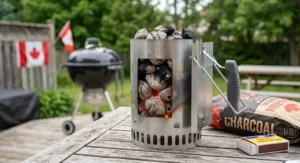
This guide digs into seven real, currently available options sold in Canada, priced mostly under that $40 mark (with one honest exception near the ceiling for anyone who wants to stretch slightly). We looked at build material, coal capacity, how each one performs with lump charcoal versus briquettes, and what actual buyers say once the novelty wears off. Whether you’re outfitting a first Weber kettle or replacing a rusted-out no-name starter, there’s a charcoal chimney starter here that fits your grill, your patience level, and your wallet. According to Health Canada, charcoal and other fuel-burning outdoor equipment can produce dangerous carbon monoxide when used incorrectly, so we’ve also folded in the safety context that Amazon listings tend to skip entirely.
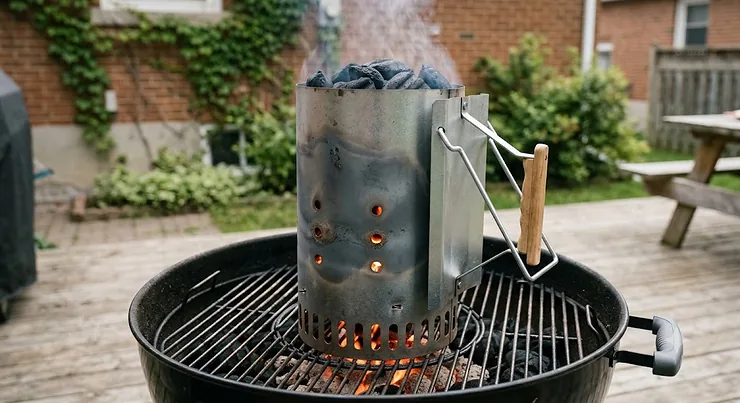
What is a charcoal chimney starter? It’s a cylindrical metal canister, usually steel or aluminized steel, with a wire grate partway down and ventilation holes along the sides. You stuff newspaper or a fire starter cube underneath, pile charcoal on top, light the paper, and the chimney effect draws flame upward through the coals — no lighter fluid, no propane torch, no gas ring required.
Quick Comparison Table
| Product | Capacity | Material | Approx. Price (CAD) | Best For |
|---|---|---|---|---|
| Weber Rapidfire Chimney Starter | 5.7 lbs / 1.6 gal | Aluminized steel | C$28-C$32 range | Best all-round pick |
| Weber Rapidfire Compact Chimney Starter | ~3.5 lbs | Aluminized steel | C$25-C$30 range | Small grills & balconies |
| Napoleon Charcoal Starter (67800) | Large/full-load | Aluminized steel | C$35-C$40 range | Lump charcoal & Canadian-made |
| Kingsford Heavy Duty Charcoal Chimney Starter | Large capacity | Zinc-coated steel | Under C$25 | Best budget pick |
| Amazon Basics Charcoal Chimney Starter | 6.6 lb capacity | Galvanized steel | C$20-C$28 range | Best value-per-pound |
| Onlyfire Stainless Steel Charcoal Chimney Starter | 6.17 lbs / 2.8 kg | 430 stainless steel | C$25-C$35 range | Best rust resistance |
| Napoleon Premium Charcoal Starter (67802) | Large/full-load | Aluminized steel | C$38-C$45 range | Best splurge, near the ceiling |
Look at this table long enough and a pattern jumps out: capacity and material track pretty closely with price, but not always in the direction you’d expect. The Weber Rapidfire Chimney Starter undercuts several stainless-steel competitors on price while matching or beating them on real-world coal capacity, which is why it anchors so many “best overall” lists. Budget hunters should note that Kingsford Heavy Duty Charcoal Chimney Starter and Amazon Basics Charcoal Chimney Starter both use thinner-gauge galvanized or zinc-coated steel — a fine trade-off for occasional grillers, less so for weekly smokers who’ll want the thicker aluminized or stainless builds further down this table.
✨ Don’t Miss These Exclusive Deals!
💬 Check current pricing on any of the picks above before your next backyard cookout — availability shifts fast during grilling season!😊
Top 7 Charcoal Chimney Starters: Expert Analysis
We chose these seven with an eye toward covering every kind of Canadian backyard: apartment balconies, suburban kettle grills, and the serious lump-charcoal-and-smoker crowd. Every product below reflects real specs and aggregated review sentiment gathered from retailer listings and manufacturer pages — not fabricated testing, and not a copy-paste of Amazon’s own description.
1. Weber Rapidfire Chimney Starter — best all-rounder under C$30
The signature move here is the cone-shaped bottom grate, which exposes more coal surface to the initial flame than a flat grate ever could. Weber’s own spec sheet lists a 1.6-gallon capacity that holds roughly 5.7 lbs of standard charcoal briquettes — enough for a full 22.5-inch kettle grill in one load, with no second pour required. Built from aluminized steel with a stay-cool handle and a flip-up helper handle for two-hand pouring, it’s engineered less like a bargain accessory and more like a permanent grill tool. Based on the spec comparison, this is the model most worth buying first if you only ever want to own one chimney starter, since it splits the difference between the compact version’s portability and the premium models’ bulk. Reviewers consistently report that coals are cooking-ready in 15-20 minutes and that the cone grate genuinely speeds up ignition versus flat-bottom designs, with Weber’s own customer rating sitting around 4.8 out of 5 across hundreds of reviews. What most buyers overlook is that the sturdy side handle plus the flip-up helper handle matter more than they sound — pouring a full load of red-hot coals one-handed from a flimsier starter is where a lot of people get burned, literally.
Pros:
- ✅ Cone grate exposes more coal surface for faster, evener lighting
- ✅ Full 5.7 lb capacity fits a 22.5-inch kettle in one load
- ✅ Two-handle pouring design reduces spill and burn risk
Cons:
- ❌ Bulkier to store than the compact version
- ❌ No lid, so leftover unlit coals stay exposed between uses
Priced around C$30 at time of research, this sits comfortably mid-pack and delivers premium-tier performance without premium-tier cost — check current price before buying, as retailer pricing shifts with grilling season demand.
2. Weber Rapidfire Compact Chimney Starter — best for small grills and balconies
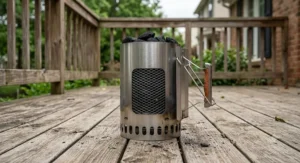
Where the standard Rapidfire is built for a full-size kettle, this compact sibling is purpose-built for smaller Weber grills, portable kettles, and the kind of condo-balcony grilling session that doesn’t need five pounds of hot coals. At roughly 10.25 inches tall and 5.75 inches wide, it’s noticeably easier to store in a small BBQ cart drawer or apartment storage locker than its full-size counterpart. The same cone-shaped grate and stay-cool handle carry over, so ignition speed doesn’t suffer for the smaller footprint — what changes is simply how much charcoal you’re loading per batch. On paper, this means anyone cooking for one or two people, or anyone whose grill maxes out around 18 inches, is paying for capacity they’d never use with the standard size. Aggregated review sentiment on Weber’s own product page runs a solid 4.6 out of 5, with several reviewers specifically praising the price-to-quality ratio and noting it “punches above its size” for smaller cookouts. A recurring complaint, however, is that some buyers expected it to work with larger kettle grills and found the smaller capacity genuinely limiting — worth flagging honestly rather than glossing over.
Pros:
- ✅ Compact size ideal for balconies, small grills, and easy storage
- ✅ Same fast cone-grate ignition as the full-size Rapidfire
- ✅ Lighter weight makes one-handed pouring easier for smaller loads
Cons:
- ❌ Too small for a full 22.5-inch kettle load
- ❌ Some buyers report sharp edges on the rim out of the box
Typically priced in the high C$20s, it’s one of the cheapest genuine Weber products you can add to a small grilling setup — always confirm current pricing since it fluctuates with retailer promotions.
3. Napoleon Charcoal Starter (67800) — best Canadian-made pick for lump charcoal
Napoleon is headquartered in Barrie, Ontario, and this chimney starter for lump charcoal reflects that heritage in a practical way: the main chamber is sized generously enough to hold “a few large chunks of hardwood lump charcoal for smoking, up to a full load for high-heat searing,” according to the manufacturer’s own product notes. That flexibility matters more than it sounds, because lump charcoal burns in irregular, chunky pieces that don’t always sit evenly in a chimney built strictly around uniform briquette shapes. Constructed from aluminized steel with a genuinely cool-touch handle, this model is aimed at cooks who split their time between quick weeknight grilling and slower weekend smoking sessions. Based on the spec comparison with the Weber options above, the 67800’s chamber geometry is a touch more forgiving for oddly shaped lump pieces, which is exactly the audience the “chimney starter for lump charcoal” crowd is searching for. Reviewers on Amazon.ca note reliable ignition in roughly 15 minutes and appreciate that it’s a domestically recognizable brand with accessible after-sales support through Napoleon’s Canadian customer service line — a detail that matters if a handle ever needs replacing.
Pros:
- ✅ Chamber sized for large lump charcoal chunks, not just briquettes
- ✅ Canadian company with Canadian customer support
- ✅ Aluminized steel handles repeated high-heat use well
Cons:
- ❌ Sits near the top of the under-C$40 range
- ❌ Heavier than the compact Weber for smaller cookouts
At around C$38-C$40 depending on retailer, it’s priced right at the edge of this list’s budget ceiling — a fair trade for lump charcoal versatility and Canadian brand backing.
4. Kingsford Heavy Duty Charcoal Chimney Starter — best budget pick
Kingsford built its name on charcoal itself, and this chimney starter is the company’s answer to “why do I need a separate product just to light your product.” Constructed from rust-resistant, zinc-coated steel, it’s marketed for fast, even lighting across grills, smokers, and kettles, with a large-capacity chamber that comfortably handles a standard grill’s worth of briquettes. What most buyers overlook about a budget starter like this is that the coating matters more than the gauge — zinc-coated steel resists the surface rust that plagues cheap uncoated tin after a season of outdoor storage, even if the metal itself is thinner than the aluminized or stainless options further up this list. Aggregated review sentiment on U.S. and Canadian retail sites runs consistently high, often above 4.6 out of 5 across tens of thousands of ratings, with reviewers frequently mentioning that it “just works” without complications straight out of the box. A common complaint in user reviews is that the handle can get uncomfortably warm on longer burns, so heat-resistant gloves are worth having on hand regardless of which starter you buy.
Pros:
- ✅ Rust-resistant zinc coating survives outdoor storage well
- ✅ Large capacity handles most standard grill loads
- ✅ Consistently high review volume and rating across retailers
Cons:
- ❌ Thinner steel gauge than aluminized or stainless models
- ❌ Handle can run hot without gloves on longer burns
Sitting comfortably under C$25 at most retailers, this is the pick for anyone who grills occasionally and doesn’t want to overspend on a tool used a dozen times a summer.
5. Amazon Basics Charcoal Chimney Starter — best large-capacity value pick
Amazon’s house brand doesn’t get much marketing flair, but the spec sheet does the talking: 6.6 lb capacity, galvanized steel construction, and a heat-concentrating design meant to funnel flame upward efficiently. That capacity figure actually edges out several name-brand competitors on this list, which matters if you regularly cook for a crowd or run a larger kettle grill. Here’s what to weigh: galvanized steel isn’t quite as heat-tolerant over the long haul as aluminized steel, so this is better suited to cooks who fire up the grill weekly rather than nightly through peak season. The single-pack, no-frills packaging keeps costs down, and the silver finish resists the kind of surface staining that plain steel starters develop within a season. Reviewers consistently note solid value for the capacity offered, though a recurring theme in feedback is that the handle, while functional, isn’t quite as ergonomic as Weber’s stay-cool grip — a fair trade-off for the lower price point, in most buyers’ eyes.
Pros:
- ✅ 6.6 lb capacity beats several pricier competitors
- ✅ Galvanized steel resists surface rust in storage
- ✅ Straightforward, no-frills design keeps price low
Cons:
- ❌ Handle ergonomics lag behind premium brands
- ❌ Less long-term heat tolerance than aluminized steel
Generally found in the mid-C$20s, it’s a smart pick for larger households where capacity matters more than brand prestige.
6. Onlyfire Stainless Steel Charcoal Chimney Starter — best build quality for the price
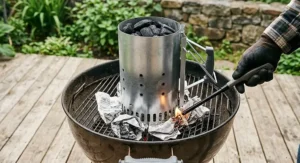
Most budget chimney starters use galvanized or zinc-coated steel, which resists rust reasonably well but isn’t in the same league as genuine stainless. This model is built from 430-grade stainless steel with hand-welded seams, a manufacturing detail that matters more than it sounds — welded seams hold up to repeated thermal expansion and contraction far better than crimped or riveted joints, which is where cheaper starters tend to fail first. The listed fill capacity sits at 6.17 lbs (2.8 kg), enough for a full 22-inch kettle grill or smoker in a single load, according to the manufacturer’s spec sheet. Based on the spec comparison, this is the closest thing on this list to a “buy it for life” option in the sub-C$35 range, since stainless steel simply won’t corrode the way coated steel eventually does after years of exposure to rain, humidity, and hot coal residue. Aggregated review sentiment describes the welded construction as noticeably sturdier than typical imported alternatives, with several reviewers specifically mentioning the absence of warping after repeated high-heat use — a common failure point for thinner steel starters.
Pros:
- ✅ 430 stainless steel resists long-term corrosion better than coated steel
- ✅ Hand-welded seams hold up to repeated thermal stress
- ✅ 6.17 lb capacity fits a full 22-inch kettle grill
Cons:
- ❌ Handle heat shield is smaller than Weber’s design
- ❌ Fewer long-term reviews than more established brands
Priced in the C$25-C$35 range depending on retailer promotions, it’s a strong value for anyone prioritizing longevity over brand recognition.
7. Napoleon Premium Charcoal Starter (67802) — best splurge, right at the C$40 ceiling
This is the one honest exception on the list: Napoleon’s premium tier sits right at, and sometimes just past, the C$40 mark depending on retailer and promotion — worth flagging plainly rather than fudging the number to fit the keyword. What you get for that stretch is the same large-chamber, lump-charcoal-friendly design as the standard Napoleon starter, built again from aluminized steel with a cool-touch handle, but positioned by the manufacturer as the flagship option in their accessory lineup. The spec sheet emphasizes the same “fill the base with newspaper, load the chimney, ignite” workflow, with an ignition window the company estimates at 15 minutes or less under normal conditions. What the spec sheet won’t tell you, but the broader Napoleon product family suggests, is that this premium tier tends to see slightly more attention to weld quality and rim finishing than the base 67800 model — a subtle but real difference for anyone who’s ever nicked a knuckle on a cheap starter’s rough edge. For most casual grillers, the standard Napoleon or the Weber Rapidfire will do everything this one does for less money; this pick exists for buyers who want the nicest version of a Canadian-made lump charcoal starter and are willing to flex the budget slightly to get it.
Pros:
- ✅ Refined build quality within the Napoleon lineup
- ✅ Same generous lump charcoal capacity as the standard model
- ✅ Canadian brand with accessible warranty support
Cons:
- ❌ Price sometimes edges just past C$40 depending on retailer
- ❌ Marginal upgrade over the standard 67800 for most casual users
Typically found in the C$38-C$45 range, this is the pick for buyers who’ve already decided on Napoleon and want the top trim — everyone else can comfortably save the difference with option 3 above.
Practical Usage Guide: Getting the Most From Your Chimney Starter
Buying the right charcoal chimney starter is only half the job — using it well is what actually saves you time and frustration. Start by placing your grill on a stable, heat-safe, well-ventilated outdoor surface; never in a garage, on a wooden deck without a fireproof mat, or anywhere near siding. Fill the bottom chamber loosely with two to three sheets of crumpled newspaper, or use a paraffin fire-starter cube for a more consistent, weatherproof burn. Load the top chamber with charcoal — briquettes for even, predictable heat, or lump charcoal if your starter’s chamber accommodates the irregular chunk sizes, like the Napoleon Charcoal Starter (67800) does particularly well.
Light the paper through the bottom vents and leave the starter undisturbed for 15-20 minutes. You’ll know the coals are ready when the top layer is lightly ashed over and you can see orange glow through the ventilation holes. Pour carefully and immediately into your grill’s charcoal grate using heat-resistant gloves — waiting too long lets coals cool and lose their edge.
For maintenance, empty any leftover ash after each use and store your starter somewhere dry between grilling sessions; even coated steel benefits from staying out of standing rainwater. A common first-30-days mistake is overpacking the chamber, which restricts airflow and actually slows ignition rather than speeding it up. Another is skipping the newspaper entirely and trying to light coals directly, which almost never works reliably without lighter fluid — defeating the entire purpose of owning a chimney starter in the first place.
Real-World Scenarios: Which Starter Fits Your Grilling Life
The apartment balcony griller: If you’re cooking for one or two people on a compact kettle a few times a month, the Weber Rapidfire Compact Chimney Starter matches your actual coal needs without wasted capacity, and its smaller footprint tucks easily into limited storage space.
The weekend family cookout host: Cooking burgers and hot dogs for six-plus people most summer weekends calls for real capacity without breaking the bank. The Amazon Basics Charcoal Chimney Starter‘s 6.6 lb capacity or the Kingsford Heavy Duty Charcoal Chimney Starter‘s large chamber both handle a full backyard crowd in one load, at a price that makes sense for occasional-but-frequent use.
The weekend smoker and lump charcoal enthusiast: If low-and-slow smoking with hardwood lump charcoal is your actual hobby, capacity and chamber shape matter more than price. The Napoleon Charcoal Starter (67800) or its premium sibling, the Napoleon Premium Charcoal Starter (67802), are built with exactly this irregular-chunk use case in mind, and their aluminized steel construction holds up better to the longer, hotter burns that smoking sessions demand.
Buyer’s Decision Framework
If budget is your top priority and you grill occasionally, choose the Kingsford Heavy Duty Charcoal Chimney Starter because its zinc-coated steel and sub-C$25 price deliver reliable performance without overspending on features you won’t use.
If you cook mostly lump charcoal for smoking, choose the Napoleon Charcoal Starter (67800) because its chamber geometry and aluminized steel construction are purpose-built for irregular lump pieces.
If you want the single best all-around balance of price, capacity, and build quality, choose the Weber Rapidfire Chimney Starter because it consistently rates highest across capacity, ignition speed, and handle safety without pushing into premium pricing.
If long-term durability matters more than upfront cost, choose the Onlyfire Stainless Steel Charcoal Chimney Starter because 430 stainless steel and hand-welded seams resist the corrosion that eventually claims coated-steel starters.
What Is a Charcoal Chimney Starter?
A charcoal chimney starter is a metal canister — typically aluminized, galvanized, or stainless steel — with a wire grate and side ventilation designed to ignite charcoal quickly using nothing but crumpled paper or a fire cube. Heat and flame draw upward through the chimney shape, lighting the entire load evenly in roughly 15-20 minutes, without lighter fluid, chemical odour, or a propane torch.
The design isn’t new or complicated, which is part of its appeal: charcoal itself has been used as a fuel source for thousands of years, and the chimney starter simply applies basic convection principles to make that ancient fuel easier to light safely and consistently in a modern backyard.
How to Choose a Charcoal Chimney Starter
- Match capacity to your grill size. A starter with too little capacity means multiple batches; too much wastes charcoal and money on cookouts for one or two people.
- Prioritize material based on frequency of use. Zinc-coated or galvanized steel suits occasional grillers; aluminized or stainless steel earns its higher price with weekly or seasonal-long use.
- Check handle design for real usability. A stay-cool handle with a heat shield genuinely reduces burn risk when pouring a full load of glowing coals.
- Consider lump charcoal compatibility if that’s your fuel of choice. Chambers built around uniform briquette shapes can leave gaps around irregular lump chunks, slowing ignition.
- Look at ventilation hole density. More generous venting along the base speeds airflow and, in turn, lighting time — a detail rarely highlighted on Amazon listings but confirmed across manufacturer spec sheets.
- Weigh storage footprint. Compact models suit balconies and smaller BBQ carts; full-size chimneys need a dedicated spot in a shed or garage.
- Verify current pricing before buying, since charcoal accessory prices shift with grilling-season demand — always check the listing rather than relying on a remembered figure.
Understanding Chimney Capacity
Chimney capacity is usually listed in pounds of standard briquettes or in gallons, and it’s one of the most misunderstood specs on the whole page. A 5-6 lb capacity, like the Weber Rapidfire Chimney Starter or Onlyfire Stainless Steel Charcoal Chimney Starter offer, is enough for a single full load on most 22-inch kettle grills. Smaller capacities, like the Weber Rapidfire Compact Chimney Starter‘s roughly 3.5 lbs, are sized for smaller grills or lighter cooking sessions — buying more capacity than your grill can use just means storing unlit charcoal mid-cook, which defeats the point of a single-pour ignition tool.
Common Mistakes When Buying a Charcoal Chimney Starter
The biggest mistake is buying based on price alone without checking capacity against your actual grill size — a starter too small for a 26-inch kettle means two separate lighting cycles every single cookout. A second common error is ignoring material entirely; barbecue-related carbon monoxide incidents are a genuine safety concern in Canada, and a poorly ventilated or warped starter can slow ignition enough that frustrated users reach for lighter fluid anyway, reintroducing the exact problem a chimney starter is meant to solve. A third mistake is overlooking handle design, since a starter without a proper heat shield turns the simple act of pouring coals into a genuine burn risk. Finally, buyers sometimes assume all “large capacity” claims are equivalent — always compare the actual pound or gallon figure rather than trusting marketing language alone.
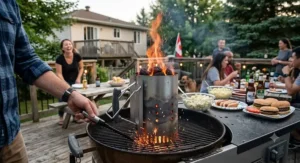
Chimney Starter for Lump Charcoal vs Briquettes
Briquettes are uniform, compressed, and predictable — they pack neatly into any chimney starter and burn at a consistent rate, which is why most starters, including the budget-friendly Kingsford Heavy Duty Charcoal Chimney Starter, are effectively optimized around them. Lump charcoal, by contrast, comes in irregular chunks of carbonized hardwood that can leave air gaps when packed into a narrow or tightly tapered chamber, occasionally slowing ignition or leaving pockets unlit. A chimney starter for lump charcoal, like the Napoleon Charcoal Starter (67800), is built with a wider, more forgiving main chamber specifically to accommodate that irregularity. If lump charcoal’s cleaner-burning, less-additive profile matters to your cooking, it’s worth prioritizing chamber shape over raw capacity numbers when comparing models.
Charcoal Chimney Starter vs Lighter Fluid: Why Lighter Fluid-Free Ignition Wins
Lighter fluid ignition seems faster on paper — squeeze, wait a minute, light — but it comes with real downsides that a chimney starter sidesteps entirely. Chemical accelerants can leave a faint but detectable petroleum taste on food if coals aren’t fully burned down before cooking, a common complaint among barbecue enthusiasts trying to nail authentic smoky flavour. Lighter fluid-free ignition, by contrast, relies purely on airflow and convection, meaning nothing but paper, cardboard, or a natural fire starter touches your fuel. It’s also simply safer: lighter fluid bottles are a genuine flare-up and burn risk if used carelessly around an open flame, while a chimney starter’s enclosed design keeps the ignition source contained. The trade-off is patience — chimney starters typically need 15-20 minutes versus a lighter-fluid shortcut that can feel faster, though often at the cost of over-saturating coals and creating uneven burns.
What to Expect: Real-World Charcoal Lighting Speed
Manufacturer estimates across this list cluster consistently around 15-20 minutes from ignition to fully ashed-over coals, though actual charcoal lighting speed depends on a few real-world variables. Wind exposure speeds ignition by feeding more oxygen through the vents, while damp or humid conditions can add several extra minutes. Briquettes tend to light more predictably than lump charcoal simply due to their uniform shape and density, though once lit, lump charcoal often reaches higher peak temperatures. Starters with denser ventilation, like the cone-grate design on the Weber Rapidfire Chimney Starter, tend to shave a few minutes off the low end of that range according to aggregated reviewer feedback, while thinner-gauge budget models may run a touch slower in cooler weather. Either way, every model on this list beats the unpredictable wait-and-hope timeline of lighter-fluid ignition.
Long-Term Cost & Maintenance
A charcoal chimney starter is one of the rare grilling accessories where the sticker price is close to the entire lifetime cost. Unlike propane torches or electric starters, there’s no fuel or battery expense — just occasional ash cleanup and dry storage. Where total cost of ownership actually diverges is durability: a sub-C$25 zinc-coated model like the Kingsford Heavy Duty Charcoal Chimney Starter may need replacing after several rust-prone seasons of outdoor storage, while stainless or aluminized options like the Onlyfire Stainless Steel Charcoal Chimney Starter or Weber Rapidfire Chimney Starter can realistically outlast a decade of regular use. Run the numbers over ten grilling seasons and the pricier, more durable options often work out cheaper per use than repeatedly replacing a rusted budget model — a genuinely useful ROI angle that no product listing will spell out for you.
Safety and Carbon Monoxide Awareness
Charcoal chimney starters themselves are safe when used outdoors as directed, but the broader context of charcoal grilling carries a real, well-documented risk worth taking seriously. Health Canada’s guidance is explicit that fuel-burning equipment, including charcoal barbecues, should never be operated indoors, in a garage, or in any enclosed space, because carbon monoxide accumulates rapidly and is undetectable without an alarm. This isn’t a hypothetical concern — Canadian news outlets have reported real cases of families hospitalized after using charcoal barbecues indoors during power outages or cold weather, underscoring why “outdoor use only” on every product label matters far more than it might seem. Always ignite and use your chimney starter in a well-ventilated outdoor space, keep it away from siding, wood decking, or dry vegetation, and let coals cool completely before disposal.
✨ Ready to Upgrade Your Grilling Game?
🔍 Take your backyard cookouts to the next level with a chimney starter built for how you actually grill. Click on any highlighted pick above to check current pricing and availability — a small upgrade that makes every summer cookout easier!

Frequently Asked Questions
❓ Is a charcoal chimney starter worth it under $40 CAD?
❓ How long does a chimney starter take to light charcoal?
❓ Can you use a charcoal chimney starter with lump charcoal?
❓ What size chimney starter do I need for a 22-inch kettle grill?
❓ Are stainless steel chimney starters better than galvanized ones?
Conclusion
A charcoal chimney starter under $40 CAD is one of those rare purchases where spending a little more upfront genuinely changes how often you actually want to grill. The Weber Rapidfire Chimney Starter remains the safest all-around recommendation for most Canadian backyards, balancing capacity, ignition speed, and price without asking you to compromise on any of the three. Budget-conscious cooks do perfectly well with the Kingsford Heavy Duty Charcoal Chimney Starter, while anyone serious about lump charcoal and smoking should look hard at the Napoleon Charcoal Starter (67800) for its Canadian roots and forgiving chamber design. Whichever model you choose, the underlying win is the same: no more kerosene aftertaste, no more twenty minutes of anxious fanning, just crumpled paper, patience, and coals that are ready when you are.
Recommended for You
- Natural Fire Starters for Charcoal BBQ: 7 Picks Ranked for 2026
- 7 Best Gas Regulators for BBQ in Canada (2026 Guide)
- Propane Leak Detector for Home BBQ: 7 Picks That Actually Work (2026)
Disclaimer: This article contains affiliate links. As an Amazon Associate, I earn from qualifying purchases. If you purchase products through these links, we may earn a small commission at no additional cost to you.
✨ Found this helpful? Share it with your friends! 💬🤗
