
In This Article
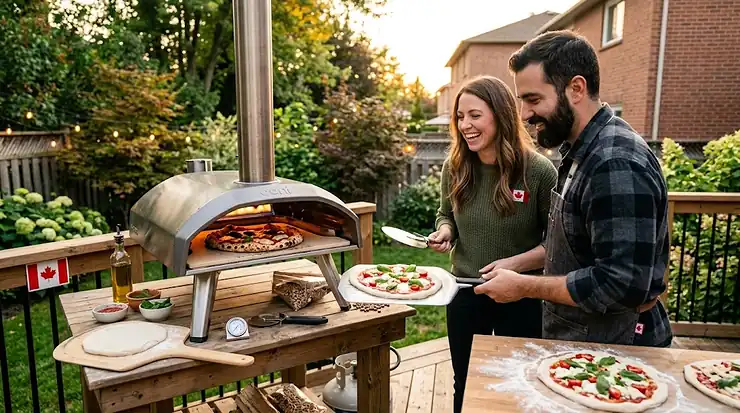
Here’s the thing nobody tells you before your first pizza night: the oven matters way more than the dough recipe. You can nail a 48-hour cold ferment and still watch your pie slide off the peel into a sad heap if the equipment fights you the whole way. A good pizza oven for beginners isn’t the one with the flashiest spec sheet — it’s the one that forgives your mistakes while you’re still learning where the “sweet spot” on the dial actually is. Some ovens practically hold your hand through that first char-flecked crust; others assume you already know what a rolling flame looks like and leave you guessing.
This guide skips the marketing fluff and gets into what actually separates a genuinely approachable oven from one that’ll frustrate you into ordering delivery. We looked at real models sold to Canadian shoppers, weighed their specs against what actual owners report after weeks (not minutes) of use, and organized everything by budget, fuel type, and how steep the learning curve really is. Whether you’re working with a condo balcony in Vancouver or a full backyard in Calgary, there’s a sensible starting point below — and by the end, you’ll know exactly which one matches how you actually plan to cook.
What Is a Beginner-Friendly Pizza Oven?
A pizza oven for beginners is a compact gas, wood, or electric oven built for home use that reaches 700°F–950°F, cooks a 12-inch pizza in roughly 60 seconds to a few minutes, and requires minimal technical know-how to operate safely — think one-dial temperature control, preset cooking modes, or clearly marked “sweet spot” zones instead of fussy multi-step calibration.
Quick Comparison Table
| Oven | Fuel | Max Temp | Beginner Friendliness | Price Range (CAD) | Best For |
|---|---|---|---|---|---|
| Chefman Indoor Pizza Oven | Electric | 800°F | Preset touchscreen, zero guesswork | around C$300-380 | Apartments, total beginners |
| Solo Stove Pi Prime | Propane | 950°F+ | Marked dial “sweet spot” | C$480-620 range | Budget outdoor cooks |
| Cuisinart Indoor Pizza Oven | Electric | 700°F | Full kit included, plug-and-go | C$400-550 range | Weather-proof indoor cooking |
| Ooni Koda 12 | Propane | 950°F | Simple dial, ultra-portable | C$450-550 range | Small patios, portability |
| Gozney Roccbox | Propane/Wood | 950°F | Forgiving heat retention | C$650-780 range | Serious hobbyists, entertaining |
| Ooni Koda 16 | Propane | 950°F | Larger opening, less stressful launches | around C$800-950 | Families, bigger pizzas |
| Breville Smart Oven Pizzaiolo | Electric | 750°F+ | Automated sensor presets | C$1,300-1,550 range | Premium indoor, hands-off cooking |
Looking at the spread above, the honest takeaway is that price and beginner-friendliness don’t move in lockstep. The Chefman Indoor Pizza Oven and Solo Stove Pi Prime both sit at the accessible end and still deliver a genuinely low learning curve, while the Ooni Koda 16 costs more but actually asks more of a first-timer because of its uneven rear burner. If your budget allows it, the Breville Smart Oven Pizzaiolo all but automates the process — but that convenience comes at a price premium that’s hard to justify unless indoor, hands-off cooking is a non-negotiable for you.
💬 Just one click — help others make better buying decisions too!😊
Top 7 Pizza Ovens for Beginners: Expert Analysis
Coverage here spans budget, mid-range, and premium tiers, plus a mix of indoor electric and outdoor gas models — because “beginner-friendly” looks different depending on whether you’ve got a backyard or a kitchen counter.
1. Chefman Indoor Pizza Oven — foolproof touchscreen presets
The standout feature here is the five-preset touchscreen, which takes the single biggest source of beginner anxiety — “what temperature do I even use?” — completely off the table. Both heating elements range from 300°F to 800°F, and dedicated presets for Neapolitan, New York, thin-crust, pan, and frozen styles mean you tap a button instead of guessing. At just over 23 lbs, it’s light enough to store in a cupboard between pizza nights, which matters if you’re working with a small Toronto condo kitchen rather than a dedicated outdoor setup.
This is squarely built for someone who wants restaurant-style results without learning to manage an open flame — students, apartment dwellers, or anyone testing the waters before committing to a bigger outdoor rig. Reviewers consistently note that the New York-style preset performs excellently, while the Neapolitan preset can be inconsistent because the top burner sometimes cuts out mid-cook, according to hands-on testing from pizza-focused review sites. That’s a fair trade-off if thin, foldable New York slices are more your speed than blistered Neapolitan char.
Pros:
- ✅ Touchscreen presets remove all guesswork for total beginners
- ✅ Reaches 800°F on a countertop with no propane or wood needed
- ✅ Lightweight and compact enough for small kitchens
Cons:
- ❌ Top burner can be inconsistent on the Neapolitan preset
- ❌ Feels less premium than metal-bodied outdoor competitors
At around C$300-380, the Chefman lands as one of the most accessible entry points into pizza-oven ownership, and the preset system alone makes it worth considering if convenience matters more than authenticity.
2. Solo Stove Pi Prime — marked dial takes the guesswork out
What immediately stands out is the front-mounted temperature dial with orange markings showing the ideal pizza-cooking range — a small design choice that testers repeatedly flagged as the thing that made this oven genuinely approachable on the very first cook. It’s propane-only (the dual-fuel wood option from the earlier Solo Stove Pi was dropped for this model), reaches full temperature in roughly 15-20 minutes, and the 13-inch stone comfortably fits pizzas up to 12 inches.
Here’s what most budget-oven shoppers overlook: cheap doesn’t automatically mean forgiving. Plenty of sub-C$400 ovens sacrifice heat consistency to hit their price point, but the Pi Prime’s insulated chamber reflects heat onto the pizza rather than blasting it from one direction, producing more even bakes than its price would suggest. Reviewers who tested it against pricier rivals noted it “gives the Arc a good run for its money” despite costing roughly half as much, which says a lot about where Solo Stove chose to invest their engineering budget.
Pros:
- ✅ Marked dial zone makes temperature control nearly foolproof
- ✅ Ready to cook in about 15-20 minutes from a cold start
- ✅ Comes with a protective cover included
Cons:
- ❌ Propane only — no wood-fire option like some competitors
- ❌ 12-13 inch stone limits pizza size for bigger groups
3. Cuisinart Indoor Pizza Oven — the most complete beginner kit
The standout advantage here is what’s actually in the box: a pizza stone, a foldable pizza peel, and a deep-dish pan, all included at no extra cost — something Ooni and Gozney notably don’t offer without separate purchases. It plugs straight into a standard outlet, hits a maximum of 700°F using radiant heat and dual internal fans, and doesn’t care whether it’s raining, snowing, or -20°C outside, since it lives entirely on your countertop.
Here’s what the spec sheet won’t tell you: that 700°F ceiling means you’re better suited to New York, pan, and Detroit-style pizzas than true Neapolitan, though a full preheat and attentive rotation can still get you decent blistering. Aggregated owner reviews on Best Buy and Amazon consistently describe consistent New York-style results in the five-to-six-minute range, with the caveat that the 20-30 minute preheat time tests patience and the fans run loud enough to notice. For someone who wants a complete kit without hunting down accessories separately, that trade-off is a reasonable one.
Pros:
- ✅ Ships with stone, peel, and deep-dish pan — nothing extra to buy
- ✅ Works indoors regardless of Canadian weather conditions
- ✅ Straightforward controls with an independent countdown timer
Cons:
- ❌ Preheat takes 20-30 minutes before the first pizza goes in
- ❌ Reviewers note the fans run noticeably loud during operation
In the C$400-550 range, the Cuisinart earns its place as the practical middle ground between a bare-bones electric oven and a full outdoor setup, especially for anyone who cooks pizza year-round rather than seasonally.
4. Ooni Koda 12 — the lightest, simplest outdoor option
The Ooni Koda 12’s standout trait is sheer simplicity: unfold the legs, connect a propane tank, and you’re cooking — no assembly tools required. It reaches 950°F in about 15 minutes courtesy of instant gas ignition, weighs a mere 20.4 lbs, and the single control dial governs everything from a gentle simmer for roasting to full pizza-launching heat.
What most first-time buyers don’t realize is that portability and beginner-friendliness often go hand in hand — a lighter, simpler oven means fewer components to misjudge. The Koda 12 rewards that simplicity with genuinely fast learning: reviewers describe it as user-friendly “even if you’re not a seasoned pizza chef,” largely because there’s only one dial to understand rather than separate top and bottom controls. The trade-off is size — the 12-inch stone and comparatively tight opening mean careful rotation matters more than on larger models, since edges can catch if you’re not paying attention.
Pros:
- ✅ One-dial operation with no learning multiple controls
- ✅ Reaches full temperature in about 15 minutes
- ✅ At just over 20 lbs, genuinely easy to move and store
Cons:
- ❌ 12-inch opening is tighter, requiring careful pizza rotation
- ❌ Gas-only unless you buy a separate multi-fuel attachment
5. Gozney Roccbox — includes the accessory beginners always forget to buy
The Roccbox’s standout feature is what’s bundled in: a professional-grade perforated pizza peel worth roughly $85 USD on its own, something competitors typically sell separately. It reaches 950°F, uses a single 14,330 BTU propane burner as standard (with an optional wood-burner attachment), and its dense insulation plus thick 19mm stone give it unusually forgiving heat retention for back-to-back cooking.
Based on the spec comparison with lighter competitors, the extra 20-plus pounds of weight the Roccbox carries isn’t wasted bulk — it’s insulation that keeps the exterior cool to the touch (thanks to a silicone jacket) and stabilizes internal temperature swings between pizzas. What most buyers overlook is that this stability directly reduces the beginner’s biggest failure mode: burning pizza number three after nailing pizza number one. Aggregated reviewer sentiment consistently praises the build quality and describes the rolling-flame design as genuinely fun to watch, while noting the narrow 12-inch by 4-inch opening does limit pizza size compared to larger ovens.
Pros:
- ✅ Includes a professional-grade peel most rivals sell separately
- ✅ Dense insulation gives more forgiving, consistent heat
- ✅ Silicone jacket keeps the exterior safe to touch
Cons:
- ❌ Heavier than most portable competitors at roughly 44 lbs
- ❌ Narrow opening restricts pizzas to about 12 inches
Priced in the C$650-780 range, the Roccbox sits above true budget territory, but the included peel and heat consistency genuinely offset part of that premium for buyers who plan to entertain regularly.
6. Ooni Koda 16 — room to grow once the basics click
The Koda 16’s headline feature is its 16-inch cooking surface — noticeably roomier than the 12-inch class, which gives you actual space to rotate a pizza without frantically chasing the crust edge around a cramped opening. It reaches 950°F in about 20 minutes via an L-shaped rear burner, and Ooni’s own marketing leans into it being the best-selling pizza oven of all time, a claim that at least reflects genuine market traction.
Here’s the honest trade-off reviewers keep flagging: that L-shaped burner creates a hotter zone at the back and cooler zone toward the front, meaning you need to rotate every 20-30 seconds to avoid uneven cooking. Experienced pizza makers tend to enjoy the extra control this demands; total beginners sometimes find it more stressful than a simpler single-point burner. Reviewers were candid that “beginners find it stressful,” which is worth weighing against the genuine benefit of extra cooking room if you’re planning to feed a family rather than cook solo portions.
Pros:
- ✅ 16-inch stone comfortably fits larger, family-sized pizzas
- ✅ Wide opening reduces edge-catching during rotation
- ✅ Proven reliability with a large installed user base
Cons:
- ❌ L-shaped burner creates uneven heat requiring active rotation
- ❌ Heavier and pricier than the smaller Koda 12
7. Breville Smart Oven Pizzaiolo — the closest thing to hands-off pizza
The standout here is sensor-driven automation: this is the only electric indoor oven in this lineup capable of exceeding 700°F, and it uses built-in sensors to automatically adjust cooking conditions across dedicated presets for Neapolitan, thin-and-crispy bar-style, New York, and Chicago deep-dish. You’re not managing an open flame or eyeballing a dial — you’re selecting a style and letting the oven do the calibration.
On paper, this means the steepest part of the learning curve — understanding how heat, timing, and pizza style interact — gets handled by the machine instead of by trial and error. Lab-style comparative testing found the Neapolitan setting produces a properly puffed, charred cornicione that rivals dedicated outdoor ovens, a genuinely rare feat for an indoor electric appliance. The catch, and reviewers are blunt about this, is cost: at a significant premium over every other oven on this list, “justifying the price is not easy” relative to the performance gap versus a Roccbox or Koda costing half as much.
Pros:
- ✅ Only electric model here to exceed 700°F reliably
- ✅ Automated presets handle temperature calibration for you
- ✅ Produces genuinely wood-fired-style results indoors
Cons:
- ❌ Premium price is difficult to justify purely on performance
- ❌ Bulky footprint takes up significant counter space
At roughly C$1,300-1,550, the Pizzaiolo is a specialty purchase for someone prioritizing zero-flame convenience and indoor year-round cooking over value-per-dollar — not a typical first oven, but a legitimate option for a beginner who simply wants the smallest possible margin for error.
Practical Usage Guide: Your First 30 Days
Getting comfortable with a new oven has less to do with the equipment and more to do with repetition during a predictable “shakedown” period. In week one, run your oven empty at a moderate setting for 15-20 minutes before your first real cook — this burns off manufacturing residue on electric models and lets you observe how quickly your specific unit climbs to temperature, since real-world preheat times often run longer than marketing copy suggests. Keep a phone timer running the first several cooks; guessing at doneness by eye is the single most common beginner mistake, and a consistent 60-90 second baseline for high-heat gas ovens (or 5-7 minutes for 700°F electric models) gives you a reference point to adjust from.
By weeks two and three, start deliberately varying one variable at a time — dough hydration, topping quantity, or stone position — rather than changing everything at once, so you can actually identify what caused a soggy centre or a scorched edge. Flour your peel generously and launch decisively rather than hesitantly; a slow, wavering launch is what causes dough to stick and tear. For gas and wood ovens specifically, get comfortable with flame adjustment between pizzas: most beginners leave the flame too high once food is already in the chamber, which chars the top before the base finishes cooking. By day 30, most owners report the process feels automatic rather than effortful — which is really the whole point of choosing an oven with a genuinely manageable learning curve in the first place.
Common early mistakes worth flagging now: overloading the pizza with sauce and toppings (this is the top cause of a soggy middle), skipping a full preheat because you’re impatient, and forgetting to re-flour the peel between launches. Maintenance-wise, let cordierite or ceramic stones cool completely before cleaning, brush off loose debris rather than scrubbing with soap (which the stone will absorb), and for gas models, do a soapy-water leak check on the hose connection each time you reattach a propane tank.
Real-World Scenarios: Which Beginner Pizza Oven Fits You
Picture a university student in a shared apartment in Waterloo with no balcony access and a strict no-open-flame lease clause. For that situation, the Chefman Indoor Pizza Oven or Cuisinart Indoor Pizza Oven make far more sense than anything propane-fuelled, since both plug into a standard outlet and store away in a closet between uses — no gas tank, no outdoor space requirement, and a genuinely minimal learning curve thanks to preset controls or a bundled starter kit.
Now consider a young family in suburban Mississauga with a modest backyard patio, hosting pizza nights for six people most Saturdays. Here, capacity and forgiveness both matter: the Ooni Koda 16 earns its larger price tag through its 16-inch stone, while the Gozney Roccbox offers steadier heat retention for cooking several pizzas back-to-back without a cooldown lag between them — either is a reasonable pick depending on whether raw capacity or consistency ranks higher on the priority list.
Finally, imagine someone who cooks solo most nights, values portability for camping trips or a friend’s cottage, and wants to spend as little as possible while still getting genuinely good results. The Solo Stove Pi Prime was practically built for this profile — its marked dial removes the guesswork, it’s light enough to toss in a trunk, and the price sits well below most 950°F-capable competitors. In each case, matching the oven to how you’ll realistically use it — not to the highest spec sheet — is what actually determines whether you stick with pizza-making as a hobby.
How to Choose a Pizza Oven for Beginners
- Match fuel type to your living situation first. If you’re in a condo or rental without outdoor access, electric indoor models like the Chefman or Cuisinart eliminate the propane-tank question entirely.
- Prioritize preset or marked temperature guidance over raw max heat. A 950°F oven with no guardrails can intimidate a first-timer more than a 700°F oven with clear presets.
- Check the opening size against the pizza size you actually want. A 12-inch opening is tighter to rotate in than a 16-inch one — worth weighing if edge-catching stress is a concern.
- Factor in what’s actually included. Some ovens bundle a peel, stone, and pan; others require separate purchases that add real cost on top of the sticker price.
- Consider weight and portability honestly. If you’ll be moving the oven between a shed and a patio each use, a 44-lb model is a very different daily commitment than a 20-lb one.
- Budget for accessories and fuel, not just the oven. Propane tanks, a proper pizza peel if not included, and dough ingredients all add to the real first-month cost.
- Read aggregated review sentiment, not just star ratings. A 4.5-star average can still hide a consistent complaint — like an inconsistent top burner — that matters specifically to a beginner.
Common Mistakes When Buying a Pizza Oven for Beginners
The single most common misstep is buying based on maximum temperature alone. A 950°F ceiling sounds impressive, but if you’re still learning dough handling, that heat can punish small mistakes — a slightly thick edge burns in seconds rather than giving you a forgiving margin. Reviewers testing side-by-side comparisons repeatedly note that lower-heat, preset-driven electric ovens actually produce more consistent results for total beginners, even though the “authentic” wood-fired flavour and char belong to the higher-heat gas and wood models.
A second frequent error is underestimating accessory costs. Ooni and Gozney ovens, for instance, don’t always include a pizza peel in their base packaging (Gozney does with the Roccbox, notably), so budgeting the oven price alone can leave you short by C$50-90 once you add the tools you actually need to use it. Third, many first-time buyers skip reading the fine print on preheat time — a 20-30 minute wait, as reported for both the Cuisinart and comparable electric models, catches people off guard on weeknights when patience is already thin. Finally, buyers sometimes ignore storage and weight entirely, then discover a 40-plus-pound oven is awkward to move solo between a garage and a patio table every single use.
Easy to Use Pizza Oven vs Traditional Home Oven
A conventional kitchen oven tops out around 500-550°F for most Canadian residential models, which simply isn’t hot enough to replicate the fast, high-heat cook that gives pizza its signature blistered crust and quickly melted, slightly browned cheese. An easy to use pizza oven — whether electric, gas, or wood — is purpose-built to blow past that ceiling, often reaching 700-950°F, which compresses cook time from the 12-15 minutes a home oven needs down to 60 seconds to a few minutes.
That speed isn’t just a novelty — it fundamentally changes the texture outcome. At home-oven temperatures, moisture has time to escape the dough evenly, producing a firmer, cracker-like crust; at pizza-oven temperatures, the outside sets and chars almost instantly while the interior stays airy, which is the textural contrast most people associate with “real” pizzeria pizza. The trade-off is that a dedicated pizza oven is a single-purpose appliance taking up counter or patio space, whereas your existing oven is already there and free. For someone still deciding whether pizza-making will become a regular hobby, that’s a genuine consideration worth weighing before committing to a purchase.
What to Expect: Real-World Performance in Your First Month
Specs on paper rarely match the lived experience of a first-time owner, so here’s what actually tends to happen. Your first pizza, regardless of which oven you choose, will probably not look like the marketing photos — expect an uneven shape, maybe a slightly thicker edge on one side, and possibly a spot or two of char that’s darker than intended. This is completely normal and has more to do with launch technique than the oven itself. By pizza three or four, most beginners report a noticeable jump in consistency once they’ve internalized their specific oven’s hot spots and timing.
Reviewers testing the Solo Stove Pi Prime and Ooni Koda 12 both noted that once a new owner trusts the marked dial or gets comfortable with the single control, results become “damn fine” fairly quickly — usually within the first few attempts rather than weeks. Electric indoor ovens like the Chefman tend to front-load their learning curve into choosing the right preset rather than managing live flame, so the improvement curve looks a little different: fewer dramatic failures early on, but potentially less flavour complexity than a wood or gas-fired result once you’ve mastered either. Either path leads to genuinely foolproof pizza results with enough repetition — the equipment differences mainly affect how many attempts that takes.
Beginner Friendly Outdoor Oven vs Indoor Oven: Which Should You Choose
The honest answer depends heavily on Canadian climate realities more than personal preference. A beginner friendly outdoor oven like the Solo Stove Pi Prime or Ooni Koda 12 delivers genuinely superior char and smoky flavour complexity, largely because open-flame cooking interacts with the dough differently than an enclosed electric chamber. But outdoor ovens also mean you’re at the mercy of a Canadian winter for roughly four to five months of the year in most provinces, plus wind, which can meaningfully affect flame stability and cook consistency if your patio isn’t sheltered.
Indoor electric models solve the weather problem entirely — the Cuisinart and Chefman both work identically in January and July — but they generally can’t match the top-end heat of gas or wood, with the notable exception of the Breville Pizzaiolo, which closes that gap at a steep price. For a true first-time buyer trying to minimize variables while learning, an indoor electric model removes one entire category of unpredictability (weather and wind), which is a meaningful advantage even if it means slightly less dramatic char on the finished crust. Buyers who already know they’ll cook year-round regardless of season tend to be happier long-term with an outdoor gas model, since the ceiling on flavour and texture is simply higher once technique catches up.
Simple Pizza Oven Setup: What Actually Matters
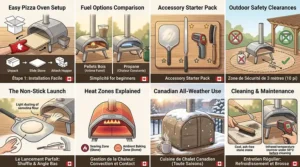
A simple pizza oven setup comes down to three things: minimal assembly, clear first-use instructions, and a stable, appropriate surface to place the oven on. Among the models covered here, the Ooni Koda 12 and Solo Stove Pi Prime both arrive essentially ready to cook — unfold legs, connect propane, insert the stone if it isn’t pre-installed, and you’re within minutes of your first bake. The Gozney Roccbox is similarly quick, though at 44 lbs, positioning it correctly on a stable surface matters more, since aggregated owner feedback has flagged that improper positioning can cause the folding legs to shift under the oven’s weight.
Electric models simplify setup even further in one sense — no gas connection or leak-testing required — but the Cuisinart specifically needs its crumb tray, wire rack, and stone stacked correctly before first use, and its 20-30 minute preheat means setup-to-first-pizza takes noticeably longer than a gas model’s roughly 15-minute climb. Whichever oven you choose, placing it on a level, heat-safe, non-combustible surface, keeping the required clearance from siding or fencing for gas models, and doing a first “empty run” before your actual pizza night will smooth out nearly every setup surprise before it costs you a ruined dinner.
Temperature Guide Included: Mastering Heat Without Guesswork
Several ovens on this list address the guesswork problem directly by building a temperature guide included right into the appliance itself. The Solo Stove Pi Prime’s orange dial markings are the clearest example — Solo Stove explicitly designed the dial so a beginner can find the ideal cooking zone without ever consulting a manual mid-cook. The Chefman goes a step further with named presets (Neapolitan, New York, thin-crust, pan, frozen) rather than raw temperature numbers, translating the abstraction of “375°F top, 320°F bottom” into a decision anyone can make instantly.
For ovens without a built-in guide, a simple rule of thumb helps: aim for roughly 750°F stone temperature for Neapolitan-style pizza (cook time 60-90 seconds), 650-700°F for New York style (cook time 4-6 minutes), and 600-650°F for thicker pan or deep-dish styles (cook time 12-15 minutes). An inexpensive infrared thermometer, while not strictly necessary on preset-driven models, gives genuinely useful confirmation on gas and wood ovens where the built-in thermometer — if one exists at all — may only measure ambient rather than stone-surface temperature. Getting comfortable with these reference points is often the single fastest way to shorten the overall learning curve, regardless of which oven you own.
Safety & Regulations: Propane, CSA Certification, and Canadian Rules
Safety compliance isn’t optional when it comes to gas-fuelled pizza ovens in Canada, and it’s worth understanding the basics before your first cook. Any propane-burning outdoor appliance sold in Canada should carry CSA certification, confirming it meets the CSA Group’s national safety standards for gas-burning equipment — look for the certification mark on the unit or in the manual before connecting a tank. Beyond the appliance itself, Health Canada’s guidance is unambiguous: propane and gas-fired cooking appliances are approved for outdoor use only, since they can produce carbon monoxide, a colourless and odourless gas that becomes dangerous in enclosed spaces like garages or covered balconies without adequate ventilation.
Practical first-timer safety habits worth building early: always position a gas pizza oven away from wooden fencing, siding, or overhanging branches; never leave it unattended once lit, given how quickly a 950°F chamber can scorch nearby material; and do a soapy-water bubble test on the hose connection each time you reattach a propane tank, since a slow leak is often invisible otherwise. Indoor electric ovens sidestep the propane and ventilation questions entirely, but they still draw significant power — the Chefman and Cuisinart both run at roughly 1700-1800 watts — so plugging directly into a wall outlet rather than an extension cord or power bar is the safer default, particularly in older Canadian homes with older wiring.
Long-Term Cost & Maintenance for Beginner Pizza Ovens
The sticker price is only part of the real cost of ownership. Gas-fuelled ovens like the Ooni Koda 12, Solo Stove Pi Prime, and Gozney Roccbox require ongoing propane refills — a standard 20-lb tank typically costs somewhere in the C$20-30 range to refill in most Canadian cities and lasts through a fair number of cook sessions depending on frequency, making the ongoing fuel cost modest compared to the oven’s upfront price. Electric models like the Chefman and Cuisinart trade that recurring propane cost for a marginal bump in household electricity use, which is negligible for occasional pizza nights but worth factoring in if you plan to cook several times a week.
Maintenance costs also diverge by model. Cordierite and ceramic stones can crack under thermal shock if cleaned improperly or exposed to sudden temperature swings, and a replacement stone typically runs somewhere in the C$40-70 range depending on the brand — a cost worth avoiding by letting the stone cool fully before any cleaning. Most manufacturers in this lineup, including Gozney and Ooni, offer extended warranties (often five years) if you register the product shortly after purchase, which is a simple step that meaningfully protects your investment against manufacturing defects. Looking at total cost of ownership over two to three years, the gap between a budget electric oven and a premium model like the Breville Pizzaiolo narrows somewhat once you account for fuel, accessories, and warranty coverage — though the upfront price difference still dominates the overall calculation for most buyers.
✨ Ready to Fire Up Your First Pizza Night
🍕 Compare the models above side by side, click through to check current pricing on Amazon.ca, and get one step closer to a genuinely foolproof pizza night — no culinary school required!
FAQ
❓ What is the easiest pizza oven for a total beginner?
❓ How hot does a pizza oven for beginners need to get?
❓ Do I need experience to use an outdoor pizza oven?
❓ Indoor vs outdoor pizza oven for beginners — which is better?
❓ How much does a beginner pizza oven cost in Canada?
Conclusion
Choosing the right pizza oven for beginners really comes down to being honest about how you’ll actually use it — not chasing the highest max-temperature number on the spec sheet. If you’re working with limited outdoor access or want the shortest possible learning curve, the Chefman Indoor Pizza Oven or Cuisinart Indoor Pizza Oven remove nearly every variable that trips up first-timers. If you’ve got patio space and want that unmistakable wood-fired char, the Solo Stove Pi Prime and Ooni Koda 12 both offer genuinely simple, forgiving operation without demanding a big budget. And if you’re planning to entertain regularly or simply want the smallest possible margin for error, the Gozney Roccbox, Ooni Koda 16, or Breville Smart Oven Pizzaiolo all justify their higher price tags in different ways.
Whichever you land on, remember that the equipment only gets you part of the way there — a few dozen pizzas in, technique closes most of the gap between a C$350 oven and a C$1,500 one. Start with what matches your space, your climate, and your patience for a slightly imperfect first attempt, and the rest tends to follow naturally.
Recommended for You
- Pizza Oven for Small Backyard: 7 Compact Picks for 2026
- 7 Best Pizza Ovens for Canadian Winter in 2026 (Cold-Proof Picks)
- Pizza Oven Cover: 7 Top Picks That Survive Canadian Winters (2026)
Disclaimer: This article contains affiliate links. As an Amazon Associate, I earn from qualifying purchases. If you purchase products through these links, we may earn a small commission at no additional cost to you.
✨ Found this helpful? Share it with your friends! 💬🤗
