In This Article
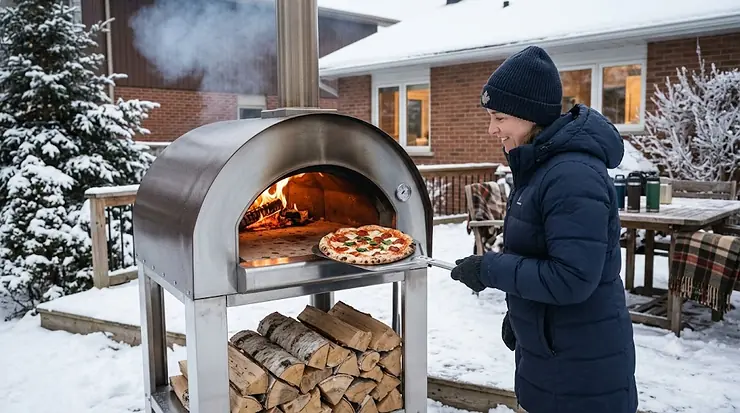
Somewhere around late November, most backyard pizza dreams in this country get shoved into a shed and forgotten until the snow melts. That’s a shame, because a properly built pizza oven for canadian winter use doesn’t care about the polar vortex nearly as much as you’d think. A pizza oven for canadian winter is simply an outdoor cooking appliance engineered with insulation, cold-tolerant materials, and a fuel system that keeps performing when the mercury drops well below freezing — think double-walled steel, ceramic fibre insulation, and burners rated for consistent output in sub-zero air. The good units hit 800°F+ in twenty minutes flat, snow on the ground or not. The catch is that most of the marketing copy on Amazon.ca never tells you which ovens actually hold up to a Winnipeg January versus which ones quietly develop hairline cracks by February. That’s the gap this guide is here to close, using real specs, real aggregated review sentiment, and honest comparative analysis rather than recycled listing copy. Whether you’re chasing that perfect leoparded Neapolitan crust on a Tuesday in Thunder Bay or just want one appliance that earns its keep 12 months a year, we’ve dug into seven genuine options across every price tier — budget, mid-range, and premium — and we’re going to tell you exactly which ones deserve a spot on your patio through January, not just July.
Quick Comparison Table
Before we get into the weeds, here’s the fast version for anyone standing in the driveway with frostbitten fingers and a decision to make.
| Product | Fuel Type | Preheat Time | Price Range (CAD) | Best For |
|---|---|---|---|---|
| Ooni Koda 16 | Propane | ~20 min | C$650-C$750 range | Beginners wanting fast, reliable heat |
| Ooni Karu 2 Pro | Multi-fuel | ~15-20 min | C$900-C$1,000 range | Buyers who want gas and wood flexibility |
| Gozney Dome (Gen 2) | Multi-fuel | ~30-40 min | C$1,700-C$2,000 range | Serious year-round cooks, big households |
| Gozney Roccbox | Gas or wood | ~15-20 min | C$600-C$700 range | Compact, wind-sheltered winter setups |
| Solo Stove Pi Prime | Propane | ~15 min | under C$450 | Budget-conscious first-time buyers |
| Ooni Volt 12 | Electric | ~20 min | C$1,200-C$1,350 range | Condo dwellers and snowed-in pizza nights |
| Halo Versa 16 | Propane | ~15-20 min | C$500-C$600 range | Hands-off cooking with auto-rotation |
Looking at this table, the split that actually matters for winter isn’t price — it’s fuel type and insulation depth. Propane and multi-fuel ovens like the Gozney Dome (Gen 2) and Ooni Karu 2 Pro hold heat better in a headwind because of their thicker ceramic-lined shells, while the Ooni Volt 12 sidesteps cold-fuel problems entirely by running on household electricity. Budget picks like the Solo Stove Pi Prime and Halo Versa 16 still perform well, but their thinner bodies mean you’ll want a wind break and a slightly longer preheat once the temperature drops below -10°C.
💬 Just one click — help others make better buying decisions too!😊
Top 7 Pizza Ovens for Canadian Winter: Expert Analysis
We picked these seven based on real specs, genuine review patterns across major retailers, and how each one actually behaves once the driveway ices over. Every model here is a real, currently available product — no invented spec sheets, no phantom “house brand” units.
1. Ooni Koda 16 — fastest 20-minute winter preheat
The standout here is speed: even in cold, dry air, the Koda 16 typically reaches its working temperature in about 20 minutes flat, which matters enormously when you don’t want to be standing outside in a parka for 40 minutes waiting for dinner. Under the hood, it runs a single gas burner feeding a wide, L-shaped flame across a 16-inch cordierite stone, with an insulated stainless steel dome trapping heat far more efficiently than the open-flame designs of a decade ago. What most buyers overlook about this model is that it needs almost no monitoring once it’s dialed in — no wood to feed, no charcoal to manage — which is exactly the kind of low-fuss operation you want when your fingers are numb. It’s built for the person who wants excellent Neapolitan pizza without becoming a backyard pit master, and reviewers consistently note that it’s the easiest Ooni to learn on, even for someone who’s never cooked outdoors before. Aggregated customer feedback across retailers points to strong satisfaction with build quality and heat consistency, though a recurring theme in cold-climate reviews is that the door-free design lets more heat escape on windy days, so a simple three-sided windscreen noticeably improves performance.
Pros:
- ✅ Reaches cooking temperature in about 20 minutes
- ✅ Simple single-dial propane control, easy to learn
- ✅ Lightweight enough to store indoors between winter sessions
Cons:
- ❌ No door, so heat escapes faster in high winds
- ❌ Single fuel type limits flexibility if propane runs low
At around C$650-C$750 range, the Koda 16 earns its price through sheer ease of use — for a first winter pizza oven, it’s hard to beat the value.
2. Ooni Karu 2 Pro — multi-fuel flexibility for snow days
This is the oven for people who don’t want to commit to just one fuel source before they know what a Canadian winter will throw at them. The Karu 2 Pro runs on wood, charcoal, or an optional gas burner attachment, with a glass viewing door and a genuinely spacious 16-inch cooking floor that fits a full 16-inch pizza without cramming. Its thicker double-walled construction and denser insulation compared to the entry-level Karu translate into meaningfully better heat retention once you’re cooking pie after pie in a cold backyard — the stone doesn’t dip in temperature the way thinner-walled ovens do between bakes. This is the pick for the buyer who genuinely wants wood-fired flavour on weekends but appreciates having gas as a backup for a quick Tuesday-night dinner when it’s -18°C and you’re not in the mood to babysit a fire. Reviewers frequently mention the viewing door as a standout feature for winter use specifically, since it lets you monitor the bake without opening the door and losing precious heat to the cold air outside. The main complaint that surfaces in aggregated feedback is that the optional gas burner is sold separately, which surprises buyers who assumed multi-fuel meant “everything included in the box.”
Pros:
- ✅ True multi-fuel flexibility — wood, charcoal, or gas
- ✅ Viewing door reduces heat loss during cold-weather bakes
- ✅ Roomy 16-inch floor handles full-size pizzas easily
Cons:
- ❌ Gas burner attachment sold as a separate accessory
- ❌ Wood-fired mode demands more hands-on fire management
In the C$900-C$1,000 range, the Karu 2 Pro sits squarely in the mid-tier, and it’s the most defensible choice if you can’t decide between convenience and classic wood-fired character.
3. Gozney Dome (Gen 2) — best insulation for deep freeze sessions
If insulation and heat retention are your top priority for winter cooking, this is the oven that wins the category outright. The Dome uses a thick ceramic-fibre insulated shell wrapped in a stone-effect exterior, and that mass is precisely what makes it so forgiving in extreme cold — once it’s up to temperature, it holds it with minimal fuel draw, even during a long session of back-to-back pies in a snowstorm. Reviewers who’ve used the Dome through full Canadian winters describe it as the rare backyard oven that behaves the same in January as it does in July, largely because the insulation buffers the internal chamber from ambient temperature swings that would otherwise force a smaller oven to work overtime. This is squarely a premium buy for the household that entertains often and wants an oven that can double as a roasting or bread-baking chamber year-round, not just a summer novelty. The tradeoff, and it’s a real one, is a longer 30-40 minute preheat compared to the smaller Ooni models, simply because there’s more thermal mass to bring up to temperature. Aggregated review sentiment is overwhelmingly positive on durability and consistency, with the recurring criticism being the steep price and the extra planning that longer preheats demand for spontaneous pizza nights.
Pros:
- ✅ Superior ceramic-fibre insulation holds heat in extreme cold
- ✅ Doubles as a year-round roasting and baking oven
- ✅ Multi-fuel design adapts to gas, wood, or charcoal
Cons:
- ❌ 30-40 minute preheat is slow next to smaller ovens
- ❌ Highest price point of the seven featured here
At C$1,700-C$2,000 range, the Dome is an investment piece rather than an impulse buy, but for buyers who genuinely cook outdoors all winter, the long-term value case is strong.
4. Gozney Roccbox — most portable for wind-sheltered winter spots
The Roccbox earns its spot here because portability and cold-weather performance aren’t actually opposites — a smaller, well-insulated chamber heats up fast and holds that heat efficiently, which is exactly what you want if your “winter patio” is really just a sheltered corner by the garage. Its stone-composite insulated shell is noticeably thicker than what you’ll find on similarly sized competitors, and the compact 12-inch cooking floor means less internal volume to keep hot, so it recovers quickly between pizzas even when it’s cold enough to see your breath. This is the oven for the apartment-adjacent backyard, the cottage that only gets used a few winter weekends a year, or anyone who wants to tuck their pizza oven into a closet between uses rather than leaving it exposed to the elements. Reviewers consistently praise how compact and grab-and-go the Roccbox feels compared to the larger Karu and Dome models, and a common theme in cold-weather feedback is that its foldable legs and integrated carry handle make it realistic to bring the oven indoors overnight, which meaningfully extends its lifespan in freeze-thaw conditions. The most common critique is that its 12-inch stone limits you to smaller pizzas than the 16-inch competitors on this list.
Pros:
- ✅ Thick insulated shell heats and recovers quickly
- ✅ Genuinely portable — foldable legs and carry handle
- ✅ Compact size makes indoor overnight storage realistic
Cons:
- ❌ 12-inch stone caps pizza size below larger competitors
- ❌ Smaller chamber means less room for other dishes
Priced in the C$600-C$700 range, the Roccbox delivers premium build quality in a size that actually makes sense for smaller Canadian yards and balconies.
5. Solo Stove Pi Prime — best budget pick under C$450
For anyone who wants to test the waters before committing serious money to winter pizza cooking, the Pi Prime is the honest budget answer. It’s a propane-fuelled, single-burner design with a front-mounted control knob, which is a small but genuinely useful detail in winter — you can fine-tune the flame without walking around to the back of a cold, possibly icy patio. The insulated stainless body isn’t as thick as the premium options here, but it’s more than adequate for typical Canadian winter temperatures as long as you’re not cooking in an open, wind-exposed spot. This is the pick for the budget-conscious buyer, the renter who isn’t ready to invest four figures in outdoor cooking gear, or the parent testing whether their household will actually use a pizza oven regularly before upgrading. Reviewers frequently highlight the value proposition here — a lifetime warranty and included weatherproof cover are unusual at this price point, and aggregated sentiment suggests most buyers are pleasantly surprised by how close the bake quality comes to pricier competitors. The recurring complaint is that it doesn’t fit on Solo Stove’s own accessory stand, which is a minor but avoidable annoyance if you don’t check compatibility before buying.
Pros:
- ✅ Front-mounted knob makes temperature control easy in winter
- ✅ Lifetime warranty and included weatherproof cover
- ✅ Most affordable propane option on this list
Cons:
- ❌ Thinner insulation than premium multi-fuel ovens
- ❌ Not compatible with Solo Stove’s own accessory stand
At in the mid-C$400s, the Pi Prime is the easiest entry point on this list, and honestly, it punches above its price class for casual winter use.
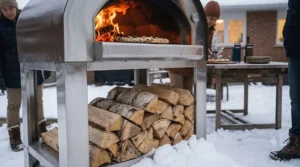
6. Ooni Volt 12 — best electric oven for snowed-in pizza nights
If cold-weather propane performance or wood management sounds like a hassle, the Volt 12 sidesteps the entire problem by running on standard household electricity — no fuel canister to worry about losing pressure in the cold, no wood to keep dry under a snow-covered tarp. Its dual 1,600-watt heating elements bring the 13-inch cordierite stone up to a maximum of 850°F in about 20 minutes, and because it’s a sealed unit rather than an open-flame design, it’s rated for both indoor and outdoor use, which is a genuine game-changer for condo dwellers or anyone without a backyard at all. What most buyers overlook is that propane’s vapour pressure actually drops as temperatures fall — propane needs roughly -42°C before it truly stops vaporizing, but in practical terms a very cold tank can still deliver a weaker flame, something an electric oven simply never experiences. Reviewers who’ve tested it through winter consistently describe it as the appliance that finally let them keep pizza night alive during a January cold snap, since it works exactly the same on a kitchen countertop as it does on a covered porch. The tradeoff is a genuinely steep price tag and a unit heavy enough that moving it in and out for storage requires some real counter space and forethought.
Pros:
- ✅ No cold-weather fuel issues — runs on standard household power
- ✅ Rated for both indoor and outdoor cooking
- ✅ Consistent 850°F ceiling regardless of outside temperature
Cons:
- ❌ Highest price relative to its 12-inch cooking size
- ❌ Nearly 18 kg, making indoor/outdoor moves a two-hand job
At C$1,200-C$1,350 range, the Volt 12 is a premium solution to a very specific winter problem, and for anyone without reliable outdoor space, it’s arguably the only oven on this list that removes the weather variable entirely.
7. Halo Versa 16 — auto-rotating stone for hands-off winter bakes
The party trick here is an auto-rotating stone that turns your pizza for you, which matters more in winter than you’d expect — nobody wants to stand hunched over an oven in a snowstorm manually rotating a pie every 15 seconds for even browning. The Versa 16 runs on propane, reaches high New York-style baking temperatures quickly, and its rotating mechanism means shorter total time spent outside per pizza, since you’re not opening the door repeatedly to check and turn it. Its insulated dome construction is respectable for the price tier, though it trails the thicker-walled Gozney and Ooni Karu models in raw heat retention during extended sessions. This is the oven for the household that prioritizes convenience and consistency over pure customization — think busy families who want restaurant-quality bakes without turning pizza night into a technical skill to master. Aggregated reviews are strongly positive on the rotation feature specifically, with several buyers noting it’s the difference between an evenly cooked crust and one with a scorched edge on a cold, windy evening. The main criticism that surfaces is that the design leans hardest into New York-style bakes and is a bit less forgiving for ultra-high-heat Neapolitan attempts.
Pros:
- ✅ Auto-rotating stone reduces time spent outside in the cold
- ✅ Fast preheat for New York-style pizza specifically
- ✅ Simpler learning curve than manual-turn competitors
Cons:
- ❌ Less optimized for high-heat Neapolitan-style bakes
- ❌ Insulation trails the premium multi-fuel options on this list
Sitting in the C$500-C$600 range, the Versa 16 is a smart mid-tier pick for anyone who wants consistent results without babysitting the bake.
Practical Usage Guide: Winter Setup and Maintenance
Getting a pizza oven for canadian winter use running properly takes a few extra steps compared to a July backyard session, but none of them are complicated. First, always warm your oven gradually — cranking a frozen stone straight to maximum heat can cause thermal shock and hairline cracking, since ceramic and cordierite materials expand at different rates when heated unevenly. Start on low for the first 10 minutes, then ramp up. Second, brush any snow or frost off the stone and interior before lighting; that trapped moisture will hiss, steam, and throw off your temperature readings for the first several minutes. Third, if you’re running propane, keep the tank itself relatively full (above 30%) through winter, since cold air reduces internal pressure and a near-empty tank can struggle to deliver consistent flame strength exactly when you need it most. For maintenance, wipe down the exterior after each session to prevent salt and road-spray corrosion if your oven lives near a driveway, and inspect door seals and gaskets monthly for winter compression damage. A common first-30-days mistake is leaving an oven uncovered through a freeze-thaw cycle — the repeated expansion and contraction is far harder on materials than a steady deep freeze would be, so a proper weatherproof cover isn’t optional if you’re keeping the unit outdoors year-round.
Real-World Winter Scenarios
Picture three different buyers standing in front of the same seven options. First, there’s Priya, a downtown Toronto condo owner with a small balcony and no gas hookup allowed by her building — for her, the Ooni Volt 12 is close to the only realistic answer, since its electric operation sidesteps both propane storage rules and open-flame restrictions entirely. Second, there’s the Robichaud family outside Moncton, hosting weekly Sunday dinners for six through a proper Maritime winter — they need volume and heat retention over portability, making the Gozney Dome (Gen 2) or Ooni Karu 2 Pro the sensible picks despite the higher upfront cost, since the cost-per-pizza drops fast with heavy, regular use. Third, there’s Dev, a university student in Kingston testing whether winter outdoor cooking pizza is even worth the hassle before he commits real money — for him, the Solo Stove Pi Prime makes the most sense as a low-risk way to find out, with enough performance to make the experience genuinely enjoyable rather than a compromise. In each case, the “best” oven has nothing to do with brand reputation and everything to do with how often you’ll actually use it and what constraints your specific living situation puts on fuel type and storage.
Problem → Solution: Common Cold-Weather Pizza Oven Problems
Problem: The stone won’t hold consistent heat between bakes. This usually comes down to thin-walled insulation losing heat to cold ambient air faster than the burner can replace it — the fix is either a wind break, a longer per-pizza recovery pause, or stepping up to a thicker-shelled model like the Gozney Dome (Gen 2).
Problem: Propane flame seems weaker than usual. Cold temperatures reduce vapour pressure inside the tank, so the fix is keeping your tank fuller through winter and, if it’s severely cold, briefly warming the tank (never with an open flame) before connecting it.
Problem: Visible cracking appeared on the stone or dome. This is almost always thermal shock from heating a frozen oven too quickly — always ramp temperature gradually, and never pour anything cold onto a hot stone.
Problem: Snow keeps accumulating on or around the oven. A dedicated weatherproof cover designed for snow-proof pizza cooking conditions, plus keeping the unit slightly elevated off the ground on a stand, solves most of this.
Problem: Ignition struggles in extreme cold. Battery-powered igniters can weaken in low temperatures — keep a backup long lighter on hand and store spare batteries indoors rather than in the oven’s accessory pouch.
✨ Ready to Winter-Proof Your Backyard?
🔍 Compare these seven cold-weather-ready pizza ovens side by side and check current pricing before the next cold snap hits your area!
How to Choose a Pizza Oven for Canadian Winter
Choosing the right cold weather pizza oven comes down to seven practical criteria, in roughly this order of importance:
- Insulation thickness — thicker ceramic fibre or double-walled steel means less fuel burned to maintain temperature in freezing air.
- Fuel type reliability in cold — electric sidesteps propane pressure issues entirely; multi-fuel gives backup options if one source runs low.
- Preheat time — shorter preheats mean less time standing outside in the cold before you can actually cook.
- Door presence — a viewing door reduces heat loss compared to open-front designs, especially in wind.
- Portability versus permanence — decide whether you want to store the oven indoors between sessions or leave it covered outdoors year-round.
- Material durability — look for frost resistant materials rated for repeated freeze-thaw cycles, not just high heat.
- Price versus frequency of use — a premium oven only makes financial sense if you’ll genuinely use it through the whole winter, not just for one impressive dinner party.
Frost Resistant Materials: What Actually Survives a Canadian Winter
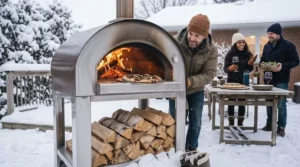
Not every material marketed as “durable” is actually built for frost resistant materials performance. Cordierite stone, the most common baking surface in this category, handles high heat exceptionally well but is genuinely vulnerable to thermal shock if heated too fast from a frozen state — this is a material science issue, not a manufacturing defect, since ceramic-based stones expand unevenly under rapid temperature swings. Powder-coated carbon steel exteriors, used on most Ooni models, resist rust reasonably well but benefit enormously from a proper cover during freeze-thaw cycles, since repeated condensation is harder on coated steel than a steady dry cold. Stainless steel, found on higher-end shells, is the most naturally frost-tolerant option and shrugs off moisture exposure better than painted alternatives, which is part of why it commands a price premium. The takeaway for Canadian buyers: don’t just check the maximum temperature rating on a spec sheet — check what the manufacturer says about cold-start behaviour and freeze-thaw storage, since that’s the detail most listings genuinely omit.
Insulation and Heat Retention Explained
Insulation and heat retention is arguably the single most important spec category for anyone planning genuine winter outdoor cooking pizza sessions, yet it’s the one most listings summarize in a single vague sentence. In practice, insulation works by slowing the rate at which heat escapes from the cooking chamber to the cold air outside — the thicker and denser the insulating layer (usually ceramic fibre wrapped around the dome or double-walled steel with an air gap), the less your burner has to work to hold a stable temperature. This directly affects your fuel costs and cooking consistency: an oven with poor insulation might need its burner running at near-maximum constantly just to offset heat loss on a -15°C evening, burning through propane far faster than the same oven would in summer. Ovens like the Gozney Dome (Gen 2) and Ooni Karu 2 Pro justify their higher prices partly through this exact spec — once their thermal mass is up to temperature, it stays there with minimal fuel input, which becomes a genuine long-term cost advantage if you cook outdoors frequently through the colder months.
Gas vs Wood vs Electric: Best Fuel Type for Winter Outdoor Cooking
This is where the real decision-making happens for anyone serious about winter outdoor cooking pizza. Gas (propane) ovens like the Ooni Koda 16 and Solo Stove Pi Prime offer the best balance of convenience and control — instant ignition, adjustable flame, no fuel prep — but cold temperatures do reduce tank pressure, meaning you’ll want to keep tanks fuller and possibly store them somewhere slightly warmer between sessions. Wood-fired ovens, available on multi-fuel models like the Ooni Karu 2 Pro, deliver genuinely superior flavour and higher peak temperatures, but demand active fire management in conditions where your hands are already cold, and dry fuel storage becomes a real logistical challenge once snow starts falling. Electric options like the Ooni Volt 12 eliminate the cold-fuel problem entirely and can even move indoors when the weather turns genuinely hostile, but they carry a real cost premium and depend entirely on a nearby power outlet, which rules them out for anyone without an accessible exterior circuit. For most Canadian buyers cooking outdoors through a full winter, propane represents the most practical middle ground, while electric is the strongest choice for anyone in an apartment, condo, or extremely cold region where open-flame cooking outdoors just isn’t appealing most weeks.
Year-Round Pizza Oven vs. Seasonal-Only Models
The distinction between a genuine year round pizza oven and a fair-weather appliance comes down almost entirely to build quality rather than marketing claims. A true year round pizza oven is designed with insulation and materials that tolerate both summer heat exposure and winter freeze-thaw cycling without degrading — the Gozney Dome (Gen 2) is explicitly built with this dual-season use case in mind, which is part of why it can also function as a general roasting oven outside of pizza season. Seasonal-only models aren’t necessarily lower quality, but they’re often thinner-walled by design choice, prioritizing portability and lower cost over the thermal mass that makes year-round outdoor storage practical. If you’re only planning to cook a handful of times each winter, a seasonal model like the Solo Stove Pi Prime stored indoors between uses is perfectly sensible and saves real money. But if the goal is genuinely treating your pizza oven as a permanent kitchen fixture rather than a summer accessory, it’s worth budgeting for one of the heavier-insulated options and pairing it with a proper cover, since the incremental cost pays for itself in fewer replacement cycles over several years.
Common Mistakes When Buying a Cold Weather Pizza Oven
The single most common mistake is buying based purely on maximum temperature rating, when in winter, insulation quality and cold-start behaviour matter far more to your actual day-to-day experience. A second frequent misstep is assuming a “portable” oven is automatically a good winter choice because it’s compact — smaller ovens generally have less thermal mass, meaning they lose heat faster in cold air unless the insulation is genuinely dense, not just thin and lightweight. A third mistake, and one that’s easy to avoid, is neglecting to check whether accessories like a proper cover or wind screen are included or need to be purchased separately, since these details materially affect real-world winter performance and total cost. Finally, plenty of buyers underestimate how much longer a cold oven takes to reach cooking temperature compared to the manufacturer’s stated preheat time, which is usually measured under mild-weather test conditions rather than a genuine Canadian cold snap.
Safety, Regulations and Compliance Guide
Winter outdoor cooking comes with a few safety considerations that are easy to overlook once the excitement of a new oven kicks in. Any propane-fuelled unit sold in Canada should carry CSA or ULC certification, which confirms it’s been tested against national safety standards for outdoor cooking appliances rather than only meeting less stringent overseas benchmarks — worth double-checking before you buy, since the Standards Council of Canada maintains public notices on exactly which appliance categories these certifications cover. Propane tanks themselves need periodic requalification in Canada, generally every 10 years from the manufacture date stamped on the collar, and a Canadian consumer safety resource notes this requalification process is regulated under Transport Canada oversight. Carbon monoxide risk is the safety issue most worth repeating: outdoor fuel-burning appliances, including pizza ovens, should never be operated in an enclosed porch, garage, or vestibule regardless of how cold it is outside, since Health Canada’s official guidance is explicit that CO buildup can occur even with a door left partially open. Finally, always store cylinders upright, outdoors, and away from ignition sources through the winter months, brushing off accumulated snow rather than letting it sit against the tank.
Long-Term Cost and Maintenance
Total cost of ownership for a winter-ready pizza oven includes more than the sticker price — it’s fuel consumption, accessory replacement, and how many extra years good build quality buys you. A well-insulated oven burns noticeably less propane per session in cold weather than a thin-walled competitor working overtime to offset heat loss, which can meaningfully offset a higher upfront price over several winters of regular use. Covers typically need replacing every two to three winters under harsh freeze-thaw conditions, and door gaskets on multi-fuel models occasionally need resealing after a few seasons of temperature cycling. Electric options like the Ooni Volt 12 trade fuel costs for a modest increase in household electricity use, which is generally cheaper per session than propane but adds a fixed appliance-level draw to your utility bill during heavy use. When you run the numbers over three to five winters, the premium multi-fuel and electric options frequently close the value gap with budget picks, especially for households cooking outdoors weekly rather than occasionally.
Snow-Proof Pizza Cooking: Setup Tips for Snowy Patios
Getting genuinely snow proof pizza cooking results starts with your setup location, not your oven’s spec sheet. Elevate your oven on a proper stand rather than a snowbank or wooden pallet, since ground-level cold and moisture transfer directly into the oven’s base and legs over time. A three-sided wind break — even simple outdoor-rated panels — dramatically improves heat retention on open, exposed patios where wind chill does most of the damage to your cooking temperature. Keep a small broom or brush nearby specifically for clearing snow off the stone and dome before each session, since melted snow steaming inside a hot chamber both wastes fuel and risks localized thermal shock. Finally, consider a simple overhead shelter, even a patio umbrella angled correctly, to keep fresh snowfall from landing directly in an open-top oven mid-bake — a small habit that meaningfully extends both cooking consistency and the appliance’s working lifespan.
Features That Actually Matter (And Those That Don’t)
Marketing copy loves to highlight maximum temperature numbers, but for genuine Canadian winter use, insulation depth, cold-start tolerance, and fuel-type reliability matter far more day to day. A glass viewing door is a feature that genuinely earns its keep in winter, since it lets you monitor a bake without opening the oven and losing heat to freezing outside air. On the other hand, features like built-in USB charging ports or elaborate app connectivity, occasionally bundled into premium ovens, add very little practical winter value and mostly function as upsell extras. Auto-rotating stones, as seen on the Halo Versa 16, genuinely matter for anyone who doesn’t want to stand outside manually turning a pizza in the cold, while decorative exterior finishes, however attractive, have essentially zero bearing on cold-weather cooking performance and shouldn’t factor heavily into a winter-focused purchase decision.
Buyer’s Decision Framework
If you live in an apartment or condo without outdoor gas access, choose the Ooni Volt 12 because it’s the only genuinely indoor-capable option on this list. If you want maximum flavour and don’t mind active fire management, choose a multi-fuel model like the Ooni Karu 2 Pro because wood adds a dimension propane simply can’t replicate. If you’re testing the waters on a tight budget, choose the Solo Stove Pi Prime because it delivers real performance without a four-figure commitment. If you host large groups weekly through the entire winter, choose the Gozney Dome (Gen 2) because its insulation and thermal mass are built precisely for sustained, heavy use. And if hands-off convenience matters more than customization, choose the Halo Versa 16 for its auto-rotating stone and simplified learning curve. Match the situation to the oven, not the oven to the brand name, and the right answer becomes obvious fairly quickly.
FAQ
❓ Can you use a pizza oven outside in winter in Canada?
❓ Does cold weather damage a pizza oven?
❓ What's the best fuel type for a winter pizza oven?
❓ Do pizza ovens need to be stored indoors during winter?
❓ How long does a pizza oven take to heat up in cold weather?
Conclusion
A pizza oven for canadian winter isn’t some exotic category of appliance — it’s really just a well-insulated, cold-tolerant version of the backyard cooking gear you already know, built to keep performing once the snow starts sticking. Whether you land on the fast, beginner-friendly Ooni Koda 16, the flavour-forward Ooni Karu 2 Pro, the deeply insulated Gozney Dome (Gen 2), the compact Gozney Roccbox, the budget-savvy Solo Stove Pi Prime, the fuel-worry-free Ooni Volt 12, or the hands-off Halo Versa 16, the right choice comes down to your climate, your storage situation, and how often you’ll genuinely fire it up between November and March. Insulation and fuel reliability matter more than flashy max-temperature numbers, frost resistant materials matter more than sleek finishes, and a few smart setup habits — gradual warmup, a wind break, a proper cover — will do more for your winter pizza game than any single spec on the box. Pizza night doesn’t have to end when the first snowfall hits; it just needs the right equipment behind it.
🔍 Still Deciding? Check current pricing on your top pick today — winter pizza season won’t wait, and neither should you! 🍕
Recommended for You
- Pizza Oven Cover: 7 Top Picks That Survive Canadian Winters (2026)
- Pizza Making Kit: 7 Best Picks for Canadian Kitchens in 2026
- Best Pizza Stone 2026: 7 Genuinely Great Picks for Crispy Crust
Disclaimer: This article contains affiliate links. As an Amazon Associate, I earn from qualifying purchases. If you purchase products through these links, we may earn a small commission at no additional cost to you.
✨ Found this helpful? Share it with your friends! 💬🤗
