
In This Article
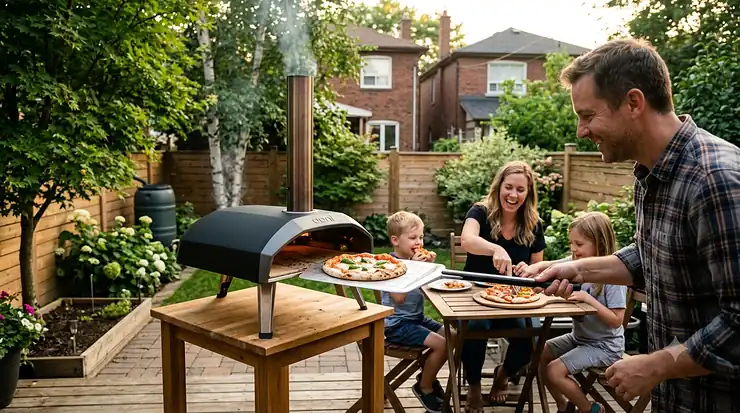
Here’s the thing nobody tells you when you move into a place with a postage-stamp patio: the pizza dream doesn’t care how much square footage you have. You still want that leopard-spotted crust, that 90-second cook time, that “wait, YOU made this?” moment with friends crammed onto your tiny deck. A pizza oven for small backyard living isn’t a compromise — it’s actually where this category shines, because the best models were engineered from day one to be portable, stackable, and footprint-conscious. Weight, width, and clearance matter as much as raw heat output when your outdoor space measures in square feet, not acres.
What is a pizza oven for small backyard use? It’s a compact, typically countertop-sized outdoor oven — usually 11 to 20 kg and roughly 40-55 cm wide — engineered to reach 450-500°C on a narrow footprint, so it fits on a balcony rail table, a two-person patio set, or a townhouse deck without dominating the space.
Below, we’ve dug through real specs, aggregated review sentiment, and Canadian pricing patterns to line up seven genuinely space-savvy ovens — gas, wood, and electric — so you can pick one that fits your actual footprint, not just your Pinterest board. According to City of Toronto fire safety guidance, clearance and fuel-type rules matter more in dense housing than almost anywhere else in the country, so we’ll flag that throughout too.
Quick Comparison Table
| Oven | Fuel | Footprint (approx.) | Weight | Price Range (CAD) | Best For |
|---|---|---|---|---|---|
| Ooni Koda 12 | Propane | 51 x 30 x 30 cm | 9.25 kg | C$400-C$450 | Best all-rounder for small patios |
| Solo Stove Pi Prime | Propane | Compact demi-dome | ~9 kg | Under C$450 | Best budget pick |
| Gozney Roccbox | Gas/wood | 60 x 30 x 33 cm | ~20 kg | Mid-C$600s-C$700s | Best build quality in a portable size |
| Bertello 12″ SimulFIRE | Gas + wood | Compact dome | ~14 kg | C$300-C$550 | Best value multi-fuel |
| Ooni Fyra 12 | Wood pellet | 51 x 30 x 30 cm | ~10 kg | Around C$350 | Best wood flavour, no tank needed |
| Ooni Karu 12 | Multi-fuel | 40 x 52 x 60 cm | ~12 kg | C$450-C$550 | Best flexibility for renters |
| Ooni Volt 12 | Electric | Countertop, compact | ~28 kg | C$1,000-C$1,100 | Best balcony-safe, condo-legal pick |
Scanning across the table, the split is really about fuel philosophy: propane models like the Ooni Koda 12 and Solo Stove Pi Prime trade a bit of smoky flavour for near-instant readiness and a tiny footprint, while the Gozney Roccbox and Bertello 12″ SimulFIRE let you flip between gas and wood without buying a second oven. If your building bans open flame entirely, the electric Ooni Volt 12 is really the only category that clears that bar cleanly — more on that below.
💬 Just one click — help others make better buying decisions too!😊
Top 7 Pizza Ovens for Small Backyards: Expert Analysis
1. Ooni Koda 12 — best all-rounder for hilly patios and tiny decks
The Ooni Koda 12 built its reputation on doing the most with the least amount of oven. At just 9.25 kg and 51 x 30 x 30 cm, it’s genuinely light enough to lift with one hand off a shelf, unfold, and set up in under a minute — a real advantage when your “storage room” is a closet, not a shed. The gas-powered oven reaches up to 950°F (500°C) in as little as 15 minutes and cooks a Neapolitan-style pizza in roughly 60 seconds, which in practice means you’re not standing around babysiting a fire while your guests get hungry on a balcony that barely fits two chairs. Based on the spec comparison with bigger 16-inch models, the trade-off is capacity — you’re capped around 12-13 inch pies — but for a household of two to four that’s rarely a real limitation. Reviewers consistently note that setup is nearly instant right out of the box, though several also flag that a turning peel is a near-mandatory add-on purchase since the oven itself doesn’t include one. What most first-time buyers overlook is that the propane hookup means you’ll need a small standard tank nearby, which eats a bit of your limited patio real estate — factor that into your footprint math, not just the oven’s own dimensions.
Pros:
- ✅ Extremely light and foldable — ideal for closet or shed storage
- ✅ Reaches cooking temperature in about 15 minutes
- ✅ Cooks a full pizza in roughly 60 seconds
Cons:
- ❌ No pizza peel included — plan on a separate purchase
- ❌ Propane tank needs its own clearance space nearby
Expect to pay in the C$400-C$450 range depending on bundle inclusions; check current price before buying, since retailer promotions shift often. For the footprint-to-performance ratio, this is hard to beat as a first oven for a small yard.
2. Solo Stove Pi Prime — best budget pick for a snug patio
Solo Stove built its name on smokeless fire pits, and the Solo Stove Pi Prime brings that same design-forward thinking to a demi-dome pizza oven with a surprisingly wide mouth for its compact shell. The rounded, low-profile body means it doesn’t read as a bulky appliance sitting on your railing table — it looks more like a piece of outdoor decor that happens to make pizza. On the spec sheet, it uses a cordierite stone and Solo’s signature airflow engineering to reach optimal launch temperature in around 25 minutes, which is a touch slower than the Koda but still well within reason for a weeknight dinner. Here’s what to weigh: this oven costs meaningfully less than most of its rivals yet, according to independent testers, performs at a level that punches well above its price bracket, cooking Neapolitan-style pies in under two minutes once it’s fully heated. Aggregated reviewer sentiment across outdoor cooking outlets consistently praises the front-mounted control knob, which lets you dial the flame down mid-cook without walking around the unit — a small thing that matters enormously on a cramped deck where “walking around the oven” might mean stepping into a flower bed. The included weatherproof shelter cover is another point buyers repeatedly call out as a thoughtful inclusion for anyone without a shed.
Pros:
- ✅ Compact demi-dome shape suits tight patio corners
- ✅ Front-mounted flame control — no need to walk around it
- ✅ Comes with a weatherproof storage cover
Cons:
- ❌ Takes a bit longer to preheat than some rivals
- ❌ Wide mouth design means more heat loss if left open too long
Priced under C$450 in most listings, this is the strongest budget-conscious entry in this roundup — a legitimate case of getting premium performance without the premium price tag.
3. Gozney Roccbox — best build quality in a genuinely portable size
If you’ve ever picked up a Gozney Roccbox in a showroom, you’ll notice it immediately: this thing feels dense, substantial, engineered — not flimsy sheet metal. Canadian buyers frequently mention that the heft and the solid click of the burner mechanism feel legitimately premium straight out of the box. On paper, it’s a dual-fuel dome oven that swaps between a propane burner and a detachable wood burner, hitting 950°F and cooking a pizza in about 60 seconds once preheated. What most buyers overlook about this model is the safe-touch silicone jacket wrapped around the dome — while competitors’ bare steel shells can become genuinely dangerous to brush against at full temperature, the Roccbox stays cool enough on the exterior that it’s meaningfully safer around kids or a crowded small patio where elbow room is scarce. Reviewers repeatedly single out the retractable legs, detachable burner, and built-in carry strap as evidence this was designed for people without a permanent outdoor kitchen — it packs down small enough to store indoors over winter. The 12.4-inch cooking surface caps your pizza size, and adding the optional wood burner is an extra cost most buyers don’t budget for upfront, so factor that into your total spend from the start.
Pros:
- ✅ Safe-touch silicone exterior stays cooler than bare steel shells
- ✅ Retractable legs and carry strap for true portability
- ✅ Restaurant-grade stone floor for a properly charred crust
Cons:
- ❌ Wood burner sold separately, adding to total cost
- ❌ 12.4-inch cook surface is tight for feeding a crowd
The Roccbox typically lands in the mid-C$600s to C$700s range — check current price, as this model rarely sees deep discounts given its build reputation. Value verdict: a legitimate long-term investment for a couple who cooks pizza weekly rather than a once-a-summer novelty.
4. Bertello 12″ SimulFIRE — best value for multi-fuel flexibility
The Bertello 12″ SimulFIRE answers a question most compact ovens dodge: why choose between gas convenience and wood flavour when you can run both at once? Its patented dual-burner “FlameThrower” system heats the stone from underneath with gas while a second burner works the toppings from above — genuinely useful physics, since pizza is a two-layer food that single-burner ovens often struggle to cook evenly on both crust and cheese simultaneously. Based on the spec comparison, it reaches over 900°F in under 20 minutes, and the wood tray sits directly over the gas burner so chips or pellets self-ignite without a separate lighting step. What that means in everyday terms: you get gas-oven convenience with a genuine wood-smoke aroma layered in, without tending an actual fire the whole time. Reviewers who switched from other brands frequently describe being pleasantly surprised at how easily the dual-fuel system works in practice — turn gas down as wood catches, turn it back up as needed. The carbon-and-stainless steel body with a heat-resistant powder coat is also called out repeatedly as sturdier than “tinny” competitors that dent and discolour with regular use.
Pros:
- ✅ Simultaneous gas-and-wood cooking for real smoke flavour
- ✅ Dual-burner design cooks crust and toppings more evenly
- ✅ Sturdier powder-coated steel body than many rivals
Cons:
- ❌ Gas burner and wood tray add a learning curve for beginners
- ❌ Bundled kits push the price toward the upper end of this range
Bertello’s Canadian pricing runs roughly C$300 to C$550 depending on the bundle, making it one of the more accessible multi-fuel options for a small backyard cook who doesn’t want to compromise on flavour.
5. Ooni Fyra 12 — best wood-fired flavour without a fuel tank
For a small backyard where you’d rather not store a propane cylinder at all, the Ooni Fyra 12 solves that specific problem: it burns compressed hardwood pellets instead of logs or gas, so your fuel supply is a small bag you can tuck into a cupboard rather than a tank that needs clearance rules of its own. On paper, it shares the Koda 12’s compact 51 x 30 x 30 cm shell and roughly 10 kg weight, folding down the same way for storage. What the spec sheet won’t tell you, but reviewers note, is that pellet-fed wood ovens require a bit more active management — you’re feeding the hopper periodically rather than turning a single dial — so it rewards someone who enjoys the ritual of tending a small fire rather than someone who just wants dinner on the table fast. The genuine wood-fired flavour it produces is consistently cited as a step up from gas models by reviewers who care about that smoky char on the crust edge. For apartment or townhouse dwellers where propane storage is explicitly restricted by building bylaws, a pellet-burning oven can sometimes be an easier sell to a landlord or condo board than a gas cylinder, though local fire codes on any open flame still apply and should always be confirmed first.
Pros:
- ✅ No propane tank to store or transport
- ✅ Genuine wood-fired flavour and crust char
- ✅ Same ultra-compact folding shell as the Koda 12
Cons:
- ❌ Requires more hands-on fuel management than gas models
- ❌ Slower and less consistent heat than dial-controlled gas ovens
Priced around C$350, the Fyra 12 is a smart pick for the small-yard cook who values flavour and fuel simplicity over pure convenience.

6. Ooni Karu 12 — best flexibility for renters and multi-fuel curious cooks
Renting means your outdoor cooking setup often has to adapt to wherever you land next, and the Ooni Karu 12 is built around that kind of flexibility. It runs on wood, charcoal, or an optional gas burner attachment, letting you start with the cheapest fuel option and add gas later if your new place makes that easier. Reaching up to 950°F and cooking a 12-inch pizza in about 60 seconds, it holds its own against pricier dedicated models, and its foldable legs and removable chimney mean it collapses into a genuinely small storage shape — useful if you’re the type who moves apartments every year or two. Compared with the larger Karu 16, it offers a notably more portable and compact footprint, which is really the whole point for a small-backyard buyer. Independent testers note that ash cleanup requires reaching an arm into the front tray, which is a minor inconvenience but not a dealbreaker, and that wood-only cooking can take up to half an hour to hit full temperature — the optional gas burner attachment meaningfully speeds that up if convenience matters more to you than pure wood-fired purism.
Pros:
- ✅ Runs on wood, charcoal, or optional gas — genuinely flexible
- ✅ Foldable legs and removable chimney for compact storage
- ✅ Reaches near-950°F for fast, authentic cooking
Cons:
- ❌ Ash cleanup requires reaching into the front tray
- ❌ Wood-only mode takes longer to preheat than gas rivals
Expect a price in the C$450-C$550 range depending on whether the gas burner attachment is bundled in — a smart middle-ground buy for anyone who isn’t ready to commit to one fuel type forever.
7. Ooni Volt 12 — best balcony-safe, condo-legal electric pick
Here’s the honest truth for a lot of condo and apartment dwellers: no matter how compact a gas or wood oven’s footprint is, if your building bans open flame or propane storage, none of the ovens above are actually usable on your balcony. That’s where the Ooni Volt 12 earns its spot on this list. It’s a fully electric countertop pizza oven that still reaches roughly 900°F, putting it in the same performance tier as the gas-fired options while running off a standard household outlet — no tank, no flame, no combustion byproducts to worry about under a building’s fire code. On paper, that makes it the only oven in this roundup that sidesteps balcony BBQ restrictions entirely in most municipalities, since electric appliances are broadly treated differently from propane or charcoal under provincial and municipal fire rules. Reviewers who tested it against outdoor gas ovens report comparable cook quality and crust char, with the added benefit of being usable indoors near a window or on a covered balcony where an open flame simply wouldn’t be permitted. The trade-off is footprint on a different axis — it’s heavier at roughly 28 kg and, because it earns real daily use, testers note it often ends up living semi-permanently on a countertop or sturdy balcony table rather than being tucked away between uses.
Pros:
- ✅ Reaches near-900°F without propane, wood, or open flame
- ✅ Typically exempt from balcony fire-code restrictions on combustion
- ✅ Usable on a standard outlet, even on a covered or small balcony
Cons:
- ❌ Significantly heavier than the gas or wood options here
- ❌ Higher upfront price than any other oven in this roundup
Pricing typically lands around C$1,000 to C$1,100, which is a real jump from the gas-fired picks — but for condo and townhouse renters facing an outright propane ban, it’s arguably the only category that’s actually legal to use, making the premium a practical necessity rather than a luxury.
Benefits vs Traditional Backyard Pizza Ovens
| Factor | Compact Oven for Small Backyard | Traditional Built-In Wood-Fired Oven |
|---|---|---|
| Footprint | 0.15-0.3 m² typical | 1-3 m² permanent structure |
| Setup time | 1-30 minutes, portable | Weeks of masonry construction |
| Cost | C$300-C$1,100 | C$3,000-C$15,000+ |
| Storage | Foldable, can be moved indoors | Permanent, non-negotiable |
| Best For | Renters, condos, small patios | Homeowners with dedicated outdoor kitchens |
The gap here isn’t subtle: a compact countertop oven gets you into stone-baked pizza territory for a fraction of the investment and zero permanent construction, while a built-in wood-fired oven is a genuine home renovation project. For anyone renting, living in a townhouse with a shared wall, or simply not ready to commit a permanent structure to their yard, the portable route is the only realistic path — and as the product breakdown above shows, “portable” no longer means “compromised” on cooking performance.
✨ Don’t Miss These Exclusive Deals!
🔍 Take your small-space pizza night to the next level with these carefully selected compact ovens. Click on any highlighted item to check current pricing and availability. These picks will help you create authentic backyard pizzeria results your family will love, even on a modest patio!
Practical Setup & First-30-Days Guide
Getting a compact pizza oven running smoothly on a small patio comes down to a handful of habits that most first-time owners learn the hard way. Start by finding your actual safe cooking spot before the oven even arrives — measure clearance from railings, siding, and any overhang, since propane and wood units both need real airflow and combustible-material distance to operate safely in a tight space. On day one, season the stone if your manual calls for it, and run a short “empty” preheat cycle to burn off any manufacturing residue before your first pizza ever touches the surface. A common early mistake is underestimating preheat time — that 15-to-25-minute window listed in specs is a floor, not a suggestion, and launching a pie onto a stone that hasn’t fully soaked up heat is the single biggest cause of soggy, pale crusts in the first month of ownership. Reviewers across gas and wood models consistently flag that a proper infrared thermometer is worth the small extra cost, since ambient oven temperature and actual stone-surface temperature can differ by up to 100°F, and stone temperature is what actually cooks your crust. For maintenance, brush loose flour and char off the stone after it cools rather than washing it (most stones shouldn’t be soaped), and check gas hose connections for cracking each season if you’re running propane. Store the oven under its cover or indoors when not in active weekly use — even weather-resistant steel shells benefit from a dry off-season, especially through a Canadian winter.
Real-World Scenarios: Which Oven Fits Your Space
The downtown condo renter with a 4×6 balcony, no propane allowed: this is the exact situation the electric Ooni Volt 12 was built for — it sidesteps fire-code restrictions on combustion entirely, plugs into a standard outlet, and its footprint, while heavier, doesn’t require any clearance for flame or tank storage the way gas units do.
The townhouse owner with a small fenced patio and weekly pizza nights: here, value and speed matter most, making the Ooni Koda 12 or Solo Stove Pi Prime the strongest fits — both are light enough to move around a compact deck and fast enough that a weeknight pizza dinner doesn’t turn into a 45-minute production.
The multi-generational household hosting biweekly backyard gatherings with a modest but usable yard: the Bertello 12″ SimulFIRE or Gozney Roccbox make more sense here, since the dual-fuel or dual-burner flexibility lets you dial in genuine wood flavour for a crowd without sacrificing the gas convenience needed to keep multiple pizzas moving quickly through the queue.
How to Choose a Pizza Oven for Small Backyard Living
- Measure your actual usable clearance first. Before comparing ovens, measure the flattest, most open section of your patio or balcony and subtract at least one metre from any combustible wall, railing, or overhang — this single step eliminates half the models on the market before you even look at specs.
- Confirm your building’s fuel rules. Condo boards and landlords frequently restrict or ban propane storage on balconies, so check your lease or bylaws before falling for a gas model’s price tag.
- Weigh portability against daily-use convenience. A folding, sub-10 kg oven is easiest to store away, but if you’re cooking weekly, a slightly heavier model that lives semi-permanently on a stand may actually save you setup hassle.
- Decide how much you value wood-fired flavour. Gas is faster and more consistent; wood or dual-fuel models add genuine smoke character but demand more active management and preheat patience.
- Match capacity to your household size. A 12-inch cook surface comfortably feeds two to four people per pie; larger households may need to run more batches rather than upsizing the oven itself, which usually isn’t compact-friendly anyway.
- Budget for accessories up front. Peels, infrared thermometers, and covers are rarely included and can add C$50-C$150 to your real total cost — factor that in rather than being surprised later.
- Check the warranty and regional support. Brands offering multi-year warranties when registered (common with Ooni and Gozney) reduce your long-term risk on what is, for most households, a multi-hundred-dollar seasonal appliance.
Common Mistakes When Buying a Compact Pizza Oven
Even careful shoppers trip over a handful of recurring errors. The first is buying based on maximum temperature alone — nearly every oven in this category claims to hit 900°F-950°F, so that number alone won’t meaningfully differentiate your options; footprint, fuel type, and real-world preheat time matter more for a small-space buyer. The second is ignoring the propane clearance math entirely, then discovering after purchase that a tank’s relief valve needs a full metre from any door or window below it, which many balconies simply can’t accommodate. The third is skipping the peel and thermometer in the initial budget, then facing an unexpectedly higher total cost once those near-mandatory accessories get added at checkout. The fourth is assuming “portable” automatically means “lightweight” — some dual-fuel and electric models exceed 20-28 kg, which is portable in the sense of not being bolted down, but not exactly a one-hand carry up a condo stairwell. Finally, buyers frequently underestimate storage needs for the off-season; a compact oven still needs a dry spot or weatherproof cover through a Canadian winter, and skipping that step shortens the lifespan of the steel shell and stone considerably.
What to Expect: Real-World Performance on a Small Patio
Specs on paper translate into a specific everyday rhythm once an oven is actually living on your deck. Preheat realistically takes 15 to 30 minutes depending on fuel type, during which your oven is genuinely too hot to be near unattended pets or kids, so factor that window into any small-space layout where seating is close by. Once launched, a 12-inch pizza in a compact gas or electric oven cooks in roughly 60 to 90 seconds — fast enough that you’ll likely be turning the pie by hand every 15-20 seconds rather than walking away, which on a tight patio actually works in your favour since you’re not moving far to manage it. Reviewers across multiple brands note that after the first two or three pizzas, the stone holds residual heat well enough that subsequent pies cook even faster, making these ovens genuinely practical for entertaining rather than just a novelty for a single pie. This rapid, high-heat cooking method traces back to the traditional wood-fired oven design, and today’s compact models essentially miniaturize that same principle of thick, heat-retentive cooking surfaces into an urban-friendly footprint. On a small patio specifically, expect the exterior of gas and wood models to radiate noticeable heat for 20-30 minutes after use — another reason the Roccbox’s silicone-jacketed exterior or the Volt’s cooler electric housing can matter more in tight quarters than they would in a spacious yard.
Pizza Oven for Small Backyard vs Standard Home Kitchen Oven
A standard kitchen oven tops out around 260°C (500°F) even on its highest self-clean-adjacent setting, which simply isn’t hot enough to replicate a true Neapolitan crust — that char and rapid rise depend on surface temperatures north of 450°C that a compact outdoor oven reaches in minutes but a household appliance was never designed to hit. Beyond raw heat, cooking outdoors keeps the intense, brief blast of heat and any smoke away from your indoor kitchen entirely, which matters more than it sounds like in a small condo or townhouse where a hot oven can noticeably raise indoor temperature and trigger sensitive smoke detectors. On the other hand, a kitchen oven wins on convenience for anything that isn’t pizza — slow roasts, baking, multi-hour dishes — since compact pizza ovens are single-purpose tools built around speed, not versatility. For someone with a small backyard who already loves pizza night, the two aren’t really competing; the outdoor oven becomes the specialist tool for a specific, high-reward use case, while the kitchen oven keeps handling everything else.
🔥 Ready to Upgrade Your Pizza Nights?
✨ These compact ovens prove great pizza doesn’t need a big backyard — just the right pick for your space. Check today’s price on your favourite model and get your first pie in the oven this weekend!
Long-Term Cost & Maintenance
Total cost of ownership on a compact pizza oven extends well beyond the sticker price. Fuel is the biggest ongoing variable: propane tanks typically run a modest amount per refill and last many cooking sessions, wood pellets or chunks are usually the cheapest per-use option but require more frequent restocking, and electricity for a model like the Volt adds a small, predictable amount to a monthly bill rather than a separate fuel purchase entirely. Accessories — a proper turning peel, an infrared thermometer, a weatherproof cover, and eventually a replacement stone if yours cracks from thermal shock — commonly add C$100-C$200 over the first year regardless of which oven you buy. On the maintenance side, gas models need occasional hose and regulator inspection, wood-burning units need ash management and occasional chimney cleaning, and electric ovens need essentially none of that, trading a higher upfront cost for near-zero ongoing fuss. Warranty coverage varies meaningfully by brand: several manufacturers extend standard coverage to multi-year terms when you register the product within a set window after purchase, which is worth doing immediately rather than letting it slip. Viewed over three to five years of regular weekend use, even the pricier electric option tends to even out against a mid-range gas oven once fuel and accessory costs are tallied honestly.
Safety, Regulations & Balcony Compliance Guide
This is the section small-backyard buyers genuinely cannot skip. Per guidance from the Canadian Condominium Institute, barbecues and open-flame appliances are generally permitted on Canadian balconies and terraces, but they can be restricted or banned outright due to the risks associated with propane, charcoal, smell, and smoke, and it’s essential to check your specific building bylaws or condo agreement before assuming you’re in the clear. Toronto’s fire safety guidance notes that if a balcony lacks a natural gas connection and propane is used instead, the cylinder’s relief valve must sit at least one metre horizontally from any building opening below it, and at least three metres from a building air intake — on many smaller balconies, that requirement alone rules out propane entirely. Rules also vary meaningfully by province: some jurisdictions restrict solid-fuel barbecues on multi-unit buildings outright, so it pays to check both your municipality and your condo or landlord’s specific rules, which can be stricter than the local fire code. If your building falls into a grey zone or bans open flame altogether, an electric model like the Ooni Volt 12 sidesteps most of these restrictions since it introduces no combustion, no tank, and no propane storage question at all. Regardless of fuel type, keep a fire extinguisher within reach, never leave a hot oven unattended around kids or pets, and always confirm current rules with your building management directly rather than relying on general guidance — bylaws can and do change, and enforcement varies by city.
Features That Actually Matter (And Those That Don’t)
Marketing copy for outdoor ovens loves to lead with peak temperature numbers, but once you’re above roughly 450°C, additional degrees make little practical difference to home pizza-making — nearly every oven on this list clears that bar comfortably, so it shouldn’t be your deciding factor. What actually matters far more for a small-backyard buyer: real weight and folded dimensions (does it genuinely fit your storage spot), preheat time (does a 15-minute wait versus a 30-minute wait matter to your weeknight schedule), and fuel-source legality in your specific building. Features that sound impressive but matter less in this context include built-in rotating stones (nice, but adds bulk and cost that a small-space cook rarely needs) and oversized cooking chambers sized for 16-inch pies, which simply won’t get used to capacity by a household of two or three. Genuinely useful features worth prioritizing include a cool-touch exterior (safety on a tight patio where people brush past constantly), a front-accessible flame control (so you’re not squeezing around the unit to adjust heat), and honest, verifiable manufacturer warranty terms — a five-year warranty on a C$700 appliance is a meaningfully different value proposition than a one-year warranty on the same price tag.
Buyer’s Decision Framework
If your balcony bans propane outright, choose the Ooni Volt 12 because it’s the only fully electric option here and sidesteps combustion restrictions entirely. If your top priority is the absolute lowest price without sacrificing real performance, choose the Solo Stove Pi Prime because independent testing consistently shows it performing near the level of pricier rivals. If you want genuine wood-fired flavour but have zero interest in tending an actual wood fire, choose the Ooni Fyra 12 or Bertello 12″ SimulFIRE, since both simplify wood cooking into something closer to a gas oven’s ease of use. If you’re renting and expect to move within a year or two, choose the Ooni Karu 12 for its multi-fuel flexibility that adapts to whatever setup your next place allows. If long-term build quality and resale value matter more than shaving costs, choose the Gozney Roccbox for its reputation and stronger warranty terms. As a simple priority checklist: confirm building rules first, measure your space second, set your fuel-type preference third, and only then compare price and capacity — doing it in reverse order is how buyers end up with an oven that doesn’t fit their patio, their budget, or their bylaws.
Pizza Ovens for Renters and Apartment Dwellers
Renters face a specific set of constraints that homeowners with a full backyard simply don’t: no permanent structures, frequent moves, and often outright bans on propane storage written into a lease. For this exact situation, the calculus shifts hard toward two things — total weight for moving day, and fuel-type legality under your specific lease terms. In Ontario, for instance, landlords can generally prohibit propane or charcoal barbecues on rented balconies, and it’s increasingly common for standard leases to explicitly ban open flames and combustible fuels on balconies altogether, which makes the electric Ooni Volt 12 the safest legal bet for many apartment renters despite its higher price. For renters whose building does permit propane with proper clearance, the featherweight Ooni Koda 12 or Solo Stove Pi Prime pack down small enough to move between apartments without needing a dedicated storage unit. Always get any balcony cooking permission in writing from your landlord or condo board rather than relying on a verbal okay — it’s a small step that avoids a much bigger headache if a dispute ever comes up.
Frequently Asked Questions
❓ Can I use a propane pizza oven on an apartment balcony in Canada?
❓ What size pizza oven is best for a small backyard?
❓ Are electric pizza ovens as good as gas or wood-fired models?
❓ How much clearance does a compact pizza oven need from my house?
❓ Do compact pizza ovens cook as well as full-size backyard models?
Conclusion
A small backyard, a modest patio, or even a snug condo balcony genuinely doesn’t have to mean giving up on real, stone-baked, restaurant-style pizza at home. The seven ovens covered here span from a sub-C$450 budget pick in the Solo Stove Pi Prime to a fully electric, condo-legal option in the Ooni Volt 12, with plenty of flexible middle ground in between for gas, wood, and multi-fuel cooking. What matters most isn’t chasing the highest advertised temperature — nearly all of these clear that bar — but matching fuel type to your building’s actual rules, weight and footprint to your actual storage space, and budget to a total cost that honestly includes accessories and fuel, not just the sticker price. Measure your space, check your bylaws in writing, and pick the oven that fits the real constraints of your outdoor square footage rather than the one with the flashiest marketing photo. Do that, and a small backyard stops being a limitation and starts being just the right amount of space for genuinely great pizza.
✨ Find Your Perfect Compact Pizza Oven Today!
🍕 Don’t let a small backyard hold back your pizza dreams — check current prices on these space-saving picks and get cooking this weekend!
Recommended for You
- 7 Best Pizza Ovens for Canadian Winter in 2026 (Cold-Proof Picks)
- Pizza Oven Cover: 7 Top Picks That Survive Canadian Winters (2026)
- Pizza Making Kit: 7 Best Picks for Canadian Kitchens in 2026
Disclaimer: This article contains affiliate links. As an Amazon Associate, I earn from qualifying purchases. If you purchase products through these links, we may earn a small commission at no additional cost to you.
✨ Found this helpful? Share it with your friends! 💬🤗
