
In This Article
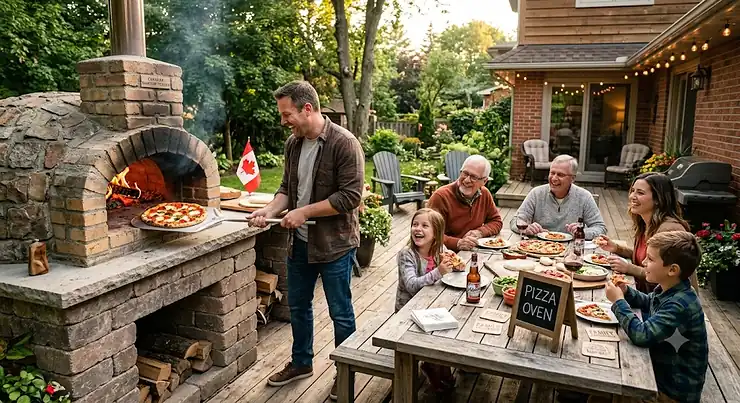
There’s a specific kind of chaos that happens the moment a pizza oven shows up at a family gathering. Someone’s uncle starts “supervising.” A kid who has never cooked anything more complicated than toast suddenly wants to be the dough guy. Somebody’s grandmother watches the flame for thirty seconds, nods once, and quietly takes over the whole operation. A pizza oven for family gatherings isn’t really a kitchen appliance — it’s a small stage where everyone gets a turn.

That’s also exactly why picking the wrong one is such a letdown. A tabletop oven built for a single camping trip will buckle under the demands of a dozen hungry cousins waiting on pie number six. What you actually need is capacity, recovery speed (how fast the stone bounces back to temperature between bakes), and a build that can handle back-to-back rounds without losing its nerve.
So, what is a pizza oven for family gatherings? In short, it’s an outdoor or countertop oven engineered to reach very high temperatures — typically 800°F to 950°F — fast enough and consistently enough to cook multiple pizzas back-to-back for a group, rather than the single-pizza-then-cool-down cycle of a smaller camping-style unit.
Below, we’ve dug into seven real ovens sold on amazon.ca, from budget wood-fired boxes to serious 16-inch gas rigs, with honest analysis of who each one actually suits. We’ll also cover propane safety basics, since Health Canada’s barbecue safety guidance is worth a quick read before your first backyard pizza night — carbon monoxide and grease fires aren’t dramatic until they suddenly are. Prices below are shown as ranges in Canadian dollars since Amazon pricing shifts constantly; always check current pricing before buying.
Quick Comparison Table
| Oven | Fuel | Capacity | Best For | Price Range (CAD) |
|---|---|---|---|---|
| Ooni Koda 16 | Propane | 16″ pizzas | Best all-rounder for big groups | C$700–C$850 |
| Gozney Arc XL | Propane | 16″, 338.5 sq in | Best heat retention, premium builds | C$1,300–C$1,600 |
| Solo Stove Pi Prime | Propane | 12″ pizzas | Budget entry point | C$500–C$650 |
| HALO Versa 16 | Propane | 16″, rotating stone | Hands-free party hosting | C$650–C$750 |
| Pizzello Grande 16 | Wood-fired | 2-layer, 2 pizzas at once | Large capacity on a budget | C$220–C$320 |
| Ninja Woodfire 8-in-1 | Electric | 12″ pizzas + full meals | Versatility beyond pizza | C$400–C$500 |
| BIG HORN OUTDOORS 16″ | Multi-fuel | 16″ pizzas | Budget multi-fuel flexibility | C$200–C$300 |
Looking at the spread here, the split isn’t really “cheap versus expensive” — it’s “single-pizza-at-a-time versus genuinely built for volume.” The Pizzello Grande 16 stands out because its two-layer design lets you bake two pies simultaneously for a fraction of what the gas ovens cost, though you trade away the 60-second cook times gas delivers. Meanwhile, the Gozney Arc XL justifies its price with a stone floor big enough to fit more than just a pizza — a 13×18-inch sheet pan slides in there too. If you’re feeding more than eight people regularly, cross anything under 14 inches off your shortlist entirely.
💬 Just one click — help others make better buying decisions too!😊
Top 7 Pizza Ovens for Family Gatherings: Expert Analysis
Picking the right pizza oven for family gatherings comes down to matching fuel type, capacity, and recovery speed to how you actually host. Here’s the honest breakdown of seven real models worth considering.
1. Ooni Koda 16 — best all-rounder for hilly, hungry crowds
The Koda 16 earns its reputation as the default recommendation for a reason: a 16-inch cordierite stone paired with an L-shaped burner that distributes heat more evenly than the single-jet burners found on smaller ovens. It hits 950°F in about 20 minutes and can turn out a Neapolitan-style pie in roughly 60 seconds once it’s up to temperature.
What that means in practice is fewer awkward gaps between pizzas. On a 350W-class camping stove-sized oven, you’re often waiting five or six minutes for the stone to recover between bakes; on the Koda 16, that recovery window shrinks dramatically because the stone mass and burner output are proportioned for continuous use. This is the oven best suited to a family that wants to run through eight or ten pizzas over the course of an afternoon without the operator burning out first.
Based on the spec comparison with smaller 12-inch tabletop units, the extra four inches of stone diameter isn’t just about pizza size — it’s about margin for error when you’re turning a pie one-handed while also handing someone a plate. Reviewers consistently note that the Koda 16 tolerates novice peel work better than tighter ovens, since there’s more room to maneuver without scraping the dome.
Pros:
- ✅ 16-inch stone fits large family-size pizzas comfortably
- ✅ Fast 20-minute preheat keeps hosting momentum going
- ✅ Simple propane hookup with no wood management required
Cons:
- ❌ Propane-only on the standard model, no wood-fired flavour option
- ❌ Heavier and bulkier than 12-inch portable ovens
Available in the C$700–C$850 range depending on bundle, the Ooni Koda 16 delivers strong value for anyone hosting regularly rather than occasionally.

2. Gozney Arc XL — best for heat retention and multi-dish versatility
The Arc XL’s headline feature is its lateral rolling flame, which mimics the airflow pattern of a traditional wood-fired oven without requiring you to tend one. The stone floor measures 16.7 by 20.3 inches for 338.5 square inches of total cooking space — genuinely larger than most “16-inch” competitors, since the oven’s rectangular footprint uses corner space that round ovens waste.
Here’s what the spec sheet doesn’t fully convey: that extra rectangular real estate means the Arc XL can hold a half-sheet pan or a 12-inch cast iron skillet alongside pizza duty, which matters if your family gathering includes people who don’t want pizza. What most buyers overlook about this model is that its two-layer insulation isn’t just about reaching 950°F faster — it’s about holding that temperature through pizza number six without a noticeable dip, something thinner-walled ovens struggle with.
Reviewers who’ve run it through extended sessions report the burner’s rolling flame pattern produces more even top-heat than single-jet designs, reducing the “burnt edge, raw center” problem that plagues cheaper ovens. The tradeoff is weight — at roughly 58.5 pounds for the oven alone, this isn’t something you’re moving solo between the garage and the patio each time.
Pros:
- ✅ Largest usable cooking surface in this lineup at 338.5 sq in
- ✅ Two-layer insulation holds heat through back-to-back bakes
- ✅ Digital thermometer removes guesswork on stone temperature
Cons:
- ❌ Heaviest oven here, not ideal for frequent relocation
- ❌ Premium price puts it out of reach for casual hosts
At around C$1,300–C$1,600, the Gozney Arc XL is the splurge pick for a family that entertains often enough to make the investment pay off in fewer disappointing pizza nights.
3. Solo Stove Pi Prime — best budget entry point for first-timers
Solo Stove built its name on smokeless fire pits before entering the pizza category, and the Pi Prime reflects that DNA — a demi-dome shape with a single built-in propane burner, no detachable parts to lose, and a stainless steel body that comes fully assembled out of the box. It reaches roughly 900°F in about 15 minutes and cooks a 12-inch pizza in 90 seconds to two minutes.
The honest tradeoff here is capacity for simplicity. At 12 inches, this isn’t the oven for a table of fourteen expecting seconds within ten minutes — but for a smaller family gathering of four to six, or as a genuinely accessible first oven for a household easing into the hobby, it punches well above its price bracket. Based on the spec comparison with other sub-C$650 ovens, the Pi Prime’s single front-facing dial and lack of fussy assembly make it meaningfully easier for a nervous first-time user to operate than oven types requiring separate burner attachment.
Aggregated reviewer sentiment across major retail platforms consistently praises the fast heat-up and describes the learning curve as forgiving, though a recurring complaint is the absence of a built-in thermometer, which pushes buyers toward an infrared gun as a near-mandatory add-on.
Pros:
- ✅ Ready to use out of the box with minimal assembly
- ✅ Lightweight at around 30 lbs, easy to carry outside
- ✅ Backed by a lifetime warranty against manufacturing defects
Cons:
- ❌ 12-inch capacity limits it for larger crowds
- ❌ No built-in thermometer included
At roughly C$500–C$650, the Solo Stove Pi Prime is the sensible choice for families dipping a toe into outdoor pizza-making before committing to a bigger rig.
4. HALO Versa 16 — best for hands-free hosting
The Versa 16’s signature trick is a motorized, 360-degree rotating stone — you load the pizza, flip a switch, and the stone spins itself under a curved top burner while an infrared bottom burner handles the crust. Combined BTU output sits at 21,100, split between the two burner systems, and the oven reaches roughly 750°F stone temperature in about 12 minutes.
What most buyers overlook about this model is what the rotation actually solves: turning a pizza by hand is the single biggest source of unevenly cooked crusts for inexperienced users, and it’s also the task that keeps the “cook” tethered to the oven instead of the party. Here’s what the spec sheet won’t tell you, but reviewer reports across independent test sites consistently note: the rotating mechanism genuinely reduces hot-spot burning compared to fixed-stone ovens in the same price bracket, since no side of the pizza sits in one flame zone for too long.
The dual-burner cooking technology means the Versa 16 also recovers quickly between pizzas — reviewers testing consecutive bakes reported the third and fourth pizzas cooked just as evenly as the first, which isn’t universally true of single-burner competitors.
Pros:
- ✅ Motorized rotating stone frees up the host during cook time
- ✅ Dual-burner system gives consistent multi-batch results
- ✅ Compatible with both 20 lb tanks and portable 1 lb canisters
Cons:
- ❌ Rotation motor requires batteries or an AC adapter
- ❌ Assembly is more involved than single-burner ovens
In the C$650–C$750 range, the HALO Versa 16 suits a host who wants to actually enjoy the party instead of babysitting the flame.
5. Pizzello Grande 16 — best large capacity pizza oven on a budget
If your priority is literally cooking two pizzas at once without wood-fired ceremony or a four-figure price tag, the Pizzello Grande 16 is the most direct answer in this lineup. Its two-layer, wood-fired design offers a genuinely large capacity pizza oven footprint, letting you run a 16-inch pizza on the bottom rack while roasting vegetables, wings, or a second smaller pizza on top — a removable center rack opens the whole cavity for something like a whole chicken.
The honest analysis here: wood-fired ovens in this price bracket trade consistency for character. You’re managing airflow through door and chimney vents rather than dialing a propane knob, which means more variability between cooks and a genuine learning curve around fire management. What that means in practice is this oven rewards patience — your third pizza night will look noticeably better than your first as you learn how your specific wood or pellets behave in the chamber.
Reviewers repeatedly frame this as the “party” oven of the Pizzello lineup specifically because of the two-layer setup, with aggregated sentiment describing it as good value for households prioritizing simultaneous cooking over speed-run pizza production.
Pros:
- ✅ Two-layer design cooks two dishes simultaneously
- ✅ Lightweight at roughly 24 lbs for easy transport
- ✅ Removable center rack fits larger items like whole poultry
Cons:
- ❌ Wood-fired heat is less consistent than gas alternatives
- ❌ Requires more hands-on fire management for beginners
Priced around C$220–C$320, the Pizzello Grande 16 is the value pick for anyone who wants genuine multiple pizza batches capability without a premium price tag.
6. Ninja Woodfire 8-in-1 — best for versatility beyond pizza
The Ninja Woodfire earns its spot not by being the fastest pizza oven here, but by refusing to be a one-trick appliance. Electric heat lets it run a controlled range from 105°F to 700°F across eight cook modes — pizza, roasting, broiling, baking, smoking, dehydrating, and keeping food warm — with five dedicated pizza presets (Neapolitan, Thin Crust, Pan, New York, Frozen) that cook a 12-inch pie in about three minutes without needing a manual turn.
Here’s the practical read: a family gathering rarely means pizza and nothing else. Someone wants wings, someone’s bringing a casserole that needs reheating, someone else wants smoked ribs. The Woodfire’s integrated smoke box, which uses as little as half a cup of pellets, means one appliance covers a surprising amount of a party’s actual menu, and its electric heat source makes it usable on a covered patio where open-flame ovens might not be ideal. Based on the spec comparison with gas-fired models, the tradeoff is peak temperature — 700°F tops out well below the 900°F-plus range gas and wood ovens reach, so true Neapolitan char is a bit softer here.
Independent reviewer testing has recorded stone temperatures around 771°F in the center after a full preheat cycle, and testers note the auto “GET FOOD” prompt takes the guesswork out of timing multiple pizzas back to back.
Pros:
- ✅ 8-in-1 functionality covers far more than pizza night
- ✅ No manual pizza turning required across all presets
- ✅ Electric operation works well on covered or urban patios
Cons:
- ❌ 700°F max temperature is lower than dedicated gas ovens
- ❌ 12-inch pizza stone limits single-batch size
Sold in the C$400–C$500 range on amazon.ca, the Ninja Woodfire 8-in-1 rewards families who want one appliance doing double duty as the whole outdoor kitchen.
7. BIG HORN OUTDOORS 16″ Multi-Fuel — best budget multi-fuel flexibility
Rounding out the list is a genuinely budget-friendly option that still hits the 16-inch capacity mark families need for entertaining. The BIG HORN OUTDOORS 16-inch model supports wood-fired and gas burner compatibility (sold separately for the gas attachment), giving buyers a way to start cheap on wood and add gas convenience later without replacing the whole unit.
What that means in practice for a budget-conscious household: you can get into a full-size 16-inch oven for meaningfully less than the premium gas brands, accepting a more basic build — thinner steel gauge, simpler stone mounting — in exchange. Reviewers note the multi-fuel flexibility as the standout feature, since it lets a family test wood-fired cooking before committing to a pricier dedicated gas burner attachment down the line. The honest tradeoff is heat distribution evenness, which several aggregated reviews describe as more variable than the dual-burner or lateral-flame designs found on premium models.
For a first oven bought specifically to see whether pizza nights become a recurring family tradition before investing further, this is a reasonable low-commitment entry point.
Pros:
- ✅ Full 16-inch capacity at an entry-level price point
- ✅ Multi-fuel compatibility allows wood-to-gas upgrade path
- ✅ Portable design suits both backyard and camping use
Cons:
- ❌ Heat distribution less even than premium dual-burner ovens
- ❌ Gas burner attachment often sold separately
At roughly C$200–C$300, the BIG HORN OUTDOORS 16″ is the pick for a family testing the waters before a bigger investment.
Practical Usage Guide: Your First 30 Days With a New Pizza Oven
Getting a new pizza oven for family gatherings home is the easy part — the first month is where habits get set, good or bad. Start by seasoning the stone: run any new oven at moderate heat for 20-30 minutes empty before your first cook, which burns off manufacturing residue and helps the stone hold heat more evenly afterward.
For your first real session, resist the urge to invite the whole extended family. Practice on two or three people first. Learn how your specific oven behaves — where the hot spots are, how long true preheat actually takes versus what the display shows, how your dough performs on that particular stone. A common first-30-days mistake is trusting a built-in thermometer at face value; several models here, including the HALO Versa 16, have been reported by independent testers to read hotter than the actual stone surface, so a separate infrared thermometer is worth the modest cost.
Maintenance-wise, let the stone cool completely before wiping it down — thermal shock from cold water on a hot cordierite stone can crack it. For gas models, a monthly soap-and-water check on hose connections catches leaks before they become a problem; Health Canada’s guidance on barbecuing food safety is a useful companion read here, since propane safety and food safety habits tend to develop together during those first few cookouts. Store the oven under a proper cover between uses; most warranty claims in this category trace back to weather exposure rather than mechanical failure.
Real-World Scenarios: Matching the Right Oven to Your Gathering
Not every family gathering looks the same, so here’s how the math actually plays out for a few common situations.
The monthly Sunday dinner crew (6-8 people): A household hosting a recurring but modest group doesn’t need the Arc XL’s premium capacity. The Solo Stove Pi Prime or BIG HORN OUTDOORS 16″ covers this comfortably — enough throughput for two rounds of pizza per person without the investment a bigger oven demands.
The big annual reunion (15-20+ people): This is where a large capacity pizza oven stops being a luxury and starts being a logistics necessity. The Gozney Arc XL or Ooni Koda 16, ideally paired with a second, smaller oven running simultaneously, turns a multi-hour bottleneck into a manageable rotation. Running two ovens at once — one gas, one wood, if budget allows — genuinely changes the math on how many pizzas move through in an hour.
The multi-generational household that entertains often: Families where grandparents, parents, and kids all want a turn benefit most from the HALO Versa 16‘s hands-free rotation, since it lowers the skill floor for less experienced cooks while still producing consistent results for the family member who’s become the de facto pizzaiolo.
The apartment-balcony or covered-patio host: Open-flame propane ovens aren’t always practical or permitted in every outdoor space. The Ninja Woodfire 8-in-1‘s electric heat and enclosed design make it the more realistic option here, and it doubles as a smoker and roaster the rest of the month.
How to Choose a Pizza Oven for Family Gatherings
Working through the decision methodically saves you from an expensive mismatch. Here’s the framework we’d walk a friend through:
- Count your typical guest list honestly. Four to six people rarely justifies a 16-inch premium oven; twelve-plus almost always does.
- Decide on fuel type first. Gas means convenience and speed; wood means flavour and a learning curve; electric means versatility and patio-friendliness.
- Check the stone size against your dough recipe. A 16-inch stone is wasted if your family always makes personal-sized pizzas — but frustrating if you make one big pie per household.
- Weigh portability against permanence. If the oven lives on a fixed patio setup, weight barely matters; if it travels to a cottage or another relative’s yard each summer, a 30-pound oven beats a 60-pound one every time.
- Budget for accessories up front. A peel, an infrared thermometer, and a cover routinely add C$80-C$150 to the sticker price — factor that in before comparing raw oven prices.
- Read aggregated review sentiment, not star averages alone. A 4.6-star rating built on hundreds of reviews tells you more about real-world reliability than a 4.9 average built on twelve.
- Match capacity to your actual batch size. If you regularly need multiple pizza batches cooked in under 30 minutes, prioritize recovery speed over peak temperature specs.
Common Mistakes When Buying a Party Pizza Oven Outdoor
The most frequent misstep we see is buying based on peak temperature bragging rights alone. A 950°F oven that takes ten minutes to recover between bakes isn’t actually faster for a crowd than an 850°F oven with better thermal mass and a two-minute recovery window — total throughput matters more than the number on the spec sheet.
A second common error is underestimating stone size needs. Families frequently buy a 12-inch oven assuming it’ll “be fine” for gatherings, then discover mid-party that a 12-inch stone realistically limits you to personal pizzas if you want any margin for turning and peel maneuvering. A third mistake: skipping the accessory budget, then discovering on the first cook that you genuinely cannot safely load or rotate a pizza without a proper peel. Finally, many buyers overlook fuel logistics — a wood-fired oven sounds appealing until you realize you need a steady, dry wood or pellet supply on hand, which is a bigger ongoing commitment than swapping a propane tank.

Pizza Oven vs Indoor Oven for Entertaining
The case for a dedicated entertaining pizza oven over your kitchen’s built-in unit comes down to two things: temperature ceiling and social geography. A standard home oven tops out around 500-550°F, which physically cannot replicate the crisp-yet-chewy crust texture that 800°F-plus stone-baking produces — there’s no workaround for that gap, it’s a hard physics limitation on crust structure and moisture release.
The second factor is less obvious but arguably more important for a family gathering specifically: an outdoor pizza oven puts the cooking process in the middle of the party instead of hidden in the kitchen. Guests gather around it, kids watch the flame, someone inevitably starts narrating the bake like a sports commentator. That’s the social cooking experience an indoor oven simply can’t replicate, since the kitchen is usually where one person works in isolation while everyone else waits in another room. The tradeoff is upfront cost and outdoor space requirements — an indoor oven is “free” in the sense that you already own it, while a dedicated pizza oven is a genuine additional purchase and, for gas or wood models, an outdoor-only appliance under Canadian safety guidance.
Long-Term Cost & Maintenance for Multiple Pizza Batches
Total cost of ownership extends well past the sticker price. Gas ovens need a steady propane supply — a standard 20 lb tank typically runs 15-20 hours of cooking time depending on burner output, which for a family that hosts monthly works out to a modest but recurring cost. Wood-fired ovens shift that cost toward fuel purchases (hardwood or pellets) and toward your own time managing the fire, which is a real cost even if it doesn’t show up on a receipt.
Maintenance costs are generally low across this category but not zero. Cordierite stones can crack from thermal shock or physical impact and typically run C$40-C$90 to replace depending on size. Propane hoses and regulators should be inspected each season and occasionally replaced, a cost usually under C$30. Electric models like the Ninja Woodfire carry the lowest ongoing fuel cost per session but the highest single point of failure risk if the heating element fails outside warranty. Buyers who plan on running multiple pizza batches most weekends should weigh the HALO Versa 16 or Ooni Koda 16’s faster recovery times against their higher upfront cost — the time saved per cook adds up meaningfully over a full hosting season, even if it’s not a dollar figure that shows up on a receipt.
Safety and Regulations Guide for Outdoor Pizza Ovens in Canada
Propane and wood-fired ovens are outdoor-use appliances, full stop — that applies to every gas model in this lineup. The Canadian Propane Association’s barbecue safety guidance is direct on this point: propane appliances emit carbon monoxide, which is colourless and odourless, and using one in a garage, tent, or other enclosed space poses a genuine asphyxiation risk. Always operate and store propane cylinders outdoors, upright, in a stable, well-ventilated area, positioned away from wooden fences and combustible overhangs.
For provincial and municipal rules, requirements vary — some municipalities restrict open-flame cooking appliances on apartment balconies regardless of fuel type, so it’s worth a quick check of local bylaws before assuming your setup is compliant. Propane cylinders themselves require periodic requalification in Canada (generally every 10 years, based on the date stamped on the collar), and only a certified attendant is permitted to refill a tank. For wood-fired models, check regional fire bans before your gathering, particularly during dry summer months, since some municipal fire restrictions distinguish between gas appliances with a shut-off valve and open wood or pellet flame.
Features That Actually Matter for Crowd Feeding Capacity
Marketing copy loves to lead with peak temperature, but for genuine crowd feeding capacity, three quieter specs matter more. First, stone thermal mass — a thicker stone (20mm or more, like the Arc XL’s) holds heat through consecutive bakes far better than a thin stone that cools noticeably after each pizza. Second, burner recovery design — dual-burner or rotating-stone systems, like the HALO Versa 16’s, distribute heat more evenly across repeated cooks than single-jet burners, which tend to develop uneven hot spots as a session goes on. Third, opening width — a wider oven mouth genuinely speeds up loading and turning for a nervous first-time pizza-maker, cutting the awkward fumbling that slows down a hosting rhythm.
Features that matter far less than their marketing suggests: app connectivity and Bluetooth temperature monitoring look impressive on a product page but rarely change the actual outcome of a home pizza night, since experienced hosts learn to judge readiness by eye and smell within a session or two anyway.
What to Expect: Real-World Performance When Feeding a Crowd
Specs on paper don’t always translate cleanly to a Saturday afternoon with a dozen relatives. In practice, expect your first few pizzas from any new oven to run slightly inconsistent as you calibrate to that specific unit’s hot spots — this is normal and not a sign of a defective oven. Expect gas ovens to noticeably outpace wood-fired models on total pizzas-per-hour once everyone’s in the rhythm, though wood ovens generally win on flavour complexity according to aggregated reviewer sentiment across the models covered here.
Expect that whoever runs the oven ends up semi-tethered to it for the first hour of any gathering — this is where rotating-stone designs like the HALO Versa 16 genuinely change the experience, since the operator can step away between turns instead of hovering constantly. And expect, realistically, that a large family gathering with a single oven will always have someone waiting for their pizza; running two ovens simultaneously, even a budget model alongside a premium one, is the most effective fix for that bottleneck if your gatherings regularly exceed twelve guests.
✨ Don’t Miss These Exclusive Deals!
🔍 Take your backyard pizza nights to the next level with these carefully selected ovens. Click on any highlighted item to check current pricing and availability. These picks will help you create authentic, crowd-pleasing pizza your whole family will love!

Best Pizza Oven Setup for Different Family Sizes
For small, frequent gatherings (four to six people), a budget single-burner oven like the Solo Stove Pi Prime or BIG HORN OUTDOORS 16″ is genuinely sufficient — anything larger sits idle more than it earns its price. For mid-size regular hosting (eight to twelve people), the Ooni Koda 16 or HALO Versa 16 hits the sweet spot of capacity and recovery speed without premium pricing. For large, occasional gatherings (fifteen-plus), the Gozney Arc XL‘s thermal mass and recovery speed justify its cost, particularly if paired with a second oven to double throughput during peak serving windows. And for households whose gatherings involve more than pizza — full meals, smoked meats, sides — the Ninja Woodfire 8-in-1‘s multi-function design offers the best return regardless of headcount, since it’s covering multiple appliance roles at once.

FAQ
❓ What size pizza oven do I need for a family gathering?
❓ Is a gas or wood-fired pizza oven better for entertaining?
❓ How hot does a pizza oven need to be for a crispy crust?
❓ Can I use a propane pizza oven on an apartment balcony in Canada?
❓ How many pizzas can a 16-inch pizza oven cook per hour?
Conclusion
Choosing a pizza oven for family gatherings ultimately comes down to being honest about how you actually host. If you’re feeding a rotating cast of six on a casual Sunday, the Solo Stove Pi Prime or BIG HORN OUTDOORS 16″ will serve you well without overspending. If your gatherings regularly balloon past a dozen people, the recovery speed and thermal mass of the Gozney Arc XL or Ooni Koda 16 stop being luxuries and start being the difference between a smooth afternoon and a line of hungry relatives.
What all seven of these ovens share is the same basic gift: they turn cooking from a solo task into a shared one. Somebody always ends up in charge of the peel, somebody always burns the first pizza slightly, and somebody always insists their topping combination is the best one at the table. That’s the actual value here — not the BTUs, not the stone diameter, but the fact that everyone ends up standing around the same small fire, waiting for the same thing, together. Whichever model fits your household and your guest list, that part tends to take care of itself. Before your first big cookout, it’s worth a final skim of Health Canada’s leftover food safety guidance too, since a great pizza night often ends with a fridge full of extras that deserve to be handled properly.
Recommended for You
- Pizza Oven for Beginners: 7 Foolproof Picks for 2026
- Pizza Oven for Small Backyard: 7 Compact Picks for 2026
- 7 Best Pizza Ovens for Canadian Winter in 2026 (Cold-Proof Picks)
Disclaimer: This article contains affiliate links. As an Amazon Associate, I earn from qualifying purchases. If you purchase products through these links, we may earn a small commission at no additional cost to you.
✨ Found this helpful? Share it with your friends! 💬🤗
