
In This Article
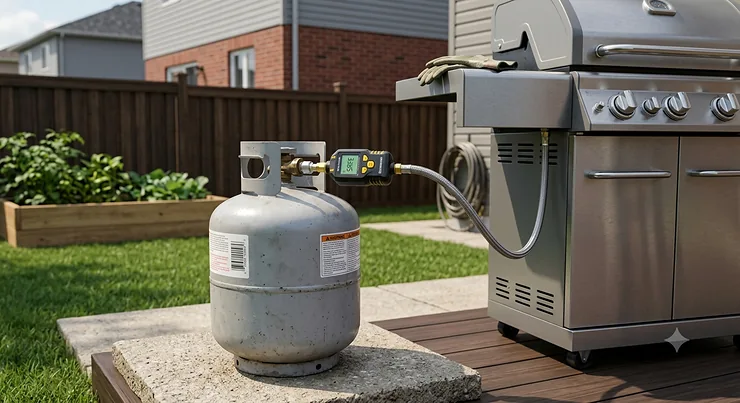
Here’s the thing nobody tells you when you buy your first gas grill: the scariest part of barbecuing isn’t the flare-up, it’s the part you can’t see. A propane leak detector for home BBQ use is a simple tool — an electronic sniffer, a plug-in alarm, or a bubble-forming spray — that reveals escaping propane at tank valves, hoses, and regulator fittings before that gas finds an ignition source or, worse, drifts into an enclosed space. Propane itself is colourless and (mostly) odourless in its raw form; the rotten-egg smell added to it is a safety feature, not a guarantee, because a slow leak outdoors on a breezy patio can dissipate before your nose ever catches it.
That’s the gap these tools fill. A cracked hose, a corroded regulator, a fitting that wasn’t tightened after winter storage — any one of these can turn a Saturday cookout into a genuine emergency, and Ontario’s Technical Standards and Safety Authority runs a seasonal reminder campaign for exactly this reason, because it happens every single spring when barbecues come out of hibernation. Read TSSA’s full seasonal BBQ safety checklist for the province’s official pre-season inspection routine.
This guide compares seven real, currently available options across three formats — bubble sprays, handheld electronic sniffers, and plug-in combination alarms — so you can pick based on how you actually grill, not on marketing copy. We’ll cover real specs, honest trade-offs, price ranges in Canadian dollars, and the practical stuff Amazon listings tend to skip, like which detector actually catches a slow leak on a cold morning versus a warm afternoon.
Quick Comparison Table
| Product | Type | Best For | Price Range (CAD) |
|---|---|---|---|
| Rectorseal 65554 Better Bubble | Bubble spray, 8 oz | Fast pre-season checks on a budget | Under C$20 |
| Rectorseal 65432 Better Bubble | Bubble spray, 32 oz trigger sprayer | Whole-system checks, multiple appliances | C$25-C$35 |
| Swagelok Snoop MS-SNOOP-8OZ | Bubble spray, professional-grade | Catching very small, slow leaks | C$40-C$55 |
| PerfectPrime GA0080 | Handheld electronic sniffer | Budget-conscious first-time buyers | C$30-C$45 |
| Y201 Flexible Gooseneck Detector | Handheld electronic sniffer | Tight, hard-to-reach fittings | C$25-C$40 |
| First Alert GCO1CN | Plug-in combo alarm (gas + CO) | Continuous monitoring near an attached deck | C$45-C$65 |
| Kidde 900-0113-02 | Plug-in combo alarm (gas + CO), CSA/UL listed | Certified, always-on whole-home protection | C$40-C$60 |
The spread here matters more than it looks: sprays and handheld sniffers only tell you something the moment you use them, while the two plug-in alarms watch continuously, which is a completely different job. Reviewers consistently note that the Rectorseal 65554 and PerfectPrime GA0080 punch well above their price for occasional, seasonal use, while the Kidde 900-0113-02 earns its higher price through third-party certification that the cheaper sniffers don’t carry. If your BBQ sits on an attached deck or near a basement walkout, pair a spray or sniffer for pre-season checks with one of the plug-in alarms for year-round peace of mind.
💬 Just one click — help others make better buying decisions too!😊
Top 7 Propane Leak Detectors for Home BBQ: Expert Analysis
1. Rectorseal 65554 Better Bubble — fastest pre-season check under C$20
The Rectorseal 65554 is an 8-ounce bottle of concentrated bubble-forming solution built specifically for gas fittings, not a repurposed dish-soap mix. Spray it on the hose, the regulator, and the tank valve connection, and any escaping propane blows visible bubbles within seconds — no batteries, no calibration, no learning curve. Its formula is non-corrosive on brass and rubber, which matters because some homemade soap solutions can leave residue that degrades hose fittings over a season. Based on the spec comparison with the DIY dish-soap method, the advantage isn’t sensitivity — it’s consistency: a purpose-built solution produces more stable, longer-lasting bubbles in wind, which is exactly the condition most Canadian patios deal with in early spring. Reviewers consistently flag it as their go-to for quick seasonal checks precisely because the bottle lasts through several tank changes. Pros and cons based on real specs and review themes:
Pros:
- ✅ Ready to use straight from the bottle, no mixing
- ✅ Non-corrosive formula safe on hoses and brass fittings
- ✅ Compact size fits in a drawer or grill caddy
Cons:
- ❌ Only detects leaks at the exact spot sprayed
- ❌ Small bottle empties fast with frequent multi-appliance use
Priced under C$20 at the time of research, this is the cheapest legitimate entry point into proper leak testing — a strong value pick for anyone who just wants a once-a-season safety habit.
2. Rectorseal 65432 Better Bubble — best for whole-system checks
Same trusted formula as its smaller sibling, but the Rectorseal 65432 comes in a 32-ounce bottle with a built-in trigger sprayer, which changes how you actually use it. Instead of dabbing solution on one fitting at a time, you can walk the entire gas train — tank valve, regulator, hose, manifold, each burner valve — in one pass without refilling or reaching for a separate spray bottle. What most buyers overlook about the jump in size is that it isn’t really about the BBQ alone; households with a propane fire pit, a patio heater, or an RV get far more mileage from one large bottle than from several small ones. On paper, the trigger mechanism also means more even coverage, so thin or angled leaks (the kind that dribble along a fitting rather than spraying straight out) are easier to catch than with a simple squeeze bottle.
Pros:
- ✅ Trigger sprayer covers multiple fittings quickly
- ✅ Large volume covers a full season of multi-appliance checks
- ✅ Same non-corrosive, gas-safe formula as smaller sizes
Cons:
- ❌ Bulkier to store than the 8-ounce bottle
- ❌ Overkill if you own a single BBQ and nothing else
Expect a price in the C$25-C$35 range, which works out to solid value per test if you’ve got more than one gas appliance in the yard.
3. Swagelok Snoop MS-SNOOP-8OZ — most sensitive spray for slow, sneaky leaks
The Swagelok Snoop comes from industrial gas-fitting supply, not the barbecue aisle, and that lineage shows in its performance. Its noncorrosive, chlorine-free formula is rated for use across a wide temperature range and meets recognized gas-leak-detection performance standards used in professional fitting work, with a flexible snooper tube built into the cap for reaching valves tucked behind a cart or cabinet. Here’s what the spec sheet won’t spell out for a casual buyer: professional-grade formulas like this are engineered to sustain bubble action even on vertical surfaces and very small leaks, which is exactly where cheaper dish-soap mixes tend to fail — thin bubbles that pop before you notice them. If you’ve ever suspected a leak, tested it, and gotten an inconclusive “maybe” result, this is the upgrade that removes the ambiguity. It’s a favourite among gas fitters and RV technicians, and that professional-grade reputation is reflected in a noticeably higher review count relative to hobbyist sprays.
Pros:
- ✅ Detects very small leaks other sprays can miss
- ✅ Wide temperature range performs in cold spring weather
- ✅ Flexible snooper tube reaches awkward valve locations
Cons:
- ❌ Costs roughly double a basic bubble spray
- ❌ Marketed for industrial use, so packaging feels utilitarian
At C$40-C$55, it’s the premium spray option — the right call if you’ve had a previous scare or you maintain multiple gas appliances and want the most reliable read possible.
4. PerfectPrime GA0080 — best budget electronic sniffer
Sprays only tell you about the exact spot you coat, but the PerfectPrime GA0080 is a battery-powered handheld sniffer that scans the air itself, sweeping along hoses and connections to sense propane, butane, and methane concentrations before they’re visible as a leak at all. It uses an adjustable sensitivity dial with audible and visual alarm indicators, so you can dial in sensitivity to your specific environment and reduce false positives from ambient gas smells near a garage or shed. Based on the spec comparison with bubble sprays, the real advantage here is speed and reach — you can wave the wand along an entire hose run in seconds instead of spraying and waiting for bubbles to form at each joint. What most buyers overlook is that this also works for troubleshooting appliances beyond the BBQ, including a gas dryer connection or a leaking propane heater, making it a more flexible household tool.
Pros:
- ✅ Sweeps entire hose runs quickly without spraying
- ✅ Adjustable sensitivity reduces false alarms
- ✅ Doubles as a general household gas sniffer
Cons:
- ❌ Requires batteries and periodic sensor calibration checks
- ❌ Less precise than a spray for pinpointing an exact pinhole
In the C$30-C$45 range, this is a smart first electronic detector for a household that wants more than a one-time spray test.
5. Y201 Flexible Gooseneck Detector — best for tight, awkward fittings
Some of the worst leak spots hide behind grill carts, under side burners, or wedged against a fence — places a rigid sniffer simply can’t reach. The Y201 solves that with a roughly 12-inch flexible sensor neck you can bend into whatever angle the fitting demands, paired with a multi-LED display and audible alarm that shows relative gas concentration as you get closer to the source. Reviewers consistently mention the flexible neck as the standout feature, since it turns a two-handed, awkward inspection into something you can do one-handed while the grill cart stays put. On a practical level, the trade-off for that flexibility is a learning curve: the sensitivity dial needs a bit of tuning on first use, gradually increasing until it just starts alarming, then backing off slightly — the same calibration principle used by professional combustible-gas sniffers.
Pros:
- ✅ Flexible 12-inch neck reaches behind carts and tight gaps
- ✅ Visual LED ladder shows leak intensity, not just yes/no
- ✅ Works across several combustible gases, not just propane
Cons:
- ❌ Sensitivity dial takes a few tries to calibrate correctly
- ❌ Bulkier than a simple wand-style sniffer
Typically priced in the C$25-C$40 range, it earns its spot for anyone whose BBQ setup makes fittings genuinely hard to access.
6. First Alert GCO1CN — best dual-gas plug-in alarm for continuous monitoring
Sprays and sniffers are point-in-time checks; the First Alert GCO1CN is a completely different category — a plug-in alarm that watches the air around it continuously for both explosive gas (propane, methane, natural gas) and carbon monoxide, with a backlit digital display and an 85-decibel alarm. It’s designed for indoor placement near where gas risk could migrate — a mudroom, a garage doorway, or a room adjacent to an attached deck where BBQ exhaust and any leaked gas could drift in on a still day. On paper this means round-the-clock coverage you don’t have to remember to run, which matters because most people only think to spray-test their BBQ once or twice a season, not every single grilling night. What the spec sheet doesn’t emphasize enough: the dual-gas sensing means one device also covers the unrelated but very real risk of a blocked furnace vent or a poorly ventilated water heater, not just your grill.
Pros:
- ✅ Monitors continuously, not just at test time
- ✅ Combines explosive-gas and CO detection in one unit
- ✅ Digital display shows readings, not just an alarm state
Cons:
- ❌ Needs an indoor outlet, so it can’t sit right at the BBQ
- ❌ 9V battery backup still needs periodic replacement checks
Expect to pay C$45-C$65, positioning it as a mid-to-premium pick for households that want passive, always-on protection rather than a manual test.
7. Kidde 900-0113-02 — most trusted certified whole-home alarm
The Kidde 900-0113-02 is a plug-in carbon monoxide and explosive gas alarm built and tested to UL/ULC/CSA safety standards, which is the detail that separates it from budget import alarms that skip third-party certification entirely. It includes a 9-volt battery backup for power outages, a test/reset button, and an 85-decibel alarm loud enough to wake a household. Honest analysis grounded in the spec sheet: certification isn’t just a badge — it means the sensor response, alarm threshold, and false-alarm resistance have been independently verified against recognized Canadian and North American standards, which matters enormously for a device you’re trusting with your family’s safety while you sleep. Kidde has built decades of market presence in the residential fire-and-gas-safety category, and that track record shows up in a large accumulated base of real customer feedback online, though — as with any electronic safety device — reviewers do note it’s worth testing monthly rather than assuming it works indefinitely.
Pros:
- ✅ UL/ULC/CSA certified for verified safety performance
- ✅ 9V battery backup keeps working through power outages
- ✅ Loud 85 dB alarm with simple test/reset button
Cons:
- ❌ No digital PPM readout on this specific model
- ❌ Must be plugged in near where gas could migrate indoors
At C$40-C$60, it’s arguably the best value-for-certification pick on this list, and it’s the one we’d recommend leading with if you’re only buying one plug-in alarm.
How to Test Your BBQ for Propane Leaks: A Step-by-Step Guide
Testing takes five minutes and belongs at the top of your seasonal checklist, right alongside cleaning burner ports and checking for spider webs in the venturi tubes. Start by making sure your BBQ is outdoors, on level ground, away from doors, windows, and any ignition source — TSSA and municipal fire services both flag clearance distances of roughly one to three metres from openings and air intakes as the baseline. Open the lid before you touch the tank valve; propane is heavier than air, and an open lid lets any gas disperse upward and outward instead of pooling in a closed grill body.
Next, apply your bubble spray or run your electronic sniffer along every connection point: the tank valve, the regulator threads, the hose length, and each burner connection. Turn the tank valve on slowly, watch for bubbles or an alarm reading, then shut it off again before you walk away. If you see bubbles growing rather than staying static, or your sniffer alarms consistently at one spot, you’ve found a real leak — tighten the fitting by hand, re-test, and if bubbles persist, replace that hose or regulator rather than trying to seal it with tape. Never use a lighter or match to “check” for a leak; it’s a genuinely dangerous habit that still shows up in provincial safety warnings every year.
✨ Ready to build your own testing kit? Grab one of the sprays or sniffers above and make this a five-minute spring ritual.
Real-World Scenarios: Matching the Right Detector to Your Setup
The apartment-balcony griller. If you’re working with a small two-burner BBQ on a condo balcony, weight and simplicity matter more than range — the Rectorseal 65554 or the PerfectPrime GA0080 cover the job without taking up storage space, and neither needs an outlet you probably don’t have access to outside anyway.
The multi-appliance backyard. A household running a BBQ, a propane fire pit, and maybe a patio heater gets more value from the Rectorseal 65432‘s bigger bottle or the Y201‘s flexible probe, since you’re testing several fittings across several appliances each season rather than just one grill.
The attached-deck family with young kids or pets. If your BBQ sits close to the house — an attached deck, a walkout basement door nearby — continuous monitoring beats a once-a-season spray test. Here, the First Alert GCO1CN or the certified Kidde 900-0113-02 plugged in just inside the door gives you round-the-clock coverage for both leaked propane and the carbon monoxide risk that comes with any combustion appliance running near living space.
Common Propane Leak Problems (And How to Fix Them)
Problem: Hissing sound near the tank valve. This usually means the connection wasn’t threaded on straight or fully hand-tightened. Turn the tank off, disconnect, realign the threads, reconnect by hand until snug, then test with a spray before turning the gas back on.
Problem: Bubbles forming along the hose itself, not just at fittings. A hose that leaks mid-length rather than at a connection point is typically cracked or sun-damaged and should be replaced outright — this isn’t a fitting you can re-tighten your way out of.
Problem: Faint gas smell but no visible bubbles anywhere. Small leaks at a regulator diaphragm can be inconsistent under a basic spray test. This is exactly where a more sensitive detector like the Swagelok Snoop earns its higher price, since it’s built to catch leaks a standard soap mix might miss.
Problem: Alarm keeps triggering on a plug-in unit with no obvious source. Before assuming a false alarm, rule out nearby aerosols, cleaning products, or a poorly vented appliance elsewhere in the home — then, if it persists, treat it as real and call your local gas utility or fire department non-emergency line to be safe.
How to Choose a Propane Leak Detector for Your BBQ
- Match the format to your habit. If you’ll realistically only check once or twice a season, a bubble spray is enough. If you want protection you don’t have to remember to run, a plug-in alarm is the better fit.
- Consider your BBQ’s proximity to the house. Anything within a few metres of doors or windows benefits from continuous monitoring, not just a manual test.
- Check for certification on any plug-in alarm. UL/ULC/CSA marks aren’t marketing fluff — they’re independently verified performance standards.
- Think about multi-appliance coverage. A larger spray bottle or a flexible-probe sniffer pays off faster if you’ve got more than one gas appliance.
- Factor in climate. Cold spring mornings can make bubble formation sluggish; a temperature-rated formula like the Swagelok Snoop performs more consistently.
- Don’t skip carbon monoxide coverage. A propane leak and a CO risk are related but separate hazards — a combo alarm addresses both in one device.
- Budget for replacement, not just purchase. Sprays run out, and alarm sensors have a service life; factor recurring cost into your decision, not just the sticker price.
Common Mistakes When Buying a Propane Leak Detector
The single biggest mistake is buying only a spray and assuming it covers you year-round — a spray test is a snapshot, not ongoing protection, and a fitting that was fine in April can loosen by August. The second is skipping certification entirely on electronic alarms to save a few dollars; an uncertified plug-in unit might work fine, or it might have a sluggish, unverified alarm threshold, and you have no independent way to know which. A third common mistake is placing a plug-in alarm too far from where gas could realistically migrate — mounting it in a distant hallway instead of near the door closest to the BBQ defeats much of its purpose. Finally, plenty of buyers treat a detector as a one-time purchase rather than a maintenance item: sensors degrade, batteries die, and spray bottles run dry, so build a recheck into your seasonal routine rather than assuming a detector bought three summers ago is still fully reliable today.
Gas Leak Detector Spray vs Electronic Leak Detectors
These two formats solve overlapping but genuinely different problems, and understanding the difference changes which one you should buy first. A gas leak detector spray works by physical evidence: propane escaping under pressure blows a bubble through the soap film, so what you’re seeing is undeniable, visual proof of an active leak at that exact spot. Its limitation is coverage — it only tells you about wherever you sprayed, it needs accessible, visible fittings, and it performs less reliably in cold or windy outdoor conditions where bubbles don’t form as cleanly.
Electronic sniffers, by contrast, sense gas concentration in the air itself, letting you sweep an entire hose run or check a spot before a visible leak has even formed. That reach comes at the cost of needing batteries, periodic sensitivity calibration, and — depending on the unit — a bit of a learning curve to avoid false alarms from ambient household gas smells. Neither format replaces the other; a spray gives you certainty at a specific joint, while a sniffer gives you speed across a whole system. Based on the spec comparison, the most sensible household kit pairs a spray like the Rectorseal 65554 for definitive spot-checks with a sniffer like the PerfectPrime GA0080 for faster full-system sweeps before every tank swap.
| Factor | Bubble Spray | Electronic Sniffer |
|---|---|---|
| Setup | None — spray and look | Batteries, sensitivity dial |
| Best For | Confirming a suspected leak | Scanning an entire system quickly |
| Cold-Weather Performance | Can be sluggish below freezing | Generally more consistent |
| Ongoing Cost | Refill the bottle periodically | Battery replacement, sensor life |
Looking at the table above, sprays win on simplicity and cost, but sniffers win on speed and reach across multiple fittings — the right pick really does come down to how often you’re testing and how many gas appliances you own.
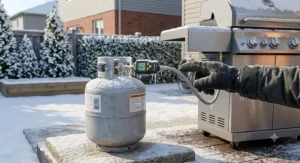
Propane Safety Alarms: Do You Need One for Your Backyard?
A propane safety alarm — the plug-in, continuously monitoring kind, like the First Alert GCO1CN or Kidde 900-0113-02 — solves a problem sprays and sniffers can’t: they only protect you at the moment you actively test. An alarm watches passively, all the time, which matters most when your BBQ sits close enough to the house that a leak could realistically drift indoors, or when young kids and pets are around and a five-minute manual check just isn’t going to happen every single grilling session. What most buyers overlook is that these alarms aren’t BBQ-specific devices at all — they’re general household explosive-gas and CO monitors that happen to also cover a leak from your grill’s tank if it’s stored or connected near the house. If your BBQ lives well away from any structure and you’re diligent about spray-testing every use, a standalone alarm is a nice-to-have rather than a must. If it’s anywhere near a door, window, or attached deck, it moves firmly into the “worth the C$40-C$65” category.
Carbon Monoxide Risk: What Every BBQ Owner Needs to Know
Every propane and charcoal barbecue produces carbon monoxide as a byproduct of combustion — that part is unavoidable, and it’s exactly why grills are built for outdoor use only. Health Canada is blunt about the danger: breathing in carbon monoxide cuts your blood’s ability to carry oxygen, and it can do real harm before you ever notice a symptom, which is exactly why it is nicknamed the silent killer. Nationally, carbon monoxide exposure is tied to an estimated few hundred deaths and hospitalizations every year, and outdoor equipment like barbecues is explicitly named as a common source when it’s used somewhere it shouldn’t be — a garage, an enclosed porch, a tent.
The core safety rule is simple and non-negotiable: never operate a propane or charcoal BBQ in a garage, tent, enclosed porch, or any space without serious airflow, even “just for a minute” during bad weather. Because CO is odourless and colourless, your senses genuinely cannot warn you — see Health Canada’s full guidance on preventing CO exposure at home for a complete breakdown of certified alarm types and placement. Pairing a propane leak detector with a certified CO alarm, like the Kidde 900-0113-02, addresses both halves of the risk with a single continuously running device.
Gas Leak Warning Signs Every Homeowner Should Recognize
What are the warning signs of a propane gas leak? The clearest sign is smell — propane suppliers add a rotten-egg or sulphur-like odorant specifically so leaks are detectable, so any unexplained sulphur smell near your tank deserves immediate attention. Beyond smell, watch for a visible frost or ice buildup on the tank itself during use (a sign of unusually fast gas release), a hissing sound near valves or fittings, houseplants or grass near the BBQ area dying unexpectedly, and — the one people miss most — flames that burn consistently yellow or orange instead of blue, which can indicate an air-to-gas ratio problem worth investigating. If you smell gas, the correct response is to shut the tank valve immediately, move away, and avoid any switches, lighters, or ignition sources until the area is clear. A detector confirms what your nose already suspects; it isn’t a replacement for treating any gas smell as real until proven otherwise.
Home BBQ Safety for Every Household
Grilling with young kids around means keeping a visual perimeter — most parents find a simple rule, like “no one under 10 crosses this line,” does more good than any single piece of hardware, paired with a plug-in CO and gas alarm as a passive backstop. Pet owners should remember that dogs and cats are just as vulnerable to carbon monoxide as people, and curious noses have a habit of investigating tank valves and hoses, so a quick pre-light visual check matters as much as the spray test itself. Renters and condo dwellers face an added wrinkle: many buildings restrict or ban propane BBQs on balconies entirely for exactly the CO and fire risks covered above, so checking your building’s rules before you check your hose fittings is worth doing first. Seniors or anyone managing a BBQ solo should lean toward the lowest-effort option that still gets tested reliably — a plug-in alarm requires zero ongoing action beyond an occasional battery check, which beats relying on remembering a manual spray test every time.
Long-Term Cost & Maintenance: Is a Leak Detector Worth It?
| Product | Approx. Price Range (CAD) | Ongoing Cost | Value Verdict |
|---|---|---|---|
| Rectorseal 65554 | Under C$20 | Occasional refill | Best entry-level value |
| Swagelok Snoop | C$40-C$55 | Refill, less often needed | Best for peace of mind on small leaks |
| PerfectPrime GA0080 | C$30-C$45 | Batteries, occasional sensor check | Strong value for multi-use households |
| Kidde 900-0113-02 | C$40-C$60 | 9V battery, sensor lifespan (years) | Best long-term certified protection |
The math here favours acting early rather than reacting late: even the priciest option on this table costs a small fraction of a single emergency service call, let alone the cost of a damaged BBQ or worse. Sprays and sniffers have the lowest ongoing cost since a bottle or a set of batteries lasts a full season or more, while plug-in alarms carry a slightly higher upfront price but amortize that cost over years of passive protection. Whichever type you choose, budget for a periodic replacement — sensor accuracy on electronic devices degrades gradually, and manufacturers generally recommend replacing CO-sensing alarms after several years of continuous use rather than assuming indefinite reliability.
🔍 Don’t wait for a close call — check current pricing on the picks above and build your kit before your next cookout.
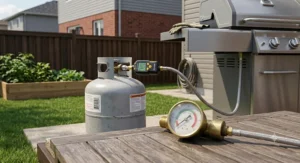
Frequently Asked Questions
❓ Do I really need a propane leak detector if I already smell for leaks?
❓ How often should I test my BBQ hose and regulator for leaks?
❓ Can a propane leak detector spray damage my grill's hose or fittings?
❓ Is a plug-in gas alarm better than a handheld sniffer?
❓ What should I do if my detector alarms or I find bubbles during a test?
Conclusion
A propane leak detector for home BBQ safety isn’t a luxury purchase — it’s a five-minute habit backed by a C$20 to C$65 tool, standing between a normal Saturday and a genuinely dangerous one. Whether you land on the simplicity of the Rectorseal 65554, the reach of the PerfectPrime GA0080, or the round-the-clock certainty of a certified Kidde 900-0113-02, the real win is building the check into your routine rather than treating it as a one-time box to tick. Pair a spray or sniffer for active testing with a plug-in alarm if your grill sits anywhere near the house, and you’ve covered both the propane leak risk and the carbon monoxide risk in one system. For the province-specific inspection routine before your first cookout of the season, Ottawa’s outdoor fire and BBQ safety guidance is worth a five-minute read alongside this guide.
Grilling season should be about good food and good company, not a gamble on a fitting you never got around to checking. Do the test, trust the tool, and enjoy the cookout.
✨ Don’t Miss These Exclusive Deals!
🔍 Take your backyard safety setup to the next level with the detectors and alarms above. Click on any highlighted product to check current pricing and availability on Amazon.ca. A few dollars now buys real peace of mind at every cookout this summer!
Recommended for You
- Chimney Starter vs Electric Fire Starter: 7 Picks (2026)
- Charcoal Chimney Starter Under $40 CAD: 7 Best Picks for 2026
- Natural Fire Starters for Charcoal BBQ: 7 Picks Ranked for 2026
Disclaimer: This article contains affiliate links. As an Amazon Associate, I earn from qualifying purchases. If you purchase products through these links, we may earn a small commission at no additional cost to you.
✨ Found this helpful? Share it with your friends! 💬🤗
