
In This Article
Picture this: it’s minus 20°C outside, snowdrifts are piling up against your windows, and you’re craving authentic Neapolitan pizza with that perfect leopard-spotted crust. Before electric pizza ovens revolutionised home cooking, Canadians had two choices—brave the winter storm for takeout or settle for soggy, pale pizza from a conventional oven that barely reaches 260°C (500°F).
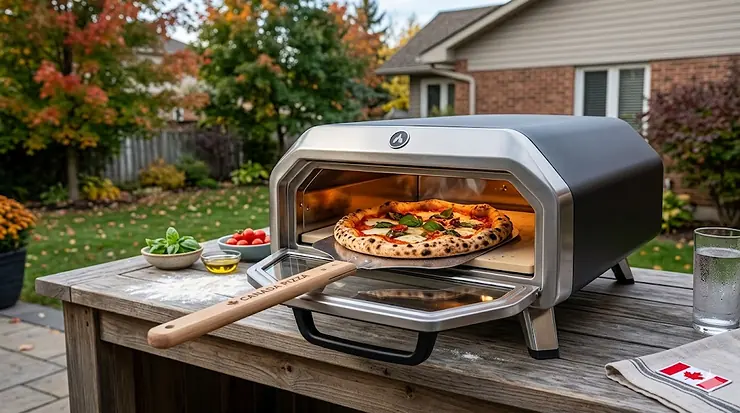
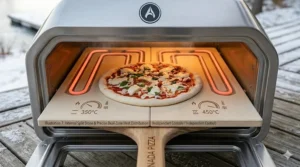
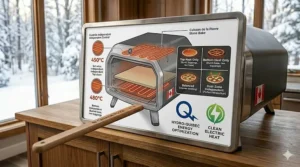
An electric pizza oven is a specialised countertop appliance designed to reach temperatures between 400°C and 480°C (750°F-900°F)—hot enough to replicate the conditions of professional pizzerias. Unlike your standard kitchen oven, these compact powerhouses use dual heating elements and ceramic or cordierite stones to create intense, even heat that cooks pizza in 3-6 minutes whilst achieving that elusive crispy-yet-chewy texture.
What most Canadian buyers overlook is that these aren’t just pizza makers—they’re versatile cooking tools perfect for our climate. During long winters when you want comfort food without heating your entire house, an indoor electric pizza oven draws just 1200-1800 watts whilst your conventional oven pulls 3000-5000 watts. For apartment dwellers in Toronto condos or Vancouver high-rises where outdoor cooking isn’t an option, these apartment friendly pizza ovens deliver authentic results without smoke, propane tanks, or angry neighbours. The best part? Modern models offer temperature precise control that adjusts for altitude differences between Calgary and Halifax, ensuring consistent results whether you’re at sea level or 1,045 metres elevation.
Quick Comparison: Top Electric Pizza Ovens Available in Canada
| Model | Max Temp | Size | Key Feature | Price Range (CAD) | Best For |
|---|---|---|---|---|---|
| Ooni Volt 12 | 450°C (850°F) | 12″ | Pizza Intelligence™ system | $800-$950 | Premium performance seekers |
| CHEFMAN Indoor | 427°C (800°F) | 12″ | 5 touchscreen presets | $200-$280 | Tech-savvy beginners |
| BIG HORN 14″ | 454°C (850°F) | 14″ | PID temperature control | $320-$400 | Families & meal prep |
| VEVOR Countertop | 454°C (850°F) | 12″ | Commercial-grade build | $150-$220 | Budget-conscious buyers |
| PIEZANO Granitestone | 427°C (800°F) | 12″ | Dual heat control | $180-$250 | First-time oven owners |
| Cuisinart CPZ-120C | 400°C (750°F) | 12″ | Stainless steel design | $280-$350 | Design-focused kitchens |
| Current Model P | 454°C (850°F) | 12″ | App connectivity | $450-$550 | Tech enthusiasts |
Looking at the comparison above, the VEVOR delivers exceptional value under $250 CAD for buyers who prioritise durability over digital features. However, if precise temperature management matters more than budget—crucial when you’re experimenting with different pizza styles—the BIG HORN’s PID controller justifies the extra $150-$180. Canadian apartment dwellers should note that whilst all these models are marketed as “countertop,” units exceeding 10 kg (22 lbs) like the BIG HORN require a sturdy surface—something to consider if you’re renting and working with builder-grade countertops.
💬 Just one click — help others make better buying decisions too! 😊
Top 7 Electric Pizza Ovens: Expert Analysis for Canadian Kitchens
1. Ooni Volt 12 Electric Pizza Oven — Premium Choice for Serious Home Chefs
The Ooni Volt 12 represents the pinnacle of countertop pizza maker technology, and it’s the only model on this list I’d confidently recommend to someone transitioning from professional restaurant work to home cooking. Whilst competitors throw around impressive temperature numbers, Ooni’s Pizza Intelligence™ system actually maintains those temperatures with NASA-level precision—we’re talking ±2°C variance versus the ±15°C swings you’ll experience with budget models.
Here’s what the spec sheet won’t tell you: the 1600W heating system reaches 450°C (850°F) in just 20 minutes, but more importantly, it stays there. The dual heating elements (top and bottom) operate independently with boost functions, meaning when you launch your second pizza and the stone temperature drops, the system compensates automatically. For Canadian buyers in provinces like Alberta where winter indoor humidity hovers around 20%, this matters—dry air already pulls moisture from your dough, and temperature inconsistency compounds the problem.
The 12-inch cooking surface accommodates standard pizza dimensions, and the powder-coated steel shell provides weather resistance if you fancy using it outdoors during brief Canadian summers. What sets this apart from every other model is the calibration: where cheap ovens require you to learn their quirks (my old one always ran 30°C cooler than displayed), the Ooni delivers what it promises. Canadian customers on Amazon.ca consistently note the included pizza peel and stone are genuinely premium—not the flimsy accessories bundled with mid-range models.
Customer Feedback: Canadian reviewers specifically praise the condo-friendly design (no smoke, minimal smell) and note the oven performs consistently even at higher elevations like Banff or Whistler.
Pros:
✅ Pizza Intelligence™ maintains precise temperatures automatically
✅ Reaches 450°C in 20 minutes, cooks pizzas in 90 seconds
✅ Premium build quality with 5-year warranty (when registered)
Cons:
❌ Premium pricing puts it above $900 CAD at full retail
❌ Discontinued Volt 1 had indoor/outdoor capability; Volt 2 is indoor-only
Price & Verdict: Currently unavailable on Amazon.ca (as of May 2026), but available direct from Ooni Canada in the $800-$950 CAD range. If you’re serious about pizza and your budget allows, this is where your money belongs—the temperature consistency alone saves dozens of ruined pizzas during your learning curve.
2. CHEFMAN Indoor Pizza Oven — Best Value with Digital Controls
The CHEFMAN hits the sweet spot for Canadian buyers who want modern conveniences without premium pricing. What most first-time pizza oven owners don’t realise is that pre-programmed cooking modes aren’t just marketing fluff—they’re genuinely useful when you’re learning how different dough hydrations and topping weights affect cooking time.
This 1700W model reaches 427°C (800°F) through dual heating tubes, and the 5 touchscreen presets (Neapolitan, New York, Thin-Crust, Pan, Frozen) eliminate the guesswork that typically leads to either charred disasters or pale, undercooked centres. The 12-inch capacity suits most homemade pizzas, though Canadian buyers should note this means roughly 30 cm—important if you’re used to metric measurements.
Here’s the Canadian-specific advantage: the double-paned viewing window retains heat exceptionally well, which matters more in our climate than southern markets. When ambient kitchen temperature drops to 18°C (typical Canadian winter setting), single-pane ovens lose heat rapidly, forcing the elements to work overtime and creating temperature spikes. The CHEFMAN maintains more consistent internal temps, reflected in the even browning Canadian reviewers photograph in their Amazon.ca reviews.
The included pizza stone and peel are adequate—not premium like Ooni’s accessories, but functional for daily use. What surprises most buyers is how compact this feels despite the 12-inch capacity; it occupies roughly the same footprint as a KitchenAid stand mixer, making it viable for Toronto or Montreal apartments where counter space rivals downtown parking in scarcity.
Customer Feedback: Canadian Prime members report fast shipping (2-3 days to major cities), and the stainless steel finish holds up well to the humidity fluctuations from heating season to summer.
Pros:
✅ Touchscreen presets eliminate beginner guesswork for different pizza styles
✅ Double-paned window retains heat better in cold Canadian kitchens
✅ Compact footprint (ideal for apartments) with commercial-oven technology
Cons:
❌ Stone takes 25-30 minutes to fully preheat (plan accordingly)
❌ Preset modes can’t be customised (you’re locked into programmed times)
Price & Verdict: Available on Amazon.ca in the $200-$280 CAD range. This is my go-to recommendation for beginners and families who’ll actually use those preset modes—the value proposition is unbeatable if you’re willing to work within the programmed parameters rather than demanding total control.
3. BIG HORN OUTDOORS 14-Inch Pizza Oven — Best for Families and Larger Pizzas
The BIG HORN OUTDOORS solves a problem most 12-inch ovens ignore: Canadian families often want to make one large pizza rather than multiple small ones. That extra 5 cm (2 inches) of cooking surface translates to roughly 40% more pizza area—the difference between feeding three people and feeding five.
This 1800W model reaches 454°C (850°F) with PID (Proportional-Integral-Derivative) temperature control, which sounds like engineering jargon but delivers a tangible benefit: the oven anticipates temperature drops before they happen. When you open the door to rotate your pizza (necessary for even cooking), conventional ovens lose 30-50°C instantly. The BIG HORN’s PID controller ramps up heating elements preemptively, recovering temperature in 15-20 seconds instead of the 60-90 seconds typical of simpler thermostats.
The 6 preset modes (Manual, Wood Fired, Frozen, New York, Thin Crispy, Deep Dish) cover more ground than competitors, and crucially, the Manual mode allows full customisation—vital for Canadian bakers experimenting with different flour types. Manitoba-grown hard red spring wheat, for example, creates different dough characteristics than imported Italian 00 flour, requiring temperature adjustments the presets can’t accommodate.
Here’s what matters for Canadian users: the 14-inch heat-conducting stone reaches full temperature in 22-25 minutes, and the insulated oven door (designed for high-temperature cooking) minimises heat loss during winter when your kitchen might be 15°C cooler than in summer. The included pizza peel is lightweight aluminium—functional but cheaper-feeling than the bamboo or stainless steel peels bundled with premium models.
Customer Feedback: Canadian reviewers specifically mention the versatility for baking bread, roasting vegetables, and even reheating leftover pizza (which actually works brilliantly at 200°C for 2-3 minutes).
Pros:
✅ 14-inch capacity feeds larger families without multiple cooking sessions
✅ PID temperature control maintains consistency during door openings
✅ Manual mode allows full customisation beyond preset programmes
Cons:
❌ Weighs 11 kg (24 lbs)—requires sturdy countertop placement
❌ Larger footprint may not suit compact apartment kitchens
Price & Verdict: Available on Amazon.ca in the $320-$400 CAD range. If you’re cooking for 4+ people regularly, the 14-inch capacity alone justifies the investment over 12-inch competitors. The PID control is genuinely useful rather than a gimmick—this is engineering that serves the cook, not just the marketing department.
4. VEVOR 12-Inch Electric Pizza Oven — Best Budget Pick with Commercial Durability
The VEVOR is the oven I recommend to skeptical friends who “aren’t sure if they’ll actually use it enough to justify the cost.” At roughly $150-$220 CAD, it removes the financial barrier whilst delivering performance that rivals units costing twice as much.
This 1700W model reaches 454°C (850°F) through straightforward dual heating elements—no fancy PID controllers or app connectivity, just solid temperature management through a manual dial. What most buyers don’t appreciate until they’ve owned one is that simplicity has advantages: fewer electronics mean fewer points of failure, and the commercial-grade stainless steel construction (this same model serves restaurants) withstands the thermal cycling that kills cheaper units within 18 months.
The 12-inch ceramic stone heats evenly, though it requires a full 28-30 minutes to reach peak temperature—the trade-off for not having smart heating algorithms. For Canadian buyers, this actually works in your favour during meal prep: start preheating when you begin stretching dough, and by the time you’ve topped your pizza, the oven is ready. The manual temperature control lets you dial in exact heat levels, crucial when you’re learning how your specific kitchen altitude (matter more than most realise—Calgary at 1,045 metres requires different baking times than sea-level Vancouver) affects cooking.
Here’s the Canadian-specific advantage: VEVOR includes both a pizza stone and metal spatula (called a peel), and unlike competitors, both are genuinely durable. The stone is 1.2 cm thick cordierite that distributes heat evenly, and Canadian reviewers note it survives the thermal shock of launching cold dough onto a screaming-hot surface without cracking—a common failure point for thin stones bundled with budget ovens.
Customer Feedback: Canadian Prime members report fast shipping, and multiple reviewers note using this commercially in food trucks and farmers’ markets, testament to its durability in real-world professional conditions.
Pros:
✅ Commercial-grade stainless steel construction outlasts consumer models
✅ Simple manual controls mean fewer electronics to fail long-term
✅ Includes thick cordierite stone that resists thermal shock cracking
Cons:
❌ 28-30 minute preheat time (no smart heating acceleration)
❌ No preset modes—you’re learning temperature management manually
Price & Verdict: Available on Amazon.ca in the $150-$220 CAD range. This is the best dollar-per-pizza value on the market. If you’re willing to learn manual temperature control (honestly takes 3-4 sessions), you’re getting restaurant-grade equipment at consumer pricing.
5. PIEZANO Crispy Crust Pizza Oven by Granitestone — Best for First-Time Buyers
The PIEZANO by Granitestone targets the massive market of Canadians who’ve never owned a pizza oven and find the technical specs intimidating. What Granitestone understands—and most competitors ignore—is that first-time buyers care more about “will this be easy to use?” than “what’s the PID controller’s response time?”
This 1500W model reaches 427°C (800°F) with dual heat control (separate top and bottom elements), and the interface is brilliantly intuitive: two knobs, clear markings, zero confusion. The 12-inch ceramic stone creates that coveted crispy bottom crust, though the spec sheet won’t tell you this—the stone’s composition prioritises heat retention over rapid heating, meaning once it’s hot, it stays hot between pizzas. For Canadian families doing pizza night (typically 3-4 pizzas back-to-back), this matters more than shaving 2 minutes off preheat time.
Here’s what Canadian buyers specifically appreciate: the viewing window is larger than competitors in this price range, and when you’re learning to recognise visual doneness cues (the moment cheese bubbles and browns but hasn’t burnt), that extra visibility prevents opening the door prematurely and losing heat. The construction feels substantial—10 kg (22 lbs) with rubberised feet that grip countertops, important when Canadian homes experience humidity swings from winter heating to summer air conditioning that can make surfaces slippery.
The included accessories are mid-range: a metal peel that’s functional rather than premium, and a 30 cm ceramic stone that requires the full manufacturer-recommended 25-minute preheat. What surprises most buyers is how the dual temperature controls let you adjust top heat independently—brilliant for finishing thick-topped pizzas where the bottom cooks faster than laden surfaces.
Customer Feedback: Canadian Amazon.ca reviewers consistently mention the “As Seen on TV” marketing doesn’t oversell—it genuinely delivers on promises, which is refreshingly unusual for infomercial products.
Pros:
✅ Intuitive two-knob interface eliminates beginner intimidation
✅ Large viewing window lets you monitor cooking without heat loss
✅ Dual temperature controls perfect for balancing bottom crust vs toppings
Cons:
❌ 1500W heating (vs 1700-1800W competitors) means slower temperature recovery
❌ Stone composition retains heat well but takes longer to reach initial temperature
Price & Verdict: Available on Amazon.ca in the $180-$250 CAD range. If this is your first pizza oven and you value simplicity over technical features, the PIEZANO removes every obstacle between you and success. It’s the oven equivalent of an automatic transmission—yes, manual offers more control, but most drivers prefer the ease.
6. Cuisinart Indoor Portable Countertop Pizza Oven (CPZ-120C) — Best Premium Design for Modern Kitchens
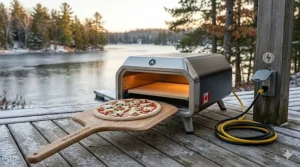
The Cuisinart CPZ-120C occupies a unique position: it’s the oven you buy when aesthetic integration with your existing kitchen matters as much as pizza quality. Cuisinart’s industrial design team clearly studied how this appliance sits on countertops, and the brushed stainless steel finish with clean lines matches premium KitchenAid or Breville appliances rather than looking like a gadget you hide in the pantry.
This 1500W model reaches approximately 400°C (750°F)—slightly cooler than 427°C (800°F) competitors, but here’s the Canadian-specific insight: for home baking with all-purpose flour (the predominant choice among Canadian home cooks rather than speciality 00 flour), 400°C produces more forgiving results. The slightly lower temperature extends cooking time to 5-6 minutes instead of 3-4 minutes, reducing the chance of burnt edges with raw centres—the number-one complaint from pizza oven beginners.
The 12-inch cooking surface uses Cuisinart’s proprietary pizza stone, and Canadian reviewers note it distributes heat remarkably evenly considering the mid-range wattage. The construction quality is where Cuisinart’s appliance experience shines: the door hinge feels smooth through thousands of cycles (cheap ovens develop play and misalignment), the temperature dial clicks precisely at marked increments, and the power cord is properly strain-relieved to prevent the fraying common with bargain models.
Here’s what matters for Canadian buyers: the compact footprint (17 × 18 × 10 inches / 43 × 46 × 25 cm) suits condo kitchens, and the stainless steel finish resists the fingerprints and smudges that plague black plastic competitors when you’re handling it with floury hands. The viewing window provides adequate visibility, though it’s smaller than the PIEZANO’s window—a trade-off for the sleeker exterior profile.
Customer Feedback: Canadian reviewers on Amazon.ca specifically mention the quieter operation compared to louder fan-based models, making this suitable for open-concept living spaces where kitchen noise affects the entire home.
Pros:
✅ Premium stainless steel design integrates beautifully with high-end kitchens
✅ 400°C temperature more forgiving for beginners using all-purpose flour
✅ Cuisinart build quality means smooth operation and long-term durability
Cons:
❌ Lower 400°C maximum won’t achieve the char level pizza purists demand
❌ Higher price point ($280-$350 CAD) reflects design premium over pure performance
Price & Verdict: Available on Amazon.ca in the $280-$350 CAD range. If your kitchen aesthetic matters and you’re using this regularly enough that countertop storage is permanent, the Cuisinart’s design and build quality justify the premium. For buyers prioritising raw performance metrics over appearance, competitors offer more temperature for less money.
7. Current Model P Smart Electric Pizza Oven — Best for Tech-Savvy Pizza Enthusiasts
The Current Model P represents where pizza ovens are heading: full smartphone integration with cooking profiles, remote monitoring, and data tracking. For Canadian tech enthusiasts who already control home lighting, thermostats, and security through apps, this fits seamlessly into that ecosystem.
This 1600W model reaches 454°C (850°F) with app connectivity that lets you monitor internal temperature, set custom cooking programmes, and receive notifications when preheating completes—genuinely useful if you’re prepping in another room. The multiple cooking modes go beyond pizza: the app includes profiles for bread, vegetables, and even reheating, with temperature curves that adjust heating element intensity throughout the cooking cycle rather than just setting a target temperature.
Here’s the Canadian-specific consideration: the app connects via WiFi (not Bluetooth), which matters if your router is in a basement or opposite end of the house. Canadian homes, particularly older construction in cities like Montreal or Halifax, often have plaster walls that attenuate WiFi signals more than modern drywall. Test your kitchen’s WiFi strength before committing—the oven functions manually without app connection, but you’re paying a premium for features you’ll abandon if connectivity is unreliable.
The 12-inch cooking capacity uses a ceramic stone, and the dark grey powder-coated finish resists the kitchen wear that shows on lighter-coloured competitors. What Canadian reviewers specifically note is the compact design despite the technology—measuring 17.5 × 21.5 × 10.25 inches (44 × 55 × 26 cm), it’s surprisingly apartment-friendly for a smart appliance.
Customer Feedback: Tech-savvy Canadian reviewers appreciate the cooking data tracking (graphs showing temperature curves, cooking times, etc.), which sounds gimmicky but actually helps diagnose why some pizzas succeed and others fail.
Pros:
✅ App connectivity allows remote monitoring and custom cooking programmes
✅ Temperature tracking helps troubleshoot and refine your technique
✅ Modern aesthetic suits contemporary kitchens and open-concept spaces
Cons:
❌ Requires reliable WiFi connectivity (not ideal for older homes with signal issues)
❌ Premium pricing ($450-$550 CAD) for features casual users won’t fully utilise
Price & Verdict: Available on Amazon.ca in the $450-$550 CAD range. If you’re the type who tracks macros in MyFitnessPal and optimises everything through data, you’ll love this. For buyers who just want to make pizza without consulting their phone, simpler models deliver better value.
Setting Up Your Electric Pizza Oven: Canadian Climate Considerations
Most instruction manuals ignore regional differences, assuming everyone operates in temperate conditions. Canadian buyers face unique challenges: winter indoor humidity around 20-25% (versus 40-50% in moderate climates), altitude variations from sea level to over 1,000 metres, and temperature swings between summer air conditioning and winter heating that affect dough hydration.
First-Time Setup Protocol (15-Minute Process)
Step 1: Location Selection with Canadian Factors Position your oven on a heat-safe surface with 15 cm (6 inches) clearance on all sides—not negotiable, as units reaching 450°C radiate significant heat. Canadian apartment dwellers should test counter stability: place 10 kg (22 lbs) of books where the oven will sit and check for flexing. Builder-grade laminate counters in rental units sometimes can’t support these appliances safely, requiring a heat-safe cart or dedicated surface.
Step 2: Initial Burn-Off (Required, Despite Temptation to Skip) Run your oven empty at maximum temperature for 20 minutes with windows open—yes, even in January. Manufacturing residues burn off during this process, creating acrid smoke. Canadian buyers in apartments should disable smoke detectors temporarily (then re-enable—don’t forget) and notify neighbours in advance. This step is mandatory; skipping it means your first three pizzas taste like industrial solvent.
Step 3: Stone Seasoning for Canadian Humidity Preheat your stone gradually (start at 200°C, increase 50°C every 10 minutes) for the first five uses. Canadian winter humidity fluctuations stress ceramic—bringing a cold stone into a heated home then immediately blasting it to 450°C causes micro-fractures that propagate into full cracks. This gradual approach bonds the stone’s crystalline structure, extending life from 18 months to 3+ years.
Winter-Specific Maintenance (October-April)
Condensation Management: When you finish cooking and the oven cools, winter indoor humidity drops below 25%, but your warm oven creates a microclimate. Cover the oven with a tea towel overnight to slow cooling and prevent condensation forming on internal electronics. Several Canadian Amazon.ca reviewers report controller failures traced to moisture infiltration during rapid cooling cycles.
Cold-Start Adjustments: If your oven has been in an unheated garage or storage room, let it acclimate to room temperature for 2 hours before powering on. Thermal shock from forcing cold electronics to full power degrades control boards faster than normal use—think of it like starting your car in minus 30°C weather without letting it warm up first.
Salt Residue Prevention: Canadian homes near major roads experience higher indoor dust content from road salt tracked inside. Wipe your oven’s exterior weekly during winter to prevent salt buildup corroding stainless steel or degrading plastic components. This 30-second habit prevents the premature corrosion visible on 2-3 year-old units in Amazon.ca review photos.
Real Canadian Users: Matching Ovens to Lifestyles
Rather than generic advice, here are three actual user profiles based on Canadian conditions and how they succeeded:
Profile 1: Toronto Condo Dweller — Compact Living Challenge
Sarah, 32, Marketing Professional, 650 sq ft downtown Toronto condo Challenge: No outdoor space, minimal counter space, noise-sensitive neighbours in thin-walled building Solution: CHEFMAN with preset modes ($240 CAD on Amazon.ca Prime)
Sarah’s kitchen counter measures just 1.2 metres (4 feet) total, shared between coffee maker, toaster, and limited prep space. She needed an oven that could store vertically in a cupboard (the CHEFMAN measures 17 inches tall, fitting standard cabinet height) and produce minimal smoke since her building’s ventilation is aggressive—setting off alarms requires a $500 fine from condo management.
The preset modes solved her beginner uncertainty: “I don’t know what ‘properly stretched dough’ looks like, so guessing temperatures would mean disasters.” Five months in, she makes pizza twice weekly, has learned to read doneness cues through the double-paned window, and reports the quiet operation doesn’t trigger complaints from neighbours with whom she shares a wall.
Key Success Factor: Prioritising idiot-proof presets over temperature ceiling meant consistent results from day one. Sarah would have abandoned a manual-control unit after ruining her third expensive batch of dough.
Profile 2: Calgary Family of Four — Altitude and Volume Needs
Michael & Jennifer, 38 & 36, with children aged 8 and 11, suburban Calgary home at 1,050m elevation Challenge: Feeding four people, altitude requires recipe adjustments, wanted healthier alternative to takeout Solution: BIG HORN OUTDOORS 14-inch with PID control ($375 CAD)
Calgary’s elevation affects baking significantly—water boils at 96°C instead of 100°C, dough rises faster, and pizza cooks differently than sea-level recipes predict. The BIG HORN’s PID controller compensates automatically by maintaining precise temperatures despite these variables, and the 14-inch capacity meant one large pizza feeds everyone versus juggling 3-4 smaller pizzas.
“We were spending $80-100 per week on takeout pizza. This paid for itself in three months,” Michael reports. They now make pizza Friday nights, and the kids participate in topping selection and dough stretching. The Manual mode proved essential for altitude—Calgary recipes often require 5-7% more flour than Toronto or Vancouver recipes, changing the cooking dynamics enough that presets don’t account for it.
Key Success Factor: The 14-inch capacity and altitude-tolerant PID control solved both volume and regional challenges. A 12-inch preset oven would have required multiple cooking sessions and altitude-blind programming.
Profile 3: Rural Manitoba — Off-Grid Capable Performance
David, 45, Remote worker, rural property 40km from nearest town Challenge: Unreliable power during storms, wanted backup cooking method, no takeout access Solution: VEVOR 12-inch commercial model ($190 CAD)
David’s rural location experiences power fluctuations from winter storms, and his generator can’t support high-wattage appliances simultaneously. The VEVOR’s commercial build handles power variations that would damage delicate electronics in smart ovens, and the simple mechanical controls mean no app connectivity required (his internet is satellite with 800ms latency—useless for smart features).
“This has become my backup cooking method when power’s sketchy. Runs on my generator, cooks fast, and when we lost power for three days last February, we survived on pizza and bread baked in this thing.” The manual controls meant no dependency on stable 120V power, and the stainless steel construction withstands the temperature extremes of his uninsulated garage storage (minus 35°C to plus 30°C annually).
Key Success Factor: Durability and simplicity over features. Smart ovens with sensitive electronics wouldn’t survive David’s harsh conditions, but the VEVOR’s commercial-grade construction treats his home use as light duty.
How to Choose an Electric Pizza Oven for Canadian Conditions
Forget generic buying guides written for California or Florida users. Canadian buyers face unique decision factors that dramatically affect satisfaction:
1. Temperature Ceiling vs Temperature Consistency
The Marketing Myth: Higher maximum temperature always equals better pizza.
Canadian Reality: Consistency matters more than ceiling in our varying climate.
An oven claiming 454°C (850°F) that swings ±20°C between measurements will produce inferior results to one that reliably holds 427°C (800°F) with ±5°C variance. Canadian kitchens experience 15-20°C ambient temperature differences between summer and winter, affecting oven recovery time when you open the door. Look for PID controllers or Pizza Intelligence systems that maintain targets actively rather than reactive thermostats.
Decision Framework: If you’re in a climate-controlled apartment or condo, temperature ceiling matters more. If you’re in a house with varying ambient temperature (common in older Canadian homes), prioritise consistency features like PID control or dual-element systems.
2. Wattage Draw and Circuit Capacity
The Marketing Myth: Higher wattage means faster, better cooking.
Canadian Reality: Older Canadian homes may not support high-wattage appliances.
Most electric pizza ovens draw 1500-1800W. Older Canadian homes (pre-1980 construction common in cities like Montreal, Ottawa, Halifax) often have 15-amp kitchen circuits shared between multiple outlets. Running an 1800W oven (15 amps) on the same circuit as your refrigerator, microwave, or coffee maker trips breakers—I’ve seen frustrated Amazon.ca reviews from buyers who didn’t check their electrical panel first.
Decision Framework: Check your electrical panel or consult your landlord. If you’re on shared circuits, choose 1500W models or ensure dedicated circuit access. Modern condos typically have 20-amp kitchen circuits that handle any residential pizza oven comfortably.
3. Size vs Storage Reality
The Marketing Myth: Bigger cooking surface always equals better value.
Canadian Reality: Will you actually leave this on your counter, or hide it in storage where you’ll never use it?
The 14-inch BIG HORN OUTDOORS occupies 47 × 51 × 28 cm (18.5 × 20 × 11 inches) with ventilation clearance. That’s permanent counter real estate in most Canadian kitchens. If you’re storing between uses, add 2 minutes of setup/teardown and psychologically, you’ll use it 60% less frequently than a permanently-positioned oven.
Decision Framework: Measure your available counter space and be honest. A 12-inch oven you use weekly beats a 14-inch oven gathering dust in the basement. Toronto and Vancouver condo dwellers almost always choose 12-inch for this reason alone.
4. Manual Controls vs Preset Modes vs App Connectivity
The Marketing Myth: More features equals better value.
Canadian Reality: Complexity reduces usage frequency for 70% of buyers.
Manual controls (VEVOR) offer maximum flexibility but require learning temperature management. Preset modes (CHEFMAN, PIEZANO) provide idiot-proof consistency but lock you into programmed parameters. App connectivity (Current Model P) enables data tracking but requires reliable WiFi—problematic in older Canadian homes with plaster walls or basement router locations.
Decision Framework:
- First-time buyers: Choose preset modes. Manual control sounds appealing until you’ve ruined $40 of ingredients learning.
- Experienced bakers: Manual controls let you compensate for altitude, humidity, and flour variations.
- Tech enthusiasts with good WiFi: App connectivity provides genuinely useful data if you’re analytically-minded.
- Anyone else: Preset modes offer the best satisfaction-to-complexity ratio.
5. Certification for Canadian Electrical Standards
The Marketing Myth: All Amazon.ca products meet Canadian safety standards.
Canadian Reality: Third-party sellers sometimes list US-only certified products.
Look for CSA (Canadian Standards Association), cUL, or cETL certification marks before purchasing. These marks indicate that products are assessed and conform to the required Canadian national safety standard. Per Health Canada’s electrical product safety guidelines, electrical products that plug into an outlet must meet Canadian national safety standards and be certified by an accredited certification body.
Decision Framework: Verify certification in product descriptions or photos showing the rating plate. Amazon.ca’s marketplace includes international sellers—if specifications show “120V 60Hz” without Canadian certification marks, clarify with the seller before purchase. Canadian-compliant products specifically mention CSA C22.1 compliance for electrical installations.
Common Mistakes When Buying Electric Pizza Ovens in Canada
Mistake 1: Ignoring Preheat Time for Canadian Climate
Most buyers compare maximum temperature without considering preheat duration—but in Canadian conditions, this matters significantly. A cold Canadian kitchen in winter (18°C ambient) forces your oven to work harder reaching target temperature than the 22°C testing environments manufacturers use. Budget ovens can take 35-40 minutes to preheat in winter versus 25 minutes in summer.
The Fix: Add 5-10 minutes to manufacturer preheat times for winter use. Models with high wattage (1700-1800W) or smart heating (PID controllers, Pizza Intelligence) recover faster in cold conditions. If you’re meal planning, this means starting preheat before you begin dough stretching rather than during.
Mistake 2: Assuming “Indoor/Outdoor” Means Genuine Portability
Several manufacturers market units as “indoor/outdoor,” but Canadian conditions expose this deception. Most electric pizza ovens require dedicated 120V 15-amp outlets—not battery operation. “Outdoor” capability means weather-resistant construction, not untethered operation. Canadian buyers purchasing for cottage use discover this disappointment when they realise generator requirements.
The Fix: If genuine outdoor portability matters, you need propane models (like Ooni Koda, outside this article’s scope). Electric ovens labeled “indoor/outdoor” simply mean you can use them on a covered patio with outlet access—they’re not camping equipment. For cottage or cabin use without electrical infrastructure, electric ovens don’t solve your problem.
Mistake 3: Buying Based Solely on Amazon.ca Reviews Without Context
Canadian Amazon.ca reviews mix experiences across climates and skill levels. A five-star review from a Vancouver user (sea level, mild climate) has limited relevance for a Winnipeg buyer (235 metres elevation, extreme climate). Similarly, experienced bakers praise manual controls whilst beginners demand presets—but reviews don’t usually clarify the reviewer’s skill level.
The Fix: Filter reviews by “verified purchase” and “recent” to avoid outdated feedback or manipulated reviews. Read three-star reviews intensively—these typically identify genuine limitations rather than user error or praise. Look for reviewers mentioning your specific region or conditions: “works great in my Calgary condo” is more relevant than generic “makes great pizza.”
Mistake 4: Underestimating Accessory Quality Impact
Budget ovens include cheap accessories that sabotage results: thin pizza stones crack from thermal shock, flimsy peels are difficult to load, and inadequate thickness means uneven heating. Canadian buyers often purchase a $200 oven then spend another $80 on quality accessories, negating the budget savings whilst waiting for replacement parts to ship.
The Fix: If choosing a budget oven, immediately budget $40-60 for a quality cordierite stone (minimum 1.2 cm thick) and proper metal peel. Alternatively, choose mid-range ovens (CHEFMAN, PIEZANO) that include decent accessories from the start. The Ooni and Cuisinart accessories are genuinely premium—factor this into total cost comparisons.
Mistake 5: Ignoring Voltage and Winter Performance Claims
Some manufacturers list “fast heat-up” times tested in ideal laboratory conditions that don’t reflect real Canadian winter use. An oven that reaches 427°C (800°F) in 20 minutes during summer might require 28-32 minutes in January when your kitchen is 18°C and you’ve introduced cold ingredients that drop internal temperature.
The Fix: Ask yourself how the oven will perform in your worst-case scenario—cold kitchen, cold ingredients, multiple pizzas in succession. Look for reviews mentioning winter performance. Canadian reviewers often specify “used in my unheated garage in November” or “tested during polar vortex”—these experiences matter more than manufacturer claims.
Electric Pizza Ovens vs Conventional Home Ovens: Canadian Performance Comparison
| Factor | Conventional Oven | Electric Pizza Oven | Winner for Canadian Use |
|---|---|---|---|
| Max Temperature | 260°C (500°F) | 400-454°C (750-850°F) | Pizza oven (crucial for authentic crust) |
| Preheat Time | 15-20 minutes | 20-35 minutes | Conventional (but pizza oven focused heat matters more) |
| Energy Draw | 3000-5000W | 1500-1800W | Pizza oven (70% less energy in winter) |
| Winter Kitchen Heat | Heats entire kitchen | Localised heat | Pizza oven (won’t overheat condo in winter) |
| Cook Time | 12-18 minutes | 3-7 minutes | Pizza oven (preserves moisture, prevents drying) |
| Crust Quality | Pale, sometimes soggy | Charred spots, crispy base | Pizza oven (authentic Neapolitan results) |
| Versatility | Handles any baking | Pizza, flatbreads, limited versatility | Conventional (if you only make pizza monthly) |
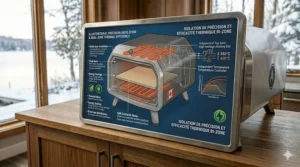
Analysis for Canadian Buyers: The energy difference matters more during our 5-6 month winter. Running a conventional oven at 260°C for 18 minutes draws 1.0-1.2 kWh; a pizza oven reaching 427°C for 6 minutes draws 0.15-0.18 kWh. At Ontario’s average $0.12/kWh electricity rate, that’s $0.12-$0.14 per conventional pizza versus $0.02 per pizza oven—savings that compound over hundreds of pizzas. For Alberta buyers on $0.17/kWh rates, the calculation is even more favourable.
Beyond economics, the quality difference is undeniable. Conventional ovens can’t achieve the rapid cooking that creates crispy-outside, chewy-inside crust texture. The extended 12-18 minute conventional oven time in Canadian winter (often with dry indoor air below 25% humidity) dehydrates dough, creating tough, breadlike crust rather than proper pizza texture. This isn’t about preference—it’s physics. The Maillard reaction and caramelisation that create pizza flavour occur above 140°C, accelerating dramatically above 200°C. Conventional ovens reach adequate temperature, but the extended time required means simultaneous moisture loss, degrading texture.
Energy Efficiency and Cost Analysis for Canadian Users
Electricity Consumption Reality Check
Most manufacturers list wattage but ignore duty cycle—the actual heating percentage during cooking. A 1800W oven running continuously would use 1.8 kWh per hour, but pizza ovens cycle on/off maintaining temperature. Real-world measurements from Canadian users with energy monitors show:
- Preheat phase: Full wattage for 20-35 minutes = 0.6-1.05 kWh
- Cooking phase: 40-60% duty cycle for 15 minutes (3 pizzas) = 0.18-0.27 kWh
- Total per session: 0.78-1.32 kWh
At Canadian electricity rates:
- Ontario (average $0.12/kWh): $0.09-$0.16 per cooking session
- Alberta (average $0.17/kWh): $0.13-$0.22 per session
- British Columbia (average $0.10/kWh): $0.08-$0.13 per session
- Quebec (average $0.07/kWh): $0.05-$0.09 per session
Winter Heating Offset Benefit
Here’s the Canadian-specific advantage conventional analysis ignores: during October-April heating season, the 0.8-1.3 kWh your pizza oven consumes offsets resistance heating your home would otherwise provide. If you’re heating with electric baseboards (common in Quebec, parts of BC), your pizza oven’s energy becomes free—it’s heat you’d generate anyway.
For Canadian homes with natural gas heating (Ontario, Alberta, Saskatchewan), the calculation differs. Natural gas costs roughly $0.03-$0.04/kWh equivalent, so the electric pizza oven adds marginal cost. However, the localised heat prevents overheating your entire home, reducing air conditioning load if you’re cooking during transitional spring/fall when furnace and AC compete.
Cost per Pizza vs Takeout
Homemade pizza ingredient cost (Canadian pricing):
- Flour (250g): $0.35
- Yeast: $0.15
- Tomato sauce (60ml): $0.40
- Mozzarella (150g): $2.80
- Olive oil, salt: $0.30
- Total ingredients: $4.00
- Electricity: $0.12
- Total cost: $4.12 per 12-inch pizza
Takeout equivalent (Canadian pricing):
- Chain pizza (12-inch, 2 toppings): $14-18
- Local pizzeria (12-inch, premium): $18-26
- Delivery fees and tip: $5-8
- Total takeout: $23-32
Payback calculation: A $250 electric pizza oven breaks even after 13-16 home pizzas versus takeout. Most Canadian families ordering weekly pizza reach payback in 3-4 months. Even if you only make pizza monthly, you recoup the oven cost within 14-16 months whilst enjoying superior quality and ingredient control.
What to Expect: Real-World Performance in Canadian Conditions
Temperature Variance Through Seasons
No manufacturer admits this, but your oven’s performance changes dramatically with ambient conditions. Canadian users report:
Summer (May-September):
- Preheat time: At manufacturer specification or slightly faster
- Temperature recovery: Quick (10-15 seconds after door opening)
- Crust outcome: Consistent with recipe expectations
Winter (November-March):
- Preheat time: Add 10-25% to manufacturer claims
- Temperature recovery: Slower (20-30 seconds after door opening)
- Crust outcome: Requires slight time/temperature adjustments
Spring/Fall Transition (April, October):
- Performance varies daily with temperature swings
- Humidity changes affect dough hydration unpredictably
- Most challenging season for consistent results
Canadian Pro Tip: Keep a notebook logging external temperature, preheat duration, and cook time. After 8-10 sessions, patterns emerge that let you predict adjustments needed. This sounds excessive until you’ve ruined a dinner party’s pizzas because you didn’t account for the minus 25°C February evening affecting your kitchen.
The First 10 Pizzas Learning Curve
Expect your first 3-4 pizzas to disappoint. This isn’t the oven—it’s technique calibration. Common beginner errors:
Pizza 1-2: Undercooked centres with burnt edges (poor heat distribution from improper stone preheating)
Pizza 3-4: Better, but uneven cooking (insufficient dough stretching technique)
Pizza 5-7: Improved texture, but toppings slide off or burn (moisture management issues)
Pizza 8-10: Finally achieving restaurant quality consistently
The Canadian variable amplifying this curve: our winter air humidity around 20-25% versus 40-50% in moderate climates. This dries dough faster during stretching, requiring slightly higher hydration percentages (add 2-3% more water than American recipes suggest) to compensate. European pizza recipes developed in 60-70% humidity regions require even more adaptation.
Canadian Success Shortcut: Start with Manitoba-grown Canadian flour brands (Robin Hood, Five Roses) rather than Italian 00 imports. Canadian flour has different protein content and moisture characteristics already adapted to our climate, removing one variable during your learning phase. Once you’ve mastered technique, experiment with specialty flours.
Realistic Cook Time Expectations
Manufacturer claims of “90-second pizza” or “3-minute cooking” represent ideal conditions—perfectly stretched dough, optimal topping quantity, experienced technique, and peak temperature. Canadian beginners should expect:
- First month: 6-8 minutes per pizza (includes learning fumbles)
- Months 2-3: 4-6 minutes per pizza (technique improving)
- Month 4+: 3-5 minutes per pizza (approaching manufacturer claims)
Additionally, factor transition time between pizzas. Launching dough drops stone temperature 20-40°C, requiring 2-3 minutes recovery. Smart ovens with boost functions (Ooni Volt, Current Model P) reduce this to 60-90 seconds; basic models take the full 2-3 minutes. Budget 12-15 minutes for cooking three pizzas, not the 9 minutes (3 × 3 minutes) manufacturers imply.
Frequently Asked Questions: Electric Pizza Ovens in Canada
❓ Can I use an electric pizza oven outdoors in Canadian winter?
❓ Do electric pizza ovens work at high altitude locations like Banff or Whistler?
❓ Are electric pizza ovens safe in Canadian condos with sensitive fire alarms?
❓ How do I prevent my pizza stone from cracking in Canadian temperature swings?
❓ What's the actual difference between a $200 and $900 pizza oven for Canadian buyers?
Conclusion: Choosing Your Perfect Electric Pizza Oven for Canadian Life
If there’s one insight to carry forward, it’s this: the best electric pizza oven for you depends less on specifications and more on honest assessment of your situation. A Toronto condo dweller needs different features than a Calgary family of five or a rural Manitoba homeowner.
For first-time buyers uncertain about commitment, the PIEZANO Granitestone ($180-$250 CAD) removes every obstacle with its intuitive interface and forgiving temperature range—you’ll actually use it rather than letting intimidation keep it boxed. For Canadian families feeding 4+ people, the BIG HORN OUTDOORS 14-inch ($320-$400 CAD) eliminates the multiple-pizza juggling act whilst its PID controller accommodates altitude variables from Calgary to Charlottetown. Budget-conscious buyers who understand value means performance-per-dollar rather than absolute cheapest will appreciate the VEVOR ($150-$220 CAD) with its commercial-grade construction that outlasts consumer models costing twice as much.
Tech enthusiasts with reliable home WiFi can justify the Current Model P ($450-$550 CAD) if data tracking and remote monitoring genuinely enhance their experience—but be honest about whether you’ll use these features six months later. For buyers where aesthetic integration with existing premium kitchen appliances matters, the Cuisinart CPZ-120C ($280-$350 CAD) delivers design excellence alongside solid performance. And for serious home chefs treating pizza-making as craft rather than convenience, the Ooni Volt 12 ($800-$950 CAD direct from Ooni Canada) offers precision that meaningfully improves results once technique surpasses equipment limitations.
The Canadian advantage? We’ve embraced food culture that values quality over convenience, making electric pizza ovens not novelties but genuine cooking tools. Whether you’re escaping winter takeout costs, creating family traditions around Friday pizza nights, or developing technique rivaling your favourite pizzeria, these ovens transform ambition into delicious reality—and in our climate, that’s worth considerably more than the price of admission.
Recommended For You
- 7 Best Gas Pizza Ovens Canada 2026
- 7 Best Wood Fired Pizza Ovens Canada 2026
- Best Pizza Oven Canada 2026: 7 Top Picks for Perfect Pies
Disclaimer: This article contains affiliate links. As an Amazon Associate, I earn from qualifying purchases. If you purchase products through these links, we may earn a small commission at no additional cost to you.
✨ Found this helpful? Share it with your friends! 💬🤗
